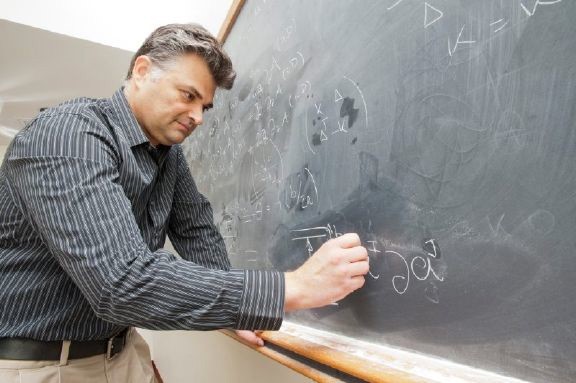
Jerry Draayer is the Roy P. Daniels Professor of Physics at Louisiana State University and an LSU Distinguished Research Master. He earned his Ph.D. from Iowa State University in 1968. His research program focuses on nuclear structure theory, computational physics, and algebraic methods applied to quantum systems. Research examines low-energy nuclear phenomena including rotational/vibrational collective behavior, superdeformed configurations, and double beta decay processes. Draayer employs group theory and high-performance computing to study microscopic and macroscopic descriptions of nuclei. His work establishes connections between nuclear collective motion and underlying nucleon interactions, particularly in rare-earth and actinide nuclei. Key publications explore symplectic symmetries in ab initio nuclear models and q-deformation effects in nuclear interactions.
Janos Simon is a Professor of Computer Science at the University of Chicago. His research focuses on computational complexity, algorithms, and distributed systems, with special interests in lower bound techniques and fault-tolerant models. He serves as Editor in Chief of the Chicago Journal of Theoretical Computer Science. His research explores diverse areas including combinatorial algorithms for optical networks, distributed computing in mobile networks, and biologically-inspired computational models. Work spans theoretical foundations to applied problems in vehicular networks and sensor systems. Professor Simon has supervised numerous PhD students in theoretical computer science and maintains active collaborations in fault-tolerant distributed computations and complexity theory.
Dr. Lucas Slot is a Lecturer at the Department of Computer Science, ETH Zurich, specializing in theoretical computer science, computational complexity, and optimization algorithms. His research focuses on polynomial optimization, sum-of-squares hierarchies, and semidefinite programming, with applications to algorithmic design and complexity analysis. Recent work includes studies on computational thresholds in stochastic block models, convergence rates of optimization hierarchies, and kernel-based methods for high-dimensional inference. His contributions span theoretical foundations and algorithmic advancements in mathematical programming and geometric data analysis. Lacking explicit mentions of academic awards or grants, Dr. Slot’s scholarly activities emphasize computational and mathematical challenges in optimization and discrete geometry. No student advisees are listed in the provided materials.
Dr. Demetres Christofides is an Associate Professor in Mathematics and Course Leader of BSc (Hons) Mathematics & Statistics at the University of Central Lancashire Cyprus (UCLan Cyprus). He holds a PhD in Mathematics from the University of Cambridge (2008), alongside advanced qualifications from Cambridge including a BA (2003), MA (2007), and Certificate of Advanced Study in Mathematics (2004). Affiliations: School of Sciences, Department of Mathematics. Administrative Roles: Former Senate Member (2015–2020), Deputy Head of School (2017–2018), and Academic Standards Lead (2017–2020). Research Interests: Focuses on combinatorics, including random graphs, extremal graph theory, positional games, and algorithmic graph theory. His work spans Hamilton cycles, Cayley graphs, information theory, and structural graph properties. He has contributed to over 10 peer-reviewed publications in journals like Journal of Combinatorial Theory and SIAM Journal on Discrete Mathematics . Funding & Grants: Secured research grants from the Cyprus Research Promotion Foundation and the EPSRC, including projects on extremal combinatorics and graph algorithms. Awards: Smith Prize (University of Cambridge). Outreach: Trains Cypriot Mathematical Olympiad teams, creates problems for international competitions (e.g., IMO Shortlist 2020), and co-authored a training book for high-school mathematics competitions. Teaching: Leads and teaches modules across all undergraduate years, including Real Analysis, Algebra, and Complex Analysis. Previously taught at Charles University, Warwick, and Birmingham.
Claudio Chamon is a Professor at Boston University, specializing in condensed matter physics and quantum computing. His research focuses on electron fractionalization in topological systems, quantum spin liquids, and fractonic behavior. He holds a Ph.D. in Theoretical Physics from MIT, along with M.S. and B.S. degrees in Electrical Engineering and Aeronautics/Astronautics, also from MIT. His work bridges theoretical and experimental condensed matter physics, with contributions to topological materials, quantum phase transitions, and quantum information science. Key research areas include topology-driven fractionalization in graphene-like structures, non-Abelian gauge theories, and quantum computing applications such as encrypted operator computing. Chamon has pioneered studies on Majorana zero modes in nanowire networks and braiding non-Abelian anyons in photonic systems. His experimental collaborations aim to realize topological qubits and quantum spin liquids in programmable devices. He has received prestigious awards including the American Physical Society Fellowship, Alfred P. Sloan Fellowship, and NSF CAREER Award. Chamon’s recent work explores quantum circuit complexity, fracton dynamics, and secure computation on encrypted data, leveraging tensor networks and combinatorial symmetries.
Jaijeet Roychowdhury is a Professor of Electrical Engineering and Computer Sciences (EECS) at the University of California, Berkeley. He specializes in machine learning, novel computational paradigms, and the analysis/simulation of cyber-physical, electronic, and biological systems. His research group pioneered self-sustaining oscillator-based Ising machines and contributed to oscillator phase macromodeling, nonlinear system reduction, and open-source prototyping platforms like MAPP. Education: B.Tech., Electrical Engineering, Indian Institute of Technology (IIT) Kanpur, 1987 M.S., Electrical Engineering & Computer Science, UC Berkeley, 1989 Ph.D., Electrical Engineering & Computer Science, UC Berkeley, 1993 Research Interests: Machine learning integration with physical systems Innovative computational hardware (e.g., oscillator-based Ising machines) Oscillator networks for unconventional computing Nonlinear dynamical systems analysis Analog circuit simulation and verification Awards & Recognition: 2019 Bell Labs Prize (with Tianshi Wang) 2009 IEEE Fellow 2019-2023 Bakar Foundation Awards Bell Labs' Extraordinary Achievement Award (1996) Advising & Industry: Notable advisee: Tianshi Wang (Bell Labs Prize co-winner) Cofounder of Berkeley Design Automation (acquired by Mentor Graphics) Leadership roles at AT&T Bell Labs, Bell Labs, and CeLight Inc. Lab & Tools: Leads the Roychowdhury Research Group, developing MAPP (Model and Algorithm Prototyping Platform) and PHLOGON phase-based logic frameworks.
Bin Yu is a Chancellor’s Professor at the University of California, Berkeley, affiliated with the Departments of Statistics and Electrical Engineering & Computer Sciences. Her research focuses on statistics, machine learning theory, and methodologies for high-dimensional data analysis, with interdisciplinary applications in genomics, neuroscience, and remote sensing. PhD in Statistics, UC Berkeley (1990) MA in Statistics, UC Berkeley (1987) BS in Mathematics, Peking University (1984) Her work includes pioneering the Predictability, Computability, and Stability (PCS) framework for veridical data science, emphasizing responsible AI development and reproducibility. Recent publications address transformer interpretability, domain adaptation, and medical AI ethics. Scientific awards include: U.S. National Academy of Sciences Member (2014) American Academy of Arts and Sciences Member (2013) Guggenheim Fellow (2006) IMS Rietz Lecturer (2016) COPSS Elizabeth L. Scott Award (2018) Research support includes collaboration with Eva Leach (eva.leach@berkeley.edu) and leadership roles at the Berkeley Artificial Intelligence Research Lab (BAIR) and the Microsoft Lab on Statistics and Information Technology in China.
Markus Maucher is a Subject Advisor in the Department of Computer Science at the University of Ulm . He has taught exercises for courses like Einführung in die Informatik I (EidI 1) and Einführung in die Informatik II (EidI 2) across multiple semesters from 2004 to 2022. His research focuses on Computational Biology , Boolean Networks , and Ant Colony Optimization , with applications in Machine Learning , Gene Expression Analysis , and Evolutionary Algorithms . His publications span journals such as Bioinformatics , IEEE/ACM Transactions on Computational Biology and Bioinformatics , and Computational Statistics , as well as conferences like the Genetic and Evolutionary Computation Conference . He holds a PhD in Computer Science, evidenced by his 2009 dissertation and subsequent book on non-perfect randomness in probabilistic algorithms . Maucher has collaborated with researchers including H.A. Kestler , U. Schöning , and C. Müssel . The keywords from his recent work include Computational Biology , Boolean Networks , and Algorithm Design . His sub-fields encompass Probabilistic Algorithms , Correlation Analysis , and Feature Selection . Contact details: markus.maucher@uni-ulm.de
Dan Mikulincer is the Brian and Tiffinie Pang Assistant Professor at the University of Washington in the Department of Mathematics, College of Arts and Sciences. He previously held a postdoctoral Instructor position at MIT Mathematics and earned his Ph.D. from the Weizmann Institute of Science under Ronen Eldan. He completed his B.Sc. in Mathematics and Computer Science at Ben-Gurion University, where he also studied Cognitive Neuroscience. B.Sc.: Ben-Gurion University (Mathematics, Computer Science, Cognitive Neuroscience) Ph.D.: Weizmann Institute of Science, Faculty of Mathematics Postdoc: MIT Mathematics Current: Assistant Professor, University of Washington, Department of Mathematics His research lies at the intersection of high-dimensional geometry, probability, statistics, information theory, and data science. He is particularly focused on normal approximations, Stein's method, stochastic analysis, and dimension-free phenomena. His work explores foundational aspects of learning theory, random matrices, transportation inequalities, and neural networks, often using probabilistic and analytic tools to derive sharp, robust results in high dimensions. The recent publications reflect a consistent focus on probabilistic methods in high-dimensional settings. Key themes include normal approximation via Stein's method, optimal transport, concentration and anti-concentration inequalities, random graph models, and theoretical aspects of machine learning such as learnability and neural network expressivity. The work spans both pure mathematics (e.g., GAFA, PTRF) and top-tier computer science venues (e.g., COLT, STOC, NeurIPS), highlighting interdisciplinary impact. Although no formal scientific awards are listed in the provided text, his publications in premier journals and conferences (Annals of Probability, STOC, NeurIPS, COLT) indicate significant recognition in the theoretical community. Dan Mikulincer has advised or collaborated with several researchers including Yair Shenfeld, Max Fathi, Ronen Eldan, and Sébastien Bubeck. He has served as a TA for 18.650: Statistics for Applications at MIT and taught programming courses (Java, Python, JavaScript) at the Interdisciplinary Center Herzliya. He is also a senior lecturer at WeCode, a nonprofit providing free programming education to underrepresented youth in Israel, indicating a strong commitment to education and outreach. He has been affiliated with research groups at MIT Mathematics, Weizmann Institute, and Microsoft Research AI, where he spent the summer of 2019 hosted by Sébastien Bubeck. These collaborations span theoretical machine learning, stochastic processes, and algorithmic foundations.
Venkat Anantharam is a Professor in the Department of Electrical Engineering and Computer Sciences at the University of California, Berkeley . His research spans Information Theory , Network Security , Coding Theory , and Stochastic Processes , with a focus on theoretical foundations and applications in communication systems, game theory, and data compression. He has supervised numerous PhD and Master’s students , including Soham Phade, Payam Delgosha, and Sudeep Kamath, and hosted postdoctoral fellows such as Lei Yu and Charles Bordenave. His recent publications address advanced topics like hypercontractivity in Boolean functions, universal compression of graphical data, and game-theoretic models for security. Articles from 2019-2021 highlight work on entropy power inequalities, error bounds for Markov chains, and distributed compression techniques. Venkat's research often bridges theoretical insights with practical applications, including LDPC decoders, network coding, and risk-sensitive control.
Sundar Vishwanathan is a Professor in the Department of Computer Science and Engineering at Indian Institute of Technology Bombay (IIT Bombay), where he has established himself as a leading researcher in theoretical computer science. His academic career spans over three decades with consistent contributions to algorithms, combinatorics, and complexity theory. His research interests form a cohesive body of work focused on theoretical foundations of computing: Algorithms (particularly approximation algorithms, online algorithms, and randomized algorithms) Combinatorics and extremal set theory Complexity theory and circuit lower bounds Graph theory and graph algorithms Combinatorial optimization problems Vishwanathan's publication record demonstrates remarkable consistency and depth, with publications spanning from 1990 to 2024. His recent work focuses on graph algorithms (particularly maximum matching problems), approximation algorithms for combinatorial optimization, and circuit complexity. He has developed innovative techniques using linear algebra, combinatorial methods, and probabilistic analysis to solve challenging theoretical problems. His approach often bridges theoretical insights with practical algorithmic considerations. His collaborative work spans multiple research groups, with frequent co-authorships with researchers such as Ashish Chiplunkar, Sumedh Tirodkar, and Sreyash Kenkre. His research has evolved from foundational work in online graph coloring in the 1990s to more specialized topics in combinatorics and recently to circuit lower bounds, showing both depth in core areas and adaptability to evolving research landscapes.
Simina Branzei is an Associate Professor of Computer Science at Purdue University, where she joined in Spring 2018. Her research spans multiple areas at the intersection of theoretical computer science, game theory, and economics, with a focus on developing rigorous theoretical frameworks for understanding complex systems. Dr. Branzei's research interests include algorithmic game theory, theory of computation, artificial intelligence, algorithms, learning, computational complexity, and their interfaces with dynamical systems and optimization. Specific topics she has worked on include fair division, markets and auctions, games, learning dynamics, and local search processes. Her research is supported by an NSF CAREER Award, a prestigious grant recognizing early-career faculty who demonstrate exceptional potential for leadership in their field. Analysis of her publication record reveals consistent contributions to understanding computational aspects of economic and social systems. Her work shows particular expertise in computational complexity of fixed point problems, fair allocation mechanisms, market dynamics, and game theoretic models. She has developed novel theoretical frameworks for analyzing cake cutting protocols, market equilibria, and strategic behavior in multi-agent systems. NSF CAREER Award IBM Ph.D. Fellowship Google Anita Borg Memorial Scholarship Dr. Branzei actively mentors graduate students in theoretical computer science, with current Ph.D. student Reed C. Phillips. Her past mentees include Nicholas J. Recker (Ph.D.) and Nithish Kumar (Master's). She has been instrumental in organizing academic workshops including the ACM EC 2024 Mentoring Workshop, Mini-Symposium on Games and Learning at CanaDAM 2023, and Workshop on Fair Division at FOCS 2022, demonstrating leadership in building research communities. She teaches graduate courses including Algorithm Design, Theory of Computation, and Algorithmic Game Theory, as well as undergraduate courses in algorithms and theory of computation, shaping the next generation of computer scientists with strong theoretical foundations.
Prof. Dr. Hans-Peter Lenhof holds the Chair for Bioinformatics at Saarland University since 2000, where he leads research in computational biology and disease mechanism analysis. His career includes: Postdoctoral research at Max Planck Institute for Informatics (1993-1999) Research Group Leader at MPI (1999-2000) Professor at Saarland University (2000-Present) His group develops innovative bioinformatics methods with three primary focus areas: Personalized Cancer Therapy : Creating AI/ML approaches to optimize drug selection from over 200 cancer therapeutics, addressing tumor heterogeneity through predictive modeling of treatment efficacy. Diagnosis & Prognosis : Pioneering blood-based diagnostic methods using autoantibody and miRNA profiles that demonstrate high clinical sensitivity for multiple cancers and neurological disorders through collaborative studies. Pathogenic Mechanism Analysis : Employing graph-based network models to visualize and analyze deregulated biological processes, particularly signaling cascades in cancer progression. The lab maintains active collaborations with Andreas Keller's Clinical Bioinformatics group and Eckart Meese's Human Genetics team. Computational tools developed include BALLView for molecular visualization, GeneTrail for high-throughput data analysis, and specialized frameworks for therapy optimization (MERIDA) and miRNA networks (miRTargetLink).