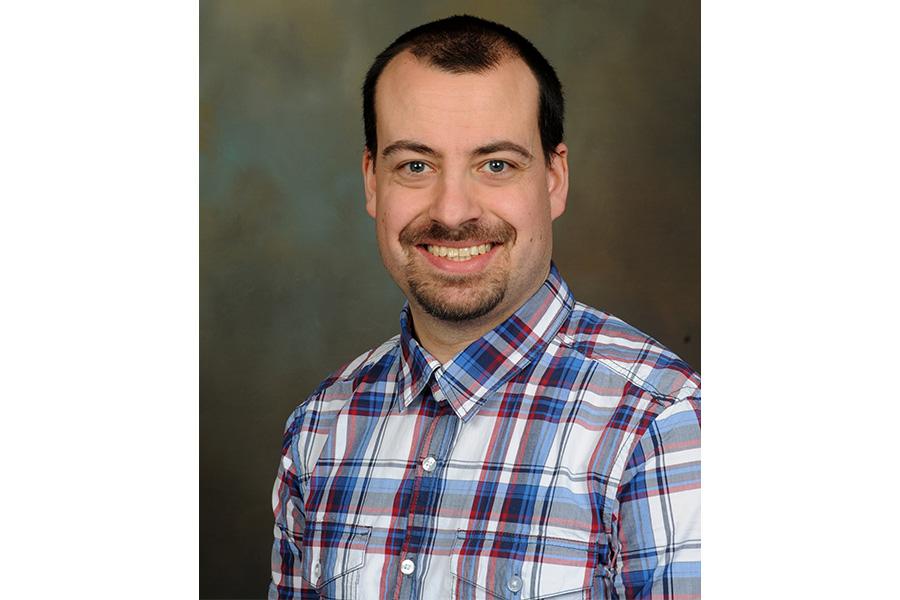
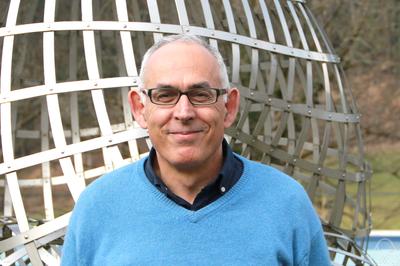
Danielle Greaves is an Online Course Facilitator and Research Degree Supervisor at the University of South Australia. Her work focuses on cognitive health, delirium prevention, and aging-related research. She contributes to interdisciplinary projects involving neurology, cardiology, and gerontology. Her research explores cognitive outcomes post-cardiac surgery, the role of EEG biomarkers in aging, and interventions targeting cognitive decline. Key research areas include: 1) Post-surgical cognitive recovery, 2) Delirium risk factors and interventions, 3) Cardiometabolic health impacts on neurophysiology, 4) Intergenerational programs for aging populations. Her studies often use mixed-methods approaches and randomized controlled trials. Greaves has published extensively on topics like APOE-ε4 genetics, computerized cognitive training, and cardiometabolic burden analysis. Her work bridges clinical practice and academic research to improve healthcare outcomes for older adults. She holds affiliations with the University of South Australia’s health sciences programs and collaborates on projects addressing age-related cognitive challenges. Her research emphasizes translational science with direct clinical applications.
Dr. Donna Coffman is an Associate Professor in the Department of Psychology at the University of South Carolina's McCausland College of Arts and Sciences. She specializes in quantitative methodology applied to behavioral health research, focusing on developing statistical methods for analyzing intensive longitudinal data from wearable devices and mobile health interventions. Her work emphasizes causal mediation analysis in contexts like smoking cessation, substance use disorder treatment, and physical activity promotion. Dr. Coffman holds a PhD in Quantitative Psychology from the University of North Carolina, Chapel Hill. Prior to her current role, she held academic positions at Temple University and Pennsylvania State University's Methodology Center. Her research bridges statistical innovation with real-world applications, particularly in designing adaptive health interventions. Her research interests include: Developing mediation analysis techniques for time-varying data Improving causal inference methods in health behavior studies Optimizing wearable sensor data integration in clinical research Analyzing mHealth intervention efficacy Recent work focuses on applications like sleep interventions for children's weight management, spinal cord injury recovery tracking via wearable sensors, and causal pathways in substance use policy impacts. She collaborates across disciplines to advance evidence-based prevention strategies through rigorous methodological frameworks. Notable contributions include methodological toolkits for propensity score weighting and mediation analysis, published in journals like BMC Medical Research Methodology and Journal of Medical Internet Research . Her applied research has addressed topics ranging from e-cigarette use trends to environmental health disparities.
Elizabeth Horton is the Associate Director of Research and Engagement within the Senior Research Management Group at Coventry University. Her research focuses on exercise training interventions for chronic conditions such as end-stage renal disease, chronic obstructive pulmonary disease (COPD), and cardiovascular disorders. She leads projects exploring physiological responses to exercise in clinical populations and evaluates the effectiveness of physical activity programs in healthcare settings. Her academic background includes a Doctor of Philosophy (PhD) in pulmonary rehabilitation, where she investigated home-based self-management programs for COPD patients. She has published extensively on topics including hemodialysis physiology, pulmonary rehabilitation outcomes, and exercise referral scheme efficacy. Key collaborations involve multidisciplinary teams addressing cardiopulmonary and metabolic challenges in chronic disease management. Dr. Horton’s work contributes to UN Sustainable Development Goals related to good health and well-being (SDG 3). Her research integrates clinical practice with translational physiology, emphasizing practical interventions to improve patient outcomes. She currently supervises PhD students and holds an h-index of 11 with significant citation impact in her field. Recent studies highlight her focus on hemodynamic instability during dialysis, gender differences in gym attendance, and the design of structured physical activity programs for high-risk populations. Her projects often involve randomized controlled trials and meta-analyses to rigorously evaluate intervention effectiveness.
Ulric Abonie is an Assistant Professor at Northumbria University in the Sport Exercise and Rehabilitation Department. A physiotherapist by training, he teaches on both the BSc (Hons) and MSc (Pre-Registration) Physiotherapy programs while actively engaging in research related to physical activity, fatigue management, and rehabilitation for chronic conditions. Assistant Professor, Northumbria University Researcher in chronic disease rehabilitation Accepts PhD students Education: PhD, University of Essex MSc, University of Essex BSc in Physiotherapy, University of Ghana Research Interests: Dr. Abonie’s work explores self-management strategies and physical activity behavior in individuals with chronic conditions like multiple sclerosis and type 2 diabetes. His studies often focus on fatigue reduction, activity pacing, and quality of life improvements. Scientific Collaborations: He has contributed to high-impact publications, including The Lancet and Scientific Reports , with a focus on global health and rehabilitation science.
Eric J. Schmutz is a tenured Professor in the Department of Mathematics at Drexel University, actively contributing to combinatorial mathematics research and academic instruction. His career demonstrates sustained engagement in theoretical and applied probabilistic methods within discrete structures. His academic foundation includes: PhD in Mathematics from the University of Pennsylvania (1988) AB in Mathematics from Princeton University (1981) Professor Schmutz's research centers on discrete mathematics with specialized expertise in probabilistic combinatorics and combinatorial number theory . His work systematically explores asymptotic behaviors in random combinatorial structures, including permutation orders, partition statistics, and matrix properties. This interdisciplinary approach bridges pure mathematics with stochastic modeling, yielding insights applicable to computational complexity and algorithmic design. Analysis of his publication timeline reveals consistent contributions to combinatorial probability since the early 1990s, with recent work (2021) extending classical permutation theory. Key thematic threads include the statistical properties of random permutations, structural analysis of integer partitions, and number-theoretic functions—often involving collaborations with prominent mathematicians like Paul Erdős and William Goh. While no specific advising relationships or grant funding are documented in the source text, his extensive publication record spanning three decades implies significant mentorship of graduate researchers. The absence of laboratory or team affiliations suggests primarily theoretical work conducted through mathematical collaboration rather than experimental facilities.
Dr. Giacomo Vivanti serves as Associate Professor of Psychology at Drexel University and Program Area Leader for Early Detection & Intervention at the A.J. Drexel Autism Institute, affiliated with the Department of Psychological and Brain Sciences. A certified Early Start Denver Model therapist and trainer, he maintains active clinical and research engagement in autism spectrum disorder (ASD) interventions. His academic foundation includes a PhD in Cognitive Science from the University of Siena, Italy, followed by postdoctoral training at the University of California Davis MIND Institute and research fellowship at La Trobe University's Olga Tennison Autism Research Center. This international trajectory informs his transdisciplinary approach to autism research. Dr. Vivanti's research centers on social learning mechanisms in young children with ASD, utilizing eye-tracking methodologies and behavioral paradigms to investigate early social cognition. His work bridges basic science and community implementation , focusing on optimizing evidence-based interventions through clinical trials and participatory research. Key themes include intervention response predictors, sensory processing, and cross-cultural implementation challenges. Analysis of his 2024-2025 publications reveals three dominant trajectories: (1) Meta-analytic validation of Early Start Denver Model efficacy with attention to developmental moderators, (2) Critical examination of autism screening tools and their real-world implementation, and (3) Exploration of understudied areas including social media discourse on autism and long-term outcomes like dementia in autistic adults. His work consistently emphasizes translational impact through policy-practice-research integration. With over 80 peer-reviewed publications and two seminal manuals ( Clinical Guide to Early Interventions and Implementing Group-Based ESDM ), Dr. Vivanti secures federal and foundation grants to advance his research agenda. He serves as Associate Editor for the Journal of Autism and Developmental Disorders and on the editorial board of the Journal of Early Intervention , while providing international consultation to clinical and policy organizations. As Program Area Leader, he directs a research ecosystem focused on early detection biomarkers and community-embedded interventions. His team collaborates with stakeholders across the US, Europe, and Australia to address disparities in access to evidence-based services, particularly for underserved populations through initiatives like group-based ESDM implementation in childcare settings.
Andreas Shalchi is a Professor in the Department of Physics and Astronomy at the University of Manitoba. His research focuses on theoretical physics, plasma physics, and astrophysics, particularly in the dynamics of cosmic rays and energetic particles in turbulent magnetic fields. He investigates phenomena such as field line random walk, perpendicular diffusion coefficients, and particle transport in space plasmas. Shalchi is also involved in the Cherenkov Telescope Array (CTA) project, contributing to instrumentation design and observational strategies for gamma-ray astronomy. His academic background includes extensive contributions to analytical and numerical studies of particle transport in magnetic turbulence, including work on dynamical turbulence models, Kubo number effects, and the interplay between adiabatic focusing and pitch-angle scattering. He has published widely on cosmic ray acceleration mechanisms, plasma turbulence theory, and the theoretical underpinnings of particle diffusion in astrophysical environments. Shalchi’s research has implications for understanding solar coronal heating, interstellar medium dynamics, and high-energy processes in supernova remnants. His recent work emphasizes the development of heuristic models and subspace approximations to simplify complex transport equations while maintaining accuracy. He collaborates internationally on projects like the CTA, aiming to advance observational capabilities for studying gamma-ray sources such as active galactic nuclei and galaxy clusters.
Costel Peligrad is a Professor in the Department of Mathematical Sciences at the University of Cincinnati. He holds a PhD in Mathematics from the University of Bucharest (1980) and has held academic appointments including Visiting Professor at the University of Rome and Worcester Polytechnic Institute, Associate Professor at the University of Cincinnati (1984-1989), and Professor since 1989. His research focuses on operator algebras, abstract harmonic analysis, and related mathematical theory, particularly C*-algebras, von Neumann algebras, automorphism groups, and invariant subspaces. Recent publications demonstrate extensive work on group actions, Markov chains, spectral theory, and dynamical systems. Peligrad's scholarly output spans operator theory, probability, functional analysis, and mathematical physics. His articles frequently address spectral properties, convergence theorems, and structural aspects of operator algebras under group actions. Awards: Romanian Academy Prize (1981) He has secured multiple research grants including from the NSF and Taft Research Foundation, focusing on operator theory and collaborative projects. Peligrad has chaired dissertation committees and contributes to departmental service including seminar coordination and examination committees.
Antonina Pirrotta is Full Professor at University of Palermo, serving as Director of the PhD School (since 2023) and CIDiS Research Center (since 2021). Her research in structural dynamics includes vibration control systems and probabilistic methods. Honors include the EASD Senior Research Prize (2020), EMI Fellowship (2020), and International Excellence Fellowship at KIT (2021). Innovations include optimized dampers for seismic and wind load mitigation. Research integrates analytical stochastic methods with experimental dynamics. Recent publications advance fractional calculus applications in random vibration theory and control device optimization. Editorial roles include Associate Editor for Meccanica and Journal of Engineering Mechanics .
Dr. Olivio Clay is Professor of Psychology and Director of Developmental Psychology at the University of Alabama at Birmingham. His research addresses racial and ethnic health disparities in older adults, with particular focus on caregiving stress, diabetes management, healthcare access, and cognitive-mobility relationships. His work examines racial differences in physical/mental health trajectories and caregiver resilience, seeking to identify mediators of health disparities and develop targeted interventions. Methodologically, he specializes in advanced statistical modeling of longitudinal data from large cohort studies. Dr. Clay completed all his degrees at UAB (BS, MS, PhD) and maintains a strong focus on community-engaged research. His work has been featured in the Birmingham Times for its impact on Alzheimer's patients and caregivers.
Amin Coja-Oghlan is Professor of Efficient Algorithms and Complexity Theory at TU Dortmund University's Department of Computer Science. His research integrates probabilistic combinatorics, information theory, and statistical physics to solve fundamental problems in theoretical computer science. Education includes a doctorate in Mathematics (University of Hamburg, 2002) and habilitation in Computer Science (Humboldt University Berlin, 2005). Research advances understanding of phase transitions in constraint satisfaction problems, optimization landscapes, and random structures. Recent publications analyze SAT thresholds, group testing, and sparse matrix properties. Academic appointments include professorships at Goethe University Frankfurt and lectureships at Edinburgh and Warwick. Research contributions bridge discrete mathematics with computational complexity.
Eric Loken is an Associate Professor in the Department of Educational Psychology at the University of Connecticut's Neag School of Education. He earned his PhD from Harvard University, specializing in advanced statistical modeling with applications to educational testing. His research focuses on latent variable models, Bayesian inference, and reproducibility in science. Recent publications explore missing data in computerized adaptive testing (2025), person-specific heterogeneity in IRT models (2024), and methodological frameworks for multi-analyst studies (2024). Loken's work addresses critical methodological challenges including measurement error impacts on replication, model specification in mixture models, and patterns of omitted responses in language proficiency testing. He maintains active research in parenting intervention effects on child development outcomes. Methodological focus: Bayesian statistical modeling Psychometric theory Reproducibility science Large-scale educational assessment
Divinus Oppong-Tawiah is an Assistant Professor of Operations Management and Information Systems at York University's Schulich School of Business. His research focuses on how new technologies transform organizational forms and practices, particularly examining social norms and influence mechanisms in digitally enabled work environments. He employs diverse empirical methods including network science, data science, and randomized controlled trials. His research interests include Business Analytics, Design Science, Digital Platforms, Network Science, and Persuasion & Gamification. His publications frequently explore organizational dynamics in digital contexts, sustainability communication, and behavioral interventions in workplace settings. Research trends show consistent focus on technology-mediated organizational innovation and ethical considerations in digital transformation. Professor Oppong-Tawiah maintains an active research program examining digital innovation across multiple domains including platform ecosystems, sustainable technology adoption, and organizational gamification.
Marc Noy is a Professor at the Department of Applied Mathematics II, Polytechnic University of Catalonia (UPC), affiliated with the School of Mathematics and Statistics. He is the Director of the Barcelona Graduate School of Mathematics (BGSMath) and leads the 2015-2019 Excellence program BGSMath/María de Maeztu. His research focuses on Combinatorics and Graph Theory, including asymptotic enumeration, random graphs, discrete geometry, and Tutte polynomials. He has advised multiple PhD and Master’s students and contributes to editorial roles for the Electronic Journal of Combinatorics and the Catalan Mathematical Society’s Bulletin. His teaching spans undergraduate and graduate courses in Combinatorics, Graph Theory, Complex Analysis, and Discrete Mathematics at UPC. He has participated in numerous international conferences and workshops, including the ICM 2014 and FOCM 2017. His work emphasizes the probabilistic analysis of graph structures, limit laws, and enumerative combinatorics. His recent publications explore topics like logical limit laws in graph classes, random planar graphs, and Tutte polynomial evaluations. He maintains active collaborations in combinatorial enumeration, with contributions to understanding graph properties in minor-closed classes and random geometric configurations.
Juanjo Rué Perna is an Associate Professor at the Universitat Politècnica de Catalunya (UPC), holding a position in the Department of Mathematics . He also serves as Director of the CFIS (Centre de Formació Interdisciplinària Superior). Previously, he was a Juniorprofessor (Assistant Professor) at Freie Universität Berlin (2013-2016), affiliated with the Combinatorics and Graph Theory group. His academic journey includes postdoctoral positions at ICMAT (Madrid, 2010-2013) and École Polytechnique (France, 2009-2010). Rué obtained his PhD in Discrete Mathematics from UPC in 2009 under Marc Noy, focusing on the enumeration of topological graphs. His research interests span Enumerative Combinatorics , Graph Theory , Random Graphs , and Additive Combinatorics , with notable contributions to planar maps and asymptotic analysis. He has supervised four PhD students, including Clément Requilé and Christoph Spiegel. He has organized major conferences like EUROCOMB 2021 and authored books such as El arte de contar: Combinatoria y enumeración and academic works on transcendental numbers. Rué's work bridges theoretical mathematics with applications in quantum gravity and statistical physics, emphasizing interdisciplinary approaches.