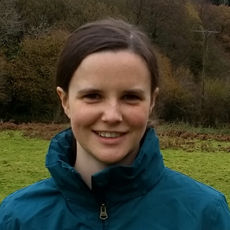
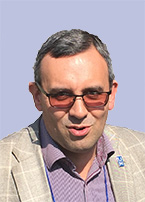
Dr. Ruth Geen is a Lecturer in Atmospheric Sciences at the University of Birmingham's School of Geography, Earth and Environmental Sciences. She holds a PhD in Atmospheric Physics from Imperial College London (2016) and a First Class MPhys from the University of Oxford (2012). Prior to joining Birmingham, she was a Research Fellow in Mathematics at the University of Exeter (2016–2021). Her research focuses on improving confidence in regional climate projections through hierarchical modeling approaches, emphasizing large-scale atmospheric circulations. Key areas include Arctic influences on midlatitude weather, monsoon dynamics (e.g., East Asian and West African monsoons), and model biases in climate simulations. She teaches on the MSc in Applied Meteorology and Climatology and supports fieldwork in Berlin. Geen's work bridges theoretical frameworks and real-world climate systems, with recent emphasis on Arctic warming impacts, teleconnections, and monsoon rainfall mechanisms. Her publications span Journal of Climate , Nature Communications , and Reviews of Geophysics , reflecting contributions to climate dynamics and model validation. She is affiliated with the Meteorology and Climate group at Birmingham and collaborates internationally on climate modeling and prediction initiatives.
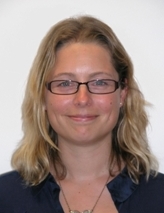
Yang Gui-Ying is a distinguished researcher in meteorology and climate dynamics affiliated with the University of Reading's Department of Meteorology within the School of Mathematical, Physical and Computational Sciences. Her work focuses on equatorial waves, tropical atmospheric dynamics, and climate modeling. Key areas include the role of equatorial waves in tropical cyclones, Hadley Cell variability, and interactions between convection and large-scale circulations. She has contributed to advancing methodologies for identifying equatorial waves in observational data and improving seasonal predictions of extreme weather events in Southeast Asia. Her research spans studies on Borneo vortices, Madden-Julian Oscillation (MJO), and the influence of QBO phases on stratospheric wave propagation. Collaborations with institutions like the Hadley Centre and NCAS highlight her involvement in climate model evaluations and systematic error analysis. Recent work emphasizes equatorial waves as precursors for tropical cyclones and their integration into hybrid forecasting systems. Publications highlight her expertise in atmospheric circulation patterns, including the Hadley Cell's structure and tropical convection's role in driving these systems. Her contributions have advanced understanding of multi-scale interactions in tropical meteorology and improved climate model performance through detailed wave dynamics analysis.
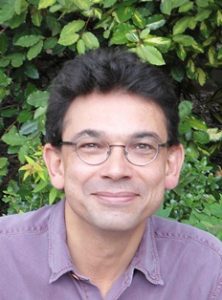
Professor Hannah Cloke is a faculty member in the Department of Meteorology at the University of Reading, where she holds the title of Professor in Hydrology. Her work focuses on interdisciplinary environmental science, particularly flood forecasting, drought impact modeling, and the application of artificial intelligence to hydrological challenges. She is an Officer of the Order of the British Empire (OBE) for her contributions to science and society. While specific educational details are not listed in the text, her professional roles include leadership in research initiatives such as the Dr Carbon Atmospheric Observatory and involvement with the Global Flood Awareness System . Her research integrates cutting-edge methodologies like machine learning (e.g., Hydra-LSTM architectures) with traditional hydrological modeling to address global water-related hazards. Her recent articles emphasize improving flood and drought forecasting systems, analyzing climate change impacts on extreme weather events, and advancing remote sensing techniques for urban flood detection. A recurring theme is the co-design of forecast products with stakeholders to enhance disaster preparedness in regions like Uganda, Bangladesh, and Kenya. Key Awards: Order of the British Empire (OBE) Professor Cloke’s advising record is not explicitly listed here, but she collaborates extensively on global initiatives such as the European Flood Awareness System and EC-Land Hydro . She leads projects exploring the societal dimensions of water crises, including studies on drought materiality in South Africa and flood risk management in Germany. Her work bridges physical and social sciences, addressing both technical and community aspects of disaster resilience.
Eric Guilyardi is a Professor in the Department of Meteorology at the University of Reading, affiliated with the National Centre for Atmospheric Science (NCAS). His research focuses on climate dynamics, particularly the El Niño-Southern Oscillation (ENSO), Atlantic Meridional Overturning Circulation (AMOC), and the impacts of anthropogenic climate change on ocean-atmosphere systems. He contributes to major international climate modeling initiatives such as CMIP5 and CMIP6. Academic Role: Professor Affiliations: Department of Meteorology, University of Reading; NCAS Research interests include model evaluation, climate variability mechanisms, and projections of future climate states. Key contributions include studies on ENSO diversity, AMOC sensitivity, and the role of ocean-atmosphere feedbacks in climate predictability. Recent work highlights include analyses of AMOC variability in coupled models, the influence of Indian Ocean dynamics on ENSO, and the reconstruction of historical climate patterns using advanced modeling frameworks. His publications span high-impact journals like Nature Climate Change and Geophysical Research Letters.
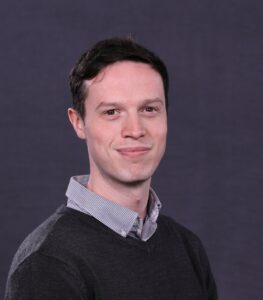
Dr. Kieran Hunt is a NERC Principal Research Fellow in Tropical Meteorology and AI at the University of Reading's Department of Meteorology. He holds additional roles as Chair of the CLIVAR Asian-Australian Monsoon Working Group's extreme weather subgroup, Co-Director of the Hub for Applied Weather and Climate at Reading, and Associate Editor of the Journal of Geophysical Research: Machine Learning and Computation . His research focuses on tropical dynamics, machine learning applications in meteorology, extreme weather in South Asia, hydrology, and renewable energy systems. Current research includes the MITRE project exploring explainable AI for natural hazard prediction in India. Past projects include BITMAP (funded by the Belmont Forum), INCOMPASS (NERC-funded), and IMPROVE (UK Met Office-Indian collaboration). He supervises multiple PhD students across institutions like IIT Kharagpur and the University of Reading. Key publications highlight AI-driven streamflow forecasting, energy demand modeling, and climate variability studies. His work bridges traditional meteorology with machine learning innovations, addressing challenges in weather prediction, renewable energy integration, and climate resilience.
Reinhard Schiemann is a Professor of Climate Science at the University of Reading's Department of Meteorology, part of the National Centre for Atmospheric Science (NCAS). His research focuses on high-impact weather phenomena in a changing climate, including atmospheric blocking, cyclonic storms, and their drivers. He leads national and international projects such as CANARI (Climate Change in the Arctic-North Atlantic Region) and contributes to initiatives like PRIMAVERA, advancing high-resolution climate modeling. Schiemann's work emphasizes model development, particularly in simulating extreme weather events and climate variability. He collaborates globally on programs like WISTREEA (wind energy trends) and EXTAnt (Antarctic extreme weather). His research outputs span over 70 peer-reviewed articles, with recent contributions on atmospheric blocking projections, soil-moisture heat interactions, and monsoon dynamics. Affiliated with the University of Reading, Schiemann's expertise bridges climate science, meteorology, and computational modeling to address climate change impacts on extreme weather systems.
Matthew S. Lachniet is a Professor of Geoscience at the University of Nevada, Las Vegas (UNLV), where he has served as Department Chair (2020–2023) and directs the Las Vegas Isotope Science (LVIS) Laboratory since 2006. He holds a Ph.D. in Geology (2001, Syracuse University), an M.S. (1997, Michigan State University), and a B.A. (1995, Antioch College). His research integrates light stable and radiogenic isotope geochemistry with speleothem analysis to study paleoenvironmental and paleoclimatic changes, focusing on regions such as Costa Rica, Panama, Mexico, Alaska, and the Great Basin. Key questions include the stability of tropical climates, teleconnections between tropical and extratropical systems, and the impact of anthropogenic climate change on rainfall patterns. Dr. Lachniet has been recognized with prestigious awards, including the 2023 UNLV Barrick Distinguished Scholar Award and the 2023 College of Science’s Distinguished Researcher Award, as well as a 2024 Fulbright Scholar Award to New Zealand and a 1998–1999 Fulbright Student Scholar Award to Costa Rica. His research also explores the Urban Heat Island effect in Las Vegas and its contribution to local warming, alongside collaborations on projects like the Lake Izabal Basin Research Endeavor (LIBRE) drilling initiative. Lachniet’s teaching includes undergraduate courses on Global Warming, Paleoclimatology, and Quaternary Seminar, as well as graduate-level courses on Stable Isotope Geochemistry. He actively engages with public outreach, authoring blogs that contextualize paleoclimatic data for modern climate challenges and historical landscapes, such as reconstructing the location of 19th-century Indigenous photographs in Nevada. His work bridges geology and climate science, emphasizing interdisciplinary approaches to understanding Earth’s climate history and future trajectories. Education: Ph.D., Geology, Syracuse University, 2001 M.S., Geology, Michigan State University, 1997 B.A., Antioch College, 1995 High School, Interlochen Center for the Arts, 1991 Research Interests: Paleoclimatology and stable isotope geochemistry Tropical-extratropical climate teleconnections Speleothem-based rainfall history reconstruction Impacts of ENSO and ITCZ shifts Anthropogenic climate change adaptation Quaternary glacial and monsoonal dynamics Awards: UNLV Barrick Distinguished Scholar Award (2023) College of Science’s Distinguished Researcher Award (2023) Fulbright Scholar Award to New Zealand (2024) Fulbright Student Scholar Award to Costa Rica (1998–1999) UNLV Barrick Scholar Award (2007) Grants & Advising: His research has been supported by continuous National Science Foundation funding from 2003 to 2026. While no formal advisee names are listed, his roles as a professor and lab director suggest active involvement in mentoring graduate students and postdoctoral researchers. He collaborates with international institutions, including Ca’ Foscari University of Venice and the Smithsonian Tropical Research Institute, to advance interdisciplinary climate studies. Labs & Teams: Director, Las Vegas Isotope Science (LVIS) Lab Contributor to the SISAL global speleothem database and LIBRE drilling project
Dr. John Mejia is an Associate Research Professor in Climatology at the Desert Research Institute (DRI) and the University of Nevada, Reno, specializing in atmospheric modeling and climate dynamics. He leads research on regional climate modeling frameworks for the Western U.S., focusing on weather and climate prediction, uncertainty quantification, and climate change impacts. His work integrates advanced atmospheric models like WRF and CESM to study hydroclimate, mesoscale convection, and urban heat islands. Education: PhD in Meteorology/Regional Climate Modeling from the University of Oklahoma (2008), MSc in Water Resources Management from National University of Colombia (2002), and BSc in Civil Engineering/Hydrology from National University of Colombia (1999). Research interests include atmospheric dynamics, moisture surges during the North American Monsoon, and improving climate models for policy-relevant applications. He teaches courses in Climate Modeling, Atmospheric Turbulence, and Mesoscale Modeling at the University of Nevada's graduate program. Key achievements include the 2014 Peter B. Wagner Medal for applying atmospheric models to policy development, a NASA Group Achievement Award (2008), and recognition for academic excellence at the University of Oklahoma. His research has been published in high-impact journals such as Journal of Geophysical Research and International Journal of Climatology . Dr. Mejia's grants and advising focus on climate adaptation, aerosol impacts on precipitation, and urban climate studies. He collaborates with NSF EPSCoR to broaden STEM participation and mentors students in climate modeling and atmospheric science.
Rohan Dalpatadu is a Professor in the Department of Mathematical Sciences at the University of Nevada, Las Vegas (UNLV). His research expertise spans statistical methodology, applied mathematics, and interdisciplinary applications in healthcare, environmental science, and gaming. He holds a terminal academic rank and has contributed to both theoretical and applied research areas. Research Interests include: Statistical modeling and machine learning applications in biomedicine Numerical methods for optimal control and environmental systems Probability distributions and their applications in gambling and actuarial science Data analysis techniques for imbalanced datasets and customer satisfaction studies Recent work focuses on cancer classification using gene expression data, contaminant transport modeling, and innovative statistical approaches for medical diagnostics. His publications demonstrate a strong interdisciplinary orientation across mathematics, engineering, and health sciences. Advising and Grants: No specific advising or grant information is explicitly listed in the provided text. His research has been applied to diverse sectors including airport operations, agricultural economics, and ergonomic design. Labs/Teams: No dedicated lab or collaborative team affiliations are mentioned in the current data.
Dr. Yeonsang Hwang is the Associate Dean and Associate Professor of Civil Engineering at Arkansas State University (A-State). He holds a Ph.D. from the University of Colorado, Boulder, and degrees from Yonsei University, Seoul. His expertise includes Fluid Mechanics, Hydrology, and Statistical Methods. He serves as a Professional Engineer (P.E.) and actively engages in research through NOAA RISA programs, focusing on climate variability impacts on water systems. Education: Ph.D., Civil Engineering, University of Colorado, Boulder M.S. & B.S., Civil Engineering, Yonsei University, Seoul, Korea Research: Ensemble forecasting of drought indices, stochastic hydrologic modeling, climate network analysis Affiliations: American Society of Civil Engineers, American Society of Engineering Educators, Korean Water Resources Association His recent work with the Carolinas Integrated Sciences and Assessment (CISA) involves probabilistic drought forecasting using autoregressive models. He advocates for adaptive teaching methods and has prior engineering experience with LG Engineering & Construction (1993–2001). Office: Lab Science West 245C. Labs/Teams: Collaborates with NOAA RISA teams (CISA and WWA) for interdisciplinary climate-water research. Previously taught at Valparaiso University.
Shyama Mohanty is a Research Fellow in the Department of Earth and Planetary Sciences at the Jackson School of Geosciences , The University of Texas at Austin. Their research focuses on tropical cyclones, storm surge modeling, and coupled ocean-atmosphere interactions. Key tools include high-resolution mesoscale models (e.g., WRF, HWRF-HYCOM) and AI-enhanced weather prediction systems. Research interests include: Extreme rainfall mechanisms and urban climate impacts (e.g., Mumbai, Houston) TC rapid intensification dynamics Ocean surface temperature influences on TC life cycles Forecasting advancements for North Indian Ocean cyclones Recent work emphasizes improving storm surge predictions and understanding TC-track prediction uncertainties through coupled model simulations. No scientific awards are listed, but their research contributes to disaster preparedness and climate resilience strategies. Advising and grants: No formal advisees or grants listed, but collaborates on operational forecasting projects. Affiliated with the Jackson School’s geoscience research teams focusing on atmospheric and oceanographic modeling.
Prof. Paolo Burlando is a Full Professor of Hydrology and Water Resources Management at ETH Zurich's Department of Civil, Environmental and Geomatic Engineering. He holds a Degree in Civil Engineering (Hydraulics) from the University of Genoa (1984) and a PhD in Hydraulic Engineering (Hydrology) from Politecnico di Milano (1989). His research focuses on water resources planning, rainfall analysis, hydrologic extremes, climate change impacts, and mountain hydrology. He has led numerous international projects including ACQWA (EU FP7), AWAS (SNSF), and FUGE (NRP 61). He is a member of committees such as the Swiss Academy of Natural Sciences and the Scientific Board of the Hydrological Atlas of Switzerland. His work integrates field measurements, numerical modeling, and interdisciplinary approaches to address environmental challenges like glacier dynamics and floodplain ecosystems. Education: PhD in Hydrology (Politecnico di Milano, 1989) Key Research Areas: Glacier melt modeling, precipitation scaling, and hydrological extremes His projects explore topics such as climate change impacts on water resources, alpine hydropower systems, and sediment-vegetation interactions. Recent studies include bias correction of regional climate models and lidar-based snow ablation monitoring.
Jan Adamowski is a Full Professor at McGill University's Department of Bioresource Engineering, affiliated with the Brace Water Centre and the Faculty of Agricultural and Environmental Sciences. His research focuses on sustainable agriculture, water resources management, and climate change adaptation. He holds the William Dawson Scholar and Liliane and David M. Stewart Scholar titles in Water Resources. Key research areas include food security, renewable energy integration in agriculture, and hydrological modeling. His work often involves participatory systems modeling and machine learning to address complex environmental challenges. Notable projects include studies on Quebec pesticide management, flood susceptibility in Italy's Basento River, and drought assessment in India's Ganga Basin. Dr. Adamowski has contributed to over 150 publications since 2021, with recent trends emphasizing generative AI for climate-adaptive agriculture, coupled human-water system modeling, and equity in low-carbon infrastructure planning. His methodologies bridge environmental science, engineering, and social systems analysis. While no formal awards or grants are explicitly listed, his work demonstrates significant interdisciplinary impact. He collaborates with global institutions, focusing on data-poor regions like Guatemala and the Qinghai-Tibetan Plateau. His teaching and research emphasize participatory approaches to sustainability challenges.
Dr. Hanin Binder is a Researcher at ETH Zurich's Department of Environmental Systems Science (D-USYS), affiliated with the Professorship for Atmospheric Dynamics. Their research focuses on atmospheric dynamics, climate impacts, and extreme weather events, particularly investigating warm conveyor belts, extratropical cyclones, and Antarctic climate processes. Key contributions include analyses of Antarctic heat waves, cyclone intensification mechanisms, and the role of moisture transport in extreme events using reanalysis datasets like ERA5. Research interests span atmospheric circulation patterns, climate system interactions, and the application of advanced observational techniques (e.g., CloudSat, CALIPSO) to study cloud structures and moisture dynamics. Binder’s work integrates machine learning methodologies for exploring cirrus cloud microphysics and improving forecast error understanding. Publications highlight interdisciplinary approaches to understanding climate change impacts, including future projections of warm conveyor belt behavior and their implications for ice sheet stability. Collaborative projects emphasize the interplay between tropical and extratropical meteorological systems, atmospheric rivers, and cyclone dynamics. While no specific grants or awards are listed, their research aligns with ETH Zurich’s broader environmental systems science initiatives, contributing to global climate modeling advancements and high-impact weather prediction methodologies.
Dr. Claudio Meier is an Associate Professor of Civil Engineering at the University of Memphis, previously holding the same position at the University of Concepción, Chile. His expertise lies in ecohydrology and ecohydraulics, focusing on fluvial processes, environmental change in rivers, and rainfall analysis. He obtained degrees from the University of Concepción, Colorado State University, and the University of Montana. He serves on editorial boards, including the International Journal of River Basin Management , and has advised numerous graduate students. His research emphasizes interdisciplinary approaches combining field observations, laboratory experiments, and theoretical models to address challenges in river systems and hydrological engineering. Education: B.Sc. and Professional Diploma in Civil Engineering (University of Concepción), M.Sc. in Hydraulic Engineering (Colorado State University), Ph.D. in River Ecology (University of Montana). Research Interests: Fluvial processes in gravel-bed rivers, hyporheic exchange flows, invasive plant impacts, rainfall analysis, and sustainable hydropower. He has pioneered methodologies in vegetation establishment, extreme rainfall biases, and river corridor management. Awards include Teaching Merit Awards from Universidad de Concepción (2006-2010) and a Fulbright Scholarship. He has secured grants totaling over $600,000 for projects on river dynamics, rainfall sampling, and hydropower sustainability. Professional Roles: Board Member of the Ecohydraulics Committee (IAHR), Voting Member of the International Society for River Science (ISRS), and Editorial Board member.