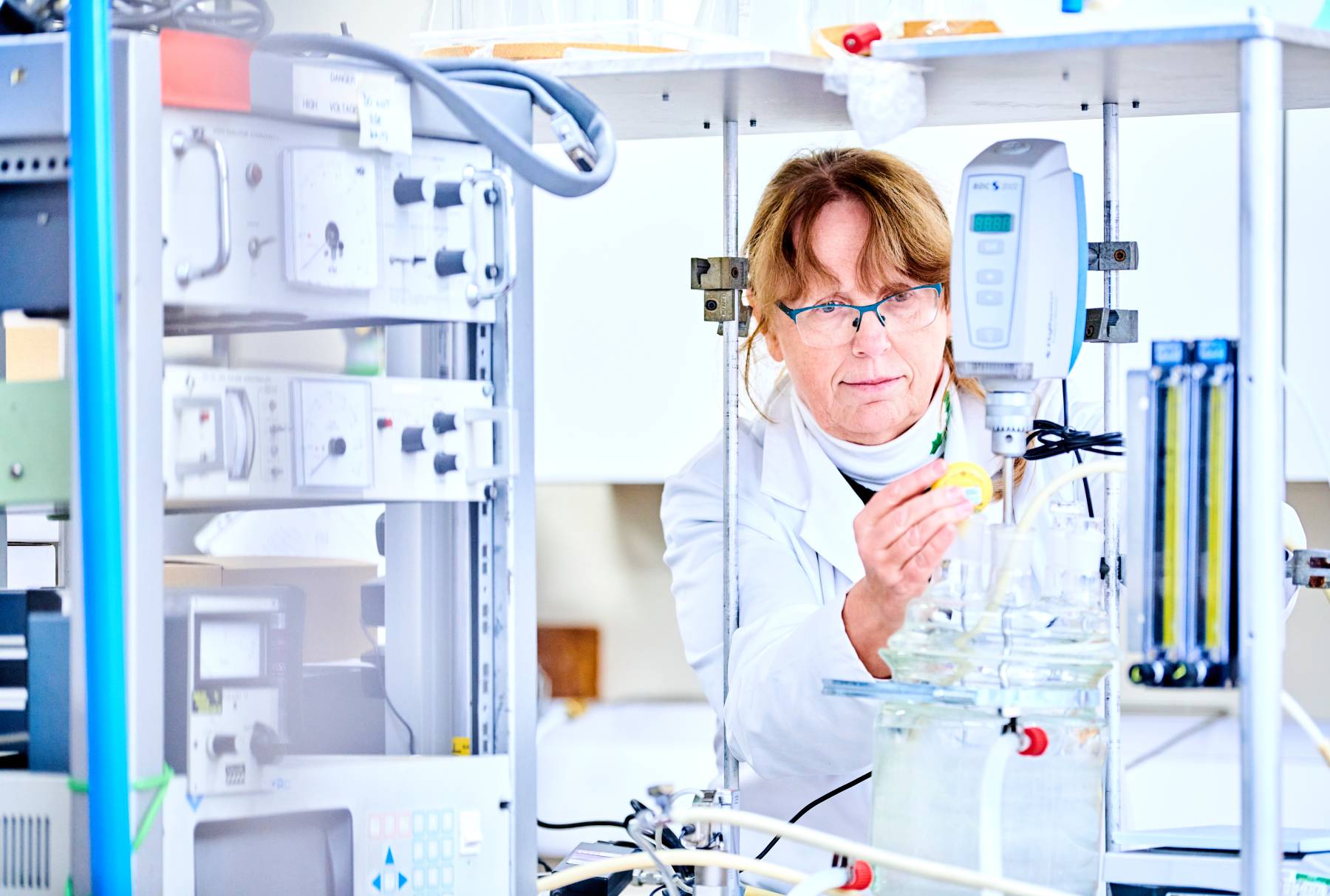
Inés Martínez Pita is a Full Professor at the Department of Physical, Chemical and Natural Systems at Pablo de Olavide University, Spain. She is affiliated with the ORGSIS (Organisms and Systems) research group, focusing on marine biodiversity and conservation biology. Key Research Areas: Reproductive biology of marine invertebrates, lipid biochemistry in bivalves, environmental impact on coastal ecosystems Methodologies: Hormonal analysis in bivalve hemolymph, satellite data for reproductive forecasting, experimental hatchery conditioning Her recent work examines teratological events in seaslug embryogenesis , non-lethal maturation diagnostics in mussels , and environmental drivers of reproductive cycles in commercial shellfish. Notable findings include dietary lipid effects on gonadal development and stress responses in hatchery-reared bivalves. Scientific Contributions span marine ecology, aquaculture optimization, and environmental physiology. She employs interdisciplinary approaches bridging zoology , biochemistry , and ecosystem management .
Dr. Stephen Blenkinsop is a Senior Lecturer in Climate and Climate Change within the School of Engineering at Newcastle University. His work focuses on climatic variability and change, climate change impacts, quality control of climate observations, climate downscaling, and climate extremes. He has established himself as a leading researcher in understanding extreme precipitation events and their relationship to climate change. His primary research interests include: Climatic variability and change Climate change impacts on hydrological systems Quality control of climate observations Climate downscaling techniques Extreme weather events, particularly precipitation extremes Flood and drought analysis Dr. Blenkinsop's recent publications demonstrate a strong focus on sub-daily precipitation extremes, with significant contributions to understanding how climate change is intensifying hourly rainfall events globally. His work bridges observational climate science with practical applications for flood risk management and climate adaptation. His research has evolved from broader climate change impacts to increasingly detailed analyses of short-duration extreme events, reflecting the growing importance of high-resolution climate data for infrastructure planning and risk assessment. Scientific recognition includes: Associate Editor for Studia Geophysica et Geodaetica Extensive collaboration with leading climate scientists globally Significant contributions to major climate assessment reports Dr. Blenkinsop leads and contributes to multiple research projects, including the EU-funded INTENSE project examining characteristics of sub-daily rainfall, and has developed quality-controlled hourly rainfall datasets for the UK. His work combines high-quality observational analysis with practical applications for climate adaptation and risk management. His research has important implications for infrastructure design standards, urban planning, and climate resilience strategies in the face of changing precipitation patterns.
Bin Wang is a distinguished Professor of Meteorology at the University of Hawaii at Manoa, recognized as one of the world's leading environmental scientists with a D-Index of 133 and over 65,000 citations. Ranked 49th globally and 24th nationally in Environmental Sciences, he has received the Research.com Environmental Sciences in United States Leader Award for three consecutive years (2022-2025) and was elected Fellow of the American Geophysical Union in 2013. Professor Wang's research focuses on climatology, monsoon systems, atmospheric sciences, and climate dynamics, with particular expertise in Asian monsoon variability, ENSO teleconnections, and climate prediction. His work spans fundamental climate processes to practical applications in seasonal forecasting. His publication record shows consistent productivity with research evolving from foundational monsoon dynamics to contemporary climate change impacts. Recent work examines how historical El Niño properties inform future extreme events, demonstrating his ability to connect past climate behavior with future projections. Research.com Environmental Sciences in United States Leader Award (2025) Research.com Environmental Sciences in United States Leader Award (2023) Research.com Environmental Sciences in United States Leader Award (2022) Fellow of American Geophysical Union (2013) Professor Wang maintains active collaborations across the Pacific, working with institutions in China, South Korea, and Australia. His research group focuses on advancing monsoon prediction and understanding climate system interactions, contributing significantly to both theoretical climate science and practical seasonal forecasting applications. His work provides critical insights for regions vulnerable to monsoon variability and extreme climate events.
Kevin E. Trenberth is a Distinguished Scholar at the National Center of Atmospheric Research (NCAR) in Boulder, Colorado, and an Honorary Academic in the Department of Physics at the University of Auckland, New Zealand. A leading climate scientist with over five decades of research experience, Trenberth has made seminal contributions to our understanding of climate variability, climate change, and the global energy and water cycles. He served as a lead author for three consecutive Intergovernmental Panel on Climate Change (IPCC) Scientific Assessment reports (1995, 2001, 2007) and shared in the 2007 Nobel Peace Prize awarded to the IPCC. Dr. Trenberth's research career has focused on empirical climate diagnostics and quantitative analysis of the Earth's climate system. His most influential work has centered on resolving Earth's global energy budget, improving estimates of heat and water transports, and understanding how these systems are changing with global warming. He has been a primary advocate for developing a comprehensive climate information system essential for climate change adaptation. His research spans interannual climate variability, El Niño, climate change impacts, the water cycle, atmospheric moisture budget, and the relationship between hurricanes and climate change. Trenberth's scientific impact is extraordinary, with a publication record exceeding 600 works including books, journal articles, and technical reports. His citation metrics place him among the most influential environmental scientists globally, with over 180,000 citations on Google Scholar and an H-index of 138. From 1996 until 2017, he ranked first in the number of highly cited papers among all environmental scientists. Jule G. Charney award from the American Meteorological Society (2000) NCAR Distinguished Achievement Award (2003) Prince Sultan Bin Abdulaziz International Prize for Water (2013) Climate Communication Prize from American Geophysical Union Roger Revelle medal by American Geophysical Union (2017) Research.com Environmental Sciences Leader Awards (2023, 2025) Fellow of multiple prestigious scientific societies Trenberth has served in numerous leadership roles, including on the Joint Scientific Committee of the World Climate Research Programme (1999-2006), and has contributed significantly to developing the global climate observing system. His work evaluating climate datasets and promoting reanalysis has been instrumental in advancing climate science methodology. As both a rigorous scientist and effective communicator, Trenberth has helped bridge the gap between climate science and public understanding, particularly regarding the connections between climate change and extreme weather events.
Professor John H. Marsham is a distinguished academic at the University of Leeds, holding the position of Professor of Atmospheric Science within the School of Earth and Environment, Faculty of Environment. He is affiliated with both the Institute for Climate and Atmospheric Science (ICAS) and the Priestley Centre for Climate Futures, where he leads research on atmospheric convection, tropical meteorology, climate change, and Saharan dust uplift. His educational background includes a PhD in Meteorology from the University of Edinburgh (2003) and an MPhys in Physics with first-class honors from the same institution (1999). Professor Marsham has received notable recognition including the Royal Meteorological Society's L F Richardson prize (2009) and the European Meteorological Society's Young Scientist Award (2010) for his outstanding publications. Professor Marsham's research spans tropical meteorology, atmospheric convection, climate change, monsoons, African climate systems, and Saharan dust dynamics. His work primarily focuses on improving weather and climate models through detailed process studies, with particular emphasis on Africa. His research shows strong interdisciplinary connections between atmospheric dynamics, land-surface processes, and climate impacts. Analysis of his publication record reveals a consistent focus on high-impact climate research, with recent work emphasizing convection-permitting modeling of African weather systems, extreme events, and dust dynamics. His studies often bridge fundamental atmospheric processes with practical applications for climate prediction and risk assessment. Royal Meteorological Society's L F Richardson prize (2009) European Meteorological Society's Young Scientist Award (2010) D-Index of 46 with 6,954 citations 250 publications with significant global impact Ranked 5,089th globally and 397th nationally in Environmental Sciences Professor Marsham leads the Climate Risk module of the MSc in Climate Futures and supervises multiple postgraduate researchers including Kilian Hermes, James Bassford, Jack Law, and Yutong Lu. He is actively involved in several research projects including FORSEA, H2X, Nowcasting with AI for African Rainfall, UMBRELLA, and WISER-EWSA, demonstrating ongoing funding and research activity. Beyond academia, he engages with climate policy and communication, using platforms like Bluesky to discuss climate science and policy developments, emphasizing the importance of evidence-based decision-making for addressing the climate crisis.
Uwe Ulbrich is a Senior Professor of Meteorology at the Free University of Berlin, where he serves as Head of the Climate Diagnostics and Meteorological Extreme Events Working Group within the Institute of Meteorology, part of the Department of Geosciences. He has held this senior professorship since October 1, 2024, following a distinguished career that included a C3-Professorship in Meteorology at the same institution from 2004-2024 and earlier work as a scientific staff member at the Institute of Geophysics and Meteorology at the University of Cologne from 1990-2004. Ulbrich earned his habilitation in Meteorology at the University of Cologne in 2000 with a thesis on "baroclinic wave disturbances and cyclones in the Northern Hemisphere." He completed his doctoral studies in Meteorology at the University of Cologne from 1985-1989, with a dissertation titled "The atmospheric energy cycle of stationary and transient waves," and earned his diploma in Geophysics from the same institution between 1978-1985. His research focuses on diagnosing atmospheric physical processes, particularly understanding climate variability and meteorological extreme events in mid-latitudes, climate model validation, and anthropogenic climate change. His work specifically examines cyclone activity, large-scale variability patterns like the NAO, and identifying large-scale conditions for storms, floods, and extreme rainfall events. He also engages in interdisciplinary research with the insurance industry and legal sciences regarding the impacts of climate change and extreme events. Analysis of Ulbrich's recent publications reveals a strong focus on practical applications of meteorological research, particularly in infrastructure risk assessment. His work increasingly examines how extreme weather events impact transportation systems (railways, roads, public transit), with a growing emphasis on developing predictive models for weather-related risks. His research combines climate modeling with real-world impact assessment, bridging the gap between theoretical meteorology and practical risk management. Scientific Awards THE GORDON MANLEY WEATHER PRIZE OF THE ROYAL METEOROLOGICAL SOCIETY (2008) Ulbrich serves as Executive Editor of the journal "Natural Hazards and Earth System Sciences" (NHESS) and holds leadership positions in several international scientific initiatives including the Steering Committee of "MedCLIVAR," the Advisory Board of the "National Grid Initiative" (NGI-DE), and the Belmont Forum E-infrastructure & Data Management working group. He is also Deputy Chair of the Scientific Advisory Board of the "Deutsches Komitee Katastrophenvorsorge" (DKKV) and serves on the Scientific Advisory Board of the "Forschungsforum öffentliche Sicherheit." As Head of the Climate Diagnostics and Meteorological Extreme Events Working Group, Ulbrich leads a team conducting research on windstorms, climate extremes, and their societal impacts. His group participates in major research projects including ClimXtreme, NFDI4Earth, and WEXICOM, focusing on understanding and predicting extreme weather events and their implications for climate adaptation strategies.
Martin Göber is a Researcher affiliated with the Institute of Meteorology at Free University of Berlin. He currently serves as the Head of Department at the German Weather Service (DWD), focusing on optimizing weather warnings and climate monitoring communication. PhD in Meteorology (University of Bonn, 1997) MSc in Remote Sensing and Image Processing (University of Dundee, 1991) Diploma in Meteorology (Humboldt University Berlin, 1991) His research spans forecast verification , weather warning communication , economic implications of meteorological decisions , and geostatistical modeling . He integrates psychology into weather warning systems to improve public response. Key publication themes include: Meteorological data validation Extreme weather prediction Climate diagnostics Arctic atmospheric budgets Verification methodologies Uncertainty communication His work supports operational forecasting at DWD and contributes to projects like ClimXtreme and NFDI4Earth .
Akintomide Afolayan Akinsanola is an Assistant Professor at the Department of Earth and Environmental Sciences, University of Illinois Chicago, with a joint appointment at Argonne National Laboratory's Environmental Science Division. His research focuses on climate dynamics, monsoon systems, and extreme weather events, using climate models and observational data to study tropical and mid-latitude precipitation patterns. PhD (Climate Science, 2019, City University of Hong Kong) Postdoctoral Research Associate (University of Georgia, 2019–2021) Postdoctoral Appointee/Assistant Atmospheric Scientist at Argonne National Laboratory (2021–2022) Research interests include regional climate modeling, climate variability and change, monsoon systems, and climate impacts on agriculture, water resources, and health. His work emphasizes reducing model biases and quantifying uncertainties in regional climate projections. Recent publications analyze precipitation extremes in the United States (CMIP6 simulations), West African monsoon dynamics, and heatwave risks under global warming. Articles span topics like convection-permitting models, dust aerosols, and interannual climate variability. Scientific awards include the Argonne Impact Award (2022), Chow Yei Ching Scholarship (2018), and multiple academic performance awards from City University of Hong Kong.
Akintomide Afolayan Akinsanola is an Assistant Professor at the University of Illinois Chicago in the Department of Earth and Environmental Sciences. His research focuses on climate dynamics, particularly tropical and mid-latitude precipitation systems, monsoon variability, and climate change impacts. PhD in Climate Science (2019), City University of Hong Kong MSc in Meteorology (2015), Federal University of Technology BSc in Meteorology (2011), Federal University of Technology His work spans climate modeling , extreme weather analysis , and land-atmosphere interactions . Key areas include West African monsoon systems, heatwaves, precipitation erosivity, and aerosol impacts on regional climates. Recent publications (2024-2025) highlight intensified winter precipitation in the US , accelerated African heatwaves , and land surface temperature dynamics in West Africa. His research employs CMIP models, convection-permitting simulations, and machine learning techniques. 2018 : Outstanding Academic Performance Award 2018 : Chow Yei Ching Scholarship 2017 : Research Tuition Scholarship 2017 : UGC-funded Research Award Collaborations include institutions in Norway (University of Bergen), China (CityUHK), and Nigeria (Federal University of Technology). He actively contributes to advancements in high-resolution climate modeling and precipitation simulation through projects like CORDEX and CMIP6.
Brian Baetz serves as the Director of the Walter G. Booth School of Engineering Practice and Technology at McMaster University. His academic career spans several decades with a focus on engineering systems, sustainable communities, and environmental modeling. Dr. Baetz's research interests lie in the synthesis of a range of modeling approaches (optimization, simulation, decision analysis) to problems in sustainable and resilient communities and hydrological and environmental systems analysis. He has developed prototype decision support systems for improved decision-making in these areas. As a systems engineer, his work focuses on the development of more resilient and integrated communities. His scholarly activity demonstrates expertise across multiple domains including waste management systems, water resources planning, climate change impact analysis, and sustainable community development. Dr. Baetz has published extensively in high-impact journals across environmental engineering, hydrology, and sustainability science, with his most recent work (2021-2024) showing advanced applications of machine learning and sophisticated uncertainty analysis methods. Dr. Baetz has received significant scholarly attention, with his work being referenced in policy sources, picked up by news outlets, and shared across academic networks. His research has practical applications in municipal planning, environmental management, and sustainable infrastructure development. Extensive publication record spanning from 1988 to present Research cited by policy makers and featured in media outlets Active contributor to sustainable engineering practices and education Teaching experience across multiple engineering and sustainability courses His work bridges theoretical modeling approaches with practical applications for community resilience and environmental sustainability.
Dr. Kevin Roche is an Assistant Professor in the Department of Civil Engineering at Boise State University's College of Engineering. His research spans hydrology, environmental engineering, and climate science, focusing on predictive models for hydrologic processes and contaminant transport across multiple scales (mm – km) through experimental and theoretical approaches. B.S. in Chemical Engineering, Purdue University Fulbright Junior Scholar, IDAEA-CSIC (Spain) Postdoctoral Scholar, University of Notre Dame Research interests include: Fluid mechanics and nutrient transport Reactive transport modeling Climate change impacts Conflict and resource management Nanoparticle transport in streams Multi-scale hydrological modeling Recent publications demonstrate expertise in benthic-hyporheic interactions , climate-conflict modeling , and nano-environmental dynamics . Fundamental contributions in turbulent mixing and sediment-water interface processes. Award Highlights: Fulbright Junior Scholar Professional Background: Process Control Engineer, Eli Lilly and Company US Peace Corps Service, Guinea & Costa Rica
Katja Tielbörger is a Professor of Vegetation Ecology at the University of Tübingen, within the Faculty of Mathematics and Natural Sciences and the Department of Biology. She has held this position since 2004 and has served as the Director of the Botanical Garden of the University of Tübingen since 2012. Education: Ph.D. (1997) from Hebrew University of Jerusalem. Diploma in Biology (1993) from Ludwig-Maximilians University Munich. Research Focus: Her work investigates biotic interactions (e.g., plant-plant, plant-soil biota, plant-pollinator) in a changing climate. She combines experimental field/greenhouse studies with long-term ecological research to understand plant responses to stress, invasive species dynamics, and community stability. Her projects span semi-arid shrublands (Israel, Namibia) and temperate ecosystems (Europe), integrating molecular and chemical methods. Publications: Recent articles (2023–2025) emphasize drought resilience, invasive species impacts, global dryland ecology, and plant trait evolution. Common themes include climate adaptation, community dynamics, and biogeochemical processes, often leveraging large-scale collaborations and meta-analyses. Research Group: She leads a team focused on vegetation ecology, with collaborators including Dr. Maria Májeková, Dr. Max Schmid, and Dr. Sara Tomiolo. Her group explores niche partitioning, phenotypic diversity, and ecological stability under environmental stress.
Professor Paul Hallett is a Chair in Soil Physics at the School of Biological Sciences, University of Aberdeen , where he serves as Postgraduate Research Coordinator and Course Tutor for the MSc Soil Science program. His research focuses on plant-soil-microorganism interactions, soil degradation, sustainable agriculture, and critical zone observatories, spanning from fundamental biophysical processes to applied solutions for global food security. BSc in Agriculture (1992) from the University of Guelph PhD in Chemical Engineering (1996) from the University of Birmingham His research explores how plant root traits engineer soil structure, the impact of soil physical conditions on microbial processes, pollutant transport, and resilience to environmental stresses. Recent projects include studying root-soil interactions in rice cultivation, soil carbon dynamics under tillage practices, and microplastic pollution in soils. The 15 most recent publications highlight his work in soil physics, bioremediation, hydrology, and sustainable agricultural engineering. Key themes include root-soil interactions, soil carbon sequestration, bacterial transport modeling, and soil resilience under climate stressors. Professor Hallett collaborates internationally with institutions such as Cornell University, CIMMYT, The James Hutton Institute, and Hawassa University . He has supervised numerous PhD students in multidisciplinary projects, securing grants from NERC, ESRC, BBSRC, and Newton Fund for initiatives like Natural Flood Management and Soil Microplastics research.
Prof. Andreas Fink is a Professor at the Department of Physics, Karlsruhe Institute of Technology (KIT). His research focuses on tropical meteorology, climate dynamics, and rainfall forecasting in Africa, with a particular emphasis on understanding the interplay between tropical waves, climate variability, and extreme weather events. He leads the IMK research group and is actively involved in international field campaigns like CADDIWA, which investigate atmospheric processes in West Africa. His work addresses critical challenges in predicting rainfall patterns, extreme events such as landslides and heatwaves, and the impacts of climate change on vulnerable regions. Fink’s methodologies combine observational data, advanced climate models, and machine learning to improve forecasting accuracy. Notable contributions include studies on the predictability of tropical cyclones in the Atlantic and the dynamics of low-level clouds over equatorial Africa. Fink’s research has practical implications for climate adaptation and disaster risk reduction, particularly in regions like West and East Africa. He frequently engages in science communication, highlighting global climate policy gaps and their consequences for international collaboration.
Prof. Dr. Frank Simon is a Research Professor and Director of the IPE Group at the Karlsruhe Institute of Technology (KIT). He specializes in environmental and hydrological research, particularly in karst systems, water quality, and geochemical processes. His work integrates field studies with advanced analytical techniques, focusing on understanding catchment dynamics, microbial activity, and the impact of human activities on natural systems. Research interests include karst aquifer characterization, carbonate weathering, and early-warning systems for water contamination. His studies span alpine karst springs, river bed sediment analysis, and tracer-based methods to assess solute transport. He leads the IPE Group, which develops innovative approaches for geohydraulic exploration and environmental monitoring. Publications highlight multi-scale and multi-parameter analyses, emphasizing the interplay between hydrology, geochemistry, and microbiology. His work contributes to improving water resource management and predicting climate change impacts on carbon cycles. No scientific awards are explicitly mentioned, but his extensive research output reflects significant contributions to environmental science.