Liana Burghardt is an Assistant Professor in the Department of Plant Science at Pennsylvania State University. Her research focuses on plant-microbe interactions, evolutionary ecology of rhizobia, seed dormancy mechanisms, and climate change impacts on Mediterranean plant phenology. Key Research Areas: Legume-rhizobia symbiosis, phenology, seed dormancy, environmental adaptation Recent Highlights: USDA-NIFA grant for corn-soil fungi interactions, 2023-24 One Health Microbiome Center fellow Her experimental work with Arabidopsis thaliana demonstrates how precipitation timing and soil substrate drive germination phenology and fitness. She investigates genetic factors like DOG1 and FRI alleles that regulate dormancy and flowering time, showing that high-dormancy alleles buffer populations against variable rainfall patterns. Her publications span top journals like Proceedings of the National Academy of Sciences and New Phytologist , with interdisciplinary implications for climate adaptation and agricultural sustainability.
Dr. Ailie Gallant is an Associate Professor at the School of Earth, Atmosphere and Environment within Monash University's Faculty of Science. Her research focuses on characterizing drought, precipitation extremes, and climate variability using observations and climate models, with significant contributions to flash drought mechanisms and paleoclimate context. Chief Investigator, Australian Research Council Centre of Excellence for Climate Extremes Chief Investigator, Australian Research Council Centre of Excellence for the Weather of the 21st Century Monash Node Lead, National Environmental Science Program Climate Systems Hub Her research interests span drought dynamics, precipitation variability, climate change attribution, El Niño-Southern Oscillation (ENSO) impacts, and weather system interactions. Recent work emphasizes flash droughts, decadal climate patterns, and sustainable development goals related to climate action. Scientific awards include the 2020 Dean of Science’s Award for Excellence for Research Impact. She actively contributes to science education through teaching climate change and hydrology courses and public engagement via Melbourne's 3RRR Science Show and 774 ABC Melbourne.
Professor Andrew G Turner is a Professor in Monsoon Systems at the University of Reading's Department of Meteorology, jointly funded by the University's Academic Investment Programme and the National Centre for Atmospheric Science (NCAS). He serves as Departmental Director of Internationalisation and leads the Climate & Global Change programme at NCAS. Turner is a Lead Author for the IPCC Sixth Assessment Report and was awarded the Gulbenkian Prize for Humanity in 2022 as part of the IPCC team. Turner's research focuses on fundamental monsoon processes and observations, tropical variability and prediction, and climate change. His work particularly emphasizes the South Asian monsoon system, examining its variability, predictability, and response to climate change. He investigates the interactions between monsoon systems and other elements of the climate system, with a special interest in the Indian monsoon and its connections to global climate patterns. Turner's publication record shows a strong focus on monsoon dynamics, climate modeling, and climate change impacts. His recent work explores topics such as monsoon duration changes, the influence of ocean basins on monsoon systems, extreme rainfall events, and the role of atmospheric circulation patterns in monsoon behavior. His research bridges fundamental climate science with practical applications for monsoon prediction. Buchan Award for Scientific Advances, Royal Meteorological Society, 2023 LF Richardson Prize, Royal Meteorological Society, 2009 Gulbenkian Prize for Humanity 2022 (as IPCC Lead Author) Professor Turner actively supervises numerous PhD students and postdoctoral researchers, fostering the next generation of climate scientists. He leads several major research projects including WCSSP-India OUTBREAK and NERC MiLCMOP, focusing on monsoon predictability and climate change impacts. His work involves extensive collaboration with international partners, particularly in India, and he has led significant field campaigns such as INCOMPASS to study the Indian monsoon.
Dr. Baden Myers is a Research Fellow at the University of South Australia (UniSA STEM) , specializing in hydrology and water-sensitive urban design . His work focuses on sediment transport dynamics, urban stormwater management, and climate change impacts on catchment hydrology. Affiliation: Sustainable Infrastructure and Resource Management (SIRM), UniSA STEM Research Themes: Urban hydrology, sediment rating curves, WSUD systems Myers contributes to empirical modeling of sediment dynamics in urban streams like Dry Creek, demonstrating strong relationships between streamflow and suspended sediment concentration. His analysis reveals implications for water quality and infrastructure management in urbanized catchments. He also investigates groundwater impacts of forestry plantations, showing deemed water use rates overestimate actual impacts. Recent publications emphasize multi-method trend analysis of hydroclimatic variables, highlighting seasonal rainfall increases and temperature rise effects in South Australia. He has supervised research on historical drainage system performance in Adelaide's Frederick Street catchment, documenting declining drainage standards due to infill development. Myers collaborates extensively with institutions like the Goyder Institute for Water Research and CSIRO , applying innovative modeling approaches (TFPW-MK test, Innovative Trend Analysis) to address urban water management challenges. His work supports evidence-based flood mitigation strategies and sustainable water resource planning.
Dr. Akintomide Afolayan Akinsanola is an Assistant Professor at the Department of Earth and Environmental Sciences, University of Illinois Chicago, with a joint appointment at the Environmental Science Division of Argonne National Laboratory. His research focuses on utilizing climate models and observations to better understand climate dynamics, particularly processes that impact tropical and mid-latitude precipitation systems. Dr. Akinsanola received his B.Tech. and M.Tech. in Meteorology from the Federal University of Technology Akure, Nigeria, followed by a Ph.D. in Climate Science from City University of Hong Kong. He completed postdoctoral research at the University of Georgia and Argonne National Laboratory before joining UIC. His research interests span Earth System Modeling, Climate Variability and Change, and Climate Extreme and Risk Assessment. Dr. Akinsanola specializes in Monsoon Climates, Tropical and Mid-latitude Climate dynamics, and Extreme Events analysis. His work addresses critical climate impacts on agriculture, water resources, air quality, and human health, with a focus on climate change resilience. Analysis of Dr. Akinsanola's recent publications reveals a strong focus on precipitation modeling across different regions, particularly the United States and West Africa. His work frequently employs CMIP6, E3SM, and CORDEX models to examine extreme precipitation events, monsoon systems, and climate change impacts. A significant portion of his research addresses model uncertainties and biases in simulating regional climate phenomena. Scientific Awards and Honors 2022: Argonne Impact Award 2018: Chow Yei Ching School of Graduate Studies Scholarship Award for outstanding doctoral-level research, City University of Hong Kong 2018, 2017: Outstanding Academic Performance Award, City University of Hong Kong 2016: Research Tuition Scholarship, City University of Hong Kong 2012: Award of Excellence, National Youth Service Corp (NYSC) Professional Service 2022 – till date, Editorial Board Member, Communications Earth and Environment (Nature) 2021 – 2024, Co-chair of the Monsoons Panel's Working Group on African Monsoons (WG-AFM), Climate Variability and Predictability/Global Energy and Water Exchanges (CLIVAR/GEWEX) Dr. Akinsanola is actively seeking highly motivated undergraduate and graduate students, as well as postdocs, to join his research group. His lab focuses on utilizing regional and Earth system models, along with observations, to understand climate system dynamics, quantify extreme weather/climate events, and address challenges posed by Earth's changing climate.
Dr. Abhirup Dikshit is a Research Fellow at the Climate Change Research Centre within the Faculty of Science at the University of New South Wales (UNSW). Holding a PhD from the University of Technology Sydney (2023) and an MS by Research from IIIT Hyderabad (2019), his work bridges geospatial analysis, remote sensing, and machine learning to address critical environmental challenges. His research focuses on geospatial ecohydrology , specializing in monitoring vegetation health through satellite remote sensing and advanced machine learning models. Key research areas include: Flash drought prediction and monitoring using geostationary satellites Vegetation dynamics during extreme climate events Land-atmosphere feedback mechanisms post-bushfires Empirical modeling of rainfall-induced landslides Spatiotemporal drought assessment frameworks Analysis of his 15 most recent publications reveals a strong emphasis on explainable AI (XAI) for environmental modeling, with significant contributions to drought forecasting (42% of recent works), geohazard prediction (31%), and vegetation monitoring (27%). His methodological innovations particularly focus on attention mechanisms and stacked LSTM architectures for transparent climate modeling. Notable scientific recognition includes: 2025 ARC Discovery Early Career Researcher Award (DECRA) 2021 Best Paper Award in Gondwana Research (Elsevier) 2020 Best Paper Award in Atmosphere (MDPI) 2020 IEEE NSW Computational Challenge 2nd Prize Dikshit leads significant research initiatives including the ARC DECRA project on flash drought-bushfire linkages and previously secured funding from the International Science Council for climate-land use-landslide dynamics research in South/East Asia. His work demonstrates strong interdisciplinary collaboration across environmental science, computer science, and geohazards research.
Dr. Agus Santoso is a Senior Research Associate at the Climate Change Research Centre within the University of New South Wales (UNSW) . Holding a PhD from the UNSW School of Mathematics and Statistics (2006), he specializes in tropical climate variability and global thermohaline circulation, particularly focusing on El Niño-Southern Oscillation (ENSO) and Indian Ocean Dipole (IOD) dynamics and projections. He serves as an Associate Investigator for the Australian Research Council Centre of Excellence for Climate Extremes and as Editor for the Journal of Climate (American Meteorological Society). Santoso has contributed to international programs like CLIVAR and CSHOR. Research Focus : ENSO Diversity, IOD Projections, Indo-Pacific Climate Coupling Key Collaborations : Australian Research Council, CSIRO, NOAA, CLIVAR Recent Work : Analyzed CMIP5/CMIP6 model biases, explored ENSO-IOD interactions under warming, and modeled Southern Ocean heat uptake mechanisms. Scientific Contributions : Authored 15+ high-impact publications in Nature Climate Change , Nature Communications , and Science Bulletin since 2023, emphasizing extreme climate event frequency and cross-basin interactions. His work links ENSO/IOD to Australian floods/droughts and global warming implications. Advising & Leadership : Supervises PhD students including Sebastian McKenna and Bryam Orihuela Pinto. Led CSHOR projects (2017-2022) and organizes international workshops on ENSO dynamics. Regularly contributes to media outlets like The Guardian and Bloomberg.
Natasha Krell is a human-environment geographer who studies the impacts of climate variability on small-scale farming and the diffusion of mobile phones and access to digital information. She received her Ph.D. in Geography from the University of California, Santa Barbara in 2021. Her research is centered in Eastern and Southern Africa, with extensive fieldwork conducted in Kenya and Zambia. Her research interests include: Climate variability and its impacts on smallholder farming systems Food security in dryland agricultural regions Mobile phone technology adoption among small-scale farmers Decision-making processes in agricultural contexts Digital information access in rural communities Natasha's research examines the intersection between information technologies, climate variability, and food security in smallholder systems. Her work has focused on monitoring crop production and farmer decision-making in central Kenya, as well as Arable Mark environmental monitoring deployments in Zambia's Southern Province. She has presented findings at the AGU Fall Meetings in 2019 and 2020, demonstrating her active engagement in the scientific community. Her scientific achievements include: Fulbright Research Fellowship to Kenya (2018) Schmidt Environmental Fellowship Science, Mathematics, and Research for Transformation (SMART) Scholarship supporting her dissertation Natasha has contributed to scholarship programs for the WAVES lab students and has secured grant funding for research on climate variability and agricultural technology in African contexts. Her work bridges technical innovation with practical agricultural challenges faced by smallholder farmers. She maintains active research collaborations with field sites in Kenya and Zambia, working directly with farming communities to understand adaptation strategies to climate challenges and technology adoption patterns.
Lixin Wang is an Associate Professor in the Department of Earth Sciences at Indiana University-Purdue University Indianapolis (IUPUI), where he leads the Ecohydrology & Biogeochemistry research group. His academic journey began with a B.S. in Biology from HeBei University in China, followed by an M.S. in Biology from the University of North Carolina at Greensboro, and culminated with a Ph.D. in Environmental Sciences from the University of Virginia. After completing a postdoctoral fellowship at Princeton University, he joined IUPUI as an Assistant Professor in 2013 and was promoted to Associate Professor in 2018. Dr. Wang's research focuses on understanding the complex interactions between water, vegetation, and climate in dryland ecosystems. His work examines spatial and temporal patterns of water and nitrogen availability, how vegetation adapts to these patterns, and how future climate and land use changes will affect these critical ecosystem interactions. He employs a diverse methodological toolkit including stable isotope analysis, manipulative field experiments, geostatistical methods, greenhouse studies, and process-based modeling to address these questions. His research spans multiple geographic regions including the Namib Desert, the Loess Plateau of China, and various dryland ecosystems worldwide. Analysis of Dr. Wang's recent publications reveals a strong emphasis on non-rainfall water inputs (particularly fog and dew) in dryland ecosystems, plant-water relations under climate change, and the application of stable isotopes to understand ecohydrological processes. His work increasingly integrates remote sensing technologies with ground-based measurements to scale ecohydrological understanding from plant to landscape levels. The research shows growing attention to agricultural water management practices and their implications for water conservation in dryland farming systems. Research Trailblazer Award (IUPUI, 2020) School of Science Research Award for pre-tenure faculty (IUPUI, 2016) NSF CAREER Award (NSF, 2016) Vice-Chancellor's Postdoctoral Research Fellowship (UNSW, 2011) Maury Prize (University of Virginia, 2008) Dr. Wang actively mentors graduate students and postdoctoral researchers, with numerous publications featuring student co-authors marked by special symbols in his publication list. His research has been supported by significant grants including NSF funding for fog isotope work in Namibia and a USDA grant for studying drought impacts on Eastern U.S. hardwood forests. He has served as an institutional PI for multiple projects examining the effects of acid deposition on forest water use through tree-ring analyses and isotope measurements. The Ecohydrology & Biogeochemistry lab maintains active research programs in multiple locations, with particular emphasis on field sites in the Namib Desert (in collaboration with Gobabeb Research and Training Centre) and the Loess Plateau of China. The lab has developed a Summer Drylands Programme for training undergraduate researchers in dryland ecosystem studies and has established international collaborations across multiple continents.
Dr. Michèlle van der Does is a Postdoc researcher at the Royal Netherlands Institute for Sea Research (NIOZ), working in the Ocean Systems department on Texel. She specializes in the transport of mineral dust from Earth's deserts, its deposition over oceans, and its interaction with the carbon cycle and climate across various timescales. Her research focuses on Atmospheric Science , Oceanography , and Paleoclimatology , with particular expertise in dust characteristics including deposition fluxes, transport pathways, particle size and shape, and geochemical composition. She investigates how mineral dust affects ocean fertilization and its relationship to terrestrial biomarkers, using advanced techniques like radiogenic isotope analysis (Sr, Nd, Hf) and rare-earth element studies. Dr. van der Does is currently leading the NWO Veni-funded project SANDCAT (SahAraN Dust and its role in a Changing climATe), which analyzes Saharan dust transported over the Atlantic Ocean to understand its bidirectional impact on climate under current global warming conditions. Her publication record shows consistent contributions to understanding dust transport mechanisms, seasonal patterns, and climate interactions. Her scientific recognition includes the prestigious NWO Veni grant , awarded to outstanding early-career researchers in the Netherlands. This competitive grant supports innovative research lines and provides three years of funding for her work on Saharan dust and climate interactions. Dr. van der Does actively collaborates with international research teams across Europe, including the Alfred-Wegener-Institut and MARUM. Her methodology combines sediment analysis, atmospheric modeling, and geochemical fingerprinting to trace dust sources and understand transport mechanisms. Her research has significant implications for climate modeling and understanding Earth's changing environment, particularly how mineral dust influences atmospheric radiation balance and ocean carbon cycling.
Dr. Sreenivasulu Chadalavada is a Conjoint Senior Lecturer at the Global Centre for Environmental Remediation (GCER) within the College of Engineering, Science and Environment at the University of Newcastle, where he has been employed since 2016. He serves as Program Coordinator for two major research programs funded by the Department of Defence and BHP at CRC CARE, which is headquartered at the University of Newcastle. His work focuses on demonstrating cost-effective remediation solutions for contaminated sites across Australia. Dr. Chadalavada completed his Ph.D. research at the Centre for Environmental Risk Assessment and Remediation (CERAR) at the University of South Australia. His doctoral research focused on simulation-optimization modeling approaches to identify unknown groundwater pollution sources, which led to the development of a novel software tool in hydrogeological modeling. Prior to joining the University of Newcastle, he worked as an Adjunct Research Fellow/Senior Hydrogeologist at the University of South Australia and as a Research Associate at the Indian Institute of Technology Kanpur. Dr. Chadalavada's research career over the past decade has centered on cutting-edge groundwater modeling and hydrogeology, with a focus on efficient characterization of potentially contaminated sites. His expertise spans mathematical modeling of groundwater flow and contaminant transport in contaminated aquifers, vapour intrusion modeling, and simulation-optimization methods. He has developed specialized knowledge in applying genetic algorithms to environmental remediation problems and has extended his research to include climate change impacts on groundwater systems. His current and future research focuses on developing mathematical models to simulate various hydrogeological processes and vapour migration pathways. Analysis of Dr. Chadalavada's recent publications reveals a strong interdisciplinary approach combining environmental engineering, hydrogeology, and computational methods. His work spans traditional hydrogeological modeling, climate change impacts on water resources, and increasingly incorporates artificial intelligence and machine learning techniques for environmental prediction and monitoring. There is a clear progression toward more sophisticated computational approaches in his recent work, with applications ranging from water quality index prediction to construction damage detection following natural disasters. Dr. Chadalavada has secured significant research funding through CRC CARE, including a $758,318 project on electrokinetic remediation of hydrocarbon-contaminated soils, a $533,848 project on natural attenuation of vapors, and a $481,835 project on co-disposal of contaminated soils with mine waste. His research has resulted in numerous high-impact publications in environmental science and engineering journals. As an academic supervisor, Dr. Chadalavada has co-supervised multiple PhD students working on diverse environmental remediation topics including vapour intrusion modeling, climate change impacts on groundwater, and electrokinetic remediation techniques. His teaching responsibilities include courses in Hydrogeology and environmental remediation. Dr. Chadalavada works within the Global Centre for Environmental Remediation, a specialized research center focused on developing practical solutions for contaminated site management. His role as Program Coordinator for the Department of Defence and BHP research programs places him at the forefront of translating research into practical applications for major industrial and government stakeholders.
Dr. Bin Gong is an MSCA Research Fellow at Brunel University London, affiliated with the Civil and Environmental Engineering department under the College of Engineering, Design and Physical Sciences. His research focuses on computational geomechanics, rock fracture mechanics, and geohazard risk assessment and mitigation. Ph.D. in Geotechnical Engineering (2015–2019), Dalian University of Technology M.Sc. in Civil Engineering (2012–2015), Dalian University of Technology B.Sc. in Civil Engineering (2008–2012), Lanzhou University Dr. Gong specializes in developing multiscale and probabilistic models to characterize geomaterial inhomogeneity and simulate slope failure and landslide dynamics. He pioneered an adaptive continuous-to-discontinuous numerical method for crack propagation analysis in jointed rock masses, with applications to rockfall, debris flow, and rock avalanche investigations. His work integrates RFPA (Rigid Body Spring Method) and DEM (Discrete Element Method) for advanced rock fracturing simulations. Recent publications highlight his expertise in computational geomechanics, with a focus on rock fracture initiation, progressive slope failure under environmental stresses, and numerical methods for simulating geological material behavior. He applies machine learning and cloud computing to model complex geotechnical systems, emphasizing disaster prevention strategies.
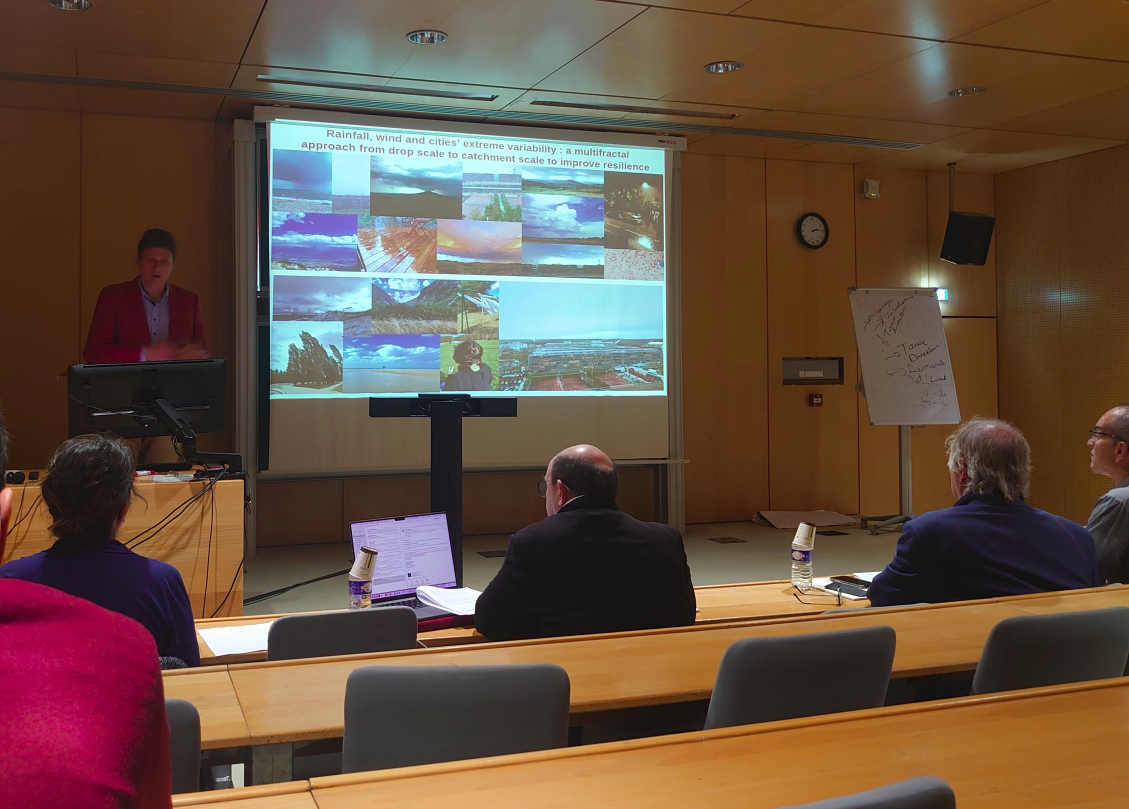
Auguste Gires is a Researcher in the Department of Civil Engineering at Ecole des Ponts ParisTech , actively contributing to hydrometeorological research through the HM&Co laboratory. He is involved in international collaborations like the ANR PRCI Ra2DW project with National Taiwan University, focusing on radar rainfall estimation, drop size distribution, and wind impacts for urban hydrological applications. His work spans rainfall variability across space-time scales, stormwater management resilience, and turbulence modeling for wind energy. He mentors PhD students including Angel Garcia Gago and Jerry Jose, and defended his HDR (Habilitation à diriger des recherches) in October 2022, demonstrating his expertise in multifractal characterization of atmospheric variability. Gires also engages in public outreach, organizing workshops on rainfall for primary school students and participating in events like the "Fête de la Science" and "Printemps des transitions" to disseminate hydrometeorological knowledge. Additionally, he co-authored a book, "50 Scientific Experiments for Weekend Junior Physicists," designed to promote home-based science education with his children Nathanaël and Nikita. His seminars and project leadership, such as the "Sceaux par tous les temps" participatory initiative, highlight his commitment to bridging academic research with societal challenges like climate adaptation and flood mitigation.
Jens Hesselbjerg Christensen is a Professor at the Ice, Climate and Geophysics research group within the Niels Bohr Institute at the University of Copenhagen. His research focuses on climate modeling, extreme weather events, and Arctic climate dynamics. He has been actively publishing research since at least 2022 with multiple publications appearing through 2025, demonstrating continued scholarly activity. His work is affiliated with the University of Copenhagen's Niels Bohr Institute, a leading center for physics and geoscience research in Europe. Christensen's research spans multiple critical areas of contemporary climate science: Climate modeling and projections, particularly using convection-permitting models Extreme weather events and their intensification under climate change Arctic climate dynamics and sea ice interactions Atmospheric circulation patterns, especially the North Atlantic Oscillation Precipitation extremes and regional climate modeling Climate change impacts on permafrost regions and biomass distribution Wind energy potential in changing Arctic conditions His recent publication record shows a strong focus on understanding how climate change affects extreme weather events, with particular emphasis on 'unprecedented extremes' - climate events that exceed historical records and challenge current adaptation strategies. His work often employs regional climate models, particularly for European and Arctic regions, and examines the impacts of climate change on windstorms, precipitation extremes, and temperature patterns. Christensen has collaborated extensively with researchers across Europe and maintains connections with the Danish Meteorological Institute, where he worked from 1990 to 2017. Christensen's research has been cited in policy documents and picked up by news outlets, demonstrating its relevance to both scientific and societal discussions about climate change. His work on windstorm extremes has received attention from 2 news outlets, while his research on biomass distribution in permafrost regions has been highlighted in 3 news mentions and blogged about. Several of his publications have been referenced in policy sources, showing the applied value of his research. As a professor, Christensen advises PhD students and early-career researchers in climate science. His work is supported by various research grants focused on climate modeling and extreme event analysis. He is involved with major climate research initiatives including Arctic-CORDEX, which coordinates regional climate modeling efforts for the Arctic. His research group at the Niels Bohr Institute conducts interdisciplinary studies combining observational data with advanced modeling techniques to understand past, present, and future climate conditions.
Dr. Andrea Borsato is a Research Associate at the University of Newcastle 's School of Environmental and Life Sciences , specializing in speleothem analysis and kars hydrogeology . With advanced expertise in synchrotron micro-XRF mapping and stable isotope geochemistry , he investigates climate and environmental signals preserved in cave carbonates. PhD in Earth Sciences from University of Milan 20+ years of cave monitoring and analytical innovation Pioneer in volcanogenic element detection in continental carbonates Research interests span: Carbonate geochemistry and mineralogical proxies for climate reconstruction High-resolution speleothem mapping using synchrotron radiation Hydroclimate variability across Mediterranean and Pacific regions His scientific contributions include: Developing 2D trace element chronologies for tropical speleothems Quantifying the Anthropocene stratigraphic signal in Alpine caves Advancing non-classical crystallization models in carbonate archives Collaborative networks involve leading institutions across Italy, Australia, Austria, and South Pacific territories. His work bridges geochemistry , climate science , and archaeological preservation through innovative analytical approaches.