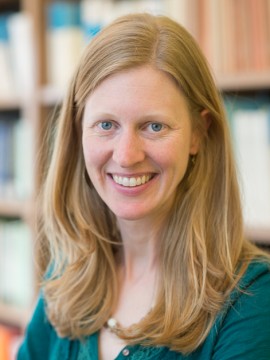
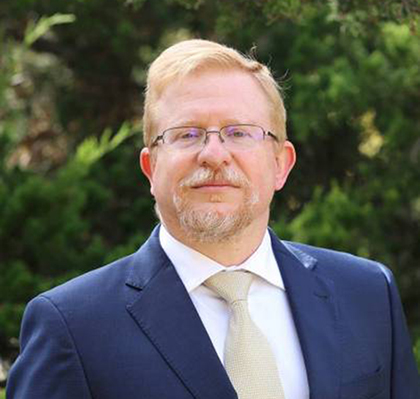
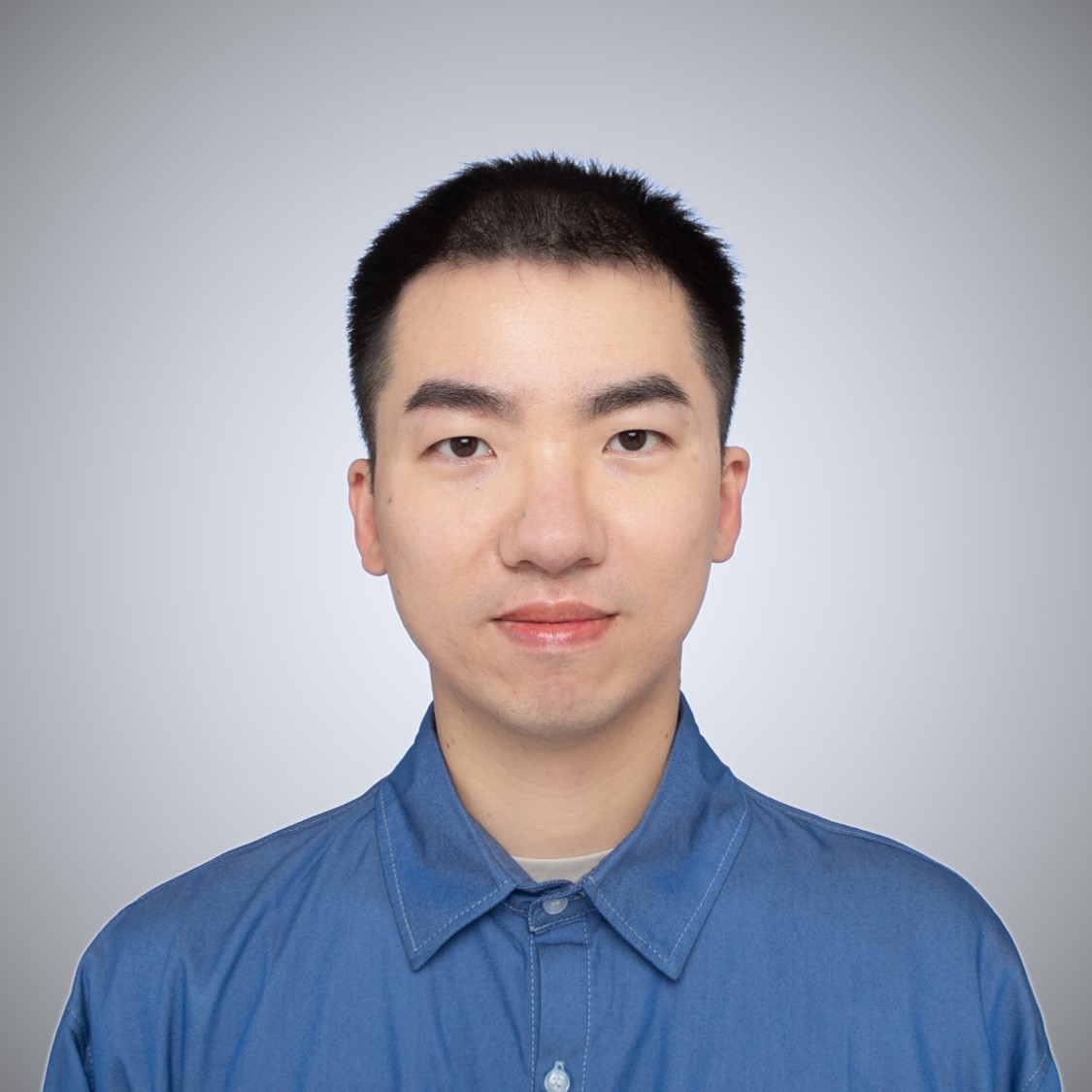
Jennifer Williams is a Professor in the Department of Geography at the University of British Columbia (UBC), located on the traditional, ancestral, and unceded territory of the Musqueam People. She holds a PhD from the University of Montana (2008) and a BA from the University of California, Berkeley. Her primary research focuses on understanding how interacting ecological and evolutionary processes influence species distributions and abundances, particularly in the context of global environmental changes like climate change, habitat fragmentation, and biological invasions. Her work integrates field experiments, observational studies, and mathematical modeling to address conservation challenges. Her current research themes include eco-evolutionary dynamics of range expansion, species interactions in Garry oak savannas, plant life history responses to climate change, and invasive species management. She received the prestigious Killam Research Fellowship in 2020, recognizing her contributions to biodiversity and climate science. Williams teaches courses in geography and ecology, and her lab actively collaborates with the Biodiversity Research Centre. Her recent work emphasizes forecasting species' responses to climate change and developing strategies for ecosystem resilience.
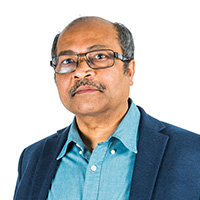
Ning Lu is a Professor in the Department of Civil and Environmental Engineering at the Colorado School of Mines, College of Engineering and Computational Sciences. His work focuses on fundamental soil physical processes in variably saturated porous media, with applications in geotechnical and environmental engineering. Research Interests: Dr. Lu's research spans unsaturated soil mechanics , vadose zone hydrology , slope stability , and soil-water interaction . He investigates fluid flow, chemical transport, heat transfer, stress, and deformation across scales—from atomic potentials to engineering-scale behavior. His work addresses critical problems such as expansive soil damage, nuclear waste containment, and shallow landslides induced by rainfall. His recent publications (2016–2024) reflect a cohesive research program advancing the theoretical foundations of soil physics. Key themes include re-evaluating classical concepts like pore water pressure, developing unified models for soil water retention and hydraulic conductivity, and introducing suction stress as a critical variable for slope instability prediction. These works appear in leading journals such as the Journal of Geotechnical and Geoenvironmental Engineering and Reviews of Geophysics , indicating sustained high-impact contributions to the field. Scientific Awards: Karl Terzaghi Award, American Society of Civil Engineers, 2023 Norman Medal, American Society of Civil Engineers, 2021 Maurice Biot Medal, American Society of Civil Engineers, 2017 Ralph B. Peck Medal, American Society of Civil Engineers, 2017 Practice Paper of the Year Award, GTJ, ASTM, 2016 J.J. Croes Medal, American Society of Civil Engineers, 2010 Advising and Grants: While specific students and grants are not listed, Dr. Lu has authored two influential textbooks— Unsaturated Soil Mechanics (2004) and Hillslope Hydrology and Stability (2012)—indicating significant educational leadership and mentorship. His service on the National Academies committee for Spirit Lake/Toutle River system (2016–2017) reflects engagement in national-level environmental and engineering policy. Labs and Teams: Although no specific lab or team name is provided, his research program involves experimental, theoretical, and computational approaches to soil physics, likely supported by a research group at Colorado School of Mines.
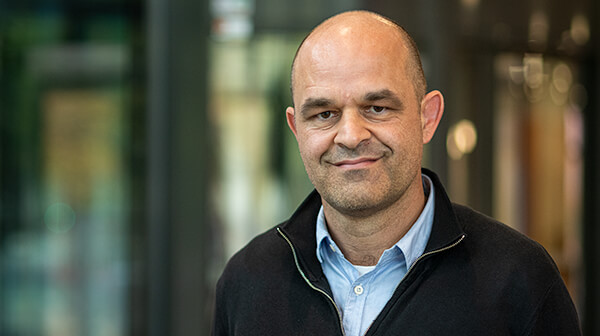
Professor Tirthankar Roy holds the position of Professor of Economic History at the London School of Economics and Political Science (LSE). His expertise spans South Asian economic history, global historical dynamics, environmental history, and the legacies of colonial empires. He teaches courses such as EH307 (Economic History of South Asia, 1600–2000) and EH404 (India and the World Economy). His research interrogates long-term patterns in Indian capitalism, the interplay between climatic conditions and economic change, and the persistence of colonial legal frameworks in modern India. Key contributions include Monsoon Economies: India’s History in a Changing Climate and co-authored works like Law and the Economy in Colonial India and its sequel. His recent book Water and Development: The Troubled Economic History of the Arid Tropics examines water resource management in arid regions. He actively engages with public discourse via social media, countering historical myths about colonialism with evidence-based scholarship. Research interests include the economic development of South Asia, global historical comparisons, environmental determinants of economic activity, and the socio-political dimensions of colonial legal systems. His work bridges historical analysis with contemporary policy debates, emphasizing the need for evidence-based understanding of historical processes.
Professor Ashish Sharma is a Professor of Hydrology and Water Resources in the School of Civil and Environmental Engineering at the University of New South Wales, Sydney, Australia. With a PhD in Civil Engineering from Utah State University and extensive experience in hydrological research, he has established himself as a leading expert in his field. Dr. Sharma's research focuses on hydrological uncertainty, with particular emphasis on the impact of climate change and variability on hydrological practice. His work spans multiple areas including remote sensing applications, stochastic hydrological modeling approaches, development of hydrological models, and addressing key hydrology challenges such as design flood estimation and water resources management. He has made significant contributions to understanding how climate change affects hydrological extremes and water availability. His publications reveal a strong trend toward advanced modeling techniques for climate change impact assessment, with recent work focusing on spectral transformation methods, multivariate bias correction in climate models, flood forecasting improvements, and the relationship between temperature and precipitation extremes. His research increasingly integrates remote sensing data with hydrological modeling to address challenges in data-scarce regions. Professor Sharma has held significant leadership positions including President of the International Commission of Hydrologic Sciences (IAHS) Commission on Statistical Hydrology (STAHY) since 2016, service on the Australian Research Council's College of Experts twice, and participation on the Technical Committee for the Australian Rainfall and Runoff Design Flood Estimation guidelines (ARR2016). In addition to his research leadership, Professor Sharma actively mentors students and collaborates with researchers globally, as evidenced by his extensive publication record across top hydrology and climate journals. His work bridges theoretical hydrology with practical applications for water resources management under changing climate conditions.
Prof. Dr. Ralf Merz serves as Head of the Department of Catchment Hydrology at the Helmholtz Centre for Environmental Research (UFZ) and holds a Full Professorship in Catchment Hydrology at Martin-Luther University Halle-Wittenberg since 2011. His career bridges hydrological modeling, flood risk assessment, and water quality analysis across diverse climates from Central Asia to Europe. MSc in Civil Engineering (Technical University of Karlsruhe, 1997) PhD in Hydrology (Vienna University of Technology, 2002) Habilitation in Hydrology (Vienna University of Technology, 2009) Research Interests span comparative hydrology, flood generation mechanisms, climate change impacts on water resources, and nitrate dynamics in river systems. His work emphasizes process-based understanding of runoff events and regional flood modeling through innovative approaches like the PHEV distribution framework. Scientific Contributions include over 100 publications (2003-2025) on: Flood frequency analysis in changing climates Groundwater recharge in arid regions Hydrochemical response to droughts Remote sensing applications for groundwater studies Multi-response calibration of hydrological models Key projects involve MOSES observatory development, TRACER research school, and Pamir Mountains glaciological studies. Recognitions : APART research grant (Austrian Academy of Sciences, 2006) Leadership extends to directing the Catchment Hydrology department and participating in European hydrological networks like the Bode Hydrological Observatory and TERENO infrastructure. His methodological advancements include flood time-scale analysis and event runoff coefficient regionalization.
Professor Liz Stephens is a faculty member at the University of Reading's Department of Meteorology, specializing in flood forecasting, climate variability, and disaster risk management. Her work focuses on improving hydrological and meteorological models to enhance flood preparedness and climate adaptation strategies globally. Research Interests: Probabilistic flood forecasting Climate impacts on extreme events Enhancing forecast communication for decision-makers Applications in data-scarce regions like Kenya and Uganda Key Projects: Global Flood Awareness System (GloFAS) World Weather Attribution studies Probabilistic forecast evaluation frameworks Her research bridges academic analysis with practical implementation, collaborating with international organizations like ECMWF and humanitarian agencies to translate scientific insights into actionable disaster preparedness measures.
Dr. Jonathan T. Overpeck is the Samuel A. Graham Dean of the School for Environment and Sustainability (SEAS) at the University of Michigan, where he also holds the William B. Stapp Collegiate Professorship of Environmental Education. He is a Professor of both Climate and Space Sciences and Engineering, and Earth and Environmental Sciences, with a career spanning climate-vegetation interactions, abrupt climate change, monsoon dynamics, drought hydroclimate, sea level rise research, and interdisciplinary climate assessment. Overpeck has published over 230 works cited 60,000+ times, emphasizing public education, university-community partnerships for climate solutions, and environmental justice initiatives. PhD in Geological Sciences, Brown University MSc in Geological Sciences, Brown University BA in Geology (Honors), Hamilton College His research spans climate-biosphere interactions , climate variability and abrupt change , monsoon dynamics , drought and hydroclimate , sea level rise , climate law , and climate adaptation . Overpeck pioneered studies on megadrought terminology, temperature-driven drought intensification, and the aridification of North America. His work with the NOAA Paleoclimate Program and World Data Center for Paleoclimatology established foundational understanding of climate dynamics through annually-laminated sediment analysis in the Cariaco Basin. Overpeck's 2020-2024 research includes climate aridification , hydroclimate scaling mismatches , and temperature-precipitation interactions , with recent focus on Antarctic heatwaves, Mississippi River Basin changes, and corporate climate accountability. His article trends show concentration in climate attribution , hydrological extremes , paleoclimate modeling , and climate policy analysis . Scientific Honors: 2024 U.S. National Academy of Sciences 2015 American Geophysical Union Fellow 2009 AAAS Fellow 2007 Nobel Peace Prize contributor (IPCC) 2005 Guggenheim Fellowship Multiple U.S. Department of Commerce awards Overpeck has led or participated in significant climate adaptation projects , including NSF grants totaling $5.1M+ for Southwest Hydroclimatic Extremes (2017-2020), Amazon Drought Impacts (2014-2018), and Quantifying Drought Risk (2013-2018). He serves on the Colorado River Research Group (2014-present) and advises Climate Communication (2011-present). Current initiatives include Great Lakes University positioning, Michigan's climate resilience planning, and the Audacious Water podcast series examining Mississippi River Basin transformations. Overpeck actively contributes to climate policy discourse , advocating for science-informed decision-making and stakeholder collaboration across government, military, and corporate sectors.
Dr. Indrani Roy is an Honorary Associate Professor in the Department of Earth Sciences at University College London (UCL). She holds a PhD from Imperial College London and has extensive research experience at institutions including Imperial College and the University of Exeter. Previously, she served as a permanent employee at the India Meteorological Department (Government of India). She is a Fellow of the Royal Meteorological Society (FRMetS) and serves as its Trustee. Dr. Roy contributes to international scientific governance as a panel member for the UK's Natural Environmental Research Council (NERC) and the Romanian National Research Council. Her multidisciplinary research spans: Solar-atmosphere-ocean coupling mechanisms Monsoon dynamics and teleconnection patterns Climate change processes and extreme events Stratosphere-troposphere interactions Climate variability across decadal scales She actively investigates how solar cycles influence regional climates and extreme weather phenomena. Dr. Roy's publications demonstrate consistent focus on climate dynamics with recent emphasis on African and Asian monsoon systems, COVID-19 climate interactions, and improving predictive capabilities for extreme rainfall events. Her work increasingly integrates public health perspectives with climate science. Scientific Recognition: Fellow of the Royal Meteorological Society (FRMetS) Teaching & Advising: As an Associate Fellow of the Higher Education Academy (HEA), she currently teaches the Literature Project module (NSCI0004) for Natural Sciences at UCL. Her past teaching includes: Undergraduate research supervision (University of Exeter) Masters project supervision and guest lecturing (UCL) Instruction of Masters/PhD candidates (University of Oulu, Finland) Professional Engagement: Dr. Roy serves as reviewer for over 40 international journals (including Nature Geoscience and Science Reports) and grant agencies such as NSF, Royal Society, and French National Research Agency. She co-convenes sessions at major conferences (AOGS) and previously held editorial roles at Frontiers journals.
Dr Conrad Wasko is a Sydney Horizon Fellow at the University of Sydney and an honorary fellow at the University of Melbourne. He specializes in environmental hydrology and climate change impacts on extreme rainfall and flooding. His work has been cited by the IPCC and he co-leads the update to Australia’s flood estimation guidelines. Previously, he held an ARC DECRA Fellowship and a McKenzie Fellowship. He has published over 50 articles and received awards including the Batterham Medal (2023) and the MSSANZ Early Career Research Excellence Award (2019). His research focuses on quantifying climate-driven changes in rainfall patterns and flood risks, with applications to infrastructure resilience and policy. Education: PhD in Civil Engineering, UNSW Sydney (2016) Bachelor/Master’s qualifications (not explicitly stated in text) Key Roles: Member of The Net Zero Institute Editor of Journal of Hydrology X and Advances in Water Resources Hydroclimate Stream Leader, Modelling and Simulation Society of Australia and New Zealand His research emphasizes the intensification of extreme rainfall events with global warming, particularly their implications for flood risk and urban infrastructure. He uses advanced statistical models and climate data to project future flood scenarios and improve design standards. Recent work includes analyzing non-stationary rainfall patterns and improving flood frequency analysis techniques. Awards and Honors: Batterham Medal (Australian Academy of Technological Sciences and Engineering, 2023) Veski Victoria Fellow (2020) MSSANZ Early Career Research Excellence Award (2019) Lorenz G Straub Award (2016) Grants and Projects: ARC DECRA Fellowship (University of Melbourne) Contributions to national climate change adaptation frameworks Labs and Collaborations: Partnerships with the Water Research Centre (UNSW) and the Net Zero Institute Collaborations on global flood risk assessments and hydrological modeling tools
Dr. Miguel Rico-Ramirez serves as Associate Professor of Radar Hydrology and Hydroinformatics at the University of Bristol's School of Civil, Aerospace and Design Engineering. His research integrates advanced radar technology with hydrological modeling to address critical water resource challenges including flood forecasting, drought management, and precipitation measurement across diverse global contexts from South Korea to Mexico City. Education: Bachelor of Engineering (Eng.) Master of Engineering (M.Eng.) Ph.D. in Engineering, University of Bristol His research program focuses on radar-based precipitation estimation, hydroinformatics, and flood prediction systems. He pioneers deep learning applications for rainfall nowcasting and develops innovative methods for uncertainty quantification in hydrological modeling. Current work emphasizes cosmic-ray neutron sensor validation, satellite-based flood mapping, and seasonal forecast applications for reservoir operations, with strong emphasis on translating research into operational water management solutions. Recent publications (2023-2025) reveal three dominant research thrusts: (1) deep learning frameworks for spatiotemporal rainfall prediction, (2) global validation of precipitation and soil moisture datasets using novel sensor networks, and (3) operational implementation of seasonal forecasts for drought mitigation in South Korea. His work consistently bridges radar meteorology with practical hydrological applications across urban and data-scarce environments. Scientific Awards: No specific awards documented in source materials Dr. Rico-Ramirez supervises postgraduate researchers in radar hydrology and hydroinformatics, with projects spanning flood early warning systems, precipitation nowcasting, and climate adaptation strategies. His research receives funding for international collaborations focused on water security challenges, particularly in drought-prone regions and data-scarce basins like the Nile Delta. Current grants support development of integrated forecasting systems combining global datasets with machine learning for extreme event management. He leads the Radar Hydrology research group within Bristol's Water and Environmental Engineering division, collaborating closely with Professor Dawei Han on hydroinformatics and Dr. Rafael Rosolem on water-climate interactions. The team maintains active partnerships with meteorological agencies and water authorities globally, particularly in flood forecasting system implementation across South Korea and Mexico.
Dr. Patrick S. Market is a Professor of Atmospheric Science and currently serves as the Director of the School of Natural Resources at the University of Missouri. He also acts as Interim Co-Director of the Missouri Water Center. His research focuses on synoptic and mesoscale dynamics, particularly winter weather, heavy rainfall, flash flooding, and severe local storms. He has contributed to advancements in precipitation efficiency studies and operational forecasting techniques. His work explores the role of artificial intelligence in weather prediction and communication, emphasizing the continued importance of human expertise in an automated forecast process. Dr. Market has secured grants for data stream maintenance and digital equity planning, and he has led educational initiatives integrating research into synoptic meteorology classrooms. Notable collaborations include projects with the National Weather Service and studies on the Ozark Plateau's topographical influence on weather systems.
Hyemi Kim is an Adjunct Professor at the School of Marine and Atmospheric Sciences (SoMAS), Stony Brook University. Her research focuses on climate variability across subseasonal to decadal timescales, including topics like the Madden-Julian Oscillation (MJO), tropical-extratropical interactions, and extreme weather events such as atmospheric rivers and tropical cyclones. Education: Ph.D., 2008, School of Earth and Environmental Sciences, Seoul National University, South Korea Research Interests: Hyemi Kim's work spans four primary areas: (1) Climate prediction from subseasonal to decadal scales, (2) Tropical-extratropical interactions, (3) Extreme events (atmospheric rivers, storm tracks, tropical cyclones), and (4) Machine learning applications for subseasonal-to-seasonal (S2S) prediction. Publication Trends: Her research output emphasizes the MJO, its interactions with other climate modes (QBO, ENSO), and implications for extreme weather. Recent works analyze atmospheric rivers, storm tracks, and tropical cyclone activity, often linking these to large-scale climate variability. Publications frequently employ climate models (e.g., CESM1, SubX, NMME) to assess predictability and improve forecasting frameworks. Labs & Teams: She collaborates with institutions like the National Center for Atmospheric Research (NCAR) and contributes to multi-model experiments such as the Subseasonal Experiment (SubX) and North American Multi-Model Ensemble (NMME).
Deg-Hyo Bae is a Professor in the Department of Civil and Environmental Engineering at Sejong University, serving since 2001, and concurrently holds the position of University President since 2018. His academic career spans leadership roles including Assistant/Associate Professor at Changwon National University (1996-2001), Senior Researcher at Yonsei University (1994-1996), and Researcher at the US Department of Agriculture-ARS (1992-1994). His research focuses on critical water security challenges through advanced hydrological modeling and climate impact assessment. His academic credentials include a Ph.D. (1992) and M.S. (1989) from the University of Iowa, and a B.S. from Yonsei University (1983). These qualifications form the foundation for his interdisciplinary expertise bridging civil engineering, atmospheric science, and environmental informatics. Professor Bae's research program centers on atmosphere-surface interactions, climate-driven hydrological extremes, and real-time prediction systems. His work integrates radar meteorology, GIS analytics, and climate modeling to develop operational tools for flood forecasting, drought monitoring, and transboundary water management. Major achievements include the Global Water Bank system and coupled atmosphere-urban flood models, directly supporting UN Sustainable Development Goals for clean water and climate action. Recent publications (2024-2025) reveal a strategic shift toward AI-enhanced hydrology, combining Bayesian uncertainty quantification with deep learning for streamflow prediction. His work increasingly addresses climate change impacts on extreme events in vulnerable regions like Burundi while exploring teleconnection mechanisms such as ENSO-ozone interactions through CMIP6 frameworks. Professional activities include media coverage of Sejong University's research impact (2021-2022) and international collaborations with Slovak presidential advisors. While specific grant details and student advising records aren't documented in the source material, his 111 publications and h-index of 25 demonstrate significant scholarly influence in water resources engineering.
Prof. ZHUANG Yizhou is an Assistant Professor in the Department of Geography at Hong Kong Baptist University. His research focuses on weather and climate extremes, climate change attribution, and land-atmosphere coupling. With a Ph.D. in Meteorology from Peking University and extensive postdoctoral experience at UCLA, he brings significant expertise in atmospheric sciences to his academic role. Dr. Zhuang's educational background includes: 2019-2024: Postdoctoral Scholar, University of California, Los Angeles (UCLA), USA 2017: Visiting Graduate Researcher, University of California, Los Angeles (UCLA), USA 2015-2017: Visiting Research Scholar, University of Texas at Austin, USA 2013-2019: Ph.D., Meteorology, Peking University, China 2009-2013: B.S., Atmospheric Sciences (Remote Sensing Focus), Nanjing University of Information Science and Technology, China Dr. Zhuang's research spans multiple critical areas in climate science. His work on weather and climate extremes examines phenomena like wildfires, droughts, and floods. In climate change attribution , he investigates the human influence on extreme weather events, with several publications in PNAS demonstrating how anthropogenic warming has altered drought mechanisms and fire risks. His research on land-atmosphere coupling explores the complex feedback mechanisms between Earth's surface and the atmosphere. Additionally, he applies machine learning techniques and remote sensing technologies to analyze cloud formations and precipitation patterns. Analysis of Dr. Zhuang's recent publications reveals a consistent focus on drought mechanisms and fire weather risk in western North America. His work frequently employs advanced statistical methods like self-organizing maps and canonical correlation analysis to understand complex climate phenomena. A notable trend is his investigation of how anthropogenic climate change is fundamentally altering the nature of droughts, shifting from precipitation-deficit dominated to temperature-driven events, with significant implications for water resource management. Dr. Zhuang has received several prestigious awards for his research contributions: JIFRESSE Outstanding Leadership/Service Award, UCLA, 2023 Richard P. and Linda S. Turco Exceptional Research Publication Award, UCLA, 2023 China Scholarship Council (CSC) Joint Ph.D. Scholarship, 2015-2017 As an academic mentor, Dr. Zhuang supervises graduate students, with evidence of at least one student (G. Wang) whose work has been published under his supervision. He serves as a reviewer for numerous high-impact journals including Proceedings of the National Academy of Sciences (PNAS), Earth's Future, and Geophysical Research Letters. Additionally, he has mentored students in the UCLA Joint Institute for Regional Earth System Science and Engineering (JIFRESSE) Summer Internship Program, with his mentee Annie Rosen winning the 2024 Best JSIP Presentation Award. Dr. Zhuang maintains an active research group, as indicated by his personal website www.zhuangyz.org. His team focuses on climate extremes, attribution studies, and land-atmosphere interactions, with ongoing projects examining drought mechanisms, fire weather risks, and precipitation variability across different regions of the United States, particularly the western states and Great Plains.
Jeff Sadler is an Assistant Professor in the Department of Biosystems & Agricultural Engineering at Oklahoma State University, where he also serves as an Extension Specialist for Water Resources with OSU Extension. He leads the WaDE (Water Data and Education) Lab, focusing on data science and machine learning applications in water resources. Education: PhD in Civil and Environmental Engineering, University of Virginia (2019) MS in Civil Engineering, Brigham Young University (2015) BS in Civil Engineering, Brigham Young University (2013) Research Interests: Jeff’s research lies at the intersection of data science and water resources. He specializes in machine learning, particularly physics-guided and process-aware deep learning, for modeling stream temperature, water quality, flood dynamics, and hydrological forecasting. His work emphasizes real-time decision support, reproducible modeling, and integrating domain knowledge into data-driven systems. Recent Research Trends: His recent publications demonstrate a strong focus on advanced deep learning architectures (e.g., graph neural networks, recurrent models), data assimilation, multi-task learning, and surrogate modeling for environmental systems. Applications center on the Delaware River Basin and coastal Virginia, with implications for climate change adaptation and infrastructure resilience. Scientific Awards: No awards explicitly listed in the provided text. Advising and Grants: Jeff mentors graduate students and supervises master's and doctoral research. He is actively funded through multiple grants from the USDA, NOAA, and USGS, supporting projects in water quality monitoring, rural health, evapotranspiration forecasting, and integrated hydrological modeling. Labs and Teams: He leads the WaDE Lab, which develops data-driven tools for water resource education and management. He has collaborated extensively with researchers from the U.S. Geological Survey, University of Virginia, and other institutions on cyberinfrastructure, reproducible modeling, and environmental machine learning.