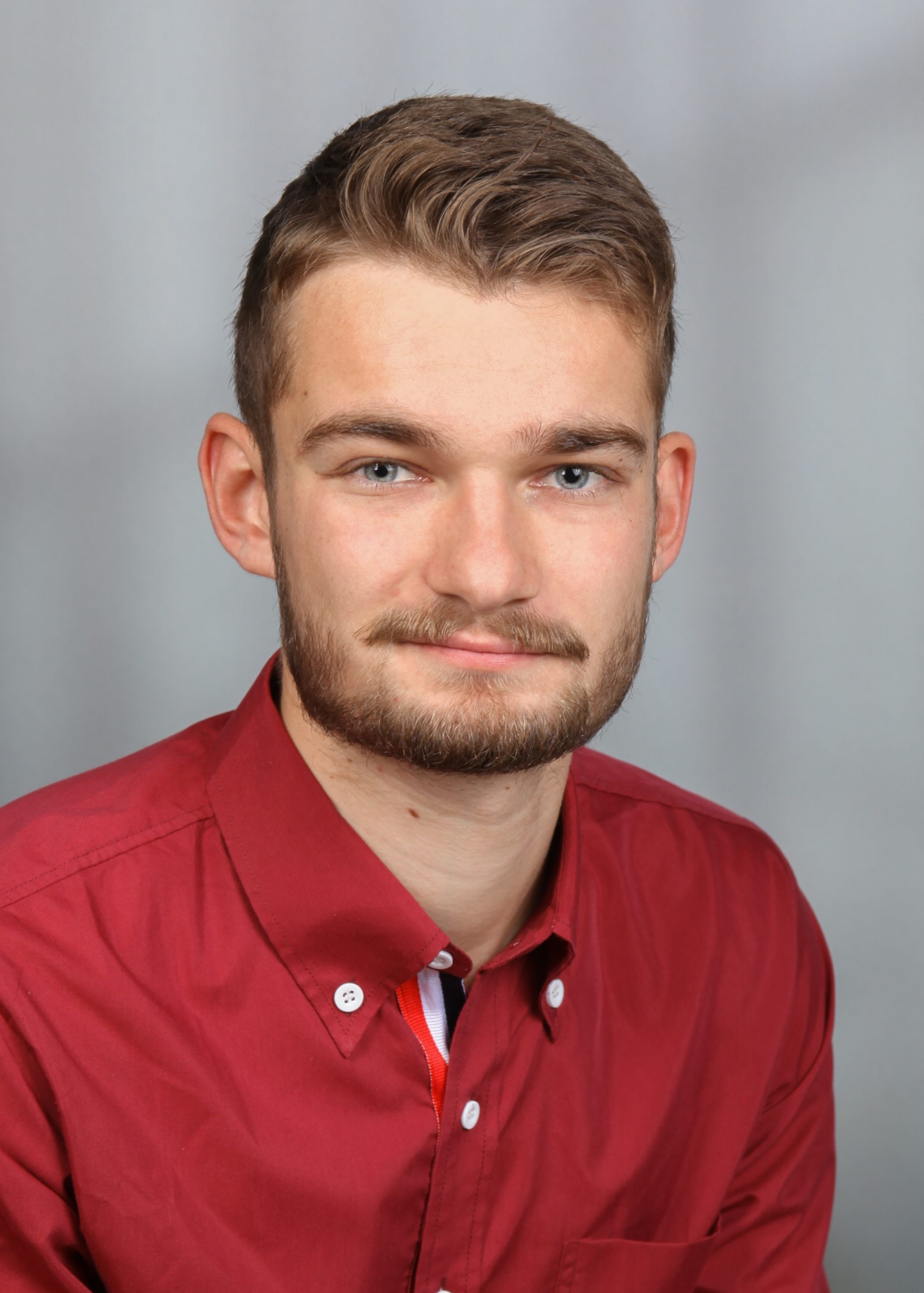
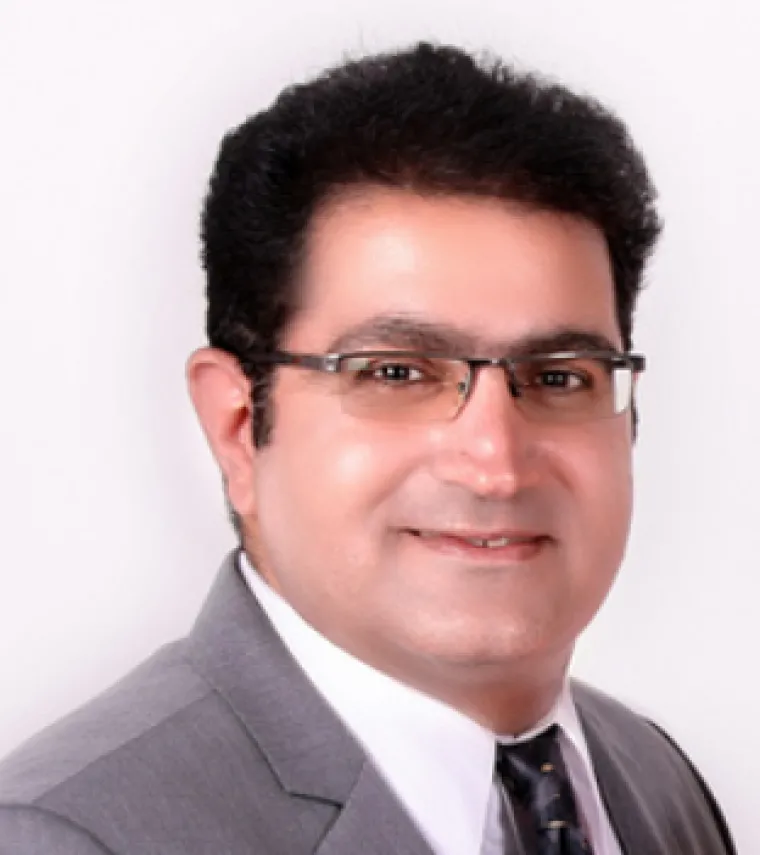
Johan Björck is a doctoral student affiliated with Lund University's Division of Fire Safety Engineering. His research focuses on early detection of natural hazards and the planning/preparedness of Fire and Rescue Services (FRS) for such events. He contributes to projects like the EXTREME-INDEX initiative, which develops vulnerability indices for multihazard scenarios. Education: Ongoing doctoral studies at Lund University. His research interests include fire engineering, disaster risk reduction, and emergency management. He has published three works: an article on wildland fire detection methods, a licentiate thesis on FRS preparedness, and a methodology paper assessing hazards in Sweden. Collaborations include international partnerships, particularly in Europe, as seen in his research outputs. No scientific awards are listed, but his work contributes to critical areas like natural hazard mitigation and emergency response strategies.
Tullio Salmon Cinotti is an Adjunct Professor at the University of Bologna's Department of Electrical, Electronic, and Information Engineering 'Guglielmo Marconi'. His teaching focuses on logic design and digital systems, including courses like 'Logic Design T' for automation and electronics engineering students. His research spans IoT applications in smart agriculture, structural health monitoring, and energy systems. Key areas include interoperable IoT architectures, semantic integration, wireless sensor networks, and embedded systems. Research interests emphasize IoT toolchain development for condition monitoring, precision irrigation via soil moisture calibration, and drone-based environmental sensing (BEE-DRONES project). He explores semantic-driven agent programming, smart energy grids, and elderly care solutions like the HABITAT project for fall detection and indoor localization. His work integrates RFID, radar, and visual technologies for smart spaces and cultural heritage management. Publications highlight interdisciplinary approaches to electromobility, grid integration, and semantic middleware (e.g., Smart-M3). Teaching materials include course units on sequential networks, combinational logic design, and digital system synthesis. Contact: Email , +39 051 20 9 5421.
Ian Pattison is an Associate Professor in Physical Geography and Leader of Geography Education at Heriot-Watt University, affiliated with the School of Energy, Geoscience, Infrastructure and Society and the Institute for Infrastructure & Environment. His research focuses on holistic flood management, including Natural Flood Management (NFM), Sustainable Urban Drainage Systems (SUDS), and flood forecasting technologies. He actively collaborates on projects in Mexico, such as IoT-based flood monitoring systems in Colima, and contributes to UN Sustainable Development Goals related to clean water, climate action, and resilient infrastructure. Research interests span fluvial geomorphology, hydrology, and the integration of environmental science with civil engineering. Key areas include sediment dynamics, rainfall simulator standardization, and the socio-technical challenges of water infrastructure in developing communities. Pattison leads interdisciplinary efforts, combining field observations, experimental methodologies, and advanced technologies like IoT sensors and machine learning for predictive modeling. He has published widely on topics such as climate change impacts on river flows, urban flood resilience, and soil compaction effects on catchment hydrology. Pattison accepts PhD students and engages in knowledge co-production with stakeholders to enhance emergency response resilience during flood disasters.
Tobias Kögel is a doctoral candidate and researcher at the Institute of Microwaves and Photonics (LHFT) within the Department of Electrical-Electronic-Communication Engineering at Friedrich-Alexander-Universität Erlangen-Nürnberg (FAU). His work focuses on advanced radar systems, signal processing, and RF technologies. Kögel holds an M.Sc. in Electrical Engineering and Information Technology (EEI) and has been actively engaged in research since 2020. His research interests span radar localization, radar signal processing in FPGAs, software-defined radio, switched injection-locked oscillators (SILOs), and UHF-RFID systems. He seeks students for projects involving hardware development, FPGA programming (VHDL/Verilog), and Python-based simulation of radar algorithms using Kalman filters. Kögel has contributed to over a dozen peer-reviewed publications since 2019, addressing topics like bistatic radar networks, time-frequency synchronization, and hybrid RFID-odometry localization. His work frequently appears in IEEE journals and conferences such as IEEE Radar Conference and International Microwave Symposium. He advises students on hardware design, FPGA implementation, and algorithm development. His lab (LHFT) focuses on microwave photonics, radar systems, and RFIC design.
Ali Emre Pusane is a Professor of Electrical and Electronics Engineering at Bogazici University, Turkey. He holds a PhD in Electrical Engineering from the University of Notre Dame (2008) and has been faculty since 2009. His research focuses on digital communications, information theory, and coding theory, with particular emphasis on molecular communication, radar signal processing, and low-complexity embedded designs. He leads the Bogazici University Signal Analysis Research Group (BUSARG), addressing challenges in communication signal analysis and prototyping. Education: B.Sc. and M.Sc. in Electronics and Communications Engineering, Istanbul Technical University (1999, 2002) M.Sc. in Electrical Engineering and Applied Mathematics, University of Notre Dame (2004, 2006) Ph.D. in Electrical Engineering, University of Notre Dame (2008) Research Interests: His work spans waveform design, machine learning-aided signal analysis, and nanoscale communication systems. Recent projects include molecular beamforming, RIS-assisted wireless systems, and LDPC-coded molecular communications. He also advises on R&D for national and international organizations. Teaching: He teaches courses like EE 242 (Numerical Methods for EE), EE 644 (Error Control Coding), and advanced communication engineering topics at Bogazici University. Feedback from students highlights his dedication to sophomore/junior-level education. Affiliations: Senior Member of IEEE, former associate editor for IEEE Transactions on Communications. Engaged with BUSARG in developing prototypes for physical layer security and molecular communication systems.
Johan Bäckman is a Researcher at Lund University's Biology Department, affiliated with the Evolutionary Ecology and Infection Biology group and the Lund Migration Group. He holds roles as Technical Coordinator and Research Engineer, focusing on technical innovations supporting bird migration research. Bäckman completed his PhD in 2002 on bird orientation and has contributed to projects like CAnMove and NordGen. His work spans database systems, electronics design, and radar ornithology. He manages the Electronics Lab infrastructure and collaborates internationally on migration studies. Education: PhD in Zoology (2002) from Lund University. Earlier involvement in a small company developing electronics for animal behavior studies. Research Interests: Bird migration biology, sensory electronics, low-power microcontroller systems, energy harvesting, and data modeling. His studies use funnel cages and radar to analyze migratory behavior, with recent focus on flight altitude dynamics and environmental influences. Projects: Active in the Dubbelbeckasinens jojo-flygningar project (2020–present) and past roles in CAnMove (until 2018) and NordGen IT systems (2003–2010). Key contributions include Svalbard Seed Vault logistics systems and radar systems for migratory tracking. Labs/Teams: Oversees the Electronics Lab, supporting technical solutions for CAnMove researchers. Collaborates across disciplines, including engineering and environmental science.
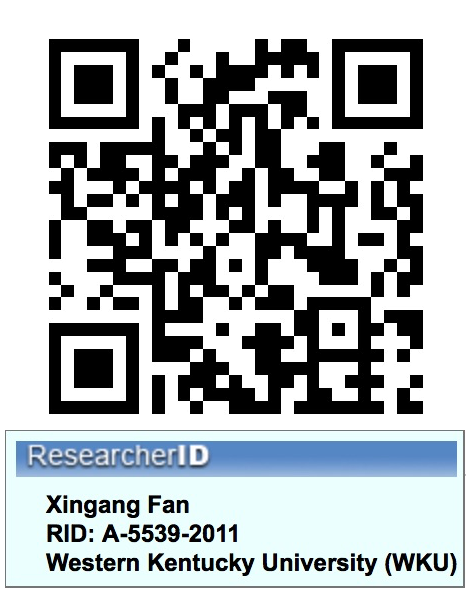
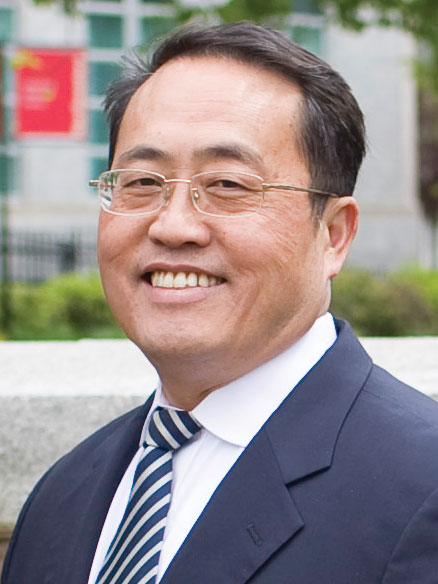
Dr. Xingang Fan is a Professor in the Department of Geography & Geology at Western Kentucky University (WKU), part of the Ogden College of Science and Engineering. He holds a Ph.D. in Atmospheric Sciences from Lanzhou University (1996), an M.S. from Lanzhou Institute of Plateau Atmospheric Physics (1992), and a B.S. from Lanzhou University (1989). His research focuses on Climate Science, Meteorology, and Environmental Science, with emphases on climate modeling, karst landscape impacts, and health effects of climate variability. He has been affiliated with WKU since 2009, advancing through academic ranks from Assistant Professor (2009–2014) to Associate Professor (2015–2020) and Professor (2020–present). Key research areas include climate downscaling for regional applications, karst landscape effects on droughts/floods, and afforestation/reforestation studies. He leads interdisciplinary projects funded by NASA, NOAA, and other agencies. Notable achievements include the 2012 Gansu Province Science and Technology Progress Award and the 2000 Tu Changwang Award for Young Scientists. Dr. Fan’s work spans publications in journals like *Frontiers in Earth Science*, *Earth and Space Science*, and *Atmospheric Environment*. His teaching includes courses on meteorology, climatology, and atmospheric modeling. Collaborations involve researchers in the U.S. and China, addressing topics such as Arctic reanalysis, soil-temperature interactions, and forest health under climate change. Current projects include NASA-funded studies on coastal forest ecosystems and karst landscape modeling. His contributions to climate science and education underscore his commitment to advancing understanding of weather and climate systems.
Prof. Jesper Larsson Träff is a Full Professor and Head of the Research Unit in Parallel Computing at Technische Universität Wien (TU Wien). His academic role is centered within the Department of Computer Engineering. He holds an MSc and PhD, and has contributed extensively to the field of parallel computing through his research and leadership in international projects. His research focuses on parallel algorithms, scheduling, and optimization of the Message Passing Interface (MPI), with emphasis on high-performance computing (HPC) systems and distributed architectures. Key projects include the Process Mapping initiative (2019–2024), Autotune (2021–2025), and contributions to Exascale Programming Models. He has also led efforts in evaluating MPI performance tools and their reproducibility challenges. Research Areas: Parallel Algorithms, MPI Optimization, HPC, Process Mapping, Collective Communication, and Memory Models. Notable Achievements: Awarded the Best Paper at EuroMPI 2014 and recognized by the Innovation Radar for his work on PGAS-based MPI interoperability in 2018. Teaching: Teaches courses such as Advanced Multiprocessor Programming, Bachelor/Master Thesis supervision, and seminars in Computer Engineering and Theoretical Computer Science. Prof. Träff’s advising includes students researching topics like lock-free data structures, MPI datatype optimization, and task scheduling. His grants span Austrian and EU funding bodies, addressing challenges in exascale computing and reproducible experimental research. He is affiliated with the Vienna Mapping and Sparse Quadratic Assignment (Vienna Mapping) project and actively contributes to international workshops and conferences.
Cihan Bayındır is an Associate Professor at Istanbul Technical University's Faculty of Civil Engineering, Department of Civil Engineering, specializing in fluid mechanics, coastal engineering, and computational methods. His research integrates advanced mathematical techniques with practical engineering applications across multiple disciplines. His primary research areas include Fluid Mechanics, Coastal Sciences and Engineering, Numerical Modeling, Fluid Physics, Acoustics and Vibrations, Nonlinear Dynamics, and Quantum Hydrodynamics. Bayındır's work demonstrates a strong interdisciplinary approach, bridging traditional civil engineering with cutting-edge computational methods and quantum phenomena. His research has significant applications in coastal protection, renewable energy systems, disaster management, and infrastructure resilience. Analysis of his recent publications reveals a clear trend toward applying artificial intelligence and machine learning techniques to traditional civil engineering challenges. His work increasingly focuses on using compressive sensing, deep learning (particularly LSTM networks), and fuzzy logic systems to solve complex problems in wave dynamics, vibration analysis, and tsunami prediction. The integration of quantum computing concepts with classical fluid mechanics represents another distinctive aspect of his research portfolio. ITU Doctoral Special Award-2024-Advisor (2025) ITU 2023 Academic Performance Award (2024) Turkish Academy of Sciences (TUBA) Outstanding Young Scientist Award (GEBİP) (2022) Elsevier Frontiers Article Award (2020) Kaleidoscope Award (American Physical Society, 2016) Bayındır leads multiple research projects funded by ITU's Scientific Research Projects Unit (BAP), including studies on dam break wave propagation using fractional equations, optimization of wave energy concentrators with AI methods, and three-dimensional vibration control in marine structures. His work involves collaborations with international institutions, including previous engagement with CERN on accelerator design. He maintains an active research laboratory focused on hydraulics and coastal engineering, with specialized equipment for wave and vibration analysis in the Hydraulics Laboratory HL 216 at ITU.
Ming L. Wang is a Distinguished Professor in the Department of Civil and Environmental Engineering at Northeastern University's College of Engineering. His work focuses on developing advanced sensor technologies for infrastructure monitoring and biomedical applications, with particular expertise in structural health monitoring of bridges and pavement systems. Education: Ph.D. in Structural Dynamics and Random Vibration from University of New Mexico (1983) M.S. in Civil Engineering from South Dakota School of Mines and Technology (1980) Professor Wang's research spans multiple disciplines at the intersection of civil engineering, sensor technology, and biomedical applications. His primary focus areas include structural health monitoring for bridges, network-wide pavement and bridge deck inspections using sensor technology, saliva-based sensor technology for disease diagnosis and monitoring, and subsurface fault detection using air-coupled GPR systems. His work bridges traditional civil engineering with cutting-edge biomedical applications, creating innovative solutions that serve both infrastructure maintenance and healthcare diagnostics needs. Analysis of Professor Wang's recent publications reveals a strong trend toward interdisciplinary research that combines civil infrastructure monitoring with biomedical sensing applications. His work demonstrates how principles from structural engineering can be applied to develop novel biosensors, while techniques from biomedical engineering can enhance infrastructure monitoring systems. This cross-pollination of ideas has resulted in patented technologies for both infrastructure assessment and medical diagnostics. Scientific Awards: 2025 Faculty Research Team Award – iSUPER Impact Engine 2015 Fellow of the International Society for Optics and Photonics Søren Buus Outstanding Research Award, Northeastern University College of Engineering Outstanding Translational Research Award, Northeastern University College of Engineering 2011 "Students Speak" Teaching Award 2001 College of Engineering Research Award, University of Illinois at Chicago 1989-1992 Halliburton Lectureship Award, University of New Mexico 1987 Jefferson Goblet Paper Award Professor Wang leads significant research initiatives including the $9 million NIST-funded project developing sensors to detect abnormalities in highways and bridge decks. He directs the Versatile Onboard Traffic Embedded Roaming Sensors (VOTERS) research center, which has developed innovative technology for road condition assessment. His work has attracted substantial funding from agencies including the National Science Foundation, Federal Highway Administration, and National Institute of Standards and Technology. Professor Wang's laboratory has developed monitoring systems deployed on some of the world's largest bridges including the Hangzhou Bay Bridge in China and the Stonecutters Bridge in Hong Kong. His VOTERS technology has been successfully implemented in Beverly, Massachusetts, where it evaluated 150 miles of roads in just four days - a task that previously took over a year and cost significantly more. His research team includes undergraduate and graduate students from multiple engineering disciplines who contribute to developing next-generation sensor technologies.
Professor Daniel Clark is a member of the University of Southampton's academic staff, specializing in multi-target tracking, Bayesian methods, and sensor fusion. His research focuses on advancing algorithms for aerospace systems, robotics, and statistical inference. He supervises PhD students in electronic engineering and is affiliated with the Vision, Learning and Control Centre for Robotics. His work bridges theoretical foundations with practical applications in tracking systems and cybersecurity. Recent contributions include advancements in covariance intersection, adversarial risk formulations, and sensor data fusion techniques. Research Interests: His expertise spans multi-object tracking, stochastic guidance systems, and information-theoretic bounds. He explores applications in maritime surveillance, robotics navigation, and secure algorithm design. Advising & Grants: Currently supervising Chuanhang Qiu (PhD in Electronics). His research has been published in top-tier journals like IEEE Transactions on Aerospace and Electronic Systems. Labs & Teams: Active member of the Vision, Learning and Control Centre for Robotics, contributing to interdisciplinary projects in autonomous systems and data fusion.
Professor James Scott is a faculty member in the School of Engineering at RMIT University. His research focuses on microwave engineering, nonlinear device modeling, radar systems, and sensor technologies. He has held academic positions since 1987, including Discipline Director of Communication Engineering since 2003. His industry experience includes roles at AWA Defence Industries and British Aerospace (Australia), specializing in microwave receiver design and smart antenna systems. Key research areas include radar warning receivers, high-efficiency power amplifiers, and microwave measurement techniques. Professor Scott has contributed to numerous peer-reviewed articles and holds an ORCID identifier (0000-0003-3200-6821). Current Role: Professor, School of Engineering, RMIT University Research Interests: Microwave circuits/devices, radar systems, sensor technologies Industry Collaborations: Defense electronics, satellite communication systems
Idris Zakariyya is a Researcher at the School of Computing Science , University of Glasgow, based at Room 409, 18 Lilybank Gardens, Glasgow, Scotland (G12 8RZ). His contact email is Idris.Zakariyya@glasgow.ac.uk . His research interests span: Machine Learning applications in healthcare technology and IoT security Privacy-Preserving Techniques such as differential privacy in neural networks Adversarial Defense mechanisms for robust AI systems Resource-Efficient Algorithms for medical data digitization and activity recognition Zakariyya’s publications reflect interdisciplinary work in healthcare informatics, radar-based activity monitoring with privacy guarantees, and cybersecurity for IoT systems. Recent trends include integrating biomedical data digitization with computational methods and advancing neural network robustness against adversarial inputs. No scientific awards or honours are listed. Collaborative research grants or advising roles are not explicitly mentioned in the text. Lab or team affiliations remain unspecified.
Ali Behrangi is a University Distinguished Scholar and Professor in the Department of Hydrology and Atmospheric Science at the University of Arizona. He holds joint appointments in Civil Engineering, Geosciences, and Remote Sensing programs. Research focuses on satellite remote sensing of precipitation, extreme weather events, and global water cycles. Primary investigations develop innovative methods for precipitation measurement using multi-sensor approaches, machine learning techniques, and climate model evaluation. Current projects include high-latitude precipitation retrieval, cloud property characterization, and hydrological modeling in arid regions. Recent publications demonstrate advancements in satellite precipitation products (GPCP, IMERG), machine learning applications in hydrology, and cryosphere monitoring. Research consistently addresses challenges in observing and modeling water cycles under changing climate conditions. Leadership roles include development of next-generation precipitation products for the Global Precipitation Climatology Project (GPCP). Research contributes to improved understanding of drought, flood, and hydrological extremes through enhanced observation systems.
Dr. David Zimmerman is a Professor of Military History at the University of Victoria, specializing in modern Canadian/European history, war technology, and refugee academics. He holds a BA from the University of Toronto, an MA, and PhD from the University of New Brunswick, and has been at UVic since 1988. His research examines naval warfare, radar development, and the rescue of scholars from Nazi Germany. Research interests focus on anti-submarine tactics, scientific exchanges during wartime (e.g., Tizard Mission), and refugee academic networks. Recent publications analyze military technology evolution, historical myths in defense systems, and transnational scholarly migration patterns. He advises graduate students on topics such as Canadian military-civilian relations (Gordon), infectious diseases in warfare (Dubord), and wartime media management (Balzer). Courses taught span global conflict studies from WWI to contemporary warfare.