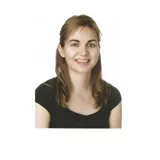
Amy L. Brock-Hon is the Robert L. Wilson Professor of Geology at the University of Tennessee at Chattanooga (UTC), part of the College of Arts and Sciences. She specializes in soil science, geomorphology, and pedogenesis, focusing on petrocalcic horizons in arid regions and the Cumberland Plateau's unique depressions. Her work integrates field studies, geophysical techniques, and micromorphological analysis. Teaching includes courses such as Physical Geology, Mineralogy, Geomorphology, and Soil Science. Her research explores the interplay of geomorphic, tectonic, and climatic processes on soil development, with notable projects on Mormon Mesa, NV, and Raccoon Mountain Caverns. Recent grants include studies on Cumberland Plateau depressions and barite mineral characterization in soils. Brock-Hon has supervised multiple undergraduate researchers, including Dylan Dudley, Sarah Morgenthaler, and Jonathan Petsch, whose work focused on soil mineralogy and sediment analysis. Her publications span pedogenic barite, carbonate soil formation, and geophysical surveys of landforms. She advocates for community engagement through geology education and integrates technology like GPR and GIS in her research.
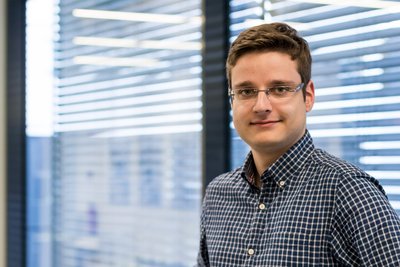
Suraj Jog is a Senior Research Scientist in the Networking Research Group at Microsoft Research, Redmond. He holds a PhD in Electrical and Computer Engineering from the University of Illinois at Urbana-Champaign (UIUC), advised by Haitham Hassanieh, and a Bachelor of Technology in Electrical Engineering from IIT Bombay. His research focuses on Wireless Networking , RF Sensing , IoT and Low Power Networks , and Machine Learning . He has contributed to projects like FarmBeats and developed systems such as HawkEye for mmWave imaging. His work spans spectrum efficiency in satellite networks, mmWave beam alignment, and ambient signal utilization for IoT localization. Notable achievements include the Qualcomm Innovation Fellowship 2020, Third Place in the SIGCOMM 2020 Student Research Competition, and the Joan and Lalit Bahl Fellowship. He serves on editorial boards for IEEE Network Magazine and conference program committees like MobiCom 2023/2024. His research bridges theoretical advancements with practical applications, such as reducing environmental sensing costs by 50x and demonstrating mmWave imaging in foggy conditions. Advising: No formal advisees listed. Current roles include leadership in the Networking Research Group at Microsoft, and contributions to open-source projects and datasets for radar imaging and mmWave systems.
Müjdat Çetin is a Professor of Electrical and Computer Engineering and serves as the Robin and Tim Wentworth Director of the Goergen Institute for Data Science and Director of the New York State Center of Excellence in Data Science at the University of Rochester. He previously held faculty positions at Sabancı University and was a Research Scientist at MIT, with visiting roles at Boston University, Northeastern University, and MIT. Education: PhD in Electrical Engineering, Boston University, 2001 MS in Electrical Engineering, University of Salford, 1995 BS in Electrical Engineering, Boğaziçi University, 1993 His research lies at the intersection of signal processing, machine learning, and data science, with applications in biomedical imaging, radar, and brain-computer interfaces. He develops probabilistic and deep learning models for robust information extraction from noisy and complex data. His work emphasizes computational imaging, sparse representations, and multimodal data fusion. The recent publications reflect a strong trend toward integrating Bayesian methods and deep learning in imaging sciences, particularly in medical image reconstruction, neuroimaging analysis, and radar systems. His group actively explores transformer architectures, federated learning, and model-based deep learning for solving inverse problems in imaging. Scientific Awards and Honors: IEEE Fellow IEEE Signal Processing Society Best Paper Award IET Radar, Sonar and Navigation Premium Award Elsevier Signal Processing Best Paper Award Turkish Academy of Sciences Distinguished Young Scientist Award (GEBİP) ODTÜ Mustafa Parlar Foundation Research Incentive Award TÜBİTAK Career Award Boston University Best Engineering Research Award Professor Cetin has advised numerous PhD and Master’s students and led significant research grants in data science and imaging. He has served as a Senior Area Editor for IEEE Transactions on Image Processing and IEEE Transactions on Computational Imaging, and held editorial roles in several top journals. He has chaired major conferences including ICASSP, ICIP, and IVMSP workshops. He leads a multidisciplinary research group focused on data science and imaging, collaborating with neuroscientists and medical researchers. The team develops novel algorithms for brain-computer interfaces, medical image analysis, and remote sensing systems, often integrating machine learning with physical models of data acquisition.
Michael Muma is a Professor in the Department of Electrical Engineering and Information Technology at Technische Universität Darmstadt. His research focuses on robust data science theory and methods applied to signal processing and machine learning in biomedicine and engineering. He leads the ERC Starting Grant ScReeningData project, developing methods for reproducible information discovery in biomedical databases, and is a Principal Investigator in the LOEWE center emergenCITY and BMBF cluster curATime. Prior roles include Independent Junior Research Group Leader (Athene Young Investigator) and Lecturer at TU Darmstadt from 2017 to 2022, and Research Associate (Post-Doc since 2014) from 2009 to 2017. His research interests span robust statistical methods, high-dimensional data analysis, emergency response systems, and biomedical signal processing. Notable projects include FDR-controlled portfolio optimization, ECG delineation algorithms, and radar-based vital sign estimation. Muma has contributed to distributed sensor networks, robust clustering, and sparse regression techniques. His work addresses challenges in multi-source detection, financial data analysis, and genomics through interdisciplinary approaches combining signal processing, machine learning, and robust statistics. Recent publications emphasize scalable solutions for high-dimensional problems, including applications in robotics, cardiology, and financial index tracking.
Arun Sundararajan is the Harold Price Professor of Entrepreneurship and Professor of Technology, Operations, and Statistics at New York University's Leonard N. Stern School of Business. He serves as Director of the Fubon Center for Technology, Business and Innovation and is affiliated with interdisciplinary research centers including the NYU Center for Data Science. Harold Price Professor of Entrepreneurship, NYU Stern Professor of Technology, Operations and Statistics, NYU Stern Director, Fubon Center for Technology, Business and Innovation Affiliated Faculty, NYU Center for Data Science His academic background includes a Ph.D. in Business Administration and an M.S. in Management Science from the University of Rochester, and a B.Tech. in Electrical Engineering from IIT Madras. Sundararajan's research focuses on artificial intelligence, the sharing economy, platform strategy, digital economics, and the future of work. He is a leading expert on network effects, AI governance, intellectual property in the age of generative AI, and antitrust policy for digital platforms. His influential book The Sharing Economy (MIT Press, 2016) has been widely translated and acclaimed. The 15 most recent publications highlight his deep engagement with generative AI, digital platform regulation, intellectual property, the future of work, and AI ethics. His work spans interdisciplinary themes connecting technology, law, economics, and societal impacts, reflecting a consistent focus on how digital innovation transforms markets and institutions. His scholarly contributions have been recognized with: Nine Best Paper awards Two Google Faculty Research Awards Axiom Best Business Books Award Thinkers50 Radar Thinker Award Sundararajan advises governments, international organizations (including the U.S. Congress, European Parliament, United Nations, and World Economic Forum), and major corporations on digital economy policy. He has provided expert testimony to federal agencies and legislative bodies and is a frequent media commentator. He teaches courses on AI, digital economics, fintech, and entrepreneurship to undergraduate, MBA, and doctoral students, and leads executive education programs globally. He is also an occasional angel investor and advisor to startups and innovation hubs. He leads the Fubon Center for Technology, Business and Innovation, fostering interdisciplinary research on digital transformation. He collaborates with research teams across NYU and advises global organizations on AI strategy and digital foresight.
Huacheng Zeng is an Associate Professor in the Department of Computer Science and Engineering (CSE) at Michigan State University (MSU), part of the College of Engineering. His research focuses on computer networking, wireless communication systems, and sensing technologies with applications in IoT security, signal processing, and machine learning. He received his Ph.D. in Computer Engineering from Virginia Tech in 2015 and was awarded the NSF CAREER Award in 2019. Dr. Zeng’s work spans innovative areas such as radar-based human motion tracking (e.g., RadEye), acoustic emotion decoding, and mmWave network optimization. His recent publications address challenges in device localization, vehicular communication, and secure RFID systems. His research often integrates machine learning techniques with traditional signal processing to enhance system performance and security. Education: Ph.D., Computer Engineering, Virginia Tech (2015) Awards: NSF CAREER Award (2019) His contributions to interference management, jamming-resilient communications, and distributed inference frameworks have advanced both theoretical and applied aspects of wireless networks. While no specific grants or advising details are listed, his extensive publication record reflects active collaboration in cutting-edge research domains.
Professor Jean-Pierre St. Maurice is a leading academic at the University of Saskatchewan specializing in atmospheric and space physics. His research focuses on ionospheric processes, plasma turbulence, and the interaction between plasma and neutral gases. He holds roles such as Scientific Program Chair for the 2008 COSPAR General Assembly and membership in the Canadian Space Agency’s Science Advisory Committee on Solar-Terrestrial Relations. His research integrates theoretical plasma physics with experimental radar and satellite data, particularly using the AMISR radar at Resolute Bay and the SuperDARN radar network. Key interests include ion velocity distributions, neutral wind circulation, Joule heating, and internal gravity wave generation. He explores how small-scale plasma processes influence large-scale atmospheric dynamics and magnetosphere-ionosphere coupling. Publications since 2001 highlight studies on ionospheric irregularities, Farley-Buneman instabilities, and equatorial electrojet dynamics. His work bridges kinetic theory with observational techniques, contributing to understanding plasma turbulence and energy redistribution in Earth’s upper atmosphere. Scientific contributions include advancements in radar data interpretation (e.g., HAIR echoes) and theoretical frameworks for ionospheric instabilities. His advisory roles reflect expertise in space science policy and international collaboration.
Petroula Laiou is a Research Fellow at King's College London, affiliated with the Department of Biostatistics & Health Informatics within the School of Mental Health & Psychological Sciences. She is part of the Institute of Psychiatry, Psychology & Neuroscience and contributes to the King's Epilepsy Research Collective (KERC). Education includes a PhD from Universitat Pompeu Fabra (Barcelona, Spain) and prior studies in Mathematics and Computational Physics at Aristotle University of Thessaloniki (Greece). Her research focuses on mathematical modeling, analysis of electroencephalographic recordings, and wearable device data to study neurological disorders like epilepsy and major depression. She applies methods from graph theory, dynamical systems, and time series analysis. Recent work includes investigating the link between home confinement and depression severity using smartphone/wearable data (published in 2022) and optimizing epilepsy surgery outcomes through computational models. Laiou collaborates across King’s faculties via KERC and contributes to multidisciplinary health research initiatives like RADAR-CNS.
Florian Vogelsang is a Researcher at the Ruhr University Bochum , affiliated with the Faculty of Electrical Engineering and Information Technology and the Integrated Systems department. His work focuses on high-frequency electronics, terahertz technology, and microwave circuit design. Research Interests: Microwave and terahertz signal generation Silicon Germanium (SiGe) and Indium Phosphide (InP) device integration Millimeter-wave radar systems and phased arrays High-efficiency RF circuits and frequency multipliers Compact and energy-efficient sensor modules Scientific Contributions: Over 15 publications (2016–2025) in IEEE journals and conferences Key work on 0.48 THz FMCW radar sensors and ultra-wideband transceivers
Catalina Spataru is Professor of Global Energy and Resources and Director of UCL Energy Institute at University College London's Bartlett School of Environment, Energy and Resources. She founded and leads the Islands and Coastal Research (ICR) Lab, driving interdisciplinary research across 27 countries with funding from UKRI, NSF, and international bodies. Her research spans the energy-resource nexus with focus on decarbonization, climate resilience, and sustainable island/coastal systems. Key methodologies include the ISLA model (applied to 300+ islands), RADaR disaster allocation framework, and IDA3/5 resource trade-off analyzer. She explores interconnected energy-water-land-material systems through complex modeling and stakeholder co-design. Publications reveal strong focus on maritime decarbonization (SOFC/GT systems), island vulnerability (Mauritius, Greece), African climate adaptation (Ghana case studies), and sustainable business frameworks. Recent work emphasizes community-led governance, challenging vulnerability narratives while developing practical tools for energy transition. Award Trevithick from Institution of Civil Engineers Socrates-Erasmus Fellowship recipient Advisory roles: IGNITE Network+, WEC Scenarios Study Group As an active supervisor, she mentors students applying her models (DEAM, IDA3, ISLA) to energy systems worldwide. She directs major initiatives like the Mobile Education Hub for Climate Resilience and collaborates with institutions including MIT, Stanford, and Princeton through her Nexus Dialogues work.
Michel Ménard is a Teacher-Researcher at the University of La Rochelle, affiliated with the Mathematics and Computer Science departments. His research focuses on image and signal processing, particularly in cardiovascular imaging, dynamic texture analysis, and UWB radar applications for through-wall imaging. Key projects: ANR DIAMS, FISC consortium, A.Gaugue project Applications: Cardiovascular imaging, environmental monitoring, mobile application programming Research Interests Ménard's work centers on modeling information ambiguity, imprecision, and uncertainty in image analysis, pattern recognition, and information fusion. He has developed generalized fuzzy coalescence methods, non-parametric Bayesian approaches for trajectory analysis, and variational formulations for image filtering inspired by quantum physics. His team focuses on: Dynamic texture modeling via spatio-temporal decomposition Low-level image processing with information theory Through-wall imaging systems using UWB radar Information fusion techniques with minimal a priori assumptions Applications in coastal environment monitoring and biomedical imaging Publications Ménard's publications reflect his expertise in advanced image processing techniques applied to diverse domains. Notable contributions include: Theoretical works on total variation and sublinear functionals Algorithm developments for multistatic radar systems Applications in 3D bee tracking and cardiovascular flow analysis Extensions of Chambolle's algorithm to color images Decomposition methods for dynamic textures Integration of quantum physics concepts in image filtering Collaborations He collaborates with: Laboratoires: L3i, MIA, CLDG/BQR, IRPHE CNRS, ETIS, LASIE Institutions: University Hospitals of Poitiers and Angers, ONERA, LEAT, Tronico Researchers: Abdallah El-Hamidi, Alain Gaugue, Damien Coisne, Gilles Aubert Teaching Ménard teaches across eight departments/programs including: Electronics and Industrial Computing Automation Network Security and Cryptography Video Game Programming Smartphone Programming Digital Media Distribution He has developed new educational initiatives in mobile application programming since 2010.
Markus Watzko is a Researcher at the Institute of Geodesy, Graz University of Technology, specializing in positioning systems for underground and indoor environments where GNSS signals are unavailable. His work directly addresses emergency response and military operational challenges through advanced localization technologies. He holds a BSc and Dipl.-Ing. (Master's equivalent) in Engineering. Watzko's research centers on underground navigation and tunnel engineering , utilizing optical radar , mobile robotics , and wireless sensor networks to solve GNSS-denied positioning challenges. His methodology emphasizes factor graph optimization and multi-sensor fusion of inertial data, UWB ranging, and 3D environmental models for real-time tracking in complex subterranean structures. Publication analysis (2022-2025) reveals progressive development from foundational pedestrian positioning systems to collaborative emergency task force solutions. The NIKE BLUETRACK project dominates his output, evolving from basic underground tracking to integrated real-time capabilities with UWB/IMU fusion. His work consistently bridges theoretical algorithm development with practical implementation in operational environments. No scientific awards are documented in available sources. Watzko maintains active research collaborations including a 2025 visit to Czech Technical University in Prague. While student supervision details are absent, his conference presentations indicate knowledge dissemination to scientific audiences. Grant specifics remain undisclosed in public profiles. His research operates within the Institute of Geodesy framework, focusing on the NIKE BLUETRACK system development team. This interdisciplinary group combines geodetic expertise with robotics and wireless communications to deliver operational tracking solutions for underground military and emergency applications.
Kai Ding is a researcher at the Johns Hopkins University School of Medicine , affiliated with the Department of Radiation Oncology . His work focuses on medical physics and radiation therapy advancements for cancer treatment, particularly pancreatic cancer. Radiation Therapy Optimization Proton Therapy Applications Medical Imaging Innovations Research trends include developing hydrogel-based spacers, fiducial marker localization techniques, and computational models for precision radiotherapy. His publications emphasize improving radiation delivery through ultrasound imaging, deep learning, and patient-specific simulations. Collaborations span institutions like Johns Hopkins University and Frontiers Media SA, with a focus on clinical applications and imaging technology integration in radiation oncology.
Robin Dietrich is a Researcher at the Department of Informatics 6 - Chair of Robotics, Artificial Intelligence and Real-time Systems at the Technical University of Munich . His work bridges computational neuroscience and robotics, focusing on translating neural mechanisms from mammalian brains into algorithms for mobile robot navigation. B.Sc. and M.Sc. in Computer Science Research on hippocampal temporal dynamics for neuromorphic SLAM Specializes in spiking neural networks for navigation and radar processing Research Interests : Robin's research explores the intersection of robotics, artificial intelligence, and computational neuroscience . His work specifically investigates spiking neural networks, FMCW radar data processing, and neuromorphic algorithms for autonomous systems. Recent projects focus on uncertainty quantification, evolutionary optimization, and multi-robot exploration using biologically inspired models. Publication Trends : Robin's publications (2019-2025) demonstrate a consistent focus on neuromorphic computing for robotic perception , with increasing specialization in spiking neural networks for radar processing and biologically inspired navigation algorithms . Key collaborations include contributions to multi-robot exploration metrics and hardware acceleration frameworks. Teaching Contributions : Robin has taught Digital Signal Processing and Real-Time Systems lectures since 2019, co-led seminars on Bio-inspired Data Processing , and supervised practical courses on Intelligent Mobile Robots using ROS.
Madelene Ostwald is a Professor at Chalmers University of Technology, affiliated with the Environmental Systems Analysis department and the Physical Resource Theory division. Her extensive research portfolio spans land use systems, climate change mitigation, and sustainable development across multiple continents, with particular focus on Africa and South Asia. She leads significant research initiatives that bridge scientific investigation with policy development. Her research interests center on multifunctional land-use systems, particularly examining how agroforestry and traditional land management practices contribute to food security, climate resilience, and biodiversity conservation. Ostwald investigates the intersection of environmental policy and practical land management, with special attention to gender dynamics in agricultural systems and the implementation of REDD+ initiatives. Her work demonstrates how remote sensing technologies can enhance understanding of complex land-use patterns in smallholder farming contexts. Analysis of her recent publications reveals a consistent focus on practical solutions for sustainable development challenges, particularly in dryland agricultural systems. She examines how traditional land management practices like parklands and homegardens provide ecosystem services while supporting local livelihoods. Her research increasingly integrates gender perspectives and policy analysis to address food security challenges in changing climate conditions. Ostwald leads multiple major research projects including 'Energy geography in East Africa' (2020-2024), 'Parkland NPP now and in the future' (2019-2023), and 'AgriFoSe2030 - Agriculture for Food Security Post 2030' (2016-2023), demonstrating sustained funding success from organizations including SIDA, Swedish Research Council, and VINNOVA. These projects reflect her interdisciplinary approach that connects environmental science with social dimensions of sustainable development. Her research spans multiple field sites across Africa (particularly Burkina Faso, Ethiopia, Kenya) and South Asia (particularly Sri Lanka and India), creating a comparative perspective on land management challenges in different ecological and socio-economic contexts. This international scope allows for cross-learning between regions facing similar sustainability challenges.