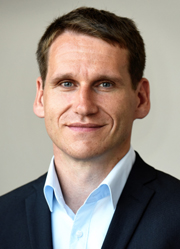
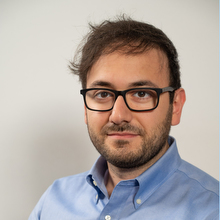
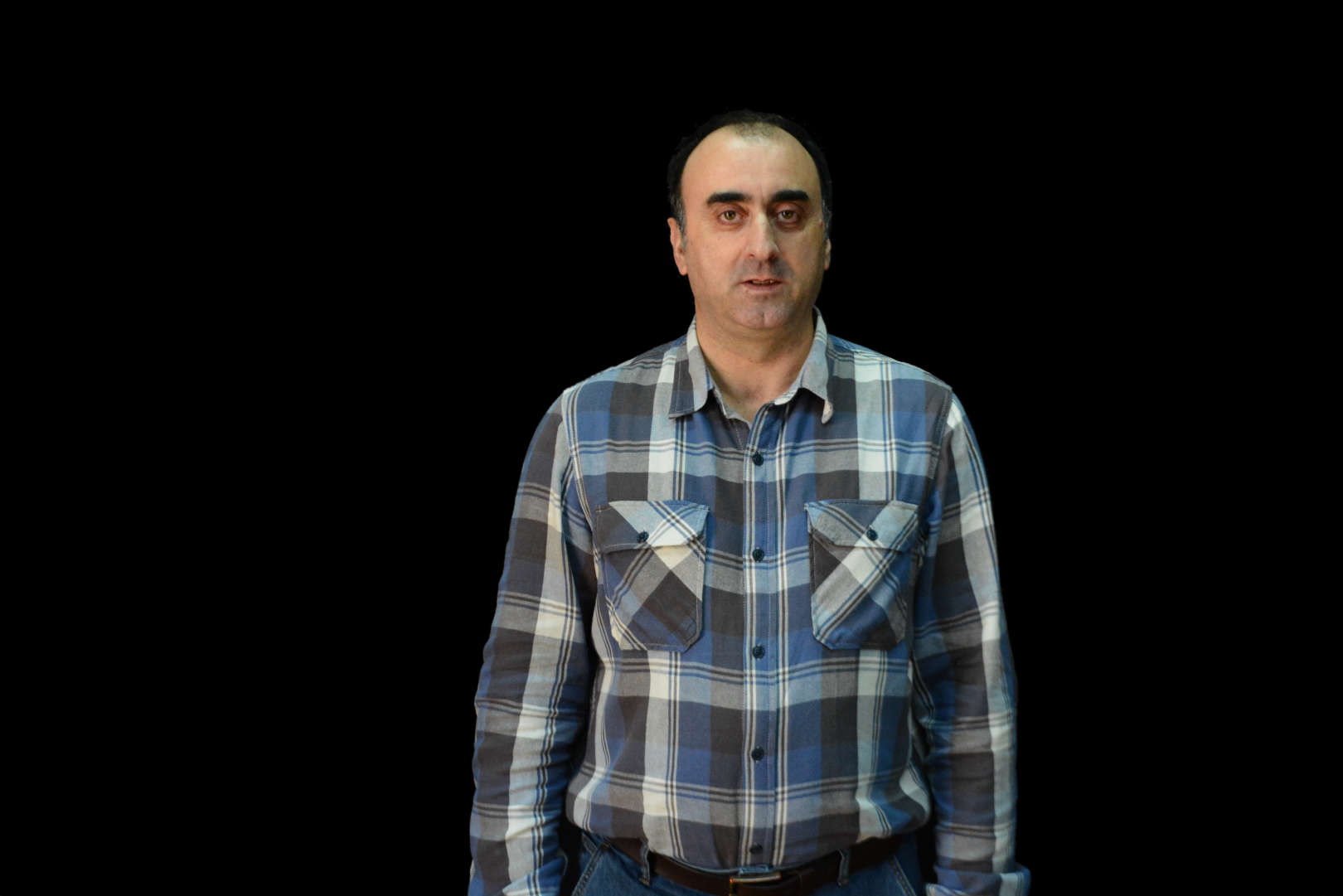
Prof. Mike Barth is a Professor for Networked Secure Automation Technology at the Karlsruhe Institute of Technology (KIT), affiliated with the Department of Electrical Engineering and Information Technology (ETIT) and the Institute for Control Systems (IRS). His academic background includes a doctorate from Helmut Schmidt University (2011) and a master's degree from Pforzheim University (2008). He previously held roles as a researcher at ABB and as a professor at Pforzheim University, focusing on blended learning and Industry 4.0 integration. Education: PhD in Automation Technology, Helmut Schmidt University (2011) M.Sc. in Product Development, Pforzheim University (2008) Diploma in Mechanical Engineering, Pforzheim University (2006) Research Interests: Automation technology, control systems, Industry 4.0, cyber-physical systems, digital twin engineering, cybersecurity, and IoT protocols. Teaching: Courses include System Modeling, Cyber Physical Production Systems, and Digital Twin Engineering. His research emphasizes secure automation architectures, decentralized systems, and model-based engineering. He chairs multiple committees including IFAC TC3.1 and the VDI/VDE Society for Measurement and Automation. Over 50+ publications span topics like simulation models, industrial security, and robotic integration. Labs/Teams: Leads the IRS Automation Technology team, focusing on innovation in control systems and digital twin applications.
Erdinç Altuğ serves as a Professor in the Department of Mechanical Engineering at Istanbul Technical University, specializing in advanced aerial robotics and control systems. His work bridges theoretical control methodologies with practical UAV applications. Research interests focus on Unmanned Aerial Vehicle design and fault tolerance Quadcopter dynamics and vertical takeoff systems Adaptive control for parametric variations Rapid prototyping of hybrid VTOL platforms His recent publications demonstrate consistent innovation in autonomous flight systems, particularly in fault-tolerant operational modal analysis and modular multi-drone configurations. Current projects include: Hibrit İnsansız Hava Aracı Ile Otonom Teslimat Sistemi Geliştirilmesi (TUBITAK, 2020-2022) Mini Jet Motorlu Dikine Kalkıp İnebilen Otonom Taşıyıcı Robot Geliştirilmesi (TUBITAK, 2018-2021) Kampüs içi ve bina içi ortamlarda çalışacak otonom taşıma aracı algoritmaları (SRP, 2018-2021) Supervising 26 graduate works, his research impacts both academic and industrial UAV development.
Petter Falkman is an Associate Professor in Systems and Control Engineering at Chalmers University of Technology, where he leads research in the Automation research group. With 68 publications spanning over two decades, his work bridges theoretical control systems with practical industrial applications, particularly in manufacturing and robotics. His research has been supported by major funding bodies including VINNOVA and European Commission projects. Falkman's research primarily focuses on intelligent automation systems, with key contributions in sequence planning, virtual commissioning, and human-robot interaction. His work integrates formal methods with practical industrial applications, developing frameworks like the Sequence Planner for control of intelligent automation systems. His recent publications demonstrate a strong emphasis on data-driven approaches, digital twin technologies, and the application of virtual reality for industrial applications. The research shows a clear trajectory toward increasingly sophisticated integration of human factors with automation systems, particularly through eye tracking and movement prediction technologies. Falkman has led or participated in 10 major research projects from 2011-2025, including CLOUDS (2022-2025) on circular solutions for sustainable production systems, UNICORN (2017-2021) on robotic refuse handling, and several VINNOVA-funded projects on virtual preparation and industrial automation. His collaborative network includes researchers across Chalmers and industry partners like Volvo Group, demonstrating strong industry-academia connections. Falkman has established himself as a key contributor to the development of frameworks for intelligent automation, with particular expertise in translating theoretical control concepts into practical industrial applications. His work on the Sequence Planner framework represents a significant contribution to the field, enabling more efficient preparation and commissioning of automation systems.
Markus Bader is a PostDoc Researcher at the Technische Universität Wien's Faculty of Informatics, Department of Automation Systems. He holds roles as Curriculum Coordinator for Master's programs in Automation Systems and Mobile Robotics, and serves on multiple academic committees including the Faculty Council and Curriculum Commissions for Informatics and Computer Engineering. He earned his Diplom-Ingenieur (2006) and Doctor Technica (Dr.techn.) from TU Wien. His research focuses on autonomous systems, mobile robotics, and control systems, with notable work on multi-robot coordination, path planning algorithms, and real-time navigation in human environments. Key projects include TransportBuddy (2018), exploring navigation in human spaces, and the Formula Student Driverless race car design (2017). Bader has led or contributed to funded projects such as the Austrian Research Promotion Agency (FFG)-supported Green Facade Digital Twin (2025–2027), Independent Wheel Offset Steering (2016–2017), and MPCv1 (2015–2017), emphasizing model predictive control and sensor integration. Research Highlights : Prioritized multi-robot route planning (MRRP), human motion prediction for autonomous navigation, and sensor fusion for vehicle localization. Grants : FFG-funded projects totaling over €2.5M, including autonomous vehicle coordination and mobile robotics tool development. He advises students on topics like ROS2-based route planning and independent steering systems, with 7+ supervised theses documented. Bader's work bridges theoretical robotics research with practical applications in industrial automation and autonomous vehicle systems.
Abdurrahman Yılmaz is an Assistant Professor at Istanbul Technical University's Department of Control and Automation Engineering within the College of Electrical-Electronics. His career spans academic and industrial roles, including a Research Assistant position at Istanbul Technical University (2018-2022) and Test Rig Design Engineer at ASELSAN INC. (2014). Education: PhD in Control and Automation Engineering (Istanbul Technical University, 2014-2022) MSc in Mechatronics Engineering (Yildiz Technical University, 2014-2017) BSc in Electronics Engineering (Istanbul Technical University, 2009-2014) Double Major in Control and Automation Engineering (Istanbul Technical University, 2011-2014) Research Interests focus on Robotics, Autonomous System Design, and Control Theory. His work includes localization frameworks for autonomous mobile robots, adaptive control algorithms for quadcopters, and soft haptic sensing technologies. Recent research explores digital twin simulators and quadruped robot dynamics. Scientific Output trends highlight advancements in mobile robot navigation, industrial automation, and autonomous systems. Publications span journals like Journal of Field Robotics and conferences including TAROS and RoboSoft. Awards: The Most Successful Doctoral Thesis Award of 2022 (University, 2023) 1st Water Management Awards (Ministry of Forestry and Water Affairs, 2019) Collaborations extend to international researchers in robotics and control systems. He serves as PI for the project "Development of a Design-Aiding Analysis Tool for Four-Legged Robots" (2023-2024).
Federico Ciccozzi is an Associate Professor in Computer Science at Mälardalen University's School of Innovation, Design and Engineering, where he leads the ASSO research group and the VR ORPHEUS project. He also serves as Head of Research Education in Computer Science and Electronics at the university. His academic journey includes a M.Sc. in Global Software Engineering (via the GSEEM program) and a Ph.D. in Computer Science and Engineering from Mälardalen University (2014), followed by promotion to Docent (Associate Professor) in 2017. Education: M.Sc. in Global Software Engineering (GSEEM program, joint between Mälardalen, L'Aquila, and Amsterdam) Ph.D. in Computer Science and Engineering (Mälardalen University, 2014) Docent (Associate Professor) in Computer Science (Mälardalen University, 2017) His research focuses on model-driven engineering, robotics software engineering, and software architecture. He has pioneered work in blended modeling approaches, EAST-ADL extensions, and formal verification of complex systems, particularly in robotics and automotive domains. Recent projects emphasize industrial collaborations, such as optimizing ROS2 multi-robot systems and enhancing safety-critical software through model-based methodologies. Research Contributions: Developed frameworks for transforming surface languages into augmented EAST-ADL models Advanced blended modeling techniques across JetBrains MPS and Eclipse tools Examined consistency management in industrial model-driven development Edited special issues on model-driven engineering and low-code development His work bridges academic innovation and industrial practice, with notable projects like the Rubus Component Model for vehicular systems. He actively organizes workshops (e.g., RoSE, ASYDE) and contributes to standardization efforts like the Portable Test and Stimulus Standard. Labs/Teams: Leads the ASSO research group, focusing on advanced software engineering methodologies and robotics systems development.
Petter Falkman is a researcher at Chalmers University of Technology, specializing in robotics, industrial automation, and control systems. His work bridges theoretical advancements with practical applications in manufacturing, leveraging technologies like digital twins, eye tracking, and virtual reality. Key Research Areas: Robotics, Industrial Automation, Control Systems, Digital Twins, Human-Computer Interaction, Machine Learning. Collaborations: Frequently works with Bengt Lennartson, Kristofer Bengtsson, Martin Dahl, and colleagues across institutions. Publication Trends: Recent articles focus on gaze-based human intention prediction, ROS2 control architectures, and compositional automated planning. His work integrates machine learning with industrial control systems, emphasizing event-driven design and virtual commissioning. Methodologies: Develops frameworks like EPypes for data pipelines, contributes to STEP AP214 model generation, and explores energy optimization in multi-robot systems.
Madi Babaiasl is a Clare Booth Luce Assistant Professor in the Department of Aerospace and Mechanical Engineering at Saint Louis University's School of Science and Engineering. Her research focuses on developing innovative robotic solutions for assistance, rehabilitation, agriculture, and education applications. Education: Ph.D. in Mechanical Engineering (Robotics) from Washington State University M.S. in Mechatronics Engineering from Tabriz University, Iran B.S. in Electrical Engineering from Tabriz University, Iran Dr. Babaiasl's research spans multiple domains at the intersection of robotics, machine learning, control theory, and artificial intelligence. Her primary focus centers on developing safe and efficient human-robot interaction systems, particularly for assistive and rehabilitation applications. She investigates human intention detection, agricultural automation, and novel approaches to robotics education, integrating knowledge from psychology, physical therapy, agriculture, and education to create comprehensive robotic solutions. Her work addresses real-world problems such as developing devices to suppress hand tremors for Parkinson's patients and creating steerable needles for surgical applications. Analysis of her recent publications (2022-2025) reveals a clear evolution from medical robotics (particularly steerable needles) toward more diverse applications including assistive and agricultural robotics. The newer publications increasingly incorporate advanced AI techniques like transformer models, large language models, and multimodal signal processing for human-robot interaction, with strong emphasis on practical implementation using ROS2, edge computing, and real-time control systems for applications where cloud connectivity may be limited. Scientific Recognition: Featured in RSIP Vision Magazine as a Woman in Science (January 2022) Featured in SWE's 'A Day in The Life of Robotics Engineer' blog (April 2022) Multiple features in university publications for steerable needle research (2018-2019) Wanda Munn Scholarship for outstanding academic achievement (2019) Top 0.2% in national university entrance exams in Iran (2006) Recent lab achievements including Midwest Robotics Workshop 2025 Travel Grant (2025) Dr. Babaiasl actively mentors students through her Mecharithm Lab at SLU, seeking those with robotics foundations, programming skills (particularly Python), and familiarity with ROS. She has successfully blended academic and entrepreneurial pursuits by founding Mecharithm in 2021, which generated $73,000 in its first year. Her mentorship philosophy emphasizes project-based learning, self-directed growth, and developing as an independent researcher. Leading the Mecharithm Lab, Dr. Babaiasl oversees research projects including WheelArm (enhancing independence in assistive robotic systems), multi-modal human intent recognition, and deploying large language models for intuitive human-robot interaction. Her lab comprises graduate and undergraduate students primarily from Mechanical Engineering and Computer Science backgrounds, working on meaningful projects that aim to leave a lasting legacy for society through robotics innovation.
Marjan Sirjani is a Professor at Mälardalen University, affiliated with the School of Innovation, Design and Engineering, and the Division of Computer Science and Software Engineering. Her research focuses on cybersecurity, formal verification, and cyber-physical systems, with notable contributions to actor-based modeling (e.g., Timed Rebeca) and tools like AFRA for model analysis. She specializes in integrating formal methods into safety-critical systems, including automotive cybersecurity, ROS2 robotics, and blockchain-based IoT systems. Her work emphasizes rigorous analysis of protocols, concurrency, and real-time constraints. Recent projects include the CRYSTAL framework for CPS assurance, Tiny Twins for runtime attack detection, and applying LLMs for automated test generation. She also explores semantic segmentation in construction and compositional analysis of distributed systems. Publications highlight advancements in protocol learning, controller synthesis for safety, and model-driven development. Her research bridges theoretical foundations (e.g., automata theory, temporal logics) with practical applications in autonomous systems, medical device interoperability, and smart mobility. Labs/Teams: Involved in the Rebeca tool development (AFRA) and collaborative projects on CPS security. Grants: Not explicitly listed but implied through project involvement.
Gianluca Caiazza is a Researcher at the Department of Environmental Sciences, Computer Science and Statistics at Ca' Foscari University of Venice. He is affiliated with the Research Institute for Complexity and the Temporary Center for the Innovation Ecosystem Project. His work focuses on cybersecurity within robotics and software systems, particularly in the Robot Operating System (ROS) framework. He teaches courses such as 'Operating Systems - MOD.1' and 'Software and System Verification' at both undergraduate and doctoral levels. His research interests span cybersecurity for robotic systems, static analysis techniques, blockchain applications in robotics, and secure middleware development. He has conducted extensive work on enhancing ROS security through tools like SROS2 and static analysis frameworks like LiSA, addressing vulnerabilities in DDS systems and penetration testing methodologies. Caiazza's recent publications emphasize automated policy extraction, microservice security, and IIoT system scalability. His work bridges theoretical computer science with practical applications in robotics, contributing to both academic journals and industry-oriented conferences. He collaborates actively with institutions like IEEE and Springer, focusing on advancing secure robotic technologies. His teaching activities include laboratory modules for software project development and advanced verification techniques for software systems. Despite no listed awards, his contributions to ROS security frameworks are recognized within academic and industrial robotics communities.
Muyinatu Bell is the John C. Malone Associate Professor in the Department of Electrical and Computer Engineering at Johns Hopkins University, with joint appointments in Biomedical Engineering and Computer Science. Her primary affiliation is the Whiting School of Engineering. She directs the PULSE Lab, pioneering innovations in ultrasound and photoacoustic imaging for surgical guidance, cancer detection, and minimally invasive procedures. Bell holds secondary appointments in Oncology and collaborates with institutions like the Malone Center for Engineering in Healthcare and the Laboratory for Computational Sensing and Robotics. Her education includes a BS in Mechanical Engineering (MIT), PhD in Biomedical Engineering (Duke University), and postdoctoral research in Computer Science at Johns Hopkins. She has developed groundbreaking technologies such as the SLSC beamformer and teleoperated photoacoustic-guided surgery systems. Her work emphasizes equity in healthcare technology, addressing biases in imaging related to skin tone and accessibility for underrepresented groups. Bell’s research focuses on integrating robotics, optics, and machine learning to improve surgical precision and diagnostic accuracy. Her lab’s innovations include robotic visual servoing systems and deep learning frameworks for real-time imaging. Key applications span neurosurgery, oncology, and妇产科手术指导. Her awards include the NSF CAREER Award (2018), MIT Technology Review's '35 Innovators Under 35' (2015), and Optica Fellowship (2024). She serves on editorial boards for journals such as IEEE Transactions on Medical Imaging and Photoacoustics, and actively promotes diversity in engineering through leadership roles in NSBE and IEEE committees. Bell’s current projects include ARPA-H-funded lung cancer imaging software and laser safety protocols for photoacoustic-guided surgeries. Her lab collaborates with clinical partners to translate technologies into clinical practice, ensuring impact on patient care.
Prof. Dr.-Ing. Annika Raatz serves as the Dean of the Faculty of Mechanical Engineering at Leibniz University Hannover and Executive Director of the Institute for Assembly Technology and Robotics. She leads task groups in advanced manufacturing and contributes to collaborative research centers CRC 1368 Oxygen-free Production CRC 871 Regeneration of Complex Capital Goods Her work bridges academia and industry through roles in the Leibniz School of Optics and Photonics , PhoenixD Cluster , and the German Research Foundation .
João Barroso serves as Associate Professor with Habilitation at the University of Trás-os-Montes and Alto Douro (UTAD) and Senior Researcher at INESC TEC's Human-Centered Computing and Information Science Centre, where he has been Research Coordinator since October 2012. Previously, he held the position of Pro-Rector for Innovation and Information Management at UTAD from July 2010 to July 2013. His academic credentials include: Doctorate in Electrical Engineering from UTAD (2002) Habilitation in Informatics/Accessibility (2008) Barroso's research centers on Digital Image Processing, Accessibility, and Human-Computer Interaction, with significant extensions into biosignal processing for healthcare applications, machine learning for gaming and autonomous systems, and context-aware architectures for Industry 4.0 environments. His work consistently emphasizes real-world implementation, as demonstrated by his leadership in developing the ElderMind mobile application for cognitive stimulation and portable ECG/EMG acquisition systems. He founded two major conference series: Software Development and Technologies for Enhancing Accessibility and Fighting Info-exclusion (DSAI, 2006) and Technology and Innovation in Sports, Health and Wellbeing (TISHW, 2016). Analysis of his 15 most recent publications (2024-2025) reveals three dominant research thrusts: (1) Machine learning validation for gaming and autonomous driving (PPO vs. SAC algorithms), (2) High-fidelity biosignal acquisition systems with visual electrode monitoring, and (3) Systematic vulnerability analyses in web/mobile security and context-aware Industry 4.0 architectures. His publications demonstrate a consistent pattern of translating theoretical computing advances into practical health and industrial applications, with 2025 outputs showing particular emphasis on hardware-software integration for telemedicine and production management. Barroso has supervised 40 postgraduate students including Dennis Lourenço Paulino (2024, UTAD) who developed crowdsourcing personalization models and Luís Filipe Jesus Correia (2022, UTAD) who researched Brain-Computer Interfaces. His project portfolio spans 35 research and development initiatives, with recent grants supporting his virtual assistant prototype for Industry 4.0 production environments and high-resolution Bluetooth biosignal modules. He leads the Human-Centered Computing and Information Science Centre at INESC TEC, where his laboratory focuses on prototyping accessible technologies through interdisciplinary teams. Current projects integrate computer vision for elderly care, ROS2 middleware for unmanned vehicle coordination, and semantic interoperability frameworks for digital twins, maintaining his dual focus on theoretical innovation and socially impactful applications.
Géza Szabó is a Researcher at Ericsson Research in Budapest, Hungary. His work focuses on advanced networking solutions for industrial and robotic systems, particularly in 5G/6G integration, network resource management, and AI-driven automation. He has extensively contributed to optimizing wireless resource allocation in industrial IoT environments and enhancing network performance through programmable data planes. Key areas: Network Co-Design, Industrial Automation, Reinforcement Learning Notable collaborations: József Peto, Sándor Rácz, Rafael Antonello His research bridges theoretical advancements with practical implementations, addressing challenges in real-time systems and quality-of-control (QoC) for cyber-physical processes. He has pioneered solutions for multipath channel switching in ROS2 and 3GPP frameworks, and developed adaptive traffic reduction techniques using SDN/NFV architectures. Recent work includes the FATHER project (Factory on the Road) exploring agile industrial production cells and the application of digital twins for network-physical system synchronization. His publications span top venues like IEEE Access, GLOBECOM, and ICC, reflecting his deep engagement with both academic and industry-relevant networking challenges.
Dr. Florian von Zabiensky is a Lecturer at Technische Hochschule Mittelhessen , where he has taught courses such as Embedded Systems Internship, Real-time Systems, and Software Engineering Project since 2016. He holds a PhD and M.Sc. in Computer Science, with a focus on embedded systems and assistive technologies for the blind. His research spans real-time operating systems, domain-specific languages, and simulation of embedded systems. Education : B.Sc. and M.Sc. in Computer Science, with thesis work on memory management and wireless sensor networks. Research Interests : Assistive technology, embedded systems, real-time systems, domain-specific languages, and sensor networks. Publications : Focus on electronic travel aids, AADL for ROS2 architectures, and neural networks in accessibility solutions. Industry Role : Software developer at Schmidt Embedded Systems GmbH since 2020 and self-employed developer in embedded systems.