.jpg?sfvrsn=1bd7bfba_2)
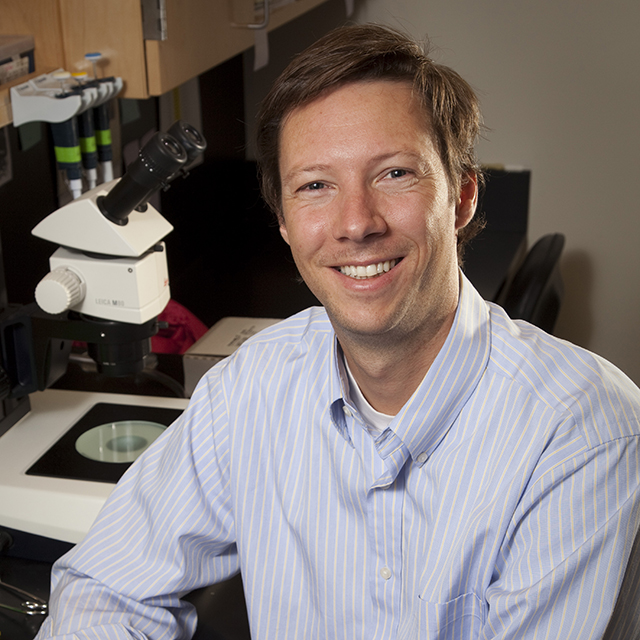
Jeffrey K. MooreView profile
Associate Professor
Jeffrey K. Moore is an Associate Professor in the Department of Cell and Developmental Biology at the University of Colorado Anschutz Medical Campus. He also serves as the Director of the Graduate Program in Cell Biology, Stem Cells and Development. His research focuses on understanding how microtubule networks organize cells and regulate crucial cellular processes, with implications for human diseases including cancer and neuropathies. Dr. Moore received his Ph.D. from the University of Rochester in 2006. His academic journey has led him to specialize in cellular organization mechanisms, particularly how the microtubule cytoskeleton controls organelle positioning during cell division and migration. His work bridges fundamental cell biology with potential clinical applications. Dr. Moore's research interests center on the molecular mechanisms that regulate microtubule dynamics and function. His laboratory investigates how molecular motors interact with microtubule tracks, how mitosis is coordinated with cell polarity during asymmetric cell divisions, and how cells develop resistance to microtubule-targeting cancer drugs. His work combines powerful yeast genetics with quantitative microscopy and protein biochemistry to uncover fundamental principles of cellular organization. The laboratory's research has significant implications for understanding human diseases where microtubule dysfunction plays a critical role. Dr. Moore's publications reveal how specialized microtubules serve different cellular functions through tubulin isotypes and post-translational modifications. His work on the 'tubulin code' has advanced understanding of how microtubule networks can be differentially regulated in various cellular contexts. Recent publications examine α-tubulin regulation, tubulin isotype specialization, and the role of microtubule-based forces in genome stability. As Director of the Graduate Program in Cell Biology, Stem Cells and Development, Dr. Moore mentors numerous graduate students in the Department of Cell and Developmental Biology. His research program is supported by grants from the National Institutes of Health and other funding agencies focused on understanding fundamental cellular processes with implications for human health. The Moore Lab at the University of Colorado Anschutz Medical Campus utilizes the budding yeast Saccharomyces cerevisiae as a primary model system. The lab brings together researchers with expertise in genetics, cell biology, biochemistry, and quantitative imaging to tackle questions about cellular organization. Their collaborative approach has led to important insights into how cells manipulate their internal architecture for proper function, with findings relevant to understanding disease mechanisms and potential therapeutic approaches.