Rémi Buisson, PhD, is an Associate Professor in the Department of Biological Chemistry at the University of California, Irvine (UCI) School of Medicine. His research focuses on the BRCA2 tumor suppressor, DNA replication fork dynamics, and mechanisms of genome instability in cancer. He investigates how BRCA2 interacts with replication factors like MCM10 to suppress PRIMPOL-mediated repriming, a process critical for DNA repair after damage. Key Research Themes: DNA Damage Response Replication Fork Stability Homologous Recombination Tumor Suppression Mechanisms Recent Articles (Trends): His work spans DNA repair pathways, APOBEC enzyme activity in cancer and viral infections, replication stress responses, and circular RNA roles in leukemias. High-impact studies include mechanisms of BRCA2-MCM10 interactions (2021), APOBEC3A's role in therapy resistance (2023), and CRISPR-Cas9 screens for viral RNA decay pathways (2024). Grants: Funded by multiple NIH/NCI awards including R00 CA212154, R01 CA138804, and P01 CA250957.
Dr. Wei Cao is a Research Fellow in the Department of Anatomy & Developmental Biology at Monash University. His research focuses on germline regulation, mitochondrial stress response, and neuronal signaling in Caenorhabditis elegans . He is a Chief Investigator in the 'Characterization of the Germline Regulatory Landscape' project (2023–2027), exploring the molecular mechanisms underlying germline development. His work contributes to UN Sustainable Development Goals related to health and innovation. Key research interests include neuro-intestinal signaling pathways, TGF-β signaling in neuronal guidance, and mechanisms of germline recovery after stress. He has published extensively in Nature Communications , Cell Death and Differentiation , and iScience . Recipient of the 2021 ECR Excellence in Publication Award Recipient of the 2022 RNAVic Award for Outstanding Research Output His research integrates molecular, genetic, and systems-level approaches to understand developmental and cellular processes in model organisms.
Bertrand Joseph is a Professor at the Department of Toxicology within the Institute of Environmental Medicine at Karolinska Institutet. His research focuses on molecular mechanisms of cell death, particularly in neurodegenerative diseases and cancer, emphasizing the role of microglia in inflammatory responses and disease progression. He holds a Docent degree from Karolinska Institutet (2004). Research interests include microglial diversity, caspase signaling, and epigenetic regulation in neuroinflammation. His work integrates molecular biology, cell biology, and neurobiology to explore how cellular decision-making processes (life vs. death) impact diseases like Alzheimer’s, Parkinson’s, and glioma. Recent publications highlight his team’s discoveries on microglial subtypes, ARG1-expressing microglia’s role in brain development, and mechanisms linking microglial dysfunction to autism and cancer. Key findings include the identification of novel pathways regulating neuroinflammation and tumor-supportive microglia phenotypes. No scientific awards or grants are explicitly listed in the provided texts. His lab, 'Toxicology – Bertrand Joseph’s Research Group,' investigates diverse aspects of microglial biology, including their response to environmental toxins and neurodegenerative triggers.
Sarah Kargbo-Hill is an Assistant Professor in the Department of Molecular, Cellular, and Developmental Biology (MCDB) at the University of Michigan. She joined the department in January 2024 and leads the Kargbo-Hill Lab, which investigates neuronal longevity mechanisms under stress and aging. Her work focuses on epigenomic and transcriptomic adaptations, particularly RNA splicing and DNA methylation in neurodegenerative diseases like ALS. Education: Ph.D. in Cell Biology from Yale University (lab of Dr. Daniel Colón-Ramos), B.S. in Biology from Penn State University (lab of Dr. Melissa Rolls). Postdoctoral research at Dr. Michael Ward’s lab explored TDP-43-linked proteins in human iPSC-derived neurons. Research interests include neuronal resilience, autophagy regulation, synaptic biology, and how aging impacts gene expression programs. Her lab uses multi-omics approaches and model systems like C. elegans and human iPSC neurons to study these processes. Key findings include mechanisms of TDP-43-driven ALS pathology, autophagosome maturation, and DNA repair in neurons. Recent work highlights links between RNA splicing defects and neurodegenerative biomarkers. Labs/Teams: Principal Investigator of the Kargbo-Hill Lab in the Biological Sciences Building, Ann Arbor. Collaborates with neurodegeneration research networks and employs advanced microscopy and genomic tools.
Oliver Hobert serves as Professor of Biological Sciences and Biochemistry and Molecular Biophysics at Columbia University's Faculty of Arts and Sciences. His research is centered at the Hobert Lab ( hobertlab.org ), where he investigates the molecular mechanisms underlying nervous system development and function using the C. elegans model system. His laboratory has made significant contributions to understanding how terminal neuronal identity is controlled through conserved regulatory mechanisms. Hobert's research focuses on several interconnected domains of neurodevelopment. His lab has revealed core regulatory logic for terminal neuronal identity specification across multiple neuron types, demonstrating evolutionary conservation of these mechanisms in chordates. A major thrust of his work addresses neuronal asymmetry across the left/right axis—a previously understudied area in neuroscience—where his team identified complex gene regulatory networks controlling differential neuron identity. Additionally, his research explores how the nervous system responds to environmental stimuli to modulate behavior and maintain structural integrity. The lab employs innovative technologies they developed to exploit C. elegans ' experimental advantages for comprehensive understanding of genetic programs governing nervous system development. Analysis of Hobert's recent publications (2023-2025) reveals consistent focus on molecular neurogenetics with expanding emphasis on comparative connectomics across nematode species. His work demonstrates sophisticated integration of single-cell genomics, evolutionary analysis, and functional neuroanatomy. Key trends include increasing investigation of peptidergic signaling networks, neuronal left-right asymmetry, and conserved mechanisms of neuronal identity specification. His research bridges molecular genetics with systems neuroscience, generating tools and conceptual frameworks applicable to understanding nervous system organization across phylogeny. The Hobert Lab maintains active research programs in neuronal identity specification, nervous system evolution, and environmental response mechanisms. They have developed novel methodologies for nervous system-wide analysis, including advanced imaging techniques and computational approaches for connectome analysis. Current work extends findings from C. elegans to vertebrate models, demonstrating translational relevance of their discoveries in fundamental neurobiological processes.
John Stanley Mattick is the SHARP Professor of RNA Biology in the School of Biotechnology and Biomolecular Sciences at UNSW Sydney. Previously, he served as Executive Director of Genomics England (2018-2019) and Director of the Garvan Institute of Medical Research (2012-2018). He holds leadership roles in genomic research, establishing key facilities like the HiSeq X10 sequencing platform. His career includes foundational roles at the University of Queensland, including founding the Institute for Molecular Bioscience and the Australian Genome Research Facility. Education: BSc (First Class Honours, Biochemistry) from the University of Sydney (1972) PhD in Biochemistry from Monash University (1978) DSc from the University of Queensland (2024) Research focuses on regulatory RNAs, noncoding DNA functions, and their roles in development, disease, and evolution. Key areas include RNA structure-function relationships, lncRNA roles in cognition, and the epigenetic trajectories of development. His work challenges traditional views of genomic 'junk' DNA, emphasizing the centrality of RNA in genetic regulation. Publications span over 300 peer-reviewed articles, cited over 100,000 times. Notable contributions include co-authoring RNA, the Epicenter of Genetic Information (2022), which won awards for Best Science Open Access Book. Awards and Honors: Officer in the Order of Australia (AO) Fellowships in the Australian Academies of Science, Health & Medical Sciences, and Technology & Engineering Recipient of the IUBMB Medal and HUGO Chen Medal Ranked #1 globally in noncoding RNA research (2023) Leadership and Service: Chaired major international genome conferences and advisory boards Contributed to ethical frameworks for genomic research and healthcare Member of the Queensland Studies Authority (2004-2007) Current research explores RNA modification dynamics, lncRNA functions in brain plasticity, and the genomic basis of complex traits.
Elliot Meyerowitz is the George W. Beadle Professor of Biology and Howard Hughes Medical Institute Investigator at the California Institute of Technology (Caltech). He holds a B.A. from Columbia University, M.Phil. and Ph.D. from Yale University, and honorary doctorates from École Normale Supérieure and Yale. His academic career spans roles from Assistant Professor (1980–85) to current endowed chair. He led the Sainsbury Laboratory at Cambridge (2011–2012) and served as Executive Officer and Chair of Caltech's Division of Biology. His research focuses on plant development, particularly shoot apical meristems in Arabidopsis. Key areas include mechanochemical signaling, plant hormone networks (e.g., auxin and cytokinin), and stem cell dynamics. His lab pioneered live imaging, computational modeling, and cell tracking techniques. Notable contributions include discoveries about peptide hormones' roles in plant development and the interplay between mechanical forces and genetic regulation in morphogenesis. Meyerowitz's work bridges molecular genetics, cell biology, and systems biology, with implications for agriculture and climate change mitigation. He has been recognized with prestigious awards, including HHMI Investigator status. His lab's interdisciplinary approach integrates experimental and computational methods to unravel complex developmental processes.
Dr. Nikolay Shirokikh is a Research Fellow at the Australian National University's John Curtin School of Medical Research, where he leads the Shirokikh Group focusing on Protein Biosynthesis and Homeostatic Control. His research examines rapid cellular responses through gene-specific translation analysis using high-throughput RNA/protein methods and computational biology. Research interests include: RNA biology and translational control mechanisms Stress response pathways in cancer and neurological disorders Computational modeling of protein biosynthesis Recent publications (2022-2024) demonstrate a focus on RNA modifications, nanopore sequencing, and machine learning applications in transcriptome analysis. Major themes include RNA modification mapping, translational dynamics under stress, and evolutionary conservation of RNA machinery. Awards: The Gordon Ada Early Career Researcher Award (2016) Supervises PhD students including Shafi Mahmud, Mohammed Muntasir, Agin Ravindran, and Katrina Woodward. Collaborates with the Hannan Group on cancer therapeutics and contributes to the Shine-Dalgarno Centre for RNA Innovation.
Stepan Denisov is a Researcher in the Division of Evolution, Infection and Genomics. His work focuses on molecular mechanisms of RNA processing, aging-related mutational signatures, and antibiotic resistance. He has contributed to high-impact studies in Nature Communications , Nucleic Acids Research , and PLoS Computational Biology . Key research areas include RNA structure-function relationships, splice site evolution, and mitochondrial DNA dynamics. His 2025 study pioneered a high-throughput method for identifying antibiotic resistance mutations, while his 2022 paper revealed mitochondria-specific aging biomarkers. Collaborations span global institutions, reflecting his interdisciplinary approach. His research has garnered significant attention, with over 35 Mendeley readers for his 2021 Nature Communications article and media coverage for the antibiotic resistance work. Though no formal awards are listed, his publications demonstrate impactful contributions to molecular biology and genetics.
Brunilda Balliu is an Assistant Professor at the David Geffen School of Medicine at UCLA, holding dual appointments in Pathology and Laboratory Medicine and Computational Medicine . Her research focuses on genomic approaches to understanding complex traits, integrating single-cell RNA-Seq , electronic health records , and statistical genetics to uncover mechanisms of disease regulation. PhD in Statistical Genetics from Leiden University Postdoctoral work at Stanford University Dr. Balliu's work spans diverse areas including: Gene regulation and splicing dynamics Multi-ethnic disease mapping Wearable device data integration Single-cell multi-omic analysis Her publications highlight collaborations in: NIH R01HG006399 (2011–2025) on disease mapping NIH R01MH125252 (2021–2026) on psychiatric disorder risk loci NIH U01HG012079 (2021–2026) on gene regulatory networks Wellcome Leap (2021–2025) on anhedonia mechanisms Her lab develops computational frameworks for: Trans-eQTL mapping Ambient contamination correction Longitudinal omics analysis
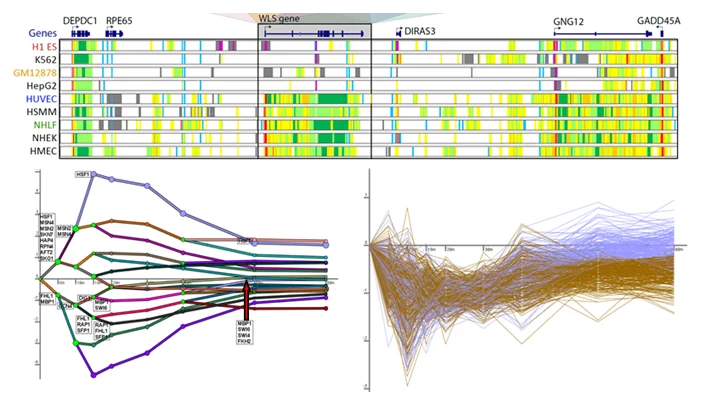
Jason Ernst is a Professor of Biological Chemistry and Computational Medicine at the University of California, Los Angeles (UCLA), where he leads a computational biology lab focused on epigenomics, regulatory genomics, and non-coding genome interpretation. His work spans multiple departments and institutes including the David Geffen School of Medicine, Computer Science Department, Computational Medicine Department, Interdepartmental Bioinformatics Program, Institute for Quantitative and Computational Biosciences, Broad Stem Cell Research Center, Jonsson Comprehensive Cancer Center, and Molecular Biology Institute. Dr. Ernst received his BS in Computer Science and Mathematics from the University of Maryland, College Park (2002), his PhD in Machine Learning from Carnegie Mellon University (2008), and completed postdoctoral training in Computational Biology at MIT (2011). His research interests center on developing computational methods to analyze chromatin states, DNA methylation patterns, and regulatory elements across diverse cell types and species. His recent publications reveal a strong focus on epigenomic data integration, with particular emphasis on chromatin state annotation, cross-species methylation analysis, and the functional interpretation of non-coding genomic regions. His lab has developed influential computational frameworks like ChromHMM for chromatin-state discovery, which has been widely adopted in the field. Current research directions include investigating regulatory elements in autism, developing methods for cross-species methylation imputation, and exploring the relationship between epigenetic patterns and life-history traits across mammals. Dr. Ernst actively mentors graduate students, with recent PhD defenses including work on autism genomics. His lab collaborates extensively across UCLA and with researchers worldwide, particularly in the fields of epigenetics, computational genomics, and disease mechanisms. His research is supported by multiple NIH grants and institutional resources, enabling the development of cutting-edge computational approaches to analyze large-scale genomic datasets. Dr. Ernst's lab maintains strong connections with both computational and experimental research groups, facilitating the translation of computational findings into biological insights.
Tracy L Johnson is a Professor in the Department of Molecular, Cell and Developmental Biology at the University of California, Los Angeles (UCLA), College of Letters and Science. Her research bridges molecular biology and health services, focusing on RNA processing, chromatin modification, and biomedical systems. Key Research Areas: RNA splicing, cotranscriptional regulation, yeast genetics, health services, and epigenetic mechanisms. Recent Publications: Highlight roles of chromatin in RNA splicing, dopamine signaling in neurological models, and computational approaches to gene structure. Awards: Recipient of the Suzanne Eaton Memorial Prize and NIH funding via IRACDA K12GM106996 (Co-PI) and R01GM085474 (PI).
Chentao Lin is a Professor in the Department of Molecular, Cell, and Developmental Biology at the University of California, Los Angeles (UCLA). His research focuses on understanding the molecular mechanisms of plant photoreceptors, particularly cryptochromes and phytochromes, and their roles in regulating plant development and light responses. He leads a lab investigating how blue-light receptor systems (e.g., CRY2) mediate photomorphogenesis, including cotyledon expansion and hypocotyl inhibition in Arabidopsis. His work employs molecular genetics and biochemical approaches to dissect signal transduction pathways and light-dependent phosphorylation events in photoreceptors. Lin's affiliations include membership in the Gene Regulation and Molecular, Cellular & Integrative Physiology home areas at the Graduate Program in the Biological Sciences (GPB). His research has led to significant contributions in elucidating the interplay between cryptochromes and phytochromes, as well as the role of post-translational modifications (e.g., phosphorylation) in light signaling. He has authored numerous high-impact publications in journals such as Plant Physiology , Genes & Development , and Proceedings of the National Academy of Sciences . Key achievements include isolating the Arabidopsis CRY2 gene, discovering its role in blue-light responses, and revealing the molecular basis of cryptochrome-mediated signal transduction. His lab also investigates light regulation of alternative splicing, auxin signaling, and the integration of photoreceptor signals with hormonal pathways. Lin's work bridges fundamental plant biology with broader implications for crop adaptation to environmental conditions.
Xena Marie Mapel is a Lecturer in the Department of Environmental Systems Science at ETH Zürich. Her research focuses on genetics, molecular biology, and evolutionary biology with applications in cattle genomics, structural variation analysis, and reproductive biology. Key areas include understanding genetic mechanisms underlying traits like male fertility, depigmentation, and functional genomic variations. She has contributed to pangenome studies, genome assembly projects (e.g., wisent), and analyses of RNA-DNA discrepancies in cattle tissues. Her work bridges computational genomics and field-based biodiversity studies, such as surveys of terrestrial vertebrates in the Solomon Islands. Publications emphasize structural variants’ roles in molecular QTL mapping, gene essentiality (e.g., adenylate kinase 9), and evolutionary constraints in intronic sequences. She has also explored gene flow dynamics in avian species and genetic factors affecting bull fertility. Mapel’s research integrates advanced genomic tools with ecological and agricultural challenges, aiming to improve cattle breeding practices and understand evolutionary processes in diverse species.
Cristina Puig Saus is an Assistant Professor in the fields of Molecular, Immunology & Microbial Pathogenesis (MIMG) and Surgery at the University of California, Los Angeles (UCLA) School of Medicine. Her research focuses on cancer immunotherapy, particularly neoantigen-targeted T-cell responses and the mechanisms underlying immune checkpoint blockade efficacy. Key areas include adoptive cell therapy, T-cell engineering, and the molecular pathways governing tumor immune evasion. Her work integrates computational methods for neoantigen prediction, gene editing strategies for T-cell engineering, and clinical translation of immunotherapeutic approaches. Notable contributions include studies on PD-1 blockade therapy responses in melanoma patients and advancements in CAR-T cell manufacturing processes. Collaborations with co-authors such as Antoni Ribas and Donald Kohn highlight her engagement with cutting-edge cancer research networks. Research interests also extend to tumor microenvironment modulation, interferon signaling pathways, and overcoming resistance to immunotherapies. Her publications span high-impact journals like Nature and Clinical Cancer Research , reflecting a focus on translational oncology and precision medicine.