Peixin YangView profile
Professor
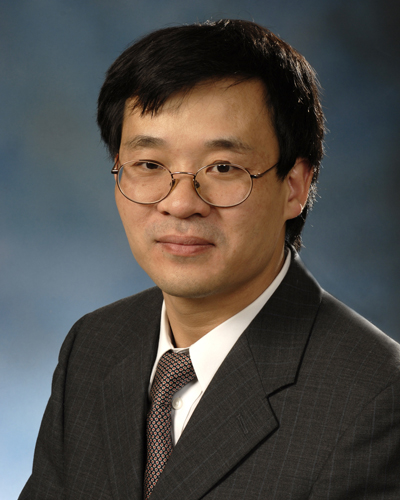
Dr. Peixin Yang is the Christopher R. Harman, MD Endowed Professor of Obstetrics, Gynecology, and Reproductive Sciences at the University of Maryland School of Medicine. He serves as Professor with tenure in the Department of Obstetrics, Gynecology and Reproductive Sciences and holds a secondary appointment in the Department of Biochemistry & Molecular Biology. Dr. Yang is the founding director of the Center for Birth Defect Research at the University of Maryland School of Medicine and leads multiple NIH-funded research projects totaling millions of dollars. Dr. Yang's educational background includes: B.S. in Animal Science from Zhejiang Agricultural University (1986-1990) M.S. in Animal Reproductive Sciences from Nanjing Agricultural University (1990-1993) Ph.D. in Biophysics from Tokyo University of Agriculture & Technology and Zhejiang University (1994-1999) Postdoctoral Research Associate at University of Nebraska Medical Center (1999-2002) BIRCWH scholar (NIH K12) at University of Maryland Baltimore (2008-2009) Dr. Yang has built an extensive research program focused on diabetic embryopathy, particularly examining how maternal diabetes induces neural tube defects (NTDs), congenital heart defects (CHDs), and kidney defects. His laboratory was the first to establish a mouse model of diabetic embryopathy and reveal the causal role of JNK1/2 in neural tube defects. He has made significant contributions to understanding the molecular mechanisms of cellular stress, endoplasmic reticulum stress, and autophagy in neural tube defect formation. Dr. Yang also investigates the effects of maternal obesity on placental function and has established the Maryland Maternal Health Research Center of Excellence. His recent work has expanded to include studies on SARS-CoV-2 infection in pregnancy and connections between insulin resistance signaling and Alzheimer's disease. Analysis of Dr. Yang's recent publications reveals a strong focus on the molecular mechanisms of diabetic embryopathy, with particular emphasis on epigenetic regulation, cellular stress signaling pathways, and placental function. His work consistently bridges basic science with clinical applications, developing potential therapeutic approaches for preventing birth defects. A significant portion of his recent research examines the intersection of maternal metabolic conditions (diabetes and obesity) with fetal development, while also expanding into novel areas like viral infections in pregnancy and connections to neurodegenerative diseases. Dr. Yang's notable scientific achievements include: The F. Clarke Fraser New Investigator Award from the Teratology Society (2013) BIRCWH scholar (NIH K12) (2008-2009) The Lalor foundation postdoctoral Fellowship (2002-2003) Dr. Yang currently directs a multi-million dollar NIH-funded research group with multiple active R01 grants. His current projects investigate the intersection of mTOR/p70S6K1 signaling and HIPPO-Yap tissue organizer in neurulation, heightened hypoxia and DNA methylation in heart defects of diabetic embryopathy, hyperglycemia-induced cardiac progenitor dysfunction, and epitranscriptomic alterations in diabetic embryopathy. He has developed a robust research program in maternal diabetes-induced heart defects, which was previously an understudied area. Dr. Yang is also leading efforts to establish the Maryland Maternal Health Research Center of Excellence, focusing on the adverse effects of obesity, placental accreta spectrum, and opioid use disorder. As the founding director of the Center for Birth Defect Research at the University of Maryland School of Medicine, Dr. Yang leads a multidisciplinary team of translational and clinical scientists. His laboratory has made original contributions to understanding the molecular mechanisms underlying maternal diabetes-induced structural birth defects. The team employs genetically modified mouse models, whole-embryo culture systems, and human placental studies to investigate the effects of metabolic conditions on fetal development. Dr. Yang's group has been instrumental in developing natural compounds as potential preventatives for diabetic embryopathy, including trehalose, epigallocatechin-3-gallate, and curcumin.