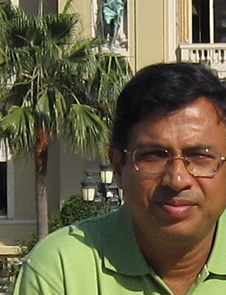
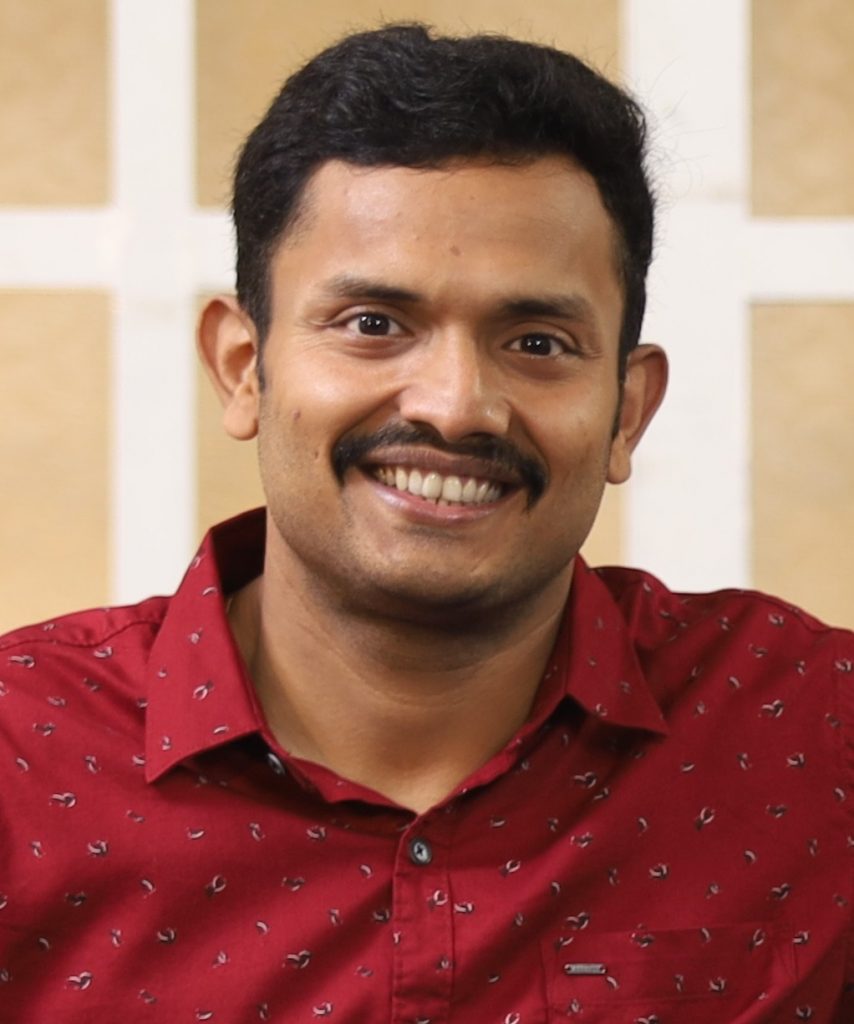
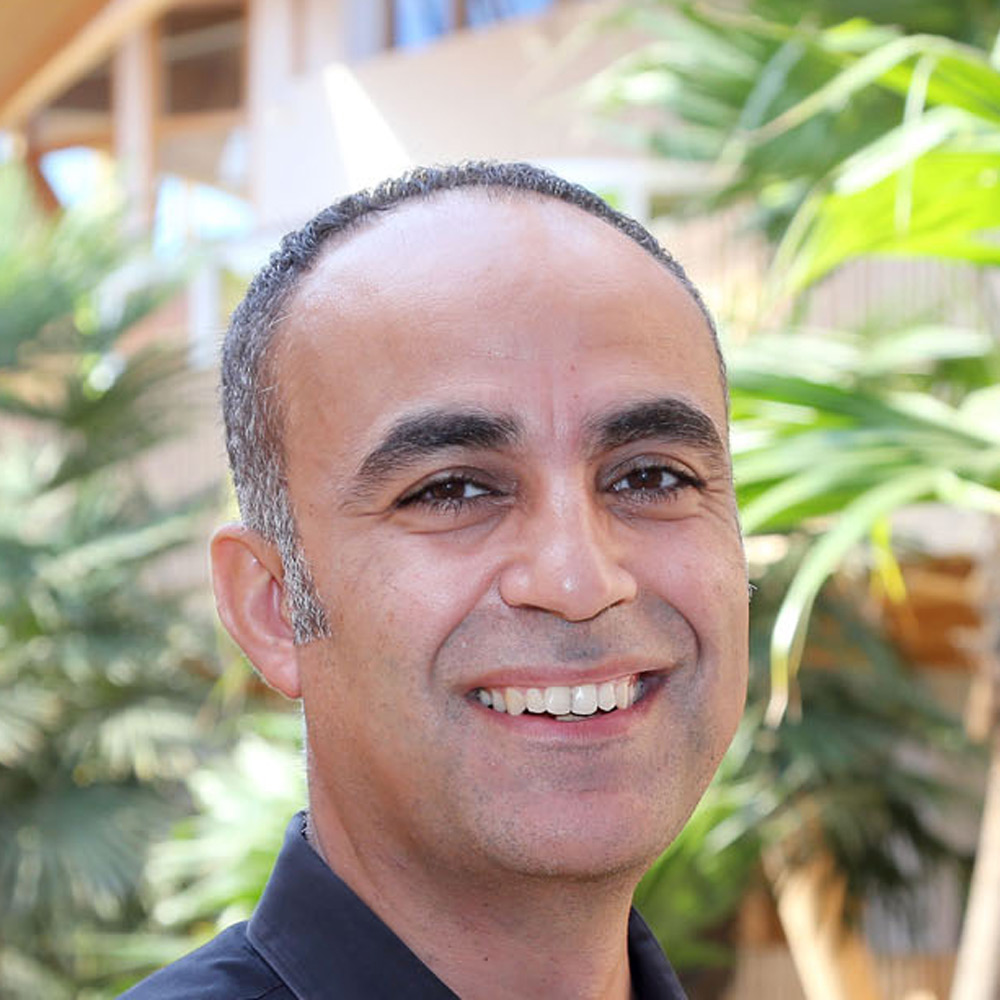
Hubert Zangl is a Professor at the University of Klagenfurt and Head of the Institute for Intelligent System Technologies . He serves as Chairman of the Information Technology Curricular Commission and participates in the Faculty Conference of the Faculty of Technical Sciences. Key research areas include: Sensor technology Electrical measurement technology Robotics Signal processing Electronics Recent research trends focus on: High-fidelity FMCW radar simulation frameworks Energy-efficient sensor systems Printed electronics for structural health monitoring Uncertainty propagation in measurement science Modular robotics with secure transducer identification Capacitive tactile sensing for robotic grasping Contact: Hubert.Zangl@aau.at
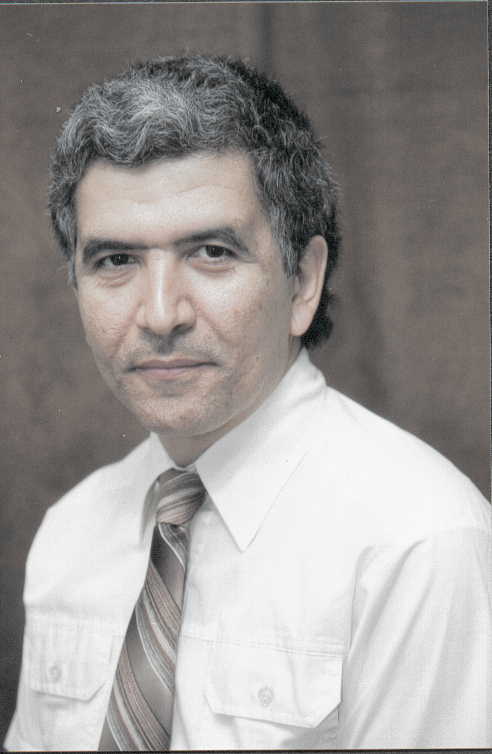
Amiya Nayak is a Professor at the School of Electrical Engineering and Computer Science of the University of Ottawa. His research focuses on Fault-Tolerant Computing , Distributed Systems , and Ad hoc and Sensor Networks . He specializes in cybersecurity, IoT security, blockchain integration, and machine learning applications in healthcare and vehicular networks. His work addresses challenges in secure communication protocols, distributed learning frameworks, and energy-efficient network designs. Notable research areas include: IoT Security : Developing frameworks for threat detection, privacy-preserving systems, and blockchain-empowered IoT defenses. Federated Learning : Enhancing healthcare predictions and IoT management through decentralized, privacy-aware machine learning. Vehicular Networks : Securing Vehicle-to-Everything (V2X) communication and optimizing QoS in cooperative internet of vehicles (IoV). Network Optimization : Leveraging deep reinforcement learning and graph neural networks for WDM network restoration and edge computing. His publications (2020–2025) highlight contributions to: Secure authentication protocols in medical sensor networks. AI-driven metaverse security solutions. Decentralized energy trading using NFTs. Energy-efficient sleep scheduling in wireless body area networks (WBANs). Nayak holds a Ph.D. and is a P.Eng. (Professional Engineer). His work bridges theoretical computer science with practical applications in telecommunications and healthcare systems.
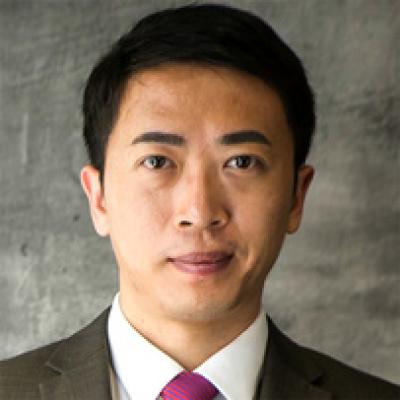
Jingxian Wang is an NUS Presidential Young Professor and Assistant Professor in the Department of Computer Science at the National University of Singapore's Faculty of Computing. His research builds next-generation wireless systems and satellite networks, with primary focus on integrating AI with wirelessly networked devices from WiFi to satellites. He earned his PhD from Carnegie Mellon University and previously served as a research scientist at Microsoft Research in Redmond, where he led the Smart Surface for 6G and Space initiative. His educational journey includes: PhD, Carnegie Mellon University Wang's research spans Wireless Systems , Satellite Networks , Artificial Intelligence , and Internet of Things , emphasizing AI-augmented wireless systems. His interdisciplinary work bridges robotics , materials science , and AI to develop sustainable sensing methods, robust communication networks, and multimodal AI techniques. Key projects include Multimodal AI for IoT (funded by Microsoft's Accelerate Foundation Models Program) and Satellite IoT Networks. His publication trends reveal accelerating integration of AI into wireless systems, with recent focus on satellite networking, soft robotics actuation, and generative models for IoT. The research consistently targets real-world deployment challenges in battery-free systems and space networks. His scientific contributions have earned prestigious recognition: ACM SIGMOBILE Doctoral Dissertation Award 2023 Communications of the ACM Research Highlights (2021, 2022) ACM SIGMOBILE Research Highlights 2021 Best Paper Awards at IPSN 2021 and UbiComp 2020 Microsoft Research Fellowship 2020 Emerging Rockstar in IEEE Pervasive Computing 2024 Wang actively mentors doctoral students and postdoctoral researchers through his AIoT Group. His grant portfolio includes Microsoft's Accelerate Foundation Models Research Program funding for multimodal AI projects, with ongoing work targeting satellite IoT infrastructure and wireless-powered soft robotics. Future directions emphasize foundation models for space networks and battery-free IoT systems. He leads the AIoT Group, fostering cross-disciplinary collaboration between computer scientists, roboticists, and materials engineers to pioneer wireless sensing and actuation technologies.
Johan Sidén is a Lecturer and Associate Professor at Mid Sweden University , employed in the Department of Computer and Electrical Engineering (DET) . His work focuses on RFID technology , antenna design , and printed/flexible electronics , with a particular emphasis on industrial IoT and welfare technology applications. Research Keywords : Radio Frequency Identification, Antenna Design, Flexible Electronics, Wireless Sensor Networks, Microwave Engineering, Electronic Design Key Projects : DRIVEN (data-driven industrial transformation), SmartArea (functional surfaces), Pressure (ulcer monitoring), MakeSense! (welfare technology) Publications : 15+ recent works on wearable antennas, smart packaging, UWB antenna design, and RFID sensor integration Collaborations include partnerships with industrial and academic institutions, focusing on sustainable electronics, sensor systems, and smart infrastructure. His technical expertise spans antenna optimization , printed circuits , and edge computing for harsh environments.
Mustapha C.E. Yagoub is a Full Professor at the School of Electrical Engineering and Computer Science, University of Ottawa, with over 500 publications in RF/microwave CAD, RFID systems, neural networks, and applied electromagnetics. He leads research in the ELEMENT Laboratory and RFM Research Group , focusing on wireless communication systems and nonlinear device modeling. PhD in Electronics (Institut National Polytechnique de Toulouse, 1994) Magister in Telecommunications (École Nationale Polytechnique d'Alger, 1987) Dipl.-Ing. in Electronics (École Nationale Polytechnique d'Alger, 1979) His research bridges Microwave Circuit Design with Artificial Intelligence , including applications in Energy Conservation and Telecommunication Systems . Key trends in his publications include hybrid modeling techniques combining Neural Networks with Computational Electromagnetics for optimizing Antenna Design and RF Components . He is a Senior Member of IEEE and licensed with the Professional Engineers of Ontario and Ordre des Ingénieurs du Québec . His lab teams focus on High-Tc Superconducting Devices and Directional Antenna Optimization for RFID networks.
Jie Xiong is an Associate Professor at the University of Massachusetts Amherst, affiliated with the Department of Computer Science within the College of Information and Computer Sciences. He holds a PhD from University College London (2015) and has been a faculty member since 2018. His research focuses on wireless sensing, mobile health, and IoT, with notable contributions to sensor-free systems and long-range sensing. He leads the Center for Smart and Connected Society and has been recognized with awards like the SIGMOBILE Test-of-Time Award (2024) and MobiCom Best Paper Award (2024). Education: PhD in Computer Science, University College London (2015) Research Interests: His work spans wireless sensing (e.g., acoustic, RF, LoRa), mobile health monitoring, and IoT applications. He explores sensor-free techniques, long-range through-wall sensing, and leveraging ambient signals for novel applications. Grants & Awards: NSF CAREER Award NIH R01 Grant (Smart and Connected Health) Google European Doctoral Fellowship BCS Distinguished Dissertation Award (Runner-Up) MobiCom '22 Best Paper Award (Runner-Up) Advising & Students: Supervises PhD students including Minhao Cui, Yuda Feng, Binbin Xie, and Dong Li. His students have received accolades like the Google Ph.D. Fellowship (Binbin Xie, 2022). Labs & Teams: Leads research in the Center for Smart and Connected Society, focusing on wireless systems and health applications. Collaborates with industry and academia on projects like EVLeSen (in-vehicle sensing) and SoilCares (agricultural monitoring).
Dr. Shervin Shirmohammadi is a Professor at the University of Ottawa's Faculty of Engineering, specifically within the School of Electrical Engineering and Computer Science. With an impressive h-index of 41 and over 6,800 citations across 473 publications, his research has made significant contributions to the fields of computer vision, biomedical instrumentation, and health monitoring systems. His academic journey spans over two decades, beginning with work on communication architectures for virtual environments in 2001 and evolving toward practical healthcare applications. Dr. Shirmohammadi's research interests center on Computer Vision , Image Processing , and Embedded Systems with a strong focus on healthcare applications including nutrition monitoring, mental health assessment, and driver safety systems. His most influential work examines computer vision applications for health monitoring, particularly food calorie measurement systems that use smartphone cameras to analyze nutritional content. His research has evolved to include EEG-based systems for ADHD detection and serious games for autism therapy, demonstrating a consistent trajectory toward practical healthcare solutions using advanced instrumentation techniques. Dr. Shirmohammadi maintains active collaborations with researchers including A. Yassine (118 joint publications), D. Ahmed, Ali Asghar Nazari Shirehjini, and B. Hariri. His publications appear primarily in IEEE Transactions on Instrumentation and Measurement, reflecting his strong connection to the instrumentation and measurement community.
Bernardo Tellini is a Full Professor of Electrical and Electronic Measurements at the Department of Energy, Systems, Land, and Construction Engineering (DESTEC) at the University of Pisa, where he also serves as Vice-Rector for Doctoral Research. He has held this institutional role since 2020, overseeing doctoral program planning, accreditation, and admission procedures. Previously, he chaired the doctoral program in Energy, Electrical, and Thermal Engineering from 2012 to 2016 and served on the Leonardo da Vinci Doctoral School in Engineering from 2008 to 2016. Education: PhD in Electrical Engineering, University of Pisa (1999) Degree in Electrical Engineering, University of Pisa (1993) Postdoctoral research at Karlsruhe Research Center for Technology and Environment Industry experience at ABB Tellini's research focuses on electrical and magnetic measurement methodologies for high-power pulsed applications, characterization of electrical and magnetic properties of materials, aging processes in battery cells, and electromagnetic emissions from power circuits. His work spans from fundamental measurement theory to practical industrial applications, particularly in railway technologies where he represents the University on the Steering Committee of the District for Railway Technologies, High-Speed, and Network Safety in Tuscany. He has served as president of the European Pulsed Power Laboratories agreement and chaired major IEEE conferences including I2MTC 2015 and MELECON 2020. His recent publications reveal a strong emphasis on RFID-based localization systems , nanoparticle-enhanced optical sensors , and advanced battery characterization techniques . The research trajectory shows increasing integration of measurement science with emerging technologies like plasmonic sensing, microwire-based transducers, and smart systems for industrial monitoring. His team has developed innovative approaches for battery health monitoring under vibration stress, temperature sensing using magnetic materials, and precise localization methods using phase-based RFID systems. Professional Service: President of Italian Section of IEEE (2019-2021) Scientific director of Pisa research unit in Association of Electrical and Electronic Measurements (GMEE) Member of Certification Committee of Italcertifer SpA (since 2019) Representative on District for Railway Technologies Steering Committee (since 2013) Tellini has authored approximately 200 publications in international journals and conference proceedings. His leadership extends to academic governance through roles on the DESTEC Department Human Resources Committee and various university committees overseeing scientific qualifications and doctoral programs. His research bridges theoretical measurement principles with practical engineering solutions for energy systems, transportation infrastructure, and industrial monitoring applications.
Alex X. Liu is a Professor in the Department of Computer Science & Engineering at Michigan State University (2016-2022), currently serving as Chief Information Security Officer and President of Midea Software Engineering Institute. His academic career includes roles as Associate Professor (2012-2016) and Assistant Professor (2006-2012) at the same institution. He holds a Ph.D. and M.S. in Computer Science from The University of Texas at Austin, and a B.S. in Computer Science from Jilin University, China. Education Ph.D. in Computer Science (UT Austin, 2006) M.S. in Computer Science (UT Austin, 2002) B.S. in Computer Science (Jilin University, 1996) Liu's research focuses on Dependable computing , Networking algorithms , Cloud computing , Mobile computing , Privacy computing , and Computer/network security . His work spans secure systems, network protocols, and resource optimization in distributed environments. Recent publications address quantum neural networks , microservices autoscaling , RFID tag recognition , network traffic classification , and hybrid physical-layer authentication , demonstrating expertise at the intersection of AI and network security. Key trends include deep learning applications for cloud systems and robust security protocols. Scientific Awards IET Fellow (2021) IEEE Fellow (2019) ACM Distinguished Scientist (2019) Withrow Distinguished Scholar Awards (Senior 2019, Junior 2011) NSF CAREER Award (2009) IEEE & IFIP William C. Carter Award (2004)
Aggelos Bletsas is a Professor at the School of Electrical and Computer Engineering, Technical University of Crete. He holds a PhD from MIT (2005) and has expertise in wireless communication, backscatter networks, and RFID systems. His research focuses on scalable wireless networks, ultra-low-cost sensor technologies, and signal processing. Education: PhD, MIT Media Lab (2005) MSc, MIT Media Lab (2001) Diploma in Electrical & Computer Engineering, Aristotle University of Thessaloniki (1998) Research Interests: His work spans wireless transmission techniques, backscatter sensor networks, and RFID systems. Key areas include: Ultra-low-cost sensor deployment RFID localization and multi-static systems Energy-efficient hardware implementations Probabilistic inference in distributed networks Awards: IEEE Marconi Prize Paper Award (2008) Technical University of Crete Research Excellence Award (2012-2013) Multiple best paper awards at RFID-TA, ISWCS, and SENSORS Academic Contributions: He advises students who have won IEEE best thesis awards and leads projects funded by ERC grants. His laboratory focuses on practical implementations of wireless sensor networks and backscatter systems. Labs & Affiliations: Director of the Telecommunications Laboratory and affiliated with the Telecommunication Systems Institute (TSI).
Aggelos Bletsas Aggelos Bletsas is a Professor at the School of Electrical and Computer Engineering (ECE) at the Technical University of Crete (TUC). He holds a PhD from MIT and has expertise in wireless communication, backscatter radio, and IoT. His research focuses on ultra-low-cost sensor networks and ambiently-powered systems. Education PhD in Media Arts and Sciences, MIT (2005) MSc in Media Arts and Sciences, MIT (2001) 5-year Diploma in Electrical & Computer Engineering, Aristotle University of Thessaloniki (1998) Research Interests Bletsas' work spans scalable wireless networks, backscatter radio, RFID systems, and energy harvesting. He pioneers batteryless IoT devices and environmental sensing technologies. His lab develops hardware and algorithms for low-cost, long-range communication. Awards & Recognition IEEE Fellow (2023) 2012-2013 TUC Research Excellence Award Multiple Best Paper Awards (ISWCS, RFID-TA, SENSORS) IEEE ComSoc and RFID Council Distinguished Lecturer (2022-2025) Labs & Projects Bletsas leads the Telecommunications Laboratory at TUC, focusing on batteryless sensors, scatter radio, and robotic inventory systems. Key projects include 'Internet of Plants' and ambiently-powered inference networks.
Jayakrishnan M. Purushothama is an Assistant Professor in the Microwave and Antenna Engineering Research Group at Heriot-Watt University's School of Engineering and Physical Sciences since March 2023. Previously, he held roles including Post-Doctoral Researcher (2019–2021) and Ph.D. scholar (2016–2019) at Université Grenoble Alpes, and Research Fellow (2014–2016) at Cochin University of Science and Technology. Education: B.Sc. (Electronics) & M.Sc. (Electronics Science), Mahatma Gandhi University & Cochin University of Science and Technology (2012–2014), both with first rank honours. Ph.D. (RF and Microwave Electronics Engineering), Université Grenoble Alpes (2019). Research interests focus on microwave antennas, beamforming, chipless RFID systems, CBRAM-based RF switches, medical biosensors, and electromagnetic compatibility. His work emphasizes reconfigurable systems, energy efficiency, and non-volatile memory applications in passive devices. Awards include the URSI Young Scientist Award (2020), 4th Prize in URSI Student Competition (2018), and UGC NET/JRF qualification (top 0.6% in 2013). Grants include ERC-funded ScattererID project (2019–2021) developing CBRAM-based RF switches. His lab explores innovations in antenna engineering, RF materials, and wearable electronics. Key contributions include reconfigurable antennas, low-cost RFID tags, and metamaterial-based shielding solutions.
Suruz Miah is an Associate Professor in the Department of Electrical and Computer Engineering at Bradley University and an Adjunct Professor at the University of Ottawa's School of Electrical Engineering and Computer Science. He holds a B.Sc. from Khulna University of Engineering & Technology (Bangladesh) and M.A.Sc./Ph.D. degrees from the University of Ottawa. His research focuses on Cyber-Physical Systems, Optimal Control, Multi-Agent Systems, and RFID Technology. He has held roles including Visiting Associate Professor at Hosei University (Japan), Visiting Research Fellow at DRDC Canada, and Part-Time Professorships at multiple institutions. Education: B.Sc., Computer Science and Engineering, Khulna University of Engineering & Technology (2004) M.A.Sc. and Ph.D., Electrical and Computer Engineering, University of Ottawa (2007, 2012) Research Interests: Dr. Miah specializes in Cyber-Physical Systems, including autonomous robotics, multi-agent coordination, optimal control, and machine learning applications. He leads projects on mobile robot navigation, energy management systems, and RFID-based localization. His work bridges theoretical control systems with practical implementations in robotics and industrial automation. Advising & Collaborations: Advised/co-authored over 20+ student research projects, focusing on reinforcement learning, multi-agent systems, and robotics. Collaborates with institutions like DRDC Canada, Bradley University's Cyber-Physical Systems Lab, and University of Ottawa's MIRaM Lab. Developed open-source frameworks like MAFOSS (Multi-Agent Framework using Open-Source Software) and BEMOSS (Building Energy Management System). Labs & Teams: Principal Investigator at Bradley's Cyber-Physical Systems Lab. Research member of the Machine Intelligence, Robotics, and Mechatronics (MIRaM) Lab at the University of Ottawa.
Professor Hakima CHAOUCHI is affiliated with Telecom SudParis, part of the NeSS group. Her primary research focuses on Internet of Things (IoT), wireless networks, RFID technology, and cyber-physical systems. She has contributed extensively to advancements in IoT infrastructure, localization techniques, and network security. Research interests include IoT architecture, RFID-enabled systems, distributed edge computing, and energy-efficient protocols. Her work spans topics like anomaly detection in IoT data, resilient cyber-physical systems, and resource allocation in 5G networks. Key contributions include the PrIoT project for IoT prototyping, studies on dynamic resource allocation in HetNets, and frameworks for mobile cloud computing privacy. She has authored multiple books and book chapters on IoT and wireless networks, including The Internet of Things: Connecting Objects to the Web . Her publications emphasize practical applications like industrial autonomous systems, vehicular networks, and edge AI integration. She collaborates actively with industry and academia, contributing to standards like MIH-IEEE 802.21 and security protocols for mobile networks.
Dr Maged Ali is a Reader in Management and Marketing at the Essex Business School, University of Essex. His research focuses on leveraging big data technologies to provide insights for decision makers across various domains including finance, marketing, environment, social science, and law. His work emphasizes visual representation of data to enhance decision-making processes. Dr Ali's primary research interests center around Big Data Technologies and Methodologies, with a specific focus on applying these techniques to poverty alleviation and Sustainable Development Goals in Sudan. His current project utilizes Big Data methods to detect regional migration patterns, their causes, and to alert decision makers to potential population displacements. His research spans multiple disciplines, connecting data science with real-world social challenges. Analysis of Dr Ali's 15 most recent publications reveals a strong focus on big data applications across diverse contexts. His work consistently bridges technical data analysis with practical applications in social, political, and business contexts. Key trends include social media analysis during crises (particularly during the COVID-19 pandemic), cross-cultural studies of technology adoption, and the application of big data to public policy challenges. His research demonstrates an interdisciplinary approach that connects information systems with social sciences, public policy, and business management. Dr Ali currently supervises two PhD students: Nour Khalaf Lafee Alhammad in Management and Penphatsorn Suwannapornkul in Management Studies. He has previously supervised four successful PhD candidates whose research covered topics including consumer technology use, social media analysis during the pandemic, marketing data science, and consumer behavior. His grant portfolio includes significant funding from Microsoft, Innovate UK, and the Academy of Medical Sciences for projects related to AI, big data analytics, and climate change adaptation. Dr Ali teaches Marketing and Innovation (BE562) at the University of Essex. His research has attracted multiple grants including a 2025 project with Footprint Digital Ltd developing AI models for search traffic forecasting, a 2024 Academy of Medical Sciences project on climate change adaptation, and multiple Innovate UK Knowledge Transfer Partnerships focusing on AI applications in screening services and media analysis.