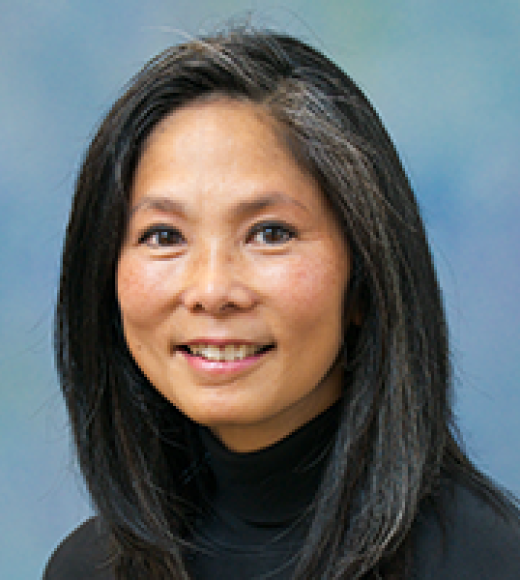
Sheila Heen is the Thaddeus R. Beal Professor of Practice at Harvard Law School and Deputy Director of the Harvard Negotiation Project. She specializes in negotiation theory, particularly in emotionally charged conflicts, and co-authored two New York Times bestsellers: Difficult Conversations and Thanks for the Feedback . Her work spans academic research, corporate consulting, and media appearances, including roles with organizations like Pixar, NBA, and the Singapore Supreme Court. Heen teaches executive education programs, focusing on leadership and conflict resolution. She holds a B.A. from Occidental College (1990) and a J.D. from Harvard Law School (1993). Her research emphasizes strategies for navigating difficult conversations, feedback dynamics, and enduring conflicts. Recent publications include articles in the Washington Post and Harvard Business Review, exploring topics like anxiety in negotiations and feedback mechanisms. She co-leads Triad Consulting Group, advising executives on conflict management. Media engagements include appearances on Oprah, NPR, and podcasts like Shane Parrish’s Knowledge Project .
Jake S. Truscott is an Assistant Professor of Political Science at the University of Florida in Gainesville. He received his Ph.D. from the University of Georgia in 2023 with focuses in American Politics (Major) & Formal Theory (Minor). Prior to his appointment at Florida, he held a postdoctoral appointment with the Center for C-SPAN Scholarship and Engagement at Purdue University. Dr. Truscott's research program focuses on merging conventional studies of judicial politics with emerging computational methods. His principal research interests include examining the American federal judiciary using high-performance computing systems and non-conventional data sources like text and audio. He is particularly interested in applying computational approaches to study the latent and explicit properties of language within the American legal community, with specific projects on judicial ideology as text, Supreme Court confirmation hearing rhetoric, and social media coverage of the Court. His research has been published in leading journals including The Journal of Law and Courts, Political Research Quarterly, and The Justice System Journal, and has been featured in major media outlets such as The Washington Post, Newsweek, and SCOTUSBlog. Dr. Truscott is the creator of scotustext, a comprehensive R package for working with Supreme Court documents, demonstrating his commitment to methodological innovation and research transparency. His scholarly contributions reflect a growing trend in political science toward computational approaches to traditional questions of judicial behavior, with particular emphasis on text analysis and high-performance computing applications to understand how language reveals judicial ideology and behavior.
Reto Geiser is an Associate Professor and Associate Dean for Research and Academic Affairs at Rice University’s School of Architecture. His work bridges architectural design, pedagogy, and media, focusing on modern architecture’s intersections with education and exhibition practices. He holds a Dr. Sc. and M.Arch. from ETH Zurich, where his early studies shaped his interdisciplinary approach. Academic Roles: Academic Leadership, Architecture Curriculum Development, and Studio Teaching Key Projects: Rice Architecture Summer Immersion Program (underserved high school students), Mellon-funded 'Reverse Ruins' photography project, and research on Miami-based firm Arquitectonica His research explores architectural exhibitions’ role in knowledge dissemination through works like Futures of the Architectural Exhibition , which analyzes contemporary curation practices. Geiser’s award-winning books include Archetypes (on Johnston Marklee) and Giedion and America , repositioning modernist historiography. Publications span Harvard Design Magazine , Future Anterior , and exhibition catalogues, reflecting his dual focus on scholarly writing and spatial practice. Recent curatorial work includes Switzerland’s 11th Venice Architecture Biennale contribution Explorations: Teaching Design Research and the 2017 Chicago Architecture Biennial’s Rooms for Books . Awards: George R. Brown Award (2021), Charles Duncan Award (2020), Scientia Institute Membership (2020) Teaching: Currently instructs ARCH 225/525: Introduction to Architectural Thinking and ARCH 550: Out of This World , emphasizing speculative design and spatial reasoning.
Arthur L. Little, Jr. is an Associate Professor of English at the University of California, Los Angeles. His research focuses on Shakespeare and Early Modern Race Studies, Black Studies, Queer Studies, and African American Studies. He serves as Co-editor-in-chief of Shakespeare Quarterly and has held leadership positions including Chair of UCLA's LGBTQ Program and Undergraduate Vice Chair of the English Department. Little received his academic training at Harvard University, earning a Ph.D. and M.A. in English, and a B.A. in English from Northwestern University. His educational journey laid the foundation for his interdisciplinary approach to early modern literature. Ph.D. in English, Harvard University, 1986-1989 M.A. in English, Harvard University, 1983-1986 B.A. in English, Northwestern University, 1979-1983 His scholarship critically examines the intersections of race, gender, and sexuality in Shakespeare and early modern literature. Little investigates historical processes of racialization and their contemporary ethical implications, with a focus on whiteness and critical race theory. He is a leading voice in anti-racist Shakespeare studies, currently developing book projects such as "Black Hamlet" and "Shakespeare and Critical Race Theories". His work consistently bridges historical analysis with urgent social justice concerns. Analysis of his publications shows a trajectory from foundational studies on race in Othello to pioneering work on critical white studies. Recent articles increasingly address intersectionality and the application of critical race theory to early modern texts, reflecting a broader scholarly shift towards decolonizing Shakespeare studies. Scientific awards: None documented in source materials Little is deeply committed to mentoring, having guided Chancellor’s Postdoctoral Fellows and Holstein Fellows. He champions his students' work, emphasizing diverse perspectives in literary scholarship and pedagogy. His dedication extends to public engagement, as seen in webinars and interviews on anti-racist Shakespeare. As Co-editor of Shakespeare Quarterly and active participant in the Shakespeare Association of America, Little shapes contemporary discourse in the field. His involvement with the Bread Loaf School of English and UCLA's LGBTQ Program underscores his commitment to inclusive academic communities.
Christen Fleming is an Assistant Professor at the University of Central Florida who leads the Ecoinformatics Lab. The lab specializes in developing and applying analytic methods for ecological, environmental, and evolutionary data with a focus on conservation needs. Develops continuous-time movement modeling (ctmm) software Collaborates with institutions like CASUS, UMD, UBC, and UA Focuses on interdisciplinary approaches combining mathematics, statistics, and computational methods Research interests emphasize animal movement analysis, species distribution modeling, and population dynamics. Fleming’s work involves complex data analysis and stochastic processes to improve conservation strategies through better understanding of animal space use and movement patterns.
Sergio Gómez Jiménez is an Associate Professor in the Department of Computer Engineering and Mathematics at Rovira i Virgili University (URV), Tarragona, Spain. He joined URV in 1995 and has held his current position since 1997. He obtained degrees in Physics (1990) and Mathematics (1995) and a PhD in Physics (1994) from the Universitat de Barcelona. His research focuses on complex networks, including community structure analysis, epidemic spreading, urban congestion, and applications to biology, medicine, and social systems. He has authored over 100 publications in high-impact journals like Nature Methods and Physical Review Letters. He coordinates the interuniversity Master's in Biomedical Data Science and the PhD Program in Bioinformatics. His editorial roles include Associate Editor of Complexity and Review Editor of Frontiers in Physics. Notable awards include the American Physical Society's Outstanding Referee (2015) and the Web Science Trust's Test of Time Award (2024). His work on modeling the spatiotemporal spread of epidemics, such as the 2020 COVID-19 pandemic, has received significant attention. He also contributed to urban traffic congestion analysis and developed algorithms for hierarchical clustering (e.g., MultiDendrograms). Collaborations span institutions like the University of Oxford and CERN, reflecting his interdisciplinary approach to complex systems.
Michael A. Bender is the John L. Hennessy Chaired Professor of Computer Science at Stony Brook University. His work spans both theoretical and applied domains in algorithms, data structures, and storage systems. He co-founded Tokutek, Inc., a database company acquired by Percona in 2015, and has held visiting positions at MIT and King's College London. Education: PhD in Computer Science from Harvard University (1998), DEA and Magistère in Computer Science from École Normale Supérieure de Lyon (1993), BA in Applied Mathematics from Harvard (1992). His research focuses on cache-oblivious algorithms , I/O-efficient computing , parallel systems , and scheduling . His work addresses scalability in large-scale data management and computational geometry, with applications in bioinformatics and robotics. The 15 most recent publications highlight advancements in list labeling , hash table design , graph algorithms , and memory optimization . These papers reflect his commitment to solving practical problems with rigorous algorithmic approaches. Awards include: PODS Best Paper Award (2024) ASPLOS Distinguished Paper Award (2023) USENIX FAST Best Paper Award (2016) Chancellor's Award for Excellence in Teaching (2015) R&D 100 Award (2006) He has led the Stony Brook Computer Science Honors Program and advised graduate students in algorithmic research. His grants portfolio includes 39 funded projects, emphasizing algorithm engineering and systems optimization.
R. Sekar serves as SUNY Empire Innovation Professor and Associate Chair in the Department of Computer Science at Stony Brook University, actively contributing to academic leadership and research initiatives. Education Ph.D. in Computer Science from Stony Brook University (1991) B. Tech in Electrical Engineering from Indian Institute of Technology, Madras (1986) Research Interests Professor Sekar's research focuses on practical software and systems security solutions, integrating principles from programming languages, compilers, operating systems, algorithms, networks, and artificial intelligence. His work addresses critical challenges including software vulnerability mitigation (buffer overflows, SQL injection, XSS), malware defense, high-performance intrusion detection (network and host-based), attack isolation/recovery mechanisms, self-healing systems, and distributed system monitoring. This interdisciplinary approach emphasizes building real-world systems to solve tangible security problems. Scientific Awards Chancellor's award for Excellence in Scholarship and Creative Activities (2011) SUNY Research and Scholarship Award (2006) Faculty Service award, Department of Computer Science (2002-2004) Promising Inventor Award, Research Foundation of SUNY (2003) Department Research Excellence award (2000-2002) Advising and Grants While the source text does not specify doctoral advisees or individual grant projects, Professor Sekar's sustained research productivity and award history indicate substantial external funding and mentorship activities. His leadership as Associate Chair further demonstrates institutional commitment to academic guidance. Labs and Teams Professor Sekar directs the Security Lab (SECLab) at Stony Brook University, as evidenced by his research website https://seclab.cs.sunysb.edu/sekar/ , which serves as the operational hub for his security research initiatives and team collaborations.
Jens Andersson is a Researcher at the Plant Production Systems department (PE&RC), focusing on sustainable agricultural practices and food security in smallholder farming systems across Africa. His work emphasizes the application of agronomic technologies, such as mobile-based decision support tools, to enhance productivity and resilience in farming communities. He holds a doctoral degree (dr.) and an engineering degree (ir.) from an unspecified institution, reflecting his academic background in agricultural sciences and engineering. His research interests include agricultural development, food security, sustainable intensification, and the analysis of farming systems. He explores how legume integration and conservation agriculture can address yield gaps and promote equitable resource management. Additionally, he investigates the challenges of scaling digital agronomy solutions and the socio-economic factors influencing technology adoption among smallholder farmers. Jens has not been mentioned to have received any scientific awards or fellowships in the provided texts. His recent publications highlight critical analyses of farm size impacts on economic development, gender dynamics in agricultural investments, and the failure to scale digital agronomy solutions in developing countries. He also examines farmer perceptions of livestock intensification and the historical trajectory of Zimbabwe's agricultural policies. As a co-promotor, Jens has advised multiple PhD candidates, including R. Pawar, H. Nyirahabimana, M. Kilakila, and T. Delaune. He is involved in grants such as the Sustainable intensification of soybean production in Ghana and Tanzania, and the Food Systems Transformation in Southern Africa for One Health (FoSTA-Health) project, where he collaborates as a co-PI. His contributions to projects like Farming Systems Analytics and Conservation Agriculture targeting tools underscore his commitment to bridging research and development practices. Jens is affiliated with the Plant Production Systems group (PE&RC), contributing to interdisciplinary teams researching farming systems analytics and agricultural development strategies. His work integrates socio-economic dimensions with agronomic science, addressing systemic barriers in technology adoption and policy design for marginalized farming communities.
Ulrike Muench is an Associate Professor with tenure in the Department of Social and Behavioral Sciences at the UCSF School of Nursing, with affiliations at the Philip R. Lee Institute for Health Policy Studies and Healthforce Center. She specializes in nursing workforce dynamics, opioid policy, Medicare systems, and disparities in healthcare. Her research leverages large datasets like Medicare claims and the Medical Expenditure Panel Survey. Education & Training: MSN (2005) and PhD (2012) in Nursing from Yale University Postdoctoral Fellowship (2014) at Vanderbilt University School of Nursing Research Interests: Focuses on nurse practitioner roles, prescribing patterns in primary care/nursing homes, dementia care trajectories, and gender-based pay disparities in healthcare. Her work bridges health policy analysis with real-world clinical outcomes, aiming to inform equitable healthcare delivery systems. Awards: 2016 Academy Health New Investigator Award 2018 American Academy of Nursing Fellow 2019 UCSF School of Nursing Mentoring Award Grants & Advising: Leads studies funded by NIH and foundations, mentoring early-career researchers in health services research. Collaborates on projects addressing workforce distribution, rural-urban care disparities, and policy reform. Labs/Teams: Active in UCSF's Healthforce Center, focusing on healthcare workforce analytics and interdisciplinary policy development.
Anya Sirota is an Associate Professor of Architecture and Associate Dean for Academic Initiatives at the University of Michigan's Taubman College of Architecture and Urban Planning. As founding principal of Akoaki, her work sits at the intersection of architecture and urban design, exploring how aesthetics, social enterprise, and cultural programming can offer contemporary strategies for urban transformation. Education: Master in Architecture from Harvard's Graduate School of Design (Araldo Cossutta Prize for Design Excellence) Bachelor of Arts in Modern Culture and Media from Brown University Sirota's research focuses on equitable urban redevelopment through interdisciplinary design approaches. Her work challenges normative tropes of social practice by embracing aesthetics, beauty, and cultural pomp to create transformative urban spaces that resist conventional good taste. She investigates how architecture can serve as a catalyst for community engagement and economic sustainability, particularly in post-industrial contexts like Detroit. Her approach integrates agricultural systems, cultural programming, and architectural interventions to create multi-functional urban landscapes that prioritize resident impact. Sirota's scholarly output demonstrates consistent exploration of urban transformation through aesthetic and social lenses. Her writing examines how design can challenge 'ruin porn' narratives while creating meaningful civic spaces that foster community dialogue and economic opportunity. The work consistently addresses the intersection of form-making with social enterprise, emphasizing how aesthetics can drive equitable urban development. Scientific Awards: Architectural League Prize (2018) ACSA Faculty Design Award (2016) SXSW Eco Place by Design Award (2015) R+D Award from Architect Magazine (2013) Presidential Award for Understanding Democracy (2025) Partners in Progress Award (2024) Graham Foundation Grants (2024) Sirota actively mentors students through her teaching of architectural design courses at multiple levels. Her research has been supported by significant grants including a Research on the City grant from Taubman College, a $1 million public art grant from Bloomberg Philanthropies for the 'Fertile Ground' project in Jackson, Mississippi, and multiple Graham Foundation grants. These funding sources have enabled her to develop innovative approaches to community-engaged design practice. As founding principal of Akoaki, Sirota leads a design practice that functions as both a research laboratory and design studio. The firm has developed several significant projects including Imaging Detroit, Detroit Cultivator, and the Midtown Cultural Center, all of which demonstrate her commitment to creating urban spaces that integrate cultural programming, economic opportunity, and ecological sustainability.
Gina R. Bai is an Assistant Professor of the Practice in the Department of Computer Science at Vanderbilt University's School of Engineering. Her research focuses on software engineering and computer science education, particularly addressing student challenges in software testing and programming practices. She holds a B.S. in Computer Science from Wake Forest University (2016) and a Ph.D. from North Carolina State University (2022), advised by Kathryn T. Stolee. Her work explores testing checklists, generative AI's role in education, fairness in machine learning, and DEI in computing communities. Education: B.S. Computer Science (Wake Forest), Ph.D. Computer Science (NC State) Research Themes: Testing pedagogy, AI in education, DEI, code search Notable Projects: Testing checklist interventions, analysis of ChatGPT in CS1, fairness metrics Her publications emphasize student testing practices, the impact of educational tools, and ethical considerations in software development. She teaches courses like CS 1101 and CS 2201 at Vanderbilt, integrating research into curriculum design.
Gabriella R. Montinola is a Professor in the Department of Political Science at the University of California, Davis. She has been affiliated with the department since 1997 and focuses on research areas including foreign aid, governance, and the political economy of development. Education: Ph.D. in Political Science from Stanford University Bachelor’s degree from Emory University Research Interests: Her work examines the impact of foreign aid and remittances on governance, development, and political participation. Key areas include corruption, the rule of law, and the political dynamics in the Philippines. She has contributed to studies on gendered aid, climate change policy, and the effects of foreign aid on public goods provision. Publications: Her recent research includes studies on public support for country ownership in aid, foreign pressure on public opinion, and the role of health aid in women’s empowerment. These studies highlight the intersection of international aid, governance, and socio-economic outcomes. Awards: No specific scientific awards mentioned in the provided text. Advising and Grants: While no specific student advisees or grant details are listed, her research has been supported by organizations such as Freedom House, the World Bank, and USAID through commissioned projects and grants. Labs/Teams: No specific laboratory or team affiliations mentioned.
Andreas Murr is an Associate Professor in Quantitative Political Science at the University of Warwick, Department of Politics and International Studies (PAIS). He joined Warwick from the University of Oxford, where he held roles such as Departmental Lecturer in Quantitative Methods and Non-Stipendiary Lecturer. His research focuses on political behavior, public opinion, and political methodology, with a strong emphasis on election forecasting. He holds a PhD in Government from the University of Essex (2013) and an MA in Public Opinion and Polling (2009). Key areas of expertise include citizen forecasting models, Bayesian statistical methods, and the application of Condorcet’s Jury Theorem. His work has been published in journals like International Journal of Forecasting , Electoral Studies , and Political Analysis . He has supervised PhD students in interdisciplinary projects and contributed to software development, including the R package hot.deck . Educations: PhD in Government (Essex, 2013), MA in Public Opinion and Polling (Essex, 2009), Undergraduate in Political Science, Economics, and Statistics (Bamberg, 2008). His research interests span electoral behavior, forecasting methodologies, and the impact of social networks on public opinion. He has secured grants such as the Oxford University Press John Fell Fund and the ESRC award, and has been recognized with fellowships including the Higher Education Academy (2019). He actively participates in academic service roles at Warwick, including Director of Undergraduate Studies and co-director of interdisciplinary degree programs. His work bridges theoretical political science with practical forecasting, influencing both academic discourse and public understanding of elections.
Hila Lifshitz-Assaf is a Professor of Management at Warwick Business School and a faculty affiliate at Harvard University's Lab for Innovation Science. Her research focuses on the micro-foundations of scientific and technological innovation in the digital age, with emphasis on AI, open innovation, and R&D transformation. She has conducted groundbreaking studies on NASA's open innovation platforms and the impact of AI on healthcare and managerial roles. Education: Doctorate, Harvard Business School MBA, Tel Aviv University (magna cum laude) BA in Management and LLB in Law, Tel Aviv University (magna cum laude) Her research interests bridge empirical and theoretical understanding of innovation processes, including crowdsourcing, open source communities, and AI-driven organizational change. Recent work explores how AI tools reshape managerial and clinical decision-making, winning multiple awards including the MISQ Best Paper Award (2022). Awards: Grigor McClelland Award (EGOS 2015) Best ASQ Paper (2018) MISQ Best Paper (2022) Frank Giarrantani Rising Star Award Teaching & Grants: She teaches Digital Transformation across multiple MBA programs and has received NSF INSPIRE and Industry Research Institute grants. Her consulting background in strategy for telecom and finance sectors informs her work on innovation strategy. She leads the ISM-Analytics (ISMA) Group at WBS and collaborates globally with institutions like MIT, Stanford, and INSEAD.