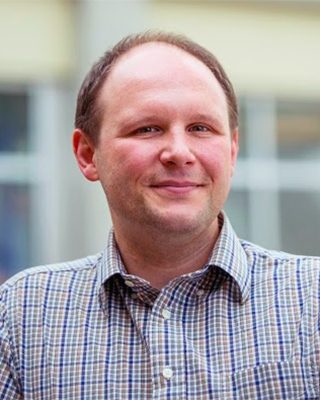
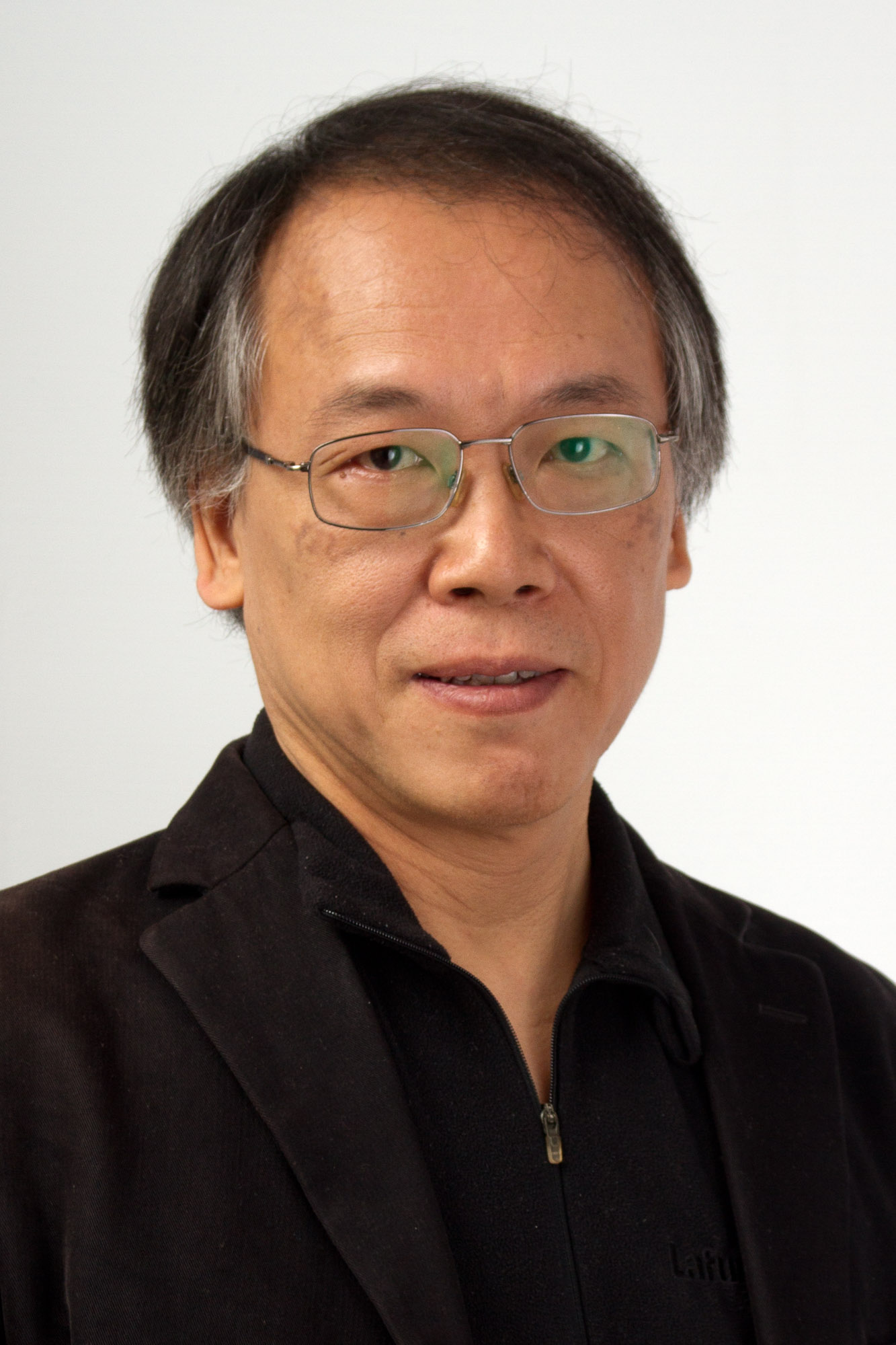
Renée J. Miller is a Professor and Canada Excellence Research Chair in Data Intelligence at the Cheriton School of Computer Science, University of Waterloo. Her research focuses on data integration, data management, and open data systems. She holds a PhD in Computer Science from the University of Wisconsin-Madison and bachelor’s degrees in Mathematics and Cognitive Science from MIT. Her work addresses challenges in data preparation, integration, and curation, aiming to reduce the burden on data scientists. She co-authored foundational papers on data exchange and schema mapping, earning the ICDT Test-of-Time Award (2013) and the Alonzo Church Award (2020). Miller has led major initiatives like the NSERC Business Intelligence Network and the International Very Large Data Base Foundation. Her grants include NSERC Accelerator Awards and funding from IBM, SAP, and Microsoft. Notable students include Ariel Fuxman (SIGMOD Dissertation Award winner) and Oktie Hassanzadeh (IBM PhD Fellow). Her research group, the Miller Lab, develops tools like Clio for schema mapping and systems for data lake exploration (RONIN, JOSIE).
Gordon Plotkin is a Professor at the School of Informatics, University of Edinburgh, where he is affiliated with the Laboratory for Foundations of Computer Science (LFCS). His research lies at the intersection of theoretical computer science and programming language semantics, with a profound influence on the formal understanding of computation. His research interests include Programming Language Theory, Semantics of Programming Languages, Domain Theory, Operational Semantics, Lambda Calculus, Type Theory, Concurrency Theory, and Algebraic Effects. His seminal work on structural operational semantics and domain theory has laid the foundation for modern semantics of programming languages. His publications span over five decades, showing a sustained and evolving research trajectory from foundational work in lambda calculus and domain theory to recent contributions in algebraic effects, probabilistic computation, and biochemical systems modeling. The articles demonstrate a consistent focus on formal methods, mathematical rigor, and the algebraic structure of computational effects. He has collaborated with leading researchers including Martín Abadi, John Power, Glynn Winskel, and John Reynolds. His work continues to influence both theoretical and practical developments in programming languages and systems. Gordon Plotkin has made foundational contributions to computer science, particularly through his development of structural operational semantics and domain-theoretic models of computation. He has advised numerous researchers and supervised many influential PhD theses, though specific student names are not listed in the provided text. His work has been supported by long-standing affiliations with the Laboratory for Foundations of Computer Science and the University of Edinburgh, and he has contributed to major collaborative projects in programming language design and verification. He is associated with several research groups and labs, most notably the Laboratory for Foundations of Computer Science (LFCS), which serves as a hub for theoretical research in programming languages, semantics, and logic at the University of Edinburgh.
Jelle Hellings is an Assistant Professor in the Department of Computing and Software at McMaster University , Canada. His research focuses on high-performance large-scale data management systems with a strong theoretical and algorithmic component, including resilient systems (blockchains) , graph databases , and external-memory algorithms . He previously worked as a Postdoc Scholar at the University of California, Davis and earned his PhD from Hasselt University in Belgium. Education: Doctor of Sciences in Computer Science (2018), Hasselt University Master of Science in Computer Science and Engineering (2011), Eindhoven University of Technology His research interests include scalable resilient systems with Byzantine fault tolerance, database theory, graph query languages, constraints on graph data, and external-memory algorithms for large graph datasets. He has authored numerous high-impact publications on blockchain-based resilient systems, query optimization in graph databases, and theoretical advancements in relation algebra expressiveness. Hellings actively contributes to academic service through program committee memberships and tutorial organization, and he currently teaches courses on future resilient databases and foundational computer science topics.
Kenneth Ross is a Professor in the Computer Science Department at Columbia University in New York City. His primary appointment is within the Department of Computer Science, with affiliations including the Foundations of Data Science Committee. His work bridges theoretical database research and practical system implementation. His research focuses on database systems with particular expertise in query processing, query language design, data warehousing, and architecture-sensitive database system design. Additional research spans computational biology, especially analysis of large genomic data sets. Current projects include Linear Algebra Operators in Databases for machine learning workloads and Repeats and Somatic Mutation analysis in genomics. His work consistently addresses the intersection of hardware capabilities and database system design. Ross leads the Database Research Lab at Columbia, which has produced significant work on query optimization, GPU database processing, and hardware-conscious database systems. His recent publications demonstrate strong focus on adapting database systems to modern hardware including GPUs, SIMD processors, and persistent memory. His scientific recognition includes: Packard Foundation Fellowship Sloan Foundation Fellowship NSF Young Investigator Award Distinguished Faculty Teaching Award (2008) Ross actively advises undergraduate engineering students (juniors with last names P-Z) and has taught foundational courses including Introduction to Databases and Programming and Problem Solving for over two decades. His teaching portfolio shows consistent engagement with both theoretical concepts and practical implementation challenges in computer science education.
National and Kapodistrian University of AthensGreece
Mohsen Lesani is an Associate Professor in the Computer Science and Engineering Department at the University of California, Santa Cruz's Baskin School of Engineering. His research focuses on reliability and security of software systems, particularly concurrent and distributed systems, with recent emphasis on secure replicated systems and distributed machine learning. Dr. Lesani received his PhD from UCLA, MS in artificial intelligence from Sharif University of Technology, and BS in software engineering from University of Tehran. He was previously a postdoc at MIT. His educational background provides a strong foundation for his interdisciplinary research spanning programming languages, distributed systems, and security. His research interests center on creating reliable and secure distributed systems. Current projects include resilient and secure distributed systems, heterogeneous and reconfigurable secure distributed systems, automatic analysis and synthesis of replicated objects, verification of distributed systems, data analytics, secure exchange across blockchains, machine learning for performance models, domain-specific languages and type systems, and automatic fence insertion for concurrent systems. His work bridges theoretical foundations with practical implementations to address real-world challenges in distributed computing. Lesani's research has been recognized with several prestigious awards including the NSF CAREER award in 2020 and DARPA YFA award in 2022. His work has also received the SIGPLAN Research Highlight in 2019, a distinguished paper award at OOPSLA 2018, and a best paper award at ISSRE 2015. These accolades reflect the impact and quality of his contributions to the field. He actively mentors PhD students in the Safe and Secure Software (S3) lab, including Xiao Li, Eric Chan, Javad Saber-Latibari, and Tejas Mane. His research has been supported by multiple NSF grants, demonstrating sustained funding for his innovative work. Lesani serves on program committees for major conferences including POPL, PLDI, OOPSLA, and DISC, contributing to the academic community. Lesani leads the Safe and Secure Software (S3) lab at UC Santa Cruz, where his team works on cutting-edge research in distributed systems, programming languages, and security. The lab fosters a collaborative environment where theoretical insights are translated into practical systems that address real-world challenges in reliability and security of distributed applications.
Natacha Crooks Dr. Natacha Crooks is an Assistant Professor in the Department of Electrical Engineering and Computer Science (EECS) at UC Berkeley. Her research focuses on distributed systems, databases, and security, with a particular emphasis on consistency models, BFT protocols, and cloud computing. She is a founding member of the SkyLab and a core contributor to the Data Systems and Foundations Group at Berkeley. She holds a Ph.D. in Distributed Systems from the University of Texas at Austin (2019) and a BA in Computer Science and Law from the University of Cambridge (2012). Affiliations & Roles: Assistant Professor, UC Berkeley EECS Visiting Researcher at Azure Research, Security & Privacy Founding Member of SkyLab Member of Berkeley Center for Decentralized Intelligence Former Scientific Advisor at Improbable and Astronomer Research Interests: Her work bridges distributed systems and database research, addressing challenges in transactional consistency, fault-tolerant protocols, and cloud resource optimization. Key themes include: Designing scalable BFT consensus algorithms Secure multi-cloud storage solutions Optimizing distributed transaction processing Privacy-preserving distributed systems Awards & Recognition: Sloan Research Fellow (2025) NSF CAREER Award ACM SIGOPS Dennis M. Ritchie Doctoral Dissertation Award (2020) IEEE CS TCDE Early Career Award (2024) Teaching: Fall 2025: CS 294-282 (Research Culture and Community Norms), Wheeler 130. Industrial Collaboration: Prior roles include visiting researcher at Cornell University, Microsoft Research (DMX group), and Imperial College London. Industrial partnerships include work with Materialize, Astronomer, and Improbable.
Amol Deshpande is a Professor in the Department of Electrical Engineering and Computer Sciences at the University of California, Berkeley, College of Engineering. With over 160 publications spanning from 2000 to 2025, his research has significantly impacted the database systems community. His work bridges theoretical foundations with practical systems, evidenced by numerous publications in top-tier venues including SIGMOD, VLDB, and ICDE. Professor Deshpande's research focuses on database systems, with particular expertise in graph databases, data management, probabilistic databases, query optimization, and data provenance. His work addresses fundamental challenges in managing complex data, including efficient graph analytics, dataset versioning, streaming data processing, and privacy-preserving data management. Recent research directions include entity-relationship abstractions beyond traditional relations, standalone catalog engines for large data systems, and graph theoretical approaches to dataset versioning. His publication trends show a consistent focus on evolving database technologies, with early work on probabilistic databases and query optimization, transitioning to graph analytics and data provenance, and more recently addressing modern challenges in data cataloging, privacy-first data management, and serverless stream processing. His research spans both theoretical contributions (e.g., approximation algorithms for stochastic optimization) and practical systems building (e.g., RStore, TreeCat). Professor Deshpande has mentored numerous PhD students who have become active researchers in the database community, including Hui Miao, Souvik Bhattacherjee, and Konstantinos Xirogiannopoulos. His collaborative work spans across institutions, with frequent collaborations with researchers from MIT, University of Maryland, and other leading institutions. His research has been supported by major funding agencies and has influenced both academic research and industry practices in data management. The evolution of his work reflects the changing landscape of data management, from traditional relational systems to modern graph and streaming data challenges.
Abolfazl Asudeh is an Associate Professor in the Department of Computer Science at the University of Illinois Chicago and director of the Innovative Data Exploration Laboratory (InDeX Lab) . He is a Senior Member of ACM and IEEE , serving as Associate Editor for IEEE Transactions on Knowledge and Data Engineering , VLDB Ambassador , and VLDB Endowment Liaison to NSF . His research focuses on Algorithm Design for Data and AI problems , emphasizing efficient, accurate, and responsible solutions through Approximation Algorithms , Randomized Methods , and Computational Geometry . Recent work explores LLM optimization ( Needle ), fair data structures ( FairHash ), and responsible AI frameworks ( Chameleon ). Scientific awards include Communications of the ACM Research Highlight Google Research Scholar Award SIGMOD 2019 Research Highlight Best of VLDB 2020 SIGMOD 2017 Reproducibility Award Grants: NSF IIS-2348919 (2024-2027): Fairness-aware Data Structures NSF IIS-2107290 (2021-2024): Collaborative Fairness Research The InDeX Lab develops systems like Needle (image retrieval) and RSR (matrix multiplication). His work integrates fairness , reliability , and computational efficiency across data structures , LLMs , and responsible AI implementations.
Emin Gün Sirer is an Associate Professor at the Department of Computer Science , College of Engineering , Cornell University . He co-directs the Initiative for Cryptocurrencies and Smart Contracts and leads the Meridian and HyperDex projects. Research in operating systems, networking, and distributed systems Focus on secure operating systems, high-performance cloud infrastructure, and peer-to-peer networks Developed systems like Nexus (secure OS), OpenReplica (Paxos implementation), and Trickles (stateless network protocol) Prominent Projects : Meridian - Lightweight network location service without virtual coordinates Cubit - Decentralized peer-to-peer search Kimera - Network-centric Java verification SPIN - Extensible microkernel for application-specific services Scientific Contributions : Leading work in blockchain security and peer-to-peer systems Patents in executable content rewriting and distributed virtual machines Advising & Collaborations : Advises projects in network positioning and content distribution Collaborates with institutions like Usenix , SIGCOMM , and NSDI Personal Background : Ph.D. and M.S. in Computer Science from the University of Washington B.S.E. in Computer Science from Princeton University High school at Robert College
Grant Weddell is an Associate Professor in the David R. Cheriton School of Computer Science at the University of Waterloo. His research focuses on database technology for real-time applications, including large-scale schema management, information clustering, dependency theory, and query optimization for heterogeneous data sources. He teaches courses such as CS338 (Introductory Databases), CS348 (Advanced Databases), CS446 (Software Engineering), and CS848 (Advanced Database Systems). His research interests emphasize the interplay between description logics and database systems, particularly in optimizing query processing and managing complex schemas. Recent work explores path agreements, functional dependencies, and ontology-mediated querying to enhance data integration and schema management efficiency. Teaching responsibilities include foundational database courses (CS338/348), software engineering (CS446), and advanced topics in information integration (CS848). No scientific awards are explicitly listed, though his contributions to database theory and optimization are extensive.
Victor Vianu is a Professor of Computer Science and Engineering at the University of California, San Diego and holds the INRIA International Chair at INRIA-Saclay in Paris. He has maintained continuous faculty status at UC San Diego since 1983 while developing extensive international collaborations, particularly with French research institutions including INRIA, ENST-Paris, ENS-Paris, and the University of Paris. His academic credentials include a Ph.D. in Computer Science from the University of Southern California (1983) and undergraduate studies in Mathematics and Informatics at the University of Bucharest (1974-1977). Professor Vianu's research spans computational logic, database systems and theory, and automatic verification. His work uniquely bridges theoretical foundations with practical applications in XML processing, workflow systems, and data-driven applications. He has made seminal contributions to understanding the theoretical underpinnings of database query languages and their expressive power, particularly in the context of XML technologies and workflow systems. His research demonstrates a consistent trajectory from theoretical computer science to practical database systems applications. His publication record reveals significant contributions to database theory spanning over three decades, with particular emphasis on XML technologies, workflow systems, and formal methods for data-driven applications. His work shows a clear evolution from foundational theoretical work to practical applications in business processes and web technologies. INRIA International Chair (2013) Fellow of the American Association for the Advancement of Science (AAAS) (2013) ACM PODS Alberto O. Mendelzon Test-of-Time Award (2010) Fellow of the Association for Computing Machinery (ACM) (2006) Professor Vianu has held significant leadership roles including Editor-in-Chief of the prestigious Journal of the ACM, numerous program committee chair positions for major database conferences (PODS, ICDT, ASIAN), and General Chair for ACM SIGMOD conferences. He has served on the executive committees of SIGMOD (1998-2000) and PODS (1993-2004), and was a member of the ICDT Council (1997-2007), demonstrating sustained influence in the theoretical database community. His extensive invited talks at major conferences including College de France, ACM PODS, and International Conference on Database Theory highlight his international recognition.
Zachary Tatlock is an Associate Professor at the Paul G. Allen School of Computer Science & Engineering at the University of Washington, where he leads the Programming Languages & Software Engineering Group (PLSE) and the SAMPL Group. His research spans programming languages, formal verification, compilers, and computational fabrication. He is also an Amazon Scholar with AWS's Automated Reasoning Group and previously advised OctoML. Tatlock's work bridges theoretical foundations with practical systems, focusing on making it easier to write tricky code while ensuring correctness through rigorous proofs and measurements. PhD in Computer Science & Engineering, University of California, San Diego (2014) Thesis: Reducing the Costs of Proof Assistant Based Formal Verification Advisor: Sorin Lerner BS in Computer Science (Honors) and Mathematics, Purdue University (2007) Professor Tatlock's research focuses on the intersection of programming languages, formal methods, and systems. His work in compilers and formal verification aims to make it easier to write tricky code while ensuring correctness through rigorous proofs. He explores computational fabrication techniques that bridge digital design with physical manufacturing. His recent work on equality saturation (via the egg framework) has transformed program optimization and synthesis. Tatlock also investigates floating-point numerics, distributed systems verification, and hardware/software co-design, always seeking to balance theoretical rigor with practical implementation. Tatlock's recent publications demonstrate a strong focus on equality saturation techniques (egg framework), computational fabrication, and verified systems. His work increasingly integrates machine learning with program analysis and synthesis. There's a clear trajectory toward more practical applications of formal methods in real-world systems, particularly in numerical computing and fabrication. His research group has made significant contributions to e-graph technology, floating-point accuracy, and the verification of distributed systems. Distinguished Paper Award for Rewrite Rule Inference Using Equality Saturation (OOPSLA 2021) Spotlight Paper Award for Dynamic Tensor Rematerialization (ICLR 2021) Distinguished Paper Award for egg: Fast and Extensible Equality Saturation (POPL 2021) Faculty Appreciation for Career Education & Training (FACET) Award (2020) NSF CAREER Award: Verifying Distributed System Implementations (2017) Distinguished Paper Award for Automatically Improving Accuracy for Floating Point Expressions (PLDI 2015) Distinguished Teaching Award Nomination (2015) Professor Tatlock has advised numerous doctoral, master's, and undergraduate students who have gone on to prominent positions in academia and industry, including faculty positions at the University of Utah and Brown University, and leadership roles at companies like OctoML and Certora. His research is supported by significant funding from NSF, DARPA, DOE, and industry partners, totaling millions of dollars. Current grants include projects on computer-aided reasoning, formal verification, computational fabrication, and machine learning systems. He has served on numerous program committees and organized workshops including FPTalks, EGRAPHS, and PNW PLSE. As co-leader of the Programming Languages & Software Engineering (PLSE) research group and affiliate of the SAMPL Group at the University of Washington, Tatlock has developed influential tools including egg (an equality saturation toolkit), Carpentry Compiler, and Odyssey. His group actively collaborates with industry partners including Amazon Web Services, where he serves as an Amazon Scholar. The group has made significant contributions to equality saturation, floating-point accuracy, program synthesis, and computational fabrication, with applications ranging from compiler optimization to 3D printing.
Jieh Hsiang is a Distinguished Professor at National Taiwan University , with affiliations in the Department of Computer Science and Information Engineering, the Digital Archives and Automatic Inference Laboratory, and the Digital Humanities Research Center. He holds concurrent roles at the Institute of Information Science, Academia Sinica, and the Higher Education Research & Development Office, National Taiwan University. Education PhD in Computer Science, University of Illinois at Urbana-Champaign (1979–1982) BS in Mathematics, National Taiwan University (1972–1976) Research Interests Hsiang's work spans automated reasoning , digital libraries , digital humanities , and information retrieval . His research focuses on integrating computational methods with cultural heritage preservation , particularly through tools like DocuSky and databases such as the Taiwan Historical Digital Library . He explores AI applications in patent analysis , historical text mining , and semantic relationships in legal documents . Recent Trends in Publications His recent articles highlight advancements in BERT and GPT-2 fine-tuning for patent classification , LARGE language models for legal automation , and GIS-based analysis of historical archives . Themes include digital preservation , AI-driven legal text analysis , and cross-disciplinary computational tools for humanities scholars. Scientific Awards 2019 Ministry of Science and Technology Distinguished Research Fellow 2009 National Taiwan University Outstanding In-House Service Award 2008 Chinese Library Association Special Contribution Award 2006 IEEE Test-of-Time Award 1997 & 1999 National Science Council Outstanding Research Award 1997 Ministry of Education Outstanding Industrial-Academic Collaboration Award 1998–2001 Founder and First Chair of IFIP WG1.6 Labs and Collaborations Hsiang leads the Digital Archive and Automatic Inference Laboratory , developing platforms like DocuSky for digital humanities, Taiwan Historical Digital Library , and QGIS Cloud Maps for spatial analysis. His team collaborates internationally on projects involving historical document digitization , patent automation , and cross-domain knowledge integration .
National Graduate School of Mechanics and AerotechnicsFrance
Amin Mesmoudi serves as Associate Professor in Data Engineering at the University of Poitiers' IUT (Institut Universitaire de Technologie), with dual laboratory affiliations at LIAS-ENSIP (Poitiers campus) and LIAS-ISAE-ENSMA (Chasseneuil campus). His research bridges theoretical database systems with practical large-scale data engineering challenges, particularly in semantic web technologies and machine learning applications. The laboratory maintains physical presences at both ENSIP's Bâtiment B25 in Poitiers and ISAE-ENSMA's Téléport 2 facility in Chasseneuil, facilitating cross-institutional collaboration. Mesmoudi's research program centers on scalable data management systems, with three interconnected pillars: (1) RDF and graph-based query optimization techniques for billion-triple datasets, (2) machine learning integration for spatial query performance and anomaly detection, and (3) explainability frameworks for complex black-box models. His work demonstrates consistent evolution from foundational database systems (2011-2016) toward contemporary AI-driven data engineering, particularly evident in his 2023-2025 publications on temporal dependency preservation and co-selection explainability. The Data Engineering team within LIAS laboratory provides the primary research context for these investigations. Publication analysis reveals strong methodological continuity in addressing scalability bottlenecks across database paradigms. Early work focused on SQL-on-MapReduce benchmarking for astronomy databases (2015-2016), transitioning to specialized RDF processing frameworks (2019-2021), and culminating in current hybrid approaches combining temporal modeling with machine learning (2023-2025). Key technical themes include fragmentation strategies for distributed data, optimizer feedback mechanisms, and graph-based query acceleration - all targeting real-world performance constraints in big data environments. As a core member of LIAS laboratory's Data Engineering team, Mesmoudi contributes to France's national research infrastructure in computer science and automation systems. The laboratory's dual-university structure enables unique cross-pollination between University of Poitiers' academic programs and ISAE-ENSMA's engineering specialization, with Mesmoudi's work exemplifying this synergy through applications spanning astronomy databases to wireless sensor networks.
Michael Benedikt is a Professor of Computer Science at the University of Oxford and a Governing Body Fellow of University College. He holds the role of Director of the Advanced MSc in Computer Science program. His research focuses on databases, Web data management, logical methods in computer science, and theoretical computer science. Benedikt's work intersects with artificial intelligence, machine learning, and algorithms, with contributions to query languages, data integration, and formal methods. Education: Ph.D. in Mathematics, University of Wisconsin, 1993 Prior roles: Distinguished Member of Technical Staff at Bell Laboratories (1994–2006), visiting researcher at Yahoo! Labs Research Interests: Databases and information exchange Web and Web 2.0 data management Logical methods in computer science Formal verification and query optimization Applications in AI and machine learning Key Projects: FOX : Query-driven data acquisition from web-based sources PDQ : Proof-driven query answering over web-based data TRANCE : Transforming nested collections efficiently Awards: Best Paper Award at ICALP 2017 (Track B) EPSRC Established Career Fellowship (2015–2020) Advising & Grants: Directed the MSc in Advanced Computer Science program Supervised PhD students including Chia-Hsuan Lu and past advisees such as Luying Chen and Ben Spencer Received funding for projects like the ERC DIADEM initiative Labs & Teams: Active in the Department of Computer Science’s research groups, including the Algorithms At Large and Databases teams.