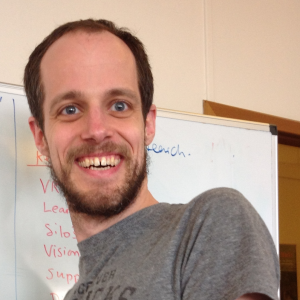
Toine Bogers is an Associate Professor at the IT University of Copenhagen in Denmark, affiliated with the Department of Computer Science . He also holds a part-time Lecturer position at Aalborg University Copenhagen within the Faculty of Humanities 's Department of Communication and Psychology . Additionally, he serves as Chief Scientific Officer at the AI Pioneer Centre for fundamental AI research. Research Interests : Information access technologies, recommender systems, search engine behavior, human information interaction, personal information management, and algorithmic fairness in HR. Key Research Areas : Algorithmic hiring systems for fair recruitment Complex search/recommendation scenarios Personal information management on handheld devices Interactive information retrieval reproducibility Scientific Contributions : Over 134 publications since 2005, including Google Scholar works on serendipity in recommendation systems, HR information behavior, and cross-domain relevance analysis. His 2022 data storytelling experiments and 2021 CHIIR collaboration manifesto highlight his methodological rigor. Awards : 2021 Best Paper Award 2020 & 2018 Best Reviewer recognitions 2020 Outstanding PC Member honor
Wenting Zheng is an Assistant Professor in the Computer Science Department at Carnegie Mellon University (CMU), with a courtesy appointment in the Electrical and Computer Engineering Department. She co-founded Opaque Systems and serves as a core faculty member at CyLab Security and Privacy Institute. Ph.D. in Electrical Engineering and Computer Science (EECS) from UC Berkeley M.Eng. and Bachelor’s degrees from MIT under Barbara Liskov Her research focuses on system security and applied cryptography , particularly systems enabling “sharing without showing.” Key areas include secure cloud computation, collaborative privacy-preserving analytics, and practical cryptographic frameworks for machine learning. Recent work emphasizes encrypted AI (e.g., Cinnamon), secure multi-party computation (e.g., Silph), and private information retrieval (e.g., PIANO). Notable scientific honors include the Berkeley Fellowship (2014-2016) , IBM Research Fellowship (2017-2018) , and the USENIX Security 2021 Distinguished Paper Award . She has advised numerous Ph.D. and Master’s students, including collaborators at CMU and UC Berkeley. Teaching: Distributed Systems, Secure Computer Systems, Cryptosystems: Theory and Practice Research grants from NSF, AWS, Cisco, Google, Samsung, and CMU CyLab Co-founder of DARE, a diversity-focused research mentorship program
Ladjel Bellatreche is a Full Professor at the National Engineering School for Mechanics and Aerotechnics (ISAE-ENSMA) in Poitiers, France, where he has been a faculty member since September 2010. He leads the Data and Model Engineering Team of the Laboratory of Computer Science and Automatic Control for Systems (LIAS). Prior to his current position, he spent eight years as Assistant and then Associate Professor at Poitiers University. His academic journey includes visiting positions at Université du Québec en Outaouais (Canada), Purdue University (USA), and Hong Kong University of Science and Technology (China). Professor Bellatreche's research interests span multiple domains in data management and engineering, with a focus on Semantic Data Integration, Ontology-based Database Design, Life Cycle of Extremely Large Database Design, Big Data & Cloud Computing, Green Computing, and Database Deployment. His work bridges theoretical foundations with practical applications in data-intensive systems. His publications reflect a strong trend toward addressing challenges in big data analytics, semantic data integration, and energy-efficient database systems. The research demonstrates a progression from traditional data warehousing techniques to more advanced approaches incorporating semantic web technologies, linked open data, and green computing principles. His work increasingly focuses on scalability, efficiency, and the integration of diverse data sources. Professor Bellatreche has received recognition through his service as an Editorial Board Member for the International Journal of Reasoning-based Intelligent Systems and as subject area editor of the Scalable Computing Journal. He has also served as a reviewer for prestigious journals including IEEE TKDE and Distributed and Parallel Database Journal. His leadership extends to organizing major international conferences such as DAWAK, DOLAP, MEDI, and WISE. With over forty program committee memberships, he plays a significant role in shaping research directions in data management. Additionally, he actively promotes research in Africa and Asia through student supervision and conference organization.
José Manuel Torres is an Associate Professor at the Faculty of Science and Technology of Fernando Pessoa University , where he has been teaching since at least 1997. He holds a PhD in Computer Science from Lancaster University (2005) and a MSc in Electrical and Computer Engineering (1997). His research focuses on Visual Information Retrieval , Multimedia Systems , and Database Modeling . PhD Thesis: "Visual Information Retrieval through Interactive Multimedia Queries" (Lancaster University, 2005) Current Research: Investigator at ISUS and LIACC research centers Email: jtorres@ufp.edu.pt Research interests span multiple domains including: Artificial Intelligence applications in multimedia Multimodal Interfaces for information retrieval Object-Oriented Database Systems modeling Computational Semiotics in digital systems MPEG-7 Standard contributions for multimedia description Visual Query Systems with region-based feedback His scholarly work shows trends in: Interactive multimedia query systems Electromagnetic teaching methodologies Database architecture comparisons Information preservation standards Adaptive interface design Visual search algorithms Teaching portfolio includes: PhD-level Artificial Intelligence courses Undergraduate Algorithms and Data Structures sequences Master's Computer Vision instruction Comprehensive Electromagnetism course development
Patrick Wang serves as an Adjunct Associate Professor in the Department of Electrical and Computer Engineering at Duke University, teaching courses including IDS 703 Introduction to Natural Language Processing. His primary contact email is patrick.wang@duke.edu. His research spans two major domains: biomedical informatics and computer vision. In biomedical informatics, he specializes in knowledge graph construction (notably ROBOKOP and Biomedical Data Translator systems), biomedical data integration, and hypothesis generation for environmental health and pandemic response. His computer vision work focuses on radar-based systems, autonomous driving algorithms, and object detection techniques leveraging physics-based modeling and camera geometry. Key methodologies include federated data systems, real-time tracking, and spatial resolution optimization. Analysis of his 15 most recent publications reveals a strategic pivot from computer vision (2010-2017) toward biomedical informatics (2018-2022). Early work centered on radar systems and autonomous driving with monocular video, while recent output emphasizes knowledge graphs for COVID-19 data integration, environmental health observations, and universal biomedical data translation. The ROBOKOP framework appears consistently across recent publications, indicating it as his flagship project for federated biomedical knowledge systems. No scientific awards were documented in the provided source material. While his course IDS 703 confirms NLP instruction, no student advising relationships or research grants were specified in the available information. The adjunct position suggests industry collaboration potential, though specific partnerships remain unreported.
Ştefania-Gabriela Dumbravă is an Associate Professor in Computer Science at the École Nationale Supérieure d'Informatique pour l'Industrie et l'Entreprise (ENSIIE), part of Institut Polytechnique de Paris. She leads the ACMES team at Samovar Laboratory (Télécom SudParis) and participates in international working groups including the Property Graph Schema Working Group and European Research Network on Formal Proofs. Education: PhD in Computer Science, Université Paris-Sud (2016) MSc in Computer Science, Jacobs University Bremen (2012) BSc in Mathematics, Jacobs University Bremen (2010) Research Focus: Her work centers on formal methods for designing and verifying graph database algorithms, with emphasis on: certified database engines, property graph schemas, threshold queries, progressive querying techniques, and knowledge graph evolution. She integrates theorem proving (Coq/Isabelle) with practical database applications. Publication Trends: Her recent works demonstrate strong focus on graph database foundations (schemas, query processing) and practical verification techniques. Publications frequently appear in top-tier venues (VLDB, SIGMOD, ICDE) and emphasize both theoretical rigor and real-world applications in areas like bioinformatics, transportation, and networking. Awards & Honors: EASST Best Software Science Paper (ICGT 2025) ICDE/SIGMOD Distinguished Reviewer Awards (2025) SIGMOD Best Paper & Research Highlight (2023) VLDB Best Paper Runner-Up (2022) Students & Grants: Supervises Master's interns on graph database applications. Leads the ANR JCJC VERDI project (2025-2029) on verified distributed graph systems. Actively recruits PhD candidates for this initiative. Labs & Service: ACMES team at Samovar Lab. Serves on editorial boards (TODS, TGDK) and program committees (VLDB, SIGMOD, ICDE). Coordinates VLDB 2026 Demonstrations Track and co-organizes multiple workshops (GRADES-NDA, TGD).
Dr. Damiano Spina is a Senior Lecturer in the School of Computing Technologies at RMIT University, Melbourne, Australia. He serves as an Associate Investigator at the ARC Centre of Excellence for Automated Decision-Making and Society (ADM+S), the RMIT Research Lead at the Australian Internet Observatory (AIO), and a member of the International Panel on the Information Environment (IPIE). In June 2025, he began a 3-year appointment as an ACM Distinguished Speaker, recognizing his significant contributions to the computing field. Dr. Spina received his PhD in Computer Science from UNED (Spain) in 2014. His academic journey has established him as a leading researcher in information access systems and human-computer interaction. His educational background reflects a strong foundation in computer science with a focus on information retrieval systems. Dr. Spina's research focuses on Information Retrieval (IR), Text Analytics, and Human-AI interaction, with particular emphasis on interactive IR (including conversational assistants) and the evaluation of information access systems. His work bridges theoretical research with practical applications, addressing critical issues such as fairness-aware evaluation, bias detection, and the impact of generative AI on information access. He has developed innovative methodologies that incorporate physiological and cognitive data to better understand user interactions with information systems. His approach often integrates perspectives from cognitive science, behavioral analysis, and ethical considerations to create more effective and equitable information access solutions. His recent publications demonstrate a clear trajectory toward increasingly interdisciplinary research, combining traditional information retrieval with neurophysiological approaches, ethical frameworks, and societal impact assessments. The articles show growing attention to real-world applications, particularly in addressing misinformation, bias in search systems, and accessibility challenges for diverse user groups. His work increasingly incorporates multimodal data and human-centered evaluation methodologies that go beyond traditional relevance metrics. SIGIR 2025 LiveRAG Challenge - First Place Walert - Outstanding Achievement in the 2024 EIP-RACE Demonstrator Competition Award for Excellence in Reviewing ACM SIGIR 2024 Best Presentation Award NTCIR-17 (2023) Best Poster Award Ubicomp-ISWC 2023 RMIT Award for Research Impact (Technology) (2021) ARC Discovery Early Career Researcher Award (DECRA) (2020-2023) Best Short Paper Award ECIR 2020 Best Evaluation Paper Award ECIR 2019 Top Reviewer Award Information Processing & Management (2018) Dr. Spina has supervised numerous PhD and Master's students across diverse research areas including neurophysiological approaches to information retrieval, trust perception in social media, fairness-aware question answering, and sexism identification in social networks. His research has been supported by significant grants including the ARC DECRA award for 'Fair and Transparent Information Access in Spoken Conversational Assistants' (2020-2023) and ongoing projects through the ADM+S Centre. He has also received the 2021 RMIT Award for Research Impact (Technology) for his work's practical applications. Dr. Spina is actively involved with the Australian Internet Observatory (AIO), a national research infrastructure initiative developing tools to analyze digital social data across disciplines. He co-leads the EXIST project series on sexism identification in social networks and has contributed to the Cortana Intelligence Institute (2018-2020) which advanced knowledge on digital assistants. His work often bridges academia and practical applications, particularly in the areas of misinformation management, fairness in information access, and human-AI cooperation.
Ahmad Ghazawneh is a Senior Lecturer at the School of Information Technology , Halmstad University. His research explores the intersection of digital innovation platforms, blockchain technology, and fintech, emphasizing transformative impacts on financial systems and digital economies. Email: ahmad.ghazawneh@hh.se Research Focus: Dr. Ghazawneh investigates blockchain-based financial ecosystems, knowledge graph integration in healthcare, and platform dynamics across multiple domains including mobility systems and social media affordances. Scientific Trends: Recent publications demonstrate expertise in federated health data systems, token-based blockchain ecosystems, conversational AI for healthcare, and sustainable mobility platforms. His work bridges theoretical platform economics with practical implementations.
Diego Reforgiato Recupero is a Full Professor at the Department of Mathematics and Computer Science of the University of Cagliari, Italy, since December 2015. He is the director and creator of the Human-Robot-Interaction Laboratory (http://hri.unica.it) and co-director of the Artificial Intelligence and Big Data Laboratory (http://aibd.unica.it). His roles include quality responsible for the department and membership in the Commission for start-up and spin-off at the University. He teaches multiple courses across disciplines: Computers Architecture for Computer Science bachelor's, Big Data for Computer Science master's, and Web Design and Digital Storytelling for the Master's in Philosophy and Theories of Communication. His research spans interdisciplinary domains including Artificial Intelligence Big Data Analytics Knowledge Graphs Human-Robot Interaction Digital Transformation His scholarly output demonstrates significant focus on AI applications in energy systems (smart grids, district heating), knowledge graph engineering (ontology generation, semantic conversion), and human-centric AI (conversational agents, digital coaching). Publications frequently address data augmentation techniques and transformer architectures across finance, tourism, and mental health domains. He leads the Human-Robot Interaction Laboratory and co-founded the Artificial Intelligence and Big Data Laboratory. His work integrates Apache Spark for big data processing, Unity for synthetic data generation, and RDF/OWL standards for knowledge representation.
Antonia Saravanou is a Ph.D. graduate from the Department of Informatics and Telecommunications at the National and Kapodistrian University of Athens (NKUA), advised by Prof. D. Gunopulos. She holds an M.Sc. in Advanced Information Systems and a B.Sc. in Computer Science from the same department. Since 2011, she has worked as a Research Scientist and Engineer at NKUA and Athens University of Economics and Business (AUEB), and is affiliated with the Knowledge Discovery in Databases Laboratory (KDDLab) and the Management of Data, Information & Knowledge Group (Madgik). Her research spans Data Mining, Machine Learning, and Anomaly Detection, with a focus on Social Network Analysis, Graph Representations, and Healthcare Applications. She has completed research visits at Stanford University's Geometric Computing Group, Spotify Tech Research, and Bloomberg AI. Education: Ph.D., Informatics and Telecommunications, NKUA M.Sc., Advanced Information Systems, NKUA B.Sc., Computer Science, NKUA Her research explores graph-based methods for event detection in social networks, self-supervised node representation learning, and applications in healthcare and news analysis. Projects include music recommendation systems via graph representations, infant mortality prediction models using birth certificate data, and real-time news monitoring frameworks. She has also worked on knowledge graph applications for news ranking and anomaly detection in sparse time series data. Scientific Awards: Outstanding Reviewer for ICLR 2021 Top Reviewer for NeurIPS 2018 As a teaching assistant, she has supported graduate and undergraduate courses at NKUA, including Mining Big Datasets, Data Mining, and Artificial Intelligence. She actively participates in outreach programs like ACM Student Chapter UoA, Rails Girls Athens, and Django Girls.
Nikolaos E. Panagiotou is a Research Engineer at the Department of Informatics and Telecommunications, National and Kapodistrian University of Athens, where he has been working since March 2014. He is also a Ph.D. candidate in Real-time Data Analysis in Massive Streams and Social Media at the same institution under the supervision of Prof. D. Gunopulos. He is an active member of the KDDLAB research group at the University of Athens, participating in EU research projects including INSIGHT and VaVeL. His educational background includes: MSc. with Distinction in Artificial Intelligence, Learning from Data from the School of Informatics, University of Edinburgh (2012-2013) BSc. in Informatics and Telecommunications from the Department of Informatics and Telecommunications, University of Athens (2007-2011) Dr. Panagiotou's research focuses on real-time analysis of high-volume data streams with particular emphasis on text and sensor streams, including news and social media content. His current research interests include: Text Mining: event detection, first story detection, open information extraction IoT/Smart-Cities: sensor analysis, heterogeneous sensor aggregation, real-time visualization Spatio-temporal Analysis: congested road-segments, travel time estimation, OSM His work bridges theoretical research with practical applications in smart city technologies and real-time data processing systems. His publication record demonstrates a strong focus on smart city applications, real-time data processing, and information extraction from diverse data sources. The research shows progression from foundational work on stream mining and event detection to sophisticated applications in urban mobility and news monitoring systems. His most recent work continues to advance techniques for handling sparse data environments and real-time analytics, with particular emphasis on travel time estimation and hybrid analytical approaches. Dr. Panagiotou has been involved in significant EU-funded projects: INSIGHT project: Implementation of real-time analysis modules and visualization engine for the smart city of Dublin VaVeL project: Design of integration schemes and development of real-time analysis modules using spatio-temporal data He has developed multiple demonstration systems including the News Monitor for real-time news analysis and various smart city monitoring dashboards. His technical expertise spans real-time data processing, stream mining, spatio-temporal analysis, and visualization systems, with applications in urban mobility and news monitoring. His collaborative work with researchers across Europe demonstrates his integration into the international research community in data science and smart city applications.
Goran Banjac is a researcher at the Department of Computer Science and Informatics, Faculty of Electrical Engineering, University of Banja Luka. His work focuses on automated conceptual database design, business process modeling, and multilingual database tools. Current projects include AMADEOS (Automated Synthesis of Conceptual Database Models) and EU-funded initiatives. His research spans database systems, software engineering, and model-driven methodologies. Collaborations include Dražen Brđanin, Slavko Marić, and international partners. Recent publications analyze heterogeneous source artifacts, speech-driven design, and UML-based forward engineering. No scientific awards were reported.
Emilio Jesús Gallego Arias is a non-tenured Research Fellow at the French National Center for Scientific Research (CNRS), hosted at the Institute of Fundamental Computer Research (IRIF) of CNRS and University of Paris Cité. He is also a member of the PiCube Inria team. Previously, he held postdoctoral positions at the University of Pennsylvania (2012–2014) and MINES ParisTech (2014–2019). His research spans mechanically-verified functional and logic programming , with a focus on the Coq proof assistant and the Mathematical Components Library . He develops tools like coq-lsp (language-server for Coq IDEs) and jsCoq (web interface), replacing earlier projects like SerAPI . His work bridges programming language theory , digital signal processing , and formal verification , particularly in the ANR FEEVER project for verifying Faust programs. His 15 most recent works (2014–2024) address type systems , differential privacy , and formal verification in domains like audio processing and mechanism design . Publications span journals (e.g., Journal of Privacy and Confidentiality), conferences (ICML, POPL, FARM), and workshops (CoqPL, UITP). He contributes to open-source projects (GitHub), including DFuzz (linear dependent types), DualQuery (privacy algorithms), and RAM (relational machine). He uses formal methods in collaborative development platforms (Gitter, GitLab) and advocates for free software and accessible audio technology .
Gioldasis Nektarios is a Lecturer in the School of Electronic and Computer Engineering at the Technical University of Crete , affiliated with the Distributed Information Systems and Applications Laboratory (TUC/MUSIC) . He has been a permanent member of the laboratory since 2006 and has contributed to numerous Research & Development projects. MSc in Informatics, School of Electronic and Computer Engineering, Technical University of Crete (2002) BSc in Applied Informatics, University of Macedonia (1999) His research interests span critical domains including: Semantic Web technologies and Open Linked Data Software engineering for Service Oriented and Multi-Tier Architectures Data modeling, metadata management, and semantic interoperability Digital libraries and multimedia management systems The article portfolio demonstrates expertise in XML-Semantic Web integration, query mediation, and cultural data systems, with a 2023 publication on location-based game platforms. Key trends include: Interoperability frameworks (2015-2012) Ontology-driven data access (2010-2009) Geospatial and cultural heritage applications (2011-2007)
Leo Vijayasarathy is Professor and Chair of the Department of Computer Information Systems and Director of the Master of Computer Information Systems (MCIS) program in the College of Business at Colorado State University. He holds an MBA from Marquette University and a Ph.D. in Information Systems from Florida International University. Prior to joining CSU in 2000, he held academic positions at Barry University and North Dakota State University where he served as MIS Coordinator. His research examines the development, use, and organizational impacts of information systems, with emphasis on: Software development methodologies (agile/waterfall selection, testing techniques) Business analytics competence and IT value realization E-commerce adoption and online consumer behavior Database systems and information retrieval effectiveness Supply chain technology integration Recent publications demonstrate strong focus on analytics-driven business value, agile project management, and security in emerging technologies. His work consistently appears in premier journals including Journal of Management Information Systems , IEEE Software , and Information & Management . Awards recognizing his contributions: Mortar Board Award for Excellence in Academic Teaching Outstanding Research Award (NDSU College of Business) Excellence in Service Award (CSU College of Business) Distinguished Service Award (CSU Office of International Programs) He actively mentors graduate students and has secured university grants for teaching/research initiatives. As Director of MCIS, he oversees program development while advising the CIS Student Association and Tech Masters Connect. His editorial service includes the advisory board of Internet Research journal.