G.C. Christodoulou, PhD, is a researcher in the Department of Electrical Engineering, Mathematics and Computer Science, focusing on data-intensive systems. His work spans cloud computing, stream processing, and interval data management, with recent publications addressing transactional cloud applications, stateful dataflows, and indexing innovations. Current affiliation: Electrical Engineering, Mathematics and Computer Science (data-intensive systems) Key collaboration networks: University of X, academic institutions in cloud computing Research Interests Christodoulou's research centers on optimizing cloud computing infrastructures and stream processing systems. His studies explore transactional stateful functions, autoscaling mechanisms, and data migration challenges. He also contributes to indexing frameworks for interval data, including hierarchical structures and temporal database efficiency. Article Trends Recent work highlights transactional consistency in cloud applications, dynamic dataflow execution, and scalable interval indexing. His publications emphasize cloud-native architectures, stream processing benchmarks, and temporal query optimization, reflecting a focus on bridging distributed systems with database innovation.
Aisling Connolly serves as a Junior Researcher at the Generations and Gender Programme (GGP) within the Netherlands Interdisciplinary Demographic Institute (NIDI), where she processes Generations and Gender Survey data, manages dissemination initiatives, and resolves user queries. Education: Master’s degree in Sociology and Social Research from Utrecht University, with thesis research on ethnic diversity exposure among youth using geo-location data across spatial contexts. Research Focus: Her expertise centers on youth development dynamics , migration patterns , and advanced spatial analysis methodologies , particularly examining how young populations experience ethnic diversity through geographic and social lenses. This interdisciplinary approach bridges demographic research with urban sociology. Professional Background: Prior to NIDI, she contributed to crime pattern analysis at Amsterdam’s Netherlands Institute for the Study of Crime and Law Enforcement (NSCR), investigating spatial-temporal distributions of high-risk crime facilities.
Giuseppe Agapito is an Associate Professor and senior research scientist at Magna Graecia University of Catanzaro, working within the Department of Law, Economics and Sociology. His academic profile spans both teaching responsibilities and active research in computational fields. His research focuses on computational intelligence techniques applied to complex real-world problems, particularly in machine learning, parallel and distributed computing, and graph theory. His work demonstrates strong interdisciplinary applications, especially in biology and omics sciences where he develops methods to leverage the vast amounts of data being produced. Agapito has published over 100 papers in international journals and conference proceedings. His recent publications show a strong focus on graph-based machine learning approaches, sentiment analysis techniques, and bioinformatics applications. His research trajectory indicates a progression from bioinformatics applications toward more general machine learning frameworks with applications across multiple domains. As an active member of the academic community, he serves as a reviewer for scientific journals and participates as chair and program committee member for national and international conferences. His editorial work for PeerJ Computer Science demonstrates his standing in the academic community. His teaching responsibilities include courses on Computer Science and Data Analysis within the Department of Law, Economics and Sociology, suggesting an interdisciplinary approach that applies computational methods to social sciences domains.
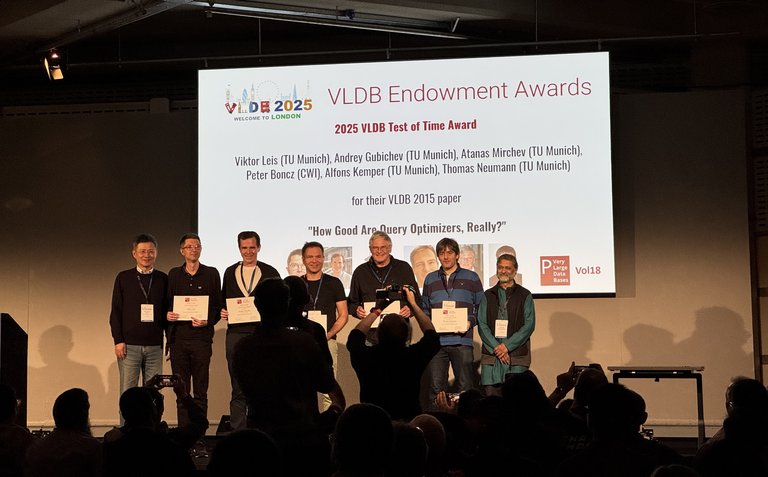
Peter Boncz is a Professor in the special chair of Large Scale Analytical Database Systems at Vrije Universiteit Amsterdam and leads the Database Architectures (DA) research group at CWI (Centrum Wiskunde & Informatica), the Netherlands' national research institute for mathematics and computer science. He serves on the CWI management team and is actively involved in multiple research initiatives and industry collaborations. Professor Boncz is internationally recognized as a pioneer of column-store databases, introduced through his PhD project MonetDB. His research spans database architecture, query processing optimization, and analytical database systems. His work on vectorized query processing with his first PhD student Marcin Zukowski has become foundational in modern analytical databases including BigQuery, Databricks, Snowflake, and DuckDB, which has millions of monthly downloads. Current research focuses include GPU data processing, vector search optimization, confidential computing, and graph data management. Boncz's recent publications reveal strong trends toward optimizing database systems for modern hardware architectures, particularly GPUs and cloud CPUs. His work bridges theoretical database concepts with practical implementation, focusing on performance optimization through innovative data layouts, compression techniques, and hardware-aware processing. The research shows a clear trajectory from foundational database concepts toward specialized optimization for emerging hardware and application requirements. VLDB Test of Time Award 2025 (second time, previously won in 2009) CIDR Test of Time Award 2024 ACM Fellow (2022) Humboldt Research Award (2013) ICTRegie Award (2006) Boncz has co-founded six spin-off companies in data systems, including MonetDB BV, and serves as an advisor to ventures like Databricks Corp. His research is supported by multiple external funding projects including Actian Research Grants, Databricks research agreements, and Motherduck Service Agreements. He has advised numerous students, with Marcin Zukowski being notably mentioned as his first PhD student who co-developed vectorized query processing. As leader of the Database Architectures research group at CWI, Boncz oversees a team focused on pushing the boundaries of database technology. The group maintains close ties with industry through projects with Databricks, Motherduck, and RelationalAI, while continuing to develop open-source technologies like DuckDB. The team is particularly active in GPU acceleration, confidential computing, and graph data management through the Linked Data Benchmark Council (LDBC), which Boncz founded.
Mark de Berg is a Full Professor at TU/e and the chair of the TU/e Algorithms Group, focusing on algorithms and spatial data structures. His research spans computational geometry, FPT algorithms, and geometric networks, emphasizing practical applications in complex networks and design. He holds a PhD from Utrecht University (1992) and is co-author of seminal textbooks on computational geometry. Department: Mathematics and Computer Science Institute: EAISI Research Groups: Algorithms, EAISI Foundational His work addresses algorithmic challenges in spatial data efficiency, with over 225 publications and notable grants like the VICI grant and leadership in the Gravitation Program Networks. He serves on editorial boards and conference committees, advancing algorithmic research globally. Recent work explores approximation algorithms for geometric coverage, truthful budget aggregation mechanisms, and geometric network optimization. His contributions bridge theory and application, influencing both academic and industrial domains. Awards: VICI grant from NWO Teaching includes courses on algorithms, geometric algorithms, and discrete mathematics. His research extends to motion planning for robots and diverse combinatorial solutions, showcasing interdisciplinary impact.
Dr. MH Morren is an Assistant Professor of Marketing at Vrije Universiteit Amsterdam since 2012, specializing in analytical methods ranging from latent variable models to large language models. As Scientific Coordinator of Sustainability, she fosters interdisciplinary collaboration to address climate challenges. Affiliated with Health Economics Research Amsterdam (HERA) and Amsterdam Sustainability Institute (ASI), her research focuses on sustainable consumer behavior, policy impacts, and environmental legitimacy of brands. Teaching includes Natural Language Processing, Data Analysis in R, and Marketing Research Methods. Her work contributes to UN Sustainable Development Goals related to climate action and responsible consumption. Recent research explores prompts vs fine-tuning for value detection (2024), reinforcement learning for database optimization (2023), and cross-cultural behavioral theories (2021). She leads the 'Connecting Climate Discourse and Religious Language' project, integrating NLP with social sciences. No scientific awards explicitly mentioned. Supervises master's theses and teaches across undergraduate and graduate programs. Active in methodological innovations for sustainability research.
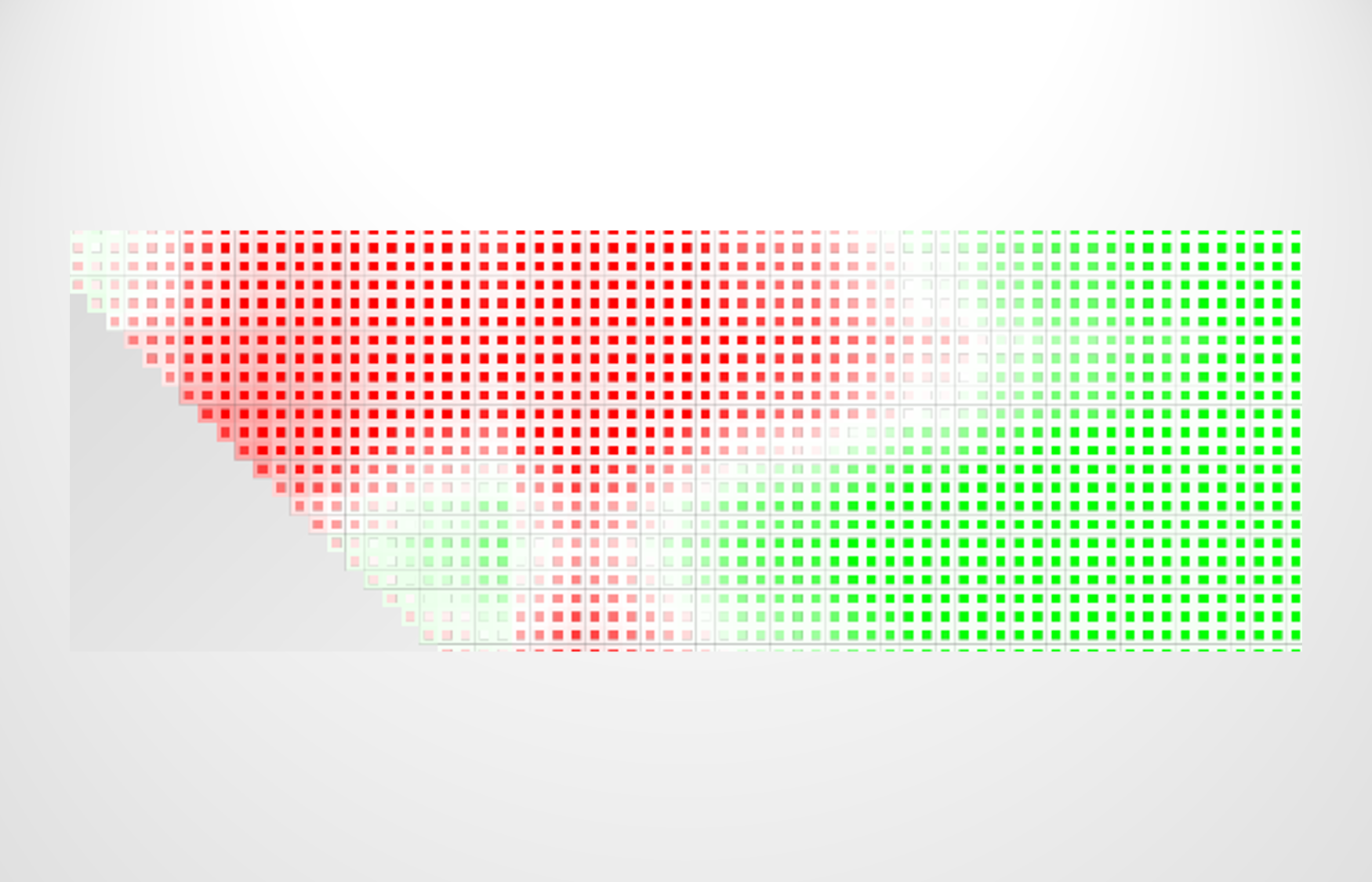
Dr. Michael Behrisch is an Associate Professor for Visual Analytics in the Visualization and Graphics Group at Utrecht University's Department of Information and Computing Sciences. With a PhD from University of Konstanz, his career includes postdoctoral work at Harvard and Tufts Universities, and over six years as a research associate at Konstanz. Specializes in matrix-based representations for relational data Focuses on cognitive load reduction in visual analytics Develops interactive systems for pattern discovery Research Highlights: Combines algorithmic approaches with user-centric visualization techniques to address challenges in large-scale, multivariate, and dynamic datasets. Research themes include: Automated pattern quantification Matrix reordering algorithms Explainable AI integration Game research applications Scientific Contributions: Recognized through 61 publications and multiple awards, including the EuroVA 2022 Best Paper and IEEE VAST 2018 Honorable Mention. His work bridges theoretical research with practical applications across life sciences, network analysis, and big data domains.
Kees van Noortwijk is an Associate Professor at the Erasmus School of Law , specializing in Law and Economics . His work bridges legal scholarship with computational methods, focusing on Legal Tech, information retrieval, and decision-making systems. Education: PhD in Legal Word Use (1995, Erasmus School of Law) Van Noortwijk’s research explores the intersection of Computer Science and Legal Informatics , with a particular emphasis on context-free grammars , legal citation metrics , and data governance . His publications reflect a strong focus on digital legal frameworks and intellectual property in the EU. Recent activities include lectures on Privacy and Data Governance (2021–2022) and contributions to open-access journals like the European Journal of Law and Technology . His work has been cited in disciplines spanning Decision-Making , Law , and Software Engineering .
Ravi Sharma is a postdoctoral researcher at the Department of Built Environment at Eindhoven University of Technology, specializing in Industrial Internet of Things (IIoT), Industry 4.0, and data-driven sustainable systems. He earned his PhD from Budapest University of Technology and Economics and a Master's from Indian Institute of Technology, Patna. Role: Researcher focusing on IIoT, ERP integration, and secure data transfer. Projects: Active in the WILSON project for federated digital twinning in building management. Sharma’s research spans IIoT, digital twins, 5G-enabled systems, and blockchain. His work addresses reducing human intervention in industrial data flows, enhancing security, and aligning technology with UN Sustainable Development Goals (SDGs). Recent publications highlight UAV-assisted code dissemination, secure pipeline monitoring, and AI-driven societal advancement. His publications (2025-2020) emphasize IIoT, Industry 4.0, and sustainable computing. Trends include blockchain for data integrity, 5G for real-time positioning, and semantic frameworks for interoperability in construction. Sharma's expertise contributes to SDGs like sustainable cities and responsible consumption. He collaborates across disciplines, including with the WILSON project team for lifecycle building management.
Mark T. de Berg is a Full Professor at Eindhoven University of Technology (TU/e), leading the TU/e Algorithms Group. He holds positions in the Department of Mathematics and Computer Science and the EAISI Foundational initiative. His research focuses on algorithms for spatial data, geometric networks, and efficient solutions for NP-hard problems. He has published over 400 works and authored influential textbooks in computational geometry. Education: MSc (Computer Science, Utrecht University, 1988), PhD (Utrecht University, 1992). Awards include the NWO Gravitation Grant (2014) and a VICI grant from NWO. He serves on editorial boards of three journals and the Computational-Geometry Steering Committee. Research Interests: Design of efficient algorithms for spatial datasets Geometric networks and FPT algorithms Applications in geographic information science and manufacturing Recent Work Trends: Emphasis on approximation algorithms, geometric data structures, and algorithmic challenges in spatial computing. Over 15 recent publications address topics like dominating sets, geometric separators, and efficient query processing in polygons. Advising & Grants: Supervised 66 students. PI in the Networks Gravitation Program. Active in international conferences and editorial roles. Labs/Teams: Core member of TU/e Algorithms Group and EAISI Foundational, fostering interdisciplinary research in algorithmic foundations.
Sacheendra Talluri is a Visiting Fellow at the Faculty of Science, Vrije Universiteit Amsterdam, affiliated with the Network Institute. His research focuses on distributed systems, serverless computing, and GPU-accelerated data processing. Current affiliation: Faculty of Science, Computer Science Department, Vrije Universiteit Amsterdam Research areas: Distributed Systems, Serverless Computing, GPU Programming, Performance Engineering Talluri's recent work investigates large language model service reliability , serverless computing overheads , and GPU-optimized data processing . His research output includes methodologies for Kubernetes configuration analysis and serverless event triggers, contributing to cloud infrastructure optimization. He participates in the project 'Extreme and Sustainable Graph Processing for Urgent Societal Challenges in Europe' (2023–2025), collaborating with researchers like Alexandru Iosup and R. van Bakel.
C Giuffrida is an Associate Professor at the Faculty of Science, Vrije Universiteit Amsterdam, with affiliations to the Network Institute and the Systems and Network Security group. His research focuses on computer systems security, hardware vulnerabilities, and software reliability. Giuffrida holds a PhD in Computer Systems from Vrije Universiteit Amsterdam (2014). His academic contributions span multiple areas including transient execution attacks, fuzzing techniques, and hardware-software co-design for security. Research Interests: Hardware Security: Investigating vulnerabilities like Spectre, Rowhammer, and speculative execution risks. Software Security: Focusing on memory safety, compiler optimizations, and exploit mitigation strategies. Systems Research: Developing tools like BinRec for binary analysis and VPS for C++ vulnerability protection. His work has been recognized with awards such as the Distinguished Paper Award in 2021. Giuffrida supervises advanced courses in operating systems and hardware security, and has guided 16 PhD theses to completion.
Benno Kruit is a Visiting Professor at the Department of Artificial Intelligence, Faculty of Science, Vrije Universiteit Amsterdam. His research focuses on knowledge representation, semantic web technologies, and AI applications in data interpretation and system dynamics. He has contributed to projects involving knowledge graphs, ontology engineering, and question answering systems. Key areas include semantic interpretation of tables, fault diagnosis in cyber-physical systems, and scalable simulation models. His work spans interdisciplinary topics such as environmental data analysis, agricultural informatics, and multilingual entity disambiguation. Kruit has co-developed platforms like TAKCO and Tab2Know for knowledge extraction from tables. He teaches the course Knowledge and Data and has contributed datasets like Tab2Know evaluation data to the research community. Recent research highlights include exploring open-source RAG systems, ontology-based simulation frameworks, and constrained LLM approaches for official statistics querying. His publications reflect a strong emphasis on practical applications of AI in knowledge integration and domain-specific problem-solving.
Dr. Jiahuan Pei is an Assistant Professor at the Vrije Universiteit Amsterdam, affiliated with the Faculty of Science's Department of Artificial Intelligence, the Network Institute, and Social AI. His research focuses on advanced AI applications in dialogue systems, natural language processing (NLP), and large language models (LLMs), with particular emphasis on clinical and therapeutic contexts. Recent work includes improving conversational recommendation systems, enhancing psychotherapy dialogue generation through motivational interviewing strategies, and developing multilingual dialogue management techniques. Key research topics include information retrieval robustness in LLMs, parameter-efficient fine-tuning methods (e.g., MELoRA), and the ethical integration of AI in healthcare. He has contributed to seminal studies on dialogue alignment, faithfulness metrics for citations, and perceptual quality in 3D point clouds. His work often bridges theoretical NLP advancements with practical applications in healthcare, education, and mixed reality environments. Pei's articles reflect a strong focus on innovation in dialogue systems, with over 15 peer-reviewed publications since 2020. He teaches the Project Conversational Agents course, emphasizing hands-on AI development. Collaborations span academic and industry partners, addressing challenges in cross-lingual communication, therapeutic AI, and multimodal training systems.
Vanessa Evers is a Full Professor in Human Media Interaction at the University of Twente. Her research spans Human-Robot Interaction , Social Robotics , and Affective Computing , focusing on designing interactive systems that adapt to user behavior and social contexts. She has led groundbreaking work in child-robot collaboration , trust dynamics , and non-anthropomorphic communication . Her recent publications highlight trends in children's interaction with AI , emotion recognition , and ethical robotics . Notable contributions include multimodal engagement metrics for children, robot-assisted cultural heritage access, and pandemic-era co-design methodologies. 2019 : Best Functional Design Award for wearable biofeedback systems 2020 : Best Paper Honourable Mention for child-robot interaction studies Evers actively organizes academic events like the Child-Robot Interaction Workshop and contributes to projects such as SPENCER (airport guidance robots) and EASEL (educational symbiotic interaction). Her work bridges technical innovation with user-centered design across healthcare, education, and public spaces.