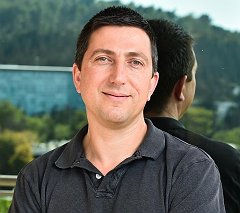
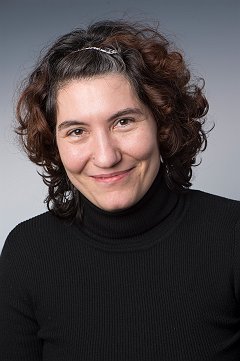
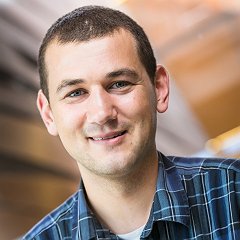
Assistant Professor at the Department of Agricultural Economics and Rural Development, Agricultural University of Athens. Holds a PhD, MSc, and BSc in Computer Engineering and Informatics from the University of Patras. Research focuses on dynamic graph problems, query optimization, and theoretical data structures with sublinear space. Teaches courses like Business Intelligence Systems and Informatics , emphasizing computer systems, databases, and data processing. His work bridges computer science theory with agricultural informatics applications. Educated at the University of Patras, he transitioned from the Department of Science (2004-2013) to his current role. Course content highlights his expertise in ETL processes, operating systems, and collaborative learning technologies.
Işıl Dillig is an Associate Professor of Computer Science at the University of Texas at Austin, where she leads the UToPiA research group. Her academic career spans over a decade of significant contributions to programming languages research, particularly in program analysis, verification, and synthesis. Dr. Dillig received all her academic degrees (BS, MS, and PhD) from Stanford University before joining the faculty at UT Austin. Her educational background established the foundation for her innovative research approach that bridges theoretical computer science with practical applications. Her research focuses on developing techniques to make software systems more reliable, secure, and easier to build through advanced program analysis, verification, and synthesis methods. She has pioneered approaches that combine symbolic reasoning with machine learning to tackle complex software engineering challenges across multiple domains including security, databases, and programming language theory. Her work demonstrates exceptional depth in creating practical tools that address real-world software development problems while maintaining strong theoretical foundations. Analysis of Dr. Dillig's publication record reveals a consistent trajectory of innovation in program synthesis, with recent work expanding into neurosymbolic approaches that bridge neural networks with formal methods. Her research shows strong connections between theoretical foundations and practical applications, particularly in security-critical systems, database technologies, and blockchain applications. The evolution of her work demonstrates increasing sophistication in handling complex program structures while maintaining practical usability. Dr. Dillig has received prestigious recognition for her research contributions: Sloan Fellowship NSF CAREER award As a dedicated educator and research leader, Dr. Dillig has served in significant roles including Program Chair for PLDI 2022 and Steering Committee member for PLDI. She has mentored numerous students through her UToPiA research group, guiding research in program synthesis, verification, and analysis. Her work has been supported by substantial research grants that have enabled innovative projects at the intersection of programming languages and security. Dr. Dillig leads the UToPiA (UT Austin Programming, Languages, and Analysis) research group, which focuses on developing novel techniques for program analysis, verification, and synthesis. The group maintains strong collaborations with industry partners and academic institutions worldwide, translating theoretical advances into practical tools that address real software engineering challenges.
Eran Yahav is an Associate Professor in the Computer Science Department at the Technion - Israel Institute of Technology. He previously served as a research staff member at IBM T.J. Watson Research Center from 2004 to 2010. His academic journey began with a B.Sc. from the Technion in 1996, followed by a Ph.D. from Tel Aviv University in 2005. Yahav's research focuses on program analysis, program synthesis, program verification, and machine learning for programming. His work bridges theoretical foundations with practical applications, particularly in developing techniques that help programmers work more effectively with complex frameworks and APIs. He has pioneered approaches that combine static analysis with machine learning to address challenges in code search, completion, and understanding. His recent work heavily intersects with neural network applications to programming tasks, demonstrating how deep learning can enhance traditional program analysis techniques. His publication record shows a clear evolution from traditional program analysis and verification toward integrating machine learning with programming language processing. The most recent articles reveal a strong focus on neural methods for code understanding, including structural language models, adversarial examples for code models, and neural approaches to binary analysis and program synthesis. This represents a significant shift toward leveraging AI techniques to solve longstanding problems in programming languages and software engineering. Yahav has received numerous accolades including the prestigious Alon Fellowship for Outstanding Young Researchers, the Andre Deloro Career Advancement Chair in Engineering, and an ERC Consolidator Grant. He also earned best paper awards at ISSTA 2006 and 2007. As an advisor, Yahav has mentored numerous Ph.D. and Master's students who have gone on to make significant contributions in academia and industry. His research has been supported by substantial grants, including the ERC Consolidator Grant. He also serves as CTO at Tabnine, demonstrating the practical impact of his research. Yahav leads multiple research projects including PRIME (Programming with Millions of Examples), Fender (Preserving Correctness under Weak Memory Models), Saint (Synthesis using Abstract Interpretation), and several others focused on program analysis, verification, and synthesis. His work often involves building practical tools that translate theoretical advances into usable software engineering solutions.
Laura Dietz is a tenured Associate Professor in the Department of Computer Science at the University of New Hampshire, where she leads the TREMA lab. Her academic journey began with a PhD from the Max Planck Institute for Informatics in Saarbruecken, Germany (2011), followed by postdoctoral positions at the University of Massachusetts Amherst (2010-2015) and University of Mannheim (2015-2016). Her educational background includes PhD studies at both the Max Planck Institute for Informatics (2007-2011) under Prof. Gerhard Weikum and Prof. Tobias Scheffer, and earlier research at Humboldt University in Berlin. She has built a distinguished career bridging theoretical computer science with practical applications in information retrieval and machine learning. Dietz's research primarily focuses on the intersection of information retrieval, natural language processing, and knowledge graphs, with a parallel research initiative in watershed data science. She is particularly known for her work on entity-aspect linking, complex answer retrieval, and the vision of automatic Wikipedia construction. Her approach integrates fine-grained knowledge annotations with text understanding to create comprehensive information systems that go beyond traditional 10-blue-links search paradigms. In watershed data science, she applies similar machine learning techniques to environmental data streams, focusing on solute transport analysis during storm events. Her recent publications reveal a strong trend toward fine-grained semantic understanding, particularly in entity-oriented search tasks. She has pioneered methods for entity-aspect linking that significantly improve retrieval accuracy by capturing different contexts in which entities appear. Her work increasingly integrates knowledge graphs with neural architectures, showing sophisticated understanding of how to leverage both structured and unstructured information for better search experiences. Best paper award at JCDL 2018 for work on entity-aspect linking NSF CAREER Award (2019-2023) for "Utilizing Fine-grained Knowledge Annotations in Text Understanding and Retrieval" OSSI Award 2013 from UMass ICB3 for open-source hardware/software Dietz actively mentors PhD and Masters students through the TREMA lab, with current research focusing on entity ranking, topic extraction, conversational search, and watershed forecasting. Her grant portfolio includes the NSF CAREER award and funding from the Northeast Big Data Innovation Hub for forecasting salinity in rivers during storm events. She has also coordinated the TREC Complex Answer Retrieval track (2017-2019), creating important benchmarks for the IR community. The TREMA lab (Text Retrieval, Entity Modeling, and Applications) serves as the hub for Dietz's research activities, bringing together students and collaborators to work on cutting-edge problems in information access. The lab's work spans both theoretical contributions to information retrieval and practical applications in domains ranging from environmental science to scientific publication analysis.
Nate Foster is a Professor of Computer Science at Cornell University's Bowers Computing and Information Science college. He also serves as a Visiting Professor at EPFL's Data Center Systems Laboratory during the 2023-24 academic year and as a Visiting Researcher at Jane Street. His research focuses on developing languages and tools that make it easy for programmers to build secure and reliable systems, with particular emphasis on software-defined networking. Dr. Foster's educational background includes: PhD in Computer Science from the University of Pennsylvania MPhil in History and Philosophy of Science from Cambridge University BA in Computer Science from Williams College Nate Foster's research spans multiple areas within programming languages and systems. His current work focuses on the design and implementation of languages for programming software-defined networks. He has also made significant contributions to bidirectional languages (also known as "lenses"), database query languages, data provenance, type systems, mechanized proof, and formal semantics. His interdisciplinary approach combines theoretical foundations with practical systems building, seeking to bridge the gap between formal methods and real-world network programming. An analysis of Foster's recent publications reveals a strong focus on network programming languages, particularly NetKAT and P4. His work consistently applies formal methods to networking problems, with increasing emphasis on verification, equivalence checking, and symbolic execution techniques. The research trajectory shows progression from foundational language design to practical verification tools, demonstrating how theoretical programming language concepts can solve real-world networking challenges. Dr. Foster has received numerous prestigious awards for his contributions: Sloan Research Fellowship NSF CAREER Award ACM SIGPLAN Robin Milner Young Researcher Award (2023) Most Influential POPL Paper Award Tien '72 Teaching Award Google Research Award Yahoo! Academic Career Enhancement Award Cornell Engineering Research Excellence Award Morris and Dorothy Rubinoff Award ACM SIGCOMM Rising Star Award As an active member of the programming languages community, Foster has advised numerous graduate students and secured significant research funding through his NSF CAREER award and Google Research Award. He has served in leadership roles for major conferences including PLDI, POPL, and ICFP, demonstrating his commitment to mentoring the next generation of researchers through programs like PLMW@PLDI. His collaborative approach is evident in his extensive co-authorship network across academia and industry. Foster leads research in the area of programming languages for networking, with particular focus on the NetKAT framework for network verification. His work bridges the gap between formal methods and practical networking systems, creating tools that have influenced both academic research and industry practice in software-defined networking. His collaborations with institutions like EPFL and industry partners like Jane Street demonstrate the real-world impact of his research agenda.
Rajiv Gupta is a Distinguished Professor and the Amrik Singh Poonian Professor of Computer Science at the University of California, Riverside (UCR), where he serves as Associate Dean for Academic Personnel in the Bourns College of Engineering (BCOE). He is a member of the RIPLE research group and has co-authored 327 papers with an h-index of 69 and over 16,600 citations. His extensive service includes chairing major conferences such as FCRC 2015, PPoPP 2020, ASPLOS 2011, and PLDI 2008. Professor Gupta's research focuses on Programming, Compiler, Runtime & Architectural Support for Parallel & Distributed Heterogeneous Systems and Software Tools for Monitoring and Managing Runtime Behavior . His work spans graph analytics with scalability and performance, understanding and managing the dynamic behavior of parallel programs, software speculation for irregular parallelism, dynamic program analysis for secure and reliable computing, and compiler optimizations with architectural support. His research has significant applications in high-performance computing, GPU programming, and distributed systems. Analysis of his recent publications reveals a strong focus on graph processing systems, with particular emphasis on evolving and streaming graph analytics. His work addresses critical challenges in memory management for large-scale graph processing, hardware acceleration for graph algorithms, and optimization techniques for concurrent and distributed graph computations. The research demonstrates a progression from foundational compiler and architecture work to increasingly sophisticated systems for handling modern data-intensive computing challenges. Fellow of the ACM (2009) Fellow of the IEEE (2008) Fellow of the AAAS (2011) NSF Presidential Young Investigator Award (1991) UCR Doctoral Dissertation Advisor/Mentor Award (2012) Multiple best paper awards across major conferences Two students won ACM SIGPLAN Outstanding Doctoral Dissertation Award Five advisees received NSF CAREER Award Professor Gupta has supervised 42 PhD students to completion and currently advises several doctoral candidates. His advising success is reflected in his students' achievements, including multiple award-winning dissertations and significant career accomplishments in academia and industry. His research has been supported by numerous grants from NSF, DARPA, and industry partners, enabling sustained investigation into parallel computing systems. The RIPLE research group under his leadership has produced influential work that bridges theoretical foundations with practical system implementations. As the leader of the RIPLE research group at UC Riverside, Professor Gupta oversees a vibrant team focused on innovative approaches to parallel and distributed computing. The group maintains strong collaborations with industry partners and other academic institutions, contributing to the development of next-generation computing systems. Current projects include GRASP (Graph Analytics with Scalability & Performance) and research on understanding and managing the dynamic behavior of parallel programs, reflecting the group's continued focus on cutting-edge computing challenges.
Sang-Hoon Kim is an Associate Professor in the Department of Software and Computer Engineering and Department of Artificial Intelligence at Ajou University, South Korea. He leads the Systems Software Lab (Paldal Hall 1004-2) and maintains active collaborations with Virginia Tech as a Visiting Scholar since August 2024. His academic journey includes a Ph.D. in Computer Science from KAIST (2016) under advisors Seungryoul Maeng and Jin-Soo Kim, and a B.S. in Computer Science from KAIST (2002). His research spans operating systems, memory management, and storage systems with focus on mobile platforms, heterogeneous architectures, and SSD technologies. Key interests include memory fragmentation control , distributed thread execution , key-value storage optimization , and resource disaggregation . His work bridges theoretical innovation with practical system implementations, particularly for mobile and datacenter environments. Kim's publication portfolio shows consistent output in top-tier venues including USENIX FAST, VLDB, ICDCS, and ASPLOS. His research demonstrates evolution from mobile memory management (2015-2017) toward distributed systems and hardware-aware software (2019-present), with recent emphasis on resource-disaggregated environments and heterogeneous-ISA computing. The 2024 Best Paper Award at USENIX FAST highlights his impact in storage systems research. Best Paper Award at USENIX FAST'24 Multiple patents including US-9588912B2 for memory control He directs significant research projects funded by ETRI, NRF, and US ONR, including current work on memory-centric computing systems (2020-2023) and disaggregated non-volatile memory systems using RDMA (2018-2020). His Systems Software Lab maintains strong industry partnerships with Samsung Electronics and NHN, with prior projects improving Android memory management and developing SSD-based storage systems for large-scale internet services.
Anil Madhavapeddy is the Professor of Planetary Computing at the University of Cambridge Computer Laboratory, where he co-leads the Energy & Environment Group and is a member of the Systems Research Group. He is also a Fellow at Pembroke College where he serves as Director of Studies in Computer Science. Madhavapeddy completed his PhD from the University of Cambridge in 2003 and his BEng in Information Systems Engineering from Imperial College in 1999. He holds a JM Keynes Fellowship since 2022 for his work combining computer science with economics, and serves on the management committee of the Cambridge Conservation Initiative where he co-directs 4C (Cambridge Centre for Carbon Credits) and the Centre for Earth Observation. His research spans computer systems and programming languages with a strong focus on applying these technologies to global conservation, biodiversity, and climate change challenges. He leads the OCaml Labs group and has made significant contributions to open-source projects including OCaml, Docker, Xen, and OpenBSD. His work often bridges computer science with environmental science, developing computational approaches to address planetary-scale challenges. Madhavapeddy's recent publications demonstrate a clear trajectory toward integrating programming language research with environmental monitoring and conservation. His work spans from foundational programming language techniques to applied geospatial computing systems, with increasing emphasis on biodiversity measurement, carbon credit systems, and planetary-scale environmental monitoring. JM Keynes Fellowship (2022-present) As an educator, Madhavapeddy teaches undergraduate courses including Foundations of Computer Science, Software & Security Engineering, and Cloud Computing. He mentors MPhil and PhD students and co-founded the award-winning book 'Real World OCaml' (2nd Edition, 2022). He has co-founded several companies including Unikernel Systems, High Energy Magic, Segfault, and Tarides to translate research into real-world impact. Madhavapeddy leads the OCaml Labs group at Cambridge and works closely with the Energy & Environment Group, collaborating with colleagues from Plant Sciences, Zoology, Economics, and NGOs including UNEP-WCMC and the IUCN. His current efforts are primarily focused on conservation technology through partnerships with organizations like Canopy PACT.
Maria Halkidi is an Associate Professor in the Department of Digital Systems at the University of Piraeus, Greece, where she conducts cutting-edge research in data mining and machine learning with over two decades of academic experience. Her educational background includes: Bachelor's degree in Informatics from the University of Piraeus (1997) Master's degree from Athens University of Economics and Business (1999) Ph.D. from Athens University of Economics and Business (2003) Dr. Halkidi's research focuses on fundamental and applied aspects of data mining, particularly recommender systems, graph data mining, cluster validity assessment, and distributed data mining. Her work bridges theoretical frameworks with practical implementations in sensor networks, social media, and real-time analytics, contributing significantly to algorithmic development in these domains. Analysis of her recent publications reveals a strong trajectory toward fairness and diversity optimization in recommender systems, alongside innovative approaches to graph clustering quality assessment and scalable sentiment analysis. Her research consistently addresses real-world challenges in dynamic data environments, with increasing emphasis on multi-stakeholder optimization and privacy-aware recommendation frameworks. Scientific awards: No specific awards or honors were documented in the provided materials. Dr. Halkidi has participated extensively in National and European-funded research projects, including a prestigious Marie-Curie fellowship at the University of California, Riverside. She serves on program committees for major international conferences in data mining and machine learning, demonstrating active community engagement. While specific graduate students aren't listed in the source materials, her professorial role indicates ongoing mentorship of Master's and Ph.D. candidates. She maintains active research affiliations with the Network oriented systems & services lab and the DataStories research group at the University of Piraeus, where she collaborates on interdisciplinary projects involving big data analytics, social network analysis, and distributed systems.
Dimitrios Karapiperis serves as an Academic Scholar at the School of Science and Technology, International Hellenic University (IHU), specializing in Entity Resolution and Privacy-Preserving Record Linkage. Previously, he held a post-doctoral position at the Hellenic Open University. He earned his PhD from the Hellenic Open University and his MSc from the University of York (UK). His doctoral thesis was featured in the IEEE Intelligent Informatics Bulletin of August 2017, highlighting its significance in the field. Dr. Karapiperis' research centers on developing advanced algorithms for entity resolution, including similarity measures, data structures, and scalable distributed solutions using randomization techniques. His work extends to privacy-preserving methods for record linkage with applications in electronic health records, cryptocurrency analysis, and social media sentiment. He has made significant contributions to efficient record linkage in data streams and spatio-temporal data through innovative blocking techniques and approximation schemes. His recent publications (2020-2022) reveal a consistent focus on scalable and privacy-aware record linkage, with increasing applications in financial technology and affective computing. Collaborations with prominent researchers like V.S. Verykios have resulted in numerous publications in top venues including IEEE Big Data and IEEE TIFS, demonstrating expertise in both theoretical foundations and practical implementations. Scientific Recognition Doctoral thesis featured in IEEE Intelligent Informatics Bulletin (2017) Research Projects University of York: Development of Java servlets for converting VisioXML into GSML within the High Integrity Systems Engineering research group University of Macedonia: Standardization of distance learning systems University of Macedonia: Establishment of a data bank for the fur sector in Kastoria University of Macedonia: System for organizing business processes of the Ministry of Macedonia and Thrace Dr. Karapiperis has collaborated with research teams across multiple institutions, contributing to diverse projects from healthcare data integration to government business process optimization, while maintaining active research in scalable entity resolution methodologies.
Dr. Paraskevas Koukaras is an Academic Scholar at the International Hellenic University (IHU) and a Postdoctoral Research Associate at the Information Technologies Institute (ITI) of the Centre for Research and Technology - Hellas (CERTH), affiliated with the School of Science and Technology at IHU. His educational background includes: IT Engineer from the Department of Informatics, Alexander Technological Educational Institute of Thessaloniki (ATEI) PhD in Interdisciplinary data science methods using machine learning for enhanced knowledge acquisition from the School of Science and Technology, International Hellenic University (IHU) Dr. Koukaras' research spans social media analytics, energy systems, and machine learning. His work focuses on energy load forecasting and optimization, data analytics, information modeling, and graph mining in heterogeneous networks. He applies these techniques to address challenges in public health, financial markets, and building energy efficiency through prescriptive analytics. His recent publications (2020-2023) demonstrate a strong focus on applying machine learning to real-world problems, particularly in social media analysis for public health during the COVID-19 pandemic, energy forecasting, and fake news detection. His work consistently employs multi-model approaches leveraging both traditional and deep learning techniques across healthcare, finance, and energy domains. Dr. Koukaras has participated in major European research projects including eDREAM (H2020), DRIMPAC (H2020), PRECEPT, SmartWins, easySRI, and SMACCs, focusing on demand response technologies and energy ecosystems. He contributes to academic training through teaching courses in data science and computing despite no formal advisees being listed. He operates within interdisciplinary research teams at ITI/CERTH and IHU's School of Science and Technology, collaborating on AI applications for energy efficiency, healthcare support, and social media analytics in residential and industrial contexts.