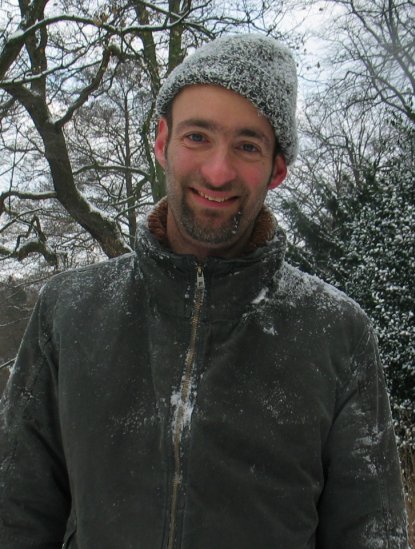
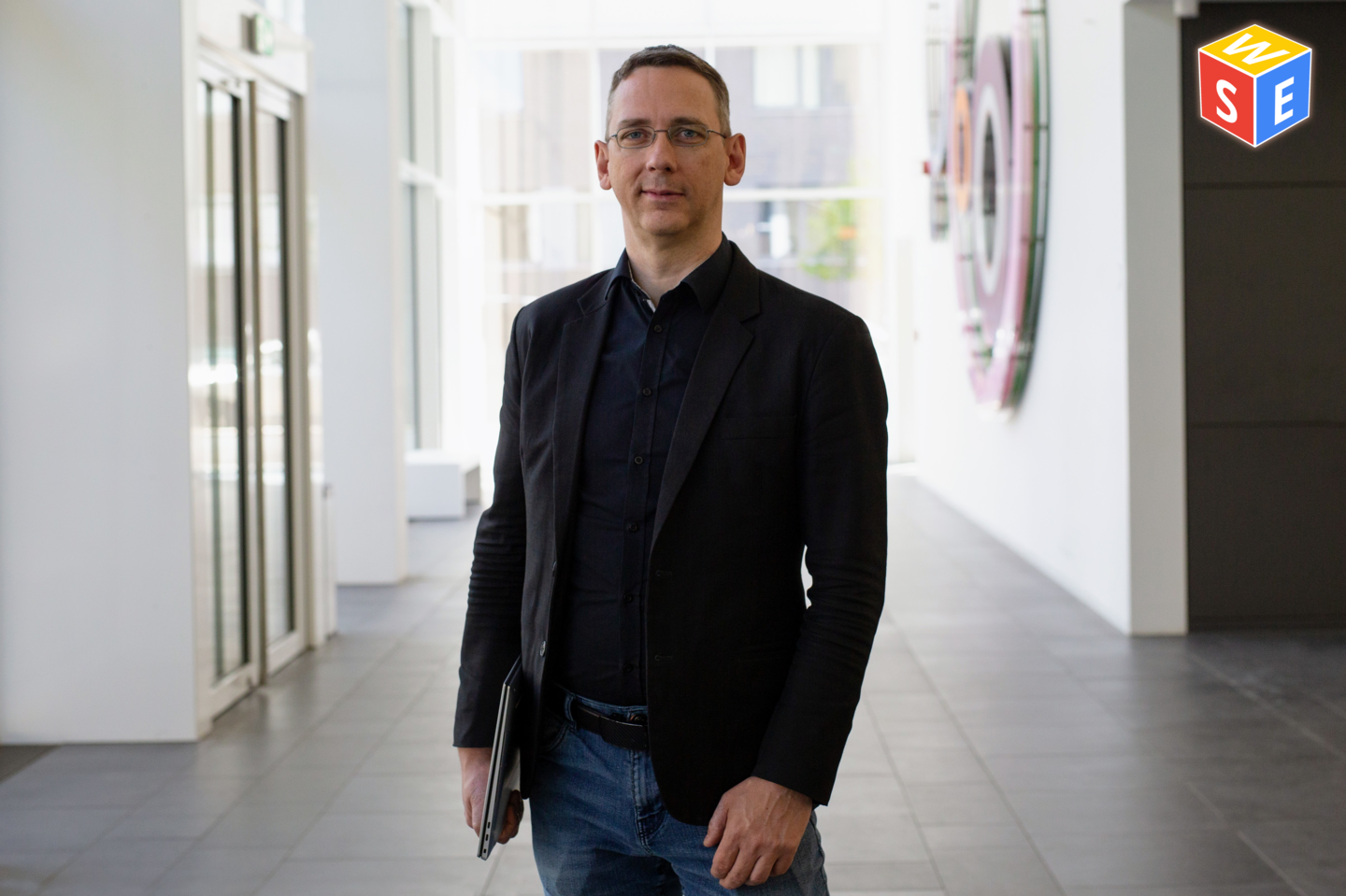
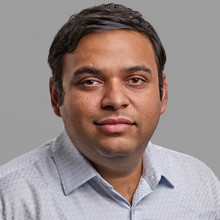
Maurice Funk is a postdoctoral researcher at Leipzig University , affiliated with the Knowledge Representation Group led by Carsten Lutz . His work bridges theoretical computer science and artificial intelligence. Current research focuses on formal representation learning , description logic , and querying under background knowledge . He develops algorithms for learning logical concepts and optimizing query processing with ontologies. Recent publications (2024-2019) explore computational limits of conjunctive query learning , SAT-based PAC learning for description logic concepts, and ontology construction techniques using language models. His work combines theoretical analysis with practical implementations. Scientific recognition includes: Distinguished Paper Award at IJCAI 2023 Best Paper Award at PODS 2023 IJCAI 2021 Distinguished Paper Honorable Mention Active in teaching as both lecturer and teaching assistant since 2020, covering courses in logic , automata theory , and description logic . Co-developer of open-source tools SPELL and ALC-SAT for concept learning applications.
Carsten Lutz is a Professor at the University of Leipzig, Faculty of Mathematics and Informatics, Institute of Informatics, where he leads the Department of Foundations of Knowledge Representation. He joined the university in April 2022 after previously holding positions at other institutions. His extensive service to the academic community includes numerous roles as Program Committee Chair, Area Chair, and Senior PC Member for major conferences in artificial intelligence, database theory, and knowledge representation. Professor Lutz's research focuses on the theoretical foundations of knowledge representation, with particular emphasis on description logics, ontology-mediated querying, and the intersection of database theory with artificial intelligence. His work bridges formal logic with practical applications in semantic technologies. His research has led to significant contributions in understanding the computational properties of knowledge representation formalisms and developing efficient query processing techniques. His recent publications demonstrate a continued focus on the theoretical aspects of knowledge representation, with increasing attention to connections with machine learning, particularly in areas like graph neural networks and PAC learning of logical concepts. The research trends show a consistent thread of applying logical methods to analyze and improve modern AI systems while maintaining strong theoretical foundations. Scientific Awards: Fellow of the Asia-Pacific Artificial Intelligence Association (AAIA) 2022 EurAI (formerly ECCAI) fellow 2016 IJCAI2023 distinguished paper award PODS2023 Best Paper Award PODS2023 Test of Time Award for PODS2013 paper on Ontology-Mediated Querying "AI Ten to Watch" award of IEEE Intelligent Systems Magazine Professor Lutz has been highly active in academic service, serving as PC Co-Chair for IJCAR2026, Area Chair for KR2025 and IJCAI2025, and PC Member for numerous prestigious conferences including ICDT2026, PODS2025, and DL2025. His commitment to reducing academic carbon footprint through reduced conference travel is noteworthy. He has also developed several software systems including Grind, Combo, and Spell that implement theoretical advances in ontology-mediated querying and concept learning.
Andreas Both is a Professor at the Faculty of Computer Science and Media at Leipzig University of Applied Sciences (HTWK Leipzig), where he leads the Web & Software Engineering (WSE) research group. His work spans multiple domains of computer science with a strong focus on bridging theoretical foundations with practical applications in software engineering, web technologies, and artificial intelligence. His research interests primarily revolve around Software Engineering (particularly test automation with AI and source code analysis), Web Engineering , Applied Artificial Intelligence (including Machine Learning, Deep Learning, and Large Language Models), Question Answering & Chatbots , and Data-driven Applications . He has developed innovative approaches in knowledge graph question answering systems, multilingual NLP applications, and privacy-preserving data sharing technologies using the Solid protocol framework. The analysis of his recent publications reveals a strong trajectory toward leveraging Large Language Models for knowledge graph applications, with particular emphasis on multilingual capabilities, explainability, and quality improvement in question answering systems. His work increasingly integrates privacy considerations with advanced AI techniques, particularly through Solid protocol implementations for data sovereignty. Best Paper Award at ICWE 2024 for AuthApp - a GDPR-compliant access granting system Outstanding Paper Award at ICWI 2024 for LLM-generated explanations in question answering systems Multiple first-place awards at the TEXT2SPARQL Challenge 2025 Best Paper Awards at ICWE 2025 and IEEE ISI 2025 CHI 2015 Honorable Mentions for search interface research Professor Both actively mentors students through the Google Summer of Code program and serves on the leadership board of the Architecture (ARC) working group of the German Computer Science Society (Gesellschaft für Informatik). His teaching portfolio includes Software Engineering, Question Answering & Chatbots, Software Projects, Project Management Practicum, Web Engineering, and Software Engineering & AI courses. His office hours are Thursdays from 11:15-12:15, requiring advance email appointment with topic specification.
Maike Buchin is a Professor of Theoretical Computer Science / Algorithmics at the Faculty of Computer Science, Ruhr-University Bochum, where she has been serving since 2019. She also holds the position of Studiendekanin Informatik (Dean of Studies for Computer Science). Prior to her current position, she was a Visiting Professor at Technical University Dortmund (2017-2019) and a Juniorprofessor at Ruhr University Bochum (2013-2017). Dr. Buchin's research focuses on computational geometry, algorithms, and trajectory analysis. Her work particularly emphasizes Frechet distance computations, curve matching, and geometric algorithms. She has made significant contributions to understanding the computational complexity of geometric problems and developing efficient algorithms for trajectory data analysis. Her research has applications in geographic information systems, movement pattern analysis, and shape comparison. Analysis of her recent publications reveals a strong focus on clustering algorithms for polygonal curves, Frechet distance computations, and trajectory analysis. Her work bridges theoretical computer science with practical applications in GIS and movement data analysis. She has developed approximation algorithms, coreset constructions, and efficient query processing techniques for geometric problems. Her research has been published in top-tier venues including ACM Transactions on Algorithms, Computational Geometry: Theory and Applications, and proceedings of major conferences like Symposium on Computational Geometry (SoCG) and European Symposium on Algorithms (ESA). Dr. Buchin has supervised numerous students and taught courses including Algorithm Paradigms, Computer Science 2 - Algorithms and Data Structures, Computer Science 3 - Theoretical Computer Science, Geometric Algorithms, Data Structures, and seminars on Cryptology and Theoretical Computer Science. She leads research in the Theoretical Computer Science / Algorithmics group at Ruhr-University Bochum, collaborating with researchers worldwide on computational geometry problems and their applications.
Dr. Debayan Banerjee is a Researcher at the Institute for Business Information Systems (IIS) and part of the Professorship for Business Informatics, especially Artificial Intelligence and Explainability at Leuphana University Lüneburg. His work bridges academic research with practical applications in knowledge management, network science, and AI systems. Institute: Institute for Business Information Systems (IIS) Professorship: Business Informatics, Artificial Intelligence and Explainability Location: Universitätsallee 1, C4.308b, Lüneburg (21335) Email: debayan.banerjee@leuphana.de Research interests focus on knowledge graph integration, hybrid intelligence systems, and explainable AI. His projects include USIN5G, ARDIAS, and INSTANT, emphasizing human-AI collaboration and scholarly data accessibility. Recent publications highlight SPARQL translation automation, hybrid question answering frameworks, and environmental impact analysis of language models. Collaborative work spans DBpedia-Wikidata interoperability, DBLP knowledge graph applications, and graph embeddings for QA systems. Education and advising : Mentored students include Mathias Gross, Fatemeh Ghoochani, and Soham Majumder, focusing on final theses related to AI-driven data extraction and knowledge graph development.
Anton Dignös is a professor at the Free University of Bozen-Bolzano , specializing in temporal databases , time series analysis , and database systems . His research focuses on efficient query processing for interval data, temporal joins, and schema design, with significant contributions to in-memory and time series databases. Key research areas include: Temporal Data Management : Advanced techniques for interval and duration queries. Time Series Analytics : Machine learning integration and pattern detection. Schema Optimization : Automated design and tuning of database schemas. Visual Analytics : Tools for period data comparison and correlation analysis. His work spans collaborations with researchers like Johann Gamper and Michael H. Böhlen , addressing challenges in healthcare systems, industrial applications, and financial data analytics. Notable contributions include algorithms for temporal anti-joins , range-duration queries , and machine learning-based anomaly detection .
Prof. Dr.-Ing. Sebastian Esser serves as Group Lead for Information Management at the Chair of Computing in Civil and Building Engineering at Technical University of Munich. His research focuses on advancing Building Information Modeling (BIM) methodologies, particularly in infrastructure and railway applications. He contributes significantly to international standardization efforts including IFC-Road and IFC-Rail projects, and leads research initiatives such as RIMcomb and BauPuls360. Dr. Esser's research spans several critical areas in digital construction: Graph-based version control systems for BIM collaboration Digital twin development for infrastructure management Semantic modeling of built environments BIM-based regulation checking for railway infrastructure Interdisciplinary model coordination techniques Knowledge representation in civil engineering His work bridges theoretical computer science with practical civil engineering applications, focusing on improving data interoperability and workflow efficiency in construction projects. Analysis of his recent publications reveals a strong emphasis on graph-based approaches to BIM challenges. His research has evolved from foundational work on BIM programming interfaces to sophisticated implementations involving knowledge graphs, semantic reasoning, and digital twin architectures. Key trends include increasing integration of semantic web technologies with BIM standards, development of specialized query interfaces like GraphQL for construction data, and application of formal methods to infrastructure modeling problems. Dr. Esser actively supervises numerous bachelor's and master's theses annually, with recent topics covering graph-based entity alignment, BIM-GIS integration for flood assessment, incremental model updates, and digital twin implementations. His teaching portfolio includes courses such as Bau- und Umweltinformatik, BIM.fundamentals, BIM.infra, and Semantic Modeling of the Built World, demonstrating his commitment to educating the next generation of digital construction professionals. He is involved in multiple research initiatives including DFG FOR 5672 (The information backbone of robotized construction), SPP 2187 (Adaptive modularized constructions), and AM2PM (Additive to Predictive Manufacturing). His laboratory work spans the BIM-Lab and related computational infrastructure supporting his research in digital construction technologies.
Prof. Dr. Axel Cyrille Ngonga Ngomo is a Professor at the University of Paderborn, affiliated with the Faculty of Electrical Engineering, Computer Science and Mathematics. He serves as the leader of the Data Science group at the Heinz Nixdorf Institute and the Informatik Rechnerbetrieb (IRB) unit. His primary research focuses on Knowledge Graphs, Semantic Web technologies, and Machine Learning applications in data science. University of Paderborn Faculty of Electrical Engineering, Computer Science and Mathematics Data Science / Heinz Nixdorf Institute Informatik Rechnerbetrieb (IRB) His research spans automated knowledge extraction, description logic learning, and explainable AI systems through dynamic data federation. Recent work explores convolutional embeddings for complex knowledge graphs and adaptive retrieval augmented generation architectures. Current projects include SAIL (Sustainable Life Cycle of Intelligent Sociotechnical Systems), TRR 318 (Constructing Explainability), Colide (Co-training and co-regulation for industrial data), 3DFed (Dynamic Data Distribution and Federation), and SFB 901 (On-The-Fly Computing). Contact details include offices at Fürstenallee 11 (Room F1.225) and Technologiepark 6 (Room TP6.3.106) in Paderborn, Germany. Consultation hours are available by appointment.
Maximilian Schüle serves as Assistant Professor in the Department of Data Engineering at the University of Bamberg's Faculty of Information Systems and Applied Computer Sciences since October 2022. Previously, he held research positions at Technical University of Munich (2017-2022). His research bridges database systems and machine learning through compiler-based approaches. His research focuses on in-database machine learning , GPU-accelerated query processing , and recursive SQL extensions . Key contributions include: Developing MLIR-based compilers for automatic differentiation in SQL (DuoLingo-AutoDiff) Creating GPU code generators for database kernels using NVRTC Designing higher-order lambda functions for expressive query languages Implementing end-to-end neural network training within database engines His recent publications (2023-2025) demonstrate consistent output in top venues including ICDE, VLDB workshops, and BTW conferences, with growing emphasis on hardware-aware optimization and compiler techniques for analytical workloads. He currently leads a DFG-funded project on elastic memory hierarchies for memory-intensive applications (2025-2028), supporting multiple PhD researchers. His supervision emphasizes open-source contributions to database systems like Umbra and practical implementation skills alongside theoretical foundations. As an active member of the database community, he serves as workshop chair for BTW 2025 and regularly reviews for ACM TODS, VLDB Journal, and Information Systems. His work on public transport analytics demonstrates real-world impact through collaborations with urban mobility initiatives in Bamberg.
Dr. Rita Hartel serves as a Senior Lecturer and Research Associate in the Department of Databases and Electronic Commerce at the University of Paderborn's Institute of Computer Science, while also fulfilling the critical role of Academic Advisor for the Computer Science Student Office where she guides undergraduate and graduate students. Her research forms two distinct yet complementary pillars: cutting-edge data compression algorithms for bioinformatics (specializing in Burrows-Wheeler Transform optimizations for DNA sequence data) and graph databases (developing grammar-based compression for knowledge graphs), alongside innovative digital humanities work applying OCR and semantic analysis to comics historiography with a focus on German traditions. This interdisciplinary approach bridges computational rigor with cultural scholarship. Dr. Hartel demonstrates consistent research productivity with five publications from 2021-2025 in premier venues including the Data Compression Conference and specialized workshops. Her work reflects strong international collaboration patterns and likely benefits from active grant funding given the technical resources required for bioinformatics compression research. As an Academic Advisor, she provides essential student support while her dual research focus creates unique opportunities for students interested in either computational methods or digital humanities applications.
Dr. Sebastian Brandstäter serves as Lecturer at the Institute for Mathematics and Computer-Based Simulation, Bundeswehr University Munich since 2022. His academic trajectory includes research associate positions at Hamburg University of Technology (2021) and Technical University of Munich (2016-2021). His research focuses on: Scientific Machine Learning for biomechanical systems Uncertainty Quantification and Bayesian Inference Global Sensitivity Analysis of complex models Multi-Physics & Multi-Scale Modeling of biological tissues Open-source scientific software development Dr. Brandstäter's work centers on gastrointestinal biomechanics, particularly computational modeling of gastric electromechanics and motility. He has pioneered applications of Gaussian-process metamodelling for sensitivity analysis in vascular and gastric systems, and develops open-source frameworks (QUEENS, 4C) that enable efficient multi-query analysis of large-scale models. He actively supervises student theses on patient-specific modeling and computational biomechanics, teaches advanced numerical methods courses, and contributes to the scientific community through conference organization, peer review, and international collaborations. His recent work demonstrates increasing emphasis on data-driven surrogate modeling and solver-independent computational frameworks for biomedical applications.
Sonja Niemann serves as a Scientific Officer Research and research associate at the Bavarian Foundation for Science, Technology and Society (bidt), specializing in human-AI co-creation systems with emphasis on code generation within the pAIrProg research project. Her academic background includes: Bachelor's degree in Psychology from University of Trier Master's degree in Computing in the Humanities from Otto-Friedrich University of Bamberg, focusing on cognitive systems and AI Niemann's research centers on trust dynamics in human-AI collaboration for programming tasks, examining how user expertise levels affect performance outcomes. She actively investigates ethical dimensions of generative AI systems and develops frameworks for equitable human-AI co-creation, integrating cognitive science methodologies with practical AI implementation. Her work bridges technical AI development and human-centered design principles to address real-world adoption challenges. Her 2025 publication analyzes prompt engineering strategies for optimizing user-AI interactions, demonstrating how structured questioning techniques significantly improve output quality from language models. This research reveals consistent patterns where domain-specific prompt templates outperform generic queries across diverse user skill levels. As a core contributor to bidt's pAIrProg project, she designs experimental protocols studying human-AI code collaboration. Her public engagement includes co-hosting workshops like 'AI is not neutral – you can change that!' at TINCON 2025, where she demonstrates bias mitigation techniques and advocates for inclusive AI development practices through hands-on coding exercises.
Dr. Jörg Waitelonis serves as Scientific Co-Worker at FIZ Karlsruhe – Leibniz Institute for Information Infrastructure and Senior Researcher at Karlsruhe Institute of Technology's Institute of Applied Informatics and Formal Description Methods (AIFB), working under Prof. Dr. Harald Sack. His career spans over 15 years in semantic technologies research, beginning at Hasso-Plattner-Institute (2009-2018) and continuing at KIT/FIZ Karlsruhe. Dr. Waitelonis' research focuses on practical implementations of Semantic Web technologies across diverse domains. His work bridges theoretical knowledge representation with real-world applications in cultural heritage informatics, materials science, historical document analysis, and sports science. Key contributions include developing domain-specific ontologies (CourtDocs, PMD Core), advancing FAIR data implementation within Germany's NFDI framework, and creating knowledge graph solutions for cross-disciplinary research data integration. His publication record demonstrates consistent output in top Semantic Web venues (ISWC, SEMANTiCS) with recent work (2023-2025) emphasizing practical ontology engineering for national research data infrastructure projects. Current research directions show increasing focus on materials science ontologies, historical document processing, and BFO-based knowledge representation frameworks. As founder of yovisto GmbH since 2012, Dr. Waitelonis maintains strong industry connections while pursuing academic research. His work demonstrates the practical application of semantic technologies to solve real-world data integration challenges across multiple scientific domains.
Oscar Corcho is a Full Professor at the Department of Artificial Intelligence within the School of Computer Science at the Technical University of Madrid. He is a prominent member of the Ontology Engineering Group and has been serving as a Professor since May 2007, with his current position as Full Professor reflecting his significant contributions to the field. Professor Corcho's research primarily focuses on Ontology-based Data Integration and the application of Semantics in Open Science. His expertise extends across the broader domains of Semantic Web, Linked Data, Knowledge Graphs, and Ontological Engineering. His work bridges theoretical research with practical applications, particularly in data integration systems and knowledge representation frameworks. With over 460 publications and more than 12,000 citations, he has established himself as a leading researcher in semantic technologies. His recent publications show a strong emphasis on virtual knowledge graph architectures, RDF-star generation, semantic labeling techniques for tabular data, and applications of semantic technologies in scientific literature analysis. His research demonstrates a clear trajectory toward solving real-world data integration challenges across heterogeneous sources while advancing the theoretical foundations of knowledge representation. Third Spanish Award on Computer Science (2001) Beyond his academic role, Professor Corcho is a co-founder of LocaliData Spain, demonstrating his commitment to translating research into practical applications. He has supervised numerous research projects and has been instrumental in developing tools like Morph-KGC for knowledge graph construction. His work has significant implications for public procurement systems, transportation data integration, citizen science initiatives, and scientific research infrastructure. As leader of the Ontology Engineering Group, he oversees a research program that develops innovative methodologies for ontology engineering and semantic data integration across diverse domains. His group's work has influenced both academic research and industry practices in knowledge representation and semantic technologies.
Dr. Charlotte Kugler is an Academic Staff Member with a Dr. rer. medic. degree at the Institute for Health Services and Healthcare Systems Research (ZVF-BB - Centre for Health Services Research) at Brandenburg Medical School Theodor Fontane. Her work focuses on the intersection of clinical practice and healthcare delivery systems. Dr. Kugler's research interests center around health services research, particularly examining hospital volume-outcome relationships in surgical procedures like total knee arthroplasty. She investigates how hospital procedure volumes affect patient outcomes and explores patient perspectives on minimum volume thresholds. Her work also includes methodological research on systematic review processes and studies on preoperative interventions such as stoma site marking. Her recent publications demonstrate a strong focus on evidence synthesis through systematic reviews and meta-analyses, as well as qualitative approaches to understanding patient perspectives. Dr. Kugler collaborates with researchers across multiple institutions on projects related to surgical outcomes and healthcare quality improvement. Dr. Kugler's scientific contributions include: Hospital volume-outcome relationship in total knee arthroplasty (2021) Patient perspectives on hospital volume thresholds (2021) Effect of preoperative stoma site marking (2021) Author query methodology in systematic reviews (2020) As a researcher at Brandenburg Medical School, Dr. Kugler contributes to advancing evidence-based healthcare practices through rigorous methodological approaches and patient-centered research.