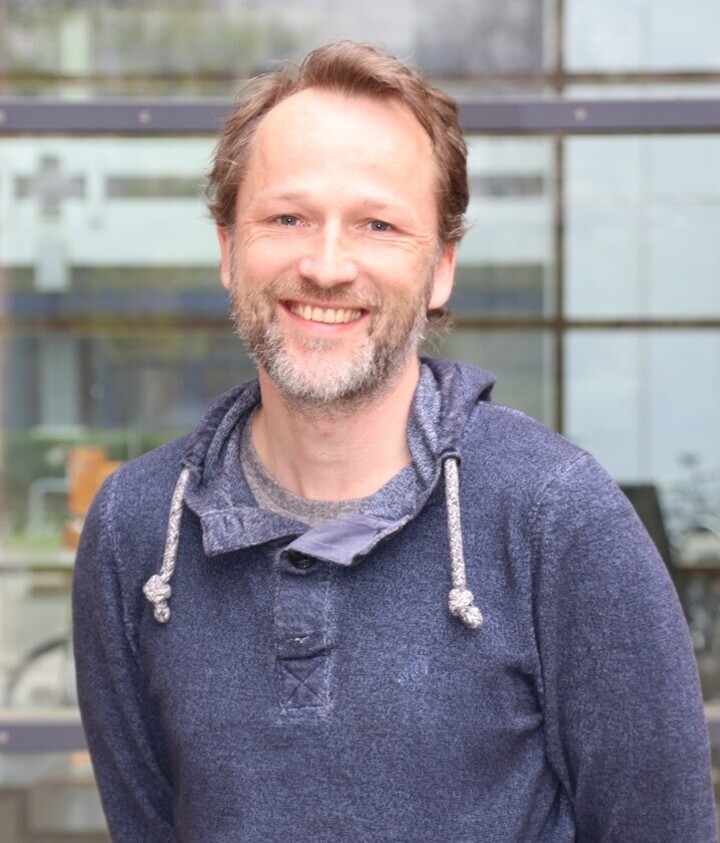
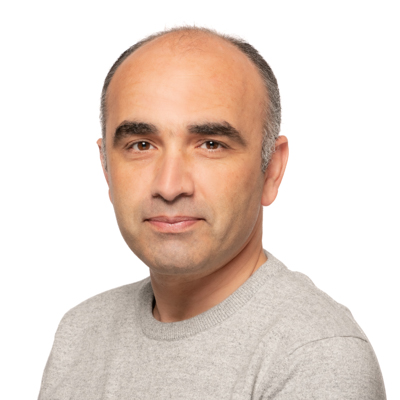
Dr. Sebastian Wild is a Lecturer at the University of Liverpool, specializing in algorithms and data structures. His research focuses on developing space-efficient and adaptive methods for computing over compressed data, optimizing performance based on input characteristics. He has led projects on sorting, selection, and dictionary operations, with an emphasis on exact constant-factor analysis and practical efficiency. Research Grants: Computing over Compressed Graph-Structured Data (EPSRC, 2024-2027) Decomposition techniques for graphs (Royal Society, 2023-2025) Lazy Finger Search Trees (Royal Society, 2021-2022) Recent publications highlight advancements in adaptive sorting, approximation algorithms for scheduling, and cache-oblivious data structures. Themes include implicit representations, compressed graph processing, and run-adaptive methods. His work bridges theoretical analysis with real-world applications in databases, compression, and algorithm engineering. Professional Roles: REF Impact Lead (Department, 2023-present) Outreach Co-ordinator (Department, 2020-present) Recruitment Lead (School/Institute, 2022-2024) He teaches modules like COMP335: Communicating Computer Science and supervises theses, integrating his research into pedagogy.
Ruzica Piskac is a Professor of Computer Science at Yale University, where she leads the Rigorous Software Engineering (ROSE) group. She has made significant contributions to the fields of software verification, security, automated reasoning, and code synthesis, focusing on improving software reliability and trustworthiness through formal techniques. Dr. Piskac received her PhD from the Swiss Federal Institute of Technology (EPFL) in 2011, where her dissertation won the Patrick Denantes Prize. Prior to joining Yale, she led an independent research group at the Max Planck Institute for Software Systems in Germany (2012-2013). Her research spans several key areas: symbolic execution for Haskell (G2), privacy-preserving formal methods (PPFM), functional reactive synthesis, verification of configuration files, and analysis of software updates. Her work consistently bridges theoretical formal methods with practical applications in real-world systems. Dr. Piskac's recent publications demonstrate a strong trend toward applying formal verification techniques to emerging challenges including large language models, quantum computing security, legal accountability of automated systems, and cyber-physical systems. Her research increasingly intersects with AI, cryptography, and legal domains while maintaining strong foundations in formal methods. Her scientific achievements have been recognized with numerous prestigious awards: Multiple Amazon Research Awards Yale University's Ackerman Award for Teaching and Mentoring Facebook Communications and Networking Award Microsoft Research Award for the Software Engineering Innovation Foundation (SEIF) Patrick Denantes Prize for her PhD dissertation Dr. Piskac has graduated five PhD students, four of whom have gone on to become assistant professors of computer science. She has served as Program Chair of the 37th International Conference on Computer Aided Verification and is on the Steering Committee of the Formal Methods in Computer-Aided Design conference. She leads the Rigorous Software Engineering (ROSE) group at Yale, which focuses on several key projects including: Symbolic Execution Engine for Haskell (G2) Privacy Preserving Formal Methods (PPFM) Functional Reactive Synthesis Verifications for Configuration Files Analysis of Software Updates and Configuration Files
Wei Liu is an Associate Professor in Machine Learning and Director of the Future Intelligence Research Lab at the University of Technology Sydney's School of Computer Science. He holds a PhD in Machine Learning from the University of Sydney and maintains active roles as a senior IEEE member and area chair for top AI conferences including KDD, AAAI, and ICDM. Education: PhD in Machine Learning, University of Sydney His research focuses on adversarial machine learning, generative AI, cybersecurity, and multimodal learning, with particular emphasis on AI security, robustness of algorithms, and model fairness. Liu's work addresses critical challenges in developing next-generation AI systems that can withstand cyber attacks while maintaining performance with multi-modal data and balanced outcomes despite data imbalances. Analysis of his recent publications reveals a strong trend toward securing large language models against novel attack vectors while advancing multimodal learning techniques. His work spans both theoretical contributions in adversarial frameworks and practical applications in cybersecurity, transportation, and industrial systems. Scientific Awards: 3 Best Paper Awards Most Influential Paper Award at PAKDD Nominee for NSW Premier's Prizes for Early Career Researcher (2017) Liu actively supervises numerous PhD students working on adversarial attacks, robust AI models, and agricultural applications. He has secured substantial funding including ARC Discovery Projects, government grants, and industry partnerships with organizations including Agriwebb, CSIRO Data61, and AVEVA. His Future Intelligence Research Lab specifically targets three emerging challenges: AI security against cyber attacks, robustness with multi-modal data, and model fairness with imbalanced datasets. The Future Intelligence Research Lab produces next-generation AI algorithms addressing AI security vulnerabilities, multi-modal robustness challenges, and fairness issues in real-world deployment scenarios, with multiple representative papers demonstrating practical applications in each domain.
Alessandro Fogli is a PhD Student at Imperial College London in the Department of Computing, affiliated with the Large-Scale Data & Systems (LSDS) Group . His research focuses on systems support for data analytics in cloud environments, including distributed systems, resource management, and query processing. Education PhD in Computer Science, 2019–Present, Imperial College London MSc in Computer Science, 2015–2017, Roma Tre University BSc in Computer Science, 2012–2015, Roma Tre University His research spans Distributed Systems , Databases , Data Analytics , and Modern Hardware . Recent work examines chiplet-based processor architectures and runtime mapping systems, with applications in performance optimization and hardware-aware query execution. Scientific Contributions Co-developed CHARM (2025), a runtime mapping system for chiplet heterogeneity Published in VLDB (2024) on OLAP processing for chiplet-based CPUs Contributed to HeatWave at Oracle Labs, improving query offloading to in-memory accelerators
Amine Mhedhbi is an Assistant Professor at Polytechnique Montréal in the Department of Computer Engineering and Software Engineering. He is affiliated with the Institute for Data Valorization (IVADO) and the Software Engineering for Machine Learning Applications (SEMLA) group. His research focuses on data management systems, particularly graph-structured databases, multimodal data engineering, and AI-driven query optimization. Ph.D. in Computer Science from University of Waterloo Former technical advisor to enterprise companies Prior applied research leadership at Distyl AI and internships at Microsoft Research His recent work explores integrating large language models (LLMs) into database systems, optimizing SQL generation, and advancing graph database architectures. Key projects include GraphflowDB and FlockMTL , addressing scalability and declarative semantic applications. Scientific awards include: NSERC Discovery Grant with Discovery Launch Supplement (2025) Cheriton School Distinguished Dissertation Award (2024) Microsoft Research Ph.D. Fellowship (2020) VLDB Best Paper Award (2018) He supervises graduate students in database systems and machine learning applications and serves on program committees for top-tier conferences like VLDB and SIGMOD.
Philip Taranto is a Lecturer (Assistant Professor) at The University of Manchester's Physics & Astronomy department, where he leads the Quantum Information & Spatiotemporal Phenomena (QuISP) research group. He also serves as an editor for the Quantum journal. Originally from Melbourne, Australia, Taranto completed his undergraduate studies and Masters at Monash University under Dr. Kavan Modi and Dr. Felix A. Pollock, focusing on memory effects in open quantum systems. He then earned his PhD at the University of Vienna under Dr. Marcus Huber, studying quantum thermodynamics and complex temporal correlations. Following this, he held a JSPS Postdoctoral Fellowship at the University of Tokyo in Dr. Mio Murao's group before joining the University of Manchester. Taranto's research centers on quantum complexity, exploring how quantum systems' intricate behaviors can be harnessed for computational advantages. His primary focus areas include quantum information theory, open quantum dynamics, quantum thermodynamics, quantum foundations, correlations & entanglement, stochastic & complex processes, and quantum computation & simulation. His methodological approach heavily relies on the framework of higher-order quantum operations—transformations that act upon transformations themselves—which has proven valuable for developing optimal quantum interactive strategies, clarifying memory effects in open quantum processes, and analyzing foundational notions like causality. He also employs tensor networks, graphical calculus, and semidefinite programming in his research. His recent publications reveal a strong focus on quantum thermodynamics, higher-order quantum operations, and quantum memory effects. Taranto has made significant contributions to understanding the relationship between Landauer's principle and Nernst's unattainability principle in quantum cooling, developing protocols for efficient quantum system cooling with finite resources, and characterizing multi-time quantum processes with classical memory. His work on the quantum switch and higher-order quantum operations has advanced our understanding of quantum causality and indefinite causal order. JSPS Postdoctoral Fellowship (2022-2025) Editor of Quantum Journal (since June 2024) Taranto actively collaborates with multiple research groups globally, including the Murao group at the University of Tokyo, the Huber group at TU Wien, and the Modi group at SUTD Singapore and Monash University. He has worked with prominent researchers such as Simon Milz, Jessica Bavaresco, Marco Túlio Quintino, Felix Binder, Martí Perarnau-Llobet, Patryk Lipka-Bartosik, and Andrea Smirne. He is currently accepting PhD students and encourages collaboration with researchers sharing similar interests. Taranto is also committed to social responsibility, advocating for open science, climate justice, and empowering historically excluded and marginalized groups.
Shqiponja Ahmetaj is an Assistant Professor in the Department of Knowledge-Based Systems at the Faculty of Informatics, TU Wien. She specializes in semantic web technologies, knowledge representation, and graph data management. Her research focuses on SHACL validation, ontology integration, and formal methods for constraint satisfaction in graph databases. Education: PhD in Computer Science, TU Wien (2019): 'Rewriting approaches for ontology-mediated query answering.' MSc in Computer Science, TU Wien (2013): 'Planning in graph databases under description logic constraints.' Roles: Course instructor for 'Introduction to Artificial Intelligence,' 'Knowledge-based Systems,' and 'Semantic Technologies.' Principal investigator in projects like FRESH (2021–2026) and SEE (2012–2016). Research Interests: Her work addresses challenges in semantic web validation, ontology semantics, and graph data evolution. She develops formal methods for SHACL constraint validation, explanation generation for non-validation, and repair algorithms. Her contributions bridge the gap between semantic web standards and practical database systems. Her recent publications focus on SHACL validation of evolving graphs , ontology-ontology interoperability , and consistent query answering under constraints . Projects like FRESH emphasize theoretical and applied aspects of SHACL in knowledge graphs. Grants & Projects: FRESH (FWF, 2021–2026): 'Shapes in Graph Data: Theory and Implementation.' SEE (WWTF, 2012–2016): 'SPARQL Evaluation and Extensions.' Advising: Supervised theses such as 'SHACL validation of evolving RDF graphs' (2023) and 'A metaheuristic approach to crowdsourced package delivery' (2023). Labs/Teams: Active in TU Wien's research groups on semantic technologies and knowledge representation, collaborating with international institutions on projects like OMEGA and KtoAPP.
Dr. Brian Ó Raghallaigh is an Assistant Professor in Fiontar & Scoil na Gaeilge at Dublin City University (DCU). He holds a BA (Mod.) in computational linguistics and a PhD in speech technology from Trinity College Dublin. His research focuses on digital terminology, onomastics, folkloristics, phonetics, and language technology. He is Co-Principal Investigator of the AHRC-IRC 'Decoding Hidden Heritages' project (2021–2024) and Principal Investigator of the Department of the Gaeltacht-funded 'Logainm Placenames Database of Ireland' project. Education: BA (Mod.) in Computational Linguistics (Trinity College Dublin), PhD in Speech Technology (Trinity College Dublin) Roles: Technology Manager of the Gaois research group, Module Coordinator for Irish Linguistics (LIG1004), Co-coordinator for Corpus Research (LIG1010) Publications: Authored Fuaimeanna na Gaeilge , creator of fuaimeanna.ie , and co-editor of Decoding the Oral Traditions of Scotland and Ireland . His research interests span terminology, placename studies, digital humanities, and language preservation. He leads projects like Terminologue (a cloud-based terminology platform) and collaborates on initiatives such as the EU-GA terminology project. He is active in professional organizations like SNSBI, SIEF, and CIGILT. Grants & Projects: Funded by AHRC/IRC, Department of the Gaeltacht, RIA. Key projects include Logainm.ie , Gaois surname database , and Historical Dictionary of Modern Irish . Labs/Teams: Gaois research group (focused on language technology), Terminologue (terminology management), and collaborations with the Digital Repository of Ireland (DRI).
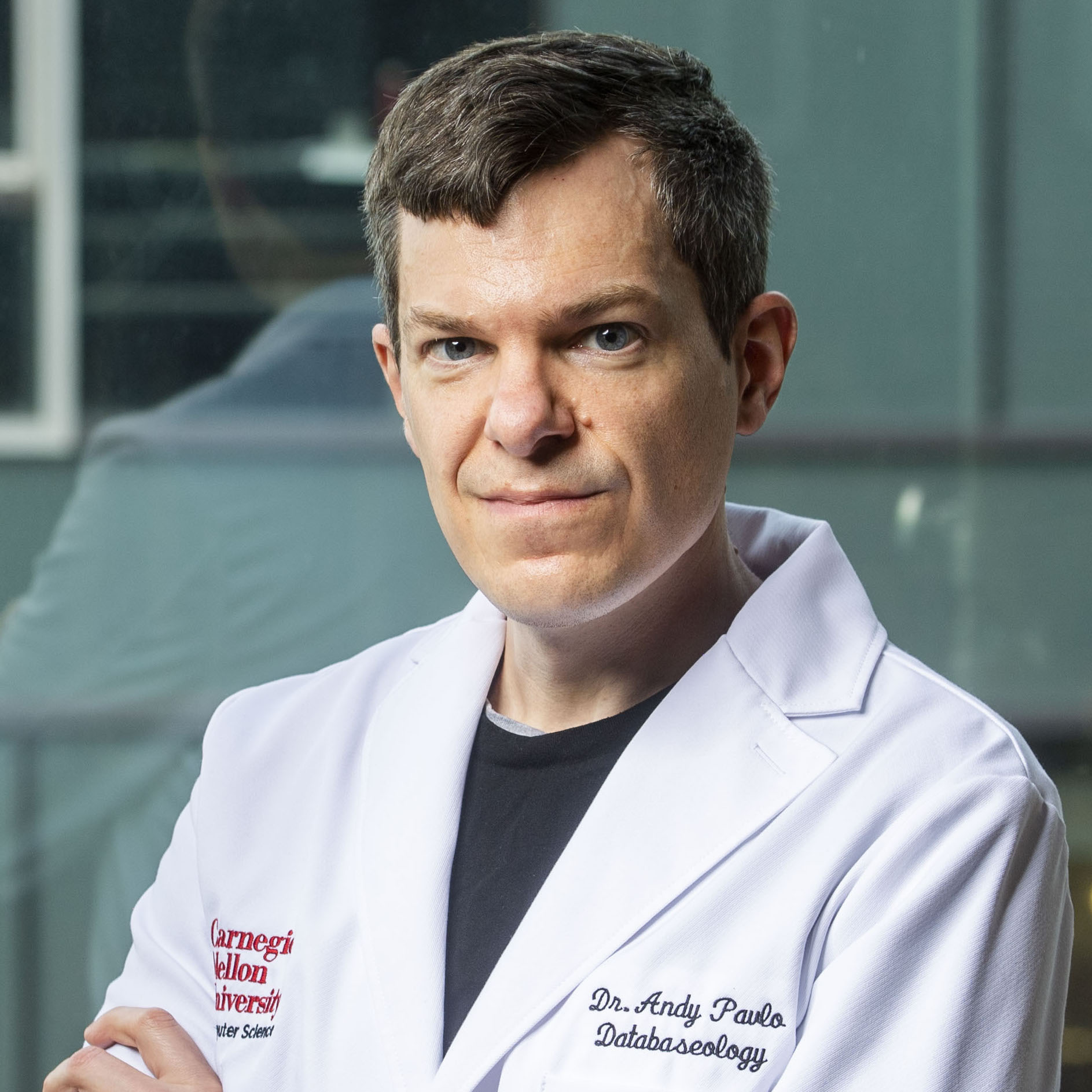
Andrew Pavlo is an Associate Professor of Databaseology in the Computer Science Department at Carnegie Mellon University , part of the School of Computer Science . His research focuses on database systems, particularly self-driving architectures, transaction processing, and large-scale analytics. He is a member of the CMU Database Group and Parallel Data Laboratory. His awards include the NSF CAREER (2019), Sloan Fellowship (2018), and ACM SIGMOD Jim Gray Dissertation Award (2014). He co-founded OtterTune, a database tuning startup, though it later ceased operations. Current research interests emphasize autonomous database systems, query optimization, and distributed computing. Recent publications (2024) highlight work on self-driving DBMS, null representation in columnar formats, and UDF optimization techniques. Awards: NSF CAREER Award (2019) Sloan Fellowship (2018) ACM SIGMOD Jim Gray Dissertation Award (2014) Advising: Mentors students in database systems, including Sam Arch, Wan Shen Lim, and William Zhang. Labs/Teams: Leads the Database Group and collaborates with the Parallel Data Laboratory.
Christian Meilicke is a Researcher at the Data and Web Science Group (DWS) within the School of Business Informatics and Mathematics at the University of Mannheim. His work focuses on artificial intelligence, ontology matching, and knowledge graph completion, with recent contributions to rule-based methods and their applications in business process modeling. He is heavily involved in teaching, coordinating courses such as 'Modeling Business Processes' and 'Artificial Intelligence.' His research interests include the integration of open and structured knowledge, probabilistic reasoning frameworks, and improving the efficiency of knowledge base systems. He has explored topics like inductive logic programming, automated debugging of ontologies, and the use of Markov Logic Networks for root cause analysis in IT systems. In terms of trends, his recent publications emphasize combining symbolic rule-based approaches with machine learning for knowledge graph tasks, such as activity recommendation and link prediction. He also investigates explainability in embeddings and temporal forecasting in knowledge graphs. His work often bridges theoretical advancements with practical applications in business informatics and data integration. No scientific awards have been explicitly mentioned. Christian has advised no formal students listed here but has contributed to teaching and mentoring through his courses and tutorials. His research and teaching are closely tied to the DWS Group, which focuses on data-centric AI and semantic technologies.
Dominique Ritze is a Research Fellow at the Data and Web Science Group of the University of Mannheim. Her research focuses on ontology alignment, semantic web technologies, linked open data integration, and knowledge organization systems. She collaborates with Prof. Dr. Christian Bizer and Prof. Dr. Kai Eckert on projects like InFoLiS II, aiming to advance data integration and semantic web applications. Education: MSc Computer Science (Diplom-Informatikerin) Research Interests: Dominique’s work bridges theoretical and applied aspects of semantic web technologies. Key areas include ontology evaluation frameworks, cross-domain data integration, and the development of tools for provenance tracking and data reuse. She has contributed to methodologies for aligning knowledge organization systems (KOS) and enhancing discovery systems with linked data. Publications Trends: Her articles from 2010-2015 emphasize ontology alignment (e.g., OAEI evaluations), semantic web applications, and data integration techniques. Notable contributions include the ICE-Map visualization for KOS evaluation and the Mannheim Search Join Engine for cross-website table integration. Awards: No scientific awards explicitly listed in the provided texts. Projects & Teams: Active in the Data and Web Science Group, leading projects on web table matching and semantic data integration. Collaborates with global research networks through initiatives like the Ontology Alignment Evaluation Initiative.
Dr. Enayat Rajabi is an Associate Professor of Business Analytics at the Shannon School of Business, Cape Breton University. Holding a PhD in Information and Knowledge Engineering from the University of Alcala (Spain) and a postdoctoral fellowship from Dalhousie University, his research focuses on the intersection of Machine Learning, Knowledge Graphs, and Data Analytics. He actively applies these technologies in healthcare, smart cities, and social media crisis response contexts. Education PhD in Information and Knowledge Engineering, University of Alcala (Spain) Postdoctoral Fellowship, Dalhousie University Research Interests His work bridges Knowledge Graphs with Machine Learning, emphasizing explainability and practical applications. Key areas include: Explainable AI for clinical decision-making Knowledge Graph applications in healthcare systems Social media analytics for emergency response Smart city data integration Generative modeling for tabular data Recent Publications Trends Recent articles highlight: Explainable AI in healthcare settings Industrial breakdown prediction systems Social media influencer detection Smart city infrastructure modeling Advanced data synthesis techniques Continued focus on Knowledge Graph applications
Bin Guo is an Assistant Professor at the Computer Science Department of Trent University (since Jan. 2024) and an Adjunct Assistant Professor at the Computing & Software Department of McMaster University. He holds a PhD in Computer Science from McMaster University (2023) and an MSc in Applied Computer Science from Winnipeg University (2018). His research focuses on parallel/distributed computing, graph algorithms, and computer security for data analytics, with notable contributions to federated k-core decomposition and secure distributed algorithms. He teaches courses in database systems, operating systems, and computer security at Trent University and has taught at McMaster University. Education: PhD in Computer Science, McMaster University (2023) MSc in Applied Computer Science, Winnipeg University (2018) Research Interests: Parallel and Distributed Computing Graph Algorithms and Mining Computer Security & Privacy Federated Learning Concurrent Data Structures Advising & Grants: Current advisees: Gregory Prouty, Michael Abiona, Syed Zarif Past advisees: Igor Jardim-Martins, Issec Lee Funding sources: Graduate Teaching Assistantships, Research Fellowships, Trent University Research Development Grants Labs & Teams: Leading research projects in parallel graph algorithms and federated security algorithms Collaborating with McMaster University on PhD/Master's co-supervision
Ronald de Wolf is a part-time Full Professor at the Institute for Logic, Language and Computation (ILLC), University of Amsterdam, and a researcher/group leader at the Algorithms and Complexity group of CWI (Dutch Centre for Mathematics and Computer Science). He is an active member of QuSoft and the Amsterdam Theoretical Computer Science ecosystem. His PhD was completed at CWI and ILLC, followed by postdoctoral research at UC Berkeley. Research Focus: De Wolf specializes in quantum computing, complexity theory, and algorithm design. His work explores quantum advantages in computation, communication, and learning, with applications in optimization, machine learning, and information theory. Recent investigations include quantum algorithms for linear algebra, error correction, and communication complexity. Publication Trends: His recent articles (2020-2025) predominantly focus on quantum algorithmic advantages, complexity bounds, and practical applications in machine learning and optimization. Key themes include quantum speedups for linear algebra, error-resilient quantum protocols, and theoretical limits of quantum computation. Awards & Honors: ERCIM Cor Baayen Award (2003) STOC Best Paper Award (2012) STOC Test-of-Time Award (2022) Gödel Prize (2023) Academic Leadership: He currently advises PhD student Lynn Engelberts and has graduated 10 doctoral students. As coordinator of the NWO Gravitation program Quantum Software Consortium , he oversees major research initiatives. He secured participation in EU projects (QAIP, RESQ, QAP, QCS, QALGO, QuantAlgo) and leads research teams at CWI and QuSoft.
Pieter Bonte is a FWO Senior postdoctoral fellow and IMEC Postdoctoral researcher at Ghent University's Faculty of Engineering and Architecture, Department of Information Technology. His research focuses on Semantic Web technologies, stream reasoning, and Internet of Things applications. His research interests span Semantic Web, Internet of Things, Stream Reasoning, Knowledge Graphs, Context-aware Systems, RDF Processing, Linked Data, and Healthcare Informatics. His work bridges theoretical semantic technologies with practical applications, particularly in healthcare and IoT domains. Bonte's publication record shows a strong focus on streaming data processing, with numerous papers on Streaming Linked Data, context-aware query derivation, and semantic reasoning frameworks. His research demonstrates a progression from foundational semantic web technologies toward practical implementations in healthcare and IoT applications, with an increasing emphasis on privacy considerations and efficient processing techniques. His work frequently involves collaborations with Femke Ongenae, Filip De Turck, and other researchers at Ghent University and IMEC, indicating strong institutional research networks. His publications appear in respected venues including the Journal of Web Semantics, Semantic Web Journal, and various conference proceedings in the semantic technologies field.