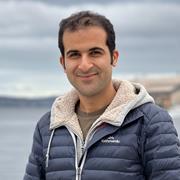
Ali José Mashtizadeh is an Associate Professor at the Cheriton School of Computer Science, University of Waterloo. His research focuses on operating systems, distributed systems, and storage, with expertise in system reliability, network optimization, and concurrent programming. Education: Ph.D., Computer Science, Stanford University (2017) M.S., Computer Science, Stanford University (2017) M.Eng., Electrical Engineering and Computer Science, MIT (2007) B.S., Electrical Engineering, MIT (2006) His research centers on designing scalable and reliable systems, with recent publications exploring TCP network frameworks, in-memory data persistence, and microsecond-scale scheduling. Key themes include optimizing tail latency, neutralization-based memory reclamation, and fault-tolerant distributed services. His articles consistently demonstrate innovations in low-latency networking, operating system architecture, and cloud infrastructure, with recent emphasis on serverless benchmarks and processor customization. No scientific awards or advising relationships are detailed in the provided materials.
Reinhard Pichler is a Full Professor at the Vienna University of Technology (TU Wien), affiliated with the Faculty of Informatics and the Department of Databases and Artificial Intelligence . His research focuses on Database Theory , Computational Logic , and Parameterized Complexity . He leads multiple research projects like DeConquer (2023–2027) and HyperTrac (2018–2022), addressing challenges in query optimization and hypergraph decompositions. He holds the prestigious START Prize (2014–2022) for young researchers. His work spans theoretical foundations (e.g., hypertree decompositions) and practical applications (e.g., SPARQL query processing systems like SparqLog). He contributes to academic governance, serving on faculty councils and curriculum commissions. His research innovations bridge algorithmic theory and real-world database systems, emphasizing efficient query evaluation and tractability analysis. Key contributions include advancing fractional hypertree decompositions , SPARQL query optimization , and consistent query answering . His projects often involve collaborations with industry and international funders like the Austrian Science Fund (FWF) and Vienna Science and Technology Fund (WWTF). He actively publishes in top venues like Journal of the ACM , ACM Transactions on Database Systems , and Proceedings of the VLDB Endowment . His academic leadership extends to course design, teaching advanced topics like Complexity Theory and Theoretical Computer Science . He mentors doctoral students and oversees research teams exploring cutting-edge areas like uncertain databases and cloud-based computational social choice .
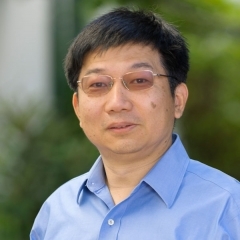
Zaiwen Feng is a researcher actively contributing to data governance, semantic modeling, and causal inference. His work focuses on knowledge graphs, graph-based methods, and service-oriented architectures through collaborations with institutions like the University of Queensland and universities in China. Research Focus : Graph Differential Dependencies, Entity Resolution, Causal Effect Estimation, and Ontology Alignment Methodologies : Machine Learning, Variational Autoencoders, Prompt Engineering, and Semantic Retrieval Application Areas : Biomedical Data, Property Graph Recommendation, and Process Model Repositories Key trends in his publications include automated semantic modeling , neural approaches for entity resolution , and causal inference with graph structures . He frequently collaborates with researchers like Keqing He, Wolfgang Mayer, and Selasi Kwashie across conferences such as HPCC, BIBM, and WISE.
Mohammad Kazemi Beydokhti is a Research Fellow (Level A) at RMIT University's Research & Innovation Capability department. He is also a PhD candidate with expertise in Machine Learning, NLP, and Geospatial Domain applications. His research focuses on qualitative spatial reasoning, GeoQA systems, knowledge graphs, and LLMs, with notable contributions to projects like Dynamic Vicmap (awarded the 'Innovation Award' by GCA) and the RMIT AWS Cloud Supercomputing Hub. He has collaborated with institutions like Utrecht University and has taught courses such as Advanced Imaging Technology (GEOM2112), Geospatial Programming with Python (GEOM2157), and Applied Geospatial Techniques (GEOM2450) as a tutor at RMIT from July 2021 to August 2024. His scientific contributions span geospatial question-answering systems, probabilistic spatial reasoning, and spatial-temporal modeling of seismic activity. Key projects include the DBSCAN-based seismic province analysis in Iran and ANP-OWA method applications in air quality monitoring station placement. Research Awards: Innovation Award (GCA) for Dynamic Vicmap project Labs/Teams: Involved in RMIT's AWS Cloud Supercomputing Hub and geospatial collaboration networks
Tao Yang is a Professor in the Department of Computer Science at the University of California, Santa Barbara, where he has been a faculty member since 1993. His research spans web search and mining, database and information systems, machine learning and data mining, parallel and distributed systems, and cloud computing. He serves as an active educator, teaching courses including CS170 Operating Systems (Spring 2024), CS291A Neural Information Retrieval (Fall 2024), and CS140 Parallel Computing (Winter 2025). PhD in Computer Science, Rutgers University ME in Artificial Intelligence, Zhejiang University MS in Computer Science, Rutgers University BS in Computer Science, Zhejiang University Professor Yang's research focuses on advancing the field of information retrieval with particular emphasis on neural approaches to search and ranking. His recent work explores neural document ranking, privacy-aware search systems, and versioned data search. He has led significant projects including Neptune clustering infrastructure, Sorrento self-organizing storage cluster, and TMPI for MPI execution optimization. His research bridges theoretical advances with practical implementations, particularly in scaling search architectures to handle billions of documents while maintaining relevancy, performance, and freshness. His publication record shows a clear evolution from foundational work in parallel and distributed systems toward contemporary research in neural information retrieval. Recent publications demonstrate expertise in optimizing both sparse and dense retrieval methods, with particular focus on efficiency improvements for multi-vector representations. His work consistently addresses real-world challenges in search scalability and privacy preservation. Faculty Research Award, Google Research Research Initiation Award, NSF (1994) UC Regents' Junior Faculty Award (1994) Computer Science Faculty Teacher Award (1995) CAREER Award, NSF (1997) Noble Jeeviant Award, AskJeeves (2002) Professor Yang has supervised numerous graduate students, many of whom have gone on to prominent positions at companies like Google, Apple, and Coursera, or academic positions at universities worldwide. His industry experience as Chief Scientist for Ask.com (2001-2010) and founding Chief Scientist for Teoma (2000-2001) has informed his research direction and provided valuable practical context for his academic work. He has served on program committees for major conferences including WWW, SIGIR, KDD, WSDM, CIKM, ECIR, and EMNLP. His research group maintains active projects in neural information retrieval, privacy-aware search, similarity computing, and parallel computing systems. The group collaborates closely with industry partners, particularly in the search technology space, and has developed systems that power major search engines serving over 100 million users.
Maribel Acosta is a Professor of Databases and Information Systems at Ruhr-Universität Bochum's Faculty of Computer Science. She holds affiliations with the Institut für Neuroinformatik (INI), focusing on interdisciplinary research combining natural and artificial cognitive systems. Her work spans databases, semantic web technologies, artificial intelligence, and machine learning applied to knowledge graphs. Acosta earned her Ph.D. (Summa Cum Laude, 2017) and Master's in Computer Science from Karlsruhe Institute of Technology (KIT). She has held roles including Junior Professor at RUB (2020–present), Deputy Professor at KIT (2019–2020), and Assistant Lecturer at Heidelberg University (2020). Research Interests: Her primary research focuses on efficient querying of knowledge graphs, integration of machine learning in data management, and semantic web technologies. Key areas include knowledge graph population, federated query processing, and stability in neural networks. Recent work explores applications in automotive systems and social science data integration. Awards: Notable recognitions include a 2022 WWW Best Paper nomination, Aminer's Top-100 Influential Scholars (2020–2021), and multiple teaching excellence awards from KIT (2017–2020). Teaching & Labs: She teaches courses on database systems, knowledge graphs, and artificial intelligence at RUB. Her lab contributes to projects like SMART-KG and has pioneered federated SPARQL query frameworks. She actively supervises doctoral research in knowledge graph applications and machine learning.
Anne-Marie Kermarrec is a Senior Researcher at INRIA (France), with prior roles at Microsoft Research (UK) and the University of Rennes 1 (France). Her work focuses on decentralized systems, including gossip protocols, peer-to-peer networks, social networks, and collaborative filtering. PhD in Computer Science (Rennes, 1996) Her research spans epidemic algorithms, content-based search in large-scale networks, and scalable group communication. She pioneered gossip-based peer sampling and multicast infrastructures like Scribe and SplitStream. Her publications highlight applications in decentralized news recommendation (AllYours), network coding, and privacy-preserving social platforms (Gossple). Key article trends include gossip protocols , P2P systems , social network analysis , decentralized storage , and collaborative filtering . She received the Michel Monpetit Award (2011), ERC Starting Grant (GOSSPLE, 2008-2013), and an ICDCS Best Paper Award (2010). Michel Monpetit Award (2011) ERC PoC AllYours (2013) ERC Starting Grant GOSSPLE (2008-2013) ICDCS Best Paper Award (2010) Kermarrec led program committees for major conferences (e.g., EuroSys, Middleware) and chaired the ACM Software System Award. Her software contributions include AllYours (news recommender), GossipLib (gossip library), and GossipPeer (P2P platform maintenance).
Dr. Mario Kolberg is a Senior Lecturer in the Department of Computing Science at the University of Stirling. He holds a PhD from the University of Strathclyde and has held roles at institutions including Humboldt University in Berlin and the University of Strathclyde. His research focuses on Peer-to-Peer (P2P) overlay networks, Home Automation, and IP Telephony, with contributions to areas like distributed feature interaction management and network protocol optimization. Key roles include co-investigator in ESRC’s Interlife and MATCH projects, exploring P2P networks in virtual worlds and healthcare integration. He leads initiatives such as the Sysnet Knowledge Transfer Partnership, developing P2P overlays for mobile devices. Kolberg is an IEEE Senior Member and Series Editor for the IEEE Communications Magazine’s Consumer Communication and Networking series, previously serving as TPC Chair for IEEE CCNC 2011. His research spans P2P multicast, home automation systems, and network efficiency, with recent work addressing IoT protocols (e.g., 6TiSCH), mobile network optimization, and integrating social media data for transport prediction. Over 79 publications highlight his technical depth, including influential papers on feature interaction detection and hybrid multicast systems. Education: PhD in Computer Science from University of Strathclyde Key Projects: Interlife (P2P in 3D virtual education), MATCH (healthcare networks), Sysnet KTP (mobile P2P) Awards: IEEE Senior Member, Series Editor role His work bridges academia and industry, addressing real-world challenges in networking and distributed systems.
Sharma V. Thankachan is an Associate Professor in the Department of Computer Science at North Carolina State University since 2022, previously serving as an Assistant Professor at the University of Central Florida (2017-2022). His academic journey includes postdoctoral research at the University of Waterloo with Ian Munro and Georgia Institute of Technology with Srinivas Aluru. His educational credentials feature: Ph.D. in Computer Science from Louisiana State University (2014) B.Tech in Electrical and Electronics Engineering from National Institute of Technology Calicut, India (2006) Dr. Thankachan's research centers on string algorithms and compressed data structures with critical applications in computational biology, particularly addressing pan-genomic data modeling and gapped pattern matching challenges. His theoretical work bridges algorithmic design with practical genomic analysis, focusing on space-efficient representations for repetitive biological sequences. Analysis of his 2022-2025 publications reveals dominant themes in BWT-based indexing, non-overlapping pattern constraints, and external memory optimization. These contributions advance core areas of data compression, bioinformatics algorithms, and scalable text processing systems, demonstrating consistent innovation in handling genomic-scale data. His distinguished recognition includes the NSF CAREER award: National Science Foundation Faculty Early CAREER Development Award (2022) Dr. Thankachan mentors multiple doctoral students including Mano Prakash Parthasarathi, Paul Macnichol, and Oliver Chubet (co-advised with Donald Sheehy), with alumni Paniz Abedin, Daniel Gibney, and Sahar Hooshmand now holding faculty positions. His research is supported by two major NSF grants: CAREER: Algorithmic Aspects of Pan-genomic Data Modeling, Indexing and Querying (2023-2027, $513,686) AF: Small: Theoretical Aspects of Repetition-Aware Text Compression and Indexing (2023-2026, $414,034)
Professor Nikolaos Pelekis is a faculty member at the University of Piraeus, Greece, holding the position of Professor in the Department of Statistics and Insurance Science within the School of Finance and Statistics. His academic career focuses on Data Science, with a specialized emphasis on Mobility Data Management and Mining, a field he has contributed to for over two decades. He has authored two monographs and over 100 peer-reviewed articles, earning five Best Paper Awards and over 5,000 citations. Research Interests: Mobility Data Management and Mining Big Data Analytics Machine Learning Geographical Information Systems His work spans trajectory analysis, maritime and vessel traffic forecasting, and spatiotemporal data management. Notable projects include leading roles in EU-funded initiatives like GREEN.DAT.AI and EMERALDS, focusing on energy-efficient AI and urban mobility analytics. Awards and Recognition : Five Best Paper Awards, including the Ralf H. Güting Best Research Paper Award (2021) and Best Demo Paper Awards at SIGSPATIAL (2021). He also ranked 1st in the SemEval-2017 Task 4 for sentiment analysis. Professional Contributions : Serves on editorial boards (e.g., ECML PKDD, DMKD) and organizes workshops like BMDA. His teaching spans undergraduate and graduate courses in Data Science, Big Data Management, and Statistical Data Mining. Labs and Teams : Co-founder of the Data Science Lab at the University of Piraeus, collaborating across 4 departments and multiple researchers. Current efforts include maritime digitalization (VesselAI) and real-time trajectory prediction frameworks like ARGO.
Padmini Srinivasan is a Professor in the Department of Computer Science at the University of Iowa, affiliated with the College of Engineering. Her work bridges computer science, informatics, and social applications through advanced research in information retrieval, natural language processing, and data mining. Research Interests: Her research focuses on Information Retrieval & NLP , Text and Web Mining , Biomedical Text Mining , Privacy/Security & Censorship , Social Media Analytics (particularly in political and health belief contexts), and Crowdsourcing & Games . She leads the Text Retrieval & Text Mining Group , fostering interdisciplinary research involving machine learning, human computation, and real-world data challenges. Publication Trends: Her recent work appears in top-tier venues such as SIG-IR, KDD, WSDM, ICWSM, EMNLP, JASIST, and PLOS One, reflecting sustained contributions to both foundational and applied aspects of data science. These publications span topics from ranking optimization and query modeling to social dynamics, health informatics, and ethical AI. Scientific Awards: No specific awards were mentioned in the provided text. Advising and Grants: She has advised numerous graduate students including Osama Khalid, Ingroj Shrestha, Asad Mahmood, Jonathan Rusert, and others. While grant details are not listed, her publication record in premier venues suggests consistent external funding and collaborative research activity. Labs and Teams: She leads the Text Retrieval & Text Mining Group , which conducts cutting-edge research in search technologies, text analysis, and social media understanding, often integrating crowdsourcing and game-based methods for data collection and evaluation.
Nirmalie Wiratunga is a Professor in Intelligent Systems at the School of Computing , Robert Gordon University, and serves as the Associate Dean for Research . She is also an Adjunct Professor at the Norwegian University of Science and Technology (IDUN program). Her academic excellence spans over two decades in Artificial Intelligence and Machine Learning , with a focus on Explainable AI (XAI) , Case-Based Reasoning (CBR) , and Natural Language Processing (NLP) . Her research explores innovative methodologies for knowledge-rich representations to automate decision-making through CBR for Retrieval-Augmented Q&A systems and human-centered AI platforms . She co-founded Attendr.app , a spinout for student and conference attendance tracking, and leads the Artificial Intelligence & Reasoning Research Group at RGU. Recent publications (2024–2025) highlight her work on LLM hallucination detection , counterfactual explanations in finance , cross-lingual biomedical review automation , and multi-query resolution in legal domains . Themes span AI explainability , NLP , CBR , and domain-specific knowledge integration across healthcare, law, and education. Her leadership extends to organizing international workshops on XAI , digital health , and Deep Learning , and co-chairing the ICCBR 2021 and 2022 conferences. She actively contributes to program committees for ECCBR , ECML/PKDD , and IJCAI .
Gyunam Park is a Research Group Lead and Process and Data Scientist at Fraunhofer FIT and a Scientific Assistant at the Chair of Process and Data Science at RWTH Aachen University, a leading institution in computer science and engineering. He is actively involved in both research and teaching, contributing to the advancement of process mining, data science, and artificial intelligence. His work bridges academic research and industrial applications, particularly in SAP ERP systems and digital twins of organizations. Research Interests: Gyunam Park’s research focuses on Action-Oriented Process Mining (AOPM) , Object-Centric Process Analysis , and Responsible Machine Learning . He aims to transform process mining insights into actionable management decisions, ensuring transparency, fairness, and compliance. His work enables organizations to monitor operational constraints, generate corrective actions, and assess their impact using data-driven methods. Publication Trends: His recent publications emphasize object-centric approaches to process mining, predictive monitoring, constraint checking, and integration with AI planning. There is a strong trend toward preserving structural information in event logs, improving machine learning performance, and applying these techniques to real-world systems like SAP ERP and after-sales service processes. Scientific Awards: No awards are explicitly mentioned in the provided text. Advising and Grants: While no formal students are listed, Gyunam Park leads research projects and collaborates with industry partners such as Samsung Electronics and SAP. His projects involve root cause analysis, resource optimization, and educational data mining. He has developed open-source tools like ProAct and OCPA , indicating active grant or institutional support for software development and research dissemination. Labs and Teams: He is a core member of the Process and Data Science (PADS) group led by Prof. Wil van der Aalst at RWTH Aachen University and leads a research group at Fraunhofer FIT. These teams focus on cutting-edge research in process mining, data science, and AI, with strong industry collaborations and regular contributions to top conferences and journals.
Dr. Agnes Haryanto is a Research Fellow in the Embodied Visualisation Group at Monash University's Faculty of IT. Her work focuses on improving healthcare quality through live-streaming clinical analytics and dashboards for accreditation. She holds a PhD from Monash University (2015) in Spatial and Graph Databases. Education: Doctor of Philosophy, Monash University Research interests span Big Data Management, Geospatial Databases, and Health Informatics. Her current projects include a digital health intervention for Emergency Department clinicians (2023–2026), funded by Australia's Department of Health and Aged Care. She has contributed to advancing spatial query optimization and clinical data warehouse systems. Collaborations involve interdisciplinary teams addressing SDGs like quality education and health equity. Teaching commitments include units like FIT3003 (Business Intelligence) and FIT5137 (Advanced Database Technology). Key projects include developing real-time clinical analytics systems to bridge gaps in healthcare data utilization. Her work aligns with UN SDG 3 (Good Health) and SDG 4 (Quality Education).
Oscar Romero Moral is a Professor at the Polytechnic University of Catalonia (UPC), affiliated with the Department of Services and Information Systems Engineering at the Barcelona School of Informatics (FIB). He leads research in the inSSIDE, inLab FIB, and DTIM groups, focusing on data management, data science, and big data technologies. His work emphasizes knowledge graphs, data governance, and machine learning integration with data systems. Affiliations: UPC, inSSIDE, inLab FIB, DTIM Group Research Interests: Data Management, Data Engineering, Big Data, Knowledge Graphs, Data Governance, Machine Learning Integration He has authored over 276 academic contributions, including peer-reviewed articles on federated healthcare data systems, GPU-accelerated workflows, and graph-driven data integration. His recent work addresses challenges in heterogeneous computing, automated data governance, and scalable data architectures. Romero has served on the program committees of major conferences like VLDB, ICDE, and EDBT, and led competitive research projects in data systems and analytics. He collaborates extensively with industry partners and academic institutions, driving innovations in distributed data management and edge computing.