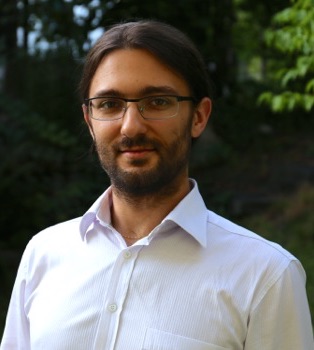
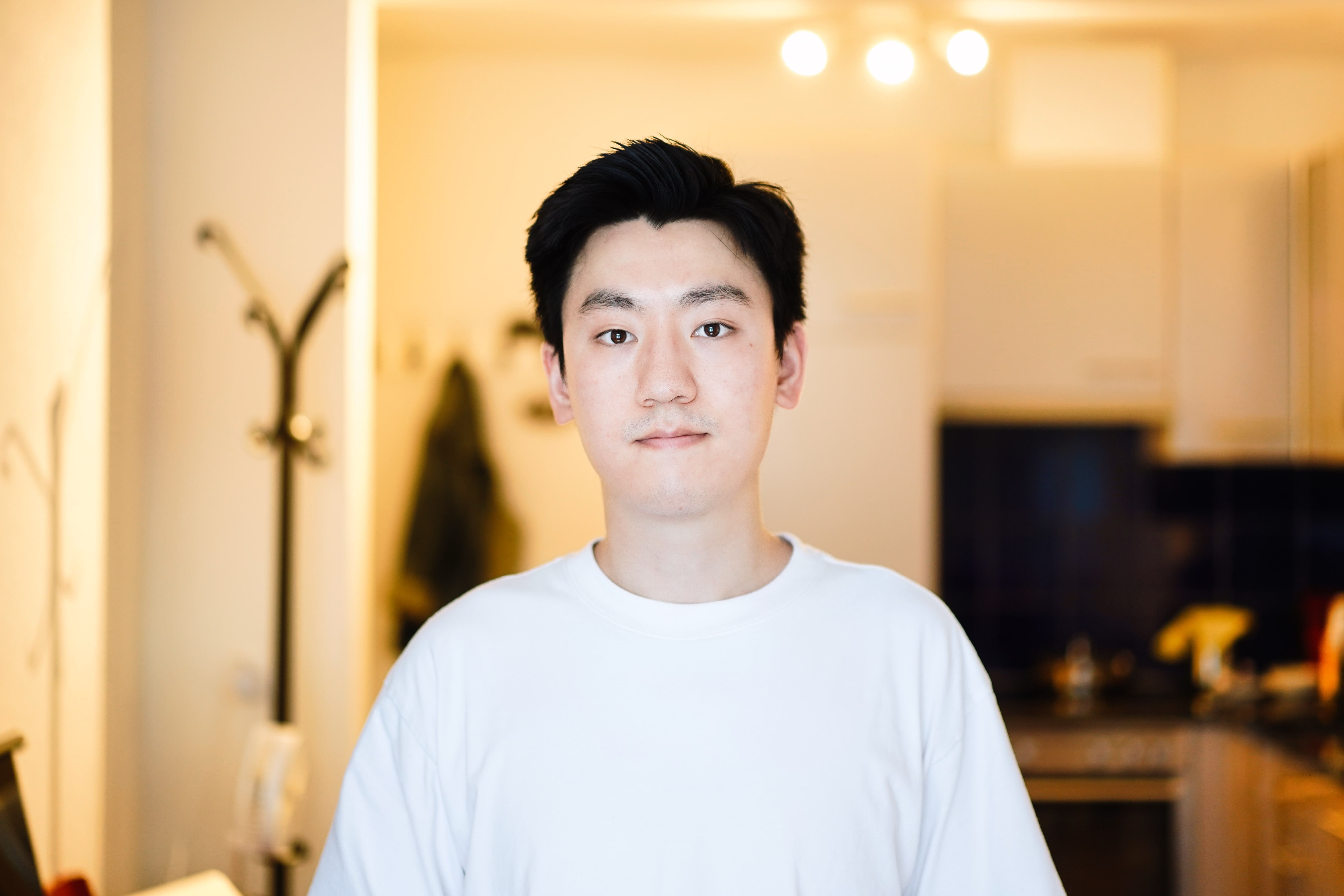
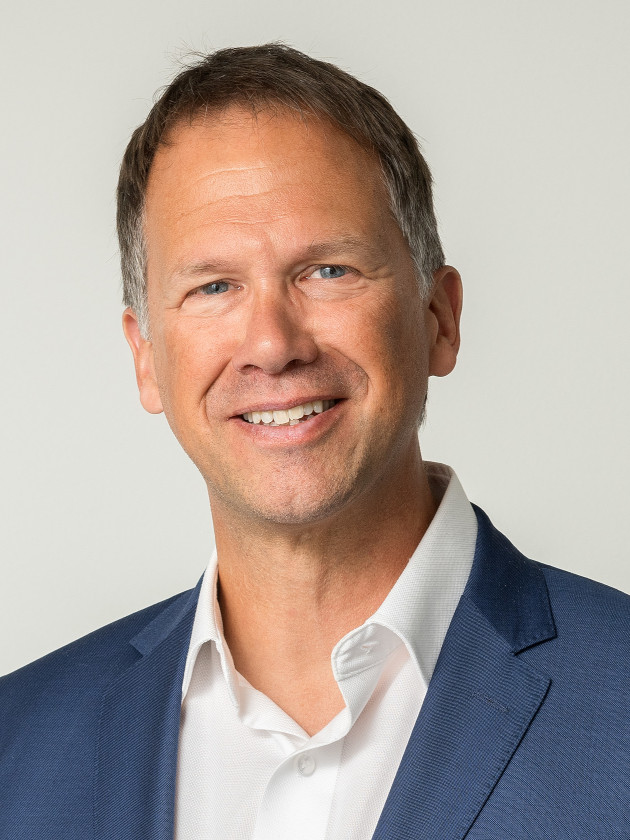
Roland Christen is a Senior Research Associate at the Lucerne School of Computer Science and Information Technology, part of the Lucerne School of Applied Sciences and Arts (HSLU). He specializes in software architecture, DevOps, distributed systems, and machine learning applications across healthcare and commerce. Christen actively contributes to STEM outreach initiatives like RobertaRegioZentrum Luzern and YoungTech@hslu, emphasizing education and technology accessibility. His professional expertise spans software design, microservices, agile methodologies, and database technologies. He leads research projects in quantum cryptography, medical image analysis (e.g., psoriasis detection), AI-driven e-commerce, and predictive modeling for tourism markets. Notable outputs include peer-reviewed work on machine learning for dermatology and conference presentations on quantum privacy amplification and GPU computing. Christen holds a Roberta® Teacher Certification from the Fraunhofer IAIS and has contributed to interdisciplinary projects like Deep Neural Yodeling and Skin-App: Medical Severity Grading of Hand Eczema. He also maintains strong ties to applied fields through lab collaborations and industry partnerships, bridging academia and practical innovation.
Prof. Angelika Steger is a Full Professor in the Department of Computer Science at ETH Zurich, leading research in theoretical computer science since 2003. She holds a Master's in Applied Mathematics from Stony Brook University (1985) and a PhD from the University of Bonn (1990). Her career includes roles at Kiel, Duisburg, and TU München before joining ETH. She is a Leopoldina member (2007), ICM speaker (2014), and Collegium Helveticum Fellow (2009+). Research focuses on probabilistic methods, randomized algorithms, graph theory, and combinatorial optimization. She has contributed to understanding discrete structures, neural networks, and algorithmic resilience. Awards include recognition in both computer science and mathematics circles. Her work bridges theoretical foundations with applications in AI, neuroscience, and distributed systems.
Maciej Besta is a leading researcher at ETH Zurich's Institute for Computing Platforms, where he heads research initiatives at the Scalable Parallel Computing Lab (SPCL) and contributes to the ETH Future Computing Laboratory (EFCL). Working under the mentorship of Professor Torsten Hoefler, he has established himself as a prominent figure in high-performance computing, graph processing, and large language models. Position: Researcher at Institute for Computing Platforms, ETH Zurich Research Leadership: Head of Sparse Graph Computations and Large Language Models Research at SPCL Collaboration: Leads project management for SPCL's contributions to ETH Future Computing Laboratory Besta's research spans multiple abstraction levels, from hardware and network topologies to middleware, algorithms, and programming models. His primary focus areas include graph-enhanced language models, graph neural networks, graph databases, and sparse models, with applications across various computational settings. He approaches these problems through rigorous performance modeling and formal reasoning, emphasizing both scalability and practical implementation. His recent publications reveal a clear trend toward integrating graph structures with language models and AI systems. Besta has pioneered work on graph databases, knowledge graphs of thoughts, and higher-order graph neural networks, while maintaining his strong foundation in high-performance computing and network topology design. His research bridges traditional HPC with cutting-edge AI, creating novel approaches for efficient large-scale computation. IEEE TCSC Award for Excellence in Scalable Computing (Early Career, 2023) Multiple Best Paper Awards at Supercomputing conferences (2022, 2023) ACM SIGHPC Doctoral Dissertation Award (2022) ETH Medal for outstanding doctoral thesis (2021) Fellow of The Explorers Club (2022) Besta actively mentors ETH Zurich students through semester projects, Bachelor's, and Master's theses, focusing on graph processing and related computer science challenges. His mentorship extends beyond technical guidance, incorporating lessons from his extensive polar and mountaineering expeditions that emphasize mental resilience, efficient risk management, and leadership. He has supervised numerous student projects that have resulted in high-impact publications at top-tier conferences. As a core member of the Scalable Parallel Computing Lab, Besta collaborates with researchers across ETH Zurich and international institutions. His unique approach integrates insights from extreme environment expeditions into research methodology, creating a distinctive framework for tackling complex computational problems. The lab's work under his leadership spans theoretical modeling, practical implementation, and real-world deployment of high-performance systems.
Timon Gehr is part of the Professorship for Computer Science at ETH Zurich's Department of Computer Science, affiliated with the Institute of Programming Languages and Systems. His research focuses on quantum computing, probabilistic programming, neural network robustness, and privacy enforcement. He has contributed to the development of quantum languages like Silq and frameworks for certifying adversarial robustness in machine learning systems. His research interests include formal methods for programming languages, scalable symbolic reasoning, and applying probabilistic techniques to security and privacy. Recent work emphasizes robustness certification of neural networks and symbolic integration in machine learning. Key projects involve exact inference for probabilistic programs and differential privacy violation detection. Notable publications include work on quantum uncomputation, adversarial examples, and integrating logic into neural networks. No specific advising or grant details are provided in the text, but his involvement with the Institute of Programming Languages and Systems indicates active participation in academic collaborations and research teams.
Tianyi Zhang is a Researcher at the Professorship for Theoretical Computer Science, ETH Zurich, located at OAT Z 29, Andreasstrasse 5. His research focuses on advancing fundamental algorithms in graph theory, with particular expertise in dynamic graph problems, efficient spanner constructions, edge coloring optimizations, and shortest-path computations. Dr. Zhang develops both theoretical frameworks and practical implementations for complex computational challenges. His core research areas include the design of near-linear and subquadratic time algorithms for graph optimization problems, fault-tolerant network structures, streaming-optimized graph coloring, and geometric graph embeddings. Recent work emphasizes breakthroughs in Vizing's theorem implementations, dynamic set cover deamortization, and space-efficient distance oracles. Dr. Zhang's publications demonstrate consistent innovation in algorithm efficiency for planar graphs, Euclidean spaces, and dynamic network settings. His 2023-2025 articles reveal concentrated efforts on: 1) Optimizing edge coloring through multi-step Vizing chains and streaming adaptations, 2) Enhancing spanner constructions for doubling metrics and planar environments, and 3) Developing failure-resistant path algorithms with improved time/space complexity. These contributions address scalability challenges in large-scale network processing. He collaborates within the Theoretical Computer Science research group at ETH Zurich, contributing to the institution's leadership in algorithmic innovation. No information about awarded grants, supervised students, or educational background is available in the source materials.
Dr. Andrej Stankovski is a researcher at the Reliability and Risk Engineering department of ETH Zürich. His work focuses on assessing risks and reliability in critical infrastructure systems, particularly power grids and nuclear energy facilities. Key research areas include climate risk quantification, cascading failure analysis, and socio-technical vulnerabilities in energy systems. He has developed novel methodologies for blackout event analysis and maintains a curated database of nuclear safety incidents. His research integrates multi-disciplinary approaches combining probabilistic modeling, data analytics, and socio-technical systems thinking. Notable contributions include frameworks for energy transition impact assessment, cross-sector climate risk comparisons, and multi-hazard security evaluations of transmission systems. Dr. Stankovski collaborates with industry partners and policymakers to translate technical insights into actionable resilience strategies. Publications span high-impact journals and conference proceedings, with a focus on empirical analyses of blackout events, nuclear fuel cycle optimization, and infrastructure vulnerability mapping. His work frequently addresses the intersection of technical systems and societal impacts, emphasizing equitable energy access and disaster resilience for vulnerable populations.
Marco Zaffalon is Professor and Scientific Director at IDSIA (Istituto Dalle Molle di Studi sull'Intelligenza Artificiale), affiliated with the Università della Svizzera italiana's Faculty of Informatics. He leads a 30-member research group on probabilistic machine learning and has published over 150 papers. Education: M.Sc. in Computer Science (Università degli Studi di Milano) Ph.D. in Applied Mathematics (Università degli Studi di Milano) Research spans probabilistic machine learning, causal AI, imprecise probabilities, and quantum computation. His work develops theoretical foundations for uncertainty reasoning and applies them to AI systems. Recent publications focus on causal inference with LLMs, counterfactual computation, and quantum decision models. Articles consistently explore intersections of probability theory, computational methods, and real-world applications like healthcare. Trends include advancing tractability in causal queries and bridging logical frameworks with machine learning. Administrative roles include co-founding Artificialy (as Chief Scientist) and directing IDSIA since 2019. He teaches courses in Causal AI, Uncertain Reasoning, and Probability.
Haozhe Zhang is a Postdoctoral Researcher in the Data Systems and Theory (DaST) group at the Department of Informatics, University of Zurich, supervised by Prof. Dan Olteanu. His career bridges theoretical research and practical implementation in database systems. Education: DPhil in Computer Science, University of Oxford (2023) MSc in Computer Science, University of Oxford (2017) BSc in Computer Science, University of Nottingham (2016) Research Focus: Haozhe's work centers on database theory, emphasizing incremental view maintenance and cardinality estimation . His research explores efficient algorithms for dynamic relational data, theoretical foundations of conjunctive queries, and robust cardinality estimation techniques like LpBound. Publications & Trends: His contributions include theoretical analyses of conjunctive queries under updates, practical systems like F-IVM for analytics over evolving data, and worst-case optimal algorithms for triangle counting. Recent work at SIGMOD 2025 and ICDT/AMW workshops highlights advancements in dynamic query evaluation and cardinality estimation guarantees. Scientific Recognition: Best Paper Award, SIGMOD 2025 Best Paper Award, ICDT 2019 Teaching Contributions: Instructor, Foundations of Data Sciences (UZH, Fall 2024) Teaching Assistant for Foundations of Data Sciences (UZH, Fall 2020–Fall 2023), Efficient Algorithms (UZH, Spring 2021–Spring 2025), and Modern Data Analytics (UZH, Fall 2023).
Matthias Grossglauser is a Full Professor at the School of Computer and Communication Sciences at École Polytechnique Fédérale de Lausanne (EPFL), where he co-directs the Information and Network Dynamics lab. He serves on the Federal Communications Commission (ComCom), Switzerland's telecommunications regulatory authority, and previously directed EPFL's Doctoral School in Computer and Communication Sciences (2016-2019). His career includes positions at Nokia Research Center (Internet Laboratory lead), AT&T Research, and EPFL (Assistant Professor). Education Ph.D. in Computer Science from Sorbonne Universités M.Sc. in Electrical Engineering from Georgia Institute of Technology Engineering degree in Communication Systems from EPFL Research Focus Grossglauser's research integrates machine learning, stochastic networks, and discrete choice models to address challenges in artificial intelligence, network science, computational social sciences, and recommender systems. His work emphasizes both theoretical foundations and practical applications, including political forecasting, climate communication, and network dynamics. Publication Trends Recent articles demonstrate strong focus on causal inference, optimal learning algorithms, and social network analysis. Dominant themes include reinforcement learning optimization, graph-based modeling, and NLP applications in political science. Methodological innovations in matrix factorization, Bayesian modeling, and stochastic processes recur throughout. Awards & Honors Fellow of IEEE and ELLIS Cor Baayen Award (1998) CoNEXT/SIGCOMM Rising Star Award (2006) Best Paper Awards: ACM COSN (2014), IEEE INFOCOM (2001) Nokia Mobile Data Challenge Winner (2012) Academic Leadership Has advised 16+ PhD students to completion and currently supervises 4 doctoral candidates. Secured research funding for projects including dynamic recommender systems, network alignment algorithms, and computational social science tools (e.g., Predikon.ch vote prediction platform). Leads the Information and Network Dynamics lab, focusing on AI-driven network analysis.
Prof. Dr. Kurt Stockinger is a Professor of Computer Science at ZHAW School of Engineering and holds a doctorate at the University of Zurich . He serves as Head of the MAS Data Science program and co-leads the ZHAW Datalab . His research focuses on Intelligent Information Systems , bridging information systems, natural language processing, and machine learning. Affiliated with the University of Zurich, he contributes to Quantum Machine Learning and Open Data Exploration initiatives. Stockinger's educational background includes a PhD in Computer Science (University of Vienna & CERN), a Master in Business Informatics (University of Vienna), and a CAS in Didactics & Methodology (ZHAW). He has taught courses in Quantum Computing , Big Data for Natural Sciences , and Data Science programs at ZHAW and University of Zurich. His research spans Data Science , Big Data , Natural Language Query Processing , Knowledge Graphs , and Quantum Machine Learning . Recent publications focus on quantum autoencoders , hybrid quantum neural networks , and prompt engineering for knowledge graph question answering. He has developed frameworks like ScienceBenchmark for real-world NL-to-SQL evaluation and NQuest for natural language query exploration. Scientific awards include the Best Paper Award at 7th Swiss Conference on Data Science (2020) He leads major projects such as DataGEMS (Data Discovery Platform, Horizon Europe) Digital Health Zurich (Clinical Innovation Lab) INODE4StatBot.swiss (NL-to-SQL Translation) GraphQueryML (Graph Database Optimization) ScienceBenchmark (NL-to-SQL Evaluation) Stockinger's work intersects with computer vision , biomedical data , and industrial applications , demonstrated through collaborations with institutions like Lawrence Berkeley National Laboratory, CERN, and University of Washington. He has contributed to establishing QuantumBasel and ZHAW Datalab as research hubs.