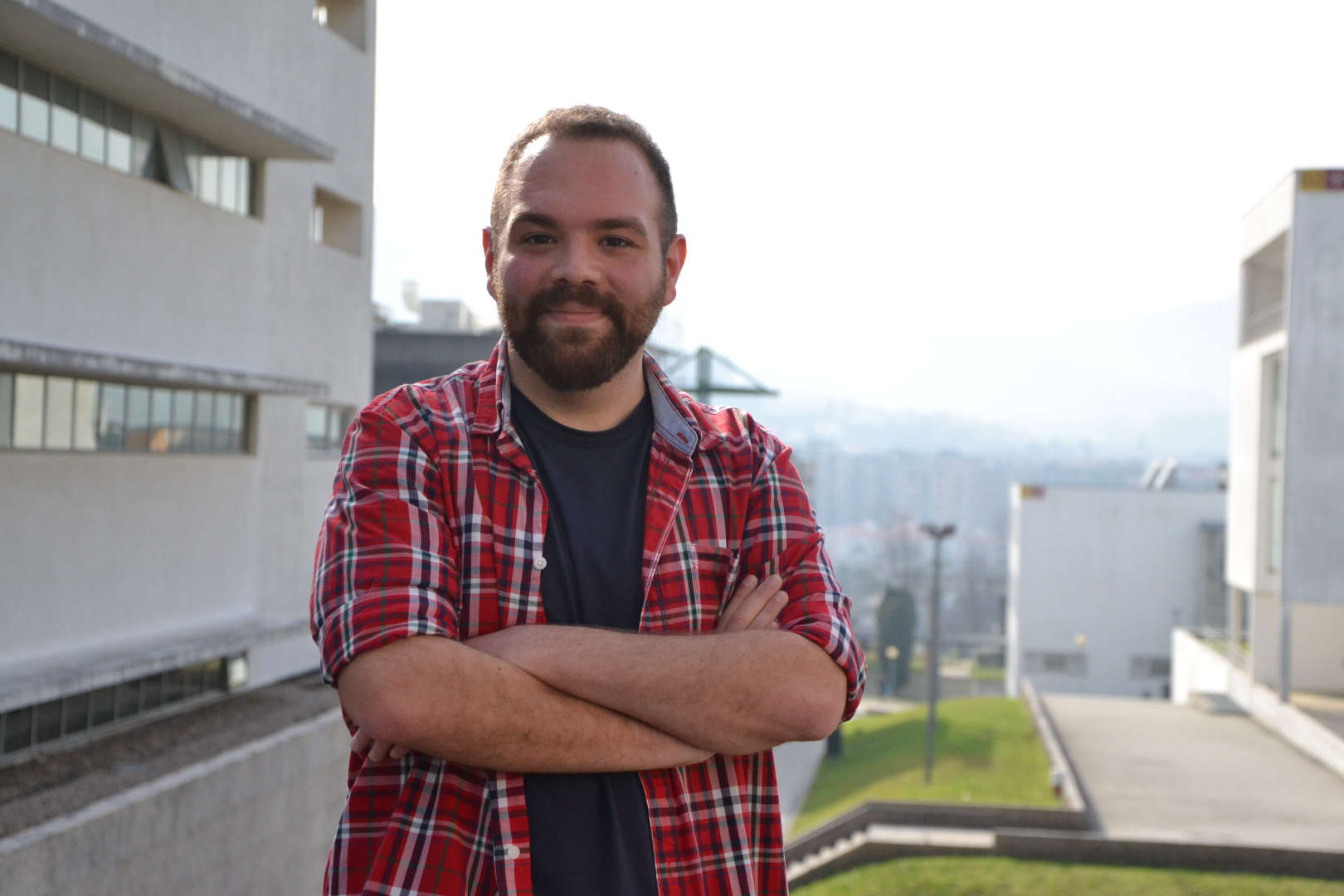
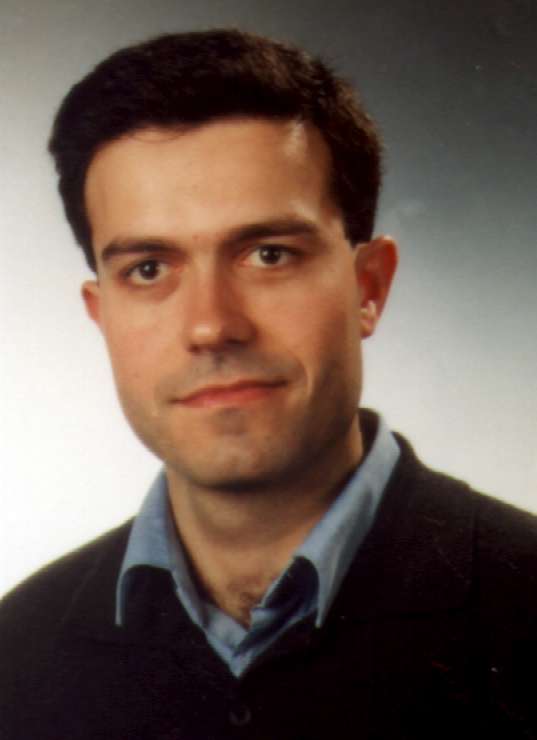
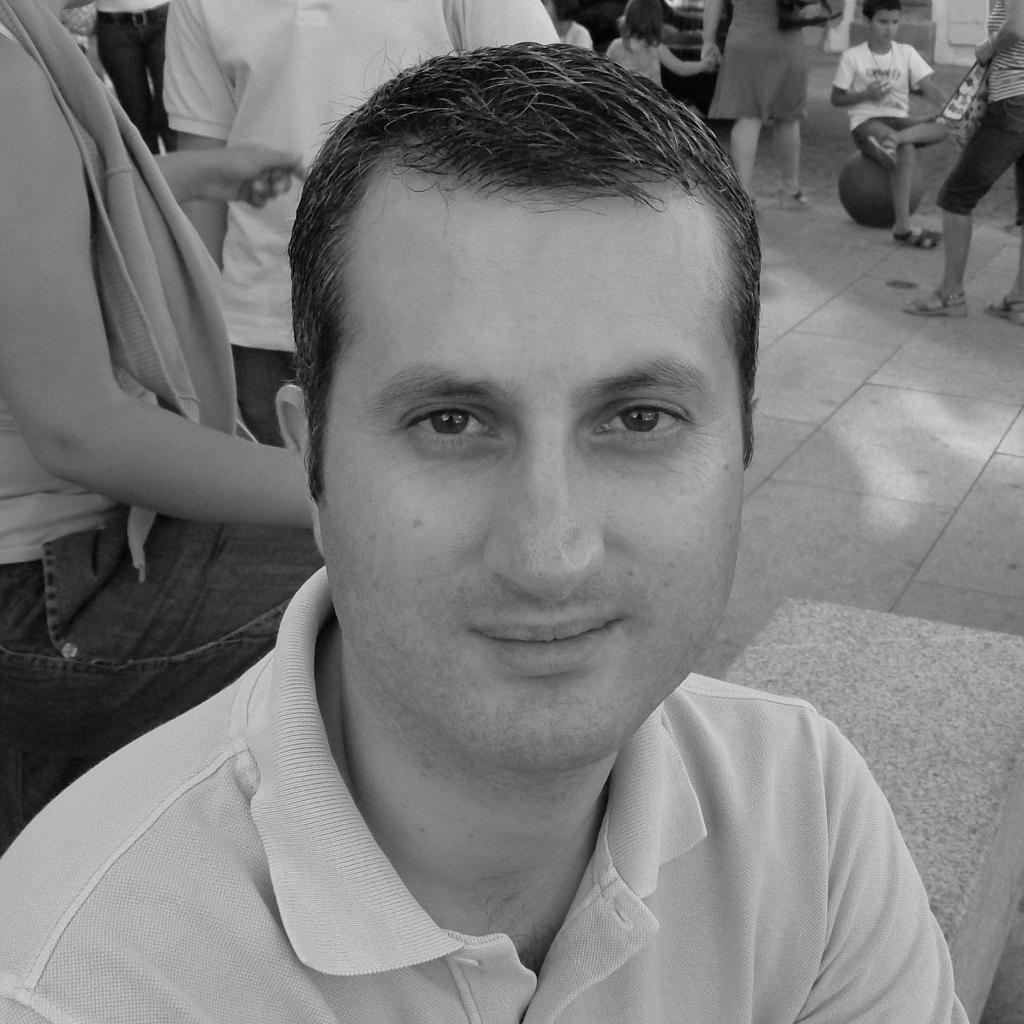
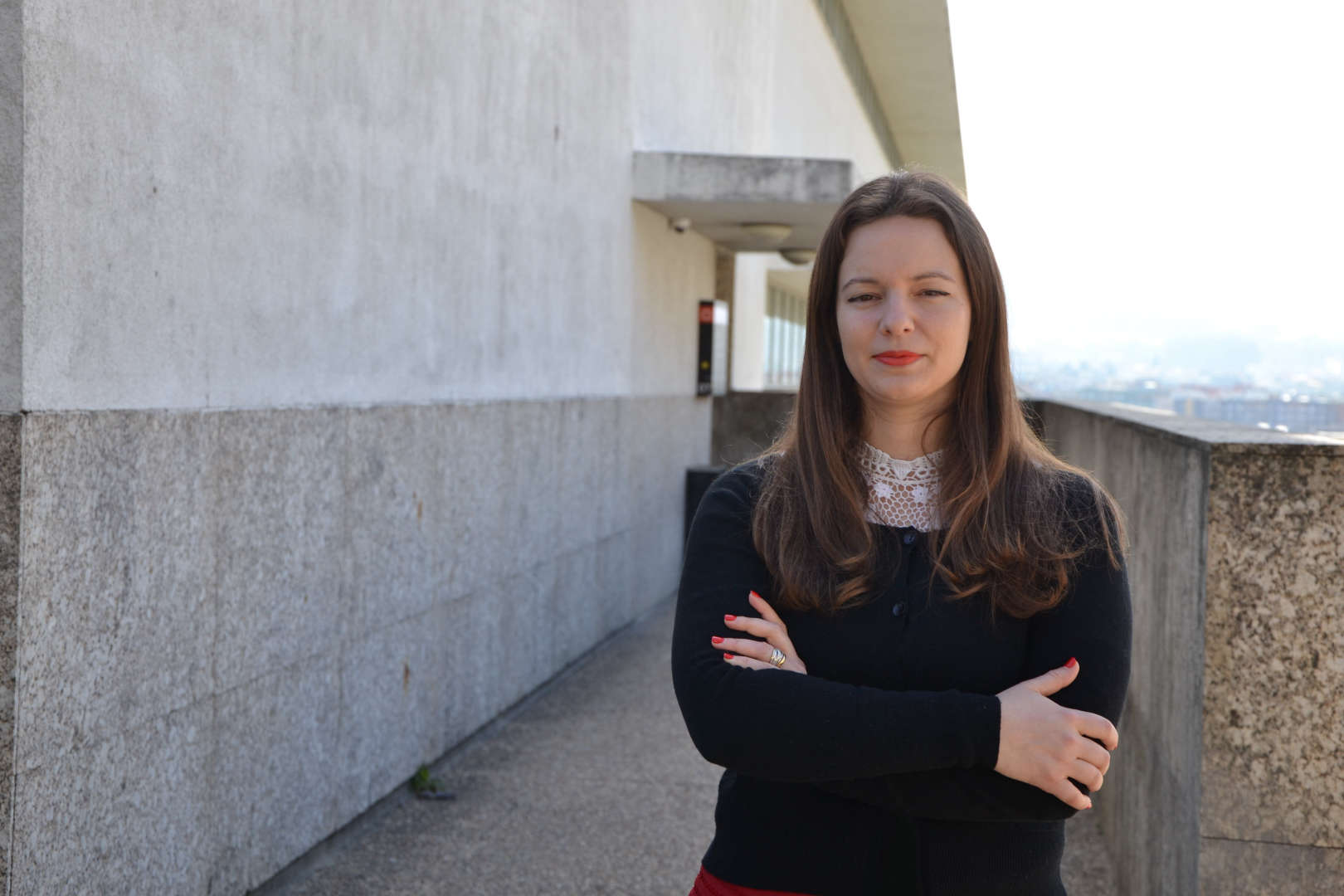
Paulo Carreira is an Associate Professor at Instituto Superior Técnico , Universidade de Lisboa. His research focuses on Building Automation , Energy Management , and Data Integration , with a particular emphasis on Smart Urban Environments and Cyber-Physical Systems . Fields: Building Automation, Energy Management, Data Privacy, Query Optimization, ETL, Streaming Query Processing Research Trends : His recent work spans from SQL Injection Attacks in LLM-integrated systems to Multi-Paradigm Modeling for Cyber-Physical Systems. Publications highlight his expertise in Energy Efficiency in buildings and BIM Integration with real-time data. Scientific Awards : Best Student Paper Award Nomination for Best Paper Award
Orlando Manuel Oliveira Belo is an Associate Professor with Habilitation at the School of Engineering, University of Minho, Portugal, where he has been a member of the Department of Informatics since 1986. He is also a Senior Researcher at the ALGORITMI R&D Centre, and a member of both the CST R&D Group and ISLab R&D Lab. His academic career spans over three decades, with significant contributions to the fields of Business Intelligence, Data Warehousing, and Data Mining. His educational background includes: 5-year degree in Systems and Informatics Engineering (1986) "Provas de Aptidão Pedagógica e Capacidade Científica" (MSc equivalent) in Expert Systems (1991) Ph.D. in Multi-Agent Systems (1998) Habilitation (2013) Professor Belo's research primarily focuses on Business Intelligence and related areas including Data Warehousing Systems, OLAP, Dashboarding, and Data Mining. His work has significant practical applications in fraud detection and control in telecommunication systems, data quality evaluation, and ETL systems for industrial data warehousing. In recent years, his research has expanded into Ontology Learning and Sentiment Analysis, with applications in healthcare analytics, particularly in cardiovascular health monitoring and dermatology. His interdisciplinary approach bridges computer science with practical business and healthcare applications, demonstrating the versatility of data analytics across different domains. His recent publications (2023-2025) show a clear trend toward integrating advanced machine learning techniques with domain-specific knowledge, particularly in healthcare applications. He has published extensively on sentiment analysis, ontologies, and data warehousing, with a growing emphasis on medical applications including atopic dermatitis and cardiovascular health. His work demonstrates a progression from foundational data warehousing and ETL research to more specialized applications in precision medicine and well-being analytics, reflecting the evolving landscape of data science applications. Professor Belo has an impressive publication record with 181 publications, including 26 in Q1/Q2 journals, and has accumulated 468 citations, resulting in an h-index of 11. His editorial contributions further demonstrate his standing in the academic community. As a dedicated researcher and educator, Professor Belo has been instrumental in developing computational platforms for specific applications and has contributed significantly to the advancement of Business Intelligence methodologies. His work with the ALGORITMI R&D Centre has fostered numerous collaborative projects and has positioned him as a key figure in data analytics research at the University of Minho. His laboratory affiliations include the CST R&D Group and ISLab R&D Lab, where he continues to lead research initiatives in Business Intelligence, Data Mining, and their applications across various domains including healthcare, telecommunications, and business analytics.
Miguel Matos is an Assistant Professor at Instituto Superior Técnico (IST) of Universidade de Lisboa and a Researcher at INESC-ID's Distributed Systems Group. His research focuses on Persistent Memory systems, blockchain scalability, distributed systems evaluation, and database performance. He has led major projects such as Angainor (reproducible evaluation tools) and ACT-PM (crash-consistency testing). Research interests include exploring persistent memory's challenges, blockchain Layer-2 limitations, automated bug detection (HawkSet, Mumak), and decentralized network emulation (Kollaps). He has received awards like the Gilles Muller Best Artefact Award at EuroSys 2025 and Best Paper Awards at DAIS 2017 and IPDPS 2012. He coordinates multi-million Euro grants including EU's Qualichain and national FCT projects. Teaching includes courses like 'Highly Dependable Systems' and 'Large-Scale Systems Engineering' at IST. His work bridges academia and industry, collaborating with startups like MIMA Housing and LeanXcale.
Carla Teixeira Lopes is an Associate Professor in the Department of Informatics Engineering at the Faculty of Engineering, University of Porto (FEUP), and a Senior Researcher at the Institute for Systems and Computer Engineering, Technology and Science (INESC TEC). Her career spans academic and research roles, blending expertise in information retrieval with human-computer interaction to enhance digital accessibility. Ph.D. in Informatics Engineering (2013), FEUP M.Sc. in Information Management (2005), FEUP B.Sc. in Informatics Engineering and Computing (1999), FEUP Her research focuses on improving online health information retrieval and leveraging linked data for cultural heritage preservation. She develops tools to optimize search behavior, readability assessment, and semantic archival systems. Recent work includes applications of large language models (e.g., Llama 3, GPT) for text simplification and entity linking. Carla’s publications reflect interdisciplinary trends in Natural language processing Health informatics Linked data architectures Archival modernization Image metadata frameworks She contributes to digital library practices and gender balance studies in informatics academia. As a Senior Researcher at INESC TEC, she bridges academic and applied research, emphasizing user-centric design and data interoperability. Her email is ctl@fe.up.pt .
Rui Alexandre Pereira is an External Research Collaborator at INESC TEC's Centre High-Assurance Software since July 2013, holding a PhD in Computer Science from the University of Minho and an MSc in Informatics Engineering. His educational background includes: PhD in Computer Science, University of Minho (MAP-i programme), thesis: \"Energyware Engineering: Techniques and Tools for Green Software Development\" MSc in Informatics Engineering, University of Minho (2013), thesis: \"Querying for Model-Driven Spreadsheets\" Dr. Pereira's research centers on green computing , focusing on energy efficiency in software systems through source code analysis, human-computer interaction for developer tools, and sustainable engineering practices. His work bridges theoretical software engineering with environmental responsibility, targeting measurable reductions in software carbon footprints. His 2022-2023 publications reveal a cohesive research trajectory examining energy efficiency across data structures, web technologies (WebAssembly vs. JavaScript), CI/CD pipelines, and computing education. These studies provide empirical evidence for optimizing energy consumption in diverse software contexts, emphasizing practical developer guidelines. His recognition includes: FCT grant for PhD research As a founding member of the Green Software Lab (GSL), GreenSSCM project, and Software Repositories for Green Computing initiative, Dr. Pereira drives collaborative infrastructure for green software engineering. His ongoing work integrates research with educational outreach to advance sustainability in software development practices.
Marina Alexandra Pedro Andrade is an Associate Professor in the Department of Mathematics at ISCTE - University Institute of Lisbon and an Integrated Researcher at ISTAR-Iscte (Research Center in Information Sciences, Technologies and Architecture). Her academic qualifications include a PhD in Quantitative Methods (ISCTE-IUL, 2007), a Master's in Applied Mathematics - Probability and Statistics (Faculty of Sciences - University of Lisbon, 2001), and a Bachelor's in Applied Mathematics - Probability and Statistics (Faculty of Sciences - University of Lisbon, 1998). Her research focuses on Mathematics , Probability and Statistics , Stochastic Processes , Bayesian Statistics , and Computational Modeling , with applications spanning forensic science, drug design, architectural rehabilitation, and ergonomics. She employs advanced statistical methods to solve real-world problems, such as DNA analysis for forensic identification and mathematical modeling of queueing systems. Her publications reflect interdisciplinary collaboration, with recent work exploring virtual reality's impact on human behavior, problem-based learning in mathematics education, and proteasome inhibitor design. She frequently utilizes Bayesian networks, stochastic modeling, and computational frameworks across diverse domains. In academic management, she serves on the Scientific Council (2023-2027) and has organized conferences like the International Conference on Advanced Research in Technologies, Information, Innovation and Sustainability (ARTIIS 2023). She coordinates courses including Mathematics I/II (Economics) and Probabilities and Stochastic Processes (Computer Engineering). She has supervised 1 doctoral thesis and 8 master's projects, covering topics from third-sector strategy to UAVs in firefighting. Her research project 'Transformation Grammars' (2004-2019) developed shape-grammar methodologies for housing rehabilitation in collaboration with European institutions.
José Manuel Torres is an Associate Professor at the Faculty of Science and Technology of Fernando Pessoa University , where he has been teaching since at least 1997. He holds a PhD in Computer Science from Lancaster University (2005) and a MSc in Electrical and Computer Engineering (1997). His research focuses on Visual Information Retrieval , Multimedia Systems , and Database Modeling . PhD Thesis: "Visual Information Retrieval through Interactive Multimedia Queries" (Lancaster University, 2005) Current Research: Investigator at ISUS and LIACC research centers Email: jtorres@ufp.edu.pt Research interests span multiple domains including: Artificial Intelligence applications in multimedia Multimodal Interfaces for information retrieval Object-Oriented Database Systems modeling Computational Semiotics in digital systems MPEG-7 Standard contributions for multimedia description Visual Query Systems with region-based feedback His scholarly work shows trends in: Interactive multimedia query systems Electromagnetic teaching methodologies Database architecture comparisons Information preservation standards Adaptive interface design Visual search algorithms Teaching portfolio includes: PhD-level Artificial Intelligence courses Undergraduate Algorithms and Data Structures sequences Master's Computer Vision instruction Comprehensive Electromagnetism course development
Arnaldo Pereira is an Invited Assistant Professor at the Instituto Politécnico de Bragança. He holds a Ph.D. in Informatics from a collaborative program between the University of Aveiro, University of Porto, and University of Minho (MAPi), focusing on semantic data querying and visualization. His research interests include Artificial Intelligence, Intelligent Systems, and their applications in biomedical informatics and FAIR data practices. He has contributed to European research projects advancing data integration and control systems. Education: Ph.D. in Informatics (Collaborative Program: University of Aveiro, University of Porto, University of Minho) Research Interests: Dr. Pereira specializes in semantic data technologies, FAIR data principles, and their application to biomedical database systems. His work emphasizes query optimization, visualization tools for complex data, and the development of interoperable systems in healthcare and industrial contexts. Recent efforts focus on collaborative workshops (BYOD) to enhance data management practices and knowledge sharing in interdisciplinary environments. Key Research Trends (2020–2024): His publications highlight advancements in FAIR-compliant tools, semantic querying of biomedical databases, and the integration of AI-driven approaches for data accessibility and system monitoring. Earlier work includes contributions to industrial cyber-physical systems, KPI optimization, and agent-based enterprise architectures. Grants & Collaborations: Active participant in EU-funded research projects focusing on data integration and intelligent systems. No specific grant details provided in the text. Labs/Teams: Affiliated with computational and biomedical informatics groups at his institution, though specific lab names are not mentioned.
João Carlos Antunes Leitão is an Associate Professor in the Informatics Department at Faculdade de Ciências e Tecnologia of Universidade Nova de Lisboa , and an Integrated Member of NOVA Laboratory for Computer Science and Informatics (NOVA LINCS) . His research focuses on the scalability and dependability of large-scale distributed systems, particularly in cloud computing , peer-to-peer networks , and geo-distributed environments . He leads work packages in European research projects such as TaRDIS and contributes to projects like Syncfree and LightKone. Research interests include: Scalability of distributed systems Causal consistency in geo-replicated storage Self-organizing overlay networks Edge and fog computing Searchable encryption on trusted hardware Framework development for distributed protocols Publication trends show consistent work on distributed hash tables , causal consistency , edge computing , and secure protocols . His framework Babel is designed for performant and dependable distributed protocol development with applications in self-configuration and security. Scientific awards : Best student paper at IEEE NCA13 (2013) Best Paper Award at Inforum 2018 Best Student Paper at CPDLA Track, Inforum 2023 Best Paper Award at Inforum 2011 Advising and grants : João earned his Ph.D. from Instituto Superior Técnico (IST) under Prof. Luis Rodrigues . He has supervised students like Pedro Fouto, Pedro Ákos Costa, and Nuno Preguiça. His research is supported by European projects TaRDIS , Syncfree , and LightKone . Labs and teams : João works with the Computer Systems Group at NOVA LINCS and contributes to open-source frameworks like Babel and Yggdrasil for distributed protocol development and wireless edge systems.
Ana Nunes Alonso is a researcher at the High Assurance Software Lab (HASLab) and an Invited Assistant Professor at the University of Minho, where she lectures in courses on Fault Tolerance, Distributed Systems and Operating Systems. She has been affiliated with INESC TEC since February 1, 2012, contributing to multiple National and European research and innovation projects in collaboration with industry in the Software Engineering, Insurance and Energy domains. Her research interests focus on dependable data management and data processing systems, with particular expertise in various fault tolerance mechanisms. She has published extensively on distributed agreement protocols, privacy-preserving machine learning applications, and database system architectures. Her recent publications demonstrate a strong focus on practical implementations of theoretical concepts, particularly in distributed systems and database technologies. Her work on TADA (Toolkit for Approximate Distributed Agreement) addresses challenges in distributed consensus, while her research on TiQuE and LOOM explores innovative approaches to database system design and transaction processing. Ana has supervised multiple master's thesis students on topics including distributed query processing, consensus algorithms, blockchain permissions, and SQL interpretation. Her work bridges academic research with practical industry applications, particularly in the insurance and energy sectors where data reliability and security are critical. She is affiliated with the High-Assurance Software Lab (HASLab) at INESC TEC, a research center focused on developing trustworthy software systems through rigorous engineering approaches and formal methods.
José Orlando Pereira is an Associate Professor at the Department of Informatics, University of Minho, and Research Coordinator at INESC TEC (INESC Technology and Science). His primary research interests lie in dependable distributed systems, with a focus on data management, group communication protocols, and tools for distributed system evaluation. He leads the High-Assurance Software Laboratory (HASLab) , part of INESC TEC and the University of Minho. Roles: Academic supervisor, conference committee member (e.g., SRDS 2025 General Co-Chair), and grant recipient (e.g., ADAPQO funding from CMU Portugal 2024). Key Projects: Includes CYBERACTIONING (cybersecurity education), EUMaster4HPC (European HPC master's program), and AIDA (adaptive assurance platform). Research Themes: Database replication, georeplicated systems, consensus protocols, edge computing, and fault injection tools like LAZYFS. His work emphasizes practical applications, such as improving transactional performance in hybrid workloads (TiQuE) and designing scalable NoSQL middleware (CloudMdsQL). He has authored over 200 publications, including seminal contributions to gossip protocols (HyParView) and consensus algorithms. Awards: Honorable Mention at ACM SIGMOD 2025 for CRDV research. Active in organizing conferences such as SRDS, DSN, and EuroSys. Teaching: Offers advanced courses on distributed systems, database administration, and large-scale data replication at both undergraduate and graduate levels.
Rogério António Pontes serves as an External Research Collaborator at INESC TEC's High-Assurance Software Centre (HASLab) since July 2014, contributing to cutting-edge research in computer security and data privacy. His work bridges academic innovation with industry-relevant solutions for secure data systems. He completed his Master's thesis on "Linear Algebra Approach to OLAP systems" and is currently pursuing his PhD through the MAP-i Doctoral programme, focusing on data privacy challenges in collaboration with the European SafeCloud-eu project. His educational trajectory demonstrates a clear progression from theoretical foundations to applied security research. Pontes' research centers on practical implementations of privacy-preserving technologies across distributed environments. His expertise spans cryptographic protocols for secure computation, oblivious database operations, and multi-cloud storage architectures. He addresses critical gaps in data security by developing systems that maintain confidentiality without sacrificing performance, with particular emphasis on real-world deployability in cloud and distributed infrastructures. His publication record reveals a consistent trajectory toward increasingly sophisticated secure system designs. Early work established foundations in secure file systems (SafeFS, 2017) and multi-cloud databases (d'Artagnan, 2019), evolving toward optimized oblivious search (CODBS, 2021) and general-purpose secure CRDTs (2023). This progression demonstrates mastery in combining cryptographic theory with systems engineering to solve concrete privacy challenges. As an integral member of HASLab at INESC TEC, Pontes collaborates within a high-assurance software research ecosystem focused on developing verifiable security solutions. His work directly impacts how sensitive data is processed in untrusted environments, contributing to Portugal's growing reputation in cybersecurity research through both theoretical contributions and open-source implementations.
Filipe de Faria Pacheco Paulo (born Filipe de Faria Pacheco in 1971) is a Professor and PhD Researcher at the Department of Computer Engineering within the School of Engineering at the Polytechnic Institute of Porto. He has been teaching at this institution since 1996 and is actively involved in research through CISTER (Centre for Research in Cyber-Physical Systems and Technologies), where he has served on the board of directors since 2013. He earned his undergraduate degree in 1994, MSc in 1997, and PhD in 2009, all in Electrical and Computer Engineering from the University of Porto. His academic journey began with research at the Systems and Robotics Institute, Industrial Automation Group (University of Porto) from 1994 to 1996, where he focused on User Interfaces. Professor Pacheco's research spans multiple domains of computer engineering with a strong emphasis on practical applications. His work has evolved from early research in industrial communication protocols and power-line communications to more recent work in wireless sensor networks, Internet of Things, and datacenter energy optimization. His publications reveal a consistent interest in real-time systems and networked embedded computing across diverse application domains including industrial automation, transportation, aerospace, and sustainable computing infrastructure. His approach combines theoretical protocol design with practical implementation considerations. His publication record demonstrates a clear progression from foundational work in industrial communication protocols to cutting-edge research in cyber-physical systems. The thematic evolution shows increasing focus on energy efficiency, scalability, and integration of diverse technologies. His recent work particularly emphasizes applications in sustainable computing, smart infrastructure, and vehicular networks, reflecting contemporary challenges in computer engineering. Best paper award nominee at INForum 2015 for 'Social Media Integration in Video Games: A Social Overlay for Desktop Games' Professor Pacheco has been instrumental in several major research projects including R-Fieldbus, REMPLI, SENODS, SmartSkin, and CarCoDe. His leadership in CISTER since 2002 and position on the board of directors since 2013 highlight his significant role in the research community. His work often involves collaboration with international partners and has practical applications in industrial settings. As a core member of CISTER, he contributes to one of Portugal's leading research centers in cyber-physical systems. The center focuses on real-time and embedded systems with applications across multiple sectors. His work within this framework has helped establish important connections between academic research and industrial applications, particularly in the domains of transportation, energy, and manufacturing.
Nuno Fachada is an Assistant Professor at Lusófona University's School of Communication, Arts and Information (ECATI) and a researcher at COPELABS (Cognitive and People-centric Computing). He teaches Programming and AI in the Videogames Bachelor's program and Research Software in the Informatics PhD program, with research spanning Artificial Intelligence, Machine Learning, Modeling and Simulation, High Performance Computing, and Computer Science Education. His work integrates computational methods with applications in game development, wildfire management, and networking. Education: Bachelor's degree in Electrical and Computer Engineering from IST (2005) Master's degree in Electrical and Computer Engineering from IST (2008), focusing on immune system simulation PhD in Electrical and Computer Engineering from IST (2016) with thesis 'Agent-Based Modeling on High Performance Computing Architectures', awarded 'Pass with Distinction and Honour' Research interests emphasize Agent-Based Modeling for complex systems like wildfires and immune responses, Particle Swarm Optimization algorithms, and OpenCL for parallel computing. He develops educational tools for game development curricula and applies AI to environmental monitoring and wireless networks, with strong output in simulation frameworks and human-centric computing. Recent publications (2024-2025) reveal three dominant trends: wildfire modeling using satellite data and agent-based approaches, large language models for engineering code generation (e.g., LoRaWAN), and game AI for procedural content and rehabilitation. His work bridges theoretical computer science with practical applications in environmental science and healthcare, while maintaining focus on education through tools like TextCL and cf4ocl. Scientific Awards: No scientific awards, fellowships, or medals were mentioned in the provided text Advising and Grants: Fachada serves as a researcher in ILIND-funded projects, notably the 'Cybersecurity Awareness Training Simulator' (2024-2025) with six collaborators. He supervises PhD students in Informatics but specific advisees aren't listed. His grant activity primarily involves institutional projects through Lusófona University's research center, with emphasis on simulation-based tools for real-world applications. Labs and Teams: He is a core researcher at COPELABS, focusing on cognitive and people-centric computing projects including wildfire simulation and cybersecurity training. Prior to Lusófona, he conducted postdoctoral work at LaSEEB/ISR (Institute for Systems and Robotics), maintaining connections to IST. His team collaborations span international researchers in environmental modeling and AI, with recent projects involving Portuguese and European institutions.
João Pedro Oliveira is an Associate Professor in the Department of Information Science and Technology at ISCTE – Instituto Universitário de Lisboa, where he also coordinates the Pattern and Image Analysis Group. He is an Integrated Researcher at the Institute of Telecommunications – IUL, contributing to cutting-edge research in signal and image processing and machine learning. His academic background includes a PhD and a Bachelor's degree in Electrical and Computer Engineering from the Higher Technical Institute - UTL. His research interests span Signal and Image Processing , Machine Learning , AI in Healthcare , Cultural Heritage Informatics , and Mobile Application Recommendation Systems . His recent publications demonstrate a strong interdisciplinary focus, combining AI with archaeology, healthcare diagnostics, and mobile computing. The analysis of his 15 most recent publications reveals a consistent trend in applying machine learning and computer vision techniques to real-world problems, particularly in cultural heritage digitization, medical imaging, and mobile user modeling. He frequently collaborates with researchers in diverse domains, publishing in high-impact journals such as Engineering Applications of Artificial Intelligence and IEEE Access . While no scientific awards are listed in the provided text, his extensive publication record and leadership in research groups underscore his academic impact. João Pedro Oliveira advises students in computer science and engineering domains, though specific names are not mentioned. He is involved in multiple research projects, particularly those integrating AI with societal applications. He leads and participates in research initiatives related to image analysis, semantic modeling, and mobile systems. His work often involves collaboration with multidisciplinary teams focusing on digital transformation in public and health sectors.