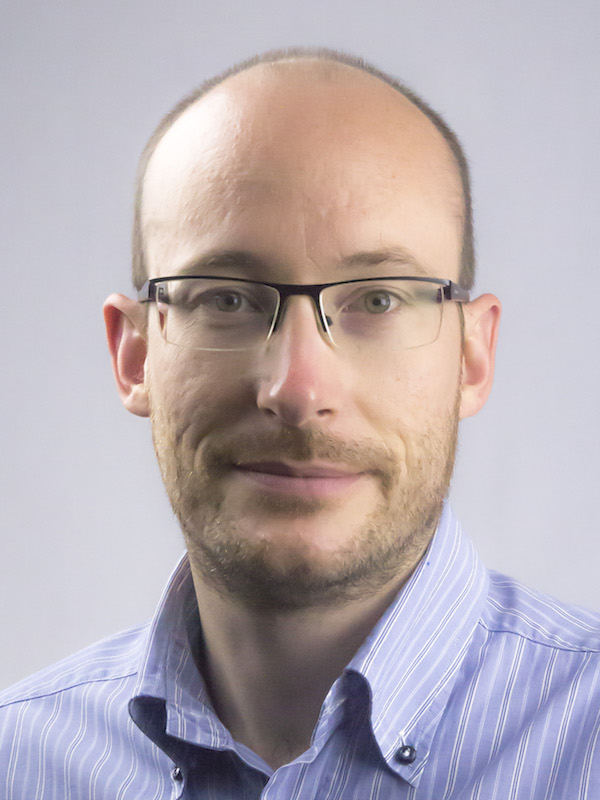
Michael J. Cafarella is an Associate Professor in the Computer Science and Engineering department at the University of Michigan . His research focuses on databases, information extraction, data integration, and data mining, with applications in economics, social media analysis, and combating human trafficking. He leads the Software Systems Lab and Michigan Database Group . Scientific Awards NSF CAREER award Sloan Research Fellowship (2016) 2018 VLDB Ten-Year Best Paper award Research Impact : Cafarella co-founded the Hadoop open-source project and Lattice Data (acquired by Apple). His work on DeepDive and DARPA MEMEX was featured on 60 Minutes and in Scientific American . Funding from The Census Bureau, DARPA, Google, NSF, Yahoo!, General Electric, and Dow.
Naren Ramakrishnan is the Thomas L. Phillips Professor of Engineering in the Department of Computer Science at Virginia Tech, where he directs the Sanghani Center for AI and Data Analytics. He also serves as AI and Machine Learning Lead for the Virginia Tech Innovation Campus. His research spans data science, machine learning, urban analytics, forecasting, and computational epidemiology. Recent publications (2024-2025) focus on language model optimization, AI applications in government and environmental conservation, and spatiotemporal data analysis. Work demonstrates strong emphasis on real-world AI deployments in regulatory compliance, supply chain verification, and network optimization. Methodological innovations include prompt engineering techniques, world models for reinforcement learning, and specialized embedding methods. Dr. Ramakrishnan has received prestigious fellowships from ACM, AAAS, and IEEE. His research has been supported by numerous agencies including DARPA, NSF, NIH, and industry partners like Amazon and Boeing, with 36 PhD students mentored to completion.
Mohsen Heidari is an Assistant Professor in the Department of Computer Science at Indiana University, Bloomington. He is affiliated with the IU Quantum Science and Engineering Center (QSEc) and the NSF Center for Science of Information (CSoI). He previously held positions as a Visiting Assistant Professor at Purdue University and as a Postdoctoral Research Associate at CSoI. Ph.D. in Electrical Engineering (2019) and M.Sc. in Applied Mathematics (2017) from the University of Michigan His research focuses span quantum computing, theoretical machine learning, and information theory. Key themes include: Quantum algorithm design and sample complexity Fourier-based learning frameworks Quantum-classical duality in learning problems Information-theoretic approaches to biological systems Article trends show a strong emphasis on quantum-classical learning intersections (6/15 papers), Fourier analysis applications (5/15), and information-theoretic foundations (12/15). Notable venues include NeurIPS, IEEE Transactions, and ISIT. He directs research involving: Quantum Neural Network development Quantum measurement simulation Quantum data compression techniques Quantum algorithm implementation constraints
Dr. Martin L. Kersten is a leading figure in database systems research at the Centrum Wiskunde & Informatica (CWI) in Amsterdam, Netherlands. With over three decades of contributions, his work focuses on column-oriented database architectures, scientific data management, and query optimization. Key Research Areas: Database systems, big data processing, query performance analysis, data-intensive scientific applications Projects: MonetDB, SciQL, TELEIOS, ExaNeSt His recent publications emphasize in-database machine learning , query log mining , and exascale computing . He pioneered database cracking and intermediate recycling techniques to enhance query processing efficiency. 2014 SIGMOD Edgar F. Codd Innovations Award for groundbreaking contributions to database technology Collaborations span institutions like ICDE , VLD , and EuroSys workshops. His work bridges theoretical advancements with practical implementations for scientific and industrial applications.
Dr. Felix Härer is a Lecturer and researcher at the University of Applied Sciences FHNW, School of Business, Basel, Switzerland, and also teaches externally at the University of Fribourg. He is affiliated with the Digital Trust Competence Center, where he conducts research and teaching in IT Security, Cybersecurity, Digital Trust, Blockchain, AI, Cloud Computing, and Systems Modeling. His research interests span a broad and interdisciplinary range, including: Digital Trust and Cybersecurity Blockchain and Decentralized Systems AI and Knowledge-based Systems (including LLMs and RAG) Software and Systems Modeling (BPMN, ArchiMate) Data Science and ETL-based Analytics Zero Trust and Secure Architectures His recent publications (2020–2023) demonstrate a strong focus on blockchain interoperability, model-driven engineering, decentralized applications, and the integration of AI with conceptual modeling. He explores scalable architectures, cross-chain query languages, and secure attestation mechanisms, often combining modeling approaches with emerging technologies. His work bridges academic rigor with practical implementation in distributed and cloud environments. Scientific awards include: Best Paper Award at IEEE PKIA 2023 He actively supervises bachelor’s and master’s theses and student projects in digital trust and related domains. He has served on PhD committees externally and is a reviewer and program committee member for journals and conferences such as IEEE Transactions, WWW, CAiSE, and EMISAJ. His professional experience includes industry work at Siemens Healthineers in software engineering. He is a member of the IEEE Blockchain Group (Switzerland) and contributes to UN/CEFACT standards for e-commerce and supply chain data. He is involved in organizing workshops and conferences, including B4ISE 2025, B4TDS 2023–2024, and DESRIST 2023, and has delivered keynotes on Computational Trust and Blockchain Interoperability.
Prof. Joaquin GARCIA ALFARO is a Professor at Telecom SudParis, affiliated with the SCN department. His research focuses on cybersecurity, network security, quantum computing applications, and resilience engineering in cyber-physical systems. He has contributed to advancements in intrusion detection systems, blockchain integration in cellular networks, and privacy-preserving frameworks for IoT and healthcare. University: Telecom SudParis Key Research Areas: Cybersecurity, Quantum Computing, IoT Security, Resilience Engineering Labs: SAMOVAR laboratory His work emphasizes practical solutions for real-world challenges, including secure data provenance, digital twin implementations, and energy-efficient edge computing. Recent research explores quantum-resistant protocols and collaborative drone systems.
Jianwen Su is a Professor in the Department of Computer Science at the University of California, Santa Barbara (UCSB), where he has been since 1990. He holds a Ph.D. in Computer Science from the University of Southern California and B.S./M.S. degrees from Fudan University in China. His research focuses on databases, formal verification, web services, business process management (BPM), and workflow systems. He has contributed to data-centric workflow modeling, artifact-based BPM frameworks, and tools like the Web Service Analysis Tool (WSAT). Adjunct professorships at Peking, Fudan, and Donghua Universities in China. Key roles: General co-chair of ICSOC 2013, PC chair of PODS 2009, and general chair of SIGMOD 2001. Recipient of the 2000 Outstanding Faculty Award (UCSB College of Engineering) and IBM Faculty Awards (2007, 2008). Research spans database query languages, incremental query evaluation, spatial databases, and formal verification techniques for software systems. Current emphasis is on data modeling for workflows and BPM systems.
Dr. Sander Leemans is a Professor at RWTH Aachen University leading the Business Process Management Foundations and Engineering research group. His work focuses on advancing process mining theory and practice with emphasis on stochastic modeling and conformance verification. Leemans' research centers on process mining, business process management, and stochastic process modeling. He investigates conformance checking techniques for probabilistic models, process discovery algorithms, and the integration of exogenous data into process analysis. His work bridges theoretical foundations with practical applications in healthcare, robotic process automation, and inter-organizational systems. Recent publications reveal a concentrated research trajectory in stochastic conformance checking, where Leemans develops methods for matching observed traces to stochastic process models using alignment techniques, entropy metrics, and partial-order reasoning. He also pioneers object-centric process mining frameworks and explores silent transitions in labeled Petri nets, significantly enhancing the precision and applicability of process mining in real-world scenarios. The Business Process Management Foundations and Engineering group under Leemans' leadership drives innovation in process mining through rigorous theoretical development and open-source tooling, maintaining RWTH Aachen's position at the forefront of business process intelligence research.
Charles Ling is a Professor of Computer Science at Western University, holding the title of Science Distinguished Research Professor. He also serves as Director of the Data Mining and Business Intelligence Lab and Associate Scientist at the Lawson Health Research Institute. His academic background includes a B.Eng. (CS and EE) from Shanghai Jiao Tong University and MSc/PhD from the University of Pennsylvania (UPenn). Research interests span machine learning, deep learning, AI, and healthcare informatics, with notable contributions to the GlucoGuide diabetes management system. He has authored over 220 peer-reviewed papers and a book titled Crafting Your Research Future , focusing on academic career development. Awarded Fellow of the Canadian Academy of Engineering (CAE) and recipient of the First Prize for Best Clinical Research Presentation (2011). Active in grants (NSERC, FedDev, Mitacs) and organizational roles in top conferences (KDD, ICDM). Supervises 5 PhD and 4 MSc students, with notable advisees including Harry Zhang and Victor Sheng. Leverages AI in education to enhance children's cognitive abilities through video-based programs like Power Thinking , approved by Curriculum Services Canada. His work integrates machine learning with healthcare, finance, and software engineering.
Guido Zuccon is a Professorial Research Fellow at the School of Electrical Engineering and Computer Science , The University of Queensland (UQ), where he leads the Information Engineering Lab (ielab) . He serves as the AI Director for the Queensland Digital Health Centre (QDHeC) and is an Affiliate Professor at the UQ Centre for Health Services Research . He was previously a Lecturer and Senior Lecturer at Queensland University of Technology and a Postdoctoral Fellow at CSIRO. His research spans Information Retrieval , Health Search , Formal Models of Search , and Health Data Science , with a strong focus on consumer health search, cohort identification, clinical decision support, and systematic review automation. He has pioneered work on search interaction, semantic models, and the evaluation of retrieval systems in health contexts. His recent publications highlight a strong trend toward leveraging large language models (LLMs) for zero-shot retrieval, federated search, dense retrieval, and query formulation. His work integrates advanced neural methods with practical applications in healthcare, including systematic review automation and clinical AI. He frequently publishes at top venues such as SIGIR, ECIR, and WSDM, often in collaboration with key researchers like Bevan Koopman, Shengyao Zhuang, and Harry Scells. ARC DECRA Fellow (2018–2020) Best Paper Awards at AIRS 2017, CLEF 2016, ALTA 2015, ECIR 2012 Best Reviewer Award at ECIR 2014 Principal Investigator on ARC Discovery Projects and MRFF grants Guido Zuccon actively supervises a large cohort of PhD students, primarily in areas related to neural information retrieval, health search, and systematic review automation. He has led significant research projects funded by the ARC, Google, Microsoft, GRDC, and CSIRO. He is a key organizer of international evaluation labs such as the CLEF eHealth Consumer Health Search task and the TREC 2019 Decision Track. He leads the ielab , a vibrant research group focused on information retrieval and data science, and contributes to major open-source initiatives like Big Brother , a tool for logging user interactions in web studies.
Shachar Lovett is a researcher at the University of California, San Diego (UCSD), specializing in computational complexity, combinatorics, and theoretical computer science. His work spans advanced topics in communication complexity, pseudorandomness, and coding theory, often intersecting with problems in additive combinatorics and Boolean function analysis. Education : Not explicitly detailed in the provided text. Research Interests : Lovett's research focuses on computational complexity, particularly in communication and circuit complexity, combinatorial structures like sunflowers and high-dimensional expanders, and the analysis of Boolean functions through Fourier and Gowers norms. His work explores the limits of deterministic vs. randomized computation, the structure of codes over finite fields, and the interplay between additive combinatorics and theoretical computer science. Article Trends : His recent publications address exact vs. approximate representations of Boolean functions, quasipolynomial bounds in combinatorics, hypercontractivity in high-dimensional expanders, and advancements in the log-rank conjecture. These works emphasize connections between computational complexity, discrete mathematics, and pseudorandomness, often yielding improved bounds or novel frameworks for understanding Boolean function behavior. Scientific Awards : No specific awards or honors were mentioned in the provided text. Advising and Collaborations : Lovett collaborates extensively with researchers like Hamed Hatami, Kaave Hosseini, and Jiapeng Zhang, contributing to fields such as non-malleable codes, matrix multiplication algorithms, and communication complexity. No formal student advising details were provided.
Xiuzhen Jenny Zhang is a Professor of Data Science at RMIT University , affiliated with the School of Computing Technologies. Her research bridges artificial intelligence, machine learning, and social media analysis, with a focus on text mining and trustworthy data science. Her recent publications highlight expertise in point-of-interest recommendation , misinformation detection , multi-task learning , and transformer-based NLP . Key trends include applications of large language models for social good, fairness in recommendation systems , and adversarial learning for robustness. Best Paper Award at TrustCom’12 Best Short Paper Award at ADCS’2009 She leads the Text And LanguagE (TALE) research group and has supervised over 20 PhD students. Research grants include Australian Research Council and Victoria state government funding.
Surajit Chaudhuri is a Researcher at Microsoft , with a career spanning decades in database systems and data management . He has received the prestigious SIGMOD Edgar F. Codd Innovations Award (2011) for his contributions to query optimization , index tuning , and data lakes . Research Interests : His work focuses on database tuning , approximate query processing , fuzzy similarity joins , automated data transformations , and machine learning integration for scalable data systems. Recent Publications : In 2025, his research includes Auto-Test for unsupervised error detection in tables, Esc for budget-aware index tuning, and MMTU for multi-task table understanding benchmarks. Earlier works in 2024–2023 address spreadsheet formula recommendation , low-overhead index filtering , and time-series pattern recognition . Scientific Impact : He has co-authored influential papers in SIGMOD , VLDB , and IEEE Transactions , shaping practices in cloud databases , query optimization , and self-service BI . His collaborations span institutions like Microsoft, MIT, and ETH Zurich.
Manos Athanassoulis is an Associate Professor in the Department of Computer Science at the College of Arts and Sciences, Boston University. He is the Founder and Director of the BU Data-intensive Systems and Computing (DiSC) lab and a member of the BU MiDAS group. His research focuses on data systems, particularly cloud data management, hybrid transactional/analytical workloads, and integration with emerging hardware such as non-volatile memory and heterogeneous computing. His educational background includes a PhD from EPFL (2014), an MSc in Computer Systems Technology, and a BSc in Informatics and Telecommunications from the University of Athens, Greece. Prior to BU, he was a Postdoctoral Researcher and Research Associate at Harvard University, supported by a SNSF Postdoc Mobility Fellowship. His research interests span data systems, database architectures, LSM trees, indexing, storage systems, and performance optimization. He explores how novel hardware can be leveraged to improve data management efficiency and scalability, especially in cloud environments. His recent publications (2021–2025) predominantly focus on LSM trees, covering topics such as compaction policies, Bloom filter tuning, DPU offloading, adversarial resilience, and sustainable caching. Earlier works include foundational contributions on access methods (RUM Conjecture) and optimal key-value stores (Monkey). The trend shows a consistent focus on data system efficiency, adaptability, and robustness under varying workloads and hardware constraints. Scientific Awards: NSF CAREER Award (2022) Facebook Faculty Research Award (2020) NSF CRII Award (2019) Best of VLDB 2017 and Best of SIGMOD 2017 SIGMOD Most Reproducible Paper Award (2017) Multiple ACM SIGMOD Distinguished PC Member recognitions (2018–2025) VLDB 2023 Best Demo Award RedHat Collaboratory Research Incubation Awards (multiple, 2021–2023) SNSF Postdoc Mobility Fellowship (2015–16) IBM PhD Fellowship (2011–12) Dr. Athanassoulis has advised numerous students and collaborators, evident from his co-authorship on works with researchers such as Niv Dayan, Stratos Idreos, and A. Ailamaki. His grants include major awards from NSF, Facebook, and RedHat, supporting research in robust data systems, hardware-software co-design, and learned cost models. He has also been recognized for teaching excellence at Harvard University. He leads the DiSC lab at Boston University, which focuses on data-intensive computing and systems research. The lab explores next-generation data architectures, particularly in cloud and hardware-aware environments. Collaborations with the BU MiDAS group enhance interdisciplinary research in data science and AI.
Dong Xie is an Assistant Professor in the field of Computer Science and Engineering , with a focus on database systems and privacy-preserving computation. His work spans indexing techniques, oblivious RAM, and high-throughput data processing. Key Research Areas: Encrypted databases, access pattern privacy, dynamic data structures, spatial analytics. Collaborations: Active in database optimization and security, with external partnerships reflected in recent publications. Over the past decade, Dong Xie has contributed to advancements in oblivious query processing , index dynamization , and spatial data management . His research addresses challenges in secure data access , concurrent updates , and storage efficiency , particularly for cloud and distributed environments. Recent publications highlight his work on low-latency transaction scheduling (2025), dynamic sampling indexes (2023), and SSD-based storage optimization (2022). His articles explore intersections of privacy , performance , and scalability .