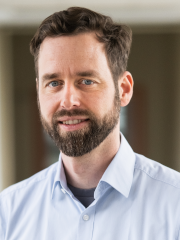
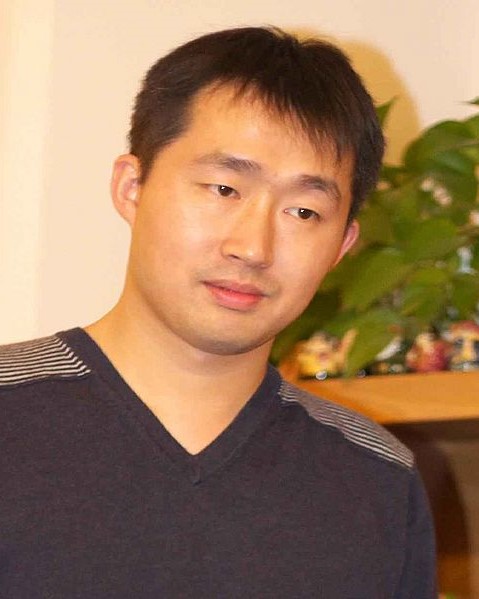
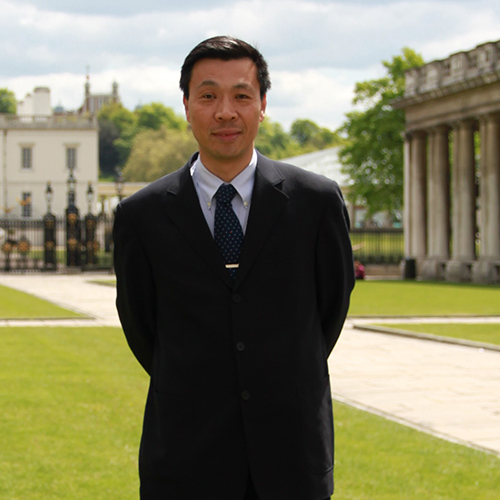
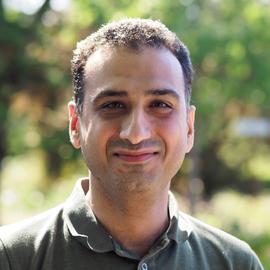
Bing Qin is a Researcher specializing in computational linguistics, artificial intelligence, and multimodal learning. Their work focuses on enhancing large language models' capabilities in temporal knowledge graph forecasting, cross-lingual alignment, and safety mechanisms. Core Research Areas: Knowledge graphs, multimodal systems, reasoning frameworks Technical Innovations: Analogical replay, gain signal estimation, cross-modal attention intervention Recent Trends: 2025 publications emphasize training-free methods and preference alignment in LLMs
Chengnian Sun is an Associate Professor at the Cheriton School of Computer Science , University of Waterloo, Canada. His research focuses on software engineering and programming languages with an emphasis on software reliability and programming productivity. Education : Ph.D. in Computer Science from National University of Singapore (2013) His work spans compiler testing (EMI, Dfusor, Kitten), program reduction (Perses, Vulcan, PPR), Android testing, and DNN testing. He has received multiple grants including Google Research Scholar Program (2025) and NSERC Discovery Grants (2024-2029). His recent publications focus on LLM-based compiler testing, weighted delta debugging, and ransomware resilience. Scientific Awards : Most Influential Paper Award at SANER (2022) NUS Research Scholarship (2008-2012) ACM SIGSOFT Distinguished Paper Award at ASE (2012) IBM Cup Campus Innovation Contest First Prize (2005) He advises Ph.D. and MMath students in software engineering, compiler testing, and program analysis, including several who have contributed to top-tier conferences like ICSE, ISSTA, and ASPLOS. His service includes program committee roles in ICSE, OOPSLA, and ISSTA.
Yang Cao is a Lecturer at the School of Informatics , University of Edinburgh , and holds a RAEng Research Fellow position. His work focuses on Databases and Data Mining Foundations of Database Systems Data Management and Optimization Research Interests: Yang Cao's research spans multiple areas in database systems, including In-database machine learning explanations Vector database optimization Transaction scheduling and isolation Graph transaction frameworks Query optimization under constraints Graph computation vectorization Article Trends: Recent work emphasizes Integrating AI/ML with database systems Graph transaction models and isolation Query optimization for big data Data quality through pattern dependencies Cache consistency in transactional systems Scientific Awards: RAEng Research Fellow SIGMOD Research Highlight Award (2018) Best Paper Award at SIGMOD (2017) PhD Students: Current and former students include Ziying Chen (2025--) Beining Yang (2024--) Tianjian Yang (2024--) Shuai An (Associate Professor, Beijing Jiaotong University) Wenyue Zhao (Amazon, London) Wenzhi Fu (Research Associate, University of Edinburgh) Multiple PhD and postdoc positions are available.
Muhammad El-Hindi is a researcher at the Technical University of Darmstadt , focusing on database systems , blockchain technology , and secure data management . His work bridges theoretical innovation with practical applications in cloud computing, trusted execution environments, and decentralized systems.
Ning Wei is an Assistant Professor of Mathematics at Purdue University, located in the Department of Mathematics within the College of Science. His research focuses on computational and applied mathematics with a strong emphasis on mathematical biology, as well as interdisciplinary work in cybersecurity and privacy-preserving technologies. He holds a faculty position with responsibilities in both teaching and research. Dr. Wei's work bridges theoretical mathematics with practical applications in security and privacy. His research interests include differential privacy mechanisms, cybersecurity behavior analysis, and the design of effective security systems. Notably, his contributions span areas such as phishing detection, password security, and privacy-enhancing technologies for data publishing. His publications demonstrate expertise in topics like adaptive network security measures, user behavior in cybersecurity contexts, and the implementation of privacy-preserving algorithms. While specific grants or awards are not listed here, his active publication record indicates significant engagement with both academic and applied research challenges in his fields of interest. Contact information includes his office location (MATH 404) and email address (wei307@purdue.edu). Further details about his research and projects can be found on his personal website.
Sanjay G. Rao is a Professor in the School of Electrical and Computer Engineering at Purdue University, with a courtesy appointment in Computer Science. He joined Purdue in 2005 and has held positions as Assistant, Associate, and full Professor since then. His research focuses on network synthesis, verification, and Internet video distribution. He has been recognized with the NSF CAREER Award and ACM SIGMETRICS Test of Time Award for his foundational work on End System Multicast. Education: B.Tech in Computer Science and Engineering, Indian Institute of Technology, Madras (1997) M.S. and Ph.D. in Computer Science, Carnegie Mellon University (2000, 2004) Research Interests: His work spans network design and verification, Internet video distribution, and cloud computing. Recent projects include causal reasoning for video streaming, 360° video optimization, and resilient routing algorithms. He leads the Internet Systems Laboratory at Purdue, which develops systems for network performance guarantees and video delivery innovations. Articles Trends: Recent work emphasizes causal inference in video streaming (e.g., Veritas) and perceptual quality for next-generation video (e.g., Dragonfly). Longstanding focus on network synthesis: PCF (2020) and Robust Validation (2017) address resilient design under uncertainty. Early contributions like End System Multicast (2002) pioneered peer-to-peer video streaming. Awards: NSF CAREER Award (2010) ACM SIGMETRICS Test of Time Award (2011) ACM Distinguished Member (2021) Purdue Seed of Success Award (2017) Advising & Grants: Supervised 15+ PhD students, many now in academia and industry (e.g., Meta, Google, AT&T). Secured $4M+ in grants from NSF, industry (Google, Cisco, Amazon), and federal programs. Notable grants include NSF support for video optimization (2022-2025) and network synthesis (2023-2027). Labs & Teams: Internet Systems Laboratory (ISL): Focuses on scalable network solutions and video streaming. Collaborations with industry (e.g., Amazon Prime Video, Meta) on real-world deployment challenges.
Dominik Moritz is an Assistant Professor at the Human-Computer Interaction Institute (HCII) of Carnegie Mellon University and Machine Learning researcher at Apple. He leads the Data Interaction Group and develops systems for interactive data visualization. Ph.D. in Computer Science from University of Washington (2019) B.S. in Computer Science from Hasso Plattner Institute (2013) His research focuses on: Human-Centered Machine Learning Data Visualization Toolkits Interactive Systems Design Accessibility in Visual Analytics Scalable Web-Based Visualization Recent publications address visualization design knowledge formalization (Draco), cross-filtering frameworks (Mosaic), and accessibility evaluation (Chartability). He has received Best Paper Honors at VIS and EuroVis conferences. Professional Collaborations: Co-founder of Vega-Lite visualization grammar Collaborations with Jeff Heer, Bill Howe, Jock MacKinlay Projects with Microsoft Research and Google Research
Doug Oard is a Professor at the University of Maryland, College Park, holding joint appointments in the College of Information Studies and the Institute for Advanced Computer Studies (UMIACS). His research focuses on enhancing information retrieval across languages, speech, and sensitive content, with notable contributions to cross-language information retrieval (CLIR), eDiscovery, and evaluation design for information systems. He leads efforts in developing test collections for evaluating retrieval systems, including work on the TREC and CLEF evaluation forums. Key research areas include multilingual information access, speech retrieval, and computational social science. Oard has pioneered methods for evaluating machine translation, automated speech recognition, and the retrieval of historical or archival content. He has contributed to projects like the Apollo Mission Control Archive and the Multilingual TEDx Corpus, advancing accessibility to spoken and written materials across languages. His work emphasizes practical applications, such as improving legal eDiscovery processes and developing tools for searching sensitive or informal text. Oard has authored over 200 peer-reviewed publications and led major international evaluation initiatives, driving advancements in information retrieval systems' reliability and cross-cultural utility.
Prof. Timo Gerkmann is a Professor at the University of Hamburg's Department of Informatics, leading the Signal Processing Research Group. His research focuses on statistical signal processing and machine learning for speech and audio applications, including communication devices, hearing aids, audiovisual media, and human-machine interfaces. He previously held roles at Technicolor Research & Innovation, KTH Royal Institute of Technology, and Siemens Corporate Research. His work emphasizes generative models, diffusion-based approaches, and acoustic signal enhancement. He currently serves as Senior Area Editor of the IEEE/ACM Transactions on Audio, Speech, and Language Processing. Research Interests: Statistical Signal Processing for Speech and Audio Machine Learning Applications in Acoustic Environments Diffusion Models for Audio Restoration Audio-Visual Speech Enhancement Human-Machine Interaction Systems Acoustic Scene Analysis Publications Highlight Trends: Recent works focus on diffusion models for speech enhancement, generative approaches to dereverberation, and audiovisual multimodal analysis. He has pioneered frameworks like ReverbFX datasets and FlowDec codecs, emphasizing perceptual quality and unsupervised domain adaptation. Advising & Grants: While no specific students or grants are listed, his research group actively publishes in top venues, indicating sustained academic contributions. His work bridges theoretical signal processing with applied systems engineering. Labs/Teams: Leads the Signal Processing (SP) Research Group at UHH, specializing in cutting-edge audio technologies and human-centric signal processing solutions.
Dr. Zia Ush Shamszaman is a Senior Lecturer in Computer Science at Teesside University's School of Computing, Engineering & Digital Technologies (SCEDT). He holds a PhD in Computer Science from the University of Galway and a Master's from Hankuk University of Foreign Studies. His research focuses on Cybersecurity, AI Ethics, IoT Resilience, and Game Theory applications, with a strong emphasis on bridging academic research with industry applications. Teaching responsibilities include postgraduate modules on AI Ethics, Cyber Risk Management, and Ethical Hacking, alongside undergraduate courses in Secure Data Acquisition and Ethical Hacking. He actively supervises five PhD students in cybersecurity and AI, advocating for inclusive technology education and societal impact. Professional memberships include IEEE (Senior Member), Elsevier Advisory Panel, and W3C. He has organized conferences like the International Conference on Suitable Technologies 4.0 and served on program committees for major events. Recognized for exceptional peer reviewing, he has received awards from leading journals like the Journal of Network and Computer Applications and Future Generation Computer Systems. Current projects funded by Innovate UK include CyberPathway (diversity in cybersecurity education), SafeSCMS (AI-driven supply chain security), and Opera-CyberThemis (trustworthy AI frameworks). Past industry roles include technical leadership in Bangladesh's government projects like the Machine Readable Passport system and World Bank-funded Bangladesh Automated Clearing House initiative. Shamszaman's work spans industry collaborations, academic leadership, and community engagement, with recent media contributions on GenAI governance and cyber resilience strategies. His research integrates theoretical advancements with practical solutions for SMEs, healthcare systems, and underserved communities.
Chengkai Li is a Professor and Associate Chair in the Department of Computer Science and Engineering at the University of Texas at Arlington (UTA), directing the Innovative Data Intelligence Research (IDIR) Lab and co-directing the Center for Artificial Intelligence and Big Data (CARIDA). He holds adjunct roles in the Multi-Interprofessional Center for Health Informatics (MICHI). His academic journey includes a Ph.D. from UIUC (2007) and faculty positions at UTA since 2007, progressing from Assistant to Full Professor (2019). Education: Ph.D. in Computer Science (UIUC, 2007), M.E. and B.S. from Nanjing University (2000, 1997). Research focuses on AI-driven data systems for social good, including computational fact-checking, knowledge graphs, and graph data usability. Key projects include ClaimBuster (end-to-end fact-checking), FactWatcher (automated fact monitoring), and Maverick (exceptional fact discovery). His work spans 30+ news features and collaborations with organizations like Knight Foundation and Google. Publications (over 100) appear in top venues (SIGMOD, KDD, VLDB), with awards like the 2017 SIGMOD Most Reproducible Paper Award. He advises over 30 students and leads grants totaling millions from NSF, Knight Foundation, and industry partners. Labs/Teams: IDIR Lab (40+ researchers), CARIDA (AI/Big Data initiatives), and partnerships with Duke Tech & Check Cooperative.
Qianru Sun is an Associate Professor at the School of Computing and Information Systems, Singapore Management University (SMU), and a Lee Kong Chian Fellow. Her research focuses on artificial intelligence, machine learning, computer vision, and semantic segmentation, with a particular emphasis on few-shot learning, meta-learning, and domain adaptation in remote-sensing imagery. Recent publications highlight her work on visual chain-of-thought reasoning , 3D scene understanding via 2D models , and parameter-efficient fine-tuning of large models. Her research also extends to weakly-supervised semantic segmentation and cross-modal video retrieval . Scientific Awards : Lee Kong Chian Fellow (2021–2023, 2025–2027) Outstanding Service Award by MMAsia (2020) Outstanding Reviewer at NeurIPS'21 and ICLR'21 Students : PhD students: Luo Zilin, Tian Zichen, Ying Jiahao Master’s students: Bao Chunhui, LOH Yi Lin, MA Li
ZHENG Baihua serves as Professor of Computer Science at Singapore Management University's School of Computing and Information Systems (SCIS), concurrently holding leadership roles as Associate Dean for SCIS Post-Graduate Research Programmes and Director of the Master of Science in Computing programme. Currently on leave but maintaining full-time faculty status, his academic career spans over two decades with foundational training from Hong Kong University of Science and Technology. Professor Zheng's research program integrates artificial intelligence, data science, and urban computing to solve critical challenges in mobility and sustainability. His expertise centers on trajectory data management, social network analysis, and spatio-temporal modeling, with significant contributions to trajectory compression algorithms, influence minimization in social networks, and real-time traffic prediction systems. His work bridges theoretical database innovations with practical applications in smart city infrastructure and public health interventions. Analysis of recent publications (2024-2025) reveals a dominant focus on physics-informed trajectory processing, GPU-accelerated indexing for high-dimensional data, and transformer-based models for urban mobility prediction. Key trends include the fusion of graph neural networks with spatio-temporal dynamics, novel approaches to contact tracing through timeline graphs, and differentiable search techniques for structured data discovery. These works consistently target real-world deployment in transportation systems and epidemic control. No scientific awards are documented in available institutional records. Information regarding student supervision, research grants, laboratory facilities, or collaborative teams remains unspecified in current public profiles.
Professor Jixin Ma is Director of the PhD/MPhil Programme and Professor of Computer Science (Artificial Intelligence) at the University of Greenwich's School of Computing and Mathematical Sciences. He leads the Artificial Intelligence Research Group and has published over 200 research papers in top-tier journals and conferences. His research spans artificial intelligence, data science, temporal reasoning, information security, machine learning, and case-based reasoning. Research interests focus on: Temporal representation and reasoning Secure computation and encrypted search Machine learning applications in security Computer vision and pattern recognition He has received multiple awards including 6 Best Paper awards and has secured research grants exceeding £330,000.
Reza Salkhordeh is a Lecturer and Postdoctoral Researcher at Johannes Gutenberg University Mainz, Germany, where he leads the Efficient Computing and Storage Group. He holds a Ph.D. in Computer Engineering from Sharif University of Technology (2018) and has been affiliated with Ferdowsi University of Mashhad and Sharif University of Technology. His research focuses on operating systems, storage systems, and non-volatile memory technologies, with a particular emphasis on high-performance computing and I/O optimization. He has taught courses such as Storage Systems and Advanced Topics in Operating Systems since 2020. His academic journey includes a B.Sc. from Ferdowsi University (2011), M.Sc. and Ph.D. from Sharif University (2013, 2018). He has held roles such as Technical Lead for the High-Performance Data Storage System (HPDS) project in Tehran, Iran, and has mentored 4 M.Sc. and 6 B.Sc. students. His work spans patented technologies like Reconfigurable Cache Architectures and Load Balancers for I/O caching systems. Research interests include heterogeneous memory management, storage system design, and optimizing I/O performance in distributed environments. His recent publications address challenges in NVMM utilization, garbage collection in SSDs, and I/O tracing for HPC systems. He is actively involved in conference committees (e.g., FAST, ARCS, SC) and has reviewed for top journals like IEEE TPDS and ACM Transactions on Storage. Notable recognitions include membership in Iran’s National Elites Foundation (2012–2015) and top rankings in national exams (3rd in PhD, 35th in MSc). His contributions to storage systems have advanced enterprise-grade architectures and decentralized file systems, with a focus on practical implementations for modern computing challenges.