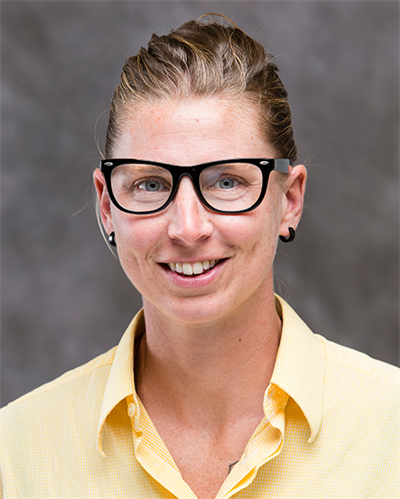
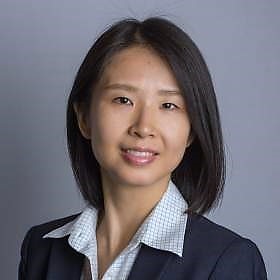
Megan Monroe is an Associate Teaching Professor in the Department of Computer Science at Tufts University . Her academic journey includes a Ph.D. and M.S. from the University of Maryland and a B.S. from Carnegie Mellon University . Research Interests : Monroe specializes in Visual Analytics , focusing on Temporal Data Analysis and Computational Thinking . She developed the EventFlow visualization tool used in healthcare and defense sectors. Her work bridges Artificial Intelligence , Computation Theory , and Human-Computer Interaction . Publications highlight her contributions to Interactive Visualization , Temporal Querying , and Multi-user Environments , with applications in healthcare data and machine learning debugging. Scientific Awards : Information is Beautiful Awards (2016) HCIL-Yahoo! Research Award (2013) VAST 2013 Honorable Mention Audience Choice Award at Pitch Dingman Competition (2011) Monroe’s teaching includes Computation Theory , Machine Structures & Programming , and Teaching Computer Science courses. She previously worked at IBM Research , designing tools for Watson technologies.
Adrienne Williams Boyarin is a Professor of English at the University of Victoria, specializing in medieval English literature and culture. She joined UVic in 2006 after earning dual BA and PhD degrees in English and Medieval Studies from UC Berkeley (2006). Her work focuses on early Middle English, religious writings, Christian-Jewish polemics, and representations of women in medieval texts, particularly Marian legends and hagiographies. She teaches courses ranging from introductory literary traditions to advanced seminars on gender, sanctity, and anti-Jewish discourse in medieval England. Her research highlights intersections between law, religion, and Jewish-Christian relations, as seen in her books *Miracles of the Virgin in Medieval England: Law and Jewishness in Marian Legends* (2010) and *The Siege of Jerusalem* (2013). Boyarin’s scholarship engages with medieval manuscripts, legal documents, and polemical literature, emphasizing how these texts reflect broader cultural and theological debates. In addition to her monographs, she has published widely in journals like *Notes & Queries* and *Religion and Literature*, analyzing themes such as medieval anti-Semitism, female agency in religious narratives, and intertextual connections between biblical and classical texts. Her pedagogical contributions include innovative courses on medieval manuscripts and collaborative projects with UVic’s special collections. Boyarin’s work bridges literary analysis with historical and legal contexts, offering critical insights into medieval England’s religious and cultural landscape. Her current research continues to explore the complex roles of Jewish communities and legal frameworks in shaping medieval English literature.
Anh Nguyen is an Associate Professor in the Department of Computer Science and Software Engineering at Auburn University, affiliated with the Samuel Ginn College of Engineering. His work focuses on deep learning, computer vision, and explainable AI. He holds a Ph.D. from the University of Wyoming and a B.S. from Assumption University. Research highlights include developing methods to improve AI robustness, analyzing biases in large language models, and creating tools for visual correspondence in image processing. He leads the Center for Artificial Intelligence and Cybersecurity Engineering and directs Auburn's first K-6 AI education program through his AI Club after-school initiative. Recipient of a $460,736 NSF CAREER Award for AI innovation Developed the AI@AU lecture series and multiple benchmark datasets (e.g., ImageNet-Hard) Collaborates with industry partners on real-world AI applications Recent projects explore multimodal model limitations (Zerobench), medical imaging (LiteGPT for chest X-rays), and interactive AI systems that incorporate human feedback. His work bridges theoretical advancements with practical implementations in healthcare, wildlife monitoring, and education.
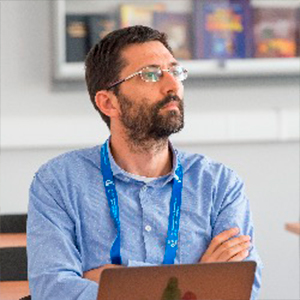
Werner Nutt is a Professor at the Free University of Bozen-Bolzano , Italy, affiliated with the Faculty of Computer Science since 2005. He previously held academic positions as a Reader at Heriot-Watt University (2000-2005), Visiting Professor at Hebrew University of Jerusalem, and Research Scientist at DFKI (1992-2000). Current Role: Professor, Free University of Bozen-Bolzano Past Roles: Reader (Heriot-Watt), Visiting Professor (Hebrew University), Research Scientist (DFKI) Research Interests focus on Data Management , Knowledge Representation , and Intelligent Information Extraction , with emphasis on modeling Construction Processes and ensuring Data Quality . His work bridges Semantic Web technologies with Business Process Management , notably through the COCkPiT project (2017-present) for construction process optimization. Key Contributions include foundational work on Query Completeness in databases, SPARQL Reasoning , and Semantic Diagnostics . He has published extensively in venues like ISWC , BPM , and CIKM , with an h-index of 35 on Google Scholar. His 154+ publications span topics from Probabilistic XML to Construction Process Modeling .
Dr. Liting Zhou is an Assistant Professor at Dublin City University's School of Computing, specializing in multimedia retrieval and information systems. She completed her PhD in Computer Science at DCU under Dr. Cathal Gurrin's supervision, focusing on multimedia analysis. Her research develops algorithms for video understanding, multimodal learning, and lifelog retrieval applied to education, healthcare, and personal informatics domains. Key research areas include: Cross-modal video-text matching and retrieval Lifelog question answering systems Multimodal fusion techniques User-friendly retrieval interfaces She serves as reviewer for top conferences/journals and has chaired sessions at MMM (2023-2024) and ECIR (2023).
Muhidin Mohamed is a Lecturer (teaching-focused) in Business Analytics at Aston University's Aston Business School, with a dual role as Program Director in Operations and Service Management. He holds a PhD in Text Analytics and Natural Language Processing from the University of Birmingham and has extensive experience in teaching and research across institutions in the UK, Malaysia, Saudi Arabia, Sudan, and Somalia. Education qualifications include a PhD (2016), MSc in Electronics and Telecoms Engineering (2011), and BSc in Computer Science (2008). He is a Fellow of the Higher Education Academy (2021) and a Certified Practitioner in Digital Teaching and Learning (2022). Research focuses on Social Media Analytics, enabling NLP/ML for low-resource languages (e.g., Somali), AI adoption in SMEs, fraud detection, and learning analytics. His work emphasizes practical applications, including frameworks like SDbQfSum for query-focused text summarization and AfriMTE/AfriCOMET for African language support. Publications span fraud detection methods, NLP for under-resourced languages, and SME digitalization trends. He actively collaborates on global projects, such as MasakhaNEWS for African language news classification and AfriMTE for machine translation evaluation. Teaching responsibilities include courses on Machine Learning, Big Data, and programming for data analytics across undergraduate and postgraduate programs. He advises students and accepts PhD applications in related fields.
Tim Crawford is a Professorial Research Fellow in Computational Musicology at Goldsmiths, University of London's Department of Computing. He transitioned from a 15-year professional music career to academia in the 1990s, working at King’s College, University of London. His research focuses on computational approaches to music history (16th–18th centuries), digital musicology, and lute music. Notable projects include the Electronic Corpus of Lute Music (AHRC-funded) and the Transforming Musicology project involving 15 researchers and 3 PhD students across multiple universities. He also leads the Learn To Play initiative, applying machine learning to music education. Education: While specific degrees aren't listed, his career shift from professional musician to academic implies advanced training in both music performance and computational musicology. Research Interests: Computational musicology, early music history, lute studies, music information retrieval, and digital humanities. His work bridges historical musicology with modern computational tools, emphasizing corpus development and semantic alignment in music libraries. Recent Articles: Focus on digital corpora (e.g., John Dowland's lute music), pragmatic digital musicology frameworks, and tools like F-TEMPO for musicological analysis. Projects emphasize scalable solutions for early music digitization and social data infrastructure for music annotation. Grants & Collaborations: AHRC-funded projects including Transforming Musicology and Learn To Play. Collaborates internationally on initiatives like OMRAS and DLfM conferences. Supervises PhD students in computational musicology and digital libraries. Labs/Teams: Leads teams in projects like Electronic Corpus of Lute Music and F-TEMPO tool development. Engages with interdisciplinary groups in music technology, digital humanities, and semantic web technologies.
Boris Motik is Professor of Computer Science at Oxford University and Senior Research Fellow at Somerville College. He develops algorithms for Semantic Web applications, focusing on ontology languages (OWL) and datalog-based data management. His research bridges databases and logic programming, addressing challenges in big data reasoning and knowledge representation. Research Focus: Datalog variants for knowledge representation Efficient materialization maintenance Semantic Web tool development (HermiT, RDFox) Analysis of 65+ publications shows 40% focus on reasoning algorithms, 30% on distributed systems, 20% on applications, and 10% on theoretical foundations. Recent work emphasizes scalable graph querying. Awards & Industry Projects: Roger Needham Award (2013) Cor Baayen Award (2007) Industry collaborations with Oracle, Samsung, EDF Founded Oxford Semantic Technologies startup
Jingjing Meng is a Senior Scientist affiliated with the Computer Science and Engineering Department at the University at Buffalo, SUNY, and Amazon. She holds a Ph.D. from Nanyang Technological University (NTU, Singapore), advised by Prof. Yap-Peng Tan, along with an M.S. from Vanderbilt University and a B.E. from Huazhong University of Science & Technology, China. Her research focuses on multimedia, large multimodal models, product recommendation/search, and computer vision applications. Notable contributions include work on surgical triplet recognition, 3D object representation, and video summarization. She has received the 2016 IEEE Transactions on Multimedia Best Paper Award. Service Roles: Technical Program Co-Chair (ICME 2024), Tutorial Co-Chair (ACM MM 2024), Area Chair (AAAI 2021-2025), and Associate Editor for IEEE TMM, Signal Processing: Image Communication, and others. Leadership: Member of IEEE IVMSP TC, VSPC TC, and MSA TC committees, and a Senior Member of IEEE. Teaching includes courses like Multimedia Systems (CSE 534), Computer Graphics (CSE 410/580), and Discrete Structures (CSE 191). Her work bridges theoretical advancements and practical applications in multimedia and AI.
Alan Dearle is a Professor in the School of Computer Science at the University of St Andrews. His academic background includes a B.Sc. and Ph.D. from the University of St Andrews. He holds roles in the British Computer Society and the Association for Computing Machinery. His research focuses on distributed systems, operating systems, programming languages, similarity search, and data linkage. Current work includes the Digitising Scotland project, which reconstructs Scottish genealogical pedigrees using digitized vital records, and the development of the Stardust unikernel for Java applications. He collaborates with Richard Connor on similarity search algorithms and leads projects funded by the Economic & Social Research Council and EPSRC. Alan advises PhD students like Ben Claydon and Tom Dalton. Notable projects include the ADR UK Programme and SFC SMART Tourism. He participates in initiatives like Doors Open @ Computer Science and contributes to open-source tools like the Metric Space Framework. His work addresses challenges in metric search, synthetic population generation, and efficient operating system design, with applications in heritage digitization and scalable data management.
Paolo Ceravolo is an Associate Professor of Computer Science at State University of Milan, affiliated with the SEcure Service-oriented Architectures Research Lab. His research spans process mining, fairness in AI, knowledge representation, and inclusive technologies. At Human Hall, he directs the Inclusive Artificial Intelligence project and HH4AI initiative focused on human rights impact assessment under the EU AI Act. Publications address fairness assurance in data augmentation, gender bias detection in translation systems, and process mining frameworks for fraud reduction. Technical contributions include the CoSMo simulation framework for business processes and ReJOOSp for SPARQL optimization. His work combines theoretical research with practical applications in criminal investigations, healthcare systems, and regulatory compliance. Ceravolo co-founded Inpolitix (political platform development) and contributed to the Smart Bear project for elderly care monitoring.
Dr. Daniel Ferrés is a Researcher at the Large Scale Text Understanding Systems Lab (LaSTuS) and member of the TALN research group at Universitat Pompeu Fabra's Department of Information and Communication Technologies (DTIC). He is involved in the ConMuTeS Project, focusing on advancing text simplification and accessibility technologies. His work bridges Natural Language Processing (NLP), Information Retrieval (IR), and Machine Learning, with applications in scientific text mining and geographical information systems. Ferrés holds a PhD and M.A.S. in Artificial Intelligence from Universitat Politècnica de Catalunya (UPC) and a BSc in Computer Science & Engineering from Universitat de Girona. His research interests include text simplification, information retrieval, and georeferencing, with a focus on multilingual systems and accessibility solutions. He has contributed to projects like PDFdigest (a PDF-to-XML converter) and systems for accessible email clients. His publications emphasize lexical simplification datasets (e.g., ALEXSIS for Spanish), cross-lingual NLP architectures, and geospatial text analysis techniques. Ferrés has also participated in initiatives like MediaEval Placing Task and GeoCLEF challenges, showcasing expertise in integrating geographical knowledge with NLP systems. His work trends reflect a strong emphasis on improving accessibility through NLP, with recent efforts on multilingual lexical simplification benchmarks and shared tasks. Earlier contributions include tools for scientific text mining, morphological generation in Spanish, and adaptive lexical simplification systems for Ibero-Romance languages. Ferrés collaborates closely with academic and industry partners, advancing both theoretical and applied aspects of computational linguistics.
Pavlos Fafalios is an Assistant Professor of Information Systems at the School of Production Engineering and Management, Technical University of Crete, and an Affiliated Researcher at the Centre for Cultural Informatics (CCI) and Information Systems Laboratory (ISL), Institute of Computer Science, Foundation for Research and Technology - Hellas (FORTH). He holds a PhD and MSc in Information Systems from the University of Crete and an Engineer's Diploma from the University of the Aegean. His academic journey includes postdoctoral research at L3S Research Center, Leibniz University of Hanover, and FORTH-ICS, as well as teaching roles at Hellenic Mediterranean University and the University of Crete. His research interests span Information Systems , Data and Knowledge Management , and Linked Data , with a strong interdisciplinary focus on applications in Cultural Heritage and the Humanities . He develops semantic technologies, knowledge graphs, and information management systems for complex, real-world domains. The recent publications highlight a strong trend in applying semantic technologies to cultural and historical data, including earthquake data modeling, feminism history documentation, and museum data integration. His work consistently focuses on knowledge representation, ontology development, and data interoperability, particularly using CIDOC CRM and Linked Data principles. Individual postdoctoral research fellowship 'Marie Skłodowska-Curie' (H2020-MSCA-IF-2019) Finalist for the '2019 ERCIM Cor Baayen Young Researcher Award' Fellowship from legacy 'Maria Michael Manasaki' (2014-2015) 1st prize in Hack4Med 2014 1st prize in Blue Hackathon 2013 PhD and MSc scholarships by FORTH Pavlos Fafalios has been involved in significant research projects such as PortADa (MSCA Staff Exchange), RICONTRANS (ERC Consolidator Grant), FE.P.I.B., ReKnow (Marie Curie project), SeaLiT (ERC Starting Grant), and ALEXANDRIA (ERC Advanced Grant), where he served as principal investigator, scientific responsible, or lead researcher. He has supervised student projects that led to award-winning software tools. He is active in scientific committees and regularly publishes in international venues. He leads and contributes to research in the Centre for Cultural Informatics (CCI) and Information Systems Laboratory (ISL) at FORTH-ICS, collaborating on interdisciplinary projects that bridge computer science with humanities and cultural heritage. His lab work emphasizes practical tools for semantic data integration, exploration, and analysis.
Heather Christine Lent is a Researcher in the Department of Computer Science at Aalborg University, affiliated with The Technical Faculty of IT and Design. Her work focuses on advancing natural language processing (NLP) for low-resource and marginalized languages, particularly Creoles, and addressing security challenges in multilingual systems. She leads the "Multilingual Modelling for Resource-Poor Languages" project (2022–2025), funded by Carlsbergfondet and Google. Her research integrates computational linguistics with ethical considerations, emphasizing equitable technology access. Notable contributions include the CreoleVal benchmark for multilingual evaluation and studies on NLP security in multilingual contexts. She collaborates internationally, including with institutions like George Mason University, and engages in community-driven dataset creation. Publications highlight themes like adversarial attacks on multilingual models, data quality audits, and cross-lingual transfer learning. She actively participates in workshops and tutorials aimed at fostering inclusive NLP practices, such as the "Connecting Ideas in Lower-Resource Scenarios" initiative.
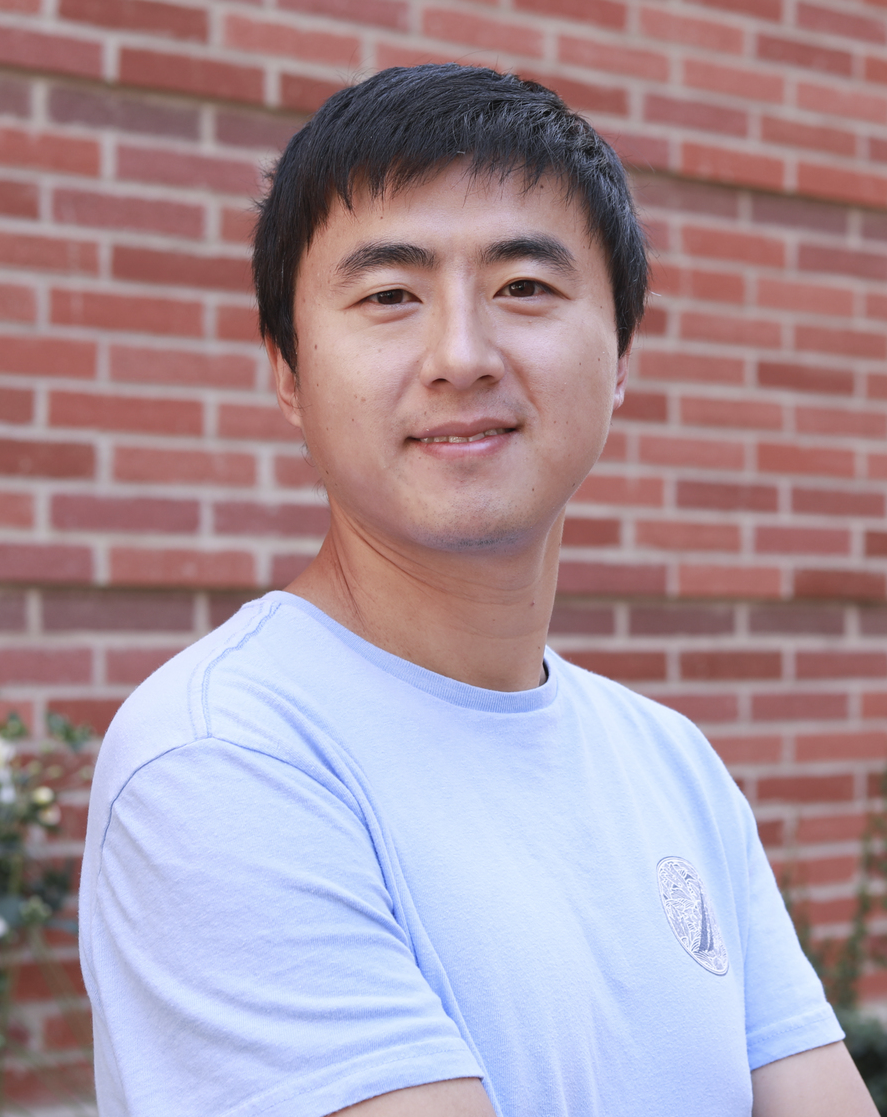
Harry Xu is a Professor in the Computer Science Department at the Samueli School of Engineering , University of California, Los Angeles . His research spans computer systems, programming languages, compilers, and AI infrastructure. He co-founded BreezeML for GenAI risk management and has held visiting roles at Microsoft Research and IBM Watson Research Center. Current research focuses on user-defined clouds and AI application infrastructures Founded BreezeML and contributed to Niijima (SOSP'19) and Yak GC (OSDI'16) Developed VQPy, integrated into Cisco's DeepVision Scientific Awards 2018 Dahl-Nygaard Junior Prize ACM Distinguished Scientist Advising and Collaborations Current students: Shan Yu, Zhenting Zhu, Shu Anzai, Yicheng Liu Alumni: Shi Liu (Databricks), Jiyuan Wang (AWS), Haoran Ma (ByteDance AI Infra), Yifan Qiao (UC Berkeley), Christian Navasca (BreezeML), Pengzhan Zhao (BreezeML co-founder)