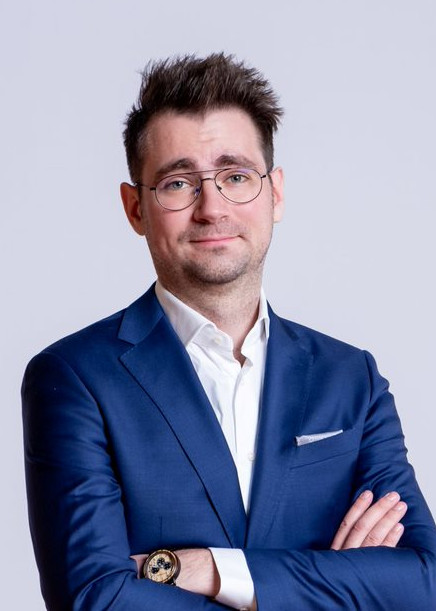
X. (Zhou) Zhou is a Postdoc affiliated with the Faculty of Economics and Business at the University of Groningen, specifically within the HRM & OB — Management department. His research focuses on interdisciplinary areas including Agent-based modeling and simulation, Game theory, and Decision science. His expertise spans Computer Science (Theory & Methods, Interdisciplinary Applications) and Micro-economics (Industrial Organization). Dr. Zhou’s work addresses complex systems through methodologies like distributed control, adaptive algorithms, and fault-tolerant mechanisms. His recent publications emphasize spacecraft attitude stabilization, multi-agent coordination, and nonlinear control systems. Despite his postdoctoral role, he has contributed significantly to both theoretical frameworks and applied solutions in robotics and aerospace engineering. While no formal grants or awards are listed, his prolific output reflects sustained engagement with cutting-edge challenges in systems control and computational economics. His research often bridges theoretical models with practical implementations, such as in multi-robot systems and space mission design.
Murilo Marinho is a Lecturer in Robotics Engineering Systems at the EEE department, with past roles including Assistant Professor (University of Tokyo, 2019–2023) and Research Associate (University of Tokyo, 2018–2019). His research focuses on surgical robotics, space robotics, and nuclear robotics, with over 50 peer-reviewed publications in top journals like T-RO, RAM, RA-L, T-MRB, and IJMRCAS. He leads the development of the SmartArm surgical robotic system, recipient of the Surgical Robot Challenge 2019: Overall Winner Award , and won the IROS'23 Best Application Paper Award for shared autonomy in vitreoretinal surgery. Teaching responsibilities include EEEN62021 Software for Robotics and EEEN62012&42012 Robotic Manipulators . His work aligns with UN Sustainable Development Goals in healthcare and innovation. Notable contributions include autonomous control algorithms using dual quaternions and vector-field inequalities, validated through surgical simulators and physical prototypes. Research Highlights : Autonomous robotic systems for minimally invasive surgery Multi-arm robotic platforms for space exploration Surgical training simulators with haptic/visual realism Open-source robotic hardware/software (e.g., UMIRobot) Awards : IROS'23 Best Application Paper Award (2023) Surgical Robot Challenge 2019 Overall Winner (2019) University of Tokyo Dean's Commendation for Teaching Excellence (2021) Collaborations include the Centre for Robotic Autonomy in Demanding and Long Lasting Environments (CRADLE) , focusing on advanced robotic autonomy in harsh environments. Active in developing surgical simulators, teleoperation frameworks, and digital twin technologies for robotic validation.
Scott Kaschner is an Assistant Professor in the Department of Mathematics and Actuarial Science at Butler University, College of Liberal Arts and Sciences. His work bridges pure mathematics, applied mathematical biology, and mathematics education. He is actively engaged in research and undergraduate teaching, with a diverse portfolio of scholarly output. Education: Ph.D. in Mathematics, Department of Mathematical Sciences, IUPUI, 2013 M.S. in Theoretical Mathematics, University of Akron, 2008 B.S. in Theoretical Mathematics, University of Akron, 2003 His research interests span Complex Dynamics , particularly Julia sets, rational maps, and bicomplex analysis; Mathematical Virology , including modeling of coronavirus and respiratory syncytial virus (RSV) replication; and Mathematics Education , with focus on student success in introductory courses, assessment design, and interdisciplinary co-teaching. His work reflects a strong interdisciplinary approach, combining deep mathematical theory with real-world applications in biology and pedagogy. The 15 most recent publications reveal a consistent trajectory across three domains: foundational work in complex dynamics and operator theory, applied modeling in virology, and scholarship of teaching and learning in mathematics. The keywords and sub-fields reflect a sophisticated blend of pure and applied mathematics, with increasing engagement in biological modeling and educational research. Scientific Awards: No awards explicitly mentioned in the text. Scott Kaschner has advised or collaborated with numerous students and researchers, particularly evident in his co-authored papers in virology and mathematics education. His involvement in the NSF GK-12 program as a fellow indicates a long-standing commitment to STEM outreach and pedagogical development. He has secured research support through collaborative grants, especially in virology and education. He co-authored an open textbook on linear transformations, contributing to accessible educational resources. He is involved in interdisciplinary research teams, particularly in virology (with Christopher Stobart and others) and mathematics education (with Aubrey Neihaus and others). His work on virus modeling suggests collaboration with biologists, and his educational research involves partnerships across disciplines. These teams reflect a commitment to collaborative, cross-cutting scholarship.
Oscar Macia Juan is an Associate Professor in the Department of Mathematics at the University of Valencia, affiliated with the Faculty of Mathematics. He is a member of the Geometric Analysis Group U.V. (GAGUV), focusing on advanced topics in differential geometry and mathematical physics. His research interests span Differential Geometry , Geometry and Topology , Several Complex Variables and Analytic Spaces , and their applications in Special Geometry , Supersymmetry , and Harmonic Mappings . His work bridges pure mathematics and theoretical physics, particularly in the context of supersymmetric field theories and supergravity. The recent publications highlight a consistent focus on geometric structures arising from theoretical physics, such as the c-map, quaternionic Kähler geometry, and harmonic mappings into quadrics. The research trend shows a deep engagement with moduli spaces, isometric embeddings, and the interplay between hyper-Kähler and quaternionic Kähler geometries, often in relation to supersymmetry. No scientific awards were mentioned in the provided texts. He earned his PhD from the University of Valencia in 2007 with a thesis on deformations and contractions in supersymmetric field theories and supergravity, supervised by Dr. María Antonia Lledó Barrena. There is no information available on students he may have advised or research grants he has led. Oscar Macia Juan is actively involved in research collaborations, with co-authors including Andrew Swann, Yasuyuki Nagatomo, and Sergio Ferrara, contributing to high-impact journals in geometry and mathematical physics.
Orhan Akyılmaz serves as a Professor in the Department of Geomatics Engineering at Istanbul Technical University, Turkey, with continuous research activity since 2004. His work bridges geodetic science with environmental monitoring through satellite gravity missions and advanced computational methods. His research focuses on satellite gravity field modeling (GRACE/GRACE-FO missions), machine learning applications for hydrological monitoring, and geodetic algorithm development . Key contributions include deep learning-aided temporal downscaling of water storage data, high-resolution gravity field products, and optimized topographic correction algorithms using digital elevation models. His fingerprint reveals strong expertise in Fuzzy Inference Systems (100%), Earth Rotation Parameters (72%), and Quaternion-based transformations (66%). Recent publications (2022-2024) demonstrate a pronounced trend toward integrating deep learning with satellite geodesy to address water resource challenges, particularly in groundwater monitoring and gap-filling between satellite missions. His work consistently targets practical environmental applications while advancing computational geodesy. Scientific recognition includes: TUJK Bilim Ödülü (Science Award) from the Turkish National Union of Chambers of Survey Engineers (2011) He secured TÜBİTAK funding (2020-2023) for the project "Grace ve Çoklu-Görev Uydu Uzaktan Algılama Verileri ile Yüksek Çözünürlüklü Yeraltı Su Bütçesi İzleme Sistemi" (High-Resolution Underground Water Budget Monitoring System). His supervised work encompasses 8 students, though specific names aren't provided in source materials.
Tokunbo Ogunfunmi is a Professor of Electrical and Computer Engineering and Director of the Information Processing and Machine Learning (IPML) Research Lab at Santa Clara University's School of Engineering. He served as Associate Dean for Research and Faculty Development from 2010-2014 and as Associate Dean for Mission, Culture and Inclusion from 2021-2024. Dr. Ogunfunmi holds a Ph.D. and M.S. from Stanford University (1990, 1984) and a B.S. from the University of Ife, Nigeria (1980). His research interests span deep learning, artificial neural networks, adaptive/nonlinear signal processing, digital signal processing, and multimedia signal processing with VLSI/DSP/FPGA implementations. Dr. Ogunfunmi has published 4 books and over 200 refereed journal and conference papers in these areas. His recent publications demonstrate strong focus on deep learning applications, hardware acceleration for neural networks, quaternion-based adaptive algorithms, and efficient video/speech processing techniques. Dr. Ogunfunmi has received numerous awards including the SCU Presidential Special Recognition Award (2020), IEEE Meritorious Service Awards (2021, 2013), Carnegie Foundation Visiting Professorships (2019, 2015), and multiple Best Paper Awards. He has served in significant editorial roles including Senior Associate Editor for IEEE Signal Processing Letters and Associate Editor for several IEEE Transactions. As an active member of the professional community, he is a Senior Member of IEEE, Member of Sigma Xi, and Member of AAAS. His industrial experience includes consulting for major companies such as Broadcom, AMD, NEC, AT&T Bell Labs, and NIKON Precision Research & Development. Dr. Ogunfunmi is also a registered professional engineer in California.
Ken Wharton is a Professor in the Department of Physics & Astronomy at San José State University . He holds a PhD in Physics from UCLA (1998) and a BS in Physics from Stanford (1992). His research focuses on foundational questions in quantum mechanics, particularly time-symmetric and retrocausal models that challenge conventional interpretations.
Professor İlkay Güven is a faculty member in the Department of Mathematics at Gaziantep University's Faculty of Arts and Sciences, where she has served since 2011. She was promoted to Professor in 2022 after serving as Associate Professor (2018-2022) and Assistant Professor (2011-2018). Her academic career focuses on differential geometry, curve and surface theory, and special number sequences. Her educational background includes: Doctorate in Mathematics from Ankara University (2006-2011) Master's in Mathematics with thesis from Ankara University (2004-2006) Bachelor's in Mathematics from Ankara University (2000-2004) Professor Güven's research primarily centers on differential geometry with special emphasis on curve theory, surface classification, and special number sequences. Her work explores directional curves, spherical indicatrices, ruled surfaces, and their applications in various mathematical frameworks including Lie groups and alternative frame systems. She has made significant contributions to the understanding of W-direction curves, Bertrand curves, and the geometric properties of special number sequences like Fibonacci and Leonardo numbers. Her publication record shows a consistent focus on geometric structures with increasing specialization in directional curve theory and special number sequences. Recent work demonstrates sophisticated integration of algebraic structures with geometric analysis, particularly in the application of quaternions and dual numbers to curve theory. Her scientific achievements include: Public Domestic PhD Scholarship from TÜBİTAK (2006) Public Domestic Master's Scholarship from TÜBİTAK (2005) Professor Güven has actively mentored graduate students, supervising one doctoral thesis and nine master's theses to completion. Her advisees have explored diverse topics including hyper-dual spheres, polynomial space curves, and directional vectorial moment curves. While specific grant information isn't detailed in the provided text, her scholarship history suggests early career research support from Turkey's primary scientific funding agency.
Yasushi Homma is a Professor in the Department of Mathematics at Waseda University's School of Fundamental Science and Engineering. He has held this position since 2012, following his promotion from Associate Professor (2007-2012). His academic career includes research positions at Tokyo University of Science and the Japan Society for the Promotion of Science. Homma earned his Doctor of Science degree from Waseda University, where he completed his doctoral, master's, and undergraduate studies in Mathematical Science. Homma's research focuses on advanced geometric structures, particularly spin geometry and differential geometry. His work explores spinor fields, Dirac operators, Clifford analysis, and Rarita-Schwinger fields on various manifolds. He investigates Weitzenböck formulas, spectral properties of geometric operators, and their applications to mathematical physics. His research bridges pure mathematics with theoretical physics, examining how geometric structures relate to physical phenomena. Analysis of his publication record reveals a consistent focus on spin geometry and related fields over two decades. His most recent work examines spinor and tensor fields with higher spin on spaces of constant curvature, spectra of the Rarita-Schwinger operator on symmetric spaces, and harmonic analysis on Grassmannians. The research demonstrates deep connections between representation theory, differential geometry, and mathematical physics, with applications to understanding fundamental geometric structures. Waseda University Teaching Awards 2017 Fall Semester Homma has secured multiple research grants from the Japan Society for the Promotion of Science, including projects on Spin Geometry and Clifford Analysis (2024-2029), New developments in spin geometry (2019-2023), and Study on identities for generalized gradients (2015-2018). His international collaborations include work with researchers from University of Stuttgart, University of Antwerp, and others. He teaches various mathematics courses including Linear Algebra, Geometry B1 (surface theory), Geometry B2 (theory of manifolds), and Advanced Geometry. As a member of the Mathematical Society of Japan Education Committee and various review committees for the Japan Society for the Promotion of Science, Homma contributes significantly to the mathematical community. His research laboratory at Waseda University focuses on advancing spin geometry with Rarita-Schwinger operators, exploring connections between geometric structures and physical theories.
Mathias Hudoba de Badyn is an Associate Professor in the Department of Technology Systems (ITS) at the University of Oslo. He previously served as a postdoc at the Automatic Control Lab at ETH Zürich (2019-2023) working with John Lygeros and Roy Smith. His academic journey includes a PhD in Aeronautics and Astronautics from the University of Washington under Mehran Mesbahi, where he focused on distributed control theory. His research interests center on control and estimation of networked dynamical systems with emphasis on sustainability applications. Using algebraic graph theory, he investigates how network structure affects distributed control, estimation, and optimization algorithms. His primary application domains include smart buildings and energy hubs interconnected with the electric grid for demand-side management and peak shaving, as well as aerospace applications involving multi-vehicle systems from UAV swarms to distributed satellite systems. His recent publication trends show strong focus on distributed control algorithms applied to energy systems and aerospace applications, with increasing integration of machine learning techniques while maintaining theoretical rigor. His work spans from fundamental network theory to practical implementations in building control and spacecraft systems. Work package leader in CENSSS (Centre for Space Sensors and Systems) Involved with FME Solar Centre for Environmentally Friendly Research Active supervisor for numerous PhD and Master's students His research group has secured projects related to smart buildings, energy systems, and aerospace control, with recent work focusing on virtual power plants, spacecraft GNC, and AI validation in maritime automation. He maintains strong collaborations with institutions including ETH Zürich, University of Washington, and various industry partners.
Daniel Romero Pérez is a Lecturer at the Department of Systems Engineering, Automation and Industrial Informatics within the Barcelona East School of Engineering (EEBE) at Universitat Politècnica de Catalunya (UPC). He maintains a research affiliation with the Institute for Bioengineering of Catalonia (IBEC) and leads projects in the BIOSPIN group focused on Biomedical Signal Processing and Interpretation. His research centers on biomedical signal processing with applications in respiratory/cardiac monitoring and disease diagnostics. Key interests include: Developing machine learning models for obstructive sleep apnea detection using ECG and respiratory signals Analyzing heart rate variability in cardiovascular disorders like Brugada syndrome Creating non-invasive respiratory monitoring systems for COPD patients Investigating hypoxia effects on cardiac electrophysiology Publication analysis (29 conference papers, 18 journal articles) reveals consistent focus on: Algorithm development for physiological signal interpretation Clinical validation of wearable sensors Multivariate modeling of cardiorespiratory pathologies Translational research bridging engineering and clinical medicine He collaborates extensively with European institutions on competitive R&D projects including 'Smart Health Ecosystem for Breathing Illnesses' and 'Unintrusive Remote Health Assessment'. Research outputs demonstrate strong emphasis on practical healthcare solutions with 16 open-access publications.
Ágnes Vathy-Fogarassy is Habilitated Associate Professor and Head of the Department of Computer Science and Systems Technology at the University of Pannonia's Faculty of Engineering and Informatics. She also serves as the Rector's Commissioner for Artificial Intelligence Education and Development and the Dean's Representative for Quality Assurance and Accreditation. Additionally, she leads the Data-intensive Artificial Intelligence Methods and Systems Research Laboratory and the Healthcare Analytics Research and Development Center. Her educational background includes: PhD in Information Science (2009) Studies at Eötvös Loránd University in Computer Science (1999-2007) Studies at University of Pannonia in Computer Science (1995-1998) Mathematics-Physics and Computer Science Teacher training at Berzsenyi Dániel Teacher Training College (1995) Ágnes Vathy-Fogarassy's research focuses on machine learning, artificial intelligence, data science, and their applications in healthcare . Her work spans predictive analytics, network analysis, and medical informatics, with a particular emphasis on developing AI methods for healthcare data analysis. She has pioneered approaches for N-glycomics-based biomarker discovery, cancer treatment prediction, and heart failure risk assessment using machine learning techniques. Her interdisciplinary research bridges computer science with medical applications, creating innovative solutions for healthcare challenges. Her recent publications demonstrate a strong trend toward applied AI in healthcare , with significant work on diabetes classification, chemotherapy effectiveness prediction, and cardiovascular risk assessment. She also maintains active research in automotive AI applications (vehicle dynamics prediction) and renewable energy optimization (solar power plant modeling). Her work consistently combines theoretical machine learning advancements with practical implementations across diverse domains. Her notable scientific achievements include: László Méray Award, University of Pannonia (2024) Tarján Memorial Medal, John Neumann Computer Science Society (2022) Pro Sciencia Award, University of Pannonia (2021) Veszprém Women's Roundtable Association Women's Empowerment Award (2019) Pro Universitate Pannonica silver medal (2017) PE-MIK Best Female Instructor (2017) As an academic advisor, Ágnes Vathy-Fogarassy has successfully guided multiple PhD students to completion, including Dániel Leitold (2020), Szabolcs Szekér (2024), and János Kontos (2025). She currently supervises several ongoing doctoral research projects with Attila Knolmajer, Tamás Miseta, Veronika Gombás, and Eszter Szakács. Her commitment to talent development is evident through her students' numerous Best Paper awards at international conferences and successful TDK papers. She has developed the curriculum for several data science subjects and established the Data Science master's program at the University of Pannonia in 2023. She leads two major research entities: the Data-intensive Artificial Intelligence Methods and Systems Research Laboratory (founded 2021) and the Healthcare Analytics Research and Development Center (founded 2017). These teams focus on cutting-edge AI research with particular emphasis on healthcare applications, bringing together interdisciplinary researchers to tackle complex data challenges in medical domains.
Megan Kerr is the Katharine and Claudine Malone '63 Professor of Mathematics at Wellesley College, where she focuses on global Riemannian geometry and the interplay between curvature constraints and symmetry groups. She holds a B.A. from Wellesley College and a Ph.D. in Mathematics from the University of Pennsylvania, advised by Wolfgang Ziller. Her research explores homogeneous and low-cohomogeneity spaces, emphasizing existence questions in geometric structures. She has held visiting positions at Brown University and the University of Arizona, and was a Radcliffe Institute Fellow. Her teaching spans calculus, linear algebra, real analysis, differential geometry, topology, and knot theory. She is dedicated to advancing women in mathematics, co-organizing initiatives like Sonya Kovalevsky Day. Her work often intersects Lie group theory, geometric analysis, and topology, with recent collaborations expanding into topological methods in geometry. Her research has taken her globally, including to Australia, Germany, and Mexico. Beyond academia, she enjoys running and maintaining an active lifestyle with her family and a faculty exercise group.
Sandra Ricardo is an Assistant Professor at the University of Trás-os-Montes and Alto Douro (UTAD), Portugal, with a strong academic foundation in Mathematics, holding a PhD from the University of Rouen, France, and a Master’s from the University of Coimbra, Portugal. She is actively engaged in research and educational projects with international impact. PhD in Mathematics, National Institute of Applied Sciences of Rouen, University of Rouen, France (2008) Master's in Mathematics, University of Coimbra, Portugal (2000) Her research interests include Mathematics Education, History of Mathematics, Special Matrices, k-Bronze Fibonacci Numbers, and Mechanical Control Systems. She emphasizes innovative teaching strategies and the integration of historical context into mathematical instruction. Her work bridges theoretical mathematics with practical applications in education and biomedical signal analysis. The most recent publications reflect a dual focus: one stream on advanced algebraic structures such as quaternion Gaussian Bronze Fibonacci numbers and matrix theory, and another on pedagogical innovations in teaching fractions, statistics, and problem-solving in early education. These works highlight her commitment to both pure mathematical research and transformative educational practices. Sandra is involved in significant international projects: TeachersMOD (Erasmus+, EACEA): Modernizing elementary school teacher training in Kurdistan (2023–2025) Mais Conhecimento Melhor Futuro (Calouste Gulbenkian Foundation): Enhancing math, Portuguese, and digital literacy in Guinea-Bissau (2022–2023) These initiatives aim to improve educational access and quality in underserved regions, focusing on curriculum development and teacher capacity building. Sandra has advised and collaborated on numerous research projects, particularly in mathematics education reform and control theory. While no formal list of advisees is provided, her publications indicate strong mentorship and collaborative leadership. She has not received publicly listed scientific awards in the provided text. She contributes to academic outreach through the CIIE (Center for Research in Educational Innovation) and LabDERE (Laboratory of Digital Experimentation and Research in Education), promoting digital tools and innovative pedagogies in educational settings.
Jayce R. Getz is a Professor in the Department of Mathematics at Duke University, specializing in number theory and related fields. His research focuses on automorphic representations and arithmetic geometry, with significant contributions to trace formulae and their applications. Dr. Getz received his academic training at prestigious institutions: Ph.D. from University of Wisconsin, Madison (2007) MS from University of Wisconsin, Madison (2006) M.A. from University of Wisconsin, Madison (2006) A.B. from Harvard University (2004) Professor Getz's research centers on the deep connections between automorphic forms, L-functions, and arithmetic geometry. He has made significant contributions to the theory of trace formulae, particularly in developing summation formulae for various algebraic structures. His work often bridges representation theory with number-theoretic applications, focusing on Shimura varieties and algebraic cycles. Getz's research provides crucial insights into the Langlands program and has implications for understanding the analytic properties of L-functions. His recent publications demonstrate a consistent focus on summation formulae, trace formulae, and their applications to automorphic representations. The research trajectory shows increasing sophistication in handling higher-rank settings and more complex algebraic structures, with a particular emphasis on quadratic forms and their generalizations. Getz has also contributed to foundational expository works that make advanced topics in automorphic representations more accessible. Professor Getz has been actively involved in mentoring the next generation of mathematicians: Current Ph.D. student: Jason Polak Postdocs mentored: Michael Lipnowski (2013-present), Fritz Hoermann (2010-2011) Undergraduate researchers supervised: Josh Izzard (2013-2014), Jamie Klassen (2012) His research is supported by multiple National Science Foundation grants: RTG: Linked via L-functions: training versatile researchers across number theory (2023-2028) Splicing summation formulae and triple product L-functions (2024-2027) Summation Formulae and Triple Product L-functions in Higher Rank (2019-2023) Professor Getz has also contributed to the mathematical community through conference organization, notably co-organizing the AIM workshop on Automorphic Kernel functions in December 2015.