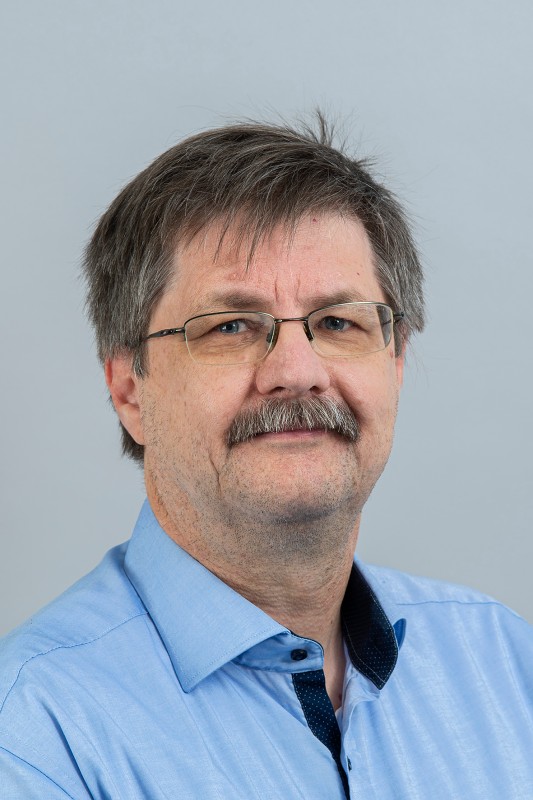
Eric Perlman is a Professor in the College of Engineering and Science at Florida Institute of Technology, specializing in high-energy astrophysics and cosmology. His research spans active galactic nuclei (AGN), relativistic jets, galaxy clusters, and astrobiology, with a focus on quantum gravity implications. Institution: Florida Tech Department: Aerospace, Physics and Space Sciences Dr. Perlman's work employs multiwavelength approaches, including radio through gamma-ray observations. His recent publications highlight studies of AGN jets' orientation, polarization imaging with Hubble, and JWST observations of outflows in quasars like Cygnus A. He has secured significant funding through NASA Long-Term Space Astrophysics grants, NSF Astronomy & Astrophysics grants, and numerous telescope proposals for Hubble, Chandra, and James Webb. Currently, Dr. Perlman contributes to the MIRADAS instrument team at Gran Telescopio Canarias and the AXIS satellite development. He leads a research group with 3-4 graduate students and 10-15 undergraduates, while overseeing Florida Tech's Physics Resource Center.
Dr James Mullaney is Senior Lecturer in Astrophysics at the University of Sheffield’s School of Mathematical and Physical Sciences. He also serves as the School’s Recruitment Lead and has built an active research group comprising three current PhD students. Education MSci Physics and Astronomy, University of Nottingham (2000–2004) PhD Astrophysics, Durham University (2005–2008) Leverhulme-funded PDRA, Durham (2008–2010) European (FP7) Fellowship, CEA-Saclay, France (2010–2012) Leverhulme Early-Career Fellowship, Durham (2012–2013) Vice-Chancellor’s Fellowship, University of Sheffield (2013–2016) Lecturer (2016–present), subsequently promoted to Senior Lecturer, University of Sheffield Research Interests Dr Mullaney studies the co-evolution of galaxies and their central super-massive black holes. Using multi-wavelength observations from the world’s largest telescopes, he investigates how black-hole growth is triggered, how AGN feedback regulates star formation, and how powerful outflows redistribute energy and matter within galaxies. His work combines deep X-ray, sub-millimetre and infrared datasets to quantify the star-formation properties of AGN hosts and to map kiloparsec-scale winds that couple black-hole activity to galactic scales. Research Output With over 60 refereed papers (six exceeding 100 citations each), his recent work emphasizes ALMA and Herschel studies of star-formation in AGN hosts, NuSTAR high-energy surveys of obscured accretion, and machine-learning techniques for time-domain astronomy within the GOTO wide-field survey. These studies reveal a complex interplay between AGN luminosity and star-formation rate, the ubiquity of ionised and molecular outflows in luminous AGN, and new methods for identifying rapidly variable and transient phenomena. Grants & Funding Co-Investigator on STFC Consolidated Grant for Sheffield Astrophysics (£1.2 M, 2015–2018) Leverhulme Trust, European FP7 and University strategic fellowships (2008–2016) Teaching & Outreach At Sheffield Dr Mullaney convenes the advanced undergraduate module PHY405 Galaxy Evolution and tutors first-year Mechanics and Optics . He has supervised numerous BSc and MPhys research projects and regularly delivers astronomy outreach to primary and secondary schools together with local amateur societies. Research Team His current group includes three PhD students—Emmanuel Bernhard, Liam Grimmet and Lydia Makrigianni—working on AGN host galaxies, feedback processes and time-domain data analysis.
Xin Liu is an Associate Professor in the Department of Astronomy at the University of Illinois Urbana-Champaign and holds a joint appointment at the National Center for Supercomputing Applications (NCSA). Her research bridges astronomy and data science, focusing on multi-messenger astrophysics, time-domain phenomena, and AI-driven scientific discovery through large-scale astronomical surveys. Her educational background includes: Ph.D. in Astrophysical Sciences, Princeton University (2010) M.A. in Astrophysical Sciences, Princeton University (2008) M.S. in Physics, Tsinghua University (2006) B.S. in Physics, Tsinghua University (2004) Liu's research centers on three interconnected domains: physics-informed machine learning for astronomical data, statistical learning with probabilistic frameworks for uncertainty quantification, and transparent AI models for scientific interpretation. She pioneers methodologies where machine learning integrates with principled astrophysical analysis rather than serving as black-box tools, addressing challenges in big data astronomy through innovative computational approaches. Her recent publications reveal a strong emphasis on dual supermassive black hole systems, active galactic nuclei variability, and time-domain astrophysics. Key themes include leveraging JWST and multi-wavelength observations to identify dual quasars, developing machine learning techniques for survey data analysis, and exploring the connection between black hole growth and galaxy evolution during cosmic noon. Her work frequently combines large datasets from SDSS, Rubin Observatory, and space telescopes with advanced computational methods. Her awards and honors include: Norman P. Jones Professorial Scholar (2023-2026) Excellent Teacher Ranked by Students (2023) NCSA Faculty Fellow (2020, 2023) Liu has secured prestigious fellowships including the NASA Einstein Fellowship and Hubble Fellowship. She teaches advanced courses like ASTR 596 (AI and Big Data in Astronomy) and has received recognition for her teaching excellence. Her research receives support through institutional appointments and competitive fellowships enabling high-impact work in data-intensive astrophysics. As an NCSA Faculty Fellow, Liu leverages world-class supercomputing resources to develop and apply machine learning frameworks for astronomical datasets. Her group fosters interdisciplinary collaboration between astronomy, computer science, and statistics, focusing on creating interpretable AI tools that advance fundamental astrophysical understanding while pushing computational boundaries.
Tuomas Savolainen is a Senior Scientist at Aalto University's Department of Electronics and Nanoengineering, specializing in radio astronomy and astrophysics. He leads projects in very long baseline interferometry (VLBI), black hole imaging, and magnetic field studies of active galactic nuclei (AGN). Key Projects: JetOrigin Consortium (2024), NT-VGOS (2018), Academy Research Fellow (2014-2019). Research Focus: Event Horizon Telescope (EHT) collaborations, polarization studies of AGN jets, geodetic VLBI applications, and magnetic field topology in 3C 84. Scientific Awards: 2020 Breakthrough Prize in Fundamental Physics (EHT), 2021 RAS Group Achievement Award (EHT), 2019-2022 EHT-related accolades (Bruno Rossi Prize, Einstein Medal), multiple teaching excellence awards (2022, 2019). Publications: 15+ recent works (2021-2025) on black hole shadows (M87/Sgr A*), polarization structures, jet collimation, and geodetic VLBI methodologies.
Dr. Joel R. Brownstein is a Research Associate Professor in the Department of Physics and Astronomy at the University of Utah, specializing in cosmology, dark matter, and gravitational lensing. As head of data management and archiving for the Sloan Digital Sky Survey (SDSS) and primary SDSS data scientist, he leads development of the SDSS science archive and data pipelines. His research spans galaxy clustering, quantum gravity implications, and machine learning applications in astrophysics, with notable contributions to radial velocity precision, white dwarf mass-radius relations, and SDSS-V survey design. Key Research Areas: Cosmology: ΛCDM constraints, dark energy, and large-scale structure. Gravitational Lensing: Strong lens detection and modeling for dark matter studies. Data Science: Machine learning in spectral analysis, neural networks for distance estimation. Stellar Dynamics: Brown dwarf kinematics, white dwarf binary systems. Major Grants: SDSS data sustainability (2020-2025), Master Lens Database development (2012-2016), and SDSS-V infrastructure support (2013-2021). He actively contributes to software frameworks for SDSS and co-develops tools like picca and Marvin for cosmological correlation analysis and data visualization.
Prof. Dr. Stefan Jordan is an Außerplanmäßiger Professor (Apl.-Prof.) at the Astronomisches Rechen-Institut, Zentrum für Astronomie, University of Heidelberg. His research focuses on stellar astrophysics with specialized expertise in white dwarfs, magnetic stellar objects, and spectroscopic analysis. Research Interests: Primary research areas include magnetic white dwarfs, stellar convection modeling, symbiotic star systems, and Gaia mission-related studies. His work extensively utilizes space-based observatories like ROSAT, EUVE, HST, and ORFEUS for ultraviolet and X-ray spectroscopy of compact objects. Publication Trends: Analysis of 15 recent publications reveals consistent focus on magnetic white dwarf characterization, stellar atmosphere modeling, and spectroscopic surveys. Key methodologies include phase-resolved spectroscopy, Zeeman effect analysis, and numerical simulations of stellar convection. Research frequently involves international collaborations and survey data from Hamburg/ESO and Hamburg Quasar surveys. Scientific Awards: No awards mentioned in available sources. Professional Activities: Engaged in multiple space telescope observation programs (ROSAT, EUVE, HST) and contributes to the Gaia mission through the Astronomisches Rechen-Institut. No specific information about student advising or research grants is available in provided materials.
Nahum Arav is a Professor in the Department of Physics at Virginia Polytechnic Institute and State University (Virginia Tech), affiliated with the College of Science. His research focuses on quasar outflows, active galactic nuclei (AGN) feedback, and high-energy astrophysical phenomena. He holds a Ph.D. from the University of Colorado. His work investigates galactic-scale outflows from quasars, their impact on AGN feedback, and the interplay between accretion disks and outflow dynamics. Key projects include the AGN STORM initiative, which uses multi-wavelength observations (X-ray, UV, optical) to study objects like Mrk 817, and analyses of Hubble Space Telescope (HST) and VLT/UVES data to quantify outflow distances and energetics. Recent studies emphasize outflow acceleration, metallicity, and the role of extreme UV observations in tracing AGN feedback mechanisms. His research bridges observational astronomy with theoretical models, addressing questions about black hole growth suppression and cosmic evolution. Notable collaborations include the Space Telescope and Optical Reverberation Mapping Project (STORM), focusing on NGC 5548 and other AGN systems. His work highlights outflows' potential as primary contributors to AGN feedback, with implications for galaxy formation and evolution.
Risa Wechsler is the Director of the Kavli Institute for Particle Astrophysics and Cosmology (KIPAC) and Professor of Physics and Particle Physics & Astrophysics at Stanford University. She holds a PhD from UC Santa Cruz and leads research on galaxy formation, dark matter, and dark energy using cosmological simulations and sky survey data. Her research investigates cosmic structure formation, dark matter properties, and the accelerating universe through projects like DESI and Rubin Observatory's LSST. Recent work combines AI/ML with astrophysical simulations to decode cosmological patterns. Publications focus on cosmological constraints from DESI and DES surveys, galaxy evolution simulations, Milky Way structure, and dark matter detection methods. Articles showcase advances in multi-probe cosmology combining cluster abundances, weak lensing, and galaxy clustering. Honors include election to National Academy of Sciences and American Academy of Arts & Sciences. She directs the Center for Decoding the Universe and leads teams developing analysis frameworks for next-generation sky surveys.
Dr. Sarah Gallagher is a Professor of Physics and Astronomy at Western University and Director of the Institute for Earth and Space Exploration. She specializes in studying supermassive black hole growth and galaxy interactions using multi-wavelength observations from space observatories. Her work bridges astrophysics with philosophy, exploring simulation-induced selection effects in astronomy. She served as Science Advisor to the Canadian Space Agency (2018–2022), advising on science investments and pandemic response initiatives like the CanCOVID network. Her research has been recognized with awards including the Ontario Early Career Researcher Award and the Purvis Memorial Award. Key projects include the CASTOR UV space telescope mission, studies of quasar outflows, and investigations into Stephan’s Quintet galaxy group dynamics. Education details are not explicitly listed, but her research emphasizes advanced observational techniques and interdisciplinary collaboration. Scientific contributions span over 100 refereed papers leveraging data from 10+ space observatories. Research interests focus on quasar physics (e.g., accretion disks, winds), galaxy group environments, and the philosophy of astrophysical surveys. Recent work highlights molecular gas dynamics in Stephan’s Quintet and AGN variability studies with CASTOR. Awards include recognition for both scientific achievement and public engagement. Grants/Advising: Canadian Space Agency advisory roles, leadership in the CanCOVID network. Labs/Teams: Leads the Institute for Earth and Space Exploration, collaborates on international surveys like GNRIS-DQS.
Thomas Boller is a Professor of Astrophysics at the Max Planck Institute for Extraterrestrial Physics (MPE) in Garching, Germany. He has held this position since 1990, following roles at the Astrophysical Institute Potsdam (1987–1990). His research focuses on active galactic nuclei (AGN), X-ray spectroscopy, and cosmological studies involving cold dark matter (CDM) models. Boller has been recognized with awards including the 2011 Michael and Biserka Baum Preis for his work on AGN and teaching excellence at Goethe-University Frankfurt. Teaching: Boller taught at the Johann Wolfgang Goethe-University Frankfurt from 1996 to 2023, offering courses on astrophysics fundamentals, AGN physics, dark matter/energy, and cosmology. He also lectured at the University of Padova (2004) and served as Adjunct Professor at Goethe-University (2005–2010) and Adjunct Fellow at Frankfurt Institute for Advanced Studies (FIAS, 2017–present). Research Contributions: Boller's work includes pioneering XMM-Newton observations of AGN spectral features, ultra-luminous infrared galaxies, and high-redshift matter detection. He has authored over 100 publications and edited conference proceedings. His awards also include membership in the Sloan Collaboration (1999) and the XMM Survey Science Consortium (1996). Awards and Affiliations: In addition to the Baum Preis, Boller was elected to Academia Europaea (2011) and holds adjunct roles at FIAS and Goethe-University. His research has advanced understanding of X-ray absorption mechanisms, relativistic phenomena in AGN, and cosmological models involving dark matter/energy.
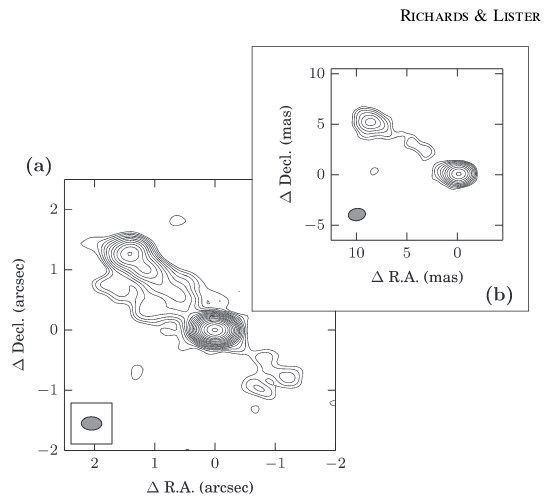
Matthew L. Lister is a Professor of Physics at Purdue University, specializing in active galactic nuclei (AGN) and relativistic jets. He leads the MOJAVE program, a long-term VLBA monitoring initiative to study AGN jets' kinematics and polarization. His research focuses on AGN jets, gamma-ray emission, and young AGN systems like compact symmetric objects (CSOs). Lister earned his Ph.D. from Boston University in 1999, with earlier degrees from the University of Victoria (M.S.) and the University of Toronto (B.S.). He has held roles including Karl Jansky Fellow at the National Radio Astronomy Observatory and Faculty Lecturer at the University of Virginia. His work includes studying blazars, narrow-line Seyfert 1 galaxies, and supermassive black hole binaries. Notable grants include a NASA Fermi Guest Investigator award (2019) and MOJAVE's ongoing VLBA funding. He advised students like Mary Ann Hodge and contributed to major collaborations like TANAMI and IceCube. Lister transitioned to MathWorks in 2022 but remains active in AGN research. Education: Ph.D. Astronomy (Boston U, 1999), M.S. Physics & Astronomy (Victoria, 1993), B.S. Physics & Astronomy (Toronto, 1991). Research Interests: AGN jet dynamics, VLBI imaging, gamma-ray astrophysics, and the MOJAVE program's role in linking radio and gamma-ray emission. Key projects include analyzing AGN kinematics, redshift determinations of BL Lacs, and young jet systems. His work bridges observational astronomy with theoretical models of jet formation and relativistic effects. Publications span over 150 peer-reviewed articles, emphasizing multiwavelength studies and jet structure. He is a member of the American Astronomical Society and serves as a referee for major journals.
David Hobbs is a Professor in the Department of Physics at Lund University, specializing in astrometry and space missions. He is a key contributor to the European Space Agency's Gaia mission, focusing on astrometric data processing and fundamental physics applications. His research includes developing algorithms for the Astrometric Global Iterative Solution (AGIS) and analyzing Gaia's data to study galactic structure, exoplanets, and stellar dynamics. Hobbs has also proposed the GaiaNIR mission, aiming to expand astrometry into near-infrared wavelengths. Earlier work includes software development for XMM-Newton and Integral observatories, as well as spacecraft attitude control algorithms for Herschel and Planck missions. Research interests include: High-precision astrometry and mission design Galactic structure analysis using Gaia data Exoplanet detection via astrometric methods Near-infrared astrometry for obscured regions Data processing algorithms for large astronomical surveys Recent articles highlight advancements in Gaia DR3 data exploitation, including chemical cartography of the Milky Way and discovery of black holes via astrometric techniques. Future work focuses on GaiaNIR's development to enhance astrometric capabilities for 12 billion stars.
Wara Chamani Velasco is a Researcher at the Metsähovi Radio Observatory, part of Aalto University. She holds a Doctor of Technology (Tekn. toht.) in Electronics from Aalto University, awarded in December 2022. Her research focuses on astrophysical phenomena such as active galactic nuclei (AGN), black hole jets, and multi-messenger studies of blazars and quasars. She has published extensively since 2017, with recent work analyzing jet-disk interactions, magnetic field measurements in AGN jets, and X-ray/γ-ray variability in blazars. Education: Doctor of Technology (Tekn. toht.), Sähkötekniikka (Electronics), Aalto University, 2022 Research Interests: Her work explores the dynamics of AGN jets, magnetic fields in astrophysical systems, and observational techniques in radio astronomy. She investigates topics like core-shift effects in blazars, multi-wavelength correlations in active galaxies, and the role of magnetic flux in jet launching mechanisms. Recent Research Trends: Recent articles emphasize multi-messenger approaches to AGN and blazar studies, with a focus on understanding jet structures, accretion processes, and variability mechanisms across radio, X-ray, and gamma-ray regimes. Collaborations: Collaborates with international teams on projects involving radio observatories and gamma-ray facilities like MAGIC Collaboration.
Omer Blaes is a Professor in the Department of Physics at the University of California, Santa Barbara (UCSB). He served as Chair of the Physics Department from 2010 to 2013 and is currently a Scientific Editor of the Monthly Notices of the Royal Astronomical Society . His research focuses on accretion physics around compact objects, combining supercomputer simulations and analytic theory to study phenomena like gravitational binding energy release, plasma dynamics, and radiation pressure effects. Education: BSc in Astrophysics, Queen Mary College, University of London (UK) DPhil from the International School for Advanced Studies (SISSA), Trieste, Italy His research interests include opacity-driven convection in accretion disks around white dwarfs, photon bubble dynamics in neutron star accretion columns, and convective variability in quasar accretion disks. Blaes has held postdoctoral fellowships at Caltech and the Canadian Institute for Theoretical Astrophysics (CITA). His work bridges plasma physics, magnetohydrodynamics, and high-energy astrophysical phenomena. No specific grants, students, or lab affiliations are explicitly detailed in the provided text.
Prof. Dr. Adrian Biland is a Lecturer at the Department of Physics at ETH Zürich, specifically affiliated with the Institute for Particle and Astrophysics. His research focuses on high-energy astrophysics, including studies of blazars, dark matter, gamma-ray detection techniques, and cosmic-ray acceleration mechanisms. He contributes to major observatories like the MAGIC telescopes and the Cherenkov Telescope Array (CTA). Key research areas include multiwavelength observations of active galactic nuclei, supernova remnants, and transient phenomena. Biland collaborates on instrumental advancements such as data standardization and open-source analysis tools for gamma-ray telescopes. His work bridges particle physics and astrophysics, emphasizing observational methods and theoretical modeling of high-energy phenomena.