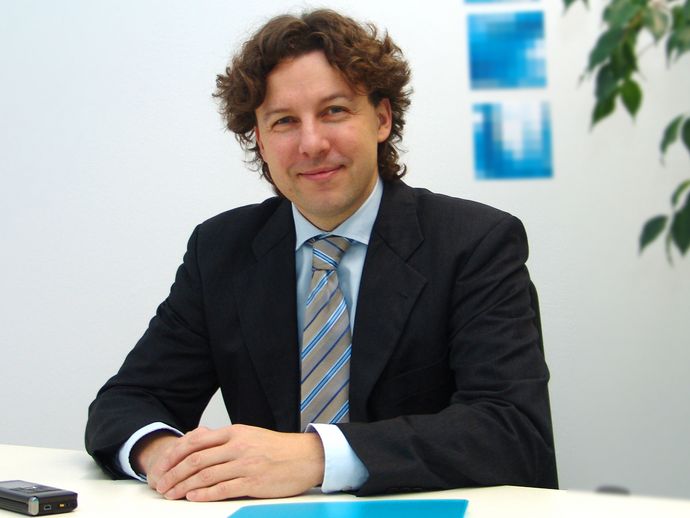
Christian Schaffner is a Professor in Theoretical Computer Science at the Informatics Institute, University of Amsterdam. He serves as director of QuSoft (Dutch research center for quantum software) and chairman of Quantum.Amsterdam. His research focuses on quantum cryptography, cryptographic protocols, and quantum information theory. PhD from Aarhus University (2007) and diploma in mathematics from ETH Zurich (2003). Recipient of prestigious NWO grants, including VENI, VIDI, and a 21.5M Euro Gravitation Grant. Active in academic leadership: co-organized QCrypt conferences, chaired program committees (e.g., QCrypt 2023), and served on editorial boards (Quantum Science and Technology journal). Teaches flipped-classroom courses in cryptography and information theory at the University of Amsterdam.
John van de Wetering is an Assistant Professor at the Theoretical Computer Science group of the Informatics Institute at the University of Amsterdam . He works with the QuSoft research center and co-develops the PyZX open-source quantum compiler. His research spans quantum computation, diagrammatic reasoning, and quantum foundations. Education: PhD in Computer Science (2022, Radboud University) Research: Focuses on ZX-calculus for quantum circuit optimization, verification, and simulation. Explores quantum foundations through algebraic and compositional methods. Recent work includes quantum circuit optimization with AlphaTensor, completeness proofs for ZH-calculus, and scalable spider nets for transversal non-Clifford gates. He directs the new Master's program in Quantum Computer Science at UvA and co-authored the book Picturing Quantum Software . Notable collaborations include PyZX development and EU Gender Equality Working Group participation. Supervision includes current PhD students Lia Yeh (Oxford), Sarah Li (UvA), and Marc Farreras (Leiden). Former students include Boldizsár Poór (Quantinuum), Julien Codsi (Princeton), and Yanbin Chen (TUM). Tools & Outreach: Maintains the ZX-calculus Wikipedia page, co-lectured courses like Quantum Processes and Computation , and develops the ZX-calculus educational website. Organized QPL2026 conference and contributed to open-access journal Quantum .
Dr. Lisa Lopez is a Professor of Educational Psychology at the University of South Florida , College of Education. Her research focuses on the educational and environmental opportunities for Latino Dual Language Learner (DLL) children in the U.S., with three active research strands: (1) developmental trajectories of school readiness, (2) ecological perspectives (home/classroom factors), and (3) curriculum/assessment development for DLL children. She collaborates with local Head Start programs and mentors doctoral students in her Bilingual School Readiness Lab . Ph.D., Applied Developmental Psychology, University of Miami NSF-funded Postdoctoral Fellowship, Harvard Graduate School of Education Her research applies ecological frameworks to examine sociocultural influences on DLL children's academic and social-emotional development, with a focus on applied solutions for educators and at-risk populations. Recent work explores longitudinal bilingual development, language dominance, and science achievement trends. Dr. Lopez has received grants including the Researcher Starter Grant (2005) and Minority Postdoctoral Research Fellowship (2001). She actively serves on doctoral dissertation committees and trains educators on working with DLLs.
Oliver Pooley is Vice Provost at Oriel College, University of Oxford, where he serves as Fellow and Tutor in Philosophy. He is also an Associate Professor in the Faculty of Philosophy at the University of Oxford. His academic appointments include teaching roles in multiple interdisciplinary programs: Computer Science and Philosophy, Mathematics and Philosophy, Philosophy and Modern Languages, Philosophy (Joint Honours), Philosophy and Theology, Philosophy, Politics and Economics, and Physics and Philosophy. Pooley's research focuses on the philosophy of physics, particularly the nature of space, time, and spacetime. His work intersects significantly with metaphysics and the philosophy of language. He is currently completing a book titled The Reality of Spacetime under contract with Oxford University Press. His research addresses fundamental questions about whether time really passes (concluding it doesn't) and how work in general metaphysics should inform the interpretation of physics. Analysis of Pooley's publication record reveals a sustained focus on spacetime ontology, particularly the substantivalist-relationalist debate. His work frequently engages with the hole argument, general covariance, and background independence in both classical and relativistic physics. A significant portion of his scholarship examines how metaphysical considerations interact with physical theories, especially regarding the interpretation of spacetime structure. His more recent work shows increasing attention to the relationship between dynamical symmetries and spacetime structure. Prior to his current position at Oriel, Pooley held a British Academy Postdoctoral Fellowship and college lectureship at Exeter College, Oxford. His teaching interests extend beyond philosophy of physics to include logic, metaphysics, epistemology, philosophy of language, and philosophy of science. He actively welcomes contact from potential graduate students whose research interests overlap with his own.
Rolf Drechsler is a Full Professor and Head of the Group of Computer Architecture at the University of Bremen's Institute of Computer Science since 2001, and Director of the Cyber-Physical Systems Group at DFKI Bremen since 2011. He holds an adjunct professorship at the Indian Statistical Institute and has been affiliated with Duke University. Education: Diploma (1992) and Dr. phil. nat. (1995) in Computer Science from Goethe University Frankfurt Academic Leadership: Dean of Mathematics and Computer Science Faculty (2018-2025), Vice Rector for Research (2008-2013) His research focuses on formal verification , RISC-V architectures , and quantum/in-memory computing . Recent work explores LLM integration in hardware testing and polynomial-based verification techniques. Publications from 2024-2025 span IEEE Transactions , DATE , and DAC , emphasizing automated verification , quantum circuit mapping , and LLM-driven testbench generation . Scientific Awards IEEE/ACM Best Paper Awards (2013, 2018) Berninghausen-Preis for Innovative Teaching (2018) IEEE Fellow (2015) Founder Award for Solvertec (2013) He has served on program committees for DAC, ICCAD, DATE, and founded graduate schools in Embedded Systems and System Design under Germany's Excellence Initiative.
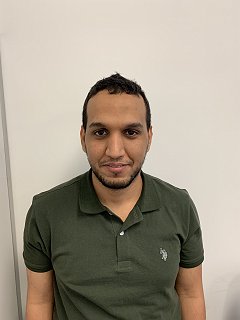
Dildar Hussain is an Assistant Professor in the Department of Artificial Intelligence Data Science at Sejong University, South Korea, where he has been serving since September 2022. His academic journey includes a Ph.D. in Biomedical Engineering from Kyung Hee University (2019), preceded by an MS in the same field (2014) and a BCS from Kohat University of Science and Technology, Pakistan (2010). Prior to his current position, he held significant roles including Postdoctoral Research Fellow at the Korea Institute for Advanced Study (KIAS), a subordinate institute of KAIST (2019-2022), Research and Development Engineer at YOZMA BMTech CO., LTD (2013-2019), and Research Associate at NUST Pakistan (2010-2012). His teaching portfolio at Sejong University includes Computer Organization and Architecture, Introduction to Data Analysis, Advance Programming Usage, Computer Vision, Artificial Intelligence and Cyber Security, Basic Coding Based on Computational Thinking, and Introduction to Applied Image Processing. Artificial Intelligence and Machine Learning applications in healthcare Medical Imaging and DXA image analysis Computer Vision and Image Processing techniques Biomedical informatics and computer-aided diagnosis Automation solutions in healthcare settings Natural language processing applications Hussain's research output shows a strong focus on applying deep learning techniques to medical imaging problems, particularly in osteoporosis detection using DXA imaging systems. His work spans multiple healthcare domains including cancer detection, diabetic retinopathy analysis, and embryo viability assessment. Recent publications (2023-2025) demonstrate expansion into diverse areas like text sentiment analysis, skin lesion diagnosis, and even materials science through computational studies of hydrogen storage materials. Kyung Hee University scholarship for Ph.D. Hussain has advised numerous research projects and collaborated extensively across disciplines, with co-authors from institutions worldwide. His industry experience at YOZMA BMTech significantly contributed to the implementation of machine learning algorithms for DXA image analysis in osteoporosis diagnosis devices. Current research directions include advancing AI techniques for medical diagnostics and exploring applications of deep learning in diverse scientific domains beyond traditional healthcare settings.
Adriano José Conceição Tavares is an Associate Professor at the School of Engineering, University of Minho, Portugal. He serves as a Senior Researcher at Centro ALGORITMI, where he is affiliated with both the IE R&D Group and the ESRG R&D Lab. His academic credentials include a PhD in Industrial Electronics from the University of Minho, a Master of Science in Information Technology from the University of Coimbra, and an undergraduate degree in Informatics from the University of Coimbra. Professor Tavares specializes in embedded systems with particular expertise in: Embedded systems modeling and design System software design System-on-chip design Real-time operating systems Hardware acceleration and FPGA design Virtualization for embedded systems IoT frameworks and protocols His publication record demonstrates a strong research trajectory in hardware-software co-design, with recent work showing an increasing integration of machine learning techniques into embedded systems. His publications span theoretical frameworks to practical implementations addressing real-time performance, resource constraints, and security challenges. Among his scholarly metrics: h-index of 18 126 publications with 1148 citations 20 publications in Q1/Q2 journals Author of a book on microcontroller programming Professor Tavares has supervised students including Miguel Ângelo Fernandes Silva and has established international collaborations through the Erasmus Program with institutions in China, Iran, Thailand, Jordan, and Cambodia. He teaches advanced courses on embedded and real-time systems modeling, compiler design, system-on-chip design, real-time operating system design, and advanced computer architectures at University of Minho.
Dr. Mukesh Prasad is an Associate Professor at the School of Computer Science , University of Technology Sydney (UTS). With expertise in Machine Learning , Artificial Intelligence , and Computer Vision , his research addresses applications in healthcare, biomedical science, and smart infrastructure. He holds a Ph.D. in Computer Science from National Chiao Tung University, Taiwan, and an M.S. in Computer and Systems Sciences from Jawaharlal Nehru University, India. Key research areas: Machine Learning, AI, Brain-Computer Interfaces, IoT, and Evolutionary Computation Industry experience: Principal Engineer at TSMC (2016-2017), Postdoctoral Researcher at National Chiao Tung University Dr. Prasad has secured competitive grants for AI applications in disaster response, conversational agents, and medical diagnostics. His work has been published in high-impact venues like IEEE , ACM Transactions , and Springer Nature , with over 200 peer-reviewed papers. He serves on editorial boards for journals including Frontiers in Neurorobotics and ACM Computing Surveys . Scientific Awards: Vice Chancellor Teaching and Learning Citation Award (2019) Alumni Fellowship for Ph.D. (2014) Golden Bamboo NCTU Fellowship (2010) Professional Members: IEEE (2011), ACM (2019)
Nilson Kunioshi is Professor at Waseda University’s School of Creative Science and Engineering, holding a Dr. Eng. from Kyoto University. His work integrates combustion chemistry, materials chemistry, and science-education research, with 32 Scopus papers and an h-index of 8. He leads projects on CVD reaction kinetics, English-medium instruction, and corpus-based pedagogical tools. Education: 1992 – Dr. Eng., Graduate School of Engineering, Kyoto University (Industrial Chemistry) 1985 – B.Eng., University of São Paulo, Faculty of Engineering (Chemical Engineering) Research Interests: Kunioshi’s group applies quantum chemical calculations and kinetic modeling to silicon CVD processes, elucidating pressure-dependent rate coefficients, surface reaction mechanisms, and chlorine elimination pathways. Parallel work in education employs large-scale corpora (OnCAL, JECPRESE) to reveal cultural differences in Japanese vs. American STEM lectures and to support non-native English instructors in EMI contexts. Publication Trends: Recent articles shift from fundamental combustion/PAH studies toward CVD kinetics and English for STEM education, reflecting dual foci on materials chemistry and pedagogical innovation. Grants & Projects: JSPS KAKENHI (B) 2019-2022: “Elucidation of the role of language in science instruction through English and Japanese” JSPS KAKENHI (C) 2021-2024: “Designing novel bone-inducing molecules by an experimental-computational approach” JSPS KAKENHI (B) 2012-2016: Development of OnCAL corpus for EMI support Labs & Teams: He heads a computational-reaction group within the Faculty of Science and Engineering, collaborates with the Yamaguchi and Fuwa laboratories on surface chemistry, and co-leads international corpus projects with partners at Stanford and MIT.
Professor J. Joshua Thomas is a distinguished academic at University of Wollongong Malaysia, specializing in intelligent systems and advanced computational techniques. He holds a PhD in Intelligent Systems Techniques from Universiti Sains Malaysia (2015) and a Master's degree in Computer Science from Madurai Kamaraj University, India (1999). Professor Thomas has demonstrated strong leadership in academic administration, having served as Head and Deputy Head of the Department of Computing between 2012 and 2017. His research focuses on intelligent systems and interdisciplinary computational algorithms, with recent work emphasizing Deep Learning, Graph Convolutional Neural Networks (GCNN), Graph Recurrent Neural Networks (GRNN), Hyper-Graph Attention Networks, and Quantum Machine Learning. Professor Thomas's projects span diverse applications including end-to-end steering learning systems, algorithm design in drug discovery, and advanced data analytics for electricity consumption and carbon price forecasting. Professor Thomas maintains an impressive publication record with over 50 peer-reviewed publications and 12 books with publishers including Wiley, Elsevier, and IGI Global. His research is supported by multiple active grants at institutional, national, and international levels, including projects on cancer survivor well-being and AI bias in smart cities. Best Paper Award at SCI 2025 Oracle Cloud Infrastructure 2024 Generative AI Certified Professional 2022 Global Staff Awards (UOWGE) - Excellence In Research Winner V-MIIEX2021: COVIDNet - GOLD AWARD Fundamental Research Grant Scheme (FRGS) recipient (2019) As an active researcher and educator, Professor Thomas serves as Principal Investigator on multiple grants, supervises PhD and Master's students, and regularly delivers keynote addresses at international conferences. His collaborative spirit is evident through partnerships with institutions in India, USA, China, and Germany, fostering knowledge exchange and innovation across disciplines.
Anne C. Elster is a Professor and Director of the Heterogeneous and Parallel Computing Lab (HPC-Lab) at NTNU's Department of Computer Science, with additional roles as HPC Leader at the Center for Geophysical Forecasting and Senior Research Fellow at the Oden Institute. She holds board positions at NTNU and its Faculty of Information Technology. Her research spans: High-Performance Computing : GPU acceleration, auto-tuning, and heterogeneous systems Machine Learning : Applied to optimization and computational geosciences Parallel Algorithms : For scientific computing and real-time simulations Her recent publications (2021-2024) focus on GPU auto-tuning, quantum-HPC integration, distributed systems, and ML-driven geophysical data analysis, with strong emphasis on performance optimization across architectures. Awards and honors: IEEE Computer Society Distinguished Contributor (2021) IEEE Distinguished Speaker (2019-2022) IEEE Senior Member (2000) She has supervised 100+ master's students, 15+ PhDs, and secured major grants including EU H2020 projects. Current Post Docs focus on HPC acceleration and AI applications. Her HPC-Lab collaborates with CERN, Equinor, and international universities, specializing in GPU-accelerated scientific computing and tools for performance portability.
Felipe Gohring de Magalhaes is an Assistant Professor in the Department of Computer Engineering and Software Engineering at Polytechnique Montréal, where he has been working since July 2018 and assumed his current position in October 2024. He holds a dual doctorate from PUC-RS (Brazil) and Polytechnique Montréal (2016), with degrees in both computer science and computer engineering. His research spans embedded system architectures, real-time systems, avionics, and cybersecurity for emerging technologies. He is affiliated with the Microelectronics and Microsystems Research Group and the Multidisciplinary Institute for Cybersecurity and Cyber Resilience, reflecting his focus on integrated circuits, microelectronics, and system security. Professor Gohring de Magalhaes has published over 40 articles in international journals and conferences, with recent work focusing on photonic integrated circuits security, optical neural networks, and post-quantum cryptography for avionic systems. His publication trend shows consistent output with increasing focus on security aspects of emerging computing technologies. He has supervised at least one PhD student to completion and teaches courses including Introduction to Programming and Operating System Kernel. His research interests align with NSERC topics in integrated circuits, microelectronics, computer systems organization, and VLSI systems.
Stefano Markidis is a Professor of Computer Science specializing in high-performance computing systems at KTH Royal Institute of Technology in Sweden. He works in the Division of Computational Science and Technology, focusing on supercomputers, quantum computers, and computational methods for scientific simulations. His research spans multiple domains including plasma physics, computational fluid dynamics, and quantum computing. Markidis holds an MS degree from Politecnico di Torino and a PhD in Nuclear Engineering from the University of Illinois at Urbana-Champaign. Prior to joining KTH, he was a graduate research assistant at Los Alamos National Laboratory and Lawrence Berkeley National Laboratory, followed by a postdoc at KU Leuven. His academic journey reflects a strong foundation in both engineering and computational science. His primary research interests include High-Performance Computing , Heterogeneous Systems , and Quantum Computing . Markidis develops computational methods for plasma physics, particle-in-cell simulations, and fluid dynamics. His work bridges theoretical physics and practical computing, with applications in space physics, fusion energy, and materials science. He is particularly known for contributions to parallel computing, GPU acceleration, and the development of scalable simulation frameworks like Neko for computational fluid dynamics. His research increasingly integrates machine learning techniques with traditional numerical methods. Analysis of Markidis' recent publications reveals a strong focus on quantum-classical hybrid computing, advanced particle-in-cell methods, and high-fidelity computational fluid dynamics. His work demonstrates expertise in programming models for heterogeneous architectures including GPUs and quantum processors, with growing emphasis on AI-enhanced scientific computing. R&D100 award (2005) for the CartaBlanca project R&D100 award (2017) for the SHIELDS project Markidis teaches multiple courses at KTH including Applied GPU Programming, Quantum Computing for Computer Scientists, and High-performance Computing for Computational Scientists. He has supervised numerous degree projects across various specializations in computer science and electrical engineering. His research has been supported by various grants related to high-performance computing and quantum technologies, with applications spanning from space physics to medical treatments. Markidis leads research in computational science with a focus on developing frameworks like Neko for extreme-scale computational fluid dynamics. His team works on integrating traditional HPC methods with emerging technologies including quantum computing and AI, contributing to advancements in scientific simulation across multiple disciplines.
Sidi Mohamed Beillahi is a Lecturer in the Department of Computer Science at the University of Toronto's Faculty of Arts and Science. He teaches courses including Principles of Programming Languages (CSC324H1S) and Algorithms and Data Structures (ECE345H1F). Previously, he served as a Teaching Assistant at both University of Paris and Concordia University for courses ranging from Automata Theory to Hardware Functional Verification. Dr. Beillahi's research focuses on developing formal verification and programming languages techniques to ensure the correctness of software systems, particularly distributed systems, concurrent programs, blockchain, and smart contracts. His work bridges theoretical computer science with practical security applications in decentralized finance. His publication record shows a clear progression from quantum circuit verification during his Master's to blockchain and smart contract security in his doctoral and postdoctoral work. Recent publications demonstrate expertise in authenticated data structures for blockchain storage, flash loan attack analysis, and formal verification of decentralized applications. Scientific Awards: ACM SIGSOFT Distinguished Paper Award (ICSE '24) ICBC Distinguished Paper Award (ICBC '22) Dr. Beillahi has advised multiple research projects in blockchain security and verification, often collaborating with Professor Fan Long and Professor Andreas Veneris at the University of Toronto. His research has been supported by prestigious fellowships including an NSERC Postdoctoral Fellowship and a Mitacs Accelerate Fellowship.
Jens Palsberg is a Professor and former Department Chair of Computer Science at UCLA. He directs the UCLA-Amazon Science Hub for Humanity and Artificial Intelligence and co-directs UCLA's quantum research center (30+ faculty). He co-founded UCLA's Master's program in quantum science and serves as an associate editor for ACM Transactions on Quantum Computing. His research spans programming languages, software engineering, and quantum computing. He has received the ACM SIGPLAN Distinguished Service Award (2012) and a UCLA teaching award (2023). As ACM Council member and former SIGPLAN chair, he has led 100+ program committees (POPL, PLDI, ECOOP) and conferences (General Chair for POPL, LICS, SPIN). Current initiatives include quantum programming research, optimizing compilers for quantum circuits, and developing concurrency analysis tools. His team focuses on quantum abstract interpretation and logical bytecode reduction.