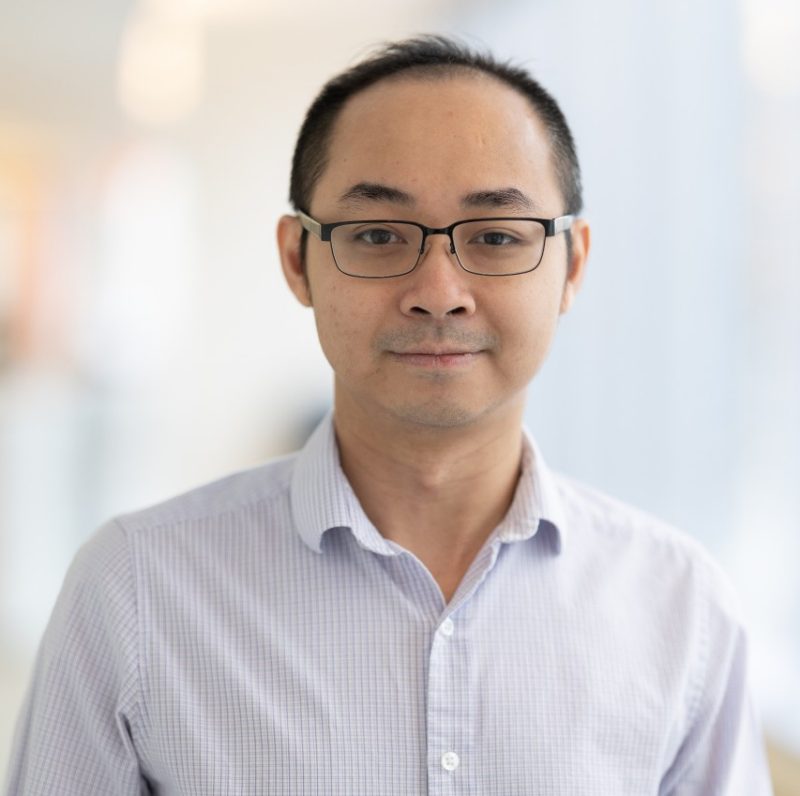
Jonathan L. Habif serves as a Research Assistant Professor in the Ming Hsieh Department of Electrical and Computer Engineering at the University of Southern California and holds a Research Lead position at the Information Sciences Institute (ISI). His work centers on fundamental limits of information extraction from physical signals, with primary focus on quantum and classical optical systems. His academic background includes: B.A. in Physics from Colgate University M.S. and Ph.D. in Electrical and Computer Engineering from the University of Rochester Postdoctoral research in Physics at MIT's Research Laboratory for Electronics Dr. Habif's research integrates quantum information science with photonic engineering, specializing in photon-starved communication scenarios, quantum-secured optical networks across free-space and fiber channels, and nano-photonic device development. He directs USC's Laboratory for Quantum-Limited Information (QLIlab) in Waltham, MA, which pioneers experimental demonstrations of information-theoretic boundaries in signal processing. The lab's work bridges theoretical limits with practical implementations in secure communications and low-light imaging systems. His institutional affiliation spans USC's Ming Hsieh Department and ISI's Waltham facility at 890 Winter Street, Suite 115, where he maintains primary operations for quantum information research initiatives.
Abhishek Halder is an Associate Professor in the Department of Aerospace Engineering at Iowa State University and an Associate Adjunct Professor in the Department of Applied Mathematics at the University of California, Santa Cruz. He is also a member of the Translational AI Center at Iowa State University. His academic journey includes joining Iowa State University as an Assistant Professor in July 2023 and previously serving as faculty at UC Santa Cruz starting from October 2017. Dr. Halder's educational background includes studies at IIT Kharagpur and Texas A&M University, where he developed expertise in systems and control theory with applications to matrix analysis, probability, and optimization. His research has been recognized with prestigious awards including the O. Hugo Schuck Best Application Paper Award from the American Automatic Control Council, Applied Mathematics Research Award from UC Santa Cruz, Outstanding Doctoral Student Award from Texas A&M, and Best Dual Degree Thesis Award from IIT Kharagpur. His research focuses on stochastic systems, control and optimization with applications to large scale cyber-physical systems. Dr. Halder has made significant contributions to the fields of optimal transport, Schrödinger Bridge theory, distributional control, and uncertainty propagation in dynamical systems. His work bridges theoretical developments with practical applications in power systems, aerospace engineering, and machine learning. He has secured multiple research grants from NSF, including a CPS Frontier project on Computation-Aware Algorithmic Design for Cyber-Physical Systems. Dr. Halder has demonstrated leadership in the control systems community through editorial roles including Associate Editor for IEEE Transactions on Automatic Control (2025-present), ASME Journal of Dynamic Systems, Measurement, and Control (2025-present), Systems & Control Letters (2022-present), and previously for IEEE Control Systems Society Conference Editorial Board (2019-2025) and IEEE Transactions on Aerospace and Electronic Systems (2019-2022). He is a Senior Member of IEEE and a member of IFAC, SIAM and ASME. His research group has produced numerous publications in top-tier journals and conferences, with recent work focusing on connections between optimal transport theory, stochastic control, and machine learning. The publication trends show increasing integration of Schrödinger Bridge formulations with machine learning techniques for distributional control problems across various domains including power systems, aerospace applications, and resource allocation. O. Hugo Schuck Best Application Paper Award (2024) Applied Mathematics Research Award from UC Santa Cruz (2022) IEEE Senior Member (2021) Outstanding Doctoral Student Award from Texas A&M Best Dual Degree Thesis Award from IIT Kharagpur Dr. Halder has mentored numerous PhD students including Alexis, Georgiy, Iman, Shadi, and Kenneth, many of whom have received prestigious fellowships. His research group maintains strong collaborations with national laboratories including Lawrence Livermore National Lab and Los Alamos National Lab, as well as industry partners. Dr. Halder is also committed to education and outreach, having created and taught the 'Feedback Control' course for high school students in the California State Summer School for Mathematics and Science (COSMOS), introducing complex control theory concepts without calculus or linear algebra.
Professor Virginia Lorenz is a faculty member at the University of Illinois at Urbana-Champaign's Department of Physics, where she focuses on experimental quantum optics, atomic and molecular spectroscopy, and optical magnetometry. She previously held positions at the University of Delaware (2009–2014) and the University of Oxford (2007–2009). Her research group has pioneered advancements in quantum networks, including launching the first publicly accessible quantum network in 2023, and developing efficient methods for photon-pair generation and quantum state characterization. Her work spans quantum memory optimization, photonic quantum state engineering, and quantum sensing of astronomical objects. Using ultrashort laser pulses, her team explores quantum estimation theory and table-top experiments to understand imaging limitations and potential quantum advantages in interferometric astronomy. Key contributions include broadband Λ-type quantum memory protocols and novel techniques for capturing joint spectral density of photon pairs via stimulated emission, enabling faster and higher-resolution analysis of quantum states. Professor Lorenz's research has been supported by the National Science Foundation and Department of Energy. She received the Dean's Award for Excellence in Research (2020). Her publications span journals like Advances in Atomic, Molecular, and Optical Physics , Physical Review A , Nature Nanotechnology , and Optica , with a focus on quantum information, nonlinear optics, and spintronics. Collaborations include Paul Kwiat and international partners in quantum network development. Dean's Award for Excellence in Research (2020) NSF and DOE funding The Lorenz research group has mentored students like Kai Shinbrough, Bin Fang, and Halise Celik, with former students defending theses on topics ranging from spin-orbit torque measurements to photonic quantum state manipulation. Lab renovations at UIUC in 2015 expanded facilities for quantum optics experiments, including fiber-based photon-pair sources and ensemble quantum memory studies.
Eleonora Igorevna Leskina is an Associate Professor and Leading Researcher at the Faculty of Law, Department of Digital and Biolaw at the National Research University Higher School of Economics (HSE) in Moscow, where she has been employed since 2024. Previously, she served as an Associate Professor at Saratov State Law Academy in the Department of Information Law and Digital Technologies (2020-2024) and the Department of Labor Law (2017-2020). She holds a Candidate of Law degree from Saratov State Law Academy (2012) with a dissertation on "Axiological aspects in civil procedural law" and a Jurisprudence degree from Saratov State Academy of Law (2009). Dr. Leskina's research focuses on the intersection of law and emerging technologies, with particular expertise in Big Data regulation, artificial intelligence legal frameworks, personal data protection, blockchain applications, and digital labor relations. Her work addresses critical challenges in data governance, including synthetic data usage, sustainable data turnover, and the legal implications of metaverse environments. She has made significant contributions to understanding the legal regimes of data in various contexts, from healthcare to environmental protection. Her scholarly output demonstrates a consistent focus on contemporary digital law challenges, with numerous publications in leading Russian legal journals and edited volumes. Recent work examines the legal support for synthetic data in AI development, characteristics of Big Data legal regimes, and sustainable data turnover frameworks. Her research shows a clear trajectory toward addressing the most pressing regulatory questions emerging from technological advancement, particularly in the Russian legal context. Gratitude from the Ministry of Justice of the Russian Federation (2023) for effective assistance in solving tasks assigned to the Ministry of Justice, contribution to legal science and education, and training of highly qualified legal personnel Dr. Leskina actively participates in national and international academic discourse, regularly presenting at major conferences including the International Scientific and Practical Conference "Legal Regulation in the Era of Artificial Intelligence" in Samarkand (2025), where she presented on synthetic data for AI development. She has also participated in the Moscow Innovative Legal Forum, conferences at Lomonosov Moscow State University, and the State Duma roundtable on court fees. Her work bridges academic research with practical policy development in the rapidly evolving field of digital law.
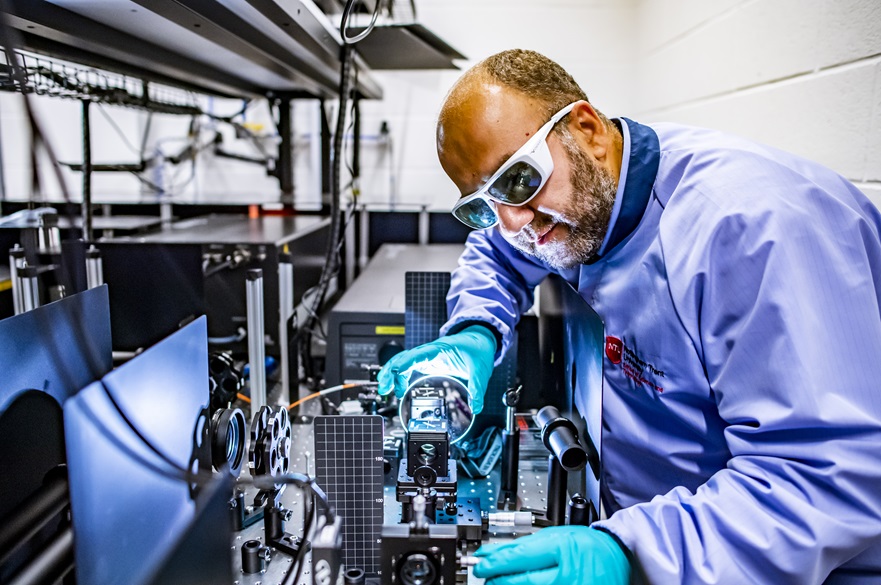
Mohsen Rahmani is a Distinguished Professor at Nottingham Trent University's School of Science & Technology, where he serves as the Leader of the Advanced Optics and Photonics (AOP) Laboratory. He holds prestigious fellowships including the Royal Society Wolfson Fellowship and UK Research and Innovation Future Leaders Fellowship, and has been recognized as an IEEE Nanotechnology Council Distinguished Lecturer (2024) and The Royal Society Yusuf Hamied Visiting Fellow (2024). His educational background includes a PhD from the National University of Singapore (2009-2013), MSc from National Technical University of Ukraine (2007-2009), and BEng from Iran Azad University (2000-2004). Prior to joining NTU, he held positions at Australian National University (2016-2020) and Imperial College London (2013-2015). Rahmani's research focuses on Nano-materials (design, modeling, and fabrication of metallic, dielectric, and semiconductor nanoparticles), Nonlinear nano-photonics (all-optical conversation of light frequencies for NIR imaging, night-vision, and species' health detection), and Optical nano-sensing (ultrasensitive nano-scale materials for gas/liquid detection of low concentration substances/biomarkers). His work bridges fundamental physics with practical applications in imaging, sensing, and communications. His 15 most recent publications (2022-2024) demonstrate a strong focus on metasurfaces, nonlinear optics, and infrared imaging technologies. Key themes include bound states in the continuum, frequency conversion, silicon photonics, and applications in biomedical diagnostics and wireless communications. His research shows a clear trajectory toward practical implementations of nanophotonic technologies for real-world problems. Outstanding Editor Award, Opto-Electronic Advances (2020) Eureka Prize for Outstanding Early Careers (2018) Australian Optical Society Geoff Opat Early Career Researcher Prize (2018) Australian National University Vice Chancellor's Award (2018) Young Scientist Medal and Prize from IUPAP (2017) Royal Society Wolfson Fellowship UKRI Future Leaders Fellowship (£1.2 million) Rahmani has secured significant research funding from The UK Research and Innovation, The Royal Society, and The Australian Research Council. At NTU, he built the Advanced Optics and Photonics Lab from scratch, attracting outstanding scientists and students to work on ambitious projects including nano-particle based disease detection systems and technologies to reduce light pollution. His editorial roles include Associate Editor of Opto-Electronic Advances (2018-present) and past Guest Editor for Nanomaterials (2020-2022). Through the AOP Lab (www.aoplab.com), Rahmani leads a dynamic research team focused on developing transformative nanophotonic technologies. His lab's work spans fundamental research on light-matter interactions at the nanoscale to applied projects with potential commercial impact, particularly in medical diagnostics and energy-efficient imaging technologies.
Xin Xie is a Schmidt AI in Science Postdoctoral Fellow affiliated with the Michigan Institute for Data & AI in Society (MIDAS) at the University of Michigan. Their research bridges topological photonics, deep learning, and quantum electrodynamics, focusing on designing novel states via topological optical structures and investigating light-matter interactions in 2D semiconductor materials. Education: Ph.D. in Physics, Institute of Physics, Chinese Academy of Sciences (2022) B.S. in Physics, Zhejiang University (2015) Research interests center on topological photonics , leveraging deep learning to engineer optical structures and explore quantum phenomena like exciton-polariton transport and strong light-matter coupling . Their work integrates machine learning with quantum electrodynamics for applications in nanophotonics and quantum devices. Recent publications highlight advancements in 2D photonic crystals , cavity Floquet engineering , and topological corner states , emphasizing their interdisciplinary approach combining theoretical physics , materials science , and AI-driven optimization . Scientific Awards: Schmidt AI in Science Postdoctoral Fellowship Michigan Data Science Fellowship Postdoctoral Affiliates Program Xin collaborates with mentors across multiple disciplines: Gongjun Xu (Statistics, Psychology), Hui Deng (Physics, EECS), and Yang Chen (Statistics). Contact via xiexin@umich.edu .
Subhomoy Haldar is an Assistant Professor in the Department of Physics at the Indian Institute of Technology Kanpur. His research focuses on semiconductor physics, quantum devices, and quantum sensing applications, with particular expertise in semiconductor-superconductor hybrid systems and microwave photon detection. PhD (2020) from Homi Bhabha National Institute, RRCAT MSc (2014) from Indian Institute of Technology Hyderabad BSc (2012) from University of Kalyani (Krishnagar Govt. College) Dr. Haldar's research spans cutting-edge areas in condensed matter physics and quantum technology. His work primarily investigates semiconductor-superconductor hybrid devices for quantum applications, light-matter interactions at the quantum level, and microwave photon detection. He specializes in electronic transport and optical spectroscopy under extreme conditions including ultra-low temperatures and high magnetic fields. His research has significant implications for quantum computing, quantum sensing, and next-generation electronic devices. His recent publications show a strong focus on quantum measurement techniques in circuit quantum electrodynamics frameworks. There's a clear progression from fundamental quantum device physics to practical applications in quantum information processing. His work bridges theoretical concepts with experimental implementations, often involving sophisticated nanofabrication and measurement techniques. Publication as Editor's Suggestion in Physical Review Letters by American Physical Society (2025) Outstanding Doctoral Student Award by Homi Bhabha National Institute, Mumbai (2021) Best Ph.D. Thesis Award by Indian Lasers Association (2021) Young Scientist Award by Madhya Pradesh Council of Science and Technology (2019) Dr. Haldar maintains an active research program with collaborations spanning multiple international institutions. His laboratory at IIT Kanpur focuses on developing novel quantum devices and measurement techniques, contributing significantly to India's growing quantum technology ecosystem.
Jonas Vinther is a Research Fellow at the Department of Computer Science , University of Copenhagen, specializing in Machine Learning and its intersections with quantum computing, medical data analysis, and sustainability. He is also an external PhD student in the Quantum Information Science & Technology program at the Niels Bohr Institute. Email: jonas.vinther@nbi.ku.dk , jonas.vinther@di.ku.dk Location: Universitetsparken 1, 2100 København Ø His research spans quantum machine learning , AI ethics , medical imaging , and environmentally sustainable AI , with recent publications on topics ranging from quantum neural networks to fairness in recommender systems . He contributes to the SCIENCE AI Centre and collaborates on initiatives like TreeSense for global tree resource monitoring.
Andreas Nunnenkamp is an Associate Professor at the University of Vienna, affiliated with the Department of Quantum Optics, Quantum Nanophysics, and Quantum Information. His research spans quantum optomechanics, topological materials, and non-Hermitian systems, with a focus on driven-dissipative dynamics and synthetic quantum states. Research Interests: Quantum information processing in engineered systems Topological phases and nonreciprocal transport Optomechanical quantum state stabilization Prethermal phases and time crystals Disorder effects in quantum many-body systems Publication Trends: Recent work explores non-Hermitian topology (2021-2023), quantum synchronization (2014-2017), and foundational optomechanics (2010-2013). Key themes include directional amplification, Majorana modes, and Floquet dynamics. Teaching Activities: Lab-Course: Theoretical Physics Specialization Lectures Bachelor's Seminar Quantum many-body systems courses
Erik Bekkers is an Associate Professor at the University of Amsterdam's Informatics Institute, leading research in the Machine Learning Lab (AMLab). His work bridges geometric mathematics and machine learning, focusing on developing robust and efficient deep learning architectures grounded in symmetry, equivariance, and physical principles. Education: PhD in Biomedical Engineering (cum laude) from Eindhoven University of Technology Previous Roles: Postdoctoral researcher in applied differential geometry at TU/e Department of Applied Mathematics His research spans: Group convolutional neural networks Symmetry-preserving representation learning Generative modeling on manifolds Physics-informed neural networks Medical imaging applications Recent publications emphasize geometric latent variable models, equivariant diffusion methods, and applications to molecular generation, medical imaging, and physics-driven AI. His team actively explores structure-preserving and self-supervised learning techniques. Scientific Awards MICCAI Young Scientist Award (2018) Philips Impact Award (MIDL 2018) NWO VENI grant: Context-Aware AI in Medical Imaging (2023) NWO VIDI grant: Neural Ideograms - Geometry-Grounded AI (2024) As co-founder of the ICML'24 GRaM workshop , he promotes geometry-grounded approaches in AI. His lab actively investigates geometric regularization, manifold-based PDE forecasting, and symmetry-aware generative methods.
Carsten Klempt is an apl. Prof. (extraordinary professor) at the Institute of Quantum Optics within the Faculty of Mathematics and Physics at Leibniz University Hannover. He serves as Group Leader of the Quantum Atom Optics research group, focusing on ultracold quantum gases and quantum entanglement. His research has significant implications for quantum metrology, atom interferometry, and quantum information processing. Education: 2002: Diploma in Physics from the Johannes Gutenberg University 2001-2002: Diploma thesis at the Institute of Nuclear Physics, University of Mainz "Construction and testing of a BaF2 detector" 1998-1999: Studied at the University of Washington (Seattle) 1996-2002: Physics studies at the Johannes Gutenberg University Mainz 2003-2007: Doctorate at the Institute of Quantum Optics "Interaction in Bose-Fermi quantum gases" 2012: Habilitation in the Faculty of Mathematics and Physics at Leibniz University Hannover: "Nonclassical states in ultracold quantum gases" Professor Klempt's research primarily focuses on quantum optics and atom optics , with particular emphasis on ultracold quantum gases , Bose-Einstein condensates , and quantum entanglement . His work explores the fundamental properties of quantum systems at extremely low temperatures, investigating phenomena such as quantum phase transitions, spin dynamics, and nonclassical states in atomic ensembles. A significant portion of his research addresses practical applications in quantum metrology and precision measurement, developing techniques for atom interferometry and quantum-enhanced sensing. His recent publications demonstrate a strong focus on quantum state tomography , quantum entanglement , and quantum metrology , with particular attention to number-resolved detection of quantum states and the development of advanced techniques for quantum-enhanced measurements. Klempt's work bridges fundamental quantum physics with practical applications in precision measurement technology. Scientific Awards: Lower Saxony Science Prize 2013 (Young Scientist Category) Professor Klempt leads the Quantum Atom Optics group at Leibniz University Hannover, where he supervises numerous PhD students and postdoctoral researchers. His research has been supported by significant funding, including his role as Head of a Junior Research Group in the Cluster of Excellence "Centre for Quantum Engineering and Space-Time Research" (QUEST) from 2008-2013. His work contributes to major collaborative projects such as ELGAR (European Laboratory for Gravitation and Atom-interferometric Research) and SAGE (Space Atomic Gravity Explorer). The Quantum Atom Optics laboratory under Professor Klempt's leadership focuses on experimental investigations of ultracold atomic systems, particularly spinor Bose-Einstein condensates. The group develops advanced techniques for quantum state preparation, manipulation, and measurement, with applications ranging from fundamental tests of quantum mechanics to practical quantum sensors for precision measurements.
Zin Lin is an Assistant Professor in the Bradley Department of Electrical and Computer Engineering at Virginia Tech, based at the Virginia Tech Research Center in Arlington. His research focuses on inverse design principles in nanophotonics, computational modeling, and scientific machine learning, with applications in quantum photonics, electromagnetics, and optical imaging. He leads the Inverse Design and Discovery Group, emphasizing large-scale optimization for physical systems and novel device discovery through physics-based AI. Education: Postdoc in Applied Mathematics at MIT (2018–2022), Ph.D. in Applied Physics from Harvard University (2018), and a B.A. in Physics and Mathematics from Wesleyan University (2012). He is a recipient of the National Science Foundation Graduate Fellowship (2014–2018). Research interests include inverse design of nanophotonic devices, topology optimization, quantum optics, and computational imaging. His group explores cutting-edge topics like metasurface engineering, terahertz wave generation, and bio-chemical sensing through physics-driven optimization frameworks. Recent work emphasizes scalable optical systems, such as end-to-end optimized metalenses and meta-optics for imaging, as well as quantum control in graphene-based metasurfaces. Key contributions span nonlinear frequency conversion, high-energy particle detection via nanophotonic scintillators, and topology-optimized multi-layered optical systems. Notable awards include the NSF Graduate Fellowship. His team actively pursues interdisciplinary projects at the intersection of wave physics, machine learning, and high-performance computing, with open positions for PhD students and postdocs.
Dr. Daniel Malz is an Assistant Professor at the Department of Mathematical Sciences, University of Copenhagen. His research focuses on quantum many-body systems, quantum optics, and quantum computing, with affiliations to research groups QA, QMATH, and QfL. His work bridges theoretical physics and mathematical modeling, addressing topics like superradiance, entanglement dynamics, and quantum state preparation. Key research interests include quantum information theory, non-Markovian dynamics, and the development of efficient quantum simulation techniques. His recent publications explore advanced topics such as photonic cluster states, tensor network simulations, and cross-platform quantum network verification. Much of his work addresses foundational questions in quantum mechanics while maintaining practical relevance for quantum technologies. His contributions span both theoretical derivations and numerical methods, with a focus on bridging classical and quantum many-body dynamics.
Tsung-Wei Huang is an Assistant Professor in the Department of Electrical & Computer Engineering at the University of Wisconsin at Madison, where he focuses on developing software systems for performance-critical applications in design automation, machine learning, and quantum computing. Previously, he held the same position at the University of Utah from 2019 to 2023. He earned his PhD from the University of Illinois at Urbana-Champaign (2017) and dual MS/BS degrees from National Cheng Kung University in Taiwan (2011). Education : PhD in ECE, University of Illinois at Urbana-Champaign (2017) MS in CS, National Cheng Kung University (2011) MS in CS, National Cheng Kung University (2010) Research Interests : Huang’s work emphasizes high-performance computing frameworks, quantum computing systems, and computer-aided design. His systems are widely adopted in academia and industry. Key contributions include GPU-accelerated quantum circuit simulators and task-parallel frameworks for static timing analysis. Publications : His research spans GPU acceleration, graph partitioning, and parallel algorithms, with recent focus on optimizing task-based execution and resource management for heterogeneous systems. Awards : ACM SIGDA Outstanding PhD Dissertation Award NSF CAREER Award Humboldt Research Fellowship ICCAD 10-year Most Influential Paper Award Multiple awards in international programming and design contests Advising & Grants : Recipient of NSF Faculty Early Career Award and Humboldt Fellowship. His research is supported by grants focusing on parallel computing systems and EDA tools. He advises students in the areas of high-performance computing and quantum systems. Labs & Teams : Leads research in parallel computing frameworks and GPU acceleration, with collaborations on taskflow systems and quantum circuit design tools.
Dr. Masudul Haque is a Professor at the Institut für Theoretische Physik (Department of Theoretical Physics) at Technische Universität Dresden. His research focuses on quantum many-body systems, non-equilibrium dynamics, and the interplay between quantum mechanics and statistical mechanics. He investigates topics such as eigenstate thermalization hypothesis, quantum chaos, integrability, and topological phases. His work spans theoretical frameworks including random matrix theory, entanglement entropy, and lattice models like the Bose-Hubbard and Heisenberg chains. Key research areas include: Quantum dynamics in open systems and thermalization phenomena Spectral properties of non-Hermitian Hamiltonians Entanglement structures in many-body systems Phase transitions and critical behavior in quantum spin chains Statistical mechanics of classical and quantum stochastic processes His recent publications (2023-2025) explore cutting-edge topics such as anti-thermalization effects, coalescence of eigenstates in non-Hermitian systems, and quantum noise-induced symmetry breaking. His work often bridges abstract theoretical concepts with potential applications in quantum technologies and condensed matter physics. No scientific awards or grants are explicitly mentioned in the provided text. His advising record remains unspecified based on current data.