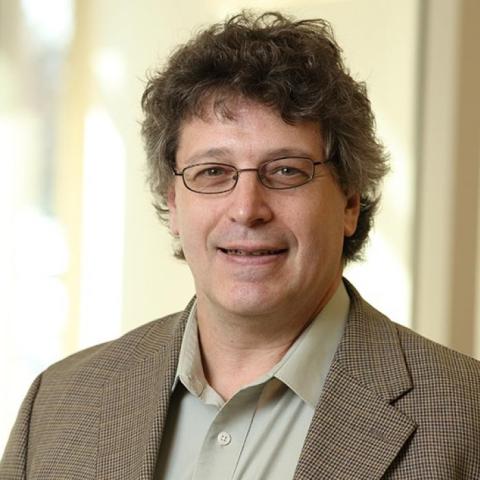
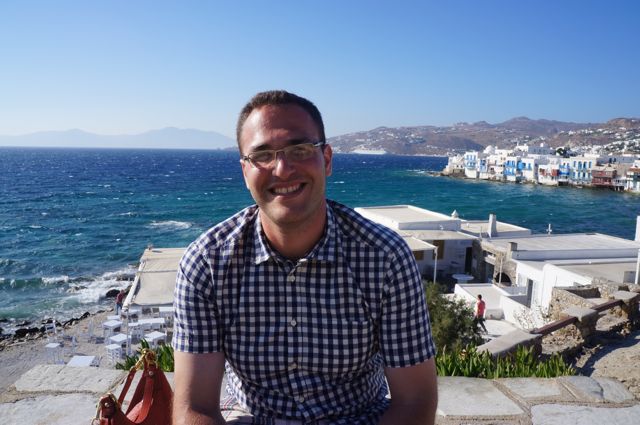
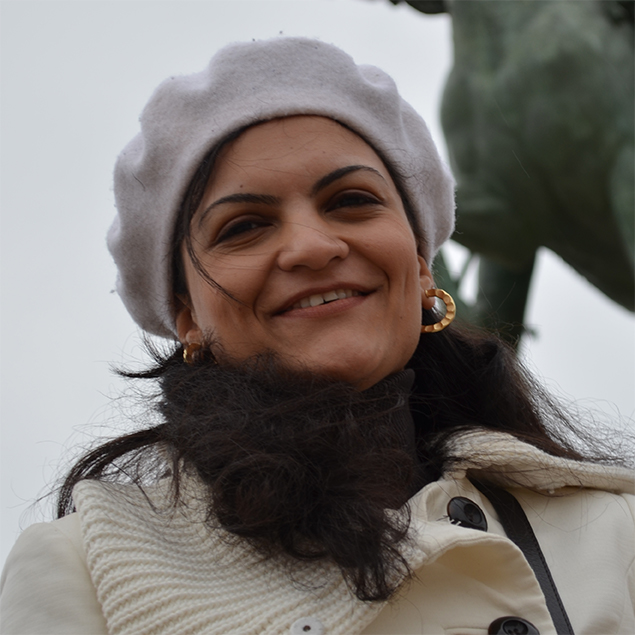
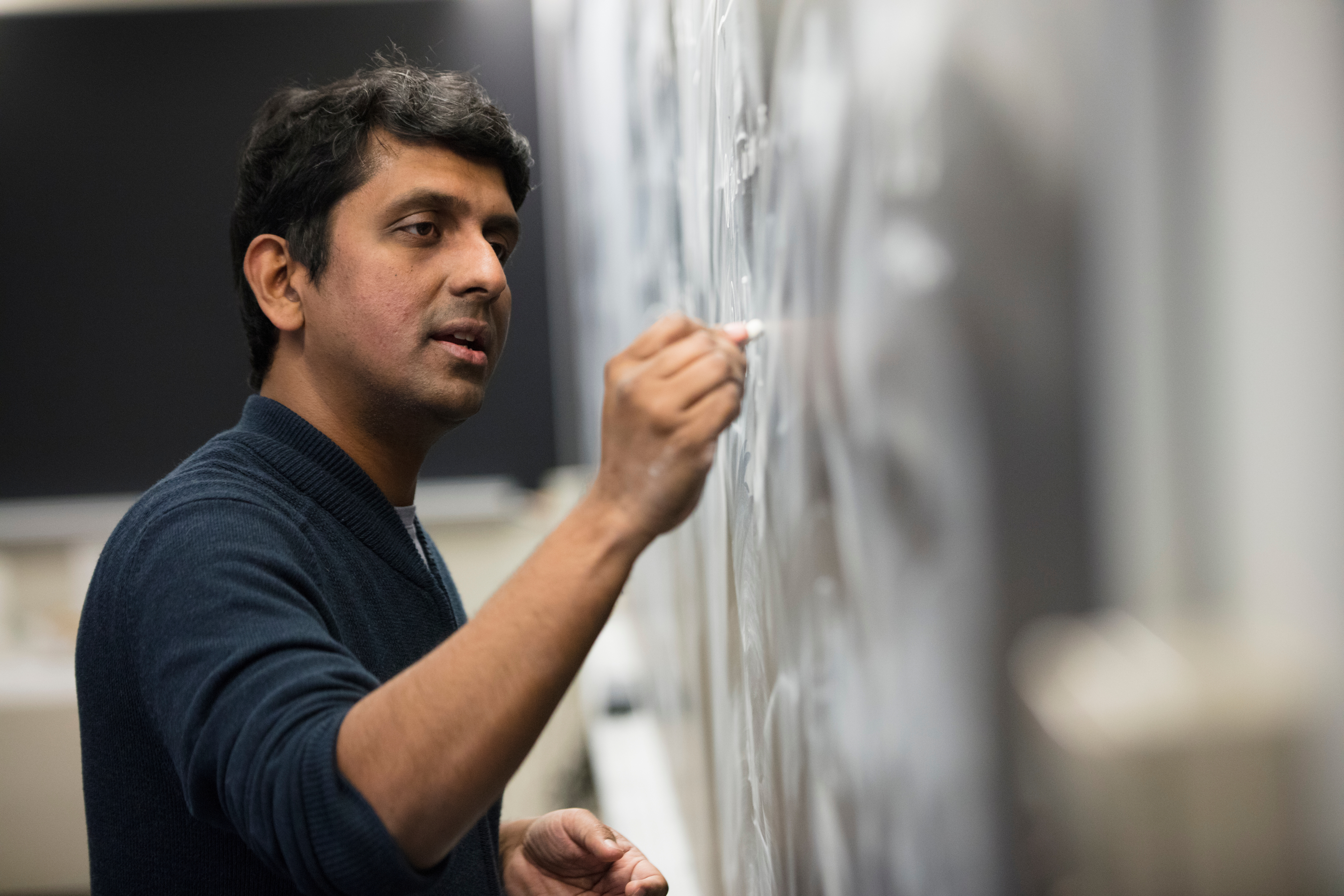
Svetlana Kotochigova is a Research Professor in the Department of Physics at Temple University. Her research focuses on theoretical atomic, molecular, and optical physics, with an emphasis on ultracold atoms and molecules, particularly lanthanide systems and precision measurements. She holds a PhD and MS from Saint Petersburg University (1986 and 1982). Her work integrates quantum-mechanical modeling of collisions and interactions among ultracold particles, including studies of magnetic lanthanide dimers, nonadiabatic effects in heavy atom molecules, and development of molecular sensors to detect CP-violating forces. Key projects include simulating Feshbach resonances in erbium and dysprosium gases, exploring quantum control via conical intersections, and designing magic traps for ultracold molecules. Notable contributions include theoretical frameworks for understanding chaotic dynamics in lanthanide dimers and advancing methods for trapping and manipulating ultracold species. She is a Fellow of the American Physical Society (since 2012) and collaborates closely with experimental groups to bridge theory and application in quantum systems.
Brooks H. Pate is the William R. Kenan, Jr. Professor of Chemistry at the University of Virginia, Department of Chemistry, within the College of Arts and Sciences. He leads an innovative research laboratory focused on developing and applying broadband rotational spectroscopy for advanced chemical analysis. B.S., University of Virginia, 1987 Ph.D., Princeton University, 1992 NRC Postdoctoral Fellow, National Institute of Standards and Technology (NIST), Gaithersburg, 1992–1993 Dr. Pate’s research centers on molecular rotational spectroscopy , particularly the development of chirped-pulse Fourier transform rotational spectroscopy . His work enables ultra-high-resolution analysis of molecular structure, dynamics, and stereochemistry. Key areas include intramolecular dynamics , molecular clusters (especially water hexamers), and quantitative chiral analysis with applications in pharmaceutical chemistry. His lab’s instruments operate across microwave to mm-wave frequencies, allowing analysis of both small (astrochemical) and large (biomolecular) species. The recent publications demonstrate a strong trend toward real-time, in situ chemical analysis and stereochemical monitoring in synthesis. The research combines experimental spectroscopy with quantum chemical modeling to extract structural and dynamical information. Applications span from fundamental quantum tunneling phenomena in water clusters to industrial process optimization in drug synthesis. Notable scientific awards include: 2016 William F. Meggers Award, The Optical Society UVa Innovator of the Year Multiple publications in Science recognized for groundbreaking impact Dr. Pate actively mentors graduate students and postdoctoral researchers, many of whom are co-authors on high-impact publications. His lab has secured significant research funding, leading to technological innovations that have spun out into a startup company focused on faster molecular analysis. The research is supported by instrumentation development, computational modeling, and strong interdisciplinary collaborations. The Pate Lab is a hub of innovation in physical chemistry, combining cutting-edge spectroscopic techniques with practical applications in pharmaceuticals and astrochemistry. The group operates advanced rotational spectrometers, including cavity-enhanced systems for real-time sampling from reaction flasks, and maintains strong ties with national labs and industry partners.
Isaac Goldbring is a Professor in the Department of Mathematics at the University of California, Irvine (UCI), where he is a leading member of the Logic and Foundations group. He also holds a courtesy appointment in the Department of Logic and Philosophy of Science. His research lies at the intersection of model theory, operator algebras, and nonstandard analysis, with significant contributions to combinatorial number theory and quantum complexity theory. His research interests include: Model theory, particularly continuous and metric model theory Applications of nonstandard analysis to algebra, analysis, and combinatorics Tracial von Neumann algebras and the Connes Embedding Problem Operator algebras and their logical properties Combinatorial number theory and ultrafilters Lie theory and geometric group theory Goldbring’s recent publications reflect a strong trend in applying model-theoretic tools to deep problems in operator algebras and quantum information. His work on the Connes Embedding Problem, especially in connection with the MIP*=RE result, has provided simpler, more direct model-theoretic proofs and stronger refutations. He has also contributed to the logical undecidability of operator algebraic properties and the model theory of C*-algebras and W*-probability spaces. His notable scientific contributions include editing the volume Model Theory of Operator Algebras and authoring influential books such as Ultrafilters throughout Mathematics and Nonstandard Methods in Ramsey Theory and Combinatorial Number Theory . He is the Editor-in-Chief of the Journal of Logic and Analysis . Goldbring currently holds an NSF grant on model theory, quantum complexity, and embedding problems in operator algebras. He has mentored several graduate students, including Ryan Burkhart, Alec Fox, Michael Hehmann, Jennifer Pi, and Jessica Schirle. He has organized major conferences, such as the 2023 North American Annual Meeting of the Association for Symbolic Logic at UCI, and frequently gives invited lectures worldwide. He is actively involved in collaborative research with prominent mathematicians such as Bradd Hart, Ilijas Farah, and Lou van den Dries, and has delivered lecture series at institutions like Yonsei University and the National University of Singapore.
Riham AlTawy is an Associate Professor and MTIS Program Director at the Department of Electrical and Computer Engineering, University of Victoria. She previously held positions as an NSERC Postdoctoral Fellow at the University of Waterloo and an NSERC Canada Graduate Scholar at Concordia University. Her research focuses on IoT security, blockchain consensus mechanisms, lightweight cryptographic primitives, and privacy-preserving protocols. She leads the IoTSec group, which develops application-specific cryptographic solutions for IoT authentication and privacy challenges. Education includes postdoctoral training at the Communication Security (ComSec) group (University of Waterloo) and doctoral studies at Concordia University. Her work has led to publications in top venues such as IEEE Transactions and CANS conferences. She actively seeks PhD research assistants and postdoctoral fellows in cryptographic research. Key research areas include authentication protocols for edge computing, privacy in cross-domain systems, and lightweight algorithms for constrained devices. Her group emphasizes practical solutions for real-world IoT security challenges.
Nicola Marzari is a Professor of Theory and Simulation of Materials at EPFL, where he also serves as Director of the National Centre for Computational Design and Discovery of Novel Materials (NCCD). He is Chairman of Psi-k, an international network for advanced materials' computational design. Previously, he held the Toyota Chair of Materials Engineering at MIT and leadership roles at the University of Oxford, including Director of the Materials Modeling Laboratory and a Statutory Chair in Materials Modeling. His education includes a Laurea in Physics (summa cum laude) from the University of Trieste, a PhD in Physics from the University of Cambridge under Prof. Michael C. Payne, and postdoctoral work at Rutgers University with Prof. David Vanderbilt. Marzari's research focuses on computational materials science, electronic structure theory, and high-throughput simulations. He develops methods for predicting material properties using first-principles approaches, machine learning, and quantum espresso software. Key areas include energy materials (batteries, thermoelectrics), magnetic materials, and optoelectronic systems. His work bridges fundamental physics and practical material design, emphasizing reproducible workflows and open-source tools like koopmans and AiiDA . His recent articles highlight advancements in machine learning for materials interfaces, dynamical Hubbard functionals, and thermal conductivity modeling. He actively contributes to EuroHPC initiatives for exascale materials design and OPTIMADE standards for materials data exchange. Marzari leads interdisciplinary teams at EPFL and collaborates globally on projects ranging from defect engineering in semiconductors to AI-driven materials discovery. His research aims to accelerate the development of sustainable energy and electronic technologies through computational innovation.
Vinod Vaikuntanathan is the Ford Foundation Professor of Engineering in the MIT EECS department and a principal investigator at MIT CSAIL. He holds a BTech from IIT Madras (2003), and SM/PhD degrees from MIT (2005/2009). His research focuses on cryptography, particularly fully homomorphic encryption (FHE), lattice-based cryptography, and quantum-resistant systems. He co-founded Duality Technologies as Chief Cryptographer. **Education:** BTech in Computer Science (2003), Indian Institute of Technology Madras SM in Electrical Engineering & Computer Science (2005), MIT PhD in Computer Science (2009), MIT **Research Interests:** His work spans FHE (enabling computations on encrypted data), lattice-based cryptography (post-quantum security), and intersections with quantum computing, machine learning, and privacy. He explores applications in secure computation, algorithm design, and cryptographic protocols. **Awards:** Recipient of the Gödel Prize (2022), Simons Investigator (2023), and MacVicar Faculty Fellow (2024). His work on FHE and lattice algorithms has earned widespread acclaim in cryptography and theoretical computer science. **Teaching & Mentorship:** Advanced cryptography courses at MIT (e.g., 6.5630, 6.876J) Advised PhD students (e.g., Sergey Gorbunov, Tianren Liu) and postdocs (e.g., Nir Bitansky, Mark Zhandry) now leading positions in academia and industry **Collaborations:** Organizer of the Charles River Crypto Day and MIT Cryptography Seminar Principal investigator on grants from NSF, DARPA, and Microsoft
Jun Xiao is an Assistant Professor in the Department of Materials Science and Engineering at the University of Wisconsin-Madison since August 2021. He holds additional affiliations with the Physics and Electrical & Computer Engineering departments. His research focuses on quantum materials, light-matter interactions, and terahertz optoelectronics. Ph.D. in Applied Science and Technology from UC Berkeley (2018) Postdoctoral scholar at Stanford University and SLAC National Accelerator Laboratory Bachelor's degree in Physics from Nanjing University Research interests include structure-property relationships in quantum materials, ultrafast optical engineering, and THz device development. His lab explores non-equilibrium phase transitions, quantum collective excitations, and photocarrier dynamics for energy and computing applications. Recent publications emphasize topological semimetals for THz sensing, stacking order engineering in 2D materials, and spin-mechanical coupling in antiferromagnets. His group integrates ultrafast lasers, quantum transport measurements, and in-situ strain control to study ferroelectricity, magnetism, and electron correlations. Scientific awards include Nature Communications Editor's Suggestion (2018) Nature Nanotechnology publication (2015) Jun Xiao's lab operates 2D material preparation and multimodal characterization facilities, including ultrafast laser systems, CW light sources, and cryogenic strain cells. He teaches courses on quantum materials and device physics, including MS&E 803 and MS&E 456.
Soumaya Cherkaoui is a Full Professor in the Department of Computer Engineering and Software Engineering at Polytechnique Montréal. Previously, she served as a Full Professor at Université de Sherbrooke and held industrial roles as an aerospace project manager. Her research integrates artificial intelligence with telecommunications, focusing on quantum computing, frugal edge intelligence, and applications in connected vehicles and IoT. Current Position: Full Professor, Polytechnique Montréal Prior Academic Role: Full Professor, Université de Sherbrooke Industry Experience: Aerospace Project Manager Research Interests: Convergence of AI and communications, quantum computing for networking, frugal intelligence at the edge, and applications in autonomous vehicles, industrial IoT, and smart grids. She leads government and industry-funded projects, including a $6 million quantum initiative in 2025. Recent Publication Trends: Her 2025–2024 work emphasizes quantum-enhanced anomaly detection (via QGANs), Open RAN slicing with quantum optimization, and reinforcement learning for secure cognitive radio networks. Topics span 5G/6G, vehicular networks, and zero-trust architectures. Scientific Awards: IEEE Communication Society Distinguished Lecturer (2020) ACM Mirela Notare Award (2023) IEEE Bio-Inspired Computing STC Leadership Award (2023) N2Women: Stars in Networking and Communications (2023) Best Paper Awards at IEEE ICC 2017, IEEE LCN 2021, ICCSPA 2024 Advising and Grants: Supervised 3 Master's students in 2024, with research on quantum GANs and federated learning for vehicular networks. Secured grants like the $6 million quantum project (2025) and participated in CFI-QC government funding (2022). Editorial and Leadership: Served as Associate Editor for IEEE, Wiley, and Elsevier journals. Chaired conferences like IEEE LCN 2019 and IEEE ICC2025, and held leadership roles in IEEE Communications Society committees.
Deyu Lu is a Physicist with continuing appointment at the Center for Functional Nanomaterials (CFN), Brookhaven National Laboratory, a position held since 2018, and concurrently serves as an Adjunct Professor in the Department of Materials Science and Engineering at Stony Brook University since 2012. His work bridges theoretical physics and materials engineering through advanced computational methodologies. Dr. Lu's educational background includes: B.S. in Physics, Tsinghua University, China, 1997 M.S. in Physics, Chinese Academy of Sciences, 2000 Ph.D. in Physics, University of Illinois at Urbana-Champaign, 2000 His research centers on developing first-principles computational methods including density functional theory and many-body perturbation theory to investigate materials properties. Current focus areas encompass catalytic behavior of 2D zeolites, computational modeling of X-ray spectroscopy (XPS/XAS/XES) for catalysis and battery systems, and machine learning applications for structure-property relationship analysis. This work positions him at the intersection of computational physics, materials characterization, and data science. Analysis of his 2017-2024 publications reveals a progressive integration of machine learning with spectroscopic techniques, particularly in X-ray absorption analysis. Key contributions include the Lightshow Python package for computational spectroscopy inputs and methods for decoding structure-spectrum relationships using physically constrained latent spaces, demonstrating significant advancement in data-driven materials characterization. Within Brookhaven's CFN, Dr. Lu actively contributes to the Theory/Computation group and has organized multiple workshops at NSLS-II and CFN User Meetings, including the 2023 Workshop on X-ray Absorption Spectroscopy Curation, the 2022 Symposium on Electronic Structure of Nanomaterials honoring Dr. Mark Hybertsen, and 2021-2022 workshops on machine learning for battery development and X-ray scattering.
Prof. CHEN Shuming is a Tenured Professor and Doctoral Supervisor at the Department of Electronic and Electrical Engineering , Southern University of Science and Technology (SUSTech) . He has held academic positions since joining SUSTech in 2013 and was promoted to Professor in 2024. Education: PhD in Electronic and Computer Engineering (HKUST, 2012), Master in Optical Engineering (Sun Yat-sen University, 2008), Bachelor in Optoelectronics (South China University of Technology, 2005) Research Focus: Prof. Chen specializes in quantum dot light-emitting diodes (QLEDs) and organic light-emitting diodes (OLEDs) , with expertise in device engineering , device physics , and display/lighting applications . His work includes: Novel device structures (tandem, top-emitting, flexible) Charge transport and exciton dynamics Low-cost fabrication techniques (inkjet printing, laminating) Publication Trends: His recent papers address QLED stability , high-efficiency architectures , and AC-compatible devices , reflecting advancements in quantum dot technology and consumer electronics integration . Scientific Awards: Guangdong Natural Science Award (2024) Shenzhen Youth Science and Technology Award (2017) China Invention Association Innovation Award (2024) International Society for Information Display Outstanding Paper Award (2018) Advising and Grants: Prof. Chen has supervised 6 doctoral students, 5 master's students, and multiple undergraduates. He has led over 10 major projects, including National Natural Science Foundation grants and National Key R&D Program initiatives.
Professor Henning Schomerus is a leading theoretical physicist at Lancaster University , specializing in condensed matter theory with a focus on quantum systems. His research spans topological photonics , non-Hermitian physics , quantum chaos , and mesoscopic transport . He leads the Theory Group and contributes to the Physics Strategy Committee . Education: Dr rer. nat. (University of Essen, 1997) Dipl. Phys. (University of Stuttgart, 1993) Research Interests include: Quantum transport in graphene and topological insulators , exploring disorder effects and quantum pumping Topological lasers and non-Hermitian photonic systems with combined amplification/absorption Quantum chaos and fractal Weyl laws in open systems Many-body localization and quantum noise phenomena Scientific Awards Senior Fellow of the Higher Education Academy (SFHEA) Fellow of the Institute of Physics (FInstP) Studenstiftung des Deutschen Volkes Scholarship JSPS Invitational Fellowship DFG Forschergruppe 760 Fellow Teaching encompasses advanced topics in Quantum Mechanics and Quantum Information Processing , with over 15 years of experience in undergraduate and postgraduate instruction.
Kirsten Moselund is a Professor at the Swiss Federal Institute of Technology in Lausanne (EPFL) and Head of the Laboratory for Nano and Quantum Technologies (LNQ) at the Paul Scherrer Institute (PSI) since 2022. She leads LNQ’s six research groups focused on nanotechnology and advanced nanomanufacturing quantum computing technologies with co-location of the ETHZ-PSI Quantum Computing Hub and affiliation to EPFL's Quantum Science and Engineering Center (QSE) . Her research spans semiconductor device physics and technology development, including III-V electronics nanophotonics topological devices cryogenic electronics with applications in quantum computing, optical communication, and integrated photonics. She received an ERC Starting Grant for hybrid photonic-plasmonic nanolasers. Recent publications focus on III-V photodetectors on silicon hybrid laser integration thermal management in nanocavities topological mode emission across Nature Communications , ACS Photonics , and Nature Electronics . Scientific awards include ERC Starting Grant and institutional roles such as Member of IHP Microelectronics Scientific Advisory Board Executive Board of Swiss Photonics Technical Program Committee member for IEDM conference At PSI, she oversees construction of the Park InnovAare cleanroom opening in 2024 and collaborates with international groups on theoretical foundations and simulations.
Florina Almenares Mendoza is an Associate Professor at the Telematics Engineering Department of Carlos III University of Madrid , where she also serves as the Director of the University Master's Degree in Cybersecurity. Her research focuses on addressing security challenges in emerging technologies such as IoT, post-quantum cryptography, and privacy-preserving systems. Email: florina.almenares@uc3m.es Contact: 916246234 Location: 4.0.F06 - Quevedo Towers (Leganés) Research Interests Florina's work spans cybersecurity , Internet of Things (IoT) , and post-quantum cryptography , with a focus on scalable authentication, quantum-resistant protocols, and privacy. She explores machine learning applications for security, federated identity management , and smart grid security frameworks. Recent Publications Her recent research includes papers on DNSSEC soft delegation, hybrid quantum security for TLS/IPsec, PUF-based authentication in IoT, and blockchain-enabled auditability. These studies emphasize IoT security , quantum-resistant algorithms , and privacy-enhancing technologies .
Raivo Jaaniso is an Associate Professor in Materials Science and Applied Physics at the Institute of Physics, Faculty of Science and Technology, University of Tartu. He has held this position since February 2024, having previously served as an Associate Professor from January 2021 to February 2024. Since June 2015, he has led the Sensor Technology Research Group and Laboratory at the University of Tartu. Dr. Jaaniso earned his Doctor's Degree in 1988 from the Institute of Physics, Estonian Academy of Sciences, with a dissertation titled "Spectrally selective processes of energy transformations in solid solutions of chlorophyll-like molecules," supervised by Jaak Kikas and Rein Avarmaa. His undergraduate studies in physics were completed at the University of Tartu from 1976 to 1981. Dr. Jaaniso's research focuses on graphene, sensor materials, gas sensors, optical spectroscopy, and pulsed laser deposition. His work spans materials science and applied physics, with particular emphasis on developing advanced sensor technologies for environmental monitoring and healthcare applications. He has pioneered research on graphene-based gas sensors, optical sensing materials, and nanomaterials for detection systems. Current projects include early diagnosis of neurodegenerative diseases with electronic nose technology and novel structures for gas microsensor arrays based on 2D materials. His recent publications reveal a strong trend toward graphene-TiO 2 heterostructures for gas detection, black aluminum films for thermal applications, and light-induced gas sensing mechanisms at room temperature. These works demonstrate his interdisciplinary approach combining materials science, optics, and sensor technology to address environmental and health monitoring challenges with practical solutions. University of Tartu Badge of Distinction (2023) Dr. Jaaniso has supervised numerous doctoral and master's students, including Martin Lind, Paniz Vafaei, and Ahmet Burak Baloglu who are currently completing their doctoral research. He has led significant research projects funded by the Estonian Research Council (totaling over €2 million in the past decade), European Commission, and industry partners including Infineon Technologies. His administrative roles include membership in the Graphene Flagship network and the NATO STO Exploratory Team on Novel Two-dimensional Materials for Military Applications. As head of the Sensor Technology Research Group, Dr. Jaaniso leads a multidisciplinary team focused on developing next-generation sensor technologies using 2D materials and advanced nanofabrication techniques. The group maintains active collaborations with international partners including the Czech Academy of Sciences and European research networks.
Matti Selg is an Associate Professor at the Institute of Physics within the Faculty of Science and Technology at the University of Tartu, Estonia. He has been actively teaching graduate courses in Quantum Mechanics, Analytical Mechanics, and Mathematical Physics since 2009, with increasing responsibility over the years. Currently, he oversees the entire teaching of three mandatory courses: Master's Course in Quantum Mechanics, Analytical Mechanics, and Theory of Complex Variables. Dr. Selg completed his education at the University of Tartu, earning a diploma in physics. He received his Doctor's Degree in 1981 from the University of Tartu with a dissertation titled "Relaxation and hot luminescence of self-trapped excitons in rare gas crystals," supervised by Vladimir Hižnjakov and Rein Kink. His additional qualification includes a PhD in solid state physics from the Institute of Physics of the Estonian Academy of Sciences. Professor Selg's research spans several interconnected areas of theoretical physics. His primary interests include quantum mechanics, particularly scattering theory and inverse problems, as evidenced by his numerous publications and textbooks on quantum scattering. He has made significant contributions to the understanding of reflectionless potentials and the Marchenko equation. More recently, he has focused on classical mechanics problems, particularly exploring Binet's equation and its connections to Newtonian and Einsteinian gravity theories, as well as revisiting historical problems like Galileo's swiftest descent problem. His work bridges mathematical physics with practical applications in molecular and solid-state physics. Analysis of his recent publications reveals a clear trajectory from quantum scattering theory toward classical mechanics and historical physics problems. While maintaining his expertise in quantum systems, particularly with hydrogen molecules and diatomic systems, he has expanded into historical and mathematical analyses of foundational physics concepts. His 2023-2025 publications show a particular focus on exact solutions to classical mechanics problems and their connections to modern gravitational theory. Dr. Selg has served in several administrative roles, including as a member of the Science Council of the Institute of Physics at the University of Tartu since 2001 and as a member of the Expert Commission for Exact Sciences of the Estonian Science Foundation (2003-2006). He has successfully led research projects funded by the Estonian Science Foundation, including studies on excimers in rare gases and their crystals. As an educator, Professor Selg has developed and taught advanced courses that integrate deep theoretical concepts with practical applications. His textbooks on quantum scattering theory demonstrate his commitment to making complex topics accessible to students. His recent work on the mathematical and physical perspectives of foundational problems suggests an evolving research program that connects historical scientific developments with contemporary theoretical challenges.