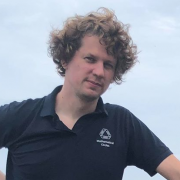
Dr James Cranch is a Teaching Fellow in the School of Mathematical and Physical Sciences at the University of Sheffield, holding critical roles as Chair of Schools Liaison, Disability Liaison Officer, Outreach Officer, and Tutor for Men Students. Based in G39c, Hicks Building, he actively contributes to academic administration and student support services. His research centers on homotopy theory and category theory, with significant interdisciplinary extensions into theoretical computer science. Key focus areas include concurrency theory, monoidal category applications, and homotopy type theory, demonstrating consistent exploration of algebraic structures in computational contexts since 2010. Recent publications (2020-2024) reveal a concentrated effort on convolution frameworks for concurrency, interacting monoidal systems in computing, and cohomological studies of partition algebras. These works, published in venues like Mathematical Structures in Computer Science, highlight his bridging of abstract mathematics with practical computing challenges through collaborations with Struth, Doherty, and others.
Jerry Li is an associate professor at the University of Washington's Paul G. Allen School of Computer Science & Engineering. Previously, he was a principal research scientist at Microsoft Research Redmond and was the VMware Research Fellow at the Simons Institute in Fall 2018. Li completed his Ph.D. at MIT under the supervision of Ankur Moitra and his master's degree at MIT under Nir Shavit. As an undergraduate, he also attended the University of Washington, where he worked on complexity of branching programs and hardness of learning problems in database theory and AI. His primary research interests focus on learning theory broadly defined, with specific expertise in quantum information theory, large foundation models, and high-dimensional statistics. He has a particular interest in applying analysis and analytic techniques to theoretical computer science problems. His recent work spans quantum computing, robust machine learning, and theoretical foundations of deep learning, showing a clear trend toward bridging quantum information theory with statistical learning theory. Li has made significant contributions to the fields of robust statistics, quantum computing, and theoretical machine learning, with numerous publications in top-tier conferences and journals including FOCS, STOC, NeurIPS, ICML, and Science. His work often bridges theoretical guarantees with practical applications in machine learning systems, particularly in the areas of robustness and quantum advantage. George M. Sprowls Award for outstanding Ph.D. theses in EECS at MIT Best Artifact Award at PPoPP 2015 for "The SprayList: A Scalable Relaxed Priority Queue" Communications of the ACM Research Highlights for "Robust Estimators in High Dimensions without the Computational Intractability" Invited to special issues of SIAM Journal on Computing for FOCS 2023 and STOC 2022 Spotlight Presentations at NeurIPS 2019 Notable top 5% paper at ICLR 2023 Li advises several Ph.D. students including Ziyun Chen (co-advised with Shayan Oveis Gharan) and numerous research interns. He has served on program committees for major conferences including STOC, SODA, and ITCS, and is co-organizing the FOCS 2024 Workshop on Recent Advances in Quantum Learning. His teaching includes courses such as CSE 422: Toolkit for Modern Algorithms and CSE 599-M: Robustness in Machine Learning, for which he has created publicly available video lectures.
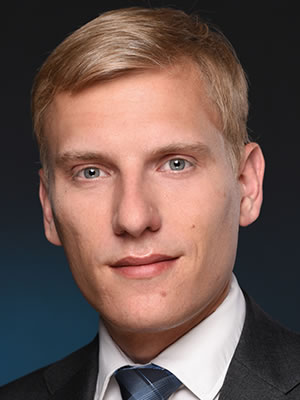
Norbert Mauser is a full Professor in the Department of Mathematics at the University of Vienna, where he has been affiliated since 1999. His research bridges mathematical analysis, computational physics, and applied mathematics with a focus on developing and analyzing numerical methods for complex physical systems. Mauser's research interests center on mathematical physics, particularly partial differential equations arising in quantum mechanics and magnetism. His work spans Schrödinger-type equations, many-body quantum systems, micromagnetics, and more recently, the integration of machine learning techniques with physics-based modeling. He has made significant contributions to the mathematical analysis of quantum systems, numerical methods for micromagnetics, and computational approaches to Bose-Einstein condensates. His recent publications (2023-2025) reveal a growing emphasis on machine learning applications in micromagnetics, with multiple papers on physics-informed machine learning for magnetic energy minimization and spin wave dynamics. This represents an evolution from his earlier foundational work on Schrödinger equations and quantum systems toward more applied computational approaches that integrate AI with physical modeling. His research consistently demonstrates strong mathematical rigor combined with practical computational implementations. Mauser leads or participates in multiple significant research projects including 'Adaptive Splitting for Magneto-Hydrodynamics in Astrophysics' (2022-2026), 'Taming Complexity in Partial Differential Systems' (2017-2026), and 'Numerical simulation of A-type and white dwarf stars' (2021-2023). He has an extensive collaboration network across Europe, frequently working with researchers in computational physics and applied mathematics. His academic activities include organizing conferences such as 'Inverse-Design Magnonics' (2024) and presenting invited talks on absorbing boundary conditions for quantum wave equations. With over 80 publications spanning more than two decades, Mauser maintains an active research program that continues to evolve with contemporary challenges in computational mathematical physics.
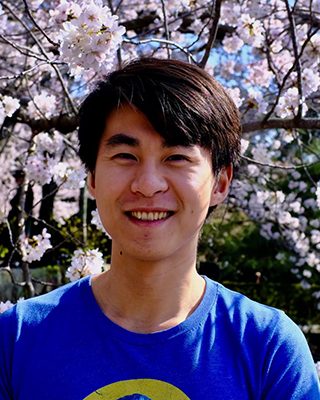
Professor Yuerui Lu is a distinguished academic at the Australian National University (ANU), holding a position in the School of Engineering. He serves as a Program Manager and Chief Investigator in the ARC Centre of Excellence for Quantum Computation and Communication Technology, demonstrating leadership in quantum research and technology development. Professor Lu received his Ph.D. degree from Cornell University in 2012 and his B.S. degree from the University of Science and Technology of China. His educational background has provided a strong foundation for his interdisciplinary research spanning quantum technologies, nanomaterials, and biomedical devices. Professor Lu's research focuses on cutting-edge areas at the intersection of quantum physics, materials science, and engineering. His work explores 2D quantum materials and optoelectronic devices, MEMS sensors and actuators, quantum sensors, and novel biomedical devices. With a particular emphasis on translating fundamental discoveries into practical applications, his research bridges the gap between theoretical concepts and real-world implementations. His team has made significant breakthroughs in understanding and manipulating the properties of atomically thin materials for next-generation electronic and photonic devices. Analysis of his recent publications reveals a strong trend toward quantum communication technologies, nonlinear optical phenomena in 2D materials, and the development of practical applications for quantum sensors and biomedical devices. Professor Lu's exceptional contributions to science have been recognized with numerous prestigious awards: Walter Boas Medal from the Australian Institute of Physics (2025) Fellow of Optica (2025) Fellow of Australian Institute of Physics (2024) Prime Minister's Prizes for Science - Malcolm McIntosh Prize for Physical Scientist of the Year (2023) Pawsey Medal from Australian Academy of Science (2023) NHMRC Investigator Award (2022) Professor Lu has demonstrated exceptional mentorship, guiding numerous PhD and honors students to success. Several of his students have received prestigious awards, including Dean's Awards for Excellent PhD Theses and winners of the 3MT (3 Minute Thesis) Competition. His former students have gone on to positions at leading institutions including University of Cambridge, Harvard, and MIT. His research is supported by multiple competitive grants, including ARC Research Hubs focused on quantum technologies, energy efficiency, and zero-emission power generation. Professor Lu leads a dynamic research group at ANU that combines expertise in nanofabrication, optical characterization, and quantum device engineering. His team collaborates extensively with international partners and industry stakeholders to advance quantum technologies and develop innovative solutions for healthcare, communications, and energy applications.
Pavlo O. Dral serves as Associate Professor at Xiamen University's Department of Chemistry, College of Chemistry and Chemical Engineering since 2019, following postdoctoral research at the Max-Planck-Institut für Kohlenforschung. His academic credentials include: BS (2004-2008), National Technical University of Ukraine M.Sc. (2008-2010), University of Erlangen-Nürnberg Mag. (2008-2010), National Technical University of Ukraine Dr. (2010-2013), University of Erlangen-Nürnberg Dr. Dral's research pioneers the integration of Machine Learning with Quantum Chemistry , focusing on developing the MLatom package for atomistic simulations, creating accurate NDDO-based semiempirical methods, and designing hybrid computational approaches. His work targets efficient solutions for complex physicochemical problems through innovative algorithm development. Analysis of his 15 publications (2014-2020) reveals consistent advancement in machine learning applications across quantum chemistry domains, including potential energy surface modeling, excited-state dynamics, and molecular property prediction. Key thematic trends involve hierarchical learning architectures, big data integration for quantum approximations, and methodological innovations in organic semiconductor characterization. Information regarding scientific awards, student advising, research grants, and laboratory teams is not provided in the source documentation.
Xiang Wang serves as an Associate Professor in the Department of Chemistry at Xiamen University's College of Chemistry and Chemical Engineering, maintaining his office in Room 434 of the Chemical Building since 2020. His research program bridges experimental nanoscience and electrochemistry with strong institutional ties to Xiamen University's PCOSS research group. His academic journey began with BS (2007) and PhD (2013) degrees from Xiamen University, followed by research assistantship (2014-2016) and postdoctoral training (2016-2020) at the same institution. This continuous affiliation demonstrates deep integration within Xiamen's chemical research ecosystem. Dr. Wang's research centers on advanced nanoscale spectroscopic techniques , particularly Tip-enhanced Raman spectroscopy (TERS) and Surface-enhanced Raman spectroscopy (SERS) . His work explores Nano-optics , Nanospectroelectrochemistry , and Nanoscale in-situ characterization to investigate 2D materials, electrocatalytic processes, and biomolecular structures at unprecedented resolution. This interdisciplinary approach merges physical chemistry with materials engineering to solve fundamental interface science problems. Analysis of his 2019-2024 publications reveals dominant themes in nanoscale characterization of 2D materials (particularly MoS 2 ), electrocatalyst evolution monitoring , and novel spectroelectrochemical methodologies . His work consistently appears in high-impact journals including Nature Catalysis , Chemical Society Reviews , and Advanced Materials , demonstrating significant contributions to nanospectroscopy and materials characterization fields.
Prof. Simon Adrian holds the Chair of Theoretical Electrical Engineering at the Institute of General Electrical Engineering, University of Rostock, Germany. His research focuses on computational electromagnetics with critical applications in antenna design, electromagnetic compatibility, and medical technology. He serves as Associate Editor for the IEEE Transactions on Antennas and Propagation and contributes to the IEEE Antennas and Propagation Society Education Committee, demonstrating significant academic leadership in the global electromagnetics community. His primary research addresses low-frequency instability challenges in electromagnetic integral equations through innovative numerical techniques. Key areas include Calderón preconditioners, quasi-Helmholtz projectors, B-spline discretizations, and adaptive cross approximation methods. These approaches enable robust simulations across diverse applications from radar systems and antenna design to biomedical problems like deep brain stimulation and electroencephalography. Recent work emphasizes broadband stability and efficient solvers for multiply-connected geometries. Analysis of Prof. Adrian's publication trends (2023-2025) reveals a concentrated effort on overcoming fundamental limitations in electromagnetic modeling. His work consistently targets low-frequency regimes where traditional methods fail, developing mathematically rigorous stabilization techniques while expanding into biomedical applications. The integration of isogeometric analysis with specialized discretization strategies represents a cutting-edge direction in computational electromagnetics. Professional engagement includes active membership in the Institute of Electrical and Electronics Engineers (IEEE), IEEE Antennas and Propagation Society, and Union Radio-Scientifique Internationale (URSI), reflecting his commitment to advancing the field through collaborative research and scholarly communication.
David Bernal Neira is an Assistant Professor in the Davidson School of Chemical Engineering at Purdue University, joined in August 2023. His research focuses on optimization algorithms, quantum computing, and computational methods applied to chemical and energy systems. He holds a PhD in Chemical Engineering from Carnegie Mellon University and degrees from Universidad de Los Andes, Colombia. Education: PhD in Chemical Engineering, Carnegie Mellon University (2017–2021) M.Sc. in Chemical Engineering, Universidad de Los Andes (2014–2016) B.A.Sc. in Chemical Engineering, Universidad de Los Andes (2010–2014) B.A.Sc. in Physics, Universidad de Los Andes (2011–2018) Research Interests: His work bridges classical and quantum optimization, with applications in process systems, energy, and chemical engineering. Key areas include mathematical modeling, quantum annealing, and federated learning. He develops algorithms and software tools, such as GDP and QUBO frameworks, and explores quantum computing for chemistry and combinatorial problems. Publications: Over 30 peer-reviewed articles since 2020, focusing on quantum optimization, federated learning, and algorithm design. Recent work emphasizes benchmarking quantum hardware and hybrid quantum-classical methods. Awards: Fellow, National Academies (2025, 2023) Best Talk Award (2022) Outstanding Teaching Assistant (2019) Advising & Grants: Supervises graduate students in quantum computing and optimization. Collaborates with NASA, USRA, and industry on quantum projects. Formerly an Associate Scientist at NASA QuAIL and Adjunct Professor at Carnegie Mellon. Labs & Teams: Leads the SECQUOIA Research Group at Purdue, focusing on systems engineering via quantum and classical optimization. Active in federally funded initiatives and industry partnerships.
Ralph M. Kaufmann is a Professor of Mathematics at Purdue University, with courtesy appointments in the Departments of Physics & Astronomy and Philosophy. His roles include co-Chief Editor for Higher Structures and Area Editor for European Journal of Pure and Applied Mathematics . He is a member of the Purdue Quantum Science and Engineering Institute. Education: PhD in Mathematics (University of Bonn, 1997), M.S. in Physics (Bonn, 1994), and M.A. in Philosophy (Bonn, 1996). Research focuses on Algebraic Topology, Algebraic Geometry, Mathematical Physics, and Higher Structures, with specific interests in Feynman Categories, Topological Insulators, Quantum Computing, and TDA in Neuroscience. He has organized major conferences and programs, including the 2016 Trimester Program on Higher Structures in Geometry and Physics at the Max-Planck Institute. Teaching includes advanced courses like MA 527 (Mathematics for Engineers) and specialized topics such as Quantum Computing (MA 495 QC) and Homological Algebra (MA 595 HAM). He maintains an active record of mentoring students and postdocs.
Wei Ai is an Assistant Professor at the University of Maryland, affiliated with the College of Information (INFO) and the Institute for Advanced Computer Studies (UMIACS). His research focuses on data science for social good (DSSG), integrating machine learning, causal inference, and experimental design to address societal challenges in education, virtual collaboration, and quantum computing. He leads the Center for Educational Data Science and Innovation (EDSI) and has secured grants from the NSF, Gates Foundation, and Walton Family Foundation for projects like M-Powering Teachers and classroom quality assessment tools. Education: PhD in Information from the University of Michigan (advised by Qiaozhu Mei). Previous academic roles include teaching at the University of Michigan and Peking University in courses like Data Mining and Information Retrieval. Research Interests: Machine Learning and Causal Inference, AI for Education, Virtual Teams and Social Identity, Large Language Models for Social Applications. He has published in venues such as PNAS, Management Science, ACL, and the Web Conference. Grants: Major awards include a NSF grant on middle-grade math instruction analysis (with Min Sun) and a Gates Foundation grant for classroom dataset development (with Jing Liu). Labs/Teams: CLIP Lab member, collaborating on interdisciplinary projects with UMIACS and the Joint Quantum Institute. Prospective students: Open to mentoring PhD students through INFO and Computer Science programs. Actively supervises current students in education technology and quantum computing domains.
Dr. Leah Casabianca is an Associate Professor in the Department of Chemistry within Clemson University's College of Science. She joined the faculty in 2014 and was promoted to associate professor with tenure in 2020. Her research group, the NanoBio NMR Lab, focuses on developing advanced NMR methodologies to study interactions between nanomaterials and biologically relevant molecules. She teaches undergraduate and graduate courses including Physical Chemistry, Atomic and Molecular Structure, and Computational Quantum Chemistry. Educational Background: Postdoctoral Fellow, Chemical Physics, Weizmann Institute of Science (2010-2013) Postdoctoral Fellow, Analytical Chemistry, University of Illinois at Chicago (2008-2010) Ph.D., Physical Chemistry, Georgetown University (2008) B.S., Chemistry, Rice University (2002) Dr. Casabianca's research program centers on developing NMR methods for studying nanomaterial-biomolecule interactions, with applications in drug delivery, biomedical devices, materials science, and nanomaterials toxicity. Her group utilizes a variety of NMR techniques including solution and solid-state NMR, calculated chemical shifts, and Dynamic Nuclear Polarization. She has pioneered applications of Saturation-Transfer Difference (STD) NMR for examining molecular binding to nanoparticle surfaces, which has become a significant methodology in nanotoxicology and nanomedicine research. Analysis of her publication record reveals a consistent focus on methodological advancements in NMR for nanomaterial characterization, with increasing emphasis on environmental implications of nanoscale plastics. Her recent work shows expansion into multiphase NMR studies and dual-modality approaches combining fluorescence with NMR. The research demonstrates strong interdisciplinary connections between chemistry, materials science, environmental science, and biomedical engineering. Scientific Recognition: 2018 College of Science Rising Star in Discovery Award Multiple student awards under her mentorship including ENC travel awards and poster prizes Mandel Fellowship and SciSAB Grant awarded to her students Dr. Casabianca has successfully mentored numerous graduate and undergraduate students, with several completing Ph.D. dissertations under her supervision. Her research program is supported by significant funding from the National Science Foundation through multiple grants including Environmental Chemical Science (CHE-2304888), Chemical Measurement and Imaging (CHE-1751529), and Major Research Instrumentation Program (CHE-1725919 and CHE-2407820). She also receives support from the American Chemical Society Petroleum Research Fund (58738-DNI6). Beyond research, she is actively involved in educational outreach through Project WISE Summer Camp, Peer-Wise Experience, and as faculty co-advisor for Clemson Student Affiliates of the American Chemical Society. The NanoBio NMR Lab maintains an active research program with regular participation in conferences including the Southeastern Magnetic Resonance Conference (SEMRC), which Dr. Casabianca helped organize in 2018. The lab has a strong collaborative network and regularly publishes in high-impact journals across chemistry, materials science, and environmental science disciplines.
Arezoo Islami is an Assistant Professor of Philosophy of Science and Mathematics at San Francisco State University (SFSU), serving as GTA Coordinator. She holds a Ph.D. from Stanford University, where she was also a Postdoctoral Fellow. Her research focuses on the philosophy of mathematics, philosophy of physics, phenomenology, and the historical construction of scientific knowledge. She explores the dynamic relationship between mathematics and physics, emphasizing their philosophical and epistemological implications. Education: Ph.D. in Philosophy, Stanford University Postdoctoral Fellowship at Stanford University Research Interests: Dr. Islami investigates the nature of mathematical discovery, the applicability of mathematics in physics, and the historical evolution of scientific concepts. Her work bridges phenomenological perspectives with analytic philosophy, addressing questions like 'Who Discovered Imaginaries?' and rethinking Wigner’s puzzle of mathematics' effectiveness in the natural sciences. Awards: Iranian Diaspora Research Fellowship Marcus Early Career Research Award Marcus Undergraduate Research Fellowship Extraordinary Ideas Grant Advising & Grants: While no specific advisees are listed, her grants (e.g., Extraordinary Ideas Grant) reflect support for innovative projects at the intersection of mathematics, physics, and philosophy. She actively engages in undergraduate research mentorship through the Marcus Fellowship program. Labs/Teams: Though no formal labs are mentioned, her interdisciplinary work likely involves collaborations across philosophy, mathematics, and physics departments at SFSU and beyond.
Steffen Strauch is a Professor of Physics in the Department of Physics and Astronomy at the University of South Carolina, affiliated with the McCausland College of Arts and Sciences. His research focuses on baryon structure, muon-proton scattering, and photoproduction experiments addressing nuclear physics challenges such as the proton-radius puzzle and chiral symmetry restoration. Education: Ph.D. in Physics, Technische Hochschule Darmstadt, 1998 Dipl. Phys., Technische Hochschule Darmstadt, 1993 Research Interests: High-precision lepton-scattering experiments (e.g., MUSE at PSI) Photoproduction studies to resolve baryon spectroscopy issues Nuclear medium effects on hadron properties Radiative corrections and two-photon exchange analyses Key Collaborations: MUSE experiment at Paul Scherrer Institut CLAS and Hall A Collaborations at Jefferson Lab Synergistic Activities: Co-spokesperson for MUSE, co-organizer of workshops on hadron physics, reviewer for proposals and journals, and mentor for science outreach programs.
Hugo J. Woerdeman is a Professor in the Department of Mathematics at Drexel University, where he has served as Department Head since 2004. He holds a PhD in Mathematics from Vrije Universiteit, Amsterdam (1989), and has held academic positions at institutions including the College of William and Mary and the University of California, San Diego. His research focuses on Matrix and Operator Theory, Systems Theory, Signal Processing, and Quantum Computing. Dr. Woerdeman’s academic contributions include over 100 peer-reviewed articles and four authored books, such as Linear Algebra: What You Need to Know (2021) and Advanced Linear Algebra (2016). He has also edited multiple volumes in operator theory and matrix analysis. His work bridges theoretical mathematics with applications in signal processing, quantum computing, and systems design. He has received prestigious awards including the 1995 Alumni Fellowship Award for Excellence in Teaching and the title of Margaret L. Hamilton Professor of Mathematics. His research collaborations span institutions globally, including École Nationale Supérieure des Techniques Avancées and Princeton University.
Corrado Loglisci is an Assistant Professor at the Department of Computer Science, University of Bari Aldo Moro, Italy. His research focuses on Temporal Data Mining , Machine Learning , and Quantum Computing , with applications in bioinformatics, medical informatics, and cybersecurity. He earned his Ph.D. in Computer Science with a thesis on temporal projection in longitudinal data. Research Highlights : Temporal Learning, Textual Data Mining, Quantum-Classical Hybrid Systems Collaborations : IRSTEA Research Institute (France), Aristotle University of Thessaloniki (Greece) His publications address dynamic network analysis , emotion detection in social media , and quantum-enhanced classification . He contributes to program committees and journal editorial work, including a special issue on Mining Complex Patterns in the Journal of Intelligent Information Systems . Notable contributions include the jKarma framework for change detection and studies on concept drift robustness in intrusion detection systems. His work spans European/National research projects, leveraging machine learning for tasks like mobile crowd sensing trustworthiness prediction (2020) and investor behavior analysis (2023-2025).