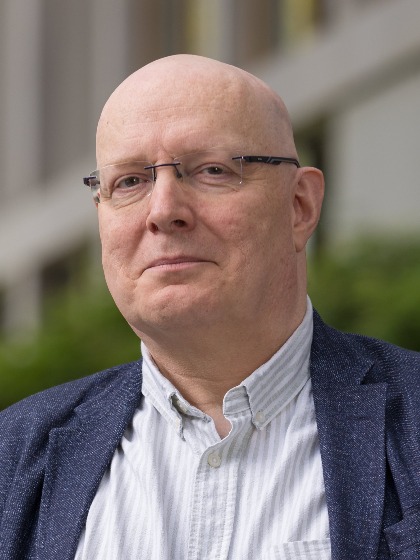
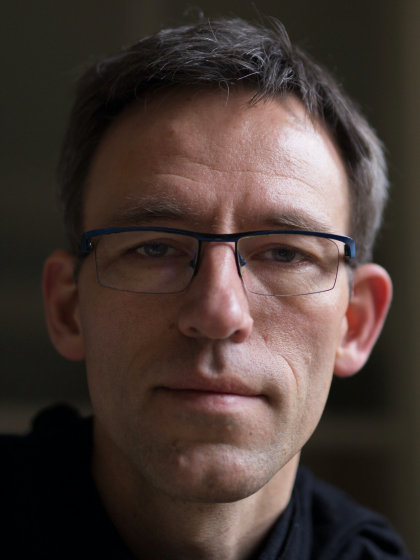
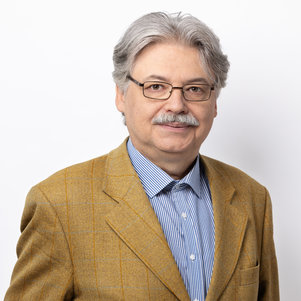
Prof. Rob Timmermans is a Professor of Theoretical Physics and Vice-Dean for Education at the University of Groningen (UG). He is affiliated with the Faculty of Science and Engineering and the Precision Frontier — Van Swinderen Institute for Particle Physics and Gravity. His research focuses on theoretical particle physics, quantum mechanics, and precision measurements, particularly in electric dipole moment (EDM) searches using molecules like BaF. His work includes developing methods for molecular beam manipulation, phase-space analysis, and symmetry violation studies. He has contributed to collaborations such as NL-eEDM, advancing techniques for EDM detection and precision physics. Prof. Timmermans has received nominations for teaching awards, reflecting his commitment to education. Research highlights include studies on nucleon decay, antinucleon-nucleon interactions, and chiral effective field theory. His lab activities involve collaborations on laser-cooled molecules and trapping techniques. Prof. Timmermans’ articles often address fundamental physics questions, such as Lorentz violation in beta decay and parity violation in molecular systems. Awards: Nominated for Faculty Teaching Award 2014, Teacher of the Year 2014-15. Grants/Advising: Leads projects on EDM searches and particle physics, with active roles in international collaborations. Labs/Teams: Van Swinderen Institute, Precision Frontier group.
Prof. dr. ir. C.H. (Caspar) van der Wal is a Full Professor in Physics of Quantum Devices at the Faculty of Science and Engineering , University of Groningen. His research focuses on spintronic and quantum information functionalities using electron/nuclear spins in semiconductor devices, combining quantum optical and electron transport methods. PhD in Quantum Transport (Delft University of Technology, 2001) Postdoc in Quantum Optics at Harvard University (2001-2003) Scientific Director of Zernike Institute for Advanced Materials (2016-2022) Research keywords include Quantum Optics , Spintronics , Quantum Information , and Semiconductor Physics . Recent work explores 2D/3D semiconductor heterostructures , spin defects in SiC , and transition metal dichalcogenides . His scientific contributions have earned him the NWO-Vidi Grant (2005) , ERC Starting Grant (2011) , and multiple teaching awards. Publications since 2001 span topics like quantum superpositions in superconducting circuits, spin relaxation in quantum dots, and telecom-ready spin centers in silicon carbide. Grants : NWO-Vidi (2005), ERC Starting Grant (2011) Leadership : Scientific Director, Zernike Institute (2016-2022) Teaching : Teacher of the Year (2015), Education Prize (2012) Current affiliations include the Physics of Nanodevices group at the Zernike Institute for Advanced Materials. Collaborations span institutions like MIT, Harvard, and AMOLF.
Professor Jasper van Wezel is a distinguished academic in the field of Condensed Matter Theory at the University of Amsterdam's Faculty of Science, where he serves as Professor in the Institute for Theoretical Physics (ITFA) within the Institute of Physics. With a career spanning over two decades, he has progressed from Assistant Professor (2014-2016) to Associate Professor (2016-2024) and currently holds the position of Professor since 2024. His academic journey began with a PhD in theoretical condensed matter physics from Leiden University in 2007, followed by prestigious fellowships at Argonne National Laboratory and Homerton College, Cambridge. PhD in theoretical condensed matter physics (cum laude), Leiden University, 2007 Master's diploma in theoretical condensed matter physics (cum laude), Leiden University, 2003 Dutch VWO Diploma (cum laude), Dalton Scholengemeenschap, Den Haag, 1997 US High School Diploma (cum laude), Sanford High School, Maine, USA, 1998 Professor van Wezel's research focuses on several interconnected areas within Condensed Matter Theory. His work explores competing instabilities in Charge Density Wave materials, including Superconductivity and Charge Order, Combined Charge and Orbital Order, and Transition-metal dichalcogenides. He has made significant contributions to Topology in Condensed Matter, particularly examining the Role of crystal symmetries and Topology in non-Hermitian systems. A major theme in his research involves investigating the Connections between Quantum and Classical behaviour, with special emphasis on Spontaneous Symmetry Breaking both in equilibrium (The role of the Thin Spectrum) and dynamically (Spontaneous loss of Unitarity). Analysis of Professor van Wezel's recent publications reveals a strong focus on quantum phenomena in condensed matter systems, with particular attention to topological aspects, symmetry breaking, and connections to fundamental physics concepts like black hole thermodynamics. His work often bridges theoretical concepts with potential experimental realizations, as evidenced by studies on electron patterns in materials like TaS2 and theoretical frameworks for understanding quantum phase transitions. Bristol Physics Teaching Award (2014) Students' Award for Outstanding Teaching (2014) Fellow of the Higher Education Academy (2014) Aneesur Rahman Fellowship at Argonne National Laboratory (2010-2012) Junior Research Fellowship at Homerton College, Cambridge (2007-2010) Physics 'Discovery of the year' by Leiden University Physics department (2005) 'Onderwijsprijs Natuurkunde' teaching award (2004/2005) Professor van Wezel has secured numerous research grants including an ENW-M grant (2023), an ENW-Groot project with Leiden University (2021), and a prestigious VIDI personal grant from NWO (2014). He has supervised over 50 students at various levels, including PhD candidates, MSc students, and BSc students, fostering the next generation of physicists. His leadership extends to organizing conferences, serving on PhD committees, and holding administrative roles such as chair of the educational committee for the Dutch Research School in Theoretical Physics. His research group at the University of Amsterdam's Institute for Theoretical Physics maintains active collaborations with institutions worldwide, including Leiden University, University of Cambridge, University of Bristol, and research centers in France, Germany, and Poland. The group's work combines analytical theoretical approaches with computational methods to tackle fundamental questions in quantum condensed matter physics.
Prof. dr. Steven Hoekstra is an Associate Professor of Atomic and Molecular Physics at the University of Groningen's Faculty of Science and Engineering, within the Van Swinderen Institute. His research focuses on precision measurements using cold molecules to explore fundamental physics, including Stark deceleration, laser cooling, and searches for physics beyond the Standard Model. He leads the NL-eEDM program at Nikhef, investigating the electron's electric dipole moment. Hoekstra is also involved in educational innovation, having received the Teacher of the Year award (2020) and a Senior Teacher Qualification (2023). He has supervised over 11 PhD theses and currently mentors 5 students. His work combines experimental techniques with theoretical insights, addressing questions like symmetry violations and quantum dynamics. Key projects include manipulating BaF molecules with electrostatic fields and exploring levitated nanoparticles as sensors. Hoekstra has secured major grants, including NWO VICI (2022) and VIDI (2013), and collaborates internationally on projects like the European Strategy for particle physics. Recent articles highlight advancements in molecular beam control, spin-precession methods for EDM searches, and opportunities in radioactive molecules. He actively participates in the Physics Olympiad Netherlands as chair, contributing to science outreach and education.
Prof. Casper Hoogenraad is a full professor in Molecular Neuroscience at the Department of Cell Biology, Faculty of Science, Utrecht University. His research focuses on understanding how intracellular protein trafficking underlies neuronal development and function, with particular emphasis on the microtubule cytoskeleton, synaptic cargo trafficking, and synaptic plasticity. He leads an active research group within Utrecht University's Cell Biology department and collaborates extensively with other neuroscience research groups. Education: PhD, Erasmus University Rotterdam (1996-2001) Postdoc, Massachusetts Institute of Technology (2002-2005) Hoogenraad's research spans three main themes: cytoskeleton dynamics during neurodevelopment and synaptic plasticity, motor proteins and adaptors as regulators of synaptic transport, and psychiatric and neurologic disease disorders linked to intracellular transport. His work combines genetics, biochemistry, molecular, and cellular biology methods in in vitro (neuron cultures), ex vivo (brain slices), and in vivo (mice) systems, along with advanced microscopy techniques including immunofluorescent confocal microscopy, high-resolution live cell imaging, and photo-activated localization microscopy (PALM). Analysis of Hoogenraad's recent publications reveals a strong focus on microtubule organization, neuronal polarity, and the molecular mechanisms underlying synaptic function and dysfunction. His work frequently explores how disruptions in intracellular transport contribute to neurological disorders including Alzheimer's disease, schizophrenia, and autism spectrum disorders, with particular attention to the relationship between cytoskeletal organization and cargo transport in neuronal compartments. Scientific Awards and Memberships: ZonMW-VIDI (2004) European Young Investigators (EURYI) award (2005) NWO-ALW VICI (2011) ERC Consolidator grants (2013) FENS-Kavli Network of Excellence (2014) European Molecular Biology Organization (EMBO) (2015) Young Academy of Europe (YAE) (2015) IBRO Kemali Prize (2016) Hoogenraad leads a research group studying neuronal development and function, with a particular focus on how intracellular transport mechanisms contribute to both normal brain function and neurological disorders. His laboratory employs a multidisciplinary approach combining molecular, cellular, and systems neuroscience techniques to investigate the molecular basis of neuronal polarity, synaptic plasticity, and the pathogenesis of neurological disorders. He has secured significant research funding through prestigious grants including ERC Consolidator grants. The Hoogenraad lab operates within the Cell Biology department at Utrecht University, collaborating with other research groups focusing on cellular dynamics, biophysics, and neurobiology. The lab utilizes advanced microscopy techniques including immunofluorescent confocal microscopy, high-resolution live cell imaging (spinning disc microscopy and total internal reflection fluorescence microscopy), and quantitative analysis using advanced high-resolution microscopy (photo-activated localization microscopy). Current lab technicians include Phebe Wulf and Bart de Haan.
Alberto G. Curto is an Assistant Professor at Eindhoven University of Technology, specializing in nanophotonics and semiconductor optoelectronics. He leads research on light-matter interactions at the nanoscale, focusing on atomically thin semiconductors and chiral nanophotonics applications. His work spans sensing, imaging, and spectroscopy, with contributions to directional light emission and chiral detection technologies. Education BSc in Physics, Universidad de Salamanca (2002–2007) MSc and PhD in Photonics, ICFO – The Institute of Photonic Sciences (2008–2013) Postdoctoral Fellow at Stanford University (2013–2016) Research Interests Curto’s research explores semiconductor nanophotonics for sensing and imaging, leveraging atomically thin materials and chiral optics. Key areas include: Enhanced light-matter interactions using nano-optical structures Chiral detection via dielectric resonators and metasurfaces Exciton dynamics in 2D semiconductors Publications His work emphasizes practical applications of nanophotonics, with recent studies on chiral sensing enhancement, silicon metasurfaces, and exciton manipulation. Over 47 peer-reviewed articles highlight his contributions to light confinement and directional emission. Awards ERC Starting Grant (2020) NWO START-UP Grant (2018) OSA Senior Member (2021) ICFO PhD Thesis Award (2014) Grants & Projects He leads the Zwaartekracht PSN Research Centre for Integrated Nanophotonics (2014–2025), focusing on nanowires, photonic crystals, and photonics applications. Labs & Teams His research group at TU Eindhoven develops novel nanophotonic devices and chiral sensing platforms, collaborating on projects like the ERC CHANSON grant.
Daniel Vanmaekelbergh is a Professor in the Department of Chemistry at Utrecht University, where he leads research in the Condensed Matter and Interfaces group within the Debye Institute for Nanomaterials Science. His academic career spans over two decades with continuous contributions to nanomaterials science and semiconductor physics. Professor Vanmaekelbergh's research focuses on the fundamental properties of semiconductor nanocrystals, quantum dots, and artificial electronic lattices. His work bridges theoretical and experimental approaches to investigate electron transport, quantum confinement effects, and the optical properties of nanoscale materials. He has made significant contributions to understanding the formation mechanisms of nanocrystal superlattices, the electronic structure of artificial honeycomb lattices, and the dynamics of excitons in confined systems. His research group, known as the Vanmaekelbergh Lab, employs advanced techniques including scanning tunneling spectroscopy, electron microscopy, and optical spectroscopy to probe nanoscale phenomena. Analysis of his recent publications reveals a strong emphasis on the physics of quantum-confined systems, particularly in lead chalcogenide and cadmium selenide nanocrystals. His work explores the relationship between nanocrystal structure and electronic properties, with applications in optoelectronics and quantum technologies. Recent research has focused on oriented attachment processes, artificial quantum systems with fractal geometries, and the fundamental limits of light-matter interactions in nanoscale materials. Professor Vanmaekelbergh has established a productive research program with numerous collaborations across the Netherlands and internationally. His work has been published consistently in high-impact journals including Nature Physics, Nano Letters, and ACS Nano, demonstrating the significance of his contributions to the field of nanomaterials science.
Chigo M. Okonkwo is a Full Professor and Chair of Secured Ultra High Capacity Transmission at the Department of Electrical Engineering, Eindhoven University of Technology (TU/e). He leads the high-capacity optical transmission laboratory within the Electro-Optical Communications Group at the Institute for Photonics Integration, focusing on next-generation photonic networks. Education: PhD in Optical Signal Processing, University of Essex (2009) Appointments: Since 2014 (tenured), 2010 as Post-Doctoral Researcher Key Research Areas: Space Division Multiplexing, Quantum Secure Communications, Advanced Modulation Formats His work spans optical transmission systems, including probabilistic signal shaping , low-complexity digital signal processing , and multi-mode/multi-core fiber components . Recent publications highlight breakthroughs in Petabit/s transmission and quantum cryptography use cases . Scientific recognition includes: ACP 2018 Best Paper Award ECOC 2018 Student Paper Award Optica 2022 Student Paper Awards Corning Outstanding Student Paper Competition Finalist 2025 He actively contributes to standardization efforts as a Technical Program Committee member for ECOC and serves as Senior Member of IEEE. Current projects include FIQCS (Fieldlab Quantum Cryptography Solutions) and NGF-ECO1 (Netherlands Quantum Flagship), advancing quantum-secure protocols and petabit/s capacity scaling.
Matthias Schlottbom is an Associate Professor specializing in Mathematics of Computational Science, with a focus on numerical methods and their applications in physics, biology, and engineering. His research integrates advanced computational techniques with interdisciplinary problems, including radiative transfer, photonic crystals, and chemotaxis modeling. Research Interests: Schlottbom’s work spans numerical analysis, finite element methods, and machine learning. He develops high-order discretization schemes, iterative solvers for anisotropic transport, and mathematical frameworks for biological network formation. Publications: Recent articles highlight his contributions to accelerating radiative transfer simulations, extending component mode synthesis for Helmholtz equations, and analyzing diffusion limits in kinetic models. His work often bridges computational mathematics with practical applications in photonics and multiscale systems. Collaborations: He actively collaborates on datasets for optical simulations, radiative transfer algorithms, and photonic crystal modeling, contributing to open-access repositories like 4TU.Centre and Zenodo. Activities: Schlottbom has organized workshops such as the Kinetic Theory Workshop in the Netherlands and delivered keynotes on residual minimization and data-driven methods for transport equations. Scientific Awards: No specific awards or fellowships are mentioned in the provided materials. Advising & Grants: Details about students, advising roles, or grant funding are not included in the available data.
Florian Bociort is an Assistant Professor at the Optics Research Group , Delft University of Technology (Faculty of Applied Sciences). He holds a PhD in Physics from TU Berlin (1994) and has dedicated his career to optical system design, gradient-index optics, and computational methods in lens design. Research Interests Bociort’s research focuses on design landscapes of optical systems , where he pioneered the use of saddle points to escape local minima in optimization. His work spans Gradient-index optics (conversion of homogeneous lenses to GRIN media) Artificial intelligence in lens design Optics education (simulation-driven learning) Academic Contributions He has supervised multiple PhD theses on topics like: A. M. Boyd (2025): Generalized gradient-index lens optimization Z. Hou (2023): Systematic lens design searches Y. Shao (2021): Imaging coherence and optimization M. Strauch (2020): Tunable optics M. Mout (2019): Ray-based diffraction simulation Recent Publications His 2025-2018 publications show a trajectory from classical optical design to modern computational approaches, including simulation-driven education, gradient-index conversions, and high-NA diffraction modeling. The 2024 paraxial reconstruction and 2025 simulation-education articles exemplify this evolution. Patents & Expertise He co-invented two ASML-related patents in lithographic design and served as expert witness in the 2018 ASML-Nikon patent lawsuit. His personal webpage details his networks of local minima and fractal basins in optimization.
Edgar J.D. Vredenbregt is an Associate Professor in the Department of Applied Physics at Eindhoven University of Technology (TU/e). His research focuses on quantum technologies, including ultracold atom trapping for quantum computing and novel charged particle sources. He leads projects on Rydberg atom-based quantum computing and ultracold ion beams for nanoscale applications. Education: MSc in Applied Physics (TU/e, 1986), PhD in Atomic and Molecular Physics (TU/e, 1990). Postdoctoral research at SUNY Stony Brook (1991-1993) and NIST (1998). He holds a KNAW fellowship (1995-2000) and has been a project member in KAT-1: Rydberg Atom Quantum Computing and Simulation since 2020. Research interests include ultracold electrons/ions for high-brightness applications, Rydberg atom arrays for quantum gates, and laser-cooled ion beams for nanotechnology. He has developed ultracold electron sources for ultrafast diffraction and focused-ion beam tools for 1 nm-scale silicon wafer modification. Publications span quantum computing, atomic physics, and nanotechnology. He teaches courses like Hybrid Quantum Computing and Physics of Plasma and Radiation. Supervised 69 student works but no names are listed in the provided texts.
Oluwafemi Stephen Ojambati serves as Assistant Professor at the MESA+ Institute for Nanotechnology, University of Twente. His research bridges quantum optics and nanophotonics with strong emphasis on light-matter interactions in complex nanoscale systems. His research focuses on nanophotonic systems where light interacts with matter at sub-wavelength scales. Key interests include plasmonic nanocavities, quantum emitter control, and energy transport in disordered media. The fingerprint analysis reveals primary expertise in Media Physics (100%), Flux Density Physics (78%), and Light Physics (68%), with significant contributions to nanophotonics, diffusivity physics, and electromagnetic absorption phenomena. Recent publications demonstrate leadership in manipulating light at nanoscale dimensions, particularly through plasmonic structures and quantum emitters. His work shows consistent focus on Quantum optical effects in nanocavities Nanoscale energy conversion mechanisms Single-object detection below 15 nm Molecular transitions in confined electromagnetic fields Scientific Awards: 3rd Poster Prize at Complex Nanophotonic Science Camp (2015) Ojambati maintains active research collaborations across international borders as evidenced by the network visualization. His speaking engagements demonstrate thought leadership in controlling light in complex nanophotonic systems and efficient energy conversion . The MESA+ Institute provides the infrastructure for his experimental work in nanofabrication and optical characterization. His laboratory work centers on adaptive quantum optics within the MESA+ ecosystem, utilizing advanced nanofabrication techniques to create plasmonic nanocavities and photonic band gap crystals for probing fundamental light-matter interactions.
Erik PAM Bakkers is a Professor in the Applied Physics and Science Education department at the Technical University of Eindhoven, where he leads the Advanced Nanomaterials & Devices research group and is affiliated with the Center for Quantum Materials and Technology Eindhoven. He also serves as a part-time professor at Delft Technical University in the Quantum Transport group, maintaining dual academic appointments. His research spans three primary domains: Nanomaterials, with a focus on Majorana particles in collaboration with Delft University, where recent discoveries have opened new frontiers in quantum information processing Light emission from silicon through crystal structure engineering, potentially revolutionizing fiber-optic communications Nanowire applications in solar cells, achieving significant efficiency gains through flexible designs using III/V semiconductor nanowires embedded in PDMS polymer Bakkers' publication record reveals a strong trajectory in quantum technologies and nanomaterials science, with emphasis on Majorana fermions, topological superconductivity, and quantum transport phenomena. His work consistently appears in premier journals including Nature, Science, and Nature Nanotechnology, demonstrating exceptional impact across quantum computing and renewable energy fields. His scientific recognition includes: NWO Vici Award (2010) for "Control of nanomaterials" ERC Consolidator Grant (HELENA, 2013) ERC Advanced Grant (2019) for "New nanomaterial to definitively demonstrate teleportation of Majorana particles" Professor Bakkers has supervised 77 students throughout his career and currently leads the "Enabling Majorana Braiding" project (2018-2028). His research group, established at Eindhoven in 2017, maintains strategic partnerships with industry leaders including IBM, Microsoft, and Philips, bridging fundamental research with practical applications in quantum computing and sustainable energy technologies.
O.J. Luiten is Full Professor in the Coherence and Quantum Technology group at Eindhoven University of Technology. His research focuses on fundamental quantum physics, materials science, nanotechnology, and life sciences, with emphasis on improving temporal resolution in electron microscopy and developing ultracold electron sources. He leads the Coherence and Quantum Technology group and is a core member of ICMS. His research interests center on quantum materials, ultrafast electron microscopy, and coherent light-electron interactions. Key areas include: Ultracold plasma applications for high-coherence electron sources Coherent manipulation of electron beams using laser light X-ray generation via electron beams His publications demonstrate a consistent focus on advancing charged particle beam technologies and light-matter interactions, with recent work emphasizing compact X-ray sources, ultrafast microscopy, and quantum electron manipulation. Scientific Awards: Smart*Light: Een tafelmodel synchrotron (2016) He leads multiple research projects including 'ICS-SAXS: Hard X-ray metrology' and 'Smart*Light 2.0', collaborating with institutions like ASML. Manages labs for ultrafast electron microscopy and quantum beam technology.
Gabriele Liga is an Assistant Professor at the Department of Electrical Engineering, Eindhoven University of Technology (TU/e), affiliated with the Signal Processing Systems (SPS) Group. He holds a Marie Curie Eurotech Fellowship focusing on signal shaping techniques for nonlinear optical fiber channels. His academic journey includes a Ph.D. in optical communications from University College London, followed by postdoctoral research in digital signal processing and nonlinearity compensation. Education: B.Sc. in Telecommunications Engineering from Università degli Studi di Palermo (2005), M.Sc. in Telecommunications Engineering from Politecnico di Milano (2011), and a Ph.D. in Optical Communications from University College London (2017). Research Interests: Digital communications, information theory, fiber-optic systems, nonlinearity compensation, channel coding, and multi-user optical communication theory. His work emphasizes achieving transmission limits through signal shaping and advanced signal processing techniques. Projects: Active roles in NESTOR (Next-gen optical networks), QuNEST (quantum communication security), Fun-NOTCH (nonlinear optical channel fundamentals), and SSTOC (signal shaping tailored to optical channels). Collaborations span institutions globally, focusing on optical fiber communication challenges. Awards: 2023 ACP/POEM Best Student Paper Award and 2019 OECC Best Paper Award. Serves as a reviewer for IEEE journals and OSA publications. Labs/Teams: Core member of the SPS Group and involved in interdisciplinary projects blending theory and experimental validation.