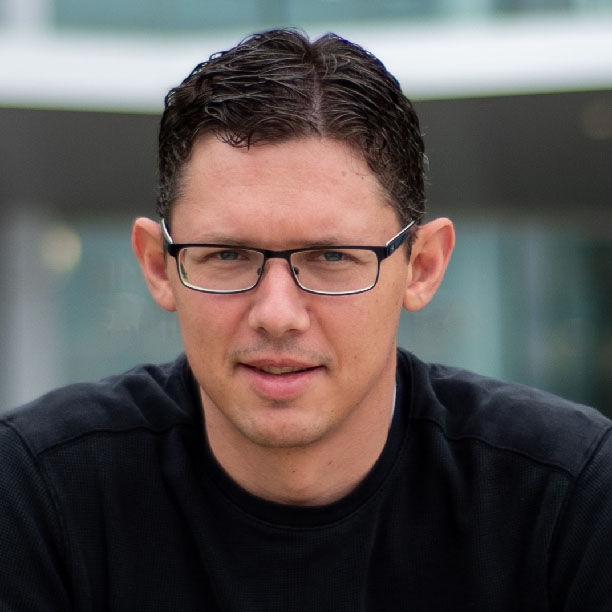
Jason R. Green is a Professor in the Department of Chemistry at the University of Massachusetts Boston. With a PhD from Purdue University (2007) and postdoctoral experience at the Universities of Chicago, Cambridge, and Northwestern University, his research bridges theoretical chemistry, physics, and data science to explore nonequilibrium systems. His work focuses on transforming chemical energy into dynamically functional materials through interdisciplinary approaches. Education: B.S., Case Western Reserve University (cum laude, 2002) Ph.D., Purdue University (2007) with NASA Graduate Fellowship NSF Postdoctoral Fellow at University of Chicago and University of Cambridge Research Interests: Theoretical chemical physics Nonequilibrium statistical mechanics Data science applications in chemical systems His recent publications analyze electrochemical material dynamics (ACS Nano 2024), chemically driven self-assembly (Chemical Science 2024), and thermodynamic speed limits across disciplines (Nature Physics 2020, Physical Review X 2022). He has received prestigious fellowships including NASA's Graduate Student Researchers Program and NSF Postdoctoral Fellowship. The Green Research Group at UMB applies theory, computation, and data science to understand energy transformation in synthetic and biological materials.
Jürgen Gauß is a full Professor of Theoretical Chemistry at Johannes Gutenberg University Mainz, holding a continuous appointment since 1995 (C3 Professor 1995-2001, C4 Professor 2001-present). He leads the Gauss Research Group, driving innovation in quantum chemical methodology and computational applications. His academic foundation includes a Diploma in Chemistry (1984), Doctorate in Theoretical Chemistry (1988), and Habilitation (1994), all from the University of Cologne. Postdoctoral training spanned the University of Washington (1989-1990) and University of Florida's Quantum Theory Project (1990-1991). Gauß's research pioneers advanced quantum chemistry techniques, focusing on electronic structure theory, molecular response properties, and computational spectroscopy. His group develops high-precision algorithms for molecular systems, bridging theoretical frameworks with experimental validation in quantum molecular science. His preeminent contributions earned Germany's highest research honor—the Gottfried Wilhelm Leibniz Prize (2005)—alongside the Carl Duisberg Memorial Prize (1996) and international academy memberships. Recent recognition includes election to Academia Europaea (2024). University Prize of the University of Cologne (1988) Postdoctoral Fellowship of the German Research Foundation (1990-1991) Liebig Habilitation Fellowship of the Chemical Industry Fund (1991-1993) Lecturer Fellowship of the Chemical Industry Fund (1995-2000) Carl Duisberg Memorial Prize of the Society of German Chemists (1996) Medal of the International Academy of Quantum Molecular Science (1997) Lise-Meitner Lecture, Israel (1998) Academy Prize of the Berlin-Brandenburg Academy (2003) Kapuy Lecture, Hungary (2005) Coulson Lecture, USA (2006) Gottfried Wilhelm Leibniz Prize (2005) Elected Member, International Academy of Quantum Molecular Science (2009) Gutenberg Research College Fellowship (2011-2016) Scrocco Lecture, Italy (2013) Elected Member, Norwegian Academy of Sciences (2018) Elected Member, Academia Europaea (2024) Professor Gauß supervises extensive thesis work across Bachelor's, Master's, and Doctoral levels, with documented theses dating to 2002. His research attracts sustained funding from the German Research Foundation, Chemical Industry Fund, and European networks, supporting methodological breakthroughs in quantum simulations. The Gauss Research Group operates from room 03-234, maintaining global collaborations through invited lectures (e.g., Scrocco Lecture 2013) and symposia like OPERA 2020—celebrating his 60th birthday with international scholars. Current teaching responsibilities for Winter 2025/26 confirm active academic engagement.
Fredrik Sandin is a Professor in the Department of Computer Science, Electrical and Space Engineering at Luleå University of Technology, where he leads the Machine Learning research group with approximately thirty members. His work focuses on neuromorphic technologies and the intersection of machine learning with computational physics to solve challenging real-world interaction problems. He coordinates the 'Teknisk fysik och elektroteknik' program at LTU and has been instrumental in establishing neuromorphic research activities at the university. Luleå University of Technology, Department of Computer Science, Electrical and Space Engineering Member of WASP (Wallenberg AI, Autonomous Systems and Software Program) and ELLIS (European Laboratory for Learning and Intelligent Systems) Coordinator of Neuromorphic Innovation Platform Sweden with KTH, Lund University, Uppsala University, FOI, ABB, Ericsson, and SAAB Fredrik earned his PhD in Physics from Luleå University of Technology in 2007, with thesis work focusing on dense states of matter in neutron stars. His academic journey began with an MSc diploma work in ATLAS at CERN in 2001, followed by postdoctoral research in computational physics at IFPA in Belgium (2008-2009) and brain-like computing at EISLAB with Prof. Jerker Delsing (2010-2011). Professor Sandin's research interests center around neuromorphic technologies, particularly neuromorphic computing and spiking neural networks. He investigates sensor/detector and intelligent systems co-design where constraints like energy, power, latency, and dynamic range challenge conventional digital approaches. His work spans mixed-signal neuromorphic circuits, algorithms, and systems, as well as machine learning projects involving industrial data and collaboration. He has been a key figure in establishing neuromorphic research at LTU, supported by The Kempe Foundations, particularly through the 2014 Gunnar Öquist Fellowship. His recent publications demonstrate a strong interdisciplinary focus spanning quantum phase transitions, particle physics detector optimization, renewable energy materials, and the integration of large language models into control systems. This diverse portfolio reflects his approach connecting machine learning with fundamental physics and practical engineering applications, particularly in neuromorphic computing and intelligent systems design, with emphasis on solving real-world problems through co-design of hardware and algorithms. Gunnar Öquist Fellowship Award and 3 MSEK grant from The Kempe Foundations ISSP award for an Original Work in Theoretical Physics (signed by Prof. 't Hooft and Prof. Zichichi) New-Talents award for original work in theoretical physics at the International School of Subnuclear Physics in Erice Professor Sandin has supervised numerous PhD students working on topics ranging from neuromorphic TinyML to materials for neuromorphic computing, privacy-preserving machine learning at the edge, and intelligent fault diagnosis. He has secured substantial research funding from various sources including Vinnova, ÅForsk, Kempe Foundations, WASP-WISE, and EU programs like ECSEL JU Arrowhead Tools and ITEA3 AutoDC. His current major projects include the Neuromorphic Innovation Platform Sweden and several initiatives focused on neuromorphic condition monitoring and computing, with total funding exceeding 30 MSEK in the past five years. He leads the Machine Learning group at LTU, which collaborates extensively with industry partners including ABB, Ericsson, SAAB, SKF, and RISE. The group is active in developing neuromorphic technologies for wireless sensor networks, condition monitoring systems, and next-generation intelligent systems that address energy, power, and latency constraints that challenge conventional digital approaches.
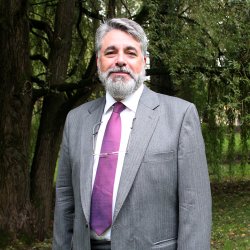
Dr. Axel Lubk is a Group Leader at the Institute for Solid State Research (IFW Dresden) , specializing in advanced electron microscopy techniques for materials science. His research spans four key areas: (1) TEM method development (high-resolution imaging, tomography, holography, and in-situ techniques), (2) charge particle optics and scattering theory , (3) magnetic nanotextures (domain walls, skyrmions), and (4) plasmonics (mode hybridization in heterogeneous structures and semiconductor heterostructures). Dr. Lubk’s work focuses on three-dimensional magnetic texture analysis using electron holography and tomography, particularly in systems like skyrmion tubes , FeGe , and Cr2O3 thin films . He has pioneered techniques for vector-field electron tomography and phase retrieval under varying boundary conditions, advancing nanoscale magnetic imaging. His recent studies include plasmonic properties in AgAu nanosphere chains , thermoelectric multilayer systems , and topological insulators like NiRh2Sb and TaTMTe4 . Dr. Lubk has published extensively in high-impact journals such as Nature Communications and Advanced Materials , with a focus on TEM instrumentation and quantitative analysis . He frequently presents at international conferences like the International Microscopy Congress and European School of Magnetism , emphasizing applications in spintronics , quantum materials , and nanostructured systems . His contributions to holographic vector-field electron tomography and machine learning for spectrum-image data have set new standards in electron microscopy.
Kanad Basu is an Associate Professor in the Department of Electrical, Computer, and Systems Engineering at The University of Texas at Dallas, Jonsson School of Engineering and Computer Science. He leads the Trustworthy and Intelligent Embedded Systems (TIES) lab, focusing on hardware security, reliability, and emerging computing paradigms. His research spans AI hardware, quantum computing, functional safety, and hardware-based security validation. Research Interests: His work emphasizes improving the trustworthiness of modern hardware systems. Key areas include hardware security (e.g., side-channel analysis, hardware trojans), functional safety in AI accelerators, quantum computing security and verification, and post-silicon validation techniques. He combines formal methods, machine learning, and hardware design to address vulnerabilities in SoCs, DNN accelerators, and quantum systems. Publication Trends: Recent publications (2023–2025) show a strong focus on interdisciplinary research, integrating AI/ML with hardware security, quantum computing, and functional safety. There is a growing emphasis on using large language models for assertion generation, symbolic execution for hardware fuzzing, and graph neural networks for quantum circuit analysis. His work frequently appears in top venues like DAC, DATE, HOST, ISVLSI, and IEEE journals. Scientific Awards: NSF CAREER Award, 2025 IEEE Top Picks in Test and Reliability, 2024 and 2023 Multiple Hack@DAC Prizes (2nd and 3rd) Best Paper Award at VLSI Design 2011 Assistant Professor Award at UTD Jonsson School, 2024 Nominated for Blavatnik Awards for Young Scientists, 2019 Advising and Grants: Dr. Basu has mentored numerous PhD, MS, and undergraduate students, many of whom have published in top-tier venues. He leads the TIES lab, which has received significant recognition, including the NSF CAREER Award. He actively collaborates across disciplines, advising students on topics ranging from quantum computing to AI hardware and functional safety. His lab produces high-impact research with real-world applications in automotive, cloud, and embedded systems. Labs and Teams: He leads the Trustworthy and Intelligent Embedded Systems (TIES) lab at UT Dallas, which fosters innovation in hardware security and reliability. The lab has produced award-winning work, including second prize at HACK@DAC 2025. He also serves on technical committees for IEEE DATE and HOST, and acts as Hardware Hacking Chair for IEEE HOST, indicating strong leadership in the hardware security community.
Hosna Jabbari serves as Associate Professor in Biomedical Engineering and cross-appointed in Electrical and Computer Engineering at the University of Alberta's Faculty of Engineering, directing the Computational Biology Research and Analytics Laboratory (COBRA Lab) focused on RNA-centric diagnostics and therapeutics development. Education: BSc in Computer Science, University of Victoria MSc in Computer Science - Bioinformatics, University of British Columbia PhD in Computer Science - Bioinformatics, University of British Columbia Research Focus: Dr. Jabbari pioneers RNA structure-function characterization through computational biology to decode disease mechanisms. Her work integrates transcriptomics , RNA-RNA/protein interaction analysis , and aging research with advanced machine learning and quantum computing approaches, emphasizing explainable AI for medical applications in RNA therapy development. Publication Trends: Recent work (2018-2024) demonstrates sustained innovation in RNA pseudoknot prediction algorithms applied to viral pathogenesis (notably SARS-CoV-2) and therapeutic design, with increasing integration of quantum computing and AI methodologies reflecting her interdisciplinary trajectory in computational genomics. Advising & Grants: Actively recruiting undergraduate researchers for funded projects including non-DNA life research, AI-driven vaccine development (comparative analysis and self-amplifying RNA platforms), and aging studies. She instructs BME 415/615 (Bioinformatics Algorithms) and MED 621 (Grant Writing), providing hands-on research training and grant preparation mentorship. Laboratory: As COBRA Lab Director, she leads a globally connected research network advancing RNA bioinformatics through algorithm development, fostering collaborations across virology, aging research, and therapeutic design domains.
Matthias C. Kettemann is Professor and Chair for Innovation, Theory, and Philosophy of Law at the Institute for Theory and Future of Law, University of Innsbruck. He simultaneously leads the research group 'Global Constitutionalism and the Internet' at the Humboldt Institute for Internet and Society (HIIG) and directs the research programme 'Regulatory Structures and the Emergence of Rules in Online Spaces' at the Leibniz Institute for Media Research | Hans Bredow Institute. Additionally, he heads the Innsbruck Quantum Ethics Lab and serves as a board member and research group leader for 'Platform and Content Governance' at the Sustainable Computing Lab, Vienna University of Economics and Business. Prof. Kettemann's research focuses on the legal foundations of digital societies, examining regulatory mechanisms for digital platforms and the interaction between states and private actors. His work spans internet governance, platform regulation, digital rights, and the ethical implications of emerging technologies including AI and quantum computing. He has published extensively on the normative order of the internet, with his 2020 monograph 'The Normative Order of the Internet: A Theory of Online Rule and Regulation' establishing him as a leading scholar in the field. His recent publications reveal a clear trajectory toward examining the intersection of law, technology, and democratic governance. The articles demonstrate particular attention to the Digital Services Act implementation, human-in-the-loop systems for AI governance, and the relationship between cybersecurity and privacy. His work consistently addresses how legal frameworks can protect democratic values while accommodating technological innovation, with increasing focus on quantum technology ethics and international dimensions of digital governance. Prof. Kettemann has advised numerous international organizations including the Council of Europe, UNESCO, OSCE, and various national ministries. His current research projects include the 'DSA research network,' 'Human in the Loop,' 'Cybersecurity,' and 'The Public International Law of the Internet,' reflecting his commitment to addressing pressing challenges in digital governance through interdisciplinary research and practical policy engagement. He is actively involved in multiple research teams and labs, particularly the Innsbruck Quantum Ethics Lab which explores ethical dimensions of quantum technologies, and contributes to shaping global digital governance through participation in international expert groups and advisory roles with governmental bodies across Europe.
Tuukka Ruotsalo serves as Associate Professor in the Machine Learning Section at the Department of Computer Science, University of Copenhagen. His research bridges human cognition with computational systems through brain-computer interfaces and physiological computing. As Academy Research Fellow at University of Helsinki (2019-2024), he maintained dual institutional affiliations while leading cutting-edge work in neuro-linguistic modeling and affective relevance. His research focuses on brain-computer interfaces for information retrieval , where he pioneers methods to decode cognitive states from neural signals to improve search systems. Key areas include affective relevance modeling that integrates emotional states into search algorithms, and neuro-linguistic reconstruction that translates brain activity into language. His work on fairness-relevance tradeoffs in recommender systems established Pareto frontier evaluation frameworks now widely adopted in ethical AI research. Recent publications demonstrate how physiological signals like EEG and galvanic skin response can create more adaptive human-information interaction systems. Ruotsalo's scientific recognition includes the prestigious Academy Research Fellow position. His publications in IEEE Transactions on Human-Machine Systems , Journal of the Association for Information Science and Technology , and Communications Biology reveal growing interdisciplinary impact. His advising spans cognitive neuroscience and machine learning students, with notable collaborations across the SCIENCE AI Centre. Current projects include the TreeSense initiative for remote sensing of global tree resources and development of quantum-inspired neural architectures. His lab leverages the department's powerful compute cluster for large-scale physiological data analysis.
Prof. Dimitrios Georgakopoulos is a Professor of Computer Science at Swinburne University of Technology's School of Science, Computing and Emerging Technologies. He serves as Director of the ARC Industrial Transformation Research Hub for Future Digital Manufacturing and Swinburne's IoT Lab. Previously, he was Research Director at CSIRO's ICT Centre and a Professor at RMIT University. Affiliations: CSIRO Adjunct Fellow since 2014 Leadership: Directed 7 large cross-disciplinary initiatives with $100M+ funding Research Focus: IoT, Cyber-Physical Systems, Digital Manufacturing, Machine Learning Funding: Secured $77.1M in external grants; $59.7M at Swinburne Research Interests: Digital twins and AI for manufacturing IoT sensor sharing ecosystems 5G-enabled smart cities Autonomic IoT systems Quality assurance in Industry 4.0 Awards: 2023 National iAward (Public Sector), Vice Chancellor’s Innovation Award (2018), and multiple industry and academic recognitions. Grants & Projects: Lead researcher on ARC-funded initiatives in digital manufacturing, cybersecurity, and steel innovation. Collaborates with industry partners like Bega Cheese and FIA on IoT-driven solutions. Labs & Teams: Oversees Swinburne's IoT Lab and the ARC Future Digital Manufacturing Hub, advancing Industry 4.0 applications in manufacturing, healthcare, and smart infrastructure.
Dr. Debajyoti Mondal is an Associate Professor in the Department of Computer Science at the University of Saskatchewan. His research focuses on algorithms, network visualization, computational geometry, and visual analytics. He holds a PhD from the University of Manitoba and has held postdoctoral positions at the University of Waterloo and Microsoft Research. Mondal's work spans interdisciplinary applications, including collaborations with Saskatoon Transit and academic medicine. He has authored over 100 peer-reviewed publications and secured grants such as NSERC Discovery, CFI, and Canada First Research Excellence grants. His awards include the 2023 New Scholar RSAW Award. Education: Ph.D. in Computer Science, University of Manitoba, 2016 MSc in Computer Science, University of Manitoba, 2012 BSc. Engg. in Computer Science, Bangladesh University of Engineering and Technology, 2009 Research Interests : Algorithms, graph drawing, computational geometry, visual analytics, and interdisciplinary applications in software engineering, transportation, and bioinformatics. His lab (VGA Lab) develops visualization systems for big data analysis. Key Contributions : Advanced theoretical foundations in computational geometry and graph drawing, developed practical visualization tools, and contributed to climate-related projects like Global Water Futures. Grants & Awards : NSERC Discovery Grant (2018-2024) CFI Grant (2021-2025) Microsoft Research Internship (2015-2016) New Scholar RSAW Award (2023) Labs/Teams : Leads the VGA Lab, collaborating with interdisciplinary teams on projects like Clone-World (software clone visualization) and SET-STAT-MAP (mixed data visualization).
Ahmedullah Aziz is an Assistant Professor in the Department of Electrical Engineering and Computer Science at the University of Tennessee, Knoxville, within the Tickle College of Engineering. He earned his Ph.D. in Electrical and Computer Engineering from Purdue University (2019), an M.S. from Pennsylvania State University (2016), and a B.S. from Bangladesh University of Engineering & Technology (2013). His research focuses on mixed-signal VLSI circuits, non-volatile memory, and beyond-CMOS device design, emphasizing emerging technologies like ferroelectrics and spintronics. He leads the NorDIC Lab and has published over 60 articles in journals, conferences, and patents. Education: PhD, Electrical & Computer Engineering, Purdue University, 2019 MS, Electrical Engineering, Pennsylvania State University, 2016 BS, Electrical & Electronic Engineering, BUET, 2013 Research Interests: Aziz explores device-circuit-system co-design techniques, particularly in cryogenic neuromorphic systems, superconducting memory, and ferroelectric-based circuits. His work bridges material innovation with practical applications, aiming to advance energy-efficient and high-performance computing. Awards: EDAA Outstanding Dissertation Award (2019/2020) Outstanding Graduate Student Research Award (Purdue, 2019) Samsung 'Icon' Award (2013) Best Publication Awards (SRC-DARPA STARnet, 2015/2016) Advising & Grants: While specific grants are not detailed, his research has been supported by prestigious institutions. He has advised/co-advised projects in emerging technologies but no listed students. His work extends to reviewing IEEE journals, conference TPC roles, and editorial contributions. Labs & Teams: He directs the NorDIC Lab, focusing on next-generation computing and device innovation.
Professor Alan Woodward is a renowned computer security expert at the University of Surrey, affiliated with the Surrey Centre for Cyber Security and Computer Science Research Centre. His career spans academia, government service, and private sector leadership, including pivotal roles in IT businesses like Charteris plc. He holds fellowships and chartered status across multiple prestigious institutions and actively advises governmental bodies such as Europol. Education: Undergraduate studies in Physics & Astronomy Postgraduate research in adaptive filtering and signal recovery at the University of Southampton's Institute of Sound and Vibration Research Research Focus: Woodward's interdisciplinary work bridges cybersecurity, digital forensics, and signal processing. His expertise includes cryptographic methods, steganography for covert communications, digital watermarking for data protection, and novel approaches to forensic computing. Current projects explore quantum computing threats and real-world cybercrime mitigation. Publication Trends: His recent articles demonstrate a strong focus on emerging cyber threats across societal and technical domains. Key themes include quantum cryptography vulnerabilities, organized cybercrime patterns, critical infrastructure risks, mobile/cloud security challenges, and public cybersecurity education with practical guidance for digital safety. Honors & Credentials: Fellow: Institute of Physics, British Computer Society, Royal Statistical Society Chartered Status: Engineer (CEng), IT Practitioner (CITP), Physicist (CPhys) Eur Ing (European Engineer) Leadership & Outreach: Beyond academic research, Woodward directs technology enterprises and leads public STEM engagement. He frequently contributes to international media (BBC, The Times, The Telegraph) as a cybersecurity commentator. His Surrey research teams collaborate with law enforcement and industry partners on threat intelligence initiatives.
Roberto Bassi is a Full Professor of Plant Physiology and Biochemistry at the University of Verona's Department of Biotechnology. His career spans prestigious roles including Visiting Professorships at institutions like Jülich Research Centre and Chinese Academy of Sciences. He holds advanced academic positions such as Chairman of the Molecular Biotechnology PhD program and Vice-President of the International Society of Photobiology. Education: 1977: Laurea degree in Biology, University of Padua 1978-1983: Fellowships at Institute of Microbiology and Institute of Botany, University of Padua Research focuses on Photosynthesis mechanisms and light energy regulation Membrane protein folding dynamics Carotenoid biosynthesis and photoprotection Bioenergy applications in algae Awards include the Baccarini-Melandri Award (1996), Helmholtz-von Humboldt Award (2009), and membership in the Italian National Academy of Sciences (2012). He has authored 220+ papers (H-index 74) and contributed to 35 book chapters. Leadership roles: Editorial boards of journals like Molecular Plant and BMC Plant Biology Governmental biosafety committee member International conference organizer (5 events) His work bridges fundamental plant biology with applied research in sustainable bioenergy and stress-resistant crops.
Alex X. Liu is a Professor in the Department of Computer Science & Engineering at Michigan State University (2016-2022), currently serving as Chief Information Security Officer and President of Midea Software Engineering Institute. His academic career includes roles as Associate Professor (2012-2016) and Assistant Professor (2006-2012) at the same institution. He holds a Ph.D. and M.S. in Computer Science from The University of Texas at Austin, and a B.S. in Computer Science from Jilin University, China. Education Ph.D. in Computer Science (UT Austin, 2006) M.S. in Computer Science (UT Austin, 2002) B.S. in Computer Science (Jilin University, 1996) Liu's research focuses on Dependable computing , Networking algorithms , Cloud computing , Mobile computing , Privacy computing , and Computer/network security . His work spans secure systems, network protocols, and resource optimization in distributed environments. Recent publications address quantum neural networks , microservices autoscaling , RFID tag recognition , network traffic classification , and hybrid physical-layer authentication , demonstrating expertise at the intersection of AI and network security. Key trends include deep learning applications for cloud systems and robust security protocols. Scientific Awards IET Fellow (2021) IEEE Fellow (2019) ACM Distinguished Scientist (2019) Withrow Distinguished Scholar Awards (Senior 2019, Junior 2011) NSF CAREER Award (2009) IEEE & IFIP William C. Carter Award (2004)
Lee Spector is a Professor of Computer Science at Amherst College and an Adjunct Professor at the University of Massachusetts, Amherst . Previously, he taught at Hampshire College from 1992 to 2019, where he held roles including Dean of the School of Cognitive Science and Director of the Computational Intelligence Laboratory . He earned a B.A. in Philosophy from Oberlin College (1984) and a Ph.D. in Computer Science from the University of Maryland (1992). His research focuses on artificial intelligence, artificial life, evolutionary computation, and intersections with cognitive science, physics, and the arts. Notable contributions include work on genetic programming for music generation (e.g., GenBebop ), quantum computing algorithms, and evolutionary robotics. He serves as Editor-in-Chief of Genetic Programming and Evolvable Machines and has authored over 100 publications, including the book Automatic Quantum Computer Programming: A Genetic Programming Approach (2004). Spector has received prestigious awards such as the NSF Director's Award for Distinguished Teaching Scholars and gold medals in the GECCO Human Competitive Results contest. He also engages in public outreach, including an op-ed in The Boston Globe on digital evolution (2005).