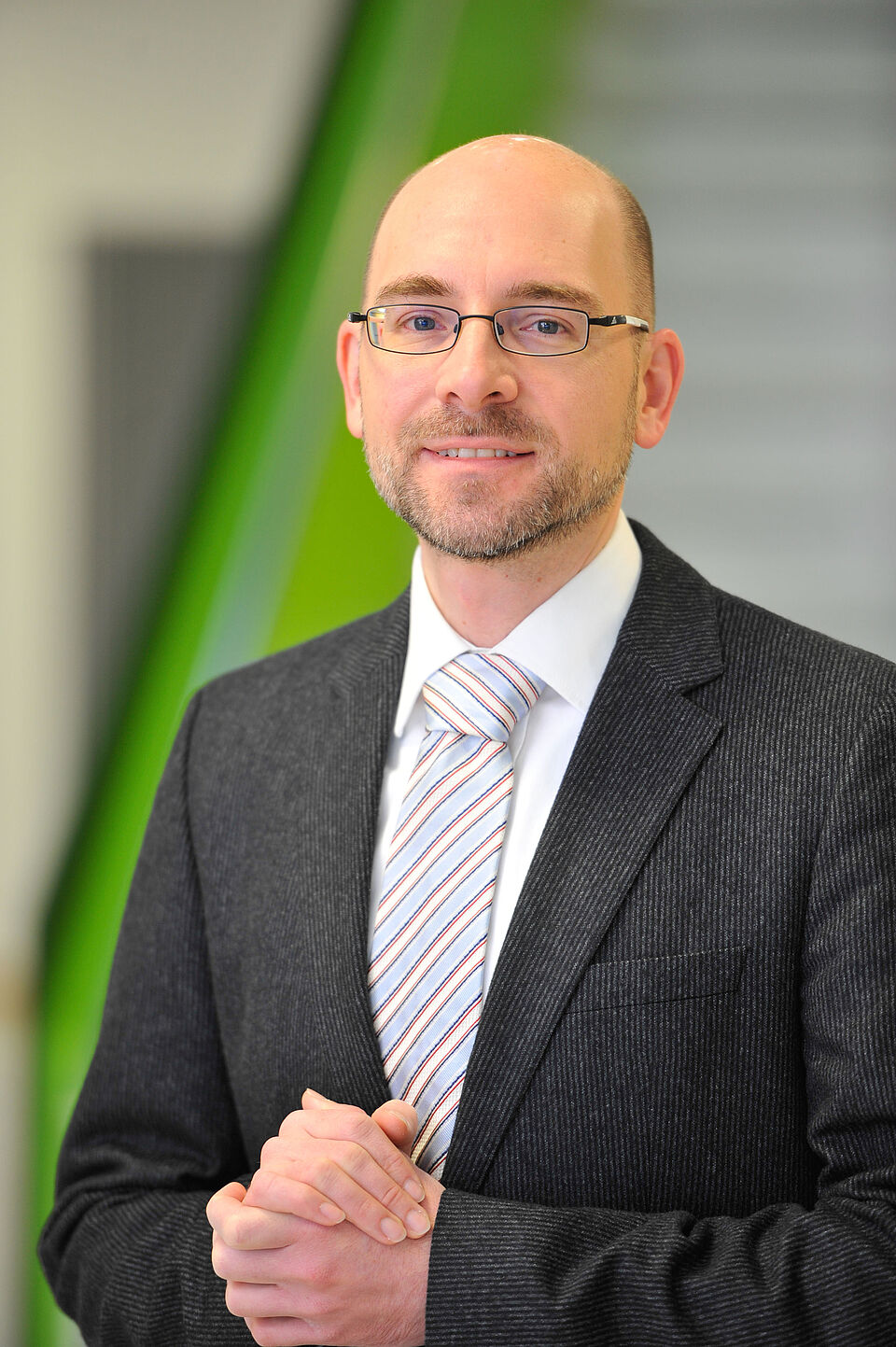
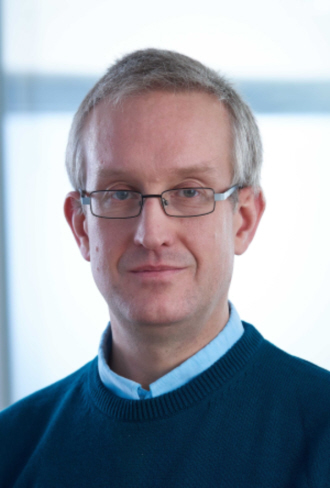
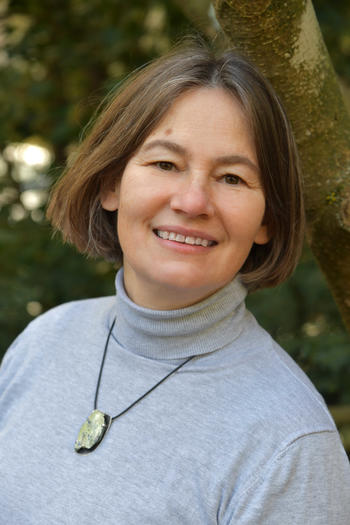
Karl Krushelnick is a Professor in the Department of Nuclear Engineering and Radiological Sciences at the University of Michigan, serving as Director of the Center for Ultrafast Optical Science (CUOS) and Associate Director for High Field Science. His research focuses on high-intensity laser-plasma interactions, relativistic electron beams, and applications in radiation generation, magnetic reconnection, and biomedical sensing. Research Interests: Basic relativistic plasma studies Table-top particle accelerators Ultra-strong magnetic fields Ultrafast laser technology Quantum electrodynamics (QED) in extreme light regimes Key Trends in Publications: Krushelnick’s recent work investigates zettawatt-equivalent laser experiments, orbital angular momentum effects on laser absorption, magnetic reconnection dynamics, and neutron generation mechanisms. His team explores laser wakefield acceleration, betatron X-ray diagnostics, and filamentation control for advanced applications in physics and engineering.
Prof. Dr. Georg Garnweitner is a full Professor of Nanomaterials at the Institute for Particle Technology , Faculty of Mechanical Engineering, Technische Universität Braunschweig. He has served as Dean of Studies since 2023, DFG Liaison Lecturer since 2021, and head of the Laboratory for Emerging Nanometrology (LENA) board since 2013. University Professorship in Nanomaterials (2013–present) Junior Professorship in Nanoparticles/Nanocomposites (2007–2013) Research at Max Planck Institute (2005–2006) His research focuses on nanomaterial synthesis , non-aqueous nanoparticle formation , and energy storage materials , particularly for lithium-sulfur batteries. He also explores drug delivery systems using silica aerogels and optofluidic particle analysis . His work combines materials science , surface chemistry , and advanced characterization techniques . Recent publications highlight breakthroughs in solid-state electrolyte design (2023), solvent-free drug loading (2022), and nanoparticle migration dynamics (2020). He contributes to crystal engineering (2021) and population balance modeling (2017) for nanoparticle formation.
Professor Oliver Johnson is a faculty member at the School of Mathematics, University of Bristol, UK, where he serves as Head of School and holds the Professor of Information Theory position. His research bridges information theory, probability, and statistics, focusing on entropy convergence, group testing, and fundamental limits in data analysis. Current PhD students: Kieran Morris, Conor Crilly Ex-PhD students: Matt Aldridge, Leonardo Baldassini, Dan Cowley, Vaia Kalokidou, Tom Kealy, Jennifer Chakravarty, Zichen Gui, Chrys Paschou Ex-postdoc: Erwan Hillion His work includes ORCiD profile and collaborations across information theory, cybersecurity, and ecological modeling.
Alex Kamenev is a Professor in the School of Physics and Astronomy at the University of Minnesota and serves as Director of the William I. Fine Theoretical Physics Institute. His academic career spans multiple decades with continuous research output since 1991, demonstrating sustained contributions to theoretical physics. His research focuses on theoretical condensed matter physics, with particular emphasis on disordered systems and glasses, field-theoretical treatment of many-body systems, mesoscopic systems, and out-of-equilibrium phenomena. His fingerprint analysis reveals strong expertise in Instanton Physics (100%), Fermion Physics (90%), Conductance (69%), Quantum Dot Physics (64%), and Superconductor physics (62%). Analysis of his recent publications shows a clear trend toward quantum computing applications, non-equilibrium quantum dynamics, and advanced field-theoretical approaches to many-body problems. His work bridges fundamental theoretical physics with practical applications in quantum information science, particularly in understanding quantum dissipation, localization phenomena, and quantum annealing processes. As Principal Investigator, Kamenev has led numerous significant research projects, primarily funded by the National Science Foundation. His current active projects include the REU Site: Physics and Astronomy at the University of Minnesota (2024-2027) and NSF-BSF: Many Body Physics of Quantum Computation (2024-2027), demonstrating his leadership in training the next generation of physicists and advancing quantum computing research. He actively mentors graduate students, as indicated by his statement that he is "Accepting new graduate research students." His research group contributes to the Condensed Matter Theory research area within the School of Physics and Astronomy, focusing on theoretical approaches to quantum systems.
Rob Gleasure is a Professor in the Department of Digitalization at Copenhagen Business School (CBS), Denmark. His research focuses on the intersection of information systems, digital technologies, and human behavior, with particular expertise in blockchain technology, crowdfunding, AI applications, and technology adaptation. Based at Solbjerg Square 3 in Frederiksberg, he contributes to CBS's mission of advancing knowledge in business and society through digital transformation. Professor Gleasure's research spans several key areas within information systems and digital innovation: Digital finance and blockchain technologies, including cryptocurrency and financial applications Crowdfunding platforms and digital fundraising mechanisms Artificial intelligence applications in various domains including healthcare and banking Human-computer interaction and the psychological aspects of technology adoption Digital collaboration and the affective dimensions of online work Quantum computing infrastructure and emerging technologies His recent publications reveal an evolving research trajectory that increasingly addresses the societal implications of digital technologies. Gleasure has moved from foundational work on crowdfunding and blockchain to more complex examinations of AI ethics, gender bias in technological systems, and the psychological impacts of digital media. His research demonstrates growing attention to sustainable development goals, particularly those related to responsible consumption and production, reduced inequalities, and climate action. The interdisciplinary nature of his work bridges business, technology, and social sciences, often employing both qualitative and experimental methodologies. Professor Gleasure has served as a supervisor for numerous students (21 supervisor tasks mentioned) and has been active in academic service including co-chairing the ACM Collective Intelligence Conference in 2021. His research has attracted media attention, with contributions to discussions on cryptocurrency, carbon offsetting in aviation, and AI applications.
University of California , Santa Barbara (UCSB)United States
James Speck serves as Professor in the Materials Department at the University of California, Santa Barbara's College of Engineering. He holds the Seoul Optodevice Distinguished Professorship of Solid State Lighting and maintains an active research laboratory focused on wide bandgap semiconductors. His work spans over 25 years of leadership in GaN-based semiconductor materials science at UCSB. Speck's research interests center on the relationship between epitaxial growth, microstructure, morphology, heterostructures, transport properties, and device performance in wide bandgap semiconductors. His group has made fundamental contributions to understanding growth mechanisms, defect generation, and the impact of threading dislocations in GaN systems. Over the past decade, his research has expanded to include binary oxides and emerging wide bandgap semiconductors like β-Ga 2 O 3 . His early work focused on epitaxial oxide films on semiconductors, ferroelectric thin films, and strain relaxation in highly mismatched epitaxial systems. The publication record demonstrates consistent research activity in III-nitride materials, with recent focus on semipolar and nonpolar orientations for improved device performance. His work spans fundamental materials science to practical device applications, particularly in solid-state lighting and laser technologies. The research shows particular emphasis on addressing efficiency limitations in LEDs and developing novel approaches for vertical-cavity surface-emitting lasers. Member of National Academy of Inventors IEEE Photonics Society Aron Kressel Award Materials Research Society (Inaugural Class) Japanese Journal of Applied Physics Best Paper Award Professor Speck has co-founded Soraa, a company commercializing GaN-based lighting technology. His research group has produced over 725 refereed publications, demonstrating extensive collaboration with colleagues including S. Nakamura and S.P. DenBaars. His work has received significant funding supporting fundamental materials research with applications in energy-efficient lighting and optoelectronic devices. The Speck group maintains active research facilities at UCSB focused on advanced semiconductor characterization and device development.
Beate Paulus is a Professor for Theoretical Chemistry at the Freie Universität Berlin , affiliated with the Chemistry and Biochemistry college and the Chemistry department. Her research focuses on advanced quantum chemical methodologies and applications to 2D materials, spintronics, and catalysis. Current affiliation: Freie Universität Berlin Key research areas: Quantum Chemistry, Density Functional Theory, 2D Materials, Spintronics, Electrocatalysis Her work spans computational modeling of electronic structures, magnetic properties, and chemical reactions using Density Functional Theory (DFT) with specialized corrections. She investigates systems like MoS2 , graphene heterostructures , and transition metal complexes , aiming to understand and optimize properties for energy applications, biosensors, and nanoelectronics. Recent publications highlight her contributions to quantum mechanical fluorine tunnelling , spin-selective transport in doped nanoribbons , and surface functionalization strategies for 2D materials. Her group also explores mechanically interlocked molecules and redox-responsive polymers with potential biomedical applications. Beate Paulus leads the Paulus Group , which actively publishes in high-impact journals and collaborates on interdisciplinary projects involving experimental and theoretical approaches.
James Martin is a Lecturer at the Department of Statistics, University of Oxford . He is affiliated with St Hugh's College and has been actively involved in organizing probability seminars since 2018. Research Interests Probability theory Random graphs and percolation Interacting particle systems Models of random growth and coagulation-fragmentation Queueing networks Combinatorial games Teaching Courses: Prelims Probability , Part A Probability , Part B Statistical Lifetime Models , Part C Probabilistic Combinatorics His publications focus on probability theory , statistical physics , and combinatorial structures . Recent work includes studies on last-passage percolation, multispecies exclusion processes, and integrable probability models. James Martin collaborates with researchers from institutions such as Uppsala University, University of Cambridge, Imperial College London, and Kyoto University. He has been a key organizer for the Oxford Probability Seminar since 2018.
Drew Higgins serves as an Associate Professor in the Department of Chemical Engineering within the Faculty of Engineering at McMaster University. His research profile demonstrates extensive scholarly activity with numerous publications spanning electrocatalysis, CO 2 conversion technologies, and energy storage systems. Higgins leads research initiatives focused on converting carbon emissions to usable fuels and has secured significant funding, including McMaster's $4.2M award for critical minerals research. His research interests center on electrocatalysis for sustainable energy technologies, with particular emphasis on CO 2 reduction, nanoscale catalyst development, and advanced characterization techniques. Higgins' work bridges fundamental electrochemical principles with practical applications for addressing climate change through carbon capture and utilization. His research group employs sophisticated in situ characterization methods including X-ray spectroscopy and transmission electron microscopy to understand catalyst behavior under operating conditions. The publication trends reveal a strong focus on electrochemical CO 2 conversion, with recent work exploring tandem catalysis systems, membrane electrode assemblies, and catalyst reconstruction phenomena. His research spans both fundamental catalyst design and practical engineering applications for energy conversion systems. Higgins has made significant contributions to understanding the atomic-scale mechanisms behind electrocatalytic processes, particularly for carbon dioxide reduction and nitrogen cycle electrochemistry. Higgins teaches core chemical engineering courses including Electrochemistry and Electrochemical Engineering (CHEMENG 4EC3/6EC3) and Chemical Engineering Principles I (CHEMENG 2D04). His scholarly impact is evident through extensive citation metrics, with multiple publications picked up by news outlets, referenced in patents, and widely read across academic platforms like Mendeley.
Anthony Bloch is the Alexander Ziwet Collegiate Professor of Mathematics and Professor of Mathematics at the University of Michigan, serving as Chair of the Department of Mathematics. He is affiliated with the Center for the Study of Complex Systems (CSCS) in Weiser Hall. His research focuses on: Geometric Mechanics : Hamiltonian/Lagrangian mechanics, symplectic geometry, and integrable systems including Toda lattices and rigid body dynamics Nonlinear Dynamics : Nonholonomic systems with nonintegrable constraints, stability analysis, and continuous-discrete flow relationships Control Theory : Nonlinear and optimal control applications extending to quantum dynamics and astrophysical systems Recent publications demonstrate geometric methods applied to nonholonomic control, virtual constraints, and stabilization, with growing interdisciplinary work in network dynamics, quantum control, and cosmological models like cosmic reheating. Through the Center for the Study of Complex Systems, Professor Bloch collaborates across disciplines to investigate complex phenomena in natural and engineered systems, leveraging geometric frameworks to address fundamental questions in mechanics and dynamics.
Dr. Yu Zhang is a Lecturer of Data Science at the School of Business, UNSW Canberra. His academic career focuses on text mining, knowledge and information management, social computing, and bibliometric analysis, with interdisciplinary applications in areas such as sustainable logistics, supply chain management, and net-zero energy solutions. Fields of Interest: Text Mining, Information Management, Social Computing, Bibliometric Analysis, Machine Learning for Information Systems, Heterogeneous Network Analysis, Data Mining for Asset Management, Sustainable Logistics, Supply Chain Management, Net-zero Energy in Green Buildings, and Transportation. Grants: Served as CI in projects like "Online health monitoring in Li-ion batteries via trustworthy AI" (ACT Government, $1.22M) and "Delivering net-zero energy buildings" (TRaCE Lab to Market, $1.05M). Awards: Best Paper Award (Runner-up) at ADMA 2024 and Excellent Paper Award at ICEBE 2024. Teaching: Coordinated courses in Data Analytics, Workforce Planning Research, Business Capstone, and Logistics Intelligence with Big Data Analysis. Supervision: Guided research on topics like federated learning for healthcare fraud detection, blockchain-based carbon offset management, and tier-based supply chain visibility. His publications span materials science and photovoltaic technologies, with a focus on thin-film solar cells and defect passivation methods. For collaboration or supervision inquiries, contact him at m.yuzhang@unsw.edu.au .
Boris Svistunov is a Professor in the Department of Physics at the University of Massachusetts Amherst . His research focuses on Theoretical Condensed Matter Physics , particularly on quantum fluids and superconductivity phenomena. Research Interests His work explores fundamental aspects of superfluidity , superconductivity , and quantum phase transitions . Key topics include: Transverse quantum fluids and their statistical features Bipolaronic superconductivity mechanisms Quantum dynamics of topological defects Monte Carlo studies of strongly correlated systems Phonon-modulated electron interactions Publications (2024-2025 Trends) Recent articles emphasize quantum hydrodynamics , Cooper flow precursors , and diagrammatic Monte Carlo approaches. Key themes include: Emergent phenomena in multi-component superfluids Unconventional pairing mechanisms in low-dimensional systems Critical behavior in disordered quantum systems Quantum plasticity and defect-mediated superfluidity Renormalization approaches to superconductivity Contact Details Email: svistunov@physics.umass.edu Phone: (413) 545-4428 Office: Hasbrouck Laboratory 408, 666 N Pleasant St, Amherst, MA 01003-9300
Yang Yang is an Assistant Professor of Chemistry at the University of Wisconsin-Madison , focusing on electronic structure theory and nuclear quantum effects in molecular systems. He leads the Yang Group , a theoretical and computational team specializing in the Constrained Nuclear-Electronic Orbital (CNEO) framework for accurate quantum simulations. B.S. in Chemistry and Physics, Peking University (2011) Ph.D., Duke University (2016) Postdoctoral Associate, University of Illinois at Urbana-Champaign and Yale University (2016–2019) His research spans method development in multicomponent quantum theory , excited states theory , and practical quantum chemistry calculations . Recent work includes landmark papers in Journal of Chemical Theory and Computation on CNEO-based reaction rate calculations and quantum computation applications. The Yang Group has secured NSF funding (2024) for CNEO integration into computational software. Publications emphasize nuclear quantum delocalization effects , vibrational spectra modeling , and nonadiabatic dynamics . NSF Grant (2024) for CNEO software integration Awards at 2024 ACS Fall Meeting Current advisees include graduate students Haoran Chen , Lin Han , Zhe Liu , Yiwen Wang , and Yuzhe Zhang . The group also collaborates with postdoctoral researchers like Zehua Chen and Tanner Culpitt .
Christian Hirsch is an Associate Professor for Data Science and Statistics at Aarhus University, where he studies random networks motivated from biology and health sciences through techniques from topological data analysis and stochastic geometry. He is a member of the Stochastics group at the Department of Mathematics and holds additional affiliations as an Associate Fellow of the Aarhus Institute for Advanced Studies, and with the AU DIGIT Centre and the AU Quantum Campus. Current Position: Associate Professor for Data Science and Statistics, Aarhus University Previous Positions: Assistant Professor at University of Groningen and University of Mannheim Postdoctoral Experience: Aalborg University, LMU Munich, WIAS Berlin Education: PhD from Ulm University Christian Hirsch's research focuses on the statistical foundations of topological data analysis, large deviations theory in stochastic geometry, and percolation theory of spatial random networks. His work bridges theoretical mathematics with practical applications in data science, particularly in analyzing complex structures through topological methods. He investigates how topological features form and disappear in growing data structures, developing statistical tests to determine whether observed patterns are significant or merely random occurrences. His recent publications reveal a strong trend toward applying topological data analysis to increasingly complex structures, with significant focus on statistical validation of topological features. Hirsch has made substantial contributions to understanding the probabilistic behavior of persistent homology, developing functional central limit theorems and large deviation principles for topological functionals. His work spans theoretical foundations in stochastic geometry while finding applications in materials science, neural networks, and wireless communication systems. As an educator, Hirsch teaches graduate courses including Topological Data Analysis, Stochastic Geometry, Monte Carlo Simulation, Markov Decision Processes, Probability Theory, and Stochastic Processes. He has supervised numerous PhD, MSc, and BSc students, with several of his former students securing academic positions at institutions like University of Leiden, Tokyo Institute of Technology, and Budapest University of Technology. Hirsch leads a research group within the Stochastics group at Aarhus University, collaborating extensively with researchers across Europe and North America. His work demonstrates how topological methods can provide rigorous statistical insights into complex data structures, making significant contributions to both theoretical mathematics and practical data analysis techniques.
Al-Amin Dhirani is an Associate Professor in the Department of Chemistry at the University of Toronto, located in the Lash Miller Chemical Laboratories. His research focuses on nanoengineered materials, particularly quantum nanoengineered materials (q-NEMS), which exhibit emergent quantum phenomena. Key themes include bottom-up synthesis of nanostructured materials, development of novel fabrication techniques for 2D materials like MoS₂, and applications in green technologies and electrochemical sensing. Research interests emphasize hybrid molecule-nanostructure states (HYMNS) that enhance optical/electrical properties, as well as advanced applications such as conductivity meters and water electrolysis materials. His lab has pioneered methods for defect healing in exfoliated MoS₂ and scalable assembly of nanostructured films. Recent achievements include student milestones like Steven Gravelsins’ PhD completion and Monique’s NSERC postdoc fellowship. Located at 80 St. George Street, the Dhirani Lab collaborates on projects ranging from fundamental quantum transport studies to applied sensor technologies. The group actively publishes in top journals like ACS Nano and Communications Chemistry , with a focus on interdisciplinary material science and physics.