Dr. Yee Wei Law is a Senior Lecturer at the University of South Australia's (UniSA STEM) Mawson Lakes Campus. His research expertise spans cybersecurity, machine learning, and wireless sensor networks, with a focus on secure communication systems and autonomous vehicle localization. He serves as a Research Degree Supervisor and actively contributes to publications in IoT security, space systems, and privacy-preserving technologies. Research Trends : Recent work emphasizes domain adaptation for predictive maintenance, adversarial attack analysis in computer vision, and quantum key distribution for satellite-IoT networks. Key themes include security in smart grids, UAV-based gesture recognition, and collaborative privacy-preserving algorithms. Publications highlight interdisciplinary applications of machine learning in fault diagnostics, cloud detection via satellite, and secure networking protocols. His work bridges theoretical advancements with real-world implementations in hypersonic tracking and RFID security.
Prof Soon Xin Ng (Michael) is a Professor of Next Generation Communications at the University of Southampton , affiliated with the School of Electronics and Computer Science. His work bridges quantum communications, wireless technologies, and machine learning, with a focus on the theoretical and practical challenges of next-generation networks. Education: B.Eng. (First Class) in Electronic Engineering and Ph.D. in Telecommunications, both from the University of Southampton Current Roles: ECS Doctoral Programme Director since 2021, IEEE Quantum Communications & Information Technology Emerging Technical Subcommittee Officer Research Interests span quantum communications, channel coding/modulation, cooperative systems, and AI-driven wireless solutions. Recent projects include quantum key distribution over THz channels, UAV path planning with reinforcement learning, and MIMO-OFDM optimization. 2025: 3D spatial compression for UAV navigation 2025: OTFS modulation in quantum THz channels 2024: CV-QKD reconciliation and quantum internet evolution Scientific Awards include the 2013 Dean’s Award for publication excellence, IEEE Senior Membership, and Fellowships from the IET and Higher Education Academy. As an author of 260+ papers and co-editor of Quantum Engineering , he mentors eight active PhD students in electronic and engineering disciplines.
Oriane Bonhomme is an Assistant Professor at Université Claude Bernard Lyon 1 , affiliated with the Institut Lumière Matière (ILM) and its Optique Non-Linéaire Et Interfaces (ONLI) team. Her research focuses on molecular-scale analysis of soft matter systems, particularly soap films and interfaces, using advanced non-linear optical techniques like Second Harmonic Generation (SHG) and Rayleigh scattering. She leads the ANR SOLSTICE project on soap film stability and collaborates on the PROGENY FET OPEN project studying electronic soap films. Teaching : Institut Universitaire de Technologie de Lyon (Department of Mechanical and Manufacturing Engineering) Key Techniques : QM/MM polarizable embedding, SHG diagnostics, electrokinetic modeling Her work intersects non-linear optics , surface science , and soft matter physics , with recent publications analyzing surfactant behavior under electric fields, hyperpolarizability fluctuations in water, and nanoscale diagnostics of liquid interfaces. She actively recruits postdoctoral researchers for projects involving molecular-scale stability and optical probing of complex systems. Scientific Awards : ANR SOLSTICE Project funding FET OPEN Project PROGENY Contact: oriane.bonhomme@univ-lyon1.fr
Dr. Mahyar Madadi is a Research Fellow at the Australian National University , affiliated with the Materials Physics department. His work focuses on computational analysis of porous and granular materials using advanced imaging techniques like X-ray tomography. Research Interests Dr. Madadi's research spans multiple disciplines including Materials Physics , Geophysics , and Computational Modeling . Key areas of investigation include pore-scale fluid dynamics, elastic properties of granular media, and microstructural analysis of carbonates and foams. Publications His work demonstrates strong expertise in digital rock physics and computational materials science , with significant contributions to understanding relationships between microstructure and macroscopic properties in diverse systems from geological formations to synthetic foams.
Dr. Gabriele Bogo is a researcher at the Faculty of Mathematics, University of Bielefeld , focusing on stochastic processes and partial differential equations. He contributes to projects like the Collaborative Research Center 1283 "Taming Uncertainty" and the Marie Skłodowska-Curie Action EPOC. Affiliations: Faculty of Mathematics, University of Bielefeld Research: Stochastic Analysis, Nonlinear PDEs, Probability Theory His work spans stochastic differential equations , Fokker-Planck-Kolmogorov equations , and McKean-type nonlinear processes , often intersecting with mathematical physics and financial modeling. Recent publications analyze strong solutions for singular drifts, gradient-type formulas for FBSDEs, and applications of Lyapunov methods. Key subfields include Markov Processes , Stochastic Homogenization , and Mean-Field Models . His research drives advancements in understanding uncertainty in dynamical systems and their mathematical representations.
Piotr Ablewski is an Assistant Professor at the Department of Applied Informatics , Institute of Technical Sciences , within the Faculty of Physics, Astronomy and Applied Computer Science at Nicolaus Copernicus University. His research focuses on optical atomic clocks, precision metrology, and dark matter detection through global clock networks. Research Areas: Optical clocks, spectroscopy, quantum metrology, dark matter detection, frequency standards, and atmospheric science. Key Collaborations: Member of the "Biophysics at the Nanoscale" research team. Participates in multi-center work on clock development and dark matter studies. Publications: 31 documented publications with a total impact factor of 33,493 and ministerial score of 577. Instrumentation: Works on VIPA spectrometer calibration, frequency comb spectroscopy, and fiber-optic time/frequency delivery systems. Email: piotra@umk.pl
Lee Arthur Rozema is a researcher at the Faculty of Physics , specializing in quantum optics, quantum nanophysics, and quantum information. His work focuses on advanced quantum technologies and explores areas such as quantum superposition, entanglement, and nanophotonic devices. He actively collaborates on experimental projects involving two-dimensional materials and graphene-based waveguides. Research Interests: Quantum optoelectronics, quantum communication, and nonlinear optical phenomena in layered semiconductors. His research includes developing deterministic quantum logic gates and broadband entangled light sources. Scientific Awards: Deterministic Quantum Logic Gate Based on Nanostructured Graphene Waveguides (2016)
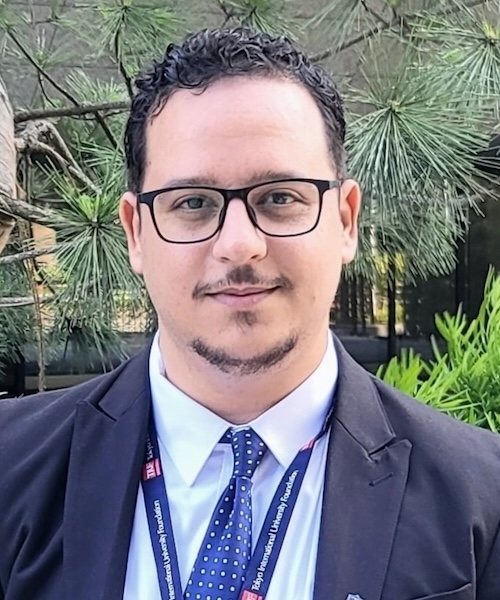
Rafik Hamza is an Associate Professor in Information Management & Cybersecurity at Tokyo International University , with prior roles at National Institute of Information and Communications Technology (NICT, Tokyo), Guangzhou University, and SONATRACH (Algeria). His work spans Cryptography , Privacy-Preserving Machine Learning , and Blockchain-Enabled IoT Security . Ph.D. (2017) in Cryptography and Security from University of Batna M.Sc. (2014) in Cryptography and Security from University of Batna B.Sc. (2011) in Applied Mathematics from University of Batna His research interests focus on securing big data ecosystems through advanced cryptographic methods, including post-quantum algorithms and homomorphic encryption. He actively explores blockchain integration for IoT authentication and privacy-preserving deep learning architectures. Recent publication trends highlight his contributions to hybrid chaotic image encryption, IP protection in distributed systems, and secure ML frameworks. Collaborations with researchers like Alzubair Hassan and Minh-Son Dao demonstrate cross-disciplinary applications. 2021-2022 : Funded by Najran University's Institutional Funding Committee (Project NU/IFC/ENT/01/013) for AI/ML in emerging technologies Associate Editor at Cureus Journal of Computer Sciences (2024–present) Conference Chair for AMLDS 2025
Holly Carley is a Professor of Mathematics at the City University of New York (CUNY) within the School of Arts & Sciences Department of Mathematics. She holds a Ph.D. from the University of Virginia (2004), an M.S. (1999) and B.S. (1997) with honors from the University of Central Florida, advised by R.N. Mohapatra and X. Li. Her research spans mathematical physics, analysis, approximation theory, and copulas in probability and statistics. B.S. with honors: University of Central Florida M.S.: University of Central Florida Ph.D.: University of Virginia Carley's research interests include mathematical physics, where she explores quantum systems and nonlinear effects, and approximation theory, focusing on inequalities and polynomial properties. She also investigates copulas for modeling multivariate dependencies in probability and statistics, with applications to extremal measures and graph-based constructions. Her publications emphasize mathematical physics (e.g., Born-Infeld effects, harmonic oscillator limits), copulas (e.g., subcopula extensions, extremal measures), and pedagogical methods (e.g., matrix reduction techniques, continued fractions). Key trends involve interdisciplinary applications of analysis and geometry to physics and statistics. Grants: Senior Personnel – Minority Science and Engineering Improvement Program (MSEIP), 2015-2018 PSC-CUNY Grants (2008-2013) on polarons, extremal doubly stochastic measures Books (OER): Co-author of PreCalculus (second edition) with Thomas Tradler Co-author of Arithmetic|Algebra with Bonanome et al.
Pawel Danielewicz is a Professor in the Department of Physics & Astronomy at Michigan State University, affiliated with the National Superconducting Cyclotron Laboratory (NSCL). His research focuses on nuclear theory, particularly the dynamics of heavy-ion collisions and the equation of state for dense nuclear matter. Education: Ph.D., University of Warsaw (1981) His work explores high-pressure nuclear environments created in central heavy-ion reactions, using transport theory to model compression, thermalization, and decompression phases. Key areas include symmetry energy , isospin diffusion , and quantum transport with applications to neutron stars and ultracold quantum gases. Recent publications emphasize deblurring techniques for source function reconstruction, optical potentials for rare-isotope beams, and equation of state constraints from GW170817. Articles from 2025-2022 span topics like pion production , neutron skins , and nonequilibrium Green's functions . His theoretical frameworks connect heavy-ion collision observables to nuclear matter properties, with cross-disciplinary implications for early cosmology and atomic traps via nonequilibrium dynamics.
Gilles Brassard is a Full Professor in the Department of Computer Science and Operations Research at the Université de Montréal's Faculty of Arts and Sciences. He holds the Canada Research Chair in Quantum Computing and serves as Scientific Director of INTRIQ (Institut transdisciplinaire d'information quantique). His affiliations include membership in the Centre de recherches mathématiques (CRM), Institut Courtois, LITQ (Laboratoire d’informatique théorique et quantique), and talents (Laboratoire d'Intelligence Artificielle pour la Cybersécurité). Brassard's research spans quantum computing, quantum and classical cryptography, foundations of quantum mechanics, and privacy protection. He pioneered quantum teleportation and quantum cryptography, demonstrating how quantum mechanics enables unconditionally secure communication. His work explores quantum advantages in computation, including algorithms that could break classical cryptography while quantum cryptography provides countermeasures. Key concepts he developed include quantum teleportation (inspiring Star Trek-like applications) and quantum pseudo-telepathy games. His recent publications reveal strong focus on quantum key distribution security proofs, relativistic cryptography for secure positioning, and privacy protection against data brokers. Trends show increasing emphasis on practical quantum cryptography implementations, noise resilience in quantum communication, and intersections with machine learning. The 2023-2025 articles particularly address real-world quantum security challenges and foundational quantum information questions. Gerhard-Herzberg Canada Gold Medal for Science and Engineering Killam Prize in Natural Sciences Officer of the Order of Canada Fellow of the Royal Society Brassard has supervised over 40 graduate students across quantum information topics, including quantum algorithms, entanglement simulation, and privacy-preserving systems. His current research is funded by major Canadian grants including NSERC Discovery Program ($20965), FRQNT Strategic Regroupments, and CIFAR. Recent projects include QUORUM (Québec Ontario Consortium on Quantum Protocols) and quantum machine learning initiatives. He leads the theoretical quantum information group within LITQ, focusing on quantum communication complexity and cryptographic applications of quantum phenomena.
Emanuel Regnath is a Tutor at the Chair of Embedded Systems and Internet of Things under Prof. Dr. Sebastian Steinhorst at the Technische Universität München . His work spans research, teaching, and supervision of student theses. Research focuses on Secure Decentralization Methodologies for the Internet of Things Teaching includes courses like Software Architecture for Distributed Embedded Systems and IoT Security His research interests include: Consensus Protocols for Cyber-Physical Systems synchronization Blockchain applications in resource-constrained devices Lightweight Message Authentication using hash-based signatures Key publication trends span: Decentralized vehicle coordination (2019-2021) Blockchain verification for IoT (2015-2020) Security architectures for autonomous systems (2017-2021) Supervised student work includes: Tariro Chingosho: "Designing a Notation System for Consensus Algorithms" (2021) Donát Nagy: "Reputation Framework to Increase Reputation Accuracy" (2021) Markus Moskopp: "Implementation and Evaluation of Consensus Protocols for IoT Systems" (2021) ...and 12 other theses from 2015-2021.
Jan-Åke Larsson is a Professor and Head of Department at the Department of Electrical Engineering (ISY) at Linköping University, Sweden. His academic career spans over two decades, with positions progressing from PhD student to Professor and department leadership. He has made significant contributions to quantum information science, particularly in quantum cryptography, quantum computing foundations, and Bell inequality tests. PhD in Applied Mathematics, Linköping University (2000) Docent in Applied Mathematics, Linköping University (2003) Professor Larsson's research primarily focuses on quantum technology, quantum information theory, and the foundations of quantum mechanics. His work explores the resources available to quantum computers that enable quantum advantage, the security of quantum cryptography systems (particularly classical subsystems), and fundamental questions of locality and contextuality in quantum mechanics. He has pioneered research in loophole-free Bell tests and developed theoretical frameworks for understanding quantum contextuality. His recent publications demonstrate a continued focus on foundational aspects of quantum mechanics while expanding into quantum computing algorithms and resource optimization. There's a clear trend toward addressing practical challenges in quantum computing implementation while maintaining a strong theoretical foundation in quantum information science. Contributed to Nobel Prize-winning research on quantum entanglement (2022 Physics Nobel) Key contributor to the "Big Bell Test" experiment published in Nature (2018) Significant contributions to loophole-free Bell inequality tests Professor Larsson has supervised multiple PhD students to completion, including Niklas Johansson (2022), Jonathan Jogenfors (2017), and Aysajan Abidin (2013), with Christoffer Hindlycke currently completing his PhD. His research has been supported by grants from the Swedish Research Council and other national and international funding bodies. He has collaborated extensively with leading quantum research groups worldwide, including those led by Nobel Laureate Anton Zeilinger. As Head of Department at ISY, Professor Larsson oversees one of Sweden's leading electrical engineering research and education units. He is actively involved in the Information Coding (ICG) research group, which focuses on quantum information, cryptography, and communication theory.
Kevin-Martin Aigner serves as an Academic Councillor (Akad. Rat) at the Department of Data Science within the Faculty of Science at Friedrich-Alexander University Erlangen-Nuremberg (FAU). He is affiliated with the Professorship of Optimization under Uncertainty & Data Analysis led by Prof. Dr. Liers, focusing on mathematical optimization methods for energy systems and power networks. His work bridges theoretical optimization with practical energy transition challenges. His research centers on optimization under uncertainty, with key interests in distributionally robust optimization, data-driven methods, and sector-coupled energy system modeling. He develops novel approaches for handling renewable energy uncertainties in power grids, solar feed-in variability, and multi-sector energy integration. His methodologies emphasize explainability in optimization processes and robust decision-making under complex uncertainty structures. Recent publications reveal consistent focus on power network optimization (2021-2025), with increasing emphasis on distributionally robust frameworks, explainable AI integration, and regional multi-sector energy modeling. His work demonstrates strong interdisciplinary connections between operations research, machine learning, and sustainable energy systems engineering. Scientific recognition includes: GOR Dissertation Award for "Data-driven Optimization under Uncertainty for Power Networks" Dr. Aigner actively contributes to major research initiatives including: CRC TRR 154: Mathematical Modeling, Simulation and Optimization using Gas Networks (2022-2026, DFG-funded) ESM-Regio: Multi-sector Coupled Energy System Modeling on Regional Level (2021-2024, BMWE-funded) Optimal Control of Electrical Distribution Networks with Uncertain Solar Feed-in (2018-2021) He participates in the Optimization under Uncertainty & Data Analysis (OUDA) research group and has organized academic events including the TRR 154 Summer School on Optimization, Uncertainty and AI (2024) and Women in Optimization 2024. His teaching includes Discrete Optimization I and specialized seminars on Mixed-Integer Nonlinear Optimization.
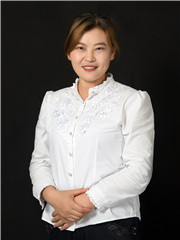
Professor Qiu Mingxia serves as a Professor at Shenzhen University of Technology's School of New Materials and New Energy since January 2024, previously holding the position of Associate Professor from 2017-2023. A recipient of the Shenzhen High-Level Leading Talent Award (Local Reserve Level), she holds a PhD in Materials Science and Engineering from Zhejiang University and has extensive experience in semiconductor research and academic leadership. Education: PhD in Materials Science and Engineering, Zhejiang University (2005-2008) Master in Materials Science and Engineering, North University of China (2002-2005) Research Focus: Professor Qiu's work centers on next-generation semiconductor technologies, with three interconnected pillars: developing perovskite-based optoelectronic devices for efficient light emission, engineering magnetic storage thin films for advanced spintronics applications, and innovating 3D printed porous materials for biosensing systems. Her research bridges fundamental materials science with practical device engineering, emphasizing solution-processed techniques and novel material interfaces. Publication Trends: Recent publications (2020-2024) reveal a strategic shift toward applied optoelectronics and spintronics, with increasing focus on perovskite LED efficiency optimization, quantum dot energy transfer mechanisms, and magnetic interface engineering. Educational research forms a secondary stream, documenting practical teaching reforms in applied technology universities. Her work shows strong industry alignment through patents in flexible electronics and laser fabrication. Scientific Recognition: Shenzhen High-Level Leading Talent Award (Local Reserve Level, 2012) Advanced Teaching Individual Award (Shenzhen University of Technology, 2019) Shenzhen Advanced Education Unit (2021, team award) Third Prize Shenzhen University Science and Technology Progress Award (2010) Research Leadership: Professor Qiu has secured leadership roles in high-impact national projects including the National 02 Major Project and NSFC Key Projects, while directing multiple Shenzhen-level initiatives in semiconductor manufacturing and educational innovation. Her patent portfolio demonstrates successful technology transfer in flexible conductive films and perovskite crystal engineering, reflecting strong industry-academia collaboration. Research Infrastructure: She directs laboratory facilities focused on thin-film deposition, nanomaterial synthesis, and optoelectronic characterization, maintaining active partnerships with semiconductor manufacturers through school-enterprise cooperation projects that integrate student training with industrial R&D needs.