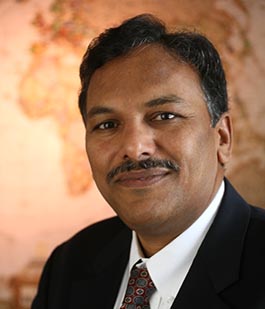
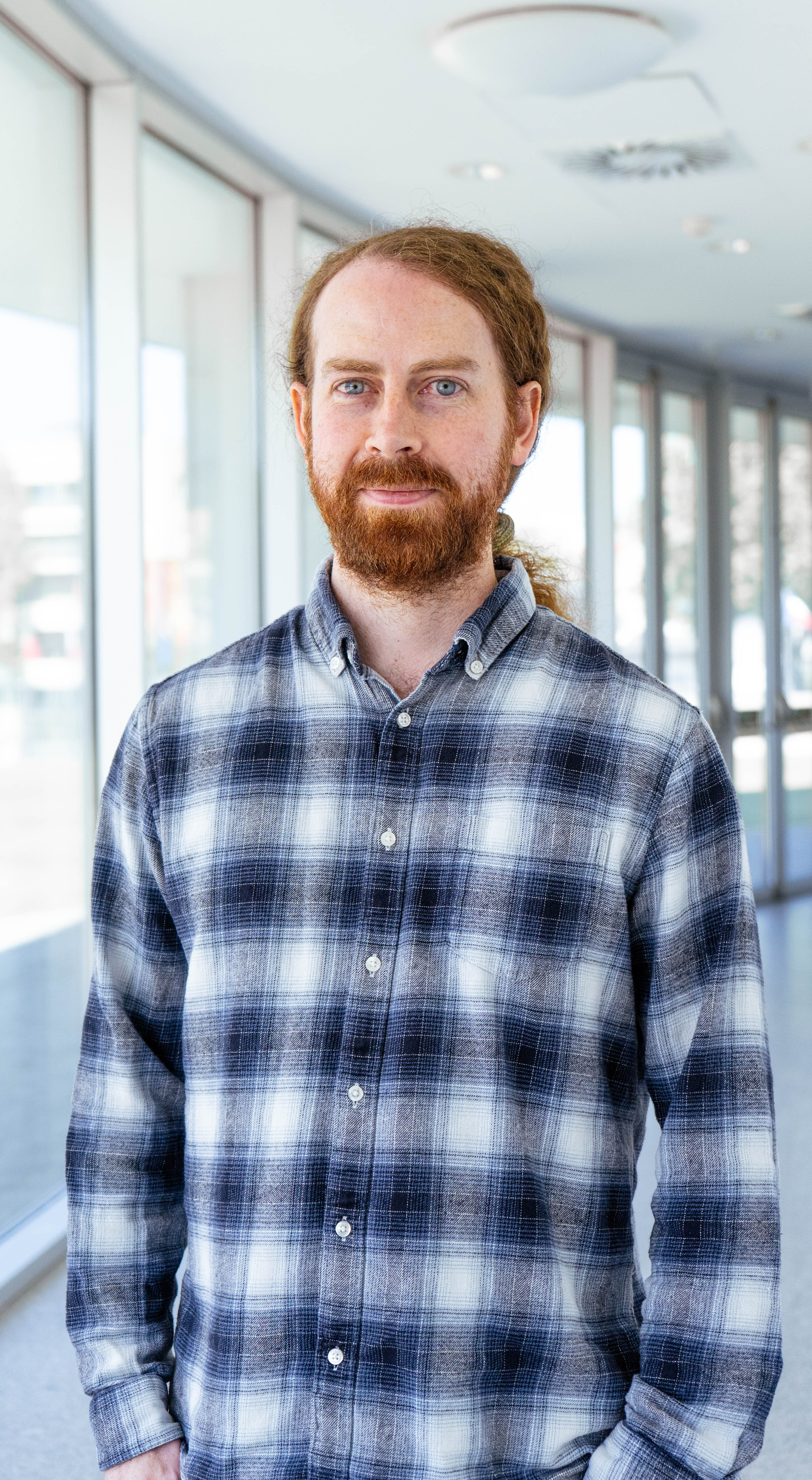
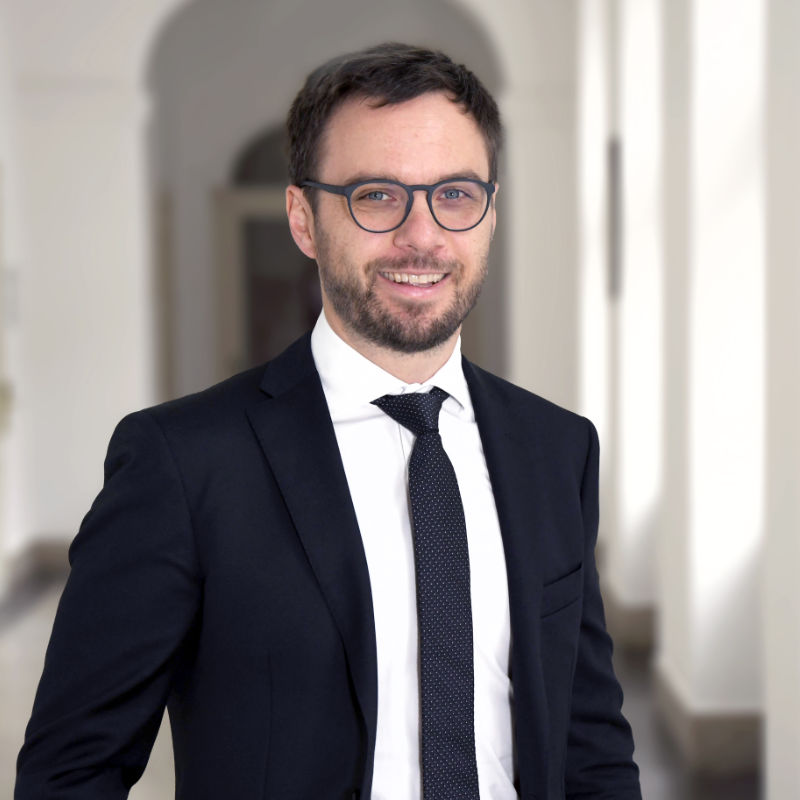
Gabriel Montaño is a Professor and Chair of the Department of Applied Physics and Materials Science at Northern Arizona University (NAU) , where he also serves as University Chief Diversity Fellow and Director of the ¡MIRA! Center for Materials Interfaces in Research and Applications . Previously, he was a Scientist IV at Los Alamos National Laboratory's Center for Integrated Nanotechnologies (CINT) from 2005 to 2018. Education PhD in Molecular and Cellular Biology, Department of Chemistry & Biochemistry, Arizona State University (2002) BS in Biology, New Mexico State University (1997) Research Interests focus on biophysical materials chemistry at the intersection of physical and biological sciences. His lab develops bio-inspired supramolecular membrane materials to mimic non-equilibrium biological systems and explores bio-synthetic interfaces for integrating biological design into materials development. Key themes include membrane biophysics, energy transfer, and scanning probe microscopy. Scientific Awards William Yslas Velez Outstanding STEM Award (2018) Distinguished CINT Affiliate Scientist (2017-2019) SACNAS Presidential Award (2006) Intelligence Community Postdoctoral Fellowship (2002-2005)
Vinayak P. Dravid serves as the Abraham Harris Chaired Professor of Materials Science and Engineering at Northwestern University's McCormick School of Engineering. He directs both the Northwestern University Atomic and Nanoscale Characterization Center (NUANCE) and the Soft and Hybrid Nanotechnology Experimental (SHyNE) Resource, an NSF-NNCI Node. His leadership spans multiple institutional initiatives including the Global McCormick Initiative (GMI) and the International Institute for Nanotechnology (IIN). Dr. Dravid's research focuses on nanoscale solutions to global challenges in energy, environment, and sustainability. His group pursues two primary themes: seeing and sensing the invisible through advanced multimodal imaging across length scales (from atomic to organismal), and hard metrology in soft matter for quantitative characterization of biological and soft materials. Key application areas include environmental remediation (e.g., OHM Sponge technology for oil/water separation), biomedical diagnostics, quantum materials, and energy storage systems. His recent publications reveal strong trends in in-situ/operando electron microscopy for dynamic process observation, nanocomposite design for environmental applications, and quantum material characterization . The work spans interdisciplinary domains including environmental engineering, quantum computing hardware, catalysis, and biophotonics, with increasing integration of AI/ML for image analysis and materials discovery. Fellow, Royal Microscopical Society (2017) IIT Bombay Distinguished Alumnus Award (2012) AAAS Fellow (2010) NSF Young Investigator Award (1993–1998) Highly Cited Researcher designation Dr. Dravid actively mentors graduate students through the VPD Group's structured subgroup system (Environmental, Hybrid Microscopy, Quantum/Energy) and has secured significant NSF, DOE, and NIH funding. His NUANCE and SHyNE centers provide critical infrastructure for over 500 researchers annually. Current projects include commercialization of sponge-based pollution remediation technology through MFNS-Tech and development of AI-driven microscopy techniques inspired by astronomical imaging algorithms.
Dr. Mukesh Prasad is an Associate Professor at the School of Computer Science , University of Technology Sydney (UTS). With expertise in Machine Learning , Artificial Intelligence , and Computer Vision , his research addresses applications in healthcare, biomedical science, and smart infrastructure. He holds a Ph.D. in Computer Science from National Chiao Tung University, Taiwan, and an M.S. in Computer and Systems Sciences from Jawaharlal Nehru University, India. Key research areas: Machine Learning, AI, Brain-Computer Interfaces, IoT, and Evolutionary Computation Industry experience: Principal Engineer at TSMC (2016-2017), Postdoctoral Researcher at National Chiao Tung University Dr. Prasad has secured competitive grants for AI applications in disaster response, conversational agents, and medical diagnostics. His work has been published in high-impact venues like IEEE , ACM Transactions , and Springer Nature , with over 200 peer-reviewed papers. He serves on editorial boards for journals including Frontiers in Neurorobotics and ACM Computing Surveys . Scientific Awards: Vice Chancellor Teaching and Learning Citation Award (2019) Alumni Fellowship for Ph.D. (2014) Golden Bamboo NCTU Fellowship (2010) Professional Members: IEEE (2011), ACM (2019)
Shoichi Yamada is a Professor at the Faculty of Advanced Science & Engineering in Waseda University . With a PhD from the University of Tokyo, his research spans astrophysics, high-energy physics, and computational methods for core-collapse supernovae and compact object formation. Key research areas: Core-collapse supernova mechanisms Neutrino flavor conversions Rotating star equilibria Boltzmann neutrino transport Gravitational wave sources Multi-dimensional hydrodynamics His 245+ peer-reviewed publications (h-index 51) focus on neutrino transport algorithms, supernova explosion dynamics, and flavor instability analysis. Recent work (2025) involves subgrid modeling for neutrino flavor conversions and machine learning applications to radiation hydrodynamics. Major research contributions include: Development of the W4 method for nonlinear equation solving Systematic studies of collisional neutrino instabilities First-principles simulations with full Boltzmann neutrino transport Investigations into muon-induced flavor instabilities Quantum mechanical radiation modeling Multi-dimensional stellar structure formulations
Wataru Onodera is an Assistant Professor at Waseda University's Graduate School of Advanced Science and Engineering, Department of Life Science and Medical Bioscience. His research bridges molecular evolution and neurobiology, focusing on proteins like Praja1/2 and APLP1 in neurodegenerative diseases and DNA damage response. Doctoral Degree (2020–2022): Waseda University, Department of Life Science and Medical Bioscience Master's Degree (2018–2020): Waseda University, Department of Life Science and Medical Bioscience Bachelor's Degree (2014–2018): Waseda University, Department of Life Science and Medical Bioscience His work explores functional divergence in E3 ubiquitin ligases (e.g., Praja family) via gene duplication and positive selection, linking evolutionary patterns to neurodevelopmental mechanisms and disease. Recent projects include quantum-inspired algorithms for phylogenetic tree reconstruction and analyzing Praja1's role in DNA protection against damage. Research trends highlight interdisciplinary approaches merging molecular evolution with computational biology (quantum computing for tree-building) and neurobiochemistry (Tau degradation, synaptic adhesion). His studies often involve comparative analyses of protein sequences and functional assays in neuroblastoma models. Scientific Awards: JSPS Research Fellowship for Young Scientists DC2
Zheng Wen is an Associate Professor (non-tenure-track) at Waseda University, affiliated with the Faculty of Science and Engineering and the Global Center for Science and Engineering. His research spans multiple interdisciplinary domains at the intersection of information technology, security systems, and artificial intelligence applications. Dr. Wen received his Ph.D. from Waseda University between 2013 and 2019, following undergraduate studies at Wuhan University from 2005 to 2009. Dr. Wen's research interests focus on the convergence of emerging technologies for practical applications. His primary areas include Data Science , Internet of Things (IoT) , Blockchain , and Artificial Intelligence , with specific applications in communication networks, disaster management, and content-oriented networking. His work demonstrates a strong emphasis on solving real-world problems through technological innovation, particularly in security-critical domains. Analysis of Dr. Wen's publication record reveals a consistent research trajectory focused on applying machine learning and AI techniques to security and communication challenges. His recent work shows increasing emphasis on blockchain applications for IoT security, GNSS spoofing detection for drone systems, and millimeter-wave imaging for security applications. The interdisciplinary nature of his research connects computer science, electrical engineering, and practical security implementations. Dr. Wen is an active member of professional organizations including IEEE and IEICE, reflecting his engagement with the broader academic community in his fields of expertise. While specific details about his advising and grant activities are not provided in the available information, his extensive publication record across multiple domains suggests active research supervision and likely participation in collaborative research projects. His work on drone security, blockchain applications, and millimeter-wave imaging indicates potential industry partnerships and practical implementations of his research. Dr. Wen's research appears to be conducted within collaborative teams focusing on security systems, wireless communications, and AI applications, with frequent co-authorship patterns suggesting established research groups working on related projects in these domains.
Erik Gauger is a Professor at the Institute of Photonics and Quantum Sciences , School of Engineering & Physical Sciences, Heriot-Watt University. He leads the Quantum Technology Theory group , focusing on quantum nanostructures for energy, sensing, and information processing technologies. His work bridges condensed matter physics, quantum optics, and quantum biology through analytical and numerical modeling. Diplom in Physics, University of Konstanz (2005) DPhil in Physics, University of Oxford (2009) Postdoctoral Research Fellow at Oxford (2009-2011) Research/Senior Fellow at National University of Singapore (2011-2014) Proleptic Assistant Professor at Heriot-Watt (2015) Associate Professor (2020) Full Professor (2022) Research interests include quantum transport optimization, environmentally assisted energy transfer, and quantum coherent effects in artificial/natural nanostructures. Recent work explores dipole engineering, non-Markovian dynamics, and bio-inspired quantum technologies. Collaborations include experimental teams across Europe and Singapore. Notable awards: Royal Society of Edinburgh's Young Academy membership (2018) and Personal Research Fellowship (2015). His group contributes to UN SDG 7 (Affordable Energy) and 13 (Climate Action) through quantum energy technologies. Edinburgh Young Academy of Scotland Royal Society of Edinburgh Fellowship He supervises PhD students and develops simulation toolkits like ACE (non-Markovian open quantum system solver). Current activities include adaptive quantum estimation, cooperative emission studies, and exploring quantum ratchet states for energy harvesting.
Dr. hab. inż. Michał Czubenko serves as an Associate Professor at the Department of Decision Systems and Robotics within the Faculty of Electronics Telecommunications and Informatics at Gdańsk University of Technology. His academic home is in Building A of the Faculty, room 638. Czubenko's research bridges theoretical computer science with practical applications in robotics and decision systems. His educational background includes a doctoral degree (dr inż.) in Automatic Control and Robotics obtained in 2017 and a post-doctoral degree (dr hab. inż.) in Information and Communication Technology achieved in January 2025, both from the Faculty of Electronics Telecommunications and Informatics at Gdańsk University of Technology. Czubenko's research spans a remarkably interdisciplinary space where artificial intelligence meets human cognition. His work integrates computational models with psychological theories to create more human-like decision systems. The researcher has developed expertise in affective computing, focusing on how machines can recognize, interpret, and simulate human emotions. His publications reveal a consistent thread connecting fuzzy logic systems with cognitive architectures, demonstrating how biological inspiration can enhance robotic decision-making capabilities. Particularly notable is his work on artificial emotion modeling, which has implications for human-robot interaction and autonomous systems that require social intelligence. Analysis of Czubenko's publication record shows a clear trajectory from foundational work in intelligent decision-making systems toward increasingly sophisticated applications in robotics and human-machine interaction. His recent work demonstrates growing interest in practical implementations of AI, including object manipulation in robotics and domain adaptation techniques for medical diagnostics. The researcher has also begun exploring the educational implications of large language models, as evidenced by his 2023 publication evaluating ChatGPT for quantum physics learning. While specific awards aren't detailed in the available information, Czubenko's substantial publication record across prestigious venues including Frontiers in Robotics and AI, Cognitive Computation, and Engineering Applications of Artificial Intelligence indicates recognition within his field. His work on computational approaches to artificial emotion has been particularly influential, providing a comprehensive review of existing solutions in this emerging domain. Czubenko's research demonstrates strong collaborative tendencies, frequently working with colleagues like Z. Kowalczuk across multiple publications spanning more than a decade. His work on the xDriver system and intelligent decision-making frameworks suggests involvement in practical implementations of theoretical concepts, likely within laboratory settings focused on robotics and autonomous systems. The researcher's recent publications indicate ongoing active engagement with cutting-edge topics including domain adaptation techniques and the application of large language models in specialized domains.
Tyler Engstrom is an Assistant Professor in the Department of Physics and Astronomy within the College of Natural and Health Sciences at the University of Northern Colorado, where he also serves as Faculty Associate to the Dean for Internships. His academic journey spans industry and academia with roles at MiTeGen, Hobart and William Smith Colleges, and Syracuse University. His educational background: Ph.D. in Physics, Penn State University (2015) B.S. in Metallurgical Engineering, South Dakota School of Mines and Technology (2005) Dr. Engstrom's research centers on mechanical instabilities in biological systems, investigating how differential growth creates structures like brain folds and retinal foveae. His work uniquely bridges theoretical physics and biological phenomena , exploring quantum-classical analogies in elasticity while collaborating with biologists. Recent publications reveal strong focus on morphogenesis mechanisms and biomechanical modeling , with applications in developmental biology and tissue engineering. His publication record shows increasing specialization in biological physics since 2016, with significant contributions to understanding compression stiffening in tissues and quantum-inspired mechanical models. The 2023 Physical Review E paper exemplifies his innovative approach to connecting classical elasticity with quantum systems. Research funding achievements: National Eye Institute grant R15EY035473 (2024) as co-PI College of Natural and Health Sciences GRIP Awards (2023, 2024) UNC New Project Proposal grant (2021) Dr. Engstrom maintains active collaborations with biologists while mentoring students through research projects. His editorial work for American Journal of Physics demonstrates commitment to physics education. The combination of industry experience (MiTeGen), academic research, and teaching creates a dynamic environment for student involvement in cutting-edge biophysics. Though no formal lab name is specified, his research group employs interdisciplinary methods to study mechanical instabilities in biological contexts, utilizing computational modeling, theoretical frameworks, and experimental collaborations to advance understanding of tissue morphogenesis.
Thomas Yager is a Postdoctoral Researcher at the International Iberian Nanotechnology Laboratory (INL) within the Sotomayor Nanophononics Research Group, leveraging over 15 years of international experience in designing, fabricating, and characterizing nano-electronic and nano-photonic devices across the UK, Sweden, Latvia, and Portugal. His academic credentials include: MSci in Physics from Royal Holloway, University of London (2009) Doctoral research at Chalmers University of Technology investigating Epitaxial Graphene Technology for Quantum Metrology Dr. Yager's research expertise spans neuromorphic computing, nano-optomechanics, nanoelectronics, and nanophotonics, with significant contributions to semiconductor materials, biomedicine, and quantum technologies. His current NEUROPIC project pioneers programmable nano-optomechanical systems for brain-inspired computing architectures, integrating his extensive background in nanoscale device development. Prior to INL, he held Postdoctoral Researcher and Leading Researcher positions at Riga Technical University and the Institute of Solid State Physics (University of Latvia), advancing both fundamental and industrial applications through cross-disciplinary collaborations in optoelectronics and quantum device engineering.
Christian Circi is an Associate Professor of Flight Mechanics at the Department of Astronautical, Electrical, and Energy Engineering, Sapienza University of Rome. He has held this position while actively contributing to space research and education in Italy's premier academic institution. Dr. Circi earned his Bachelor of Science and Master of Science in Aeronautical Engineering, followed by a Master of Science in Aerospace Engineering, and ultimately his PhD in Aerospace Engineering, all from Sapienza University of Rome. His educational background provided the foundation for his specialization in space mission design and orbital mechanics. His primary research focuses on orbital mechanics , with particular expertise in third-body perturbations , interplanetary and lunar trajectories , solar sails , orbits for planetary observation , and launch vehicle ascent trajectories . Dr. Circi's work bridges theoretical celestial mechanics with practical space mission applications, making significant contributions to the understanding of complex orbital dynamics in multi-body systems. Analysis of Dr. Circi's recent publications reveals a strong emphasis on solar sail technology, particularly the Helianthus mission, as well as innovative approaches to orbit design for lunar and planetary exploration. His work increasingly incorporates quantum-inspired optimization techniques and machine learning applications to traditional astrodynamics problems, demonstrating adaptability to emerging computational methodologies. Dr. Circi serves as the scientific director of the Italian Space Agency's "Research and Development on Photonic Solar Propulsion" project, demonstrating leadership in cutting-edge propulsion research. He has also been actively involved in consulting for both public and private space sector organizations. At Sapienza University of Rome, Dr. Circi teaches "Interplanetary Trajectories" and "Launcher Flight Mechanics" in the Master's Degree program in Space and Astronautical Engineering, as well as the second-level Master's program in "Space Transportation Systems." His teaching directly reflects his research expertise, providing students with practical knowledge of space mission design. Dr. Circi has authored 153 scientific articles throughout his career and serves as Associate Editor for several prestigious journals including "Aerospace Science and Technology," "International Journal of Aerospace Engineering," "Astrodynamics," and "Space: Science & Technology," indicating his standing within the international space research community.
Matteo Gorgone is an Assistant Professor in Mathematical Physics (RTD-A) at the Department of Mathematical and Computer Sciences, Physical Sciences and Earth Sciences at the University of Messina, where he has been employed since December 31, 2021. Previously, he held a Research Fellow position in the same department from July 2020 to December 2021. His educational background includes a Master's Degree in Mathematics and Computer Science from the University of Catania (2017), a Master's Degree in Mathematics from the University of Messina (2012), and a Bachelor's Degree in Mathematics from the University of Messina (2010). All degrees were earned with highest honors (110/110 cum laude). Gorgone's research focuses on mathematical physics with emphasis on Lie symmetry analysis of differential equations, thermodynamics, continuum mechanics, and numerical methods. His work bridges theoretical mathematics with physical applications, particularly in fluid dynamics and complex systems. He has developed methods for analyzing approximate symmetries, equivalence transformations, and decoupling of PDE systems. His publication record shows consistent output in high-impact journals with a clear progression from foundational work on symmetry methods to sophisticated applications in fluid mechanics and thermodynamics. Recent publications demonstrate increasing sophistication in handling complex physical systems through advanced mathematical techniques. University Funding for Basic Research Activities (FFABR Unime 2022) Kovalevskaya Scholarship for International Congress of Mathematicians 2022 Gorgone actively contributes to the academic community as a referee for multiple scientific journals including AIMS Mathematics, Computation, and Journal of Lie Theory. He has organized several workshops on mathematical physics topics and serves on departmental committees including the MIFT Department Council. His teaching portfolio includes courses on mathematical methods for data science, Lie symmetries, and computational mathematics.
Dr Fasil Kidane Dejene serves as Senior Lecturer in Physics at Loughborough University since 2018, co-leading the Applied Radiation and Medical Physics Group (ARAMP) with Jenny Spiga and Sarah Bugby. His collaborative work with global researchers, clinicians, and industry partners focuses on developing innovative solutions for societal challenges and healthcare improvement through advanced physics applications. His academic journey includes: BSc in Physics Education from Debub University (now Hawassa University), Ethiopia MSc in Physics (specializing in organic solar cells) from Addis Ababa University MSc in Nanoscience and PhD in Physics from University of Groningen, Netherlands Dejene's research pioneers spin caloritronics – harnessing electron spin angular momentum and waste heat for energy-efficient nanotechnology. He designs functional nanodevices using quantum materials like graphene to create magnetically actuated heat valves, switches, and magnetic sensors. His work addresses critical bottlenecks in spintronic materials by developing low-cost alternatives to platinum-based systems through voltage-tunable quantum heterostructures. Notable recognitions include: Newton International Fellowship Technische Universität Dresden Open Topic Postdoctoral Fellowship As co-leader of ARAMP, he leverages Loughborough's advanced nanomaterial fabrication facilities while actively engaging in public outreach through the 'Life through a Lens' initiative. His hands-on activities at science festivals and schools demonstrate imaging physics principles to inspire future STEM participation, particularly focusing on twistronics and lithography applications for quantum computing and medical diagnostics.
Clemens Dlaska serves as Professor of Digital Medicine in Cardiology at the University Clinic for Internal Medicine III (Cardiology and Angiology, Digital Cardiology Lab) of the Medical University of Innsbruck since February 2024. His work integrates advanced computational methods with clinical cardiology to develop next-generation diagnostic and therapeutic solutions. He holds dual academic foundations in human medicine (Medical University of Innsbruck) and physics (Leopold Franzens University of Innsbruck), completing master's and doctoral studies in theoretical quantum physics at the University of Innsbruck. His research trajectory was shaped during tenure at ETH Zurich's Institute of Neuroinformatics and Institute of Biomedical Engineering, where he cultivated expertise in artificial intelligence and machine learning applications for biomedical challenges. Professor Dlaska's research program centers on AI-driven cardiac diagnostics , digital pathology integration , and quantum computing applications for cardiovascular medicine. Leading the Digital Cardiology Lab, his team pioneers algorithms for cardiac imaging analysis, predictive modeling of heart failure, and quantum-inspired optimization of treatment protocols. His interdisciplinary approach bridges theoretical physics, clinical cardiology, and machine learning to address complex cardiovascular pathologies through computational innovation. Current initiatives focus on translating quantum technologies into clinical cardiology frameworks, with emphasis on real-time hemodynamic modeling and personalized intervention planning. The lab maintains active collaborations with neuroinformatics specialists and quantum computing researchers to accelerate the development of clinically viable AI/quantum hybrid systems for cardiac care.