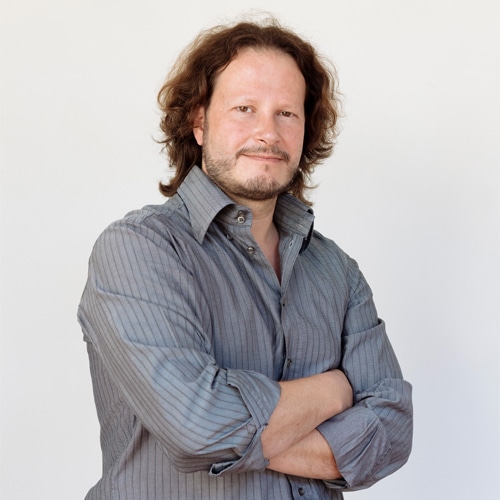
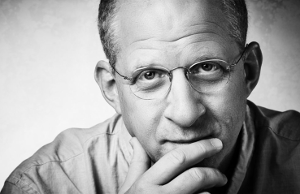
Professor Ulrik Lund Andersen heads the quantum information group at DTU Physics, Technical University of Denmark. His research develops quantum technologies including quantum computation, secure communication, and quantum-enhanced measurement systems. His group generates entangled optical states and investigates diamond-photon interactions for quantum nonlinearities. Key research areas: Quantum computing architectures Continuous-variable quantum information Quantum key distribution Quantum-enhanced sensing Solid-state quantum systems Recent work advances error correction, quantum state engineering, and quantum sensing algorithms. Publications demonstrate consistent focus on practical quantum technology implementation. Awards include multiple Sapere Aude research grants and the Eliteforsk Award from the Danish Ministry of Science.
Seth Lloyd is a Professor of Mechanical Engineering at the Massachusetts Institute of Technology (MIT), where he directs the Center for Extreme Quantum Information Theory (xQIT). His work bridges theoretical physics, quantum information science, and complex systems theory. He has made significant contributions to the foundations of quantum computing and quantum information processing. Lloyd received his education from prestigious institutions: B.A. from Harvard College (1982) M.Phil from Cambridge University (1984) as a Marshall Scholar Ph.D. in Physics from Rockefeller University (1988) Lloyd's research focuses on quantum information science, particularly quantum computation and quantum communications. He has pioneered work in quantum analog computation, quantum error correction, and quantum metrology. His research explores how quantum mechanics can be harnessed for information processing tasks, with applications ranging from quantum computing to understanding biological processes like photosynthesis. Lloyd is also known for his work on complex systems and the relationship between information and physical systems, arguing that the universe itself can be viewed as a quantum computer. His publication record shows a clear progression from foundational quantum computing work to applications in quantum machine learning and quantum biology. The most recent articles reveal a strong focus on quantum algorithms for machine learning, quantum metrology, and the intersection of quantum mechanics with biological systems. His work on the HHL algorithm for solving linear systems has been particularly influential in quantum machine learning, though its practical advantages have been debated following Ewin Tang's classical algorithms. Lloyd has received numerous scientific honors: Lindbergh Fellow (1994) Finmeccanica Professorship (1996) Edgerton Prize (2001) Fellow of the American Physical Society (2007) Quantum Communication Award (2012) International Quantum Communication Award (2012) Throughout his career, Lloyd has mentored numerous students and researchers in quantum information science. He has secured significant research funding for his work in quantum computing and complex systems. His research has been supported by various foundations and government agencies interested in advancing quantum technologies. Lloyd has also been involved in interdisciplinary collaborations, particularly with biologists studying quantum effects in photosynthesis. Lloyd directs the Center for Extreme Quantum Information Theory (xQIT) at MIT, which brings together researchers from physics, computer science, and engineering to tackle fundamental challenges in quantum information processing. His lab has been at the forefront of developing theoretical frameworks for quantum computing and exploring practical implementations of quantum information protocols.
Klaus Mølmer is a Professor at the Niels Bohr Institute, University of Copenhagen, specializing in Quantum Optics and Photonics. His research spans quantum information, entanglement, and cavity QED, leveraging machine learning and Grover's algorithm for quantum state engineering. His recent work focuses on spin squeezing, Rydberg atom interactions, and mechanical resonator cooling. A leader in quantum simulation and superradiance, he collaborates on cavity-mediated emission and quantum network design. The 15 most recent articles highlight advancements in quantum state manipulation, entanglement protocols, and robust differential phase sensing. These studies bridge theoretical frameworks with experimental applications in cavity QED, Rydberg arrays, and zero-photon detection.
Diego Garlaschelli is Professor of Theoretical Physics at the IMT School for Advanced Studies in Lucca, Italy, and at the Lorentz Institute for Theoretical Physics, University of Leiden, the Netherlands. He leads the NETWORKS research unit at IMT and the Econophysics and Network Theory group at Leiden. He is also an external faculty member at the Complexity Science Hub in Vienna and an associate member of the Enrico Fermi Research Center in Rome. His affiliations reflect a strong international and interdisciplinary research profile in network science and statistical physics. He holds a master's degree in theoretical physics from the University of Rome III (2001) and a PhD in Physics from the University of Siena (2005). His postdoctoral experience includes positions at the Australian National University, the University of Siena, the University of Oxford, and the Sant’Anna School of Advanced Studies in Pisa. Garlaschelli’s research spans network theory, statistical physics, econophysics, financial complexity, ecological networks, and social dynamics. He applies maximum entropy models, information theory, and random graph frameworks to understand complex real-world systems. His teaching includes courses in Network Theory, Econophysics, and Complex Systems at both PhD and MSc levels. The 15 most recent publications highlight a consistent focus on network reconstruction, ensemble inequivalence, renormalization, and applications to financial and socio-economic systems. Key themes include statistical inference in networks, resilience, and multi-scale modeling, with publications in top journals such as Nature Reviews Physics , Physics Reports , Science , and Physical Review Letters . His scientific awards include the Best Paper Award at the 6th International Workshop on Self-Organizing Systems (2012) and the Jan Kijne Prize (2013) as supervisor. He has secured multiple grants from NWO, the European Union, and the Royal Society, and has supervised over 40 students at PhD, master’s, and bachelor’s levels. He also mentors postdocs and visiting scientists. Garlaschelli leads and organizes major international workshops and schools in network science and complex systems. He serves on scientific committees and is an active referee for journals like Nature and Physical Review Letters , as well as funding agencies including the ERC and NWO.
Timo Minssen is Professor of Law at the University of Copenhagen (UCPH) and the Founding Director of UCPH's Center for Advanced Studies in Bioscience Innovation Law (CeBIL). He also holds affiliations as an LML Research Affiliate at the University of Cambridge and an Inter-CeBIL Research Affiliate at Harvard Law School's Petrie-Flom Centre. With extensive expertise in Intellectual Property, Competition, and Regulatory Law, Minssen focuses on the legal aspects of emerging health and life science technologies, including genome editing, big data, artificial intelligence, and quantum technology. His educational background includes a German law degree (Staatsexamen) from Georg-August-University in Göttingen, and Swedish biotech & IPR related LL.M., LL.Lic., and LL.D. degrees from Lund University and Uppsala University. His PhD thesis on the patentability of biopharmaceutical technology in the US & Europe received the prestigious Swedish King Oscar award. 2024: TUM Global Visiting Professor, Technical University of Munich (Germany) 2016: Visiting Research Fellow, University of Cambridge (UK) 2014: Visiting Research Fellow, University of Oxford (UK) 2013-14: Visiting Scholar, Harvard Law School (US) 2012: LL.D. - Doctor of Laws (Swedish "juris doktor"), EU/US patent law, Lund University, Sweden Minssen's research spans AI & Big Data in Health & Life Sciences, Sustainable and responsible innovation & tech transfer, Pharmaceutical-, Life Science- & Biotech Law, Comparative European & US Patent Law, Intellectual Property Law & Open Innovation, and EU Competition- & US Antitrust Law. His work addresses legal issues throughout the lifecycle of health and life science products and processes, from R&D regulation to technology transfer and commercialization. His extensive publication record includes 7 books and over 200 articles and book chapters published in leading journals such as Science, Nature Biotechnology, JAMA, and Harvard Business Review. His research has been featured in The Economist, Financial Times, and other major media outlets. Minssen's recent work shows a strong focus on AI regulation, quantum technology law, and data governance in health contexts, reflecting the evolving landscape of technology and law. Scientific Awards and Recognition King Oscar award for best Jur. Dr. thesis (2014) Jorcks Fonds Forsknings Pris (Jorck's Foundation Research Prize) (2017) Awapatent Research Prize (2009) Max Planck Research Scholarship (2005) Visiting Scholar appointments at Harvard Law School, University of Oxford, and University of Cambridge Recipient of a Novo Nordisk Foundation Grant for a "Collaborative Research Program in Biomedical Innovation Law" (2018) As an advisor, Minssen serves international organizations including the WHO, WIPO, and EU Commission. He has supervised numerous PhD students in areas including pharmaceutical law, biotechnology patents, and antimicrobial resistance. His current research projects include the Novo Nordisk Foundation's International Collaborative Bioscience Innovation & Law (Inter-CeBIL) Programme (50 million DKK), CLASSICA: EU Horizon Project on AI-assisted surgery, and AI@Care: Law and Ethics and Algorithmic Bias in Healthcare. Minssen leads the Center for Advanced Studies in Bioscience Innovation Law (CeBIL), which serves as a hub for interdisciplinary research on the intersection of law, technology, and innovation in the health and life sciences. The center collaborates with institutions worldwide to address pressing legal challenges in emerging technologies.
Mikkel N. Schmidt is an Associate Professor in the Department of Applied Mathematics and Computer Science at the Technical University of Denmark (DTU). His research focuses on statistical modeling, Bayesian methods, and their applications in science and industry. He has held visiting roles at Columbia University (2007) and Cambridge University (2008-2009). His work integrates probabilistic modeling with computational inference to address complex problems in diverse fields such as molecular discovery, optical communication, and brain connectivity analysis. Education highlights include visiting scholar and postdoctoral experiences at top-tier institutions. Research interests span statistical methodology development, machine learning applications, and interdisciplinary problem-solving. Current projects involve Bayesian neural networks for molecular discovery and federated learning optimization. Advising efforts include supervising multiple PhD students in areas like molecular discovery and denoising diffusion models. Notable collaborations involve work on materials science, quantum communication, and medical signal processing. His contributions bridge theoretical advancements with practical industrial applications, emphasizing interdisciplinary innovation.
Daniel Stilck França is an Associate Professor at the Department of Mathematical Sciences within the Faculty of Natural and Life Sciences at the University of Copenhagen . He is affiliated with the QMATH Centre for Quantum Mathematics and related research networks. His research focuses on quantum information and computation , particularly on noise characterization in quantum systems, its impact on computational tasks, and quantum-inspired convex optimization algorithms. Recent work explores tensor networks and quantum error mitigation limitations. Key publications (2023-2025) address topics like Pauli channel estimation, Hamiltonian parameter learning, and quantum simulator scalability. His work has been featured in Nature Communications , Nature Physics , and ACM/IEEE conferences.
Ankit Kariryaa is a Tenure Track Assistant Professor at the Department of Computer Science and Department of Geosciences and Natural Resource Management , University of Copenhagen. His work bridges Machine Learning and Environmental Informatics , focusing on remote sensing, geospatial analysis, and ecological modeling. University of Copenhagen, Denmark Machine Learning Section, Department of Computer Science Geography, Land, Environment and Society, Department of Geosciences Kariryaa specializes in applying deep learning and computer vision to environmental challenges. His research includes: Automated tree detection and biomass estimation via satellite imagery Multi-modal geospatial representation learning Monitoring farmland tree decline and carbon sequestration potential Agroforestry system mapping using AI Developing AI tools for climate policy and sustainability Recent work trends show a focus on quantum-inspired machine learning , environmental monitoring , and cross-cultural AI applications . His 15 most recent publications span topics in remote sensing , ecological modeling , and AI ethics , with methods ranging from neural networks to tensor-based learning. He collaborates across disciplines, notably with researchers in ecology , climate science , and quantum computing . His outreach includes seminars on AI in agroforestry and ecosystem management , while his team contributes to global tree resource databases like TreeSense.
Brian Møller Andersen is a Professor in Solid State Physics at the Niels Bohr Institute, University of Copenhagen, where he has maintained continuous academic appointments since completing his PhD. His research spans multiple frontiers of condensed matter physics with significant contributions to superconductivity and magnetism. PhD in Theoretical Physics, University of Copenhagen (2001-2003) PhD studies at Stanford University (2000-2001) MSc in Theoretical Physics, University of Copenhagen (1998-2000) International Exchange at UC Berkeley (1997-1998) BSc in Mathematics and Physics, University of Copenhagen (1994-1997) Andersen's primary research focuses on Superconductivity , particularly high-temperature superconductors where magnetism and superconductivity coexist, and Magnetism in novel quantum materials. His work extends to Quantum Transport phenomena, Ultracold Atoms in optical lattices, Topological Insulators , and Strongly Correlated Systems . Recent publications reveal a growing emphasis on altermagnetism, kagome lattice physics, and topological superconductivity, indicating significant evolution in his research trajectory toward emergent quantum phenomena. Analysis of his 15 most recent publications (2024-2025) shows a clear progression into cutting-edge areas: 60% focus on altermagnetism and novel magnetic states, 40% on unconventional superconductivity in topological materials, and 30% examining quantum confinement effects. His work demonstrates increasing interdisciplinary connections between condensed matter theory, materials science, and quantum information science, with frequent collaborations across Europe and the US. Andersen has received significant research support through prestigious fellowships including the Lundbeck Foundation fellowship (Associate Professor level, 2012-2017) and FNU Steno Stipend (Assistant Professor level, 2009-2013), alongside early career support from the Villum Kann Rasmussen Post. Doc. Stipend. His research group at the Niels Bohr Institute focuses on theoretical modeling of quantum materials, particularly computational approaches to understanding competing orders in correlated electron systems. The group maintains strong connections with experimental teams conducting neutron scattering, STM, and ARPES measurements to validate theoretical predictions.
Rasmus Pagh is a Professor at the Department of Computer Science, University of Copenhagen, specializing in algorithms and complexity. His career includes a 2002 PhD from Aarhus University under Peter Bro Miltersen and a tenure at IT University of Copenhagen until 2020. He leads theoretical research with practical applications in big data, databases, and modern computer architecture parallelism. His research interests span algorithms, data structures, and privacy-preserving computing. Recent work includes the ERC-funded project on Scalable Similarity Search and contributions to the BARC center for basic algorithms research. He has collaborated with Google Research (2019-2020) and focuses on theoretical foundations with real-world impact. Key research trends in his 2023-2024 publications include privacy-preserving data analysis probabilistic data structures distributed secure computation noise-robust coding hashing efficiency continual privacy mechanisms Scientific recognition includes 2024 ACM Fellowship ERC grant leadership multiple top-tier conference publications
Kohei Nakajima is an Associate Professor at the Department of Intelligent Mechano-Informatics, Graduate School of Information Science and Technology, The University of Tokyo. He holds concurrent positions at the Department of Creative Informatics and the Next Generation Artificial Intelligence Research Center (AI Center). As an Endowed Chair in Advanced Artificial Intelligence Education, he leads the Physical Intelligence Lab, which focuses on the intersection of soft robotics, nonlinear dynamics, and physical computing. His research interests center on Physical Reservoir Computing (PRC), a paradigm that exploits the natural dynamics of physical systems for computation, with applications in soft robotics, spintronics, and quantum machine learning. Nakajima's work demonstrates how physical systems can inherently process information without traditional digital computation, leveraging phenomena like chaos, bifurcations, and embodied intelligence. Nakajima's publications reveal a strong focus on understanding how physical systems can perform computational tasks. His recent work spans from biological applications (jellyfish cyborgs, ostrich-inspired robotics) to fundamental theoretical advances in reservoir computing. The research demonstrates how physical phenomena can be harnessed for information processing, with implications for energy-efficient computing and novel robotic control paradigms. As the organizer of the Reservoir Computing Seminar, Nakajima has built a vibrant research community exploring the nature of information processing across disciplines. His lab actively recruits graduate students and postdocs, indicating strong research momentum and institutional support for his work in physical intelligence.
Rob Gleasure is a Professor in the Department of Digitalization at Copenhagen Business School (CBS), Denmark. His research focuses on the intersection of information systems, digital technologies, and human behavior, with particular expertise in blockchain technology, crowdfunding, AI applications, and technology adaptation. Based at Solbjerg Square 3 in Frederiksberg, he contributes to CBS's mission of advancing knowledge in business and society through digital transformation. Professor Gleasure's research spans several key areas within information systems and digital innovation: Digital finance and blockchain technologies, including cryptocurrency and financial applications Crowdfunding platforms and digital fundraising mechanisms Artificial intelligence applications in various domains including healthcare and banking Human-computer interaction and the psychological aspects of technology adoption Digital collaboration and the affective dimensions of online work Quantum computing infrastructure and emerging technologies His recent publications reveal an evolving research trajectory that increasingly addresses the societal implications of digital technologies. Gleasure has moved from foundational work on crowdfunding and blockchain to more complex examinations of AI ethics, gender bias in technological systems, and the psychological impacts of digital media. His research demonstrates growing attention to sustainable development goals, particularly those related to responsible consumption and production, reduced inequalities, and climate action. The interdisciplinary nature of his work bridges business, technology, and social sciences, often employing both qualitative and experimental methodologies. Professor Gleasure has served as a supervisor for numerous students (21 supervisor tasks mentioned) and has been active in academic service including co-chairing the ACM Collective Intelligence Conference in 2021. His research has attracted media attention, with contributions to discussions on cryptocurrency, carbon offsetting in aviation, and AI applications.
Charles Marcus is a Professor at the University of Copenhagen's Niels Bohr Institute, holding the Villum Kann Rasmussen Chair in Quantum Sciences. He directs the Center for Quantum Devices and Microsoft Station Q – Copenhagen, while affiliating with the Niels Bohr International Academy. Education : Stanford University (B.S. 1984), Harvard University (Ph.D. 1990), IBM Postdoctoral Fellow (1990-92) Employment : Faculty at Stanford (1992-2000), Harvard (2000-2011), and UCPH (2012-present) His research focuses on experimental condensed matter physics, particularly quantum coherent electronics in semiconductors/superconductors. Key areas include spin qubits for quantum computing, Majorana modes in nanowires, quantum Hall systems, and superconductor-semiconductor hybrids. Recent work explores topological quantum information schemes and novel magnetic resonance imaging approaches. Scientific publications span quantum devices, Josephson junctions, and topological materials. Awards include the H.C. Ørsted Gold Medal, AAAS Newcomb-Cleveland Prize, and fellowships from AAAS and APS. He serves on advisory boards for quantum technology centers globally. Significant Awards : H.C. Ørsted Gold Medal (2020) Industry Prize, Danish Academy of Natural Sciences (2019) Member, National Academy of Sciences (2018) Award for Research Excellence in Nanotechnology (2014) Professional Roles : Director, Center for Quantum Devices (2012-2019) Lab Director, Microsoft Quantum (2016-2021) Scientific Director, Harvard Center for Nanoscale Systems (2004-2009)
Jesper Nygård is a Professor at the Niels Bohr Institute, University of Copenhagen, specializing in solid state physics, nanophysics, and quantum technology. He leads the Center for Quantum Devices and has held leadership roles including Head of Section for Nanophysics and Solid State Physics (2007–2017) and Deputy Head of Research (2017–present). His research focuses on hybrid superconductor-semiconductor systems, nanowire-based quantum devices, and low-temperature quantum transport. PhD in experimental nanophysics (2000) and MSc/BSc in physics/mathematics from the University of Copenhagen International research experience at Harvard, Berkeley, and CNRS Grenoble His work bridges nanofabrication, quantum electronics, and Kondo physics, with recent publications analyzing nanowire junctions, microwave dynamics in superconducting systems, and heat dissipation mechanisms. He co-founded multiple technology startups and served as a Danish astronaut candidate (2005–2008). Scientific Awards: Member of the Royal Danish Society of Letters Member of the Danish Academy of Sciences
Sadegh Talebi is a Tenure Track Assistant Professor in the Machine Learning Section at the Department of Computer Science, University of Copenhagen . His research focuses on theoretical aspects of reinforcement learning, Markov decision processes, online learning, stochastic multi-armed bandit problems, and resource allocation in networks. Education BSc in Electrical Engineering (minor: Electronics) from Iran University of Science and Technology (IUST) (2004) MSc in Electrical Engineering (minor: Communication Systems) from Sharif University of Technology (2006) PhD in Electrical Engineering from the Department of Automatic Control at KTH Royal Institute of Technology (supervised by Alexandre Proutiere and Mikael Johansson) Research Specializes in theoretical foundations of reinforcement learning and online learning Key contributions in stochastic optimization, MDPs, and bandit algorithms Collaborates on applications in resource allocation and quantum computing Publications include high-impact work on offline RL, differentially private exploration, and scalable MDP solutions in journals like Neural Processing Letters and conferences such as NeurIPS and UAI.