Dr. Ciara Rafferty is a Senior Lecturer at Queen's University Belfast's School of Electronics, Electrical Engineering and Computer Science, affiliated with the Centre for Secure Information Technologies. She leads research in advanced cryptography, focusing on post-quantum systems, homomorphic encryption, and hardware acceleration. Her work includes quantum-safe cryptography projects like the UK Quantum Communications Hub and AQuASeC (Innovate UK). She co-teaches CSC2056 - Systems Security and Cryptography and actively supervises PhD students. Dr. Rafferty is a Senior Member of IEEE and an EPSRC SPRITE+ Expert Fellow. Research Interests: Homomorphic Encryption Post-Quantum Cryptography Cryptographic Hardware Architectures Privacy-Preserving Technologies Side-Channel Attack Mitigation Key Projects: UK Quantum Communications Hub (Phase 2) SAFEcrypto (H2020 Project) AQuASeC (Toshiba Europe-funded) SEQURED (Rolls Royce-funded) Awards: Senior Member of IEEE EPSRC SPRITE+ Expert Fellow Advising & Grants: PhD Supervision: Shabnam K (Secure Cloud Computation) Funding: EPSRC, Innovate UK, Industry Partners Lab/Teams: Centre for Secure Information Technologies (CSIT), collaborating on hardware-accelerated cryptography and quantum-safe systems.
Professor Carsten Rudolph serves as Deputy Dean at Monash University's Faculty of Information Technology and directs the Oceania Cyber Security Centre (OCSC). He holds a PhD in Information Security from Queensland University of Technology (2002) and a Diplom in Computer Science from Goethe University Frankfurt (1997). His interdisciplinary research focuses on cybersecurity foundations, including cryptographic protocols, AI-driven security, human factors, and national cybersecurity policy. Key areas include securing smart grids, digital health systems, and transnational energy networks. Notable contributions include establishing the OCSC, leading Pacific region cybersecurity maturity reviews with Oxford University, and advancing frameworks for firmware security in virtual power plants. He chairs major projects like RAI4IoE (Responsible AI for Energy) and Post-Quantum Cryptography initiatives. Teaching responsibilities include cybersecurity modules like FIT3173 and FIT3168. Rudolph's research outputs (137+ publications) emphasize phishing detection via AI, blockchain-based energy trading, and resilient smart grid systems. He collaborates internationally on policy development and has advised 12 major research projects funded by agencies like the U.S. Bureau of East Asia and Pacific Affairs.
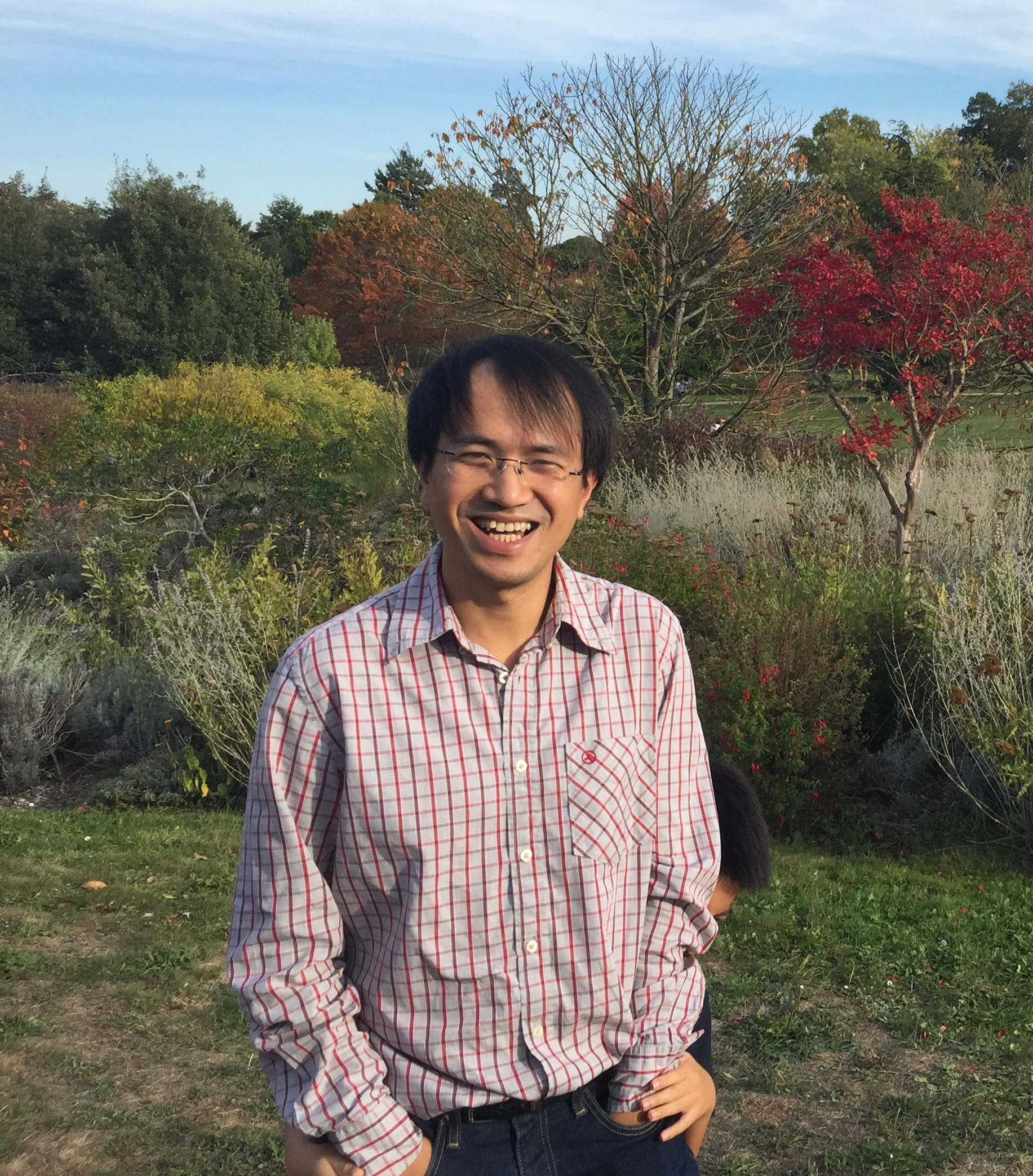
Weiwen Jiang is a tenure-track Assistant Professor in the Department of Electrical and Computer Engineering at George Mason University (GMU), affiliated with the College of Engineering and Computing (CEC). He leads the JQub lab, focusing on hardware/software co-design for computing systems, spanning classical (FPGAs, ASICs) and quantum computing applications in AI-driven fields like medical imaging and geophysics. Prior to GMU, he held a postdoctoral position at the University of Notre Dame and earned his PhD in Computer Science from Chongqing University with a joint PhD in Electrical and Computer Engineering from the University of Pittsburgh. His research emphasizes quantum computing, AI accelerators, and domain-specific computing. Notable achievements include the 2025 NSF CAREER Award, ACM Sigda Meritorious Service Award (2024), and IEEE QuantumWeek Best Paper Award (2023). His work is funded by NSF, DoE, ARO, Meta, and Leidos. He co-chaired IEEE QuantumWeek (2023–2025) and created workshops like StableQ at ESWEEK 2023. Key contributions include developing frameworks like QuPAD for quantum learning and JQub's AI-driven geophysical and medical imaging tools. His lab graduated Dr. Yi Sheng (now at University of South Florida) and Dr. Zhepeng Wang (Amazon Applied Scientist). Current research explores quantum machine learning, noise mitigation, and fairness in AI for edge devices.
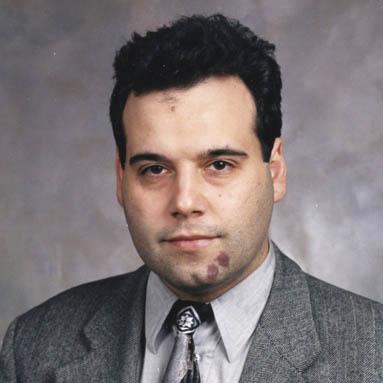
Mark F. Bocko is a Professor of Electrical and Computer Engineering and Physics at the University of Rochester, serving as Chair of the Department of Computer and Electrical Engineering since 2004. He holds a BA from Colgate University and advanced degrees (MS/PhD) in Physics from the University of Rochester. His research spans superconducting digital electronics, quantum computing, music signal processing, and smart sensor systems. Notable awards include the Excellence in Undergraduate Teaching Award (1991, 2002) and Professor of the Year (2002). His research groups focus on high-frequency digital signal processing using Josephson junctions, quantum coherence in superconducting circuits, and applications in music technology such as internet-based real-time musical collaboration. Collaborations include work with the Eastman School of Music and local industries on sensor networks and wireless technologies. Key contributions include developing GHz-rate analog-to-digital converters, quantum bit control systems, and music encoding algorithms. His NSF-funded projects explore internet2 applications for musical interaction and physical modeling in music systems.
Diana Gratiela Berbecaru is an External Collaborator and External Lecturer at the Department of Control and Computer Science (DAUIN), Politecnico di Torino, where she contributes to teaching and research in cybersecurity and digital identity. She is affiliated with the TORSEC Security Group and actively participates in EU-funded research projects such as Q-FENCE, focusing on quantum-resistant cryptography. She teaches core courses including Security and Privacy for Digital Identity Frameworks and Information Systems Security , and has been recognized with the Italian national scientific habilitation as Associate Professor in 2025, affirming her academic standing. Full Name: Diana Gratiela Berbecaru University: Politecnico di Torino Department: Department of Control and Computer Science (DAUIN) Academic Rank: Associate Professor (habilitated) Teaching Status: Part-time External Lecturer Email: diana.berbecaru@polito.it Her research focuses on cybersecurity, identity management, and trusted computing, with specific interests in authentication, authorization, data privacy, network security, and trusted computing in distributed and IoT environments. She investigates practical implementations of digital identity systems using the eIDAS infrastructure, certificate validation, TLS security, and post-quantum cryptography. Her work bridges theoretical security models with real-world deployment challenges. Her recent publications (2022–2025) reflect a strong focus on TLS security, X.509 certificate analysis, anomaly detection using AI, remote attestation for IoT, and post-quantum migration strategies. These works are published in high-impact venues such as IEEE Access, IEEE ISCC, and ARES, indicating active and influential contributions to the cybersecurity research community. The research trend shows a consistent emphasis on practical tools and frameworks for enhancing trust and security in digital systems. Scientific Awards and Recognition: Italian National Scientific Habilitation as Associate Professor (Abilitazione Scientifica Nazionale, II fascia), 2025 She serves as an Associate Editor for IEEE Transactions on Network and Service Management and IEEE Access , and as a Guest Editor for Electronics and Computer Networks . She chairs and co-chairs international workshops such as TrustAICyberSec and IMTrustSec, and is a frequent member of program committees for major conferences including ARES, IDC, and ISCC. These roles demonstrate her active engagement in academic leadership and knowledge dissemination. Labs and Research Groups: TORSEC - Security Group (DAUIN): Core research group focusing on cybersecurity, trusted systems, and digital identity.
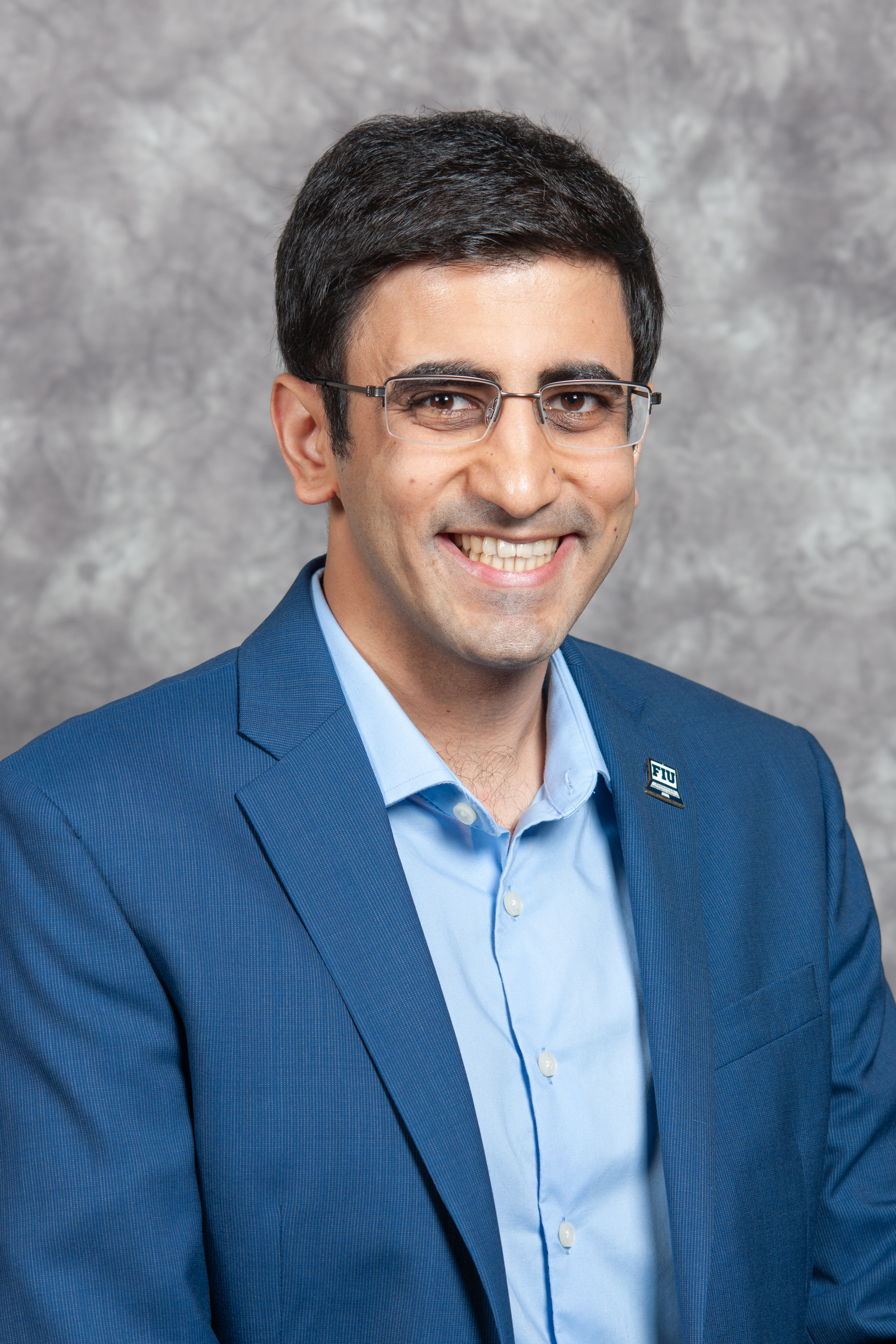
M. Hadi Amini is an Assistant Professor at Florida International University's Knight Foundation School of Computing and Information Sciences. He founded and directs the Sustainability, Optimization, and Learning for InterDependent networks (SOLID) laboratory, focusing on cyber-physical-social systems and distributed AI applications. Ph.D., Electrical and Computer Engineering (2019), Carnegie Mellon University M.Sc., Electrical and Computer Engineering (2015), Carnegie Mellon University M.Sc. (2013), Tarbiat Modares University B.Sc. (2011), Sharif University of Technology His research spans federated learning, interdependent network optimization, and AI applications in smart cities , energy systems , and healthcare . Recent work emphasizes privacy-preserving techniques, quantum encryption, and blockchain integration for secure distributed learning. The 15 most recent publications highlight trends in large language models , edge computing , medical imaging security , and infrastructure resilience , with interdisciplinary emphasis across computer science, systems engineering, and urban planning. Best Paper Award, IEEE Conference on Computational Science & Computational Intelligence (2019) Best Journal Paper Award, Springer Nature Operations Research Forum (2021) Excellence in Teaching Award, FIU (2020) Multiple Best Reviewer Awards, IEEE Transactions NSF Travel Awards (2019) As Associate Editor for Frontiers in Communications and Networks and book series editor for Sustainable Interdependent Networks , he actively shapes research discourse. His lab has secured $3.6M in federal/state funding for AI-driven infrastructure projects.
Nicola Dragoni is a Professor in Cybersecurity Engineering at the Department of Applied Mathematics and Computer Science, Technical University of Denmark (DTU). As Deputy Director and Head of Section, he leads research initiatives focused on securing emerging technologies. Key Research Areas : Internet of Things (IoT) security, machine learning for intrusion detection, cyber-deception techniques, fog computing, malware analysis, blockchain applications, and wireless sensor network security. Supervision : Actively supervising multiple PhD students in projects related to cyber-deception, moving target defense, and bio-inspired security mechanisms. Recent Publications : Contributions to IoT honeypots, drone identification via RF signals, passkey adoption challenges, and cyber range taxonomies.
Affiliations Full-time Assistant Professor of Computer Science at the School of Computing and Information Systems (SCIS) , Singapore Management University (SMU). Research focuses on cryptography, post-quantum systems, and secure protocols. Previously affiliated with PolyU for select teaching and collaborations. Education PhD in Computer Science, Chinese Academy of Sciences (2015). Research Interests Specializes in advanced cryptographic techniques including: Post-Quantum Cryptography (e.g., lattice-based systems) Threshold Cryptography (e.g., secure distributed ECDSA) Zero-Knowledge Proofs and Privacy-Preserving Technologies Authenticated Key Exchange (AKE) protocols Efficient implementations of cryptographic primitives (e.g., Kyber, NewHope) Notable Awards First Prize (LAC.PKE) and Second Prize (SIAKE, LAC.KEX) in Chinese Post-Quantum Cryptography Competition (2020) Best Paper Awards at IWSEC 2015 and ProvSec 2014 Advising & Collaborations Advises PhD students JIANG Bowen and WANG Jiaheng at SMU. Collaborates with researchers such as Guofeng Tang (post-doc) and international teams. Active in organizing conferences (e.g., CCS, ProvSec) and contributes to open-source projects like the Preprocess-then-NTT library. Labs & Teams Leads research initiatives at SMU focused on cryptographic protocol design and implementation. Collaborates with PolyU on advanced security projects.
Dr. George O'Mahony serves as Head of Department of Computer Science at Munster Technological University (MTU) and is a CONNECT Associate Investigator with Research Ireland. He leads Ireland's Cyber Range infrastructure development and acts as WorldSkills Ireland Expert for Cybersecurity Skill 54, driving national cybersecurity initiatives through academia-industry collaboration. Education: B.E. in Electrical and Electronic Engineering, University College Cork (UCC) Ph.D. in Electrical and Electronic Engineering, University College Cork (UCC), 2021 His research pioneers cyber resilience frameworks for OT/IoT systems, zero-trust architectures, and machine learning applications in anomaly detection. He develops low-complexity security solutions for resource-constrained edge devices, with emphasis on wireless sensor networks, GPS applications, and penetration testing methodologies. His work bridges theoretical innovation with practical infrastructure implementation. Recent publications reveal accelerating focus on quantum-resistant cryptography, MQTT-ZT secure brokers, and unified cyber resilience models. His scholarly output consistently addresses interference detection in wireless networks while expanding into satellite communications security and AI-driven network customization, reflecting strategic adaptation to emerging cyber threats. Research Leadership: CONNECT: Associate Investigator advancing cyber security research NCF Cyber Shock: Co-Principal Investigator Cyber Explore: Principal Investigator at MTU Cyber Range: National infrastructure lead (mobile/cloud) Horizon Telemetry: Core research team member As STEM advocate and Cyber Futures Academy contributor, O'Mahony shapes cybersecurity education through WorldSkills Ireland engagement and industry-focused cyber range deployments that serve academic, governmental, and commercial sectors.
Li Yi is a Tenured Associate Professor at the School of Microelectronics, Southern University of Science and Technology (SUSTech) , with expertise in nanoplasmonics, nano-optics, and biochips. His career spans institutions including KU Leuven, Imperial College London, and Ludwig-Maximilians-Universität München. Education: Ph.D. (2015, KU Leuven & IMEC), M.S. (2010) and B.S. (2007) in Biomedical Engineering from Zhejiang University. Career: Associate Professor (2021–present) and Assistant Professor (2019–2020) at SUSTech; LMU Research Fellow (2018–2019); Research Associate (2015–2018) at Imperial College London. Research Interests focus on single-molecule biochips, DNA data storage, and nanopore sequencing. His work bridges nanotechnology with biomedical applications, including: Integrated circuit-compatible optical/electrical devices Computational lithography and nanoscale imaging Neural network training for biosensing Publications include >60 peer-reviewed articles with 25 H-index. His recent work emphasizes DNA-based data encryption, nanopore engineering, and portable biosensing systems. Key journals: Nature Communications, Nano Letters, ACS Nano. Scientific Awards : LMU Research Fellowship (Marie Curie COFUND) imec Excellent Scientific Award Shenzhen 'Peacock Plan' Category B Talent Outstanding Poster Award at Surface Plasmon Photonics 2017 Participation in Lindau Nobel Laureates Meeting (2019) Grants include Ministry of Science and Technology Key R&D Youth Program, NSFC General Program, and Guangdong Provincial Key Program. His lab develops: Fluidic nanopores for single-molecule sensing Optical antennas for enhanced detection Training programs in biochip design and nano-optics
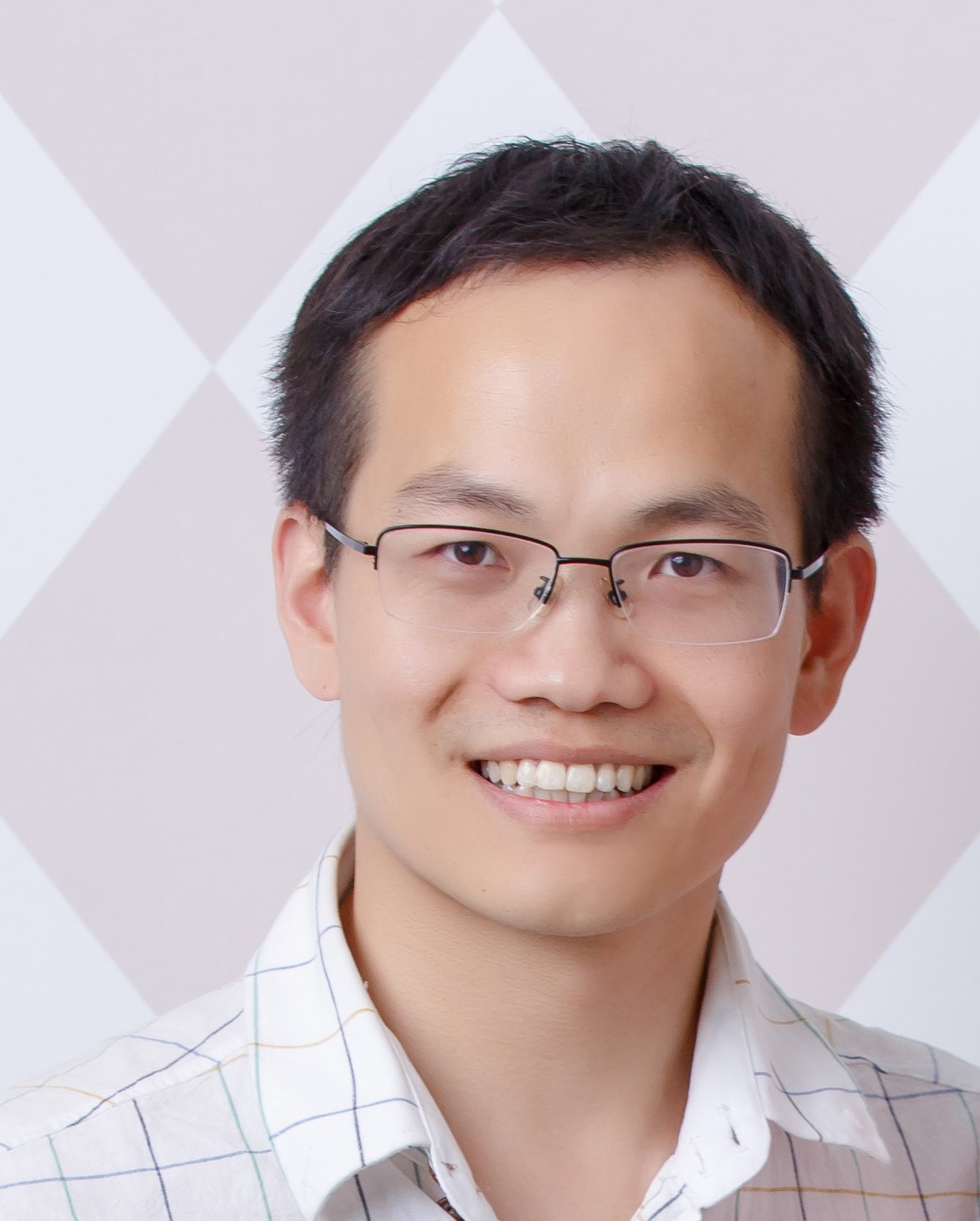
Duong Hieu Phan is a Professor at Telecom Paris, part of the Institut Polytechnique de Paris, and Head of the Cybersecurity-Cryptography team. He holds a Ph.D. in Computer Science from Ecole Normale Supérieure and has extensive postdoctoral experience at University College London and research roles at France Telecom R&D. His academic career includes roles as an assistant/associate professor at LAGA, University of Paris 8 (2007–2015), and later as a professor and director of the Master 2 Maths CRYPTIS program at XLIM, University of Limoges (2015–2020). His research focuses on cryptography, with emphasis on provable security, functional encryption, privacy-preserving systems, and anamorphic cryptography. Key areas include secure communication mechanisms against oppressive surveillance, decentralized systems, and post-quantum security. He has contributed to foundational work on CCA security for FHE, quantum-resistant protocols, and verifiable functional encryption. Prof. Phan is actively involved in professional committees, including IACR ASIACRYPT and PKC steering committees, and editorial boards such as the IACR CIC Journal. He promotes Franco-Vietnamese scientific collaboration through roles in the CNRS IRL partnership. His teaching spans cryptography, algorithms, and mathematics at undergraduate and master’s levels, including program coordination and research supervision.
Dr. Rachel Player is a Senior Lecturer in the Department of Information Security at Royal Holloway, University of London . Her research focuses on post-quantum cryptography, lattice-based cryptographic schemes, homomorphic encryption, and quantum algorithm applications in cryptanalysis. She holds a PhD in Information Security from Royal Holloway, supervised by Prof. Carlos Cid and Prof. Sean Murphy. Education: PhD in Information Security, Royal Holloway, University of London (supervisors: Prof. Cid & Prof. Murphy) Research Interests: Rachel explores cutting-edge areas in cryptography with a focus on privacy-preserving technologies. Her work bridges theoretical advancements and practical implementations, particularly in homomorphic encryption and post-quantum security protocols. Recent efforts emphasize applying quantum algorithms to cryptanalytic challenges. Professional Activities: Rachel actively contributes to standards development in cryptography, including organizing HomomorphicEncryption.org meetings and participating in ISO/IEC JTC 1/SC 27/WG 2 (cybersecurity standards). She also serves as an editor for the Designs, Codes and Cryptography journal. Labs/Teams: Collaborations include the PolSys team at Sorbonne Université (Paris) and the EU H2020 PROMETHEUS project. Current research is anchored in Royal Holloway's Information Security Department.
Berk Sunar is a Professor of Electrical & Computer Engineering and the founder of the Vernam Applied Cryptography and Cybersecurity Laboratory at Worcester Polytechnic Institute (WPI). He joined WPI in 2000 after holding postdoctoral and research roles at Oregon State University (OSU) and Trust Inc. His work focuses on applied cryptography, microarchitectural security, AI security, post-quantum cryptography, and homomorphic encryption. Sunar received his BSc from Middle East Technical University (1995) and PhD from Oregon State University (1998). Research interests include vulnerabilities in hardware (e.g., Rowhammer, TPM-FAIL), side-channel attacks, and cryptographic implementations. Notable contributions include discovering flaws in Intel CPUs and TPM chips affecting billions of devices, as well as developing defenses like cuHE (GPU-accelerated homomorphic encryption). Publications highlight breakthroughs in transient execution attacks (e.g., LVI, RIDL), post-quantum signature schemes (Dilithium), and cloud security (Firecracker VMM vulnerabilities). Awards include NSF CAREER (2002) and IBM Pat Goldberg Best Paper (2007). Advised over 30 graduate students, many of whom hold senior roles in academia and industry. Current research addresses AI security, quantum-resistant algorithms, and automated attack detection via machine learning. The Vernam Lab remains a hub for cybersecurity innovation.
Prof. Dr. Willi Meier serves as a Lecturer for mathematics and cryptology at the Institute for Sensors and Electronics within the School of Engineering and Environment at FHNW (University of Applied Sciences and Arts Northwestern Switzerland) in Windisch, Switzerland. With an extensive publication record spanning over three decades (1988-2025), he maintains an active research profile in cryptographic analysis. Dr. Meier's research primarily focuses on cryptanalysis of symmetric cryptographic primitives, with particular expertise in stream ciphers, block ciphers, and hash functions. His work frequently employs algebraic techniques, differential cryptanalysis, and mathematical modeling approaches to analyze cryptographic security. Recent research has centered on analyzing modern ciphers like Grain, Keccak, RIPEMD-160, and various lightweight cryptographic designs, often developing novel attack methodologies such as coefficient grouping and algebraic meet-in-the-middle approaches. His publication trends over the last five years show consistent high productivity in top-tier venues including CRYPTO, EUROCRYPT, ASIACRYPT, and IACR Transactions on Symmetric Cryptology. The research spans both theoretical advancements in cryptanalytic techniques and practical applications to real-world cryptographic standards. A significant portion of his recent work involves collaborations with international researchers, particularly Fukang Liu, Takanori Isobe, and Santanu Sarkar, reflecting his integration within the global cryptographic research community. Dr. Meier's work has practical implications for cryptographic standardization and implementation security, with analyses of protocols used in telecommunications (TETRA), lightweight IoT applications, and post-quantum cryptographic candidates. His research continues to contribute to the fundamental understanding of symmetric cryptographic primitives and their security margins.
Alessandra Scafuro is an Associate Professor in the Department of Computer Science at North Carolina State University. Her research focuses on theoretical and applied cryptography, particularly cryptographic protocols such as zero-knowledge proofs, secure multi-party computation, and blockchain technologies. She bridges foundational theory with practical implementations to solve real-world security challenges. Ph.D., Computer Science, University of Salerno (2013) B.S., Computer Science, Technische Universität Wien (2008) Research interests include: Design of modular and composable cryptographic protocols Privacy-enhancing techniques for blockchain systems Post-quantum secure cryptographic constructions Trust and anonymity in distributed environments Recent publications explore anonymity in blockchain consensus, zero-knowledge arguments from blockchains, and secure computation paradigms. Her work is supported by grants from NSF, Horizen Labs, Protocol Labs, and Cisco Systems. Dr. Scafuro actively mentors students and contributes to program committees such as EUROCRYPT 2024 and ACM CCS 2024 . She leads the Mutually Accountable Anonymous Systems project within the Wolfpack Security and Privacy Research Lab.