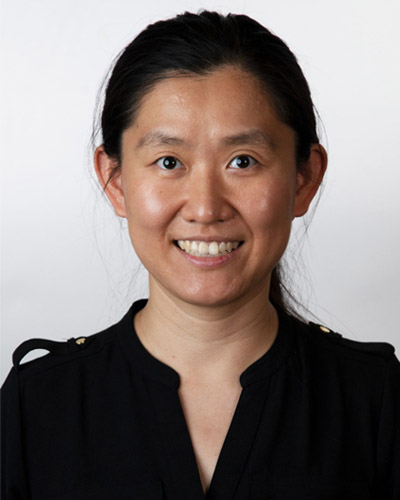
Rachel Oliver is a Professor of Materials Science at the University of Cambridge and Director of the Cambridge Centre for Gallium Nitride. Her research focuses on characterisation techniques for gallium nitride materials used in LEDs and laser diodes, with an emphasis on nanostructure engineering and quantum technology. Awarded OBE (2025), Fellow of the Royal Academy of Engineering (FREng) (2021), and Fellow of the Institute of Materials, Minerals and Mining (FIMMM) (2019) Developed atom-probe tomography and scanning capacitance microscopy to study nitride devices Her work on quantum dots and single-photon emitters has advanced quantum crystallography and optoelectronics. Recent publications highlight trends in nitride semiconductors , solar cell efficiency , and quantum device fabrication . Scientific Awards Royal Society University Research Fellowship (2006-2011) Chair in Emerging Technologies (2023) Grants EPSRC grant for semi-polar nitride structures Oliver's lab at the Department of Materials Science and Metallurgy explores nanoscale nitride structures for future devices, while advocating for gender equality in STEM.
Dr. Cristina de Dios Fernández is an Associate Professor at Carlos III University of Madrid, affiliated with the School of Engineering and the Department of Electronic Technology . She leads the research group Sensors and Instrumentation Techniques (SIT) and holds an ORCID iD 0000-0001-5474-7407 . Research Interests span Photonics , Terahertz Technologies , Optical Frequency Combs , Quantum Sensing , Biomedical Optics , and Integrated Photonics . Her work focuses on Developing compact confocal microscopes for nitrogen-vacancy centers Advancing dual-comb spectroscopy for biomedical and industrial applications Optimizing VCSEL-based optical frequency combs Designing photonic chips for THz dual-comb spectrometers Projects & Grants include principal investigator roles in initiatives like Cátedra Universidad-Empresa EPIQ (2024-2027) and HYPERTERA (2019-2020), alongside researcher roles in EU-funded programs such as OILTEBIA (2013-2017) and CELTA (2016-2020). Patents include Hyperspectral Imaging based on Dual Frequency Comb (2022), and she supervised the thesis VCSEL-based Optical Frequency Comb Generation, Expansion and Optimization (2016).
Roger Fu is a Professor of Earth and Planetary Sciences at Harvard University, leading the Paleomagnetics Lab since 2017. He holds a PhD in planetary sciences from MIT and specializes in paleomagnetism, studying planetary magnetism, tectonic reconstructions, and early Earth history. His research integrates geodynamical modeling with advanced tools like the quantum diamond microscope (QDM), enabling high-resolution magnetic imaging of geological samples. Education: BS from Harvard University (2009, Earth and Planetary Sciences & Astrophysics), PhD from MIT (planetary sciences). Post-PhD research included living with the Mapuche people of Chile to study traditional astronomy. His work focuses on Earth's geodynamo, Martian crustal magnetism, and the solar nebula's magnetic fields. Research interests span planetary formation, early Earth dynamics, and the application of QDM technology to study magnetic minerals. Notable contributions include detecting early plate motions and a reversing geodynamo by 3.5 Ga, and analyzing Martian meteorite magnetism to infer crustal cooling processes. His articles emphasize interdisciplinary approaches, linking paleomagnetic data with geodynamic models to address questions about planetary interiors and climate history. The QDM has been pivotal in visualizing magnetic mineral distributions, enhancing confidence in paleomagnetic interpretations. Labs/Teams: Director of Harvard's Paleomagnetics Lab. Collaborates with applied physics groups to advance QDM technology. Research group includes the Fu Group and the QDM development team.
Philipp Reineck is a Vice Chancellor's Senior Research Fellow at RMIT University's School of Science in Melbourne, Australia. He holds a PhD in Materials Engineering from Monash University (2014) and an Australian Research Council DECRA Fellowship (2019). His research focuses on fluorescent nanomaterials, particularly nanodiamonds, for bioimaging, sensing, and quantum technologies. Key areas include quantum sensing, nanoparticle self-assembly, and plasmonics. Education: B.Sc. Physics (LMU Munich), PhD (Monash University, 2014). Research Interests : Fluorescent nanomaterials (nanodiamonds, silicon carbide) Optical defects in wide-bandgap materials Quantum sensing applications in biology and engineering Colloid chemistry and self-assembly Recent Research Trends : Articles emphasize nanodiamond-based sensing (magnetic fields, temperature), bioimaging standards, and environmental applications (wastewater treatment). Quantum systems in 2D materials like hexagonal boron nitride are also explored. Awards : Australian Research Council DECRA Fellowship (2019). Teaching & Supervision : Coordinates 'The Professional Scientist' and physics lab courses. Supervises projects on nanodiamond sensors, quantum batteries, and bioimaging phantoms. Labs/Teams : Reineck Research Group develops nanomaterials for quantum and biomedical applications, with collaborations in photonics and materials engineering.
Benjamin Weiss is the Chair of the Program in Planetary Science and Robert R. Shrock Professor of Earth and Planetary Sciences at the Massachusetts Institute of Technology (MIT). He leads research in planetary magnetism and serves as Deputy Principal Investigator on NASA's Psyche mission, while also contributing as a Co-Investigator on the Mars Perseverance rover and Europa Clipper missions. Department of Earth, Atmospheric and Planetary Sciences MIT Planetary Magnetism Laboratory Director NASA Psyche Mission Deputy Principal Investigator Mars Perseverance Rover Co-Investigator Europa Clipper Mission Co-Investigator Weiss earned his bachelor's degree in physics from Amherst College before pursuing graduate studies in planetary science and geology at the California Institute of Technology, where he received his master's degree in 2001 and PhD in 2003. His doctoral dissertation on Martian meteorite ALH 84001 provided groundbreaking insights into ancient Martian climate and magnetic fields, demonstrating how meteorites could transfer materials from Mars to Earth without heat sterilization. As a specialist in magnetometry, Professor Weiss investigates the formation and evolution of planetary bodies through laboratory analysis, spacecraft observations, and fieldwork. His research spans nebular magnetic fields in the early solar system , planetesimal structures and dynamos , lunar magnetism and the early lunar dynamo , Hadean Earth and the origins of Earth's magnetic field , the Martian dynamo and changes in Mars' paleoclimate , and innovations in magnetic microscopy . The MIT Planetary Magnetism Laboratory, which he directs, develops high-sensitivity techniques to image magnetic fields in rock samples from meteorites, the lunar surface, and terrestrial sites. Analysis of Weiss's recent publications reveals a strong focus on Mars exploration through the Perseverance rover mission, lunar magnetism studies, and research on asteroid Psyche. His work increasingly integrates data from multiple NASA missions while advancing paleomagnetic techniques to understand planetary evolution and habitability throughout the solar system. Professor Weiss has received numerous prestigious honors including the James B. Macelwane Medal from the American Geophysical Union (2009), election as an AGU Fellow (2009), the Visiting Miller Professor Award from UC Berkeley (2014), and having Asteroid (8069) named 'Benweiss' by the International Astronomical Union (2012). Most recently, he was elected to the National Academy of Sciences (April 29, 2025). James B. Macelwane Medal, American Geophysical Union (2009) Fellow, American Geophysical Union (2009) Visiting Miller Professor Award, UC Berkeley (2014) Asteroid (8069) Benweiss named by IAU (2012) Elected to National Academy of Sciences (2025) As an academic leader, Weiss chairs MIT's Program in Planetary Science and mentors numerous graduate students in the Planetary Magnetism Laboratory. His research is supported by multiple NASA grants related to the Psyche mission, Mars exploration, and lunar science investigations. Weiss also contributes to international collaborations including missions with JAXA (Hayabusa 2), ESA (Rosetta), and SpaceIL (Beresheet). The MIT Planetary Magnetism Laboratory under Weiss's direction develops cutting-edge instrumentation for magnetic analysis, including the Quantum Diamond Microscope. His research team collaborates with scientists across multiple institutions and space agencies to analyze samples from meteorites, lunar missions, and Mars rovers, advancing our understanding of planetary formation and evolution.
Don Fahey serves as an Assistant Professor of Physics at Bryn Mawr College, where his research focuses on developing quantum sensing technologies using solid-state crystals and atomic vapors to advance measurement science and probe fundamental quantum phenomena. Education: Trained with Nobel Laureate Bill Phillips at the National Institute of Standards and Technology (NIST) and the Joint Quantum Institute His research program targets long-lived quantum coherence in portable room-temperature systems, extending atomic/molecular/optical techniques to novel platforms. The Quantum Diamond Microscope developed in his work enables cross-disciplinary applications in rock magnetism, bio-magnetism, and condensed matter physics through quantum resource exploitation. As a teacher-scholar, Fahey cultivates student curiosity through mental model examination while prioritizing classroom and laboratory inclusivity to diversify scientific representation. His industry experience includes serving as principal scientist at a deep tech startup prior to joining Bryn Mawr.
Chong-Yu Ruan is a Professor in the Department of Physics & Astronomy at Michigan State University's College of Natural Science. His research focuses on developing ultrafast electron diffraction and imaging technologies for atomic-scale resolution studies of materials and molecular processes. His research interests center on ultrafast electron diffraction , nanomaterial dynamics , and photoinduced phase transitions . Key areas include plasmonic effects in nanoparticles, charge density wave transitions, graphite-to-diamond transformation pathways, and hot electron dynamics in functional materials. His work bridges fundamental physics with applications in optoelectronics, nanoelectronics, and clean energy sciences. Analysis of his recent publications reveals a strong emphasis on femtosecond electron microscopy for quantum materials research, with particular focus on charge density waves, symmetry breaking phenomena, and nonthermal phase transitions. His group has pioneered techniques for high-throughput femtosecond imaging with atomic-scale resolution. Ruan's laboratory develops advanced instrumentation including environmental cells for solution-phase diffraction, high-brightness ultrafast diffraction cameras, and RF-compressed electron microscope platforms. His team collaborates with experts in laser physics, electron microscopy, and accelerator science to push the boundaries of time-resolved structural analysis.
Mengen Wang is an Assistant Professor in the Department of Electrical and Computer Engineering at SUNY Binghamton. She holds a BS from Shandong University (China), a PhD from Stony Brook University, and completed postdoctoral training at the University of California - Santa Barbara (2019-2022). Her research focuses on first-principles computational approaches to design materials for energy conversion and quantum information technologies, with a specialization in wide-bandgap semiconductors and quantum materials. Education: BS, Shandong University, China (2010-2014) PhD, Stony Brook University (2014-2019) Postdoc, UC Santa Barbara (2019-2022) Research interests center on density functional theory computations, quantum defects, and surface/defect engineering in semiconductors like Ga₂O₃. Her work combines machine learning with ab initio methods to predict material properties critical for optoelectronic devices and quantum systems. Recent studies explore gallium vacancy formation, surface reconstructions, and noble gas trapping in nanocages. Her group actively develops AI-driven tools for materials design and has affiliations with the Materials Science and Engineering Program at SUNY Binghamton. Funding and collaborations support computational resource development and graduate/postdoc training. Current projects emphasize defect dynamics, interface engineering, and quantum defect control in advanced materials.
Prof. Elke Neu-Ruffing is an Associate Professor in the Department of Physics at Rheinland-Pfälzische Technischen Universität Kaiserslautern since August 2022. Her workgroup focuses on quantum sensors using diamond color centers for biophysical applications. She holds a PhD from Saarland University (2012) and has held postdoctoral positions at Basel University and Harvard University. Her research explores nanoscale sensing via nitrogen-vacancy (NV) centers and their integration into scanning probes. Education: PhD in Physics, Saarland University (2012) Diplom Physik, University of Kaiserslautern (2006) Research Interests: Quantum sensing, diamond-based nanotechnology, color center fabrication, and applications in life sciences. Her group investigates NV centers as atomically small sensors for magnetic/electric fields and temperature, embedded in diamond scanning probes. Recent work includes energy transfer mechanisms between 2D materials and diamond color centers, and wafer-scale quantum technologies. Funding: Supported by German Ministry of Education & Research, European Union, Daimler-Benz Foundation, and Robert Bosch Foundation. Recent projects include Seed Fund Contest awards (2024) and collaborations within EU networks like QuSco. Labs/Teams: The Quantum Sensing and Biophysics group develops custom microscopes combining confocal and atomic force microscopy. Current lab members include scientists Nimba Oshnik and Oliver Opaluch, and students Isabell Jauch (awarded Sparkassen-Stiftung prize), Nina Thiele, and Sebastian Westrich.
Xuan Zhou is an Assistant Professor in the Department of Physics and Astronomy at The University of Texas at San Antonio (UTSA), with affiliations in the Department of Mechanical Engineering and the Center for Advanced Measurements in Extreme Environments (CAMEE). His research integrates optics, materials science, physical chemistry, and mechanical engineering to explore phenomena under extreme conditions. B.S. in Materials Physics, Xi'an Jiaotong University (2009) M.S. in Mechanics and Physics (Optics and Nanotechnology), Université de Technologie de Troyes (2010) Ph.D. in Optics and Nanotechnology, Université de Technologie de Troyes (2014) Postdoctoral Research, University of Illinois at Urbana-Champaign (2014–2016, Photoelectrochemistry; 2016–?, Shock Physics) Dr. Zhou's research focuses on nano-optics and photonics , materials under high pressure and shock compression , plasmon-assisted photopolymerization , and electrocatalysis . His lab develops ultra-high-resolution 3D printing techniques using surface plasmons, studies material transformations under GPa-level pressures via diamond anvil cells, and investigates shock-induced changes in semiconductors and energetic materials through optical spectroscopy. His interdisciplinary approach bridges nanofabrication, spectroscopy, and extreme environment physics. The recent publications highlight strong trends in shock wave physics , plasmon-enhanced nanofabrication , and mechanochemistry . His work frequently combines experimental optics with materials synthesis and characterization, often in collaboration with groups at Miami University and UIUC. Keywords across the articles include nano-optics, shock compression, semiconductors, MOFs, and photopolymerization, reflecting a cohesive research program in materials under extreme conditions and nanoscale light-matter interactions . Scientific recognitions include: Front Cover Feature, Accounts of Chemical Research , December 2020 issue Included in Journal of Optics Highlights of 2014 for plasmon-based photopolymerization work Dr. Zhou actively advises graduate and undergraduate researchers, currently mentoring Kade Johnson, Christian Verry, Eric Austin, and Kenneth Mikolaichik. He leads the Zhou Lab at UTSA, which is equipped for high-pressure and shock experiments and optical characterization. The lab has ongoing projects in nano-3D printing, high-pressure plasmonics, and shock spectroscopy, supported by external collaborations. He is actively recruiting PhD, Master’s, and undergraduate students for Fall 2025 and beyond. While specific grants are not listed, his research scope suggests support from agencies interested in materials under extreme environments, nanophotonics, and energy materials. The Zhou Lab operates in the Applied Engineering and Technology (AET) Building at UTSA, with lab space in AET 3.206 and office in AET 3.374. The team uses advanced optical setups for Raman, fluorescence, and dark-field imaging, and conducts experiments involving diamond anvil cells and shock platforms. The lab fosters interdisciplinary training in experimental physics, materials synthesis, and optical instrumentation.
Jonas Nils Becker is an Assistant Professor and J Cowen Chair in the Department of Physics & Astronomy at Michigan State University since December 2021. Prior to this, he was a Research Associate at Imperial College London (2020) and a Postdoctoral Research Assistant at the University of Oxford (2017–2020), focusing on optical quantum memory and quantum thermodynamics using diamond defects. M.Sc. in Chemistry (2013), Saarland University, Germany Ph.D. in Physics (2017), Saarland University, Germany His research spans quantum information science , quantum optics , and solid-state quantum systems , with a focus on coherent control of diamond defects for quantum memory and thermodynamic applications. He contributed to developing silicon vacancy centers as leading platforms for quantum networking and co-constructed the first non-classical heat engine using nitrogen vacancy defects. Recent publications highlight trends in nickel vacancy centers for tunable emission, quantum interconnects linking microwave and telecom wavelengths, and fundamental symmetry tests with rare isotopes in diamond. His work emphasizes coherent quantum control , solid-state systems , and quantum memory bandwidth advancements. Becker leads the QuOD (Quantum Optics and Diamond) Lab at MSU, advancing diamond-based quantum technologies and atomic frequency comb memories . His career bridges experimental quantum physics, defect engineering, and photonic system integration.
Gregory Fuchs is an Associate Professor of Applied and Engineering Physics at Cornell University's College of Engineering. He leads the Fuchs Group focusing on quantum information science and spintronics, studying spin and optical degrees of freedom in solid-state materials. His research spans quantum-enhanced sensors, quantum networks, and hybrid quantum systems combining superconducting circuits with magnetic materials. Research interests include quantum control of defect centers in diamond and wide band-gap materials, magnon-photon interactions in ferrimagnetic structures, and developing advanced magnetic microscopy techniques. His work bridges condensed matter physics, quantum optics, and nanotechnology. Recent publications demonstrate advances in quantum sensing, magnonic systems, and low-loss quantum devices, with applications spanning quantum computing, nanoscale imaging, and quantum materials characterization. His research consistently explores novel quantum phenomena at the intersection of photonics, mechanics, and spin physics. Awards and honors: Cornell Engineering Research Excellence Award (2020) Presidential Early Career Award for Scientists and Engineers (2013) Early Faculty Career Award from NSF (2013) Early Career Award from DOE (2014) Rebecca Q. and James C. Morgan Sesquicentennial Faculty Fellow (2012) The Fuchs Lab develops unique instrumentation including a time-resolved magneto-thermal microscope and scanning NV center microscope for nanoscale magnetic imaging. Current projects investigate quantum control of spins in novel materials systems and hybrid quantum architectures for information processing.
Dr. Laura Clark is a Royal Society University Research Fellow at the University of York's School of Physics, Engineering and Technology. Her research focuses on advancing electron microscopy techniques for higher-resolution imaging and quantitative analysis of sensitive materials. She holds visiting researcher positions at the University of Oxford, University of Leeds, and the Electron Physical Science Imaging Centre (ePSIC) at Diamond Light Source. Dr. Clark's expertise includes transmission electron microscopy (TEM), ptychography, differential phase contrast imaging, and beam-shaping methodologies. Her research group develops theoretical models, computational simulations, and experimental protocols to overcome current limitations in nanoscale characterization, particularly for beam-sensitive materials like solar cell components and pharmaceuticals. She received her undergraduate and MSc degrees from the University of York and completed her PhD at the University of Antwerp. Her postdoctoral work included positions at Monash University and Oxford University before joining York in 2022. Dr. Clark has received multiple scientific honors including the European Microscopy Society Outstanding Paper Award (2020) and has served on committees of the Institute of Physics and Royal Microscopical Society. Her publication record demonstrates sustained contributions across electron microscopy techniques, with recent work exploring dose-efficient imaging, phase retrieval algorithms, and materials characterization for renewable energy applications. Dr. Clark leads a research group focused on pushing the boundaries of electron microscopy capabilities.
Dr. Adrian C Barnes is a Senior Lecturer in Physics at the School of Physics , University of Bristol . His research focuses on the structure of disordered materials such as liquids and glasses, and how their properties emerge from microscopic dynamics. He employs advanced techniques like X-ray and neutron diffraction, anomalous scattering, and computational modeling (Molecular Dynamics, Monte Carlo) to probe these systems. Education: B.Sc. Ph.D., University of Bristol Chartered Physicist (C.Phys.) His work spans Quantum & Soft Matter research themes, with a focus on acoustic levitation , laser heating , and neutron spectroscopy . Recent publications include applications of ultrasonics in biomedical contexts and studies of oxide glasses using isotopic substitution. Barnes collaborates with European facilities like the ESRF , ILL , and DIAMOND , and has supervised 5 postgraduate students. Key Research Collaborations: European Synchrotron Radiation Facility (ESRF) Institut Laue-Langevin (ILL) ISIS Neutron and Muon Source DIAMOND Light Source
Joerg Appenzeller is the Barry M. and Patricia L. Epstein Professor of Electrical and Computer Engineering at Purdue University, and Scientific Director of the Nanoelectronics Group in the Birck Nanotechnology Center. His research focuses on nanoelectronics, 2D materials (e.g., MoS₂, WSe₂, black phosphorus), and their applications in advanced transistors, spintronics, and quantum sensing. He leads efforts in device fabrication, interface engineering, and low-power electronics, with contributions to probabilistic computing and resistive random-access memory (RRAM) technologies. Appenzeller's work integrates material science, quantum physics, and electrical engineering to address challenges in scaling semiconductor devices and enhancing their performance. His lab develops novel transistor architectures, explores defect-engineered 2D materials, and investigates spin-based stochastic systems for energy-efficient computing. He has pioneered studies on vertical 2D heterostructures, phase transition-based memories, and ultra-scaled FETs with record performance metrics. Key research directions include: Optimizing contacts and interfaces in 2D FETs to minimize resistance and hysteresis Developing spintronics platforms for tunable random number generation and neuromorphic circuits Advancing quantum sensing techniques using NV centers in diamond for nanoscale characterization Creating scalable fabrication methods for quasi-2D semimetals and layered chalcogenide devices His interdisciplinary approach bridges fundamental material science with applied engineering, aiming to enable next-generation electronics and computing paradigms. The Birck Nanotechnology Center provides state-of-the-art facilities for his cutting-edge research in nanoelectronics and nanomaterials.