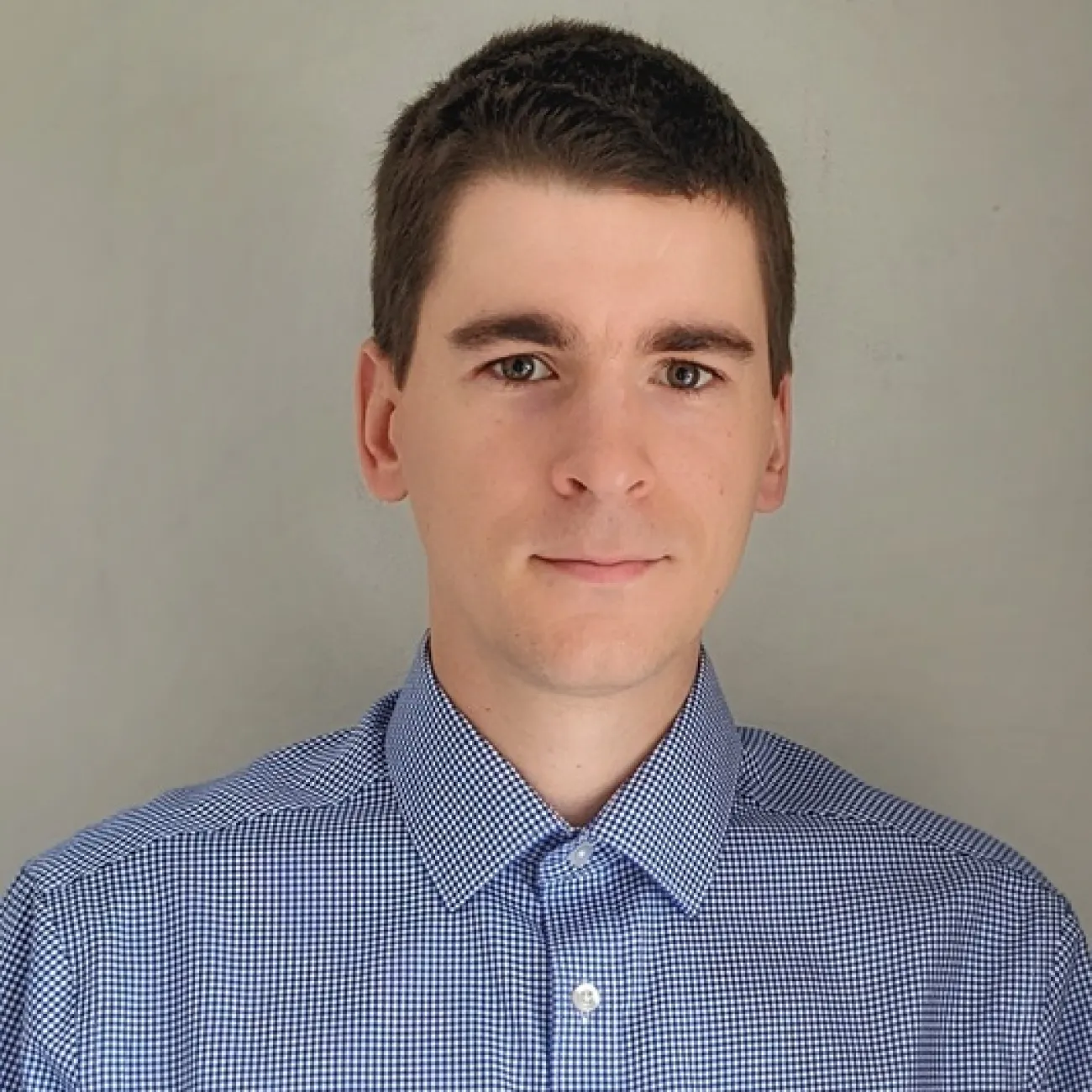
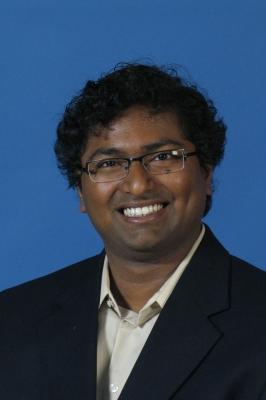
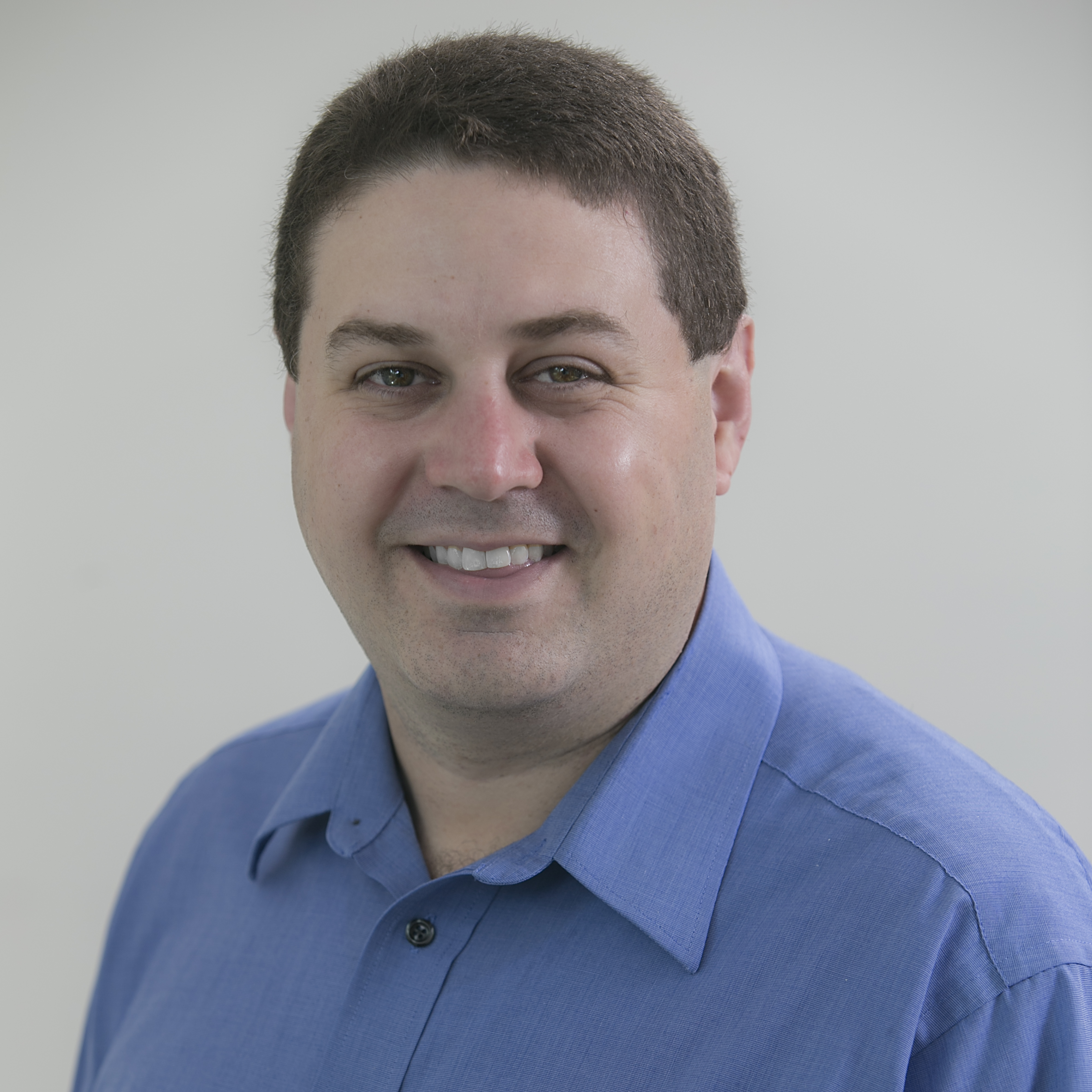
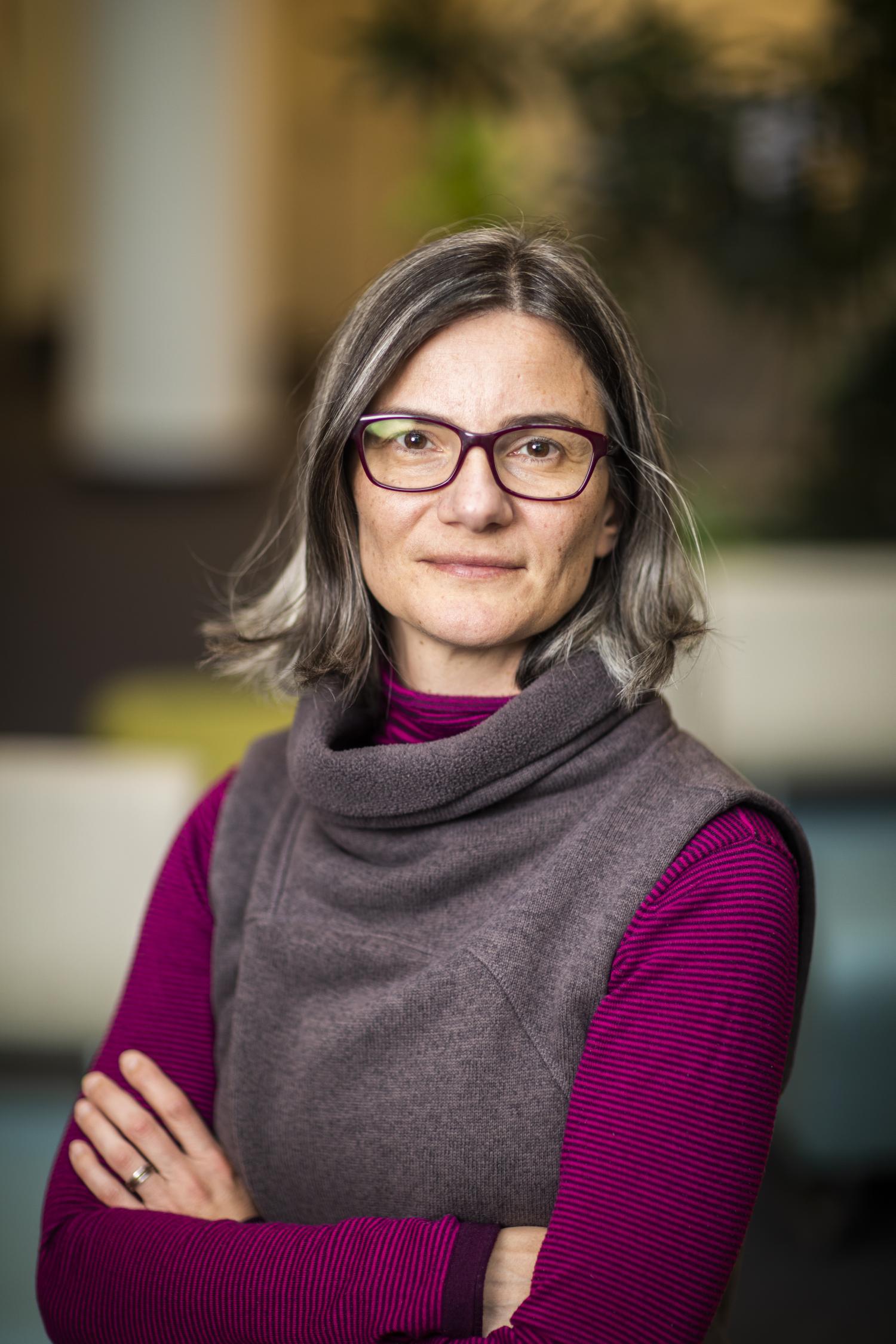
Dr. András Pályi is an Associate Professor at the Department of Theoretical Physics, Budapest University of Technology and Economics, and Head of the HUN-REN-BME-BCE Quantum Technology Research Group. His work bridges quantum computing, spintronics, and condensed matter physics, focusing on spin-phonon interactions, topological quantum systems, and semiconductor nanostructures. Quantum Computing Spintronics Topological Insulators Quantum Materials Recent publications highlight his research on quantum error correction , spin qubit control , non-Abelian Berry phases , and Weyl point stability , with applications in nanomechanical resonators and Majorana qubit architectures. His group explores spin-orbit coupling, acoustic phonons, and lattice reorientation mechanisms in quantum systems. Contact: Office F III. mfszt 6, palyi.andras@ttk.bme.hu , +36 1 463 4109
Lorenzo Pavesi is a Full Professor of Experimental Physics at the Department of Physics, University of Trento (Italy), where he leads the Nanoscience Laboratory with 25 members. His academic career spans over 30 years, including roles as Assistant Professor (1990), Associate Professor (1999), and Full Professor (2002). He founded semiconductor optoelectronics research at the university and established photonics laboratories focused on growth and advanced treatment of materials. Research Focus: Silicon photonics, quantum optics, nonlinear optics, optical sensors, and neuromorphic computing. Leadership: IEEE Italian Chapter on Nanotechnology founder, editorial board member for Frontiers in Physics , ETRI Journal , and Sensors . His work bridges photonics and electronics, with recent advancements in integrated quantum photonics and neuromorphic systems. He has managed numerous national and international projects, holds 9 patents, authored over 500 papers, and edited 15+ books. Awards include the Cavaliere title (2001), IEEE Distinguished Speaker (2010-2011), and fellowships from IEEE, SPIE, and SIF.
Dr. Richard Švejkar is a Research Fellow at the Optoelectronics Research Centre (ORC) at the University of Southampton since 2023. His work focuses on advanced laser technologies, particularly high-power thulium fibre lasers and near/mid-infrared solid-state lasers. Previously, he researched erbium- and iron-based gain media emitting 3–5 µm wavelengths. Education : Master’s in Laser Technique and Electronics (2016), PhD in Physical Engineering (2021) from Czech Technical University in Prague. Research Groups : Advanced Solid-State Sources, Smart Lasers and Special Fibres. His recent publications address challenges in temperature-dependent emission spectra measurement, quantum efficiency optimization, and tunable Tm-doped nested-ring fibre lasers. He has authored/co-authored over 40 papers and is affiliated with Optica and SPIE. Current Research : High-power thulium fibre lasers (2 µm), power scaling of Tm-doped silica fibre lasers, and tunable laser systems.
Dr. Jed Pitera is an Adjunct Assistant Professor at the University of California, San Francisco (UCSF) Department of Pharmaceutical Chemistry and currently serves as the strategy co-lead for Accelerated Discovery in Sustainable Materials at IBM Research - Almaden. He has spent over two decades at IBM Research, applying computational tools and machine learning to materials R&D challenges. Caltech (Biology, Chemistry) University of California, San Francisco (Ph.D. in Biophysics) ETH Zurich (Postdoctoral work in computational physical chemistry) His research focuses on leveraging AI, machine learning, high-performance computing, and quantum computing for advanced materials discovery, particularly in sustainability applications such as carbon capture, energy storage, and PFAS replacement. He also works on improving the sustainability of existing materials in semiconductor manufacturing and directed self-assembly techniques. His work spans computational physical chemistry, polymer science, and AI-driven approaches to material design. His publications demonstrate a focus on AI-driven materials discovery (6 papers), directed self-assembly applications (4 papers), semiconductor manufacturing (4 papers), computational modeling (4 papers), and sustainability-focused research (5 papers). Notable trends include integrating robotics with AI for materials discovery and developing lifecycle assessment tools for sustainable design. Dr. Pitera leads the Accelerator Technologies project at IBM and contributes to the IBM Safer Materials Advisor initiative. He has collaborated with researchers across multiple institutions, including Dan Sanders, Brandi Ransom, Seiji Takeda, and Teodoro Laino.
Dr. Saibal Mukhopadhyay is a Professor in the Department of Electrical and Computer Engineering at the Georgia Institute of Technology, where he joined in 2007. He holds the Joseph M. Pettit Professorship and is recognized as an IEEE Fellow for his contributions to low-power and reliable VLSI systems. Education: BEng (Jadavpur University, India), Ph.D. (Purdue University) Labs: Gigascale Reliable Energy Efficient Nanosystem (GREEN) Lab His research focuses on VLSI Systems , Nanotechnology , and Low-Power Electronics , with emphasis on technology-circuit co-design for energy-efficient computing. Recent work explores Compute-in-Memory (CIM) architectures and Spiking Neural Networks for edge AI. Key article themes include Transformer Model Acceleration , Quantum Computing Calibration , 3D Object Detection , and Device Aging Analysis , reflecting his interdisciplinary approach bridging hardware design and machine learning. Scientific Awards IEEE Fellow (2018) ONR Young Investigator (2012) NSF CAREER Award (2011) IBM Faculty Awards (2009, 2010) Best Paper Awards (IEEE-Nano 2003, ICCD 2004)
Jens Dittmer is a Professor at Le Mans University, affiliated with the Institute of Molecules and Materials of Le Mans (IMMM). His research focuses on advanced solid-state NMR techniques for studying paramagnetic systems, ion conductors, hybrid perovskites, and polymer degradation. Key projects include developing NMR methods for paramagnetic materials, analyzing lithium garnets for battery applications, and collaborating with Pratt Institute on art conservation using NMR. Primary Affiliation: Institute of Molecules and Materials of Le Mans (IMMM), Le Mans University Research Highlights: Paramagnetic Solid-State NMR, Ion Mobility in Garnets, Hybrid Perovskite Photovoltaics, Polymer Degradation in Art Conservation His work bridges fundamental NMR physics with applied material science, particularly in energy and cultural heritage sectors. Collaborations span international institutions including University of Rennes, ParisTech, and Pratt Institute. Current projects emphasize sustainable material design and non-invasive analytical techniques.
Jeffrey Young is a Principal Research Scientist at Georgia Institute of Technology, working with the Partnership for Advanced Computing Environments (PACE) and leading Georgia Tech’s Open Source Program Office. His research focuses on high-performance computing (HPC), computer architecture, and novel accelerators including GPUs, FPGAs, and Arm/RISC-V processors. He leads next-generation computing strategy at PACE and directs the NSF-funded CRNCH Rogues Gallery testbed, which explores post-Moore accelerators like neuromorphic and near-memory systems. His work bridges hardware-software co-design and scientific software engineering. Recent research trends show expertise in quantum programming (Qwerty/ASDF), heterogeneous computing (Cupbop), and memory system optimization across GPUs, FPGAs, and CPUs. He has contributed to exascale workflows (HIPLZ), safe HPC libraries, and UAV co-simulation frameworks. Scientific Awards: NSF-funded CRNCH Rogues Gallery testbed (2020-2024) Education: Ph.D. in Computer Architecture (2013), advised by Dr. Sudhakar Yalamanchili Labs & Initiatives: Director, CRNCH Rogues Gallery testbed Co-Director, Georgia Tech Center for Scientific Software Engineering Director, Georgia Tech Open Source Program Office
Carolin Müller is a Juniorprofessor for the Theory of Electronically Excited States at the Friedrich-Alexander University Erlangen-Nuremberg since November 2023. Previously, she was a Feodor Lynen Postdoctoral Researcher at the University of Luxembourg (June 2022-October 2023) and a Postdoctoral Researcher at Friedrich Schiller University Jena (March 2021-May 2022). Dr. Müller received her B.Sc. (2016) and M.Sc. (2018) in Chemistry from Friedrich Schiller University Jena, followed by her Ph.D. (Dr. rer. nat) in 2021 from the same institution. Her doctoral research focused on "Towards Operando Spectroscopy of Supramolecular Photocatalysts – A Case Study on Ru-dppz-derived Systems" under the supervision of Prof. B. Dietzek-Ivanšić. Dr. Müller's research focuses on the theoretical understanding of photoinduced processes in molecules and materials. Her group (CPC Group) investigates electron transfer processes, isomerization reactions, and excited-state dynamics with the goal of controlling and optimizing light-driven processes for increased reactivity and efficiency. Her work combines computational chemistry, spectroscopy, and machine learning approaches, specifically utilizing methods like TD-DFT, CASSCF, molecular/quantum dynamics, and cheminformatics techniques including SVD, MCR, and global/target lifetime analysis. Her recent publications demonstrate a strong interdisciplinary approach spanning computational chemistry, spectroscopy, and machine learning. Key themes include nonadiabatic molecular dynamics, excited-state simulations, photoswitch design, photocatalysis, and the development of computational tools like KiMoPack for kinetic modeling. Her work often bridges theoretical predictions with experimental validation through close collaboration with spectroscopy research groups. Feodor Lynen Research Fellowship (Alexander von Humboldt Foundation) Thuringian Research Award 2023 for Applied Research Albert-Weller Award (German Chemical Society) Dissertation Award (Faculty of Chemistry and Earth Sciences) FCI Kekulé PhD fellowship As a Juniorprofessor, Dr. Müller leads the CPC Group at FAU, where she mentors students in computational chemistry research. She has developed expertise in combining spectroscopic techniques (resonance Raman, transient absorption, and time-resolved emission spectroscopy) with computational methods and cheminformatics approaches. She also actively contributes to the scientific community through service roles including co-organizing the ESTML 2023 Workshop and serving as an active member in the yPC organization of the German Bunsen Society. Dr. Müller is actively developing the CPC Group research program at the Computer Chemistry Center, focusing on light-induced physical processes and chemical reactions. Her group combines quantum chemistry, chemoinformatics, and experimental spectroscopy to reveal mechanisms behind photoinduced phenomena and optimize light-driven processes.
Manuela Reben serves as a Professor at AGH University of Science and Technology in Kraków, Poland, within the Faculty of Materials Science and Ceramics. Her primary appointment is in the Department of Glass Technology and Amorphous Coatings, with office space in building A-3, room 222. She holds the significant administrative role of Vice-Dean of the Faculty of Cooperation and participates in multiple governance bodies including the Chemical Engineering Discipline Council, Faculty College, University Senate, and Senate Committee on Science. Her research centers on advanced glass systems with specialization in optical materials , radiation shielding composites , and waste glass valorization . Key investigations include structural characterization of rare earth-doped tellurite and phosphate glasses, development of novel compositions for photonic applications, and utilization of industrial glass wastes in sustainable construction materials. Her work bridges fundamental materials science with practical engineering solutions for laser technology, nuclear shielding, and eco-friendly building products. Analysis of her recent publications (2022-2025) reveals dominant research trajectories in three interconnected domains: (1) Engineering phosphate/tellurite glass matrices doped with rare earth ions for broadband optical amplifiers and laser gain media; (2) Developing radiation-shielding glasses with optimized attenuation properties for medical and nuclear applications; (3) Transforming industrial glass wastes into functional construction materials through sintering process optimization. These efforts demonstrate consistent innovation in glass composition design and property tailoring. Scientific awards: No awards documented in available sources. Advising activities and research grants are not specified in current documentation, though her leadership roles suggest significant mentorship responsibilities. Her departmental affiliation indicates active participation in collaborative research teams focused on glass technology and amorphous materials development.
Sophia Natasha Wilson is a Research Fellow in the Department of Computer Science (DIKU) at the University of Copenhagen, specializing in machine learning applications across interdisciplinary domains. She is affiliated with the SCIENCE AI Centre and holds a cross-departmental position at the Niels Bohr Institute . Her research bridges theoretical machine learning with practical implementations in healthcare, quantum computing, and environmental sustainability. University of Copenhagen Department of Computer Science (DIKU) Niels Bohr Institute SCIENCE AI Centre Her research focuses include: Quantum-enhanced machine learning algorithms Explainable AI for healthcare applications Environmental sustainability in computing Emotion-aware language models Quantum computing hardware optimization Public health risk modeling Her recent publications demonstrate cross-disciplinary work in quantum machine learning (hybrid optical processors, qubit stabilization), health informatics (hypothyroidism analysis, nursing values evaluation), and ethical AI (sustainable AI, fairness in recommender systems). Technical work also appears in non-Euclidean generative models and real-time adaptive systems . Current projects include quantum dot array simulation (QDarts platform) and federated learning for personalized medicine . She contributes to the TreeSense center for remote sensing of global tree resources and works on climate-aware AI frameworks.
Prof. Gordana Dukovic is a Professor and Institute Fellow at the Renewable and Sustainable Energy Institute (RASEI) within the Department of Chemistry at the University of Colorado Boulder. She holds affiliations with RASEI, the Materials Science and Engineering Program, and served as a Visiting Professor at Claude Bernard University (2016). Her research focuses on nanoscience for solar energy applications, integrating nanomaterial synthesis with electronic spectroscopy to study light-matter interactions. Key contributions include developing CdS nanorods for CO2 reduction, investigating charge dynamics in quantum dots, and creating biohybrid systems for photocatalysis. Education: Ph.D. in Chemistry from Columbia University (2006), postdoctoral research at UC Berkeley and LBNL (2006-2009). Research Interests: Design of nanomaterials for solar energy harvesting Electronic structure and excited-state dynamics of semiconductor nanocrystals Charge transfer mechanisms in enzyme-nanoparticle hybrids Photocatalytic CO2 reduction and H2 production Awards: Recipient of the Guggenheim Fellowship (2023), Sloan Research Fellowship (2014), NSF CAREER Award (2012), and multiple institutional recognitions. Her work bridges nanotechnology, physical chemistry, and renewable energy with over 70 peer-reviewed publications. Lab and Collaborations: The Dukovic Group operates labs in Ekeley Science Building (M332/M366), collaborating with institutions like NREL and UC Berkeley. Positions are open for undergraduates, graduates, and postdocs interested in nanocrystal photochemistry.
Barbara Capogrosso Sansone is an Associate Professor of Physics at Clark University. She holds a Ph.D. in Physics from the University of Massachusetts, Amherst (2008) and a B.S. in Physics from the University of Torino (2000). Her research focuses on quantum phases of dipolar bosons in optical lattices, exploring topics such as supersolid phases, cavity-coupled systems, and topological order in ultracold atomic gases. She employs quantum Monte Carlo methods to investigate many-body phenomena in strongly interacting systems. Her work examines phase transitions in dipolar boson configurations, including bilayer systems, twisted geometries, and cavity-mediated interactions. Recent studies address novel phases like pair-supersolidity, thermocrystallization, and quantum phases in twisted bilayers. She also investigates nonlocal topological signatures, such as worldline braiding properties, to characterize quantum phase transitions. Her research has been presented at venues like the APS Division of Atomic, Molecular and Optical Physics Meeting. While no specific grants or awards are listed in the provided materials, her extensive publication record reflects sustained contributions to the field of quantum many-body systems and ultracold matter.
Philip Johnson is a Professor and Chair of the Department of Physics at American University (AU), where he has been since 2006. He also serves as Director of the Integrated Space Science and Technology Institute (ISSTI), supporting over 20 AU faculty and external partners like NASA's Goddard Space Flight Center. His research focuses on quantum computing, superconducting qubits, ultracold atoms, and effective interactions in few-body systems. He holds a PhD in Theoretical Physics from the University of Maryland and completed postdoctoral work at NIST and the University of Maryland's superconducting quantum computing group. His academic leadership roles include Associate Dean of Research for AU's College of Arts and Sciences and service on the American Physical Society's council. His research explores quantum control, nonequilibrium dynamics, and applications in quantum sensing and metrology. Key areas include ultracold bosons in optical lattices, nonlocal interactions, and hybrid machine learning approaches for quantum systems. He collaborates with institutions like the Joint Quantum Institute and Johns Hopkins Applied Physics Laboratory. Johnson's recent work advances theoretical frameworks for few-atom systems and superconducting qubits, with publications addressing topics like topological properties of interactions and correlations in quantum systems. His contributions span experimental and theoretical physics, emphasizing interdisciplinary applications in space science and technology through ISSTI.
Michael DeWeese is an Associate Professor of Physics and Neuroscience at the University of California, Berkeley. His research spans nonequilibrium statistical mechanics, machine learning theory, and systems neuroscience. He holds a BA in Physics from UC Santa Cruz (1988) and a PhD in Physics from Princeton (1995). Before joining UC Berkeley in 2007, he held postdoctoral positions at the Salk Institute and Cold Spring Harbor Laboratory. His work integrates principles from physics, neuroscience, and machine learning to address fundamental questions in theoretical and experimental biology, computation, and statistical mechanics. DeWeese Lab Website provides further details on ongoing projects and collaborations. Education: BA in Physics, UC Santa Cruz (1988) PhD in Physics, Princeton University (1995) Research Interests: Nonequilibrium Statistical Mechanics: Focuses on thermodynamic optimization, active matter, and non-equilibrium processes. Machine Learning Theory: Develops first-principles models to explain neural network performance and efficient algorithms for probabilistic models. Systems Neuroscience: Uses biologically inspired models to understand neural coding, sensory processing, and computational roles of neural networks. Advising & Grants: While no formal student advisees are listed, his lab actively collaborates across disciplines. Funding sources are not explicitly mentioned but likely involve NSF, NIH, or DOE grants based on research themes. His work on quantum control and neural networks suggests potential ties to interdisciplinary funding initiatives. Labs & Teams: Directs the DeWeese Lab, which bridges physics, neuroscience, and machine learning. Collaborations include institutions like the Helen Wills Neuroscience Institute (UC Berkeley).
Distinguished Professor of Physics at the University of California Davis College of Letters and Science since 1989. Primary affiliation with the Department of Physics, with significant cross-disciplinary collaborations in Applied Mathematics and Computer Science through NSF and DOE grants. Research focuses on quantum many-body phenomena in condensed matter systems and ultracold atomic gases. Expertise spans magnetism, superconductivity, metal-insulator transitions, and quantum phase transitions. Pioneers advanced Quantum Monte Carlo simulation techniques, particularly determinant quantum Monte Carlo for Hubbard and electron-phonon models. Current work investigates spatial inhomogeneities in quantum phases and strong interparticle interactions. Recent publications reveal growing integration of machine learning with quantum simulation. Research trends indicate deepening exploration of SU(N) symmetric systems, flat-band quasicrystals, photonic quantum simulators, and neural quantum states. Increasing emphasis on interdisciplinary approaches combining condensed matter theory, quantum information science, and computational mathematics. Key methodological focus remains on overcoming fermionic sign problems and developing scalable numerical algorithms. Principal investigator for major grants from the National Science Foundation (NSF), Department of Energy (DOE), Office of Naval Research (ONR), and Defense Advanced Research Projects Agency (DARPA). Significant funding through NSF Information Technology Research and DOE Scientific Discovery through Advanced Computing Programs for quantum simulation algorithm development.