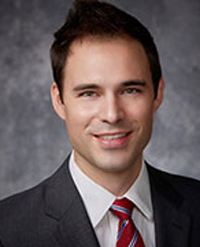
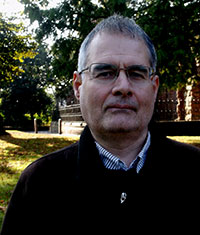
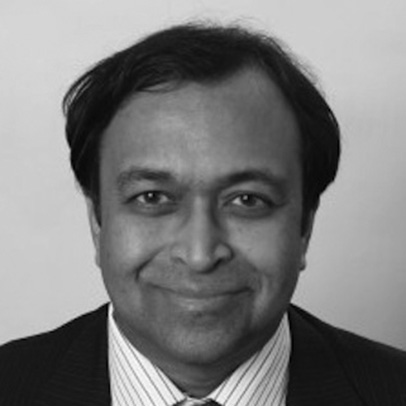
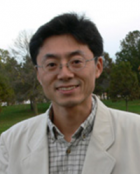
Alexander Golovnev is an Assistant Professor at Georgetown University's Computer Science Department. His research focuses on computational complexity, algorithms, pseudorandomness, learning theory, and cryptography. He received his PhD from New York University in 2017, advised by Oded Regev and Yevgeniy Dodis, with postdoctoral positions at Columbia University, Yahoo Research, and Harvard University. His current teaching includes Matrix Rigidity (Spring 2025) and Introduction to Algorithms. He has developed a 5-Course Specialization on Discrete Mathematics and organized workshops on Matrix Rigidity and Fine-Grained Cryptography. Service includes program committees for CSR'22, FOCS'22, STOC'24, CCC'24, and ITC'25. Research interests span quantum computing reductions, lattice problems, circuit complexity, and fine-grained cryptography. His recent publications explore worst-case to average-case reductions, function inversion tradeoffs, and SNARK constructions. Awards include NSF CAREER Award (2024), Rabin Postdoctoral Fellowship (2018-2020), and IPEC excellent student paper award (2012). Current PhD/Master's advisees: Sidhant Saraogi (joint with Justin Thaler), Karthik Gajulapalli, Samuel King, and Satyajeet Nagargoje.
Heinz Haas is a Research Professor in the Department of Physics at the University of Aveiro, Portugal. His career spans over five decades, including roles at CERN, Hahn-Meitner-Institut Berlin, and the Free University of Berlin. He specializes in nuclear quadrupole moments, electric field gradients, and interdisciplinary physics-chemistry research. Education: PhD in Physical Chemistry, Florida State University (1965) Habilitation in Experimental Physics (Privatdozent), Free University of Berlin (1975) Diploma in Chemistry, J.W. Goethe University Frankfurt (1962) Research Focus: Dr. Haas investigates nuclear quadrupole moments across solid-state, molecular, and atomic systems. His work bridges computational simulations (e.g., BOMD) with experimental techniques like perturbed gamma-gamma angular correlation. Key areas include temperature-dependent electric field gradients and historical verification of nuclear theories. Affiliations: Collaborator at CERN/ISOLDE Team (since 2013) Former Group Leader at CERN's ISOLDE facility (1987-1993) Grants & Labs: Active in CICECO Aveiro's research teams, focusing on photonic and magnetic materials. His work often involves international collaborations with institutions like UC Berkeley and EPFL.
Animesh Datta is a Professor of Theoretical Physics at the University of Warwick's Department of Physics, leading the Quantum Information Science group. He holds a B.Tech. in Electrical Engineering from Indian Institute of Technology, Kanpur (2003) and a PhD in Physics from the University of New Mexico (2008), working under Carl Caves. His postdoctoral roles included positions at Imperial College London and the University of Oxford. He joined Warwick as an Assistant Professor in 2015 and was awarded an EPSRC Early Career Fellowship (2014–2019). His research focuses on quantum information science, exploring quantum mechanics' role in information processing tasks like computation, communication, and sensing. Key interests include quantifying quantum resource advantages, designing protocols for realistic scenarios, and studying noisy processes such as energy transport in light-harvesting complexes. His work bridges quantum foundations with practical applications, including quantum metrology, gravity experiments, and quantum simulation validation. Recent publications highlight contributions in quantum gravity signatures, quantum algorithm development, and quantum light applications. Notable achievements include foundational work on quantum accreditation and multi-parameter estimation. His group actively collaborates across disciplines, with projects supported by EPSRC and other institutions. Teaching: PX447: Quantum Computation & Simulation Awards: EPSRC Early Career Fellowship (2014–2019) Labs/Teams: Quantum Information Science Group at University of Warwick
Justin Ruths is an Associate Professor at the University of Texas at Dallas, holding appointments in the Mechanical Engineering and Systems Engineering departments at the Erik Jonsson School of Engineering and Computer Science. He earned his PhD in Systems Science and Applied Mathematics from Washington University in St. Louis (2011), with prior degrees from Columbia University (MS Electrical Engineering), Rice University (BS Physics), and additional MS in Mechanical Engineering from Columbia. His research focuses on control & optimization of complex dynamical systems, cyber-physical system security, neuroscience, and quantum control. Notable projects include the Applied Systems Lab, developing the zonoLAB MATLAB toolbox, and leading the Nova team for autonomous vehicle software. His work bridges theoretical control systems with practical applications in robotics safety, secure industrial control, and neural network analysis. Ruths teaches MECH 4310 (Systems & Control) and SYSM 6302 (Dynamics of Complex Networks & Systems), with over 42k views on his YouTube lecture series. His recent publications emphasize cybersecurity in control systems, neural network verification, and resilient co-design frameworks. He advises graduate students through the RIDE program and undergraduate researchers via Nova's open-door policy. His research tools include hybrid zonotopes for set-based analysis, emphasizing formal verification and anomaly detection in cyber-physical systems. Current interests span attack-resistant control architectures, quantum control algorithms, and interdisciplinary applications of network dynamics.
Steve Gismondi is an Associate Professor in the Department of Mathematics & Statistics at the University of Guelph, affiliated with the College of Engineering and Physical Sciences. His research focuses on classical and quantum complexity theory, specifically heuristic solution techniques for NP-complete and coNP-complete decision problems. Notably, he explores properties of the Birkhoff polytope and algorithms for perfect matching in bipartite graphs, extending to the Graph Isomorphism problem. Education and Background: Gismondi’s expertise spans mathematical modeling, linear programming, and computational complexity. Prospective students are expected to have strong computational skills in languages like FORTRAN or C++. Research Interests: His work addresses foundational questions in computational complexity, including the P vs NP problem highlighted by the Clay Mathematics Institute. Applications range from cryptography to algorithmic verification techniques. Awards: None explicitly listed in the provided text. Grants and advising activities are not detailed here. He is based in MacNaughton 510 and reachable at gismondi@uoguelph.ca.
Dr. Cheng Chen is Associate Professor and Nariman Farvardin Professor in the Department of Civil, Environmental and Ocean Engineering at Stevens Institute of Technology. He directs the Subsurface Energy, Water and Environmental Systems (SEWES) Lab, focusing on porous media transport phenomena through combined computational and experimental approaches. His NSF and DOE-funded research addresses multiphase flow in geological formations for carbon sequestration, shale energy recovery, and nuclear waste disposal. Recent work integrates machine learning for scale-bridging data assimilation and distributional reinforcement learning for autonomous marine systems. Chen's methodological innovations include lattice Boltzmann simulations for pore-scale analysis and Gaussian process models for uncertainty quantification. Scholarly outputs demonstrate consistent focus on energy-geoscience interfaces, with recent expansion into privacy-preserving federated learning applications for IoT systems. His 2023-2024 publications increasingly address security challenges in distributed computing and adversarial machine learning. Major Recognition: Stanford Top 2% Most Cited Scientist (2023) Nariman Farvardin Endowed Professorship Chen teaches numerical methods in environmental engineering and subsurface flow modeling, maintaining industrial partnerships with Schlumberger, SeaRobotics, and Consolidated Edison. He holds editorial roles for SPE Journal and has authored over 60 peer-reviewed publications.
Dr. Ying Wang serves as an Associate Professor in the Department of Systems and Enterprises at Stevens Institute of Technology's Charles V. Schaefer, Jr. School of Engineering and Science since August 2021. Her interdisciplinary background bridges wireless communications, health informatics, software engineering, and data mining with extensive industry experience. Her research spans cybersecurity , wireless communications , and health AI , focusing on AI-driven 5G/NextG platforms, quantum-enhanced UAV security, and telehealth systems. Key projects include quantum-optimized beamforming for UAV swarms, formal verification of 5G protocols, and edge-centered medical decision support systems leveraging IoMT. Recent publications (2024-2025) reveal a strong trend toward quantum-secure communications and hybrid AI-quantum frameworks for vulnerability detection, with 60% of articles integrating quantum techniques for cybersecurity applications. Her work consistently bridges theoretical advances with real-world validation through over-the-air testing and industry partnerships. Awards: Tom Ode Richardson Faculty Fellowship (2024) Dr. Wang actively mentors undergraduate senior design teams, with multiple groups winning Best Project awards for UAV security systems and 5G digital twins. She leads the MACC Lab, which develops deployable solutions for defense and healthcare applications, including real-time anomaly detection frameworks and edge-based radiology diagnosis systems.
Lei Zhang is an Assistant Professor in the Department of Information Systems at the University of Maryland, Baltimore County (UMBC). He holds a Ph.D. in Computer Science from McMaster University, with master's and bachelor's degrees from The University of Hong Kong and Zhejiang University, respectively. Prior to academia, he worked as a software engineer and project coordinator for five years. His research focuses on quantum software engineering, post-quantum cryptography, and software quality assurance. He leads the Emerging Software Technologies Lab at UMBC. Education: Ph.D. in Computer Science, McMaster University Master's Degree, The University of Hong Kong Bachelor's Degree, Zhejiang University Affiliations: UMBC: Department of Information Systems Emerging Software Technologies Lab Former Postdoc, Toronto Metropolitan University Research Interests: His work explores the intersection of software engineering with quantum computing, machine learning, and cloud-native systems. Key areas include quantum software testing, flakiness detection, post-quantum cryptography, and large-scale cloud monitoring. Article Trends: Recent publications emphasize quantum software quality assurance, flakiness detection in quantum programs, and automated bug analysis. He also investigates legacy system modernization for quantum safety and cloud-native observability frameworks. Grants & Labs: Leads the Emerging Software Technologies Lab, focusing on advancing quantum software engineering methodologies and practical tools for industry adoption.
Ahmet Orun is a Senior Lecturer at De Montfort University's School of Computer Science and Informatics, affiliated with the Centre for Computational Intelligence. His interdisciplinary research bridges AI, quantum computing, and biomedical imaging. Research focuses on developing novel diagnostic techniques using laser speckle imaging for medical and agricultural applications, quantum communication phenomena, and cybersecurity solutions through behavioral authentication. His work applies Bayesian inference to environmental modeling and utilizes photogrammetric methods for non-invasive inspections. Honored with the TUBITAK-MRC Best Project Annual Award, he contributes to advancing computational intelligence methodologies across diverse domains including healthcare, cryptography, and environmental science.
Ali Ebnenasir is an Associate Professor of Computer Science at Michigan Technological University, specializing in software engineering, formal methods, and fault-tolerant distributed systems. He holds a B.E. (1994) from the University of Isfahan, M.E. (1998) from Iran University of Science and Technology, and Ph.D. (2005) from Michigan State University. His doctoral work was nominated for the ACM Doctoral Dissertation Award. He worked as a postdoctoral researcher at Michigan State University’s Software Engineering and Network Systems Lab (2005–2006). Research focuses on formal verification of distributed systems, quantum computing algorithms, and fault-tolerant embedded systems. Notable areas include automated analysis of fault tolerance, self-stabilizing protocols, and specification languages for safety-critical systems. He has published extensively in venues like IEEE TDSC, ACM TOSEM, and ICDCS. Educations: B.E. in Computer Engineering, University of Isfahan, Iran (1994) M.E. in Software Engineering, Iran University of Science and Technology (1998) Ph.D. in Computer Science, Michigan State University (2005) His work bridges theoretical foundations with practical implementations, addressing challenges in distributed computing and quantum algorithm optimization. Awards include an IEEE Travel Grant and Michigan State University fellowships. Current research explores quantum circuit distribution and formal methods for legal system modeling. Grants/Awards: AF: Small: Framework for Algorithmic Design of Self-Stabilizing Protocols (2011) Teaching emphasizes software engineering principles and parallel computing. Active in advising graduate students on distributed systems and formal verification methodologies. His lab focuses on GPU-based algorithm acceleration and fault-tolerant system design.
Professor Nagarajan Raja is a faculty member in the Department of Computer Science at Middlesex University, specializing in foundational aspects of computing. His research focuses on quantum information systems, cybersecurity through program analysis, and state machine theory. He leads the CST4040 module and contributes to formal methods for quantum protocols. Research interests include quantum computing, formal verification, and cybersecurity. His work spans theoretical frameworks for quantum systems, error correction, and protocol analysis using tools like Coq and Q#. He has published extensively on topics ranging from quantum process calculus to cryptographic applications. Publications highlight contributions to quantum error-correcting codes, automated equivalence checking of systems, and formal models for concurrent quantum processes. His work bridges theoretical foundations with practical applications in secure communication and computational efficiency. For collaboration or enquiries, contact Dr. Aboubaker Lasebae for research partnerships or the program director Dr. Serengul Smith for academic programs.
Prof. Peter Y A Ryan is a Full Professor in Computer Science and Communication (Applied Security) at the University of Luxembourg's Faculty of Science, Technology and Medicine, within the Department of Computer Science. His research focuses on cryptography, information security, and secure voting systems, emphasizing verifiability, privacy, and coercion resistance in e-voting. He leads projects on post-quantum cryptography, lightweight security protocols for IoT, and DNA-based data preservation. Key research areas include: Cryptography: Post-quantum algorithms, secure key exchange, and cryptographic protocol design E-Voting Systems: End-to-end verifiability, coercion mitigation, and usability studies Security Foundations: Privacy-preserving technologies, formal verification, and ransomware prevention His recent work explores: Hyperion/Selene voting systems with transparent verifiability X2065 and AVRNTRU protocols for constrained IoT devices Optical unclonable tags for artifact authentication Publications span 2020–2024, addressing topics like quantum-resistant cryptography, e-voting usability, and ransomware mitigation strategies. He contributes to international conferences such as E-Vote-ID and SECITC.
YoungMin Kwon is an Associate Professor in the Department of Computer Science at SUNY Korea. He holds a Ph.D. (2006) from the University of Illinois at Urbana-Champaign, an M.E. (1998) and B.E. (1996) from Korea University. Previously a software engineer at Microsoft (2006–2016), he joined SUNY Korea in 2016. His research focuses on Cyber-Physical Systems (CPS), quantum computing, and formal methods for system verification. Education: Ph.D. Computer Science, University of Illinois at Urbana-Champaign (2006), Advisor: Prof. Gul Agha M.E. Mechatronics, Korea University (1998), Advisor: Prof. Tae-Woong Yoon B.E. Electrical Engineering, Korea University (1996) Research interests include developing tools for CPS, quantitative model checking, middleware for networked systems, and quantum computing applications. Notable contributions include the ActorNet platform for wireless sensor networks and the iLTLChecker model checker. He teaches courses on compilers, operating systems, quantum computing, and data structures. Advising and grants include supervision of Ph.D. candidates Seonghwan Jeong and Yousun Shin, along with multiple undergraduate researchers. His work has been supported by grants from DARPA and NSF. Labs/Teams: IoT Lab @SUNYK and Open Systems Laboratory (OSL) @UIUC collaborations.
Fatemeh Rezaeibagha is Senior Lecturer in Cyber Security at Murdoch University's School of Information Technology. Her research develops cryptographic solutions for blockchain systems, IoT security, and privacy-preserving protocols. Awards include the Associate Fellow teaching certificate (2019) and Murdoch Fellowship (2023). Recent publications focus on: privacy-enhanced data sharing for medical IoT; redactable blockchain architectures; attribute-based access control; and lattice-based cryptography. Applied contributions include traceability-revocation schemes for industrial IoT and accountable systems for vehicular networks. Research emphasizes efficiency and post-quantum security in distributed environments.
Elif Surer is an Associate Professor and Associate Director at Middle East Technical University's Graduate School of Informatics, Department of Multimedia Informatics. She leads the Entertainment Computing and Interactive Systems Laboratory (ECISLab) and actively contributes to METU's entrepreneurship initiatives through GIMER (Entrepreneurship Research Center). Her academic leadership extends to international projects including EU Horizon Europe initiatives and collaborations with institutions like Stanford University's University Innovation Fellows program. Dr. Surer's research focuses on the intersection of game technologies, extended reality, and practical applications across diverse domains. Her work spans serious games for CBRNe (Chemical, Biological, Radiological, Nuclear, and Explosive) training, virtual reality applications for mining safety, archaeological visualization, and educational technology. She has developed frameworks for heterotopias as discursive playgrounds, modular serious game development for virtual laboratories, and advanced techniques in persona building for game design. Her interdisciplinary approach bridges computer science with fields like archaeology, healthcare, and occupational safety, creating innovative solutions that address real-world challenges through immersive technologies. Her publication record demonstrates consistent contributions to top journals including IEEE Transactions on Games, Virtual Reality, and JMIR Serious Games. Recent work shows increasing focus on biological network visualization in XR environments, advanced testing frameworks for deep learning systems, and sophisticated persona modeling techniques that go beyond traditional approaches. Her research trajectory reflects growing integration of AI with immersive technologies, particularly in specialized training applications and scientific visualization. METU Performance Awards (2020, 2021) Best Poster award at METU Graduate School of Informatics Open Research Day TÜBİTAK Above-Threshold-Awards Featured in Researchers Active in Technical Games Research list Dr. Surer actively supervises numerous graduate students across multiple projects, with recent completions including theses on clickbait detection, VR for mining safety, and adaptive serious games for children with learning difficulties. She leads significant research funding including EU Horizon Europe projects like eNOTICE-2 (focused on CBRNe training), the MR4MS project for mine safety, and the Quantum Flagship project QuTE4E. Her laboratory environment fosters collaboration between computer science, architecture, and other disciplines, creating opportunities for students to engage in cutting-edge research with practical applications. As director of ECISLab, she maintains strong connections with industry partners including METU Teknokent, and actively participates in entrepreneurship initiatives through METU GIMER. Her work with the University Innovation Fellows program demonstrates commitment to developing entrepreneurial skills among students, while her research on virtual reality applications continues to expand into new domains including healthcare, archaeology, and emergency response training.