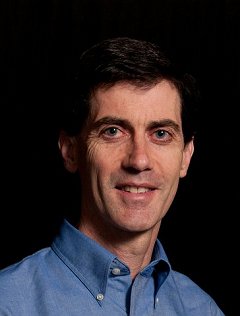
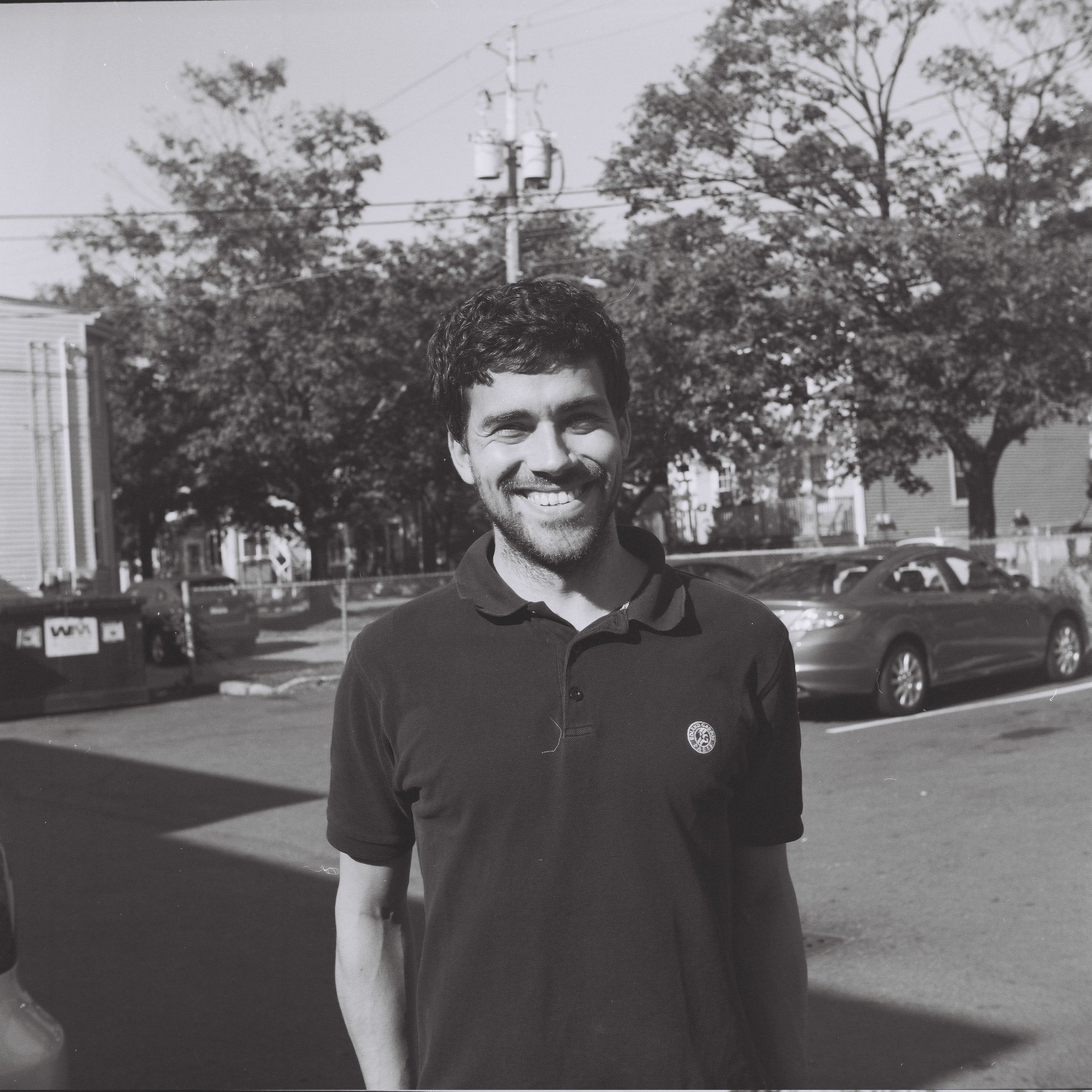
Thomas Reps is a Professor at the University of Wisconsin-Madison 's Computer Sciences Department. He has held the J. Barkley Rosser Professor and Rajiv and Ritu Batra Chair since joining in 1982. His research spans program analysis , model checking , abstract interpretation , computer security , and quantum computing . Ph.D. in Computer Science from Cornell University (1982), ACM Doctoral Dissertation Award winner Co-founder of GrammaTech, Inc. (1988) Held visiting positions at INRIA (France), University of Copenhagen (Denmark), CNR (Italy), and University Paris Diderot (France) Research Interests include program slicing, interprocedural dataflow analysis, pointer analysis, software model checking, and code instrumentation. His recent work focuses on quantum circuit verification , CFLOBDDs , and unrealizability logic . His scientific awards include: ACM Fellow (2005) Foreign Member, Academia Europaea (2013) ACM SIGPLAN Achievement Award (2017) He has advised Ph.D. students like Akash Lal (SIGPLAN Dissertation Award) and Gogul Balakrishnan (ETAPS Best Paper Award). His work has produced influential papers such as the 1988 PLDI paper on interprocedural slicing (50 most influential PLDI paper, 2004) and the 2003 TOPLAS paper on parametric shape analysis.
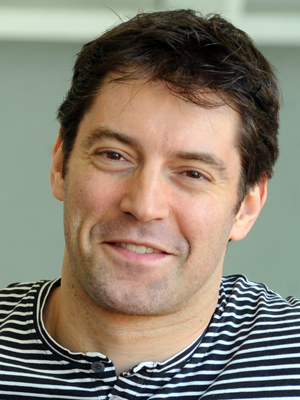
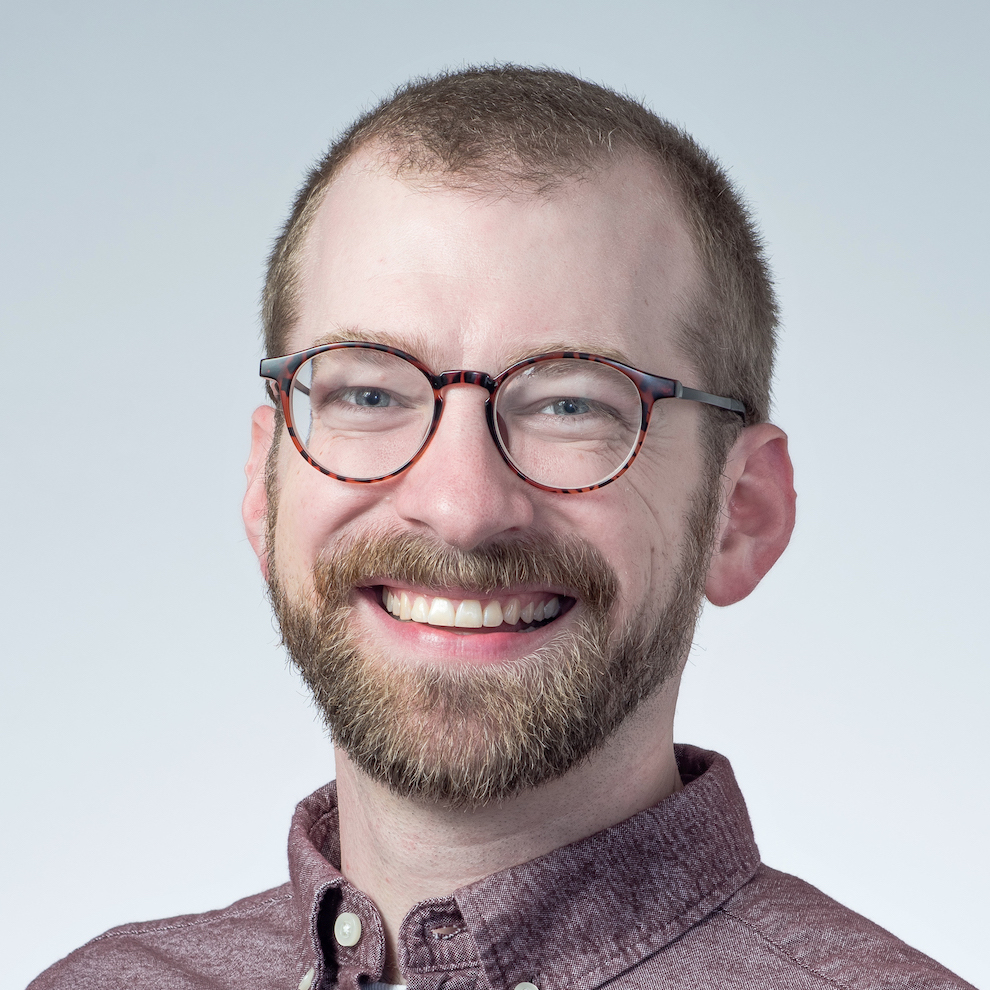
Dan Rubenstein is an Associate Professor in the Department of Computer Science at Columbia University . He is affiliated with multiple research centers including the Data, Media and Society , Foundations of Data Science , and Smart Cities initiatives. His research spans network technologies, performance analysis, and emerging applications in quantum computing and wireless systems. Education: Ph.D. in Computer Science from University of Massachusetts, Amherst Rubenstein's work focuses on optimizing network performance, wireless communication protocols, and novel applications in serverless computing and peer-to-peer systems. Recent publications highlight trends in quantum network verification , Bloom filter error modeling , and zero-rating policy analysis . NSF CAREER Award IBM Faculty Award ACM SIGMETRICS, IEEE CNP 2003, and ACM CoNext paper awards He serves as Editor-in-Chief of IEEE/ACM Transactions on Networking and chaired the ACM Sigmetrics 2011 conference. His collaborations extend to networked sensor systems, content delivery, and energy-harvesting architectures.
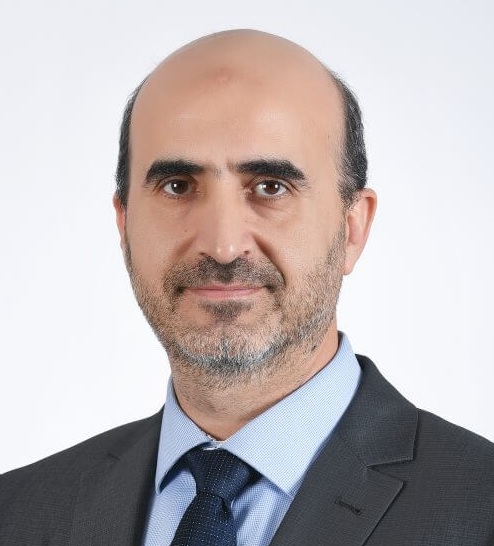
Dr. Abdulhadi Shoufan is an Associate Professor at the Computer and Information Engineering Department of Khalifa University . His research spans embedded security , cryptographic hardware , and secure drone operations , alongside innovative contributions to educational technology and lecture-free instruction . PhD in Computer Engineering from Technische Universitaet Darmstadt (2007) Director of the Learn-Smartly.com platform (2018–present) Research funded by TII , UAE Ministry of Education , and Hess State Ministry His recent work focuses on zero-trust architectures for chip-to-chip communication, AI-driven drone identification , and generative AI in education . Key trends include applying cryptographic methods to hardware security and leveraging YouTube for quality-controlled educational content delivery. Scientific Awards : Multiple teaching awards from Technische Universitaet Darmstadt Current Projects : Chip-to-Chip Zero-Trust Architecture (TII-funded) Lecture-Free Instruction (Mohammed Bin Rashid Smart Learning Program) LEEVs (YouTube content endorsement system)
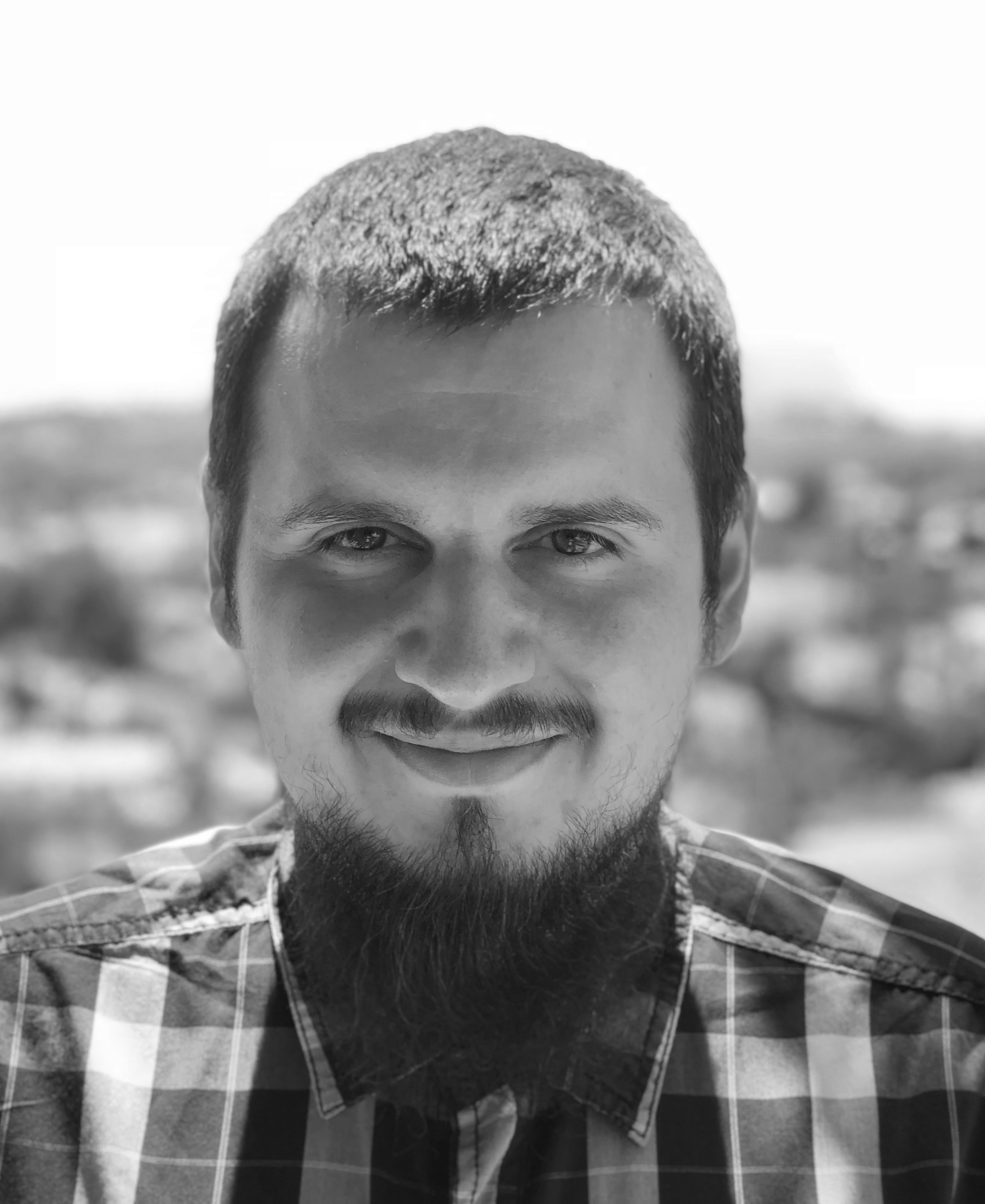
Dr. Max Bannach is a Research Fellow in Computer Science and Applied Mathematics at the European Space Agency's Advanced Concepts Team in Noordwijk, Netherlands. Prior to this role, he completed his Ph.D. at Universität zu Lübeck under Prof. Dr. Till Tantau. His work bridges theoretical insights in structural graph theory with practical applications in highly parallel optimization, including space mission planning and quantum computing. Education: Ph.D. in Computer Science (Universität zu Lübeck, Germany) Max Bannach's research focuses on parameterized algorithms, descriptive complexity, and logic-based optimization. He explores problems with tree-like structures via treewidth, leveraging Courcelle's theorem to develop efficient algorithms. His work extends to space applications, neuromorphic hardware, and quantum computing, aiming to integrate theoretical logic with real-world challenges. His recent publications span conferences like STACS, NFM, IAC, GECCO, and IPEC. Key topics include automated reasoning, MaxSAT variants, structural decomposition, and structural parameterization. He has organized computational challenges like PACE and SpOC, contributing to the advancement of exact and parallel algorithms. Dr. Bannach's collaborative efforts include projects with the European Space Agency, technical teams at conferences, and academic institutions like Universität zu Lübeck. He maintains active participation in program and steering committees for PACE and SpOC.
Neil J. Ross serves as an associate professor of mathematics at Dalhousie University, actively contributing to quantum computing research through publications spanning 2012-2025. His work bridges theoretical computer science and mathematical physics with a focus on foundational quantum computation challenges. Educational background: Ph.D. in Mathematics, Dalhousie University (2015) Ross's research centers on quantum circuit synthesis and programming language theory, particularly exact synthesis methods for Clifford-based gate sets and formal models for quantum programming. He investigates mathematical structures like category theory and number theory to optimize quantum circuits and establish completeness theorems, with emphasis on qubit and qutrit systems. Analysis of his 15 most recent publications (2021-2025) reveals three dominant trends: (1) Advancements in exact synthesis algorithms for Clifford-Cyclotomic circuits across multiqubit/multiqutrit systems; (2) Development of equational theories for Toffoli-Hadamard circuits enabling formal verification; (3) Categorical modeling of Proto-Quipper extensions including dynamic lifting and control structures. His work consistently targets gate decomposition efficiency and circuit universality. Scientific awards: None mentioned in source material. Ross has no listed advisees or grant funding in the provided text. Collaborations with researchers like M. Amy and P. Selinger suggest active academic engagement, but specific mentoring or funding details are absent. His Google Scholar profile indicates ongoing scholarly impact without institutional support references. No laboratory or research team affiliations are specified in the scraped content.
Sam Westrick is an Assistant Professor in the Courant Institute of Mathematical Sciences at New York University . Previously, he was a postdoctoral researcher at Carnegie Mellon University , where he also earned his PhD in 2022 . Research Focus : Provably efficient implementations of high-level parallel programming languages, with key contributions in parallel garbage collection , automatic granularity control , and functional language design Teaching : Currently teaching CSCI-GA.3033-121: Programming Parallel Algorithms at NYU; was a TA for CMU courses 15-210 and 15-122 His work includes the development of MaPLe (MPL) , an open-source parallel functional language with performance comparable to C/C++. Notable awards include the SIGPLAN Reynolds Doctoral Dissertation Award (2023) and best/distinguished paper recognitions at QCE'24, POPL'24, and others. Selected Publications explore topics like quantum circuit simulation , cache coherence specialization , and separation logic for disentanglement . Active in conference service as ML Family Workshop chair and PLDI/SPAA committee member. Mentoring : Advises PhD students, master's and undergraduate researchers at NYU and CMU Collaborators : Umut Acar, Guy Blelloch, Stephanie Balzer, and 20+ others
Georg Kresse is a full Professor of Computational Quantum Mechanics at the University of Vienna's Faculty of Physics, leading the Computational Materials Physics group. He developed the Vienna ab initio Simulation Package (VASP), a globally dominant tool for quantum mechanical materials simulations. His research spans theoretical solid-state physics, surface science, and computational materials physics, with recent emphasis on machine learning integration and advanced electronic structure methods. Born in Vienna (1967), habilitated in condensed matter theory Full member of Austrian Academy of Sciences and International Academy of Quantum Molecular Science Recipient of START Grant (2003), Kardinal-Innitzer-Preis (2016), honorary doctorate from Lund (2022) Research focuses include: Density Functional Theory : Development of advanced functionals (hybrid, GW, RPA) Machine Learning : Applications to materials properties and force fields Quantum Monte Carlo : AFQMC methods for solids Surface Physics : Oxidation reactions and catalytic processes His publications show strong representation in: Quantum mechanical simulations Electronic and optical properties Phase transitions and thermodynamics Energy materials and nanotechnology Major projects include: MECS : Materials for Energy Conversion and Storage (2023-2028) TACO : Taming Complexity in Materials Modeling (2021-2029) DCAFM : Doctoral College Advanced Functional Materials (2020-2025) His group maintains VASP, combining first-principles methods with machine learning to advance materials science understanding.
Wolf Müller, Dr. rer. nat., is a Research Staff Member at the Humboldt University of Berlin's Institute of Computer Science, working within the Systems Architecture Group under Prof. Dr. Jens-Peter Redlich. His academic home is in the Faculty of Mathematics and Natural Sciences, where he contributes significantly to research and teaching activities in security and identity management. Dr. Müller's research spans electronic identity systems, security engineering, and cryptographic protocols. His work focuses on practical applications of identity management, security protocols, and anonymization techniques, with particular expertise in national identity card systems, mobile authentication, and reputation management. He has developed innovative approaches to secure identity verification that balance privacy concerns with authentication requirements. His publication record from 2005-2020 demonstrates consistent contributions to security research, with recent work addressing post-quantum cryptography applications and mobile identity verification systems. Dr. Müller has collaborated extensively with industry partners, particularly NEC, on projects related to secure identity management and reputation systems. Dr. Müller holds multiple patents in identity verification and security systems, demonstrating the practical impact of his research. His work bridges theoretical security concepts with real-world implementations, particularly in the domain of electronic identity systems and secure transactions. As an educator, Dr. Müller has taught courses on IT security fundamentals, electronic identity systems, and programming fundamentals since 2018. His teaching reflects his research expertise, providing students with both theoretical foundations and practical applications of security principles. His laboratory work centers around the BeID-lab and related projects, where he develops and tests secure identity management systems, mobile authentication solutions, and cryptographic protocols for real-world applications.
Dr. James A Walker is a Senior Lecturer in the Department of Computer Science at the University of York, UK. His primary affiliation is with the Artificial Intelligence research group within the department. He holds a permanent academic position and is actively involved in research and teaching. His research interests span multiple areas including artificial intelligence, machine learning, quantum computing, esports analytics, and constraint programming. He has contributed to high-impact studies on topics such as Bayesian frameworks for neural networks, SAT encoding techniques, and quantum error correction. Dr. Walker's work often intersects interdisciplinary fields, blending theoretical computer science with practical applications in gaming, healthcare, and aerospace. Department: Department of Computer Science University: University of York Research Group: Artificial Intelligence His recent publications highlight a focus on cutting-edge technologies such as quantum computing, esports strategy analysis, and advanced machine learning methodologies. He has consistently published in top-tier venues, demonstrating expertise in both foundational and applied computer science research. Dr. Walker's work on real-time 3D tracking and quantum phase correction underscores his ability to tackle complex technical challenges with innovative solutions. His contributions to esports analytics and game design parameters reflect an interest in applying AI techniques to dynamic, competitive environments.
Shafi Goldwasser is the RSA Professor (Post Tenure) of Electrical Engineering and Computer Science at the Massachusetts Institute of Technology (MIT) and holds a professorship in the Electrical Engineering and Computer Sciences (EECS) department at the University of California, Berkeley. She is a core member of MIT’s Computer Science and Artificial Intelligence Laboratory (CSAIL), particularly within the Theory of Computation Group and Complexity Theory Group. Her work focuses on advancing cryptographic foundations, computational complexity, and algorithmic security. Goldwasser has pioneered research in areas such as zero-knowledge proofs, homomorphic encryption, and secure multiparty computation, with applications in privacy, cybersecurity, and AI alignment. Research Interests: Goldwasser’s research spans cryptography, complexity theory, and the intersection of computer science with societal challenges. Her work emphasizes: Designing provably secure cryptographic systems Algorithmic robustness and adversarial machine learning Privacy-preserving technologies for healthcare and data collaboration Formal verification of AI models Cross-disciplinary applications in law and biology Scientific Contributions: A 2017 ACM Fellow, Goldwasser has led major initiatives like the Homomorphic Encryption Standard project. Her research groups at MIT and CSAIL explore foundational problems in computational complexity while addressing real-world challenges such as securing emerging communication systems and reconciling legal secrecy with transparency through cryptographic tools. Collaborations & Teams: She co-leads the Cryptography and Information Security Group and Complexity Theory Group at MIT, collaborating with experts like Vinod Vaikuntanathan and Yael Kalai. Her work integrates theoretical breakthroughs with practical applications, such as secure genomic analysis and AI alignment frameworks.
Nikos Tzevelekos is a Senior Lecturer at the School of Electronic Engineering and Computer Science, Queen Mary University of London, where he is a member of the Theory Group. He holds a PhD from the University of Oxford, where he previously served as a postdoctoral researcher in the Quantum Group. His research focuses on Theoretical Computer Science with emphasis on: Mathematical modeling of programming languages using game semantics and category theory Applications to program analysis and verification Automata theory (particularly automata over infinite alphabets) Development of formal methods for software verification His publications demonstrate consistent focus on program semantics and verification techniques, with recent work exploring bisimulation methods, separation logic foundations, and compositional verification frameworks. Research often combines theoretical depth with practical tool development. Awards: LICS 2023 Distinguished Paper Award He actively contributes to the research community through: Program committees for top conferences (POPL, LICS, FOSSACS) Organization of events like World Logic Day 2025 Teaching courses on Algorithms, Automata Theory, and Logic in Computer Science
Parosh Aziz Abdulla is a Chaired Professor at the Department of Information Technology, Uppsala University, Sweden. He is a prominent researcher in the field of theoretical computer science with a focus on formal methods, concurrency, and program verification. His work bridges theoretical foundations with practical applications in software and hardware verification. Professor Abdulla's primary research interests include Concurrency, Distributed Systems, Program Verification, Model Checking, Automata, and Logic. His work spans both theoretical aspects of computer science and practical verification techniques for concurrent and distributed systems. He has made significant contributions to the understanding of memory models, particularly in the context of modern architectures like x86 with persistent memory. His research has evolved from foundational work on infinite-state systems to practical verification techniques for concurrent programs and string constraints. Professor Abdulla has served on numerous program committees for top-tier conferences including PLDI, POPL, CAV, CONCUR, and TACAS, demonstrating his standing in the research community. He has been PC co-Chair for TACAS'11 and has contributed to many other conferences over the years. As an advisor, Professor Abdulla has supervised numerous PhD students to completion, with graduates working on topics ranging from verification of networks of communicating processes to caches, transactions, and memory models. His students have gone on to successful careers in academia and industry. Professor Abdulla maintains an active research agenda, with recent work focusing on verification of quantum circuits, efficient linearizability monitoring, and verification under Intel-x86 with persistency. His research continues to address fundamental challenges in program verification while adapting to new computing paradigms and hardware architectures.
Sara Achour is an Assistant Professor jointly appointed in both the Computer Science and Electrical Engineering Departments at Stanford University's School of Engineering. Her work bridges computer science and electrical engineering, focusing on enabling end-users to develop computations for emerging computing platforms with analog behaviors. Dr. Achour received her PhD in Computer Science from the Massachusetts Institute of Technology in 2021. Her academic journey led her to Stanford where she currently teaches courses including Introduction to Essential Software Systems and Tools (CS 104), Software Engineering (CS 295), and Software Techniques for Emerging Hardware Platforms (CS 349H/EE 349). Her research program centers on developing new programming languages, compilers, and runtime systems that address the challenges of emerging computing platforms. She specializes in creating tools that help developers harness the potential of analog and non-traditional hardware systems. Her work spans quantum computing, analog computing paradigms, hyperdimensional computing, and memory systems, with a particular emphasis on compiler techniques and hardware-aware optimization. Analysis of her recent publications reveals a strong focus on bridging the gap between software and emerging hardware platforms. Her work spans quantum computing (qubit/qutrit circuits), analog computing paradigms, hyperdimensional computing, and novel memory systems. A recurring theme is developing compiler techniques that optimize for specific hardware characteristics while maintaining programmer productivity. Dr. Achour actively mentors students across multiple levels of their academic careers. She serves as a Doctoral Dissertation Advisor, Co-Advisor, Reader, and Master's Program Advisor for numerous students working on cutting-edge research in compilers and emerging hardware. Her teaching portfolio includes both foundational courses like Introduction to Essential Software Systems and specialized advanced courses focused on emerging hardware platforms. She appears to be building a research group focused on programming languages and compilers for non-traditional computing architectures, with students working across quantum computing, analog systems, and memory technologies.
Tobias Grosser is an Associate Professor in the Department of Computer Science and Technology at the University of Cambridge. His research focuses on compiler technology, programming language design, and performance programming, with applications spanning hardware design, climate science, and quantum computing. He leads a research group developing innovative compiler frameworks and tools that bridge theoretical foundations with practical applications. Dr. Grosser completed his undergraduate studies in Computer Science at the University of Passau in Germany and pursued his PhD at École Normale Supérieure Paris as a Google PhD Fellow. Prior to joining Cambridge, he served as a Reader at the University of Edinburgh and held an Ambizione Fellowship at ETH Zurich. His research program centers on rethinking performance programming by re-connecting developers and compilers. He aims to make compilation more modular, predictable, automatic, and trustworthy while bringing open-source compiler innovation to increasingly diverse targets from GPUs to FPGAs and custom hardware. His work spans multiple domains including polyhedral compilation, constraint solving, quantum computing, and hardware design automation. Dr. Grosser is particularly interested in breaking down barriers between compilers and programmers by enabling their interaction through the programming language environment. His recent publications demonstrate a strong focus on compiler infrastructure development, particularly around the MLIR framework. He has pioneered work on Presburger arithmetic optimization with the FPL library, developed new intermediate representations for hardware description and quantum computing, and created tools for compiler education and prototyping like xDSL. His research shows a consistent theme of creating practical, high-performance compiler technologies that address real-world challenges across multiple domains. HiPEAC Technology Transfer Award 2021 for "Fast linear programming through transprecision computing on small and sparse data" OOPSLA 2021 Distinguished Paper Award for "FPL: Fast Presburger arithmetic through transprecision" Dr. Grosser actively mentors PhD students and postdoctoral researchers, currently supervising a team of over a dozen researchers working on various aspects of compiler technology. His group collaborates with industry partners including ARM and Xilinx, and maintains strong ties with the LLVM and MLIR open-source communities. He has secured funding for multiple research projects including work on verified compilation with Lean-MLIR, quantum compiler development, and hardware design automation. His research group operates at the intersection of multiple projects including Open-Source Electronic Design Automation, Seamless design of Smart Edge Processors, Lean-MLIR for verified compilation, FPL for fast Presburger arithmetic, and compilation frameworks for quantum computers. They maintain strong community engagement through regular Compiler Social events in Cambridge and active participation in LLVM developer meetings.
Mario Román is a Research Associate at the Department of Computer Science, University of Oxford , affiliated with the Compositional Systems and Methods Group at Tallinn University of Technology. His work bridges category theory , functional programming , and probabilistic programming , focusing on formal semantics and mathematical notation. His research interests include monoidal and premonoidal categories , Markov categories , and coinductive methods for dataflow programming. He explores the algebraic structures underlying quantum programming and stochastic processes , often applying graphical calculi and string diagrams. Recent work trends, as seen in his publications, emphasize distributive monoidal categories for program logics, effectful Mealy machines for bisimulation, and partial Markov categories for probabilistic reasoning. His collaborations span institutions in Europe and Asia, including Tallinn, Oxford, and Tokyo. Scientific Awards : Kleene Award, 'Monoidal Streams for Dataflow Programming', LiCS’22 Distinguished Paper, 'Effectful Mealy Machines: Bisimulation and Trace', LiCS’25 Best BSc Thesis, Spanish Royal Mathematical Society, 2018 International Mathematical Olympiad Honorary Mention, 2012 Mario has contributed to community initiatives as a member of the Compositionality Journal Executive Board and served on program committees for Applied Category Theory and Mathematical Foundations of Programming Semantics .