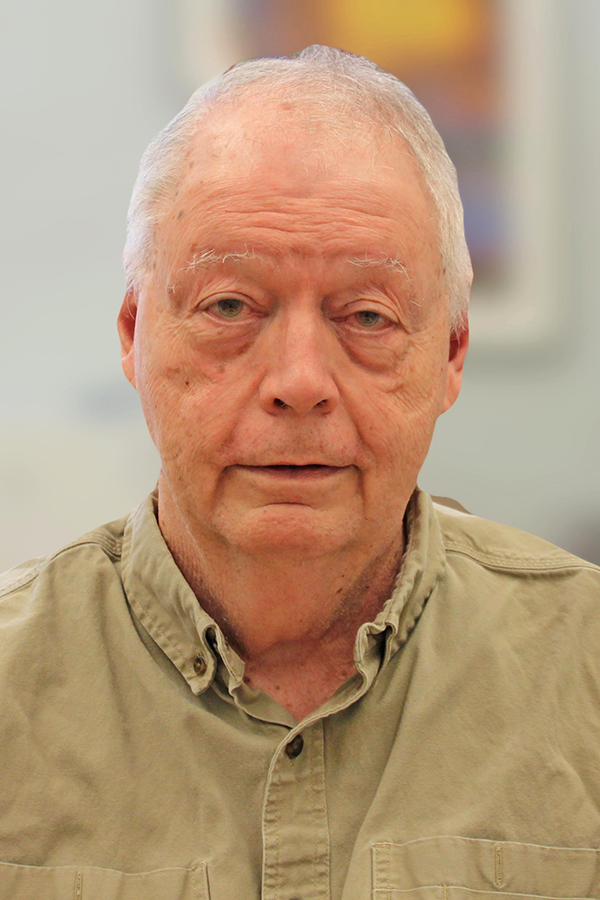
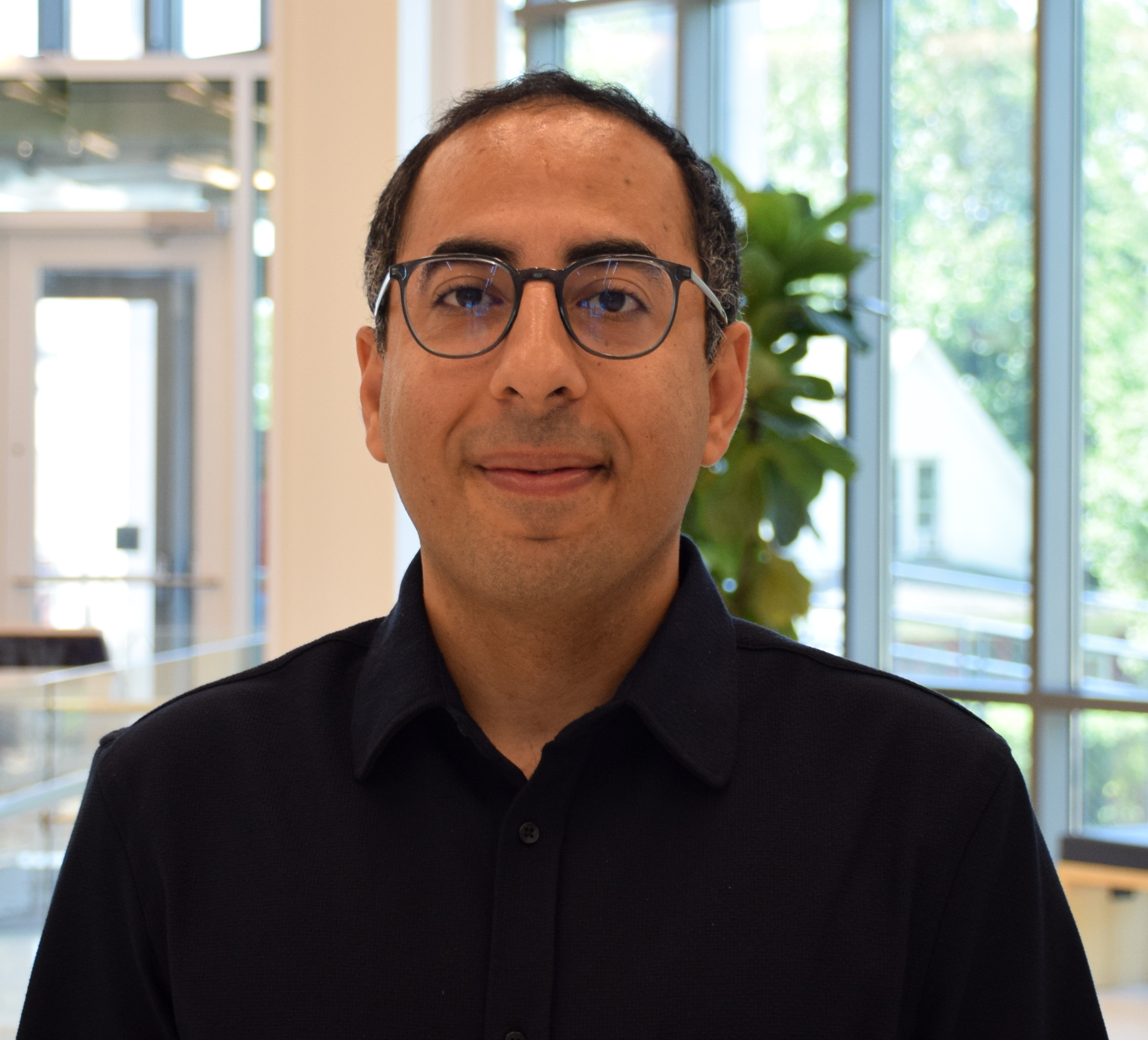
John Preskill is the Richard P. Feynman Professor of Theoretical Physics at Caltech, specializing in quantum information science, quantum computing, and the physics of quantum error correction. He directs the Institute for Quantum Information and Matter. His pioneering work bridges quantum computing, gravitational physics, and quantum field theory, with recent focus on fault tolerance and quantum supremacy. He has authored over 500 publications and received the John Stewart Bell Prize (2024).
Jiafeng (Harvest) Xie is an Assistant Professor in the Department of Electrical and Computer Engineering at Villanova University, where he directs the Security and Cryptography (SAC) Lab. He holds a Ph.D. in Electrical Engineering from the University of Pittsburgh and has prior faculty experience at Wright State University. His research focuses on cryptographic engineering, post-quantum cryptography, hardware security, and digital design for telemetry systems. Education includes a Ph.D. from University of Pittsburgh (2013-2014), M.E. from Central South University (2007-2010), and B.E. from Yanshan University (2002-2006). He has received prestigious awards like the 2024 IEEE Philadelphia Engineer of the Year Award and the 2023 Art Ryan Award. His work spans over 66 peer-reviewed publications, with a focus on hardware acceleration for post-quantum cryptographic systems. Research interests include post-quantum cryptographic engineering, fully homomorphic encryption, fault detection methodologies, and digitalization of aeronautical telemetry systems. His grants include NSF SaTC and NIST-funded projects. Teaching includes courses like Embedded Systems and Post-Quantum Computing . Current advisees include Ph.D. students Pengzhou He, Tianyou Bao, and Yazheng Tu, along with several M.S. and undergraduate researchers. The SAC Lab collaborates with AFRL and explores novel cryptographic hardware designs, with recent breakthroughs in compact accelerators for lattice-based cryptography and approximate homomorphic encryption. His work emphasizes algorithm-architecture co-design for security and efficiency in emerging computing systems.
Mohammad Hajiabadi is an Assistant Professor at the University of Waterloo's Department of Computer Science. His research focuses on theoretical cryptography, including cryptographic protocols, functional encryption, and secure communication. He holds a PhD in Computer Science from the University of Victoria (2016), a Master of Science from the same institution (2011), and a Bachelor of Science from Sharif University of Technology (2009). His research explores foundational aspects of cryptography, such as cryptographic assumptions, algorithmic lower bounds, and privacy-preserving techniques. Notable areas include registration-based encryption, secret sharing schemes, and the black-box complexity of cryptographic primitives. His work often intersects with theoretical computer science, addressing challenges in secure computation and efficient protocol design. Dr. Hajiabadi's publications span topics like trapdoor functions, oblivious transfer, and private set intersection, demonstrating a commitment to advancing both the theory and practical applications of cryptography. He has secured collaborative research funding, including a National Science Foundation grant for expanding oblivious transfer tools. His contributions to academic grants and collaborative projects highlight his role in shaping modern cryptographic frameworks.
Prof. Irina T. Sorokina is a Professor of Physics at the Norwegian University of Science and Technology (NTNU), leading the Laser Physics Group. Her research focuses on ultrafast lasers, mid-IR photonics, and their applications in materials processing, quantum computing, and spectroscopy. She holds a prestigious Fellowship from the Optical Society of America (2006) and the IEEE Snell Premium Award (2004). Research Interests: Her work spans laser physics, nonlinear optics, and solid-state laser technologies. Key areas include femtosecond laser development, mid-IR frequency combs, and advanced material processing techniques using ultrafast pulses. Recent projects include subsurface silicon modification, all-fiber mid-IR laser systems, and applications in quantum networks. Publications: Her 15 most recent articles (2023–2025) emphasize mid-IR scaling, dissipative solitons, and novel laser architectures. These contributions highlight advancements in energy-efficient laser systems and their industrial applications. Awards: Fellow of the Optical Society of America (2006) IEEE Snell Premium Award (2004) Co-founder of NTNU spin-off ATLA Lasers AS Advising & Innovation: Supervises graduate students in laser physics and materials science. Her lab collaborates on spin-off ventures and advanced projects like subsurface silicon processing for photovoltaics and quantum sensors. Research also extends to energy-dense battery materials and supercontinuum generation in chalcogenide fibers. Labs/Teams: Heads the Laser Physics Group at NTNU, focusing on mid-IR ultrafast lasers and their interdisciplinary applications. Collaborates internationally on projects like double-frequency comb spectroscopy and femtosecond laser writing in ZnS crystals.
Paul Stevenson is an Assistant Professor of Physics at Northeastern University's College of Science, leading the Stevenson Group. His research focuses on quantum sensing and biophysical dynamics using solid-state spins, particularly nitrogen vacancy centers in diamond. He develops nanoscale sensors for probing molecular motion and quantum communication technologies. Notably, his work bridges physics, chemistry, and biology, addressing challenges such as magnetism in complex systems and single-molecule imaging. He is a 2023 TIER1 Awardee and collaborates with institutions like Brown University and UC Berkeley. Stevenson's lab explores quantum materials and spintronics, leveraging interdisciplinary approaches to advance quantum hardware and biophysical understanding. His group's innovations include ultrasensitive magnetometers and tools for studying antiferromagnetic ordering. Contact: p.stevenson@northeastern.edu .
Robert S. Laramee is a Professor at the University of Nottingham (previously at Swansea University), specializing in visualization research. His work focuses on data visualization, scientific visualization, and computational fluid dynamics. He has authored over 170 publications in top journals like IEEE Transactions on Visualization and Computer Graphics, Computer Graphics Forum, and IEEE Computer Graphics and Applications. Research Interests: His research spans information visualization, flow visualization, visual literacy, and educational aspects of visualization. He emphasizes practical applications in fields like healthcare, digital humanities, and computational science. Recent Trends: Recent work includes studies on treemap literacy, educational frameworks for visualization, and interactive systems for clinical data. He has also contributed to visualization resources and surveys, aiming to bridge academic and industry needs. Grants & Collaborations: Collaborations include projects on visualization for smart cities, protein-lipid interactions, and quantum chromodynamics data analysis. No specific grant details are provided in the text. Labs & Teams: Affiliated with visualization research groups at Nottingham and Swansea, though specific lab names are not mentioned.
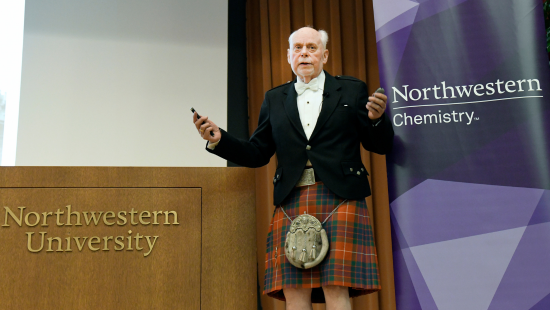
Sir Fraser Stoddart (1942-2024) was the Board of Trustees Professor of Chemistry and Director of the Center for the Chemistry of Integrated Systems at Northwestern University. A pioneer in supramolecular chemistry, he pioneered mechanical bonds and molecular machines, co-winning the 2016 Nobel Prize in Chemistry. Education: B.S. and Ph.D. from University of Edinburgh (1964/1966), followed by honorary doctorates from multiple institutions globally. Research focused on molecular recognition, self-assembly, and mechanically interlocked molecules, leading to innovations in molecular switches, rotaxanes, and nano-electronic devices. His work enabled molecular lifts, muscles, and advanced computer chip technologies. Major awards include the Nobel Prize, Royal Medal, Davy Medal, and knighthood from Queen Elizabeth II. He established a laboratory at Hong Kong University and led Northwestern's chemistry department to international prominence. Known for mentorship, he inspired generations of researchers through his energy and vision. His legacy includes over 1,400 publications and foundational contributions to nanotechnology and molecular engineering.
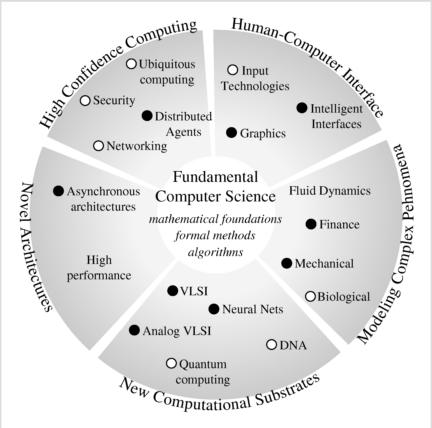
Alan H. Barr is a Professor of Computer Science at the California Institute of Technology (Caltech), affiliated with the Division of Engineering and Applied Science and the Computation & Neural Systems (CNS) department. He is a founding member of the Caltech Computer Graphics Group and a leader in developing mathematically rigorous methods for computer graphics and predictive modeling. His research focuses on enhancing computational modeling accuracy through approaches like interval analysis and constraint-based systems. Notable contributions include deformable models, quaternion interpolation, and cellular simulation frameworks. He has advised over 20 graduate students, many of whom became industry leaders at Pixar, Microsoft Research, and academic institutions like NYU and Brown University. Awards include the ACM SIGGRAPH Achievement Award (1988) and ACM Fellow (1995). Research Interests: Predictive modeling with error bounds Scientific visualization and MRI data analysis Biophysical systems simulation (e.g., cellular organelles) Self-assembling robotic structures for space colonization Mathematically robust computer graphics techniques Key Collaborations: Caltech Biological Imaging Center (Beckman Institute) JPL (Jet Propulsion Laboratory) New computational substrates research (quantum/DNA computing) Recent Work: Expanding into computational biology, medical imaging optimization, and high-confidence systems for managing complex computational interactions. Active in interdisciplinary projects across Caltech divisions.
Lucila Ohno-Machado, MD, PhD, MBA, is the Waldemar von Zedtwitz Professor of Medicine and Biomedical Informatics and Data Science at Yale University. She serves as Deputy Dean for Biomedical Informatics and Chair of the Department of Biomedical Informatics and Data Science at the Yale School of Medicine. Her leadership roles include overseeing informatics infrastructure for Yale’s academic health system and fostering interdisciplinary collaboration across departments such as Medicine and the Halicioğlu Data Science Institute (previously at UCSD). Ohno-Machado holds an MD from the University of São Paulo (Brazil), an MBA from Fundação Getúlio Vargas (Brazil), and a PhD in Medical Information Sciences and Computer Science from Stanford University. She has held faculty positions at Harvard Medical School, MIT’s Health Sciences and Technology Division, and the UCSD Health Department of Biomedical Informatics, where she pioneered federated learning and privacy-preserving AI methodologies. Her research focuses on predictive analytics, federated learning, quantum computing in healthcare, and blockchain applications to enhance data security. She emphasizes addressing algorithmic bias and promoting health equity through data-driven solutions. Recent work includes developing frameworks for medical device safety evaluation and guiding principles to mitigate disparities in algorithmic healthcare applications. Key achievements include the Inaugural Helen M. Ranney Award (2024), election to the National Academy of Medicine (2024), and the William W. Stead Award (2019). She has led NIH-funded informatics centers and contributed to the first large-scale clinical data-sharing initiative across five UC medical systems. Her grants span AHRQ, PCORI, NSF, and blockchain-related initiatives through the IT/NIST Challenge Award. Ohno-Machado advises on translational research strategies and mentors teams in YBIC (Yale Biomedical Informatics & Computing). Her lab collaborates globally, leveraging federated models and AI to advance personalized medicine while prioritizing patient privacy. She also chairs the OHER Awards for Yale Research Excellence, promoting interdisciplinary health equity research.
Zohreh Davoudi is an Associate Professor in the Department of Physics at the University of Maryland, College Park. She holds additional roles as a Fellow of the Joint Center for Quantum Information and Computer Science (QuICS) and Associate Director for Education at the NSF Institute for Robust Quantum Simulation. Her research focuses on simulating strongly interacting systems using lattice quantum chromodynamics (LQCD), quantum simulation, and quantum computing. She earned her B.Sc. and M.Sc. from Sharif University of Technology in Iran, followed by a Ph.D. in Theoretical Physics from the University of Washington (2014), and served as a postdoctoral researcher at MIT's Center for Theoretical Physics before joining UMD in 2017. Her research interests include developing computational frameworks to study nuclear and particle physics phenomena, such as neutrino interactions, dark matter scattering, and neutron star dynamics. She has pioneered efforts to leverage quantum computing to address the 'sign problem' in fermionic systems and simulate real-time dynamics of early universe matter. Notable awards include the 2025 Presidential Early Career Award, 2024 Simons Emmy Noether Fellowship, and 2019 Alfred P. Sloan Fellowship. Her educational contributions include leading training programs in quantum information science and fostering collaborations across institutes like RIKEN (2017–2021) and the NSF Quantum Simulation Institute. She supervises a dynamic research group focused on lattice gauge theory, quantum algorithms, and interdisciplinary applications such as neutrinoless double-beta decay calculations.
Dr. Jonathan Hu is a Professor in the Department of Electrical and Computer Engineering at Baylor University's School of Engineering and Computer Science. He holds a PhD from the University of Maryland Baltimore County (2008) and completed a postdoctoral fellowship at Princeton University (2009–2011). He is an active researcher in optics and photonics, leading the Photonics Research Laboratory and advising both graduate and undergraduate research assistants. Research Interests: Nanophotonics and metamaterials for photovoltaic and biomedical applications Mid-IR supercontinuum generation using chalcogenide photonic crystal fibers 2D materials such as graphene and their alignment via magnetic fields Coherent optical communication and quantum optical Fredkin gates Numerical simulation of electromagnetic problems and leaky mode analysis His recent publications (2019–2024) demonstrate a strong focus on quantum plasmonics, specialty optical fibers, optofluidics, and nonlinear optical phenomena, with high-impact work in journals like Science Advances , ACS Photonics , and Advanced Materials . The research shows a clear trend toward integrating photonics with 2D materials and quantum systems, with applications in sensing, communication, and materials characterization. Scientific Awards and Recognition: 35 Baylor faculty named among top 2% most cited researchers (2023) Editor’s Pick, Journal of Applied Physics (2018) Top three downloads in OSA journals for three consecutive months (2009) NSF Graduate Research Fellowship (awarded to advisee) Chinese Government Award for Outstanding Self-Financed Students Abroad (awarded to advisee) Second Place in FiO + LS Student Competition (awarded to advisee) Advising and Grants: Dr. Hu actively mentors students at all levels, with current graduate research assistants including Wei Zhang, Zhihao Hu, and Sterling Walzel. His lab is supported by external funding, though specific grants are not detailed in the text. He has advised PhD students such as Joshua Young, Chao Niu, and Chengli Wei, many of whom have gone on to successful academic and industry careers. His teaching includes core courses like EGR 1302, ELC 2320, and ELC 4320, as well as advanced topics in computational photonics and integrated photonics. Labs and Teams: He leads the Photonics Research Laboratory at Baylor University, located at the BRIC facility. He is also involved with the Baylor University Optica Student Chapter, promoting optics outreach and networking among students and researchers.
Robert M. Westervelt is the Mallinckrodt Professor of Applied Physics and Physics at Harvard University, holding dual appointments in the Department of Applied Physics and the Department of Physics. He directs the NSF Science and Technology Center for Integrated Quantum Materials and the Center for Nanoscale Systems. His research focuses on quantum materials, nanoelectronics, and biomedical microfluidics. Education: PhD in Physics from University of California, Berkeley (1977), followed by a postdoctoral appointment at Berkeley before joining Harvard. Research Interests: His work includes scanning probe microscopy of nanostructures, programmable microfluidic chips for cell manipulation, and quantum engineering using atomic-layer materials and topological insulators. Current projects aim to develop atomic-scale electronics and photonic devices using quantum materials like diamond nitrogen vacancy centers. Grants/Recognition: NSF grants support his quantum engineering and AI initiatives. The Center for Nanoscale Systems provides advanced nanofabrication facilities under his leadership. Labs/Teams: Directs the Westervelt Research Group and oversees shared facilities at the Center for Nanoscale Systems, fostering interdisciplinary collaboration in nanotechnology and quantum science.
Mohsen Heidari is an Assistant Professor in the Department of Computer Science at Indiana University, Bloomington. He is affiliated with the IU Quantum Science and Engineering Center (QSEc) and the NSF Center for Science of Information (CSoI). He previously held positions as a Visiting Assistant Professor at Purdue University and as a Postdoctoral Research Associate at CSoI. Ph.D. in Electrical Engineering (2019) and M.Sc. in Applied Mathematics (2017) from the University of Michigan His research focuses span quantum computing, theoretical machine learning, and information theory. Key themes include: Quantum algorithm design and sample complexity Fourier-based learning frameworks Quantum-classical duality in learning problems Information-theoretic approaches to biological systems Article trends show a strong emphasis on quantum-classical learning intersections (6/15 papers), Fourier analysis applications (5/15), and information-theoretic foundations (12/15). Notable venues include NeurIPS, IEEE Transactions, and ISIT. He directs research involving: Quantum Neural Network development Quantum measurement simulation Quantum data compression techniques Quantum algorithm implementation constraints
Jim Crutchfield is a Distinguished Professor of Physics at the University of California, Davis, where he also serves as Director of the Complexity Sciences Center. He holds additional affiliations as President and Scientific Director of the Art & Science Laboratory in Santa Fe, External Faculty at the Santa Fe Institute, General Member of the Telluride Science Research Center, and Visiting Scholar at the Redwood Center for Theoretical Neuroscience. His work bridges physics, computation, and complex systems. Education: B.A. summa cum laude in Physics and Mathematics, University of California, Santa Cruz (1979) Ph.D. in Physics, University of California, Santa Cruz (1983) Crutchfield's research centers on computational mechanics , a framework he pioneered to quantify how natural systems store, process, and transmit information. His interests span nonlinear dynamics, evolutionary dynamics, information engines, quantum computation, and pattern discovery. He explores how structure emerges in complex systems, from cellular automata to biological evolution and neural networks. His recent work focuses on thermodynamic computing, causal inference, and the physics of intelligence. His publications reveal a consistent focus on the interplay between information, energy, and computation in physical systems. Themes include the thermodynamics of information engines, causal architecture in time series, emergent organization, and intrinsic computation in quantum and classical domains. These works span disciplines such as physics, computer science, biology, and cognitive science. Scientific Recognition: Postdoctoral Fellow, Miller Institute for Basic Research in Science IBM Postdoctoral Fellow, Condensed Matter Physics Distinguished Visiting Research Professor, Beckman Institute Bernard Osher Fellow, San Francisco Exploratorium NSF Graduate Fellow UCB Chancellor’s Fellow Crutchfield has advised over two dozen PhD students in physics, computer science, and mathematics, contributing significantly to the next generation of complexity scientists. He has led major interdisciplinary initiatives, including NSF-funded museum exhibits and workshops on network dynamics, collective cognition, and evolutionary dynamics. He has also been active in public discourse through talks, films, and publications on the philosophy of complexity. He leads research groups exploring the dynamics of learning, pattern discovery, and distributed intelligence, often in collaboration with institutions like the Santa Fe Institute and Caltech. His work continues to shape the theoretical foundations of complex systems science.
Fabrizio Lombardi is the ITC Endowed Professor at Northeastern University's Department of Electrical and Computer Engineering, part of the College of Engineering. He previously held faculty positions at Texas Tech University, University of Colorado-Boulder, and Texas A&M University. He earned his B.Sc. from the University of Essex (1977), M.Sc. and Ph.D. from the University of London (1982). His research focuses on fault-tolerant computing, VLSI CAD, quantum computing, and configurable computing systems. He has led major projects like the NSF-funded Neural-Network-based Stochastic Computing Architectures for Machine Learning . He holds leadership roles including President of the IEEE Nanotechnology Council (2022-2023), IEEE Computer Society Vice President (2021), and IEEE PSPB member. His 200+ publications span IEEE Transactions on Computers, Nanotechnology, and Design & Test. Awards include IEEE Fellow, Søren Buus Outstanding Research Award, and multiple research fellowships. His work bridges theory and application, emphasizing defect-tolerant nanosystems and energy-efficient computing hardware. Recent innovations include approximate computing methodologies and secure PUF-based hardware designs.