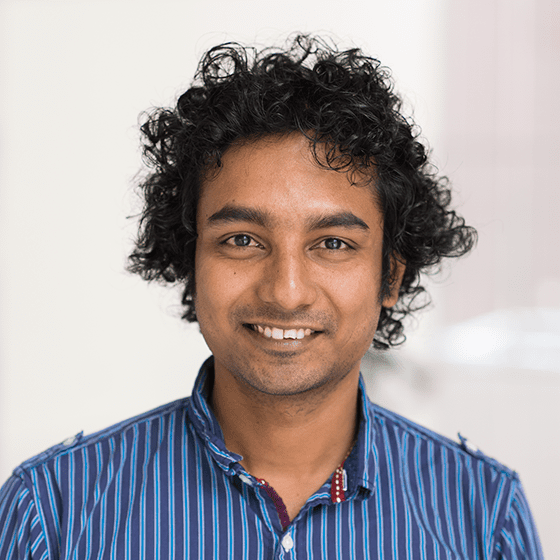
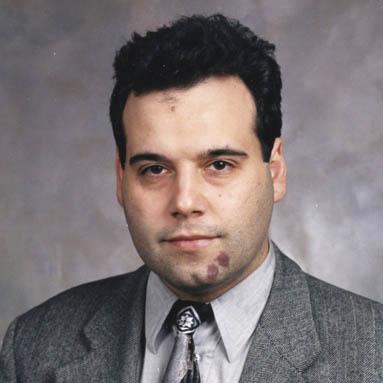
Jayadev Acharya is an Associate Professor in the School of Electrical and Computer Engineering at Cornell University, with graduate field memberships in Computer Science and Operations Research and Information Engineering. His research focuses on the intersection of information theory, statistical inference, algorithms, and machine learning. He explores trade-offs between data, memory, time, and robustness in learning problems, including quantum information and machine unlearning. Education: B.Tech in Electronics and Communication Engineering from Indian Institute of Technology, Kharagpur (2007) M.S. in Electrical and Computer Engineering from University of California, San Diego (2009) Ph.D. in Electrical and Computer Engineering from University of California, San Diego (2014) Research Trends: His recent work (2020-2022) emphasizes information-constrained inference, differential privacy, quantum entropy estimation, and distributed learning. Key subfields include communication complexity, local privacy, and adaptive gradient processing. His publications span NeurIPS, ICML, COLT, and IEEE Transactions on Information Theory. Awards: Kenneth A. Goldman ’71 Excellence in Teaching Award (Cornell, 2022) MIT Energy Initiative Fellowship (2014) Shannon Graduate Fellowship (UCSD, 2012) Jack Keil Wolf Student Paper Award (ISIT, 2010) Advising and Grants: He advises Sourabh Bhadane, Saravanan Kandasamy, Yuhan Liu, Ziteng Sun, and Huanyu Zhang. Research funded by NSF-CAREER, NSF-CRII, NSF-CIF small grants, and Google Faculty Research Award.
Dr. Richard Jiang is a Senior Lecturer (Associate Professor) at Lancaster University's School of Computing and Communications. His research focuses on Artificial Intelligence, Neurocomputing, Quantum AI, Privacy Computing, and Medical Computing. He has pioneered secure pattern recognition in encrypted domains and quantum neuromorphic computing. With over £1M in research grants from EPSRC and others, he has authored 100+ publications and supervised over 20 PhD students. Dr. Jiang's work includes the Face2Brain method for neurodegenerative assessment and explainable models for brain aging analysis. He contributes actively to academic committees, editorial boards, and conferences like the World Conference on eXplainable AI. His research spans ethical AI frameworks, quantum algorithms for medical imaging, and privacy-preserving biometric systems.
Prof. Tansu Alpcan is a Professor and Reader in the Department of Electrical and Electronic Engineering at The University of Melbourne, Australia. He holds a PhD from the University of Illinois at Urbana-Champaign (UIUC) and has held academic positions at Technical University Berlin and Deutsche Telekom Laboratories. His research focuses on AI/ML applications in engineering, game theory, cybersecurity, Industry 4.0, quantum machine learning, smart grids, and communication networks. Education: PhD in Electrical and Computer Engineering (UIUC, 2006); MSc (UIUC, 2003); BEng (Bogazici University, 1999). Research interests include adversarial machine learning, cybersecurity games, quantum computing, and renewable energy systems. Authored over 200 papers and two books, including Network Security: A Decision and Game Theoretic Approach (Cambridge, 2011). Recipient of IEEE Senior Membership (2012) and multiple best paper awards. He leads the WILAB and has secured grants such as the ARC Training Centre in Optimisation Technologies. Current projects include quantum machine learning, adversarial reinforcement learning, and smart grid modeling. Supervised 17 PhD and 3 Master’s students.
Emily J. King is a tenured Associate Professor in the Department of Mathematics at Colorado State University (CSU), College of Natural Sciences. She previously held a faculty position at the University of Bremen and has been actively contributing to the mathematical community through research, mentorship, and academic leadership. Her primary research interests include Frame Theory , Harmonic Analysis , Algebraic and Geometric Combinatorics , and Data Science , with applications in signal and image processing, Earth science, and artificial intelligence. She integrates deep mathematical theory with practical data analysis challenges. Her recent scholarly output reflects a strong focus on equiangular tight frames, combinatorial structures in frames, mathematical models for attention mechanisms, and applications to satellite imagery and cloud processes. Her work often bridges pure and applied mathematics, with a growing emphasis on interpretable AI and data science foundations. Dr. King has supervised several doctoral and master’s students, including Lander ver Hoef, Sören Schulze, Harley Meade, and Kristina Moen. She is a co-PI on an NSF grant focused on cloud processes and has been recognized for mentoring excellence, as evidenced by her student Emma Slack receiving the inaugural Outstanding Undergraduate in Mathematics award. NSF Grant Co-PI (2024) Outstanding Undergraduate in Mathematics award (mentored student, 2023) She is a founding co-organizer of the international Codes and Expansions (CodEx) Seminar and has organized sessions at major conferences such as SIAM AG and the Joint Mathematics Meetings. She frequently delivers invited talks at universities and research institutes worldwide, including upcoming presentations at the Air Force Institute of Technology, SIAM AG25, and TU Clausthal. Dr. King’s academic lineage includes John Benedetto as her mathematical advisor and Chandler Davis as her mathematical grandfather. She is actively involved in interdisciplinary research, particularly in marine data science, having co-spoken for the Helmholtz School for Marine Data Science (MarDATA).
Mohammed Y Niamat is a full-time Professor in the Department of Electrical Engineering and Computer Science at the University of Toledo's College of Engineering . His research focuses on hardware security, FPGA vulnerabilities, and blockchain applications in cybersecurity. Research Interests : Physical Unclonable Functions (PUFs), FPGA Security, Blockchain-based Security Frameworks, IoT Security, Smart Grid Authentication, Machine Learning Vulnerability Analysis Publications : Over 85 publications from 1986-2024, with recent works on integrations of blockchain and PUFs for secure supply chains, neural network modeling attacks on PUFs, and hardware Trojan detection techniques. Collaborations : Co-authored with Junghwan Kim (4), Weiqing Sun (2), Richard Molyet (1). Recent Article Trends : 2024 works on zero-trust architecture for FPGA supply chains using blockchain and ROPUFs; 2023 studies on IoT device authentication, hardware Trojan detection, and NFT-based IP protection; 2021-2019 research on machine learning attacks against PUFs, lightweight cryptographic designs for IoT, and BER optimization in wireless systems.
Mohammad Mahmoody is an associate professor in the Computer Science Department at the University of Virginia. His research focuses on theoretical aspects of cryptography, computational complexity, and machine learning, particularly on understanding barriers such as lower bounds and impossibility results. He has taught courses including Algorithms, Cryptography, and Theory of Computation. His work explores foundational questions in cryptography, adversarial robustness in machine learning, and computational assumptions underlying cryptographic primitives. Education: Ph.D. in Computer Science from Princeton University (2010) Affiliations: University of Virginia, Department of Computer Science Research Interests: His interests span cryptography (e.g., encryption schemes, coin-tossing, and registration-based systems), theoretical computer science (computational complexity, algorithms), and machine learning (adversarial robustness, data poisoning). He emphasizes formal proofs and rigorous analysis in security and learning frameworks. Publications: Recent work includes studies on quantum-resistant cryptography, adversarial machine learning, and cryptographic protocol design. Key themes involve impossibility results, lower bounds for cryptographic assumptions, and the interplay between computational constraints and learning theory. Service & Grants: - Served on program committees for ICML, NeurIPS, CRYPTO, and TCC - Organized workshops on cryptography and lower bounds - Research funded by grants exploring adversarial robustness and cryptographic foundations Labs/Teams: - Collaborations with researchers in cryptography, machine learning, and theoretical computer science - Advises a team of graduate students and postdocs in security and learning theory.
Professor Carsten Rudolph serves as Deputy Dean at Monash University's Faculty of Information Technology and directs the Oceania Cyber Security Centre (OCSC). He holds a PhD in Information Security from Queensland University of Technology (2002) and a Diplom in Computer Science from Goethe University Frankfurt (1997). His interdisciplinary research focuses on cybersecurity foundations, including cryptographic protocols, AI-driven security, human factors, and national cybersecurity policy. Key areas include securing smart grids, digital health systems, and transnational energy networks. Notable contributions include establishing the OCSC, leading Pacific region cybersecurity maturity reviews with Oxford University, and advancing frameworks for firmware security in virtual power plants. He chairs major projects like RAI4IoE (Responsible AI for Energy) and Post-Quantum Cryptography initiatives. Teaching responsibilities include cybersecurity modules like FIT3173 and FIT3168. Rudolph's research outputs (137+ publications) emphasize phishing detection via AI, blockchain-based energy trading, and resilient smart grid systems. He collaborates internationally on policy development and has advised 12 major research projects funded by agencies like the U.S. Bureau of East Asia and Pacific Affairs.
Cristina Butucea is a Professor of Statistics and Machine Learning at ENSAE-CREST, Institut Polytechnique de Paris . She was nominated an IMS Fellow (2019) for her contributions to nonparametric and high-dimensional statistics. She has co-organized major conferences like Fréjus 2018 , Luminy 2019-2020 , and Oberwolfach 2021 , and serves as Associate Editor for ALEA . Fields of interest: Nonparametric statistics, quantum statistics, differential privacy, inverse problems, machine learning. Awards: IMS Fellowship, conference organization leadership. Research trends: Focuses on optimal estimation under privacy constraints, quantum state reconstruction, high-dimensional inference, and adaptive nonparametric methods. Email: Cristina.Butucea@ensea.fr | Cristina.Butucea@ip-paris.fr
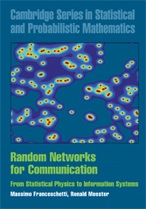
Massimo Franceschetti is a Professor in the Department of Electrical and Computer Engineering at the University of California, San Diego (UCSD), with faculty affiliation at Calit2. His research spans mathematical engineering, focusing on control, communication, computation, and sensing, particularly in complex networks and systems. He integrates tools from statistical physics, wave propagation, and information theory to analyze and design networked systems. Born in Naples, Italy, he studied at the University of Naples Federico II and the University of Edinburgh (European exchange program), graduating in 1997. He earned his M.Sc. (1999) and PhD (2003) from Caltech, where he received the Walker von Brimer Award and the C.H. Wiltz Prize for outstanding research and thesis. After postdoctoral work at UC Berkeley (2003-2004), he joined UCSD as faculty and held visiting positions at Vrije Universiteit Amsterdam, EPFL (Switzerland), and the University of Trento (Italy). He became an IEEE Fellow in 2018 and was nominated a Guggenheim Fellow in 2019. His research includes networked control systems , stochastic geometry , electromagnetic information theory , and social dynamical systems . Recent work explores non-invasive emotional contagion in social networks, quantum limits on information entropy, and the physics of wave propagation. His publications bridge information theory , machine learning , and network science , often applying percolation theory and random walks to explain scaling laws and wireless signal behavior. Scientific accolades include the S.A. Schelkunoff Transactions Prize , IEEE Communications Society Best Tutorial Paper Award , and the IEEE Ruberti Young Researcher Prize . He co-authored two books: Random Networks for Communication (2007) and Wave Theory of Information (2018). His students have pursued careers in academia (e.g., IIT-Bombay, Notre Dame) and industry (e.g., Google, IBM, Tesla). He teaches courses on network science , information theory , and control systems , emphasizing data-driven analysis and the physical foundations of communication. His group’s work impacts cyber-physical systems , quantum network coding , and epidemic modeling on networks .
Fatemeh Ganji is an Assistant Professor in the Department of Electrical & Computer Engineering at Worcester Polytechnic Institute (WPI), with an affiliation to the Cybersecurity program. She holds a Ph.D. in Electrical Engineering from the Technical University of Berlin (2017), where she received the BIMoS Ph.D. Award and was nominated for the ACM Dissertation Award. Prior to WPI, she served as a Post Doctoral Associate at the University of Florida (2018–2020) and at Telecom Innovation Laboratories/Technical University of Berlin (2017–2020). Her research focuses on interdisciplinary approaches in hardware security, combining machine learning and cryptography to design and evaluate security-critical hardware systems. Key areas include physically unclonable functions (PUFs), side-channel analysis, and countermeasures against tampering and counterfeiting. Her work is funded by the European Union (Horizon 2020, FP7), German BMBF, NSF, and NIST. Ganji actively contributes to the academic community as a reviewer for IEEE and ACM journals and serves on technical program committees for CHES, FPL, DATE, and SPACE conferences. Her recent projects include developing AI-driven forensic analysis for PCB tamper detection, secure multiparty computation frameworks for chiplet systems, and open-source tools for implementation security testing. Her awards include the BIMoS Ph.D. Award 2018 and recognition from the Technical University of Berlin for her doctoral work on PUF learnability. She has also pioneered methods to detect recycled integrated circuits and enhance hardware trust through reverse engineering and machine learning.
Prof. Joaquin GARCIA ALFARO is a Professor at Telecom SudParis, affiliated with the SCN department. His research focuses on cybersecurity, network security, quantum computing applications, and resilience engineering in cyber-physical systems. He has contributed to advancements in intrusion detection systems, blockchain integration in cellular networks, and privacy-preserving frameworks for IoT and healthcare. University: Telecom SudParis Key Research Areas: Cybersecurity, Quantum Computing, IoT Security, Resilience Engineering Labs: SAMOVAR laboratory His work emphasizes practical solutions for real-world challenges, including secure data provenance, digital twin implementations, and energy-efficient edge computing. Recent research explores quantum-resistant protocols and collaborative drone systems.
Fabrizio Falchi is a researcher at the Artificial Intelligence for Media and Humanities (AIMH) Lab of the Institute of Information Science and Technologies (ISTI) within Italy's National Research Council (CNR). He also maintains an associate position at the Biorobotics Institute of Scuola Superiore Sant'Anna. His work focuses on developing advanced multimedia retrieval systems, with the VISIONE platform being his most notable contribution, which has won international competitions including the Video Browser Showdown in 2024 and placed second in 2023. Falchi's educational background includes: Ph.D. in Information Engineering from University of Pisa (Italy) Ph.D. in Informatics from Faculty of Informatics of Masaryk University of Brno (Czech Republic) M.B.A. from Scuola Superiore Sant'Anna in Pisa His research spans deep learning, convolutional neural networks, deep features extraction, similarity search algorithms, distributed indexing systems, multimedia information retrieval, computer vision applications, and peer-to-peer systems. Falchi has made significant contributions to fine-grained visual understanding, cross-modal retrieval (particularly image-text matching), and robustness of deep learning systems against adversarial attacks. His work demonstrates a strong focus on practical applications of these technologies, particularly in video retrieval systems and safety monitoring solutions. Analysis of Falchi's recent publications reveals a strong focus on video and image retrieval systems, with the VISIONE platform being central to his work. His research shows increasing emphasis on fine-grained understanding in computer vision, cross-modal retrieval, and addressing practical challenges like cross-resolution face recognition. Recent work demonstrates innovation in making these systems more efficient through techniques like knowledge distillation (ALADIN) and leveraging virtual worlds for training data. His publications consistently bridge theoretical advances with practical applications in surveillance, safety monitoring, and multimedia search. Falchi's work has received significant recognition: Best paper award at CBMI 2024 for 'Is ClLIP the main roadblock for fine-grained open-world perception?' VISIONE 2024 won the Video Browser Showdown competition in Amsterdam VISIONE obtained second place at Video Browser Showdown 2023 in Bergen Best Paper Award for 'Learning Safety Equipment Detection using Virtual Worlds' at CBMI 2019 Falchi collaborates extensively with researchers at ISTI-CNR, particularly within the AIMH Lab. His work on VISIONE involves collaboration with Giuseppe Amato, Paolo Bolettieri, Fabio Carrara, Claudio Gennaro, Nicola Messina, Lucia Vadicamo, and Claudio Vairo. As co-chair of Ital-IA 2023, the 3rd National Conference on Artificial Intelligence, he plays an active role in the academic community. He is a member of ACM (since 2012), the Computer Vision Foundation, the Italian Association for Computer Vision Pattern Recognition and Machine Learning (CVPL), and the CINI Lab on Artificial Intelligence and Intelligent Systems. Falchi is a key member of the Artificial Intelligence for Media and Humanities (AIMH) Lab at ISTI-CNR, where he leads research on video retrieval systems. The lab has developed the award-winning VISIONE platform, which combines multiple scientific results in content-based video retrieval. His team focuses on developing systems that enable users to search for target videos using textual prompts, drawing objects and colors, or images as query examples. The lab's work demonstrates strong interdisciplinary collaboration, bridging computer science with practical applications in media, safety monitoring, and urban environments.
Professor Jinho Choi is a Chair and Professor in Radio Frequency at the School of Electrical and Mechanical Engineering, University of Adelaide, Australia. He holds a B.E. (magna cum laude) from Sogang University, and M.S.E. and Ph.D. degrees from KAIST. His research focuses on advancing wireless communication and sensing technologies, particularly in IoT, 5G/6G, non-terrestrial networks, and cognitive satellite systems. He authored three books and has been recognized with the 1999 EURASIP Best Paper Award, IEEE Fellowship, and inclusion in Stanford's Top 2% Scientists list since 2020. He currently serves as a Senior Editor of IEEE Wireless Communications Letters and editorial roles in multiple journals. Education: B.E. (Electronics Engineering) - Sogang University, Seoul (1989) M.S.E. (Electrical Engineering) - KAIST (1991) Ph.D. (Electrical Engineering) - KAIST (1994) Research Interests: Professor Choi's work addresses connectivity challenges in non-terrestrial networks, leveraging statistical signal processing and machine learning. Current projects include UAV-assisted LEO satellite technologies, cognitive satellite radios, and semantic communication protocols. His research aims to enhance global connectivity and efficiency in terrestrial and satellite networks. Publications: His recent work spans semantic communication, satellite quantum key distribution, federated learning optimization, and coverage diversity in mega constellations. These studies reflect trends in 6G-ready technologies, AI-driven communication systems, and hybrid satellite-terrestrial networks. Awards: 1999 Best Paper Award for Signal Processing (EURASIP) IEEE Fellow (Leadership in technical excellence) World’s Top 2% Scientists (Stanford University, 2020–present) Grants & Supervision: As a senior academic, he oversees grants in wireless innovation and has advised numerous students on advanced communication systems. His lab focuses on next-generation networks, integrating theoretical insights with practical implementations. Labs/Teams: Active in interdisciplinary teams at the University of Adelaide, collaborating on projects funded by industry and government to bridge gaps between academic research and real-world applications.
John Clark is a Professor of Computer and Information Security at the University of Sheffield since 2017 and Director of the Siemens Digital MINE. Previously, he held roles as Professor of Critical Systems at the University of York (1992–2017) and worked at Logica in security R&D. He studied Mathematics and Applied Statistics at the University of Oxford. His research focuses on cybersecurity, software engineering, and AI applications, particularly in threat modeling, intrusion detection, quantum cryptanalysis, and secure autonomous systems. Clark leads the Security of Advanced Systems research group and has secured grants totaling over £36 million. Notable projects include the EPSRC-funded DAASE (2012–2019) and the Active Building Centre (2018–2022). His work on phishing detection (e.g., analyzing user behavior) and malware analysis has been widely recognized. He has been awarded the Royal Society Wolfson Merit Award (2013), GEECO medals (2005, 2013), and multiple best-paper prizes. Clark’s research spans theoretical and applied domains, including evolutionary computation for cryptanalysis, robotic system security, and smart grid protection. His labs explore areas like digital twin authentication and privacy-aware energy theft detection. He has supervised numerous grants and maintains active collaborations with industry and academia.
Berk Sunar is a Professor of Electrical & Computer Engineering and the founder of the Vernam Applied Cryptography and Cybersecurity Laboratory at Worcester Polytechnic Institute (WPI). He joined WPI in 2000 after holding postdoctoral and research roles at Oregon State University (OSU) and Trust Inc. His work focuses on applied cryptography, microarchitectural security, AI security, post-quantum cryptography, and homomorphic encryption. Sunar received his BSc from Middle East Technical University (1995) and PhD from Oregon State University (1998). Research interests include vulnerabilities in hardware (e.g., Rowhammer, TPM-FAIL), side-channel attacks, and cryptographic implementations. Notable contributions include discovering flaws in Intel CPUs and TPM chips affecting billions of devices, as well as developing defenses like cuHE (GPU-accelerated homomorphic encryption). Publications highlight breakthroughs in transient execution attacks (e.g., LVI, RIDL), post-quantum signature schemes (Dilithium), and cloud security (Firecracker VMM vulnerabilities). Awards include NSF CAREER (2002) and IBM Pat Goldberg Best Paper (2007). Advised over 30 graduate students, many of whom hold senior roles in academia and industry. Current research addresses AI security, quantum-resistant algorithms, and automated attack detection via machine learning. The Vernam Lab remains a hub for cybersecurity innovation.