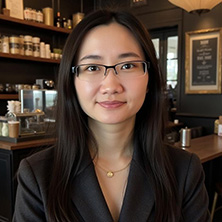
Hsin-Yi Lin is an Assistant Professor in the Department of Mathematics and Computer Science at Seton Hall University. Her research focuses on quantum machine learning, speech enhancement, and data assimilation with applications in computational physics and neural network interpretability. She explores interdisciplinary topics including quantum neural networks, adversarial robustness in speech models, and multi-scale geophysical dynamics modeling. Recent work emphasizes quantum measurement optimization, transfer learning in quantum circuits, and novel diffusion models. Her publications address challenges in speech quality assessment, domain adaptation, and scalable state estimation using recurrent networks. She has contributed to foundational mathematical analysis of transport equations and developed extensions to signal processing frameworks like SEMamba. Key research themes include hybrid quantum-classical systems, explainable AI for quantum models, and robust machine learning under adversarial conditions. Collaborations bridge theoretical mathematics with applied computational methods in earth system prediction and periodic migration modeling.
Prof. Stephan Günnemann is a Professor of Data Analytics and Machine Learning at the Technical University of Munich (TUM), affiliated with the TUM School of Computation, Information and Technology. He leads the Munich Data Science Institute as Executive Director and directs the Konrad Zuse School of Excellence in Reliable AI. His research focuses on enhancing the reliability of machine learning systems, particularly in graph-based and temporal data analysis. Prof. Günnemann holds a PhD from RWTH Aachen University (2012) and has held postdoctoral and senior research positions at Carnegie Mellon University (USA), Simon Fraser University (Canada), and Siemens AG. He founded the Emmy Noether Research Group at TUM in 2015 and has been recognized with prestigious awards including the Heinz Maier-Leibnitz Medal (2022) and the ACM SIGKDD Best Paper Award (2018). His research interests span adversarial robustness, graph neural networks, and molecular data analysis. Recent work emphasizes certifiable AI safety, efficient data pruning, and uncertainty estimation in heterogeneous systems. He has contributed to over 150 peer-reviewed publications, with a focus on foundational ML challenges and real-world applications. Key Awards: Heinz Maier-Leibnitz Medal (2022), Google Faculty Award (2020), DFG Emmy Noether Programme (2015) Leadership Roles: Executive Director of Munich Data Science Institute, Director of Konrad Zuse School Past Roles: Postdoctoral Fellow at CMU, Researcher at Siemens His lab actively explores cutting-edge AI topics such as graph representation learning, quantum chemistry simulations, and trustworthy ML systems. Current projects include developing certifiable defense mechanisms against adversarial attacks and scalable molecular generation frameworks.
Professor Dan Boneh is a Cryptography Professor at Stanford University, holding dual appointments in the Department of Computer Science and the Department of Electrical Engineering. He is also a Senior Fellow at the Freeman Spogli Institute for International Studies. Boneh leads the Applied Cryptography Group and co-directs the Computer Security Lab, focusing on cryptographic applications for computer security, including cryptosystems, web security, mobile device security, and cryptanalysis. His work has resulted in over 200 publications and prestigious awards such as the ACM Prize (2015), Gödel Prize (2013), and Packard Fellowship. He completed his PhD at Princeton University in 1996 and has been at Stanford since 1997. His research interests span cryptography fundamentals and practical security solutions, with notable contributions to zero-knowledge proofs, blockchain security, and privacy-preserving technologies. Boneh advises numerous graduate students and postdoctoral researchers, and his courses include Advanced Topics in Cryptography, Computer and Network Security, and Introduction to Cryptography. Boneh’s scientific awards reflect his impact in cryptography and security, including the Simons Investigator award (2015) and the Horizon Award (2006). His work bridges theoretical cryptography with real-world applications, addressing challenges in secure communication, privacy, and decentralized systems.
Dr. M.A. Karim is a Professor in the Department of Mechanical Engineering at the University of West Florida (UWF), within the Hal Marcus College of Science and Engineering. His academic and professional background is rooted in Civil and Environmental Engineering, with interdisciplinary teaching and research contributions. He has held faculty positions at multiple institutions including Kennesaw State University (formerly SPSU), Trine University, Virginia Commonwealth University (as Affiliate Professor), and Stratford University (as adjunct faculty). Ph.D. in Civil/Environmental Engineering, Cleveland State University, 2000 M.Sc. in Civil/Environmental Engineering, Bangladesh University of Engineering and Technology (BUET), 1992 B.Sc. in Civil Engineering, BUET, 1989 Dr. Karim's research spans environmental and geotechnical engineering, with a strong emphasis on sustainability. His work focuses on soil and sediment remediation , solid and hazardous waste management , wastewater treatment with energy recovery , and utilization of industrial byproducts like fly ash and sewage sludge ash in soil stabilization and concrete. He also investigates engineering education methodologies , particularly project-based learning, active learning, and online/hybrid instruction during and after the pandemic. His recent publications (2020–2025) reflect a dual focus: environmental sustainability in construction and innovative pedagogy in engineering education. Articles explore topics such as optimizing fly ash in concrete, comparative waste management systems globally, and the impact of attendance, prerecorded lectures, and problem-solving approaches on student learning. This indicates a sustained research trajectory bridging technical environmental solutions with educational innovation. Dr. Karim has received significant professional recognition, including: Fellow of the American Society of Civil Engineers (F.ASCE) Board-Certified Environmental Engineer (BCEE) Professional Engineer (PE) in Virginia and Georgia ABET EAC Program Evaluator and ETAC Commissioner He has advised students through capstone design and independent study courses, and has led curriculum development, including founding the BS in Environmental Engineering program at KSU. His leadership roles include interim and assistant department chair. He is actively involved in professional service, regularly presenting at ASEE conferences and contributing to industry knowledge through invited talks on waste management and sustainable materials.
Sebastian Schrittwieser is a Researcher in the Research Group Security and Privacy, part of the Faculty of Computer Science. His work focuses on cybersecurity, code obfuscation, malware analysis, and machine learning applications in security. He leads and contributes to projects like INODES (Cyber Defense Strategies) and EMRESS (Resilience Evaluation Models). His research bridges theoretical foundations and practical applications, addressing challenges in software protection and threat detection. Key research interests include: Code Obfuscation Techniques and Resistance Adversarial Machine Learning and Risk Assessment Malware Analysis and Program Simulation User Behavior in Cybersecurity Contexts Recent publications emphasize empirical studies on IT/OT infrastructure security, graph neural network vulnerabilities, and quantum-inspired machine learning. He actively collaborates with institutions like SBA Research and presents at international conferences. Grants include Research Funding for projects on optimal cyber defense strategies (INODES) and software resilience evaluation (EMRESS). His work aligns with interdisciplinary efforts in security engineering and privacy-preserving technologies.
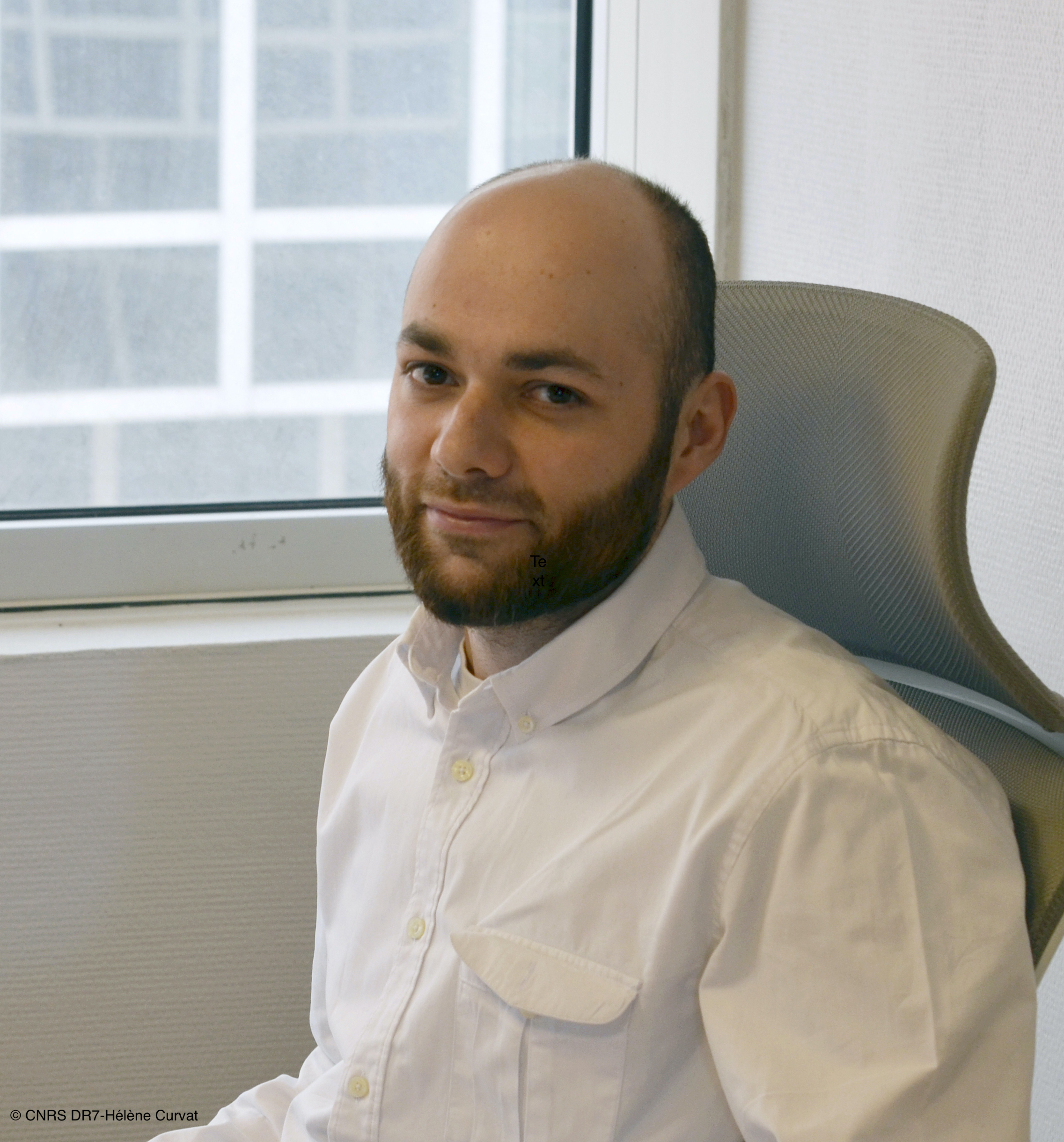
Omar Fawzi is a Research Director (Directeur de Recherche) at Inria, heading the QInfo team at École Normale Supérieure de Lyon. His primary roles include leading research in quantum information theory and theoretical computer science, with a focus on quantum algorithms, error-correcting codes, and quantum cryptography. He has held academic positions since 2011, including teaching at McGill University and ENS Lyon. His research interests span quantum information theory, theoretical computer science, and their applications. He has contributed to foundational work on quantum channel capacities, entropy accumulation theorems, and quantum error correction codes like quantum expander codes. His work bridges theoretical insights with practical implementations, including fault-tolerant quantum computing and device-independent cryptography. Fawzi has advised numerous PhD students and postdoctoral researchers, with students such as Aadil Oufkir (now at RWTH Aachen) and Antoine Grospellier (teaching in France). He has led major grants including the ERC Starting Grant AlgoQIP and the ANR-18-CE47-0011 ACOM project. His research team focuses on advancing quantum communication protocols, quantum algorithms, and the mathematical foundations of quantum mechanics. Key contributions include the entropy accumulation theorem, variational bounds on quantum divergences, and efficient simulation methods for quantum systems. His work emphasizes interdisciplinary approaches, combining tools from computer science, mathematics, and physics to tackle fundamental quantum information challenges.
Ryutaro Yamashita is an Adjunct Professor in the Department of Mathematical Sciences at Aalborg University's Faculty of Engineering and Science. His research spans quantum computing, cryptography, and machine learning. Focus areas include quantum error correction, secret sharing schemes, and adversarial attacks on depth estimation networks. Collaborates on entanglement-assisted codes and finite field applications. Recent work highlights trends in securing quantum information systems and enhancing neural network robustness.
Hans-Arno Jacobsen is a Professor at the Faculty of Computer Science (Technische Universität München, TU Munich) and affiliated with the Department of Electrical and Computer Engineering at the University of Toronto. His work spans Computer Science , Distributed Systems , and Artificial Intelligence . Research interests include Blockchain Technology , Consensus Algorithms , Graph Neural Networks , and Quantum Computing . Recent projects focus on decentralized consensus , energy-efficient databases , and federated learning in edge environments. His 15 most recent articles (2024–2025) explore topics such as dynamic resource orchestration , CRDT-based blockchains , and multimodal depression recognition . Collaborates with researchers like Ruben Mayer , Gengrui Zhang , and Shiqiang Wang on systems for federated computing , blockchain benchmarking , and distributed GNN training .
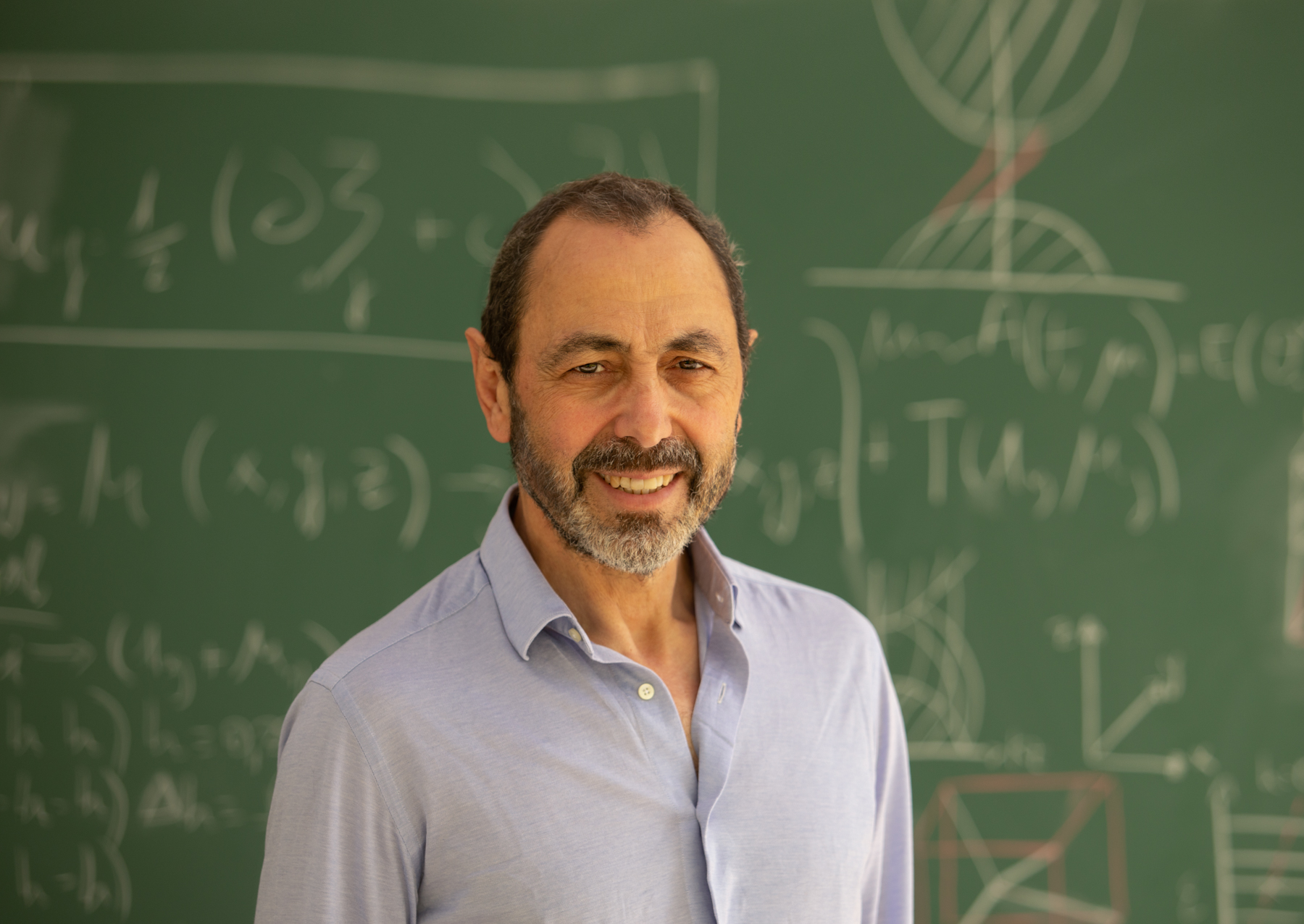
Enrique Ortega Conejero is a Full Professor of Applied Physics at the University of the Basque Country (UPV/EHU) in Donostia/San Sebastián, Spain, and a DIPC Associate at the Donostia International Physics Center. Born in San Sebastián in 1963, he earned his Bachelor's (1986) and Ph.D. (1990) in Physics from the Autonomous University of Madrid. After completing a post-doc at IBM Yorktown Heights Research Center (1991-1993) and a junior researcher position at the University of Madrid (1993-1995), he joined the University of the Basque Country where he became a Full Professor in 2003. His primary research focuses on the physical-chemical properties of surface nanostructures, with particular expertise in electron spectroscopies and synchrotron radiation research. Ortega is recognized as an expert in the field of curved crystal surfaces, which has become the hallmark of the Nanophysics Lab he leads. His work on electronic states of metallic thin-film quantum wells developed in the 1990s formed the foundation for his career and the Nanophysics Lab's research direction. The curved crystal approach enables simple vacuum processing and easy access to distinct crystal orientations on the same sample, making it valuable for studying surface science problems involving steps, faceting, electron scattering, and catalysis. Analysis of his publication record spanning over 160 scientific articles reveals a strong focus on surface electronic states, quantum confinement effects, and nanoscale surface phenomena. His work demonstrates consistent contributions to fundamental surface science with practical applications in nanotechnology and materials science. His most cited works center on quantum well states, magnetic coupling, and the electronic structure of nanostructured surfaces. His scientific impact is substantial, with over 8,000 total citations and an h-index of 48 according to Google Scholar. He has presented approximately 130 invited seminars at universities, research centers, and international conferences, demonstrating his recognition as a leading expert in his field. Notably, since 1996, Professor Ortega has taught 'Physics for Architects' at the School of Architecture of the University of the Basque Country, demonstrating his commitment to interdisciplinary education and making physics accessible to non-physics students.
Eötvös Loránd University's Faculty of Science researcher Dávid Szeghy has been affiliated with the Department of Geometry since 2006. His work focuses on differential geometry, mathematical physics, and geometric analysis of Lorentz manifolds. PhD in Mathematics (2008, ELTE) Publications span 2003–2023 with emphasis on horizon differentiability, isometric group actions, and pseudo-Riemannian conjugate loci Key collaborations include J. Szenthe and A. Fothi Research trends show deep engagement with Lorentzian geometry , including studies on: Orbit type theorems for isometric actions Normalizable vs. non-normalizable orbits Horizon smoothness in general relativity Exponential mapping properties in spacetime His work appears in journals like Annales Henri Poincaré , Classical and Quantum Gravity , and Geometriae Dedicata , with citations across mathematics and physics domains.
Xiao Cheng is a Lecturer in the School of Computing at Macquarie University, specializing in the intersection of Programming Languages and Software Engineering. His research focuses on enhancing software security and reliability through advanced analysis techniques. PhD in Computer Science and Engineering from the University of New South Wales Research interests include: Abstract interpretation and typestate analysis Integration of AI technologies like graph neural networks Malware detection in Android systems using DNN Recent publications address challenges in: Quantum search-optimized static analysis Dynamic malware label noise mitigation Recursion handling through topological ordering Scientific recognition includes: FSE 2024 ACM SIGSOFT Distinguished Paper Award OOPSLA 2020 ACM SIGPLAN Distinguished Paper Award Professional service includes: Web Chair for LCTES 2024 PC member for FSE 2026, ISSRE 2025, PAKDD 2025 Artifact Evaluation Committee for ICSE 2025 and ISSTA 2024
Dr. Eric Howard is a Research Fellow at Macquarie University , affiliated with the School of Engineering , School of Mathematical and Physical Sciences , and School of Computing . His research spans interdisciplinary domains at the intersection of quantum physics, machine learning, and AI-driven systems. Key research themes include: Quantum cryptography for Industry 4.0 security Machine learning in IoT temperature sensing Adversarial AI in cybersecurity 6G wireless communication optimization Quantum information processing Deep learning for data imputation Recent publications demonstrate a focus on emerging technologies, with articles on quantum Bayesian inference , 6G signal processing , and smart city IoT systems . His collaborative work extends to blockchain-enabled supply chain visibility and generative AI applications in programming. Research collaborations span institutions in India (AIP Publishing) and Australia, with technical contributions to quantum dynamics, neural network applications, and nanosensor development.
Swaroop Ghosh is a Professor in Electrical Engineering, focusing on cutting-edge research at the intersection of Quantum Computing , Machine Learning , and Hardware Security . His work spans theoretical and applied domains, addressing challenges in quantum error correction, cybersecurity, and drug discovery. Research Trends: His recent publications emphasize Quantum Machine Learning (e.g., adversarial attacks, molecular modeling), Error Correction (surface codes, qubit quality optimization), and Security (cloud-based quantum systems, compiler vulnerabilities). Grants & Projects: He leads multiple National Science Foundation-funded initiatives, including Drug discovery using quantum machine learning and Securing Large-Scale Noisy-Intermediate Scale Quantum Computing . Collaborations: His projects involve cross-disciplinary partnerships with experts in physics, computer science, and cybersecurity. Though no explicit students or awards are listed in the provided text, his prolific research output and leadership in quantum technologies underscore his significant contributions to academia and industry.
Mehrdad Mahdavi is an Associate Professor in the field of Computer Science and Engineering. He has secured multiple National Science Foundation (NSF) grants, including EFRI BRAID: Neuroscience Inspired Visual Analytics, CAREER: Foundations of Collaborative Machine Learning, and CNS Core: Medium: When Next Generation Wireless Networks Meet Machine Learning. His research spans diverse areas of machine learning and optimization. His work focuses on Machine Learning , Optimization Algorithms , Quantum Computing , and Graph Neural Networks . He investigates memory-efficient training methods, generalization in unsupervised learning, quantum sampling for complex distributions, and distributed algorithms for collaborative learning. His research also intersects with healthcare applications, such as AI-driven lung ultrasound analysis for diseases like COVID-19. Recent publications highlight trends in Continual Learning , Temporal Graph Learning , Quantum Algorithms , and Federated Learning . His studies address theoretical frameworks for generalization, optimization challenges in non-convex and non-logconcave problems, and scalable solutions for graph-based machine learning tasks. He has contributed to energy consumption modeling, quantum sampling, and distributed risk minimization. As a Principal Investigator (PI) and Co-PI, he has led NSF-funded projects on collaborative machine learning , neuroscience-inspired visual analytics , and AI-enabled materials discovery . These grants underscore his focus on foundational research with applications in wireless networks, quantum computing, and interdisciplinary domains.
Dr. Venkata Sriram Siddhardh Nadendla serves as an Assistant Professor in the Department of Computer Science within the College of Engineering at Missouri University of Science and Technology. His research bridges theoretical foundations in information theory with practical applications in cyber-physical-human systems across critical infrastructure domains. His educational background includes: PhD in Electrical Engineering and Computer Science from Syracuse University MS from Louisiana State University BE from SCSVMV University, India Dr. Nadendla's research spans cyber-physical-human systems with particular emphasis on human-system interaction , statistical inference , and multi-agent decision making . His work integrates machine learning, game theory, and behavioral decision theory to address challenges in transportation systems, mining safety, and cybersecurity. Recent publications show growing focus on fairness in AI systems and neuromorphic computing applications. Analysis of his 15 most recent publications reveals concentration in transportation systems (20%), cybersecurity (25%), human-AI interaction (30%), and healthcare applications (10%), with remaining work spanning mining safety and theoretical decision frameworks. His research demonstrates consistent progression from theoretical foundations toward practical implementations in critical infrastructure. Dr. Nadendla is actively affiliated with the Center for Intelligent Infrastructure at Missouri S&T, where he contributes to developing smart infrastructure solutions. His work uniquely combines quantum cognition models with traditional game theory approaches to model human decision-making in complex systems.