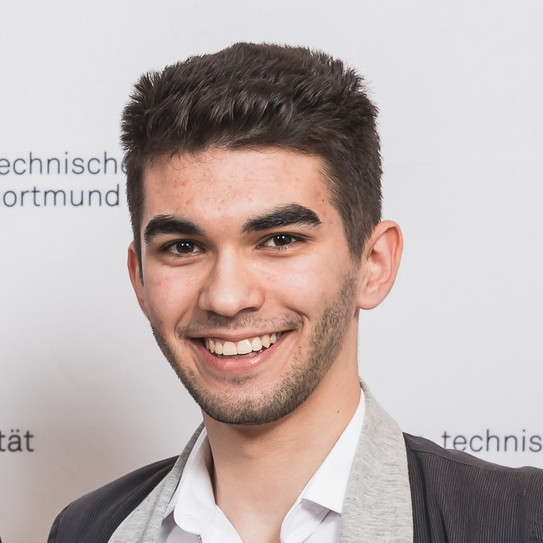
Leonard David Bereholschi is a Researcher at the Department of Computer Science 12 , Faculty of Computer Science, Technical University of Dortmund. His work focuses on integrating machine learning with embedded systems and memory technologies. Research Interests: Quantized/Binary Neural Networks Resource-Constrained ML Emerging Non-Volatile Memories
Associate Professor Jonathan Kress serves as Associate Director of Science in the School of Mathematics & Statistics at the University of New South Wales (UNSW). His academic profile highlights expertise in Mathematical Physics with a specialized focus on Superintegrable Systems. His research interests encompass: Mathematical Physics Superintegrable Systems Differential Geometry Quantum Mechanics Algebraic Geometry Professor Kress's scholarly work demonstrates a consistent trajectory of advancing theoretical frameworks for understanding superintegrable systems. His recent publications reveal a sophisticated integration of algebraic geometry with differential geometry to develop classification schemes for superintegrable systems in arbitrary dimensions. His research particularly emphasizes conformal properties, separation of variables, and quantum mechanical applications of these highly symmetric systems. Notable contributions include: Co-authoring the seminal book "Separation Variables Superintegrability" (2018) with Kalnins and Miller Developing algebraic conditions for conformal superintegrability across dimensions Establishing geometric foundations for classifying second-order superintegrable systems Professor Kress maintains productive long-term collaborations, particularly with E.G. Kalnins and W. Miller, as evidenced by their co-authorship spanning over two decades. His work bridges pure mathematics with theoretical physics applications, appearing in prestigious journals including Communications in Mathematical Physics, Journal of Geometric Analysis, and Journal of Physics A: Mathematical and Theoretical. His research continues to shape the theoretical understanding of symmetry properties in physical systems.
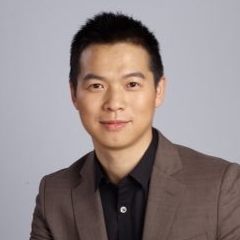
Lei Li is an Associate Professor in the Department of Computer Science at the University of California, Santa Barbara (UCSB), where they serve as Co-Director of the UCSB NLP Group. Their research focuses on developing algorithms and systems for machine learning, natural language processing, machine translation, reasoning, and AI-powered drug discovery. Dr. Li received their PhD from Carnegie Mellon University and completed their undergraduate studies at Shanghai Jiao Tong University. Dr. Li's research spans multiple critical areas in artificial intelligence and machine learning. Their work in natural language processing encompasses machine translation, speech translation, multilingual NLP, large language models, text generation, program synthesis, reasoning, privacy, and watermarking. Additionally, they have made significant contributions to AI applications in drug design and efficient machine learning techniques. Their research bridges theoretical foundations with practical applications, particularly in the emerging field of AI for biological discovery. Analysis of Dr. Li's recent publications reveals a strong focus on advancing natural language processing capabilities while addressing critical challenges in model efficiency, security, and evaluation. Their work spans machine translation systems that handle hundreds of languages, techniques for improving large language model capabilities in zero-shot settings, methods for evaluating text generation quality, and novel approaches for protecting intellectual property in language models. Notably, they've also made significant contributions to applying AI to biological problems, particularly in antimicrobial peptide discovery and protein sequence design. Dr. Li has received notable recognition for their research, including: Best Paper Award at ACL 2021 for "Vocabulary Learning via Optimal Transport for Neural Machine Translation" Dr. Li actively advises PhD and Master's students in computer science at UCSB, with recent advisees working on topics including antimicrobial peptide discovery, protein sequence design, diffusion models, speech translation, and language model watermarking. Their research group, the UCSB NLP Group, appears to be well-funded and productive, with consistent publications in top-tier conferences including ACL, EMNLP, ICML, KDD, and NeurIPS. The group has developed several influential frameworks and benchmarks, including MTG (Multilingual Text Generation benchmark) and SEScore2 (text generation evaluation metric). The UCSB NLP Group, co-directed by Dr. Li, maintains an active research agenda with multiple ongoing projects spanning natural language processing, machine learning, and their applications to scientific discovery. The group collaborates with researchers across disciplines, particularly in the biological sciences for drug discovery applications.
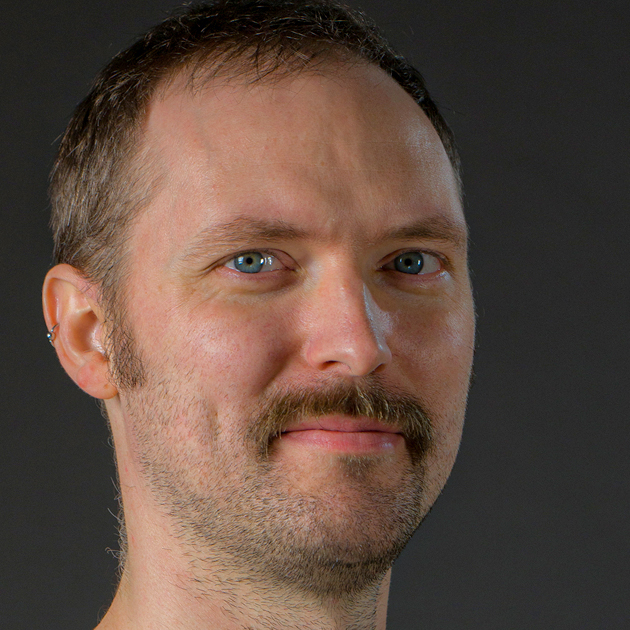
Ulrich Kühne is a Lecturer at Télécom Paris , affiliated with the Secure and Safe Hardware (SSH) team and the Information Processing and Communication Laboratory (LTCI) . His research focuses on embedded systems security and formal methods for security guarantees. Research Interests: Embedded systems security, formal verification of protection schemes, and mitigation of hardware/software attacks. Publications: His work spans moving target defense for connected cars, side-channel attack mitigation in neural networks, and hardware-assisted security mechanisms. Labs & Teams: Active in LTCI and SSH, focusing on hardware-software co-design for security.
Dr. José Mairton Barros da Silva Júnior is an Assistant Professor at the Department of Information Technology , Uppsala University , Sweden. His work integrates Wireless Communications and Machine Learning to advance future network technologies. Ph.D. in Electrical Engineering and Computer Science, KTH Royal Institute of Technology (2019) M.Sc. and B.Sc. in Teleinformatics Engineering, Federal University of Ceará (2014, 2012) His research bridges distributed optimization and machine learning for wireless systems, focusing on federated learning , vehicular communications , and full-duplex architectures . He investigates communication efficiency via novel modulation techniques and privacy-preserving frameworks. Recent publications address over-the-air computation , resource-constrained federated learning , and differential privacy in multi-base station systems. His work spans 6G network design , IoT applications , and wireless sensor networks . Scientific Awards : Exemplary Reviewer , IEEE Open Journal of the Communications Society (2021) He supervises PhD and Master's students including Metehan Karatas and Saeed Razavikia . He organizes IEEE conferences and develops open-source MATLAB toolboxes for mmWave beamforming.
Tajron Jurić is a researcher at the Ruđer Bošković Institute, leading the Quantum Gravity Group within the Division of Theoretical Physics. His work focuses on quantum gravity, noncommutative geometry, and black hole thermodynamics, with collaborations across Croatia, India, and France. PhD in Physics (2014), Faculty of Science, University of Zagreb Master’s in Physics (2011), Faculty of Science, University of Zagreb His research explores the intersection of quantum mechanics and gravity, particularly through: Noncommutative spacetime models (κ-Minkowski) Quantum gravity phenomenology via black hole entropy and quasinormal modes Nonlinear electromagnetic fields in curved spacetime Self-adjointness in quantum observables Structural implications of noncommutative geometries The 15 most recent publications reveal a consistent emphasis on quantum gravity effects, entropy quantization, and nonlinear field dynamics, with methodological roots in noncommutative geometry and κ-deformed algebras. He actively contributes to: Developing noncommutative black hole models Investigating quantum spacetime perturbations Elucidating thermodynamic properties of modified black holes Advancing mathematical frameworks for quantum gravity
Professor Colin Lambert is a Research Professor at Lancaster University's Department of Physics within the Faculty of Science and Technology. He has held prestigious roles such as Founding Director of the Lancaster Quantum Technology Centre (until 2013) and led the Physics Department to top scores in RAE 2001 and 2008. As a former Associate Dean of Research (2005-2010), he initiated major research programs including the Eurocores 'Fundamentals of Nanoelectronics' (2004) and the EPSRC/IOP 'Physics By The Lake' Summer School (1997). Current Council member, CECAM (Lausanne) Director, £4.8M North West Science Grid Board member, N8 Molecular Engineering TRC His research spans nanoelectronics, quantum transport, and energy materials, with over 400 publications and 16 PhD students in his Theory of Molecular-Scale Transport Group. Recent projects include quantum engineering of molecular materials and memristive organometallic devices (MemOD). He has secured major funding from EPSRC, EU, and Castrol PLC. Key research areas include: Quantum interference in molecular junctions Thermoelectric materials and devices Single-molecule electronics Graphene/silicene-based systems CO2 electrocatalysis Scientific honors: Research Professorship (2010) QinetiQ Fellowship (2009) Academia Europaea member (2006) Fellow of the Institute of Physics (2000) His group actively supervises PhD students and collaborates with industry partners like BP Exploration, QinetiQ, and IBM Zurich. Current projects cover memristive devices (MemOD), quantum transport, and molecular-scale electrocatalysis.
Chao Qian, M.Sc., is a researcher and PhD student at the Department of Embedded Systems, University of Duisburg-Essen, since April 2020. He holds a bachelor's degree in Electrical Engineering from the University of Electronic Science and Technology of China (2015) and a master's degree in Embedded Systems from the University of Duisburg-Essen (2020). His research focuses on enabling artificial intelligence (AI) in reconfigurable hardware like FPGAs for energy-efficient and high-performance embedded systems. He investigates methods to deploy pre-trained neural networks on FPGAs, targeting traditionally resource-constrained embedded systems. Recent publications highlight his work on Configuration-aware FPGA power management Quantized transformers for time-series forecasting Soft sensor design for fluid flow estimation LSTM acceleration on embedded FPGAs In projects like "KI-Sprung: LUTNet" and "Elastic AI", he contributes to adaptive machine learning in pervasive computing. Contact: Email: chao.qian@uni-due.de Phone: +49 203 379 2390 Address: Bismarckstr. 90 (BC), Room BC 104, Duisburg
Tianheng Ling is a Researcher at the Department of Embedded Systems, University of Duisburg-Essen, specializing in embedded machine learning and FPGA acceleration for environmental applications since November 2022. Her primary focus is the RIWWER project, which reduces environmental impact from untreated wastewater through optimized embedded algorithms. Her educational background includes: Bachelor of Information Management and Information Systems from the University of Duisburg-Essen Master of Applied Cognitive and Media Science with a focus on Artificial Intelligence from the University of Duisburg-Essen, where her thesis explored quantized neural networks for time-series prediction Her research centers on deploying energy-efficient deep learning models on resource-constrained embedded systems, emphasizing quantization techniques, real-time performance, and FPGA acceleration. Key application areas include wastewater flow estimation and environmental monitoring, with technical expertise spanning LSTM/Transformer optimization, soft sensor development, and configuration-aware power management. Analysis of her 12 publications (2023-2025) reveals consistent innovation in embedded AI for environmental systems, particularly fluid flow estimation. Recurring themes include quantization-aware training, energy-efficient neural network acceleration on FPGAs, and real-time time-series forecasting, demonstrating a clear trajectory toward deployable AIoT solutions for sustainability challenges. No scientific awards are documented in the source materials. No information is available regarding student advising or research grant management. She actively contributes to the Intelligent Embedded Systems research group through projects including RIWWER (wastewater management), Elastic AI (energy-efficient deep learning accelerators), and the IoT Garage initiative, focusing on practical embedded AI implementations for pervasive computing environments.
Sebastian Bugge Loeschcke is a PhD Fellow at the Machine Learning Section of the Department of Computer Science (DIKU), University of Copenhagen . His research spans theoretical and applied machine learning with focus on quantum machine learning, language modeling, and sustainability. Current affiliation: Machine Learning Section, DIKU Key research areas: Quantum-classical hybrid models, neural language processing, geospatial analysis Collaborative initiatives: SCIENCE AI Centre, TreeSense Centre Loeschcke's recent work includes Coarse-To-Fine Tensor Trains for compact representations and LoQT: Low-Rank Adapters for Quantized Pretraining , reflecting his focus on efficient neural architectures and quantum-inspired methods. His publications address cross-disciplinary challenges in climate modeling, healthcare, and quantum computing. Scientific contributions include: 2024: Tensor train compression methods for visual representations 2024: Low-rank adapter techniques for quantized models 2025: Quantum computing applications in molecular binding energy calculation 2025: Ethical frameworks for sustainable AI development 2025: Quantum dot array simulation tools (QDarts) Loeschcke contributes to interdisciplinary projects involving: TreeSense (remote sensing of global tree resources) Quantum computing optimization with Danish research consortia
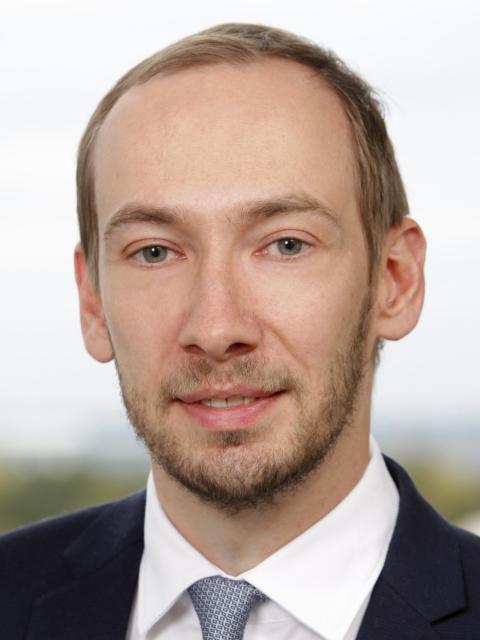
Dr. Nils Morten Kriege is an Associate Professor at the Faculty of Computer Science, University of Vienna, where he leads the Data Mining and Machine Learning research group. Previously, he served as Assistant Professor (2020-2023) at the same institution and held positions at TU Dortmund including Interim Professor (2019/2020) and Postdoctoral Researcher (2015-2020). His research focuses on graph-based machine learning methods with applications in cheminformatics and drug discovery. His educational background includes a Doctorate in Computer Science (2015) and Diploma in Computer Science (2009), both from TU Dortmund. He has also been a Visiting Researcher at the University of York, UK. Dr. Kriege's research centers on graph algorithms and machine learning with graphs, particularly focusing on graph neural networks, graph kernels, and their applications in cheminformatics and drug discovery. His work bridges theoretical computer science with practical applications, developing novel methods for graph similarity, graph classification, and network analysis. He has made significant contributions to understanding the expressivity and robustness of graph neural networks, as well as developing efficient algorithms for graph similarity search and molecular analysis. His recent publications (2023-2025) demonstrate a strong focus on graph neural networks, with particular attention to their expressivity, robustness against attacks, and practical applications in drug discovery. His work spans theoretical foundations (Weisfeiler-Leman hierarchy, graph isomorphism testing), practical implementations (efficient quantization, defense frameworks), and domain-specific applications (cheminformatics, drug discovery). Vienna Research Groups for Young Investigators (2019) - €1,466k funding for "Algorithmic Data Science for Computational Drug Discovery" Member of the Global Young Faculty V, Stiftung Mercator (2017) Dr. Kriege leads an independent research group funded through the Vienna Research Groups for Young Investigators program, focusing on computational drug discovery. He has served on program committees for major conferences including NeurIPS, ICML, IJCAI, AAAI, ICLR, and ICDM, and has reviewed for prestigious journals such as Transactions on Pattern Analysis and Machine Intelligence. His teaching portfolio includes courses on Data Mining, Graph Learning, and Introduction to Machine Learning. He leads the Machine Learning with Graphs work group within the Data Mining and Machine Learning Research Group at the University of Vienna, collaborating with researchers like Wilfried Gansterer and Petra Mutzel on graph-based methods for drug design and molecular analysis.
Professor Zidong Wang is a renowned academic in the field of dynamic systems and computing at Brunel University London. He holds the rank of Professor in the Department of Computer Science within the College of Engineering, Design and Physical Sciences. His research focuses on intelligent data analysis, statistical signal processing, and dynamic systems & control, with notable contributions to networked control systems, cyber-physical systems, and machine learning. He has been recognized as a Highly Cited Researcher in Computer Science and Engineering, and is an IEEE Fellow and member of prestigious academies such as Academia Europaea. Professor Wang’s editorial roles include Editor-in-Chief positions for the International Journal of Systems Science , Neurocomputing , and Systems Science and Control Engineering , alongside associate editorships for multiple high-impact journals. His work is funded by major organizations including the EU, Royal Society, and EPSRC. His research interests span advanced control theory, signal processing, and interdisciplinary applications in engineering systems. Notable achievements include pioneering work on state estimation, security in cyber-physical systems, and anomaly detection using novel transformer architectures. Professor Wang has supervised numerous PhD students, contributing to advancements in fields like smart grids, microarray image processing, and genetic regulatory networks. His academic leadership and prolific publication record (over 1,050 publications) underscore his global impact in systems science and computing.
Francis Bischoff is an Assistant Professor in the Department of Mathematics & Statistics at the University of Regina, part of the Topology and Geometry research group. His research focuses on the intersection of complex algebraic geometry, Poisson geometry, theoretical physics, and modern geometric tools like Lie groupoids. He explores generalized complex geometry, non-commutative geometry, and moduli spaces of singular flat connections. Previously, he was a Junior Research Fellow at Exeter College and the University of Oxford, and a postdoctoral fellow at the Fields Institute during the thematic program on Homological Algebra of Mirror Symmetry. He earned his Ph.D. in Mathematics from the University of Toronto under Marco Gualtieri, where his thesis introduced a novel approach to generalized Kähler geometry using holomorphic symplectic Morita equivalences. Bischoff’s publications span topics like logarithmic connections, moduli stacks, and brane quantization. He is actively recruiting graduate students interested in geometry and mathematical physics.
Michael G. Schmidt is a Professor at the Institute of Theoretical Physics, Heidelberg University, Germany. His academic work focuses on fundamental questions in theoretical physics, bridging cosmology, quantum field theory, and particle physics. Fields of Interest Physics of the early universe Quantum field theory for thermal non-equilibrium Extra dimensions in cosmology and elementary particle physics World-line quantization
Warren Siegel is a Professor in the Department of Physics and Astronomy at Stony Brook University. His research focuses on theoretical physics, particularly in string theory, quantum field theory, and supersymmetry. He explores topics such as T-theory, F-theory, AdS/CFT correspondence, and the interplay between string theory and Feynman diagrams. Siegel is affiliated with the CNYITP and teaches advanced courses like Strings, Quantum Field Theory (QFT), and Relativity. His work emphasizes manifest symmetries in string formulations and the development of novel computational tools for scattering amplitudes. Education: Not explicitly detailed, but his academic career includes significant contributions to theoretical physics. Research interests include supersymmetry, supergravity, and the unification of fundamental forces. He actively develops new methods for evaluating Feynman diagrams using string-theoretic insights and has contributed to the understanding of T-duality and dual superconformal invariance in gauge theories. His recent work explores F-theory’s formulation on branes and the application of superspace techniques to CFT and string amplitudes. Advising and grants: While specific grant details are not listed, his research aligns with major areas in theoretical physics, likely supported by institutional and external funding. He mentors students through graduate courses and research collaborations.