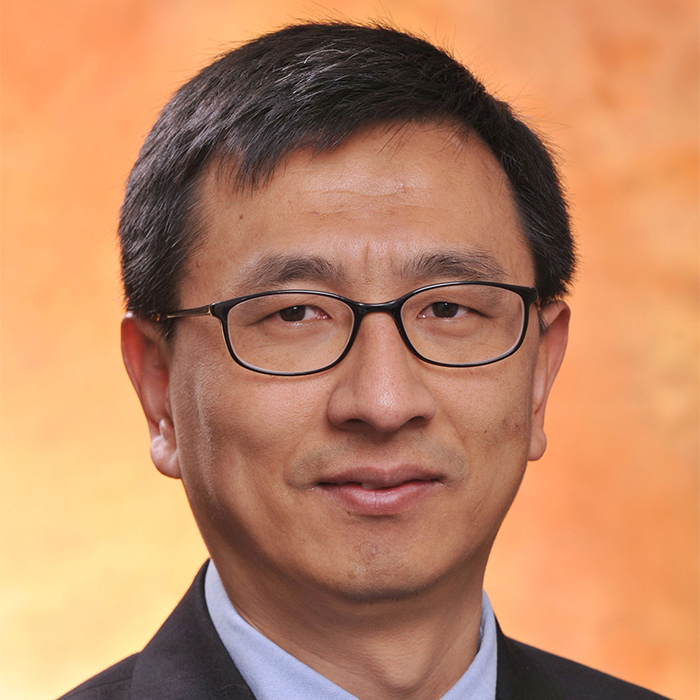
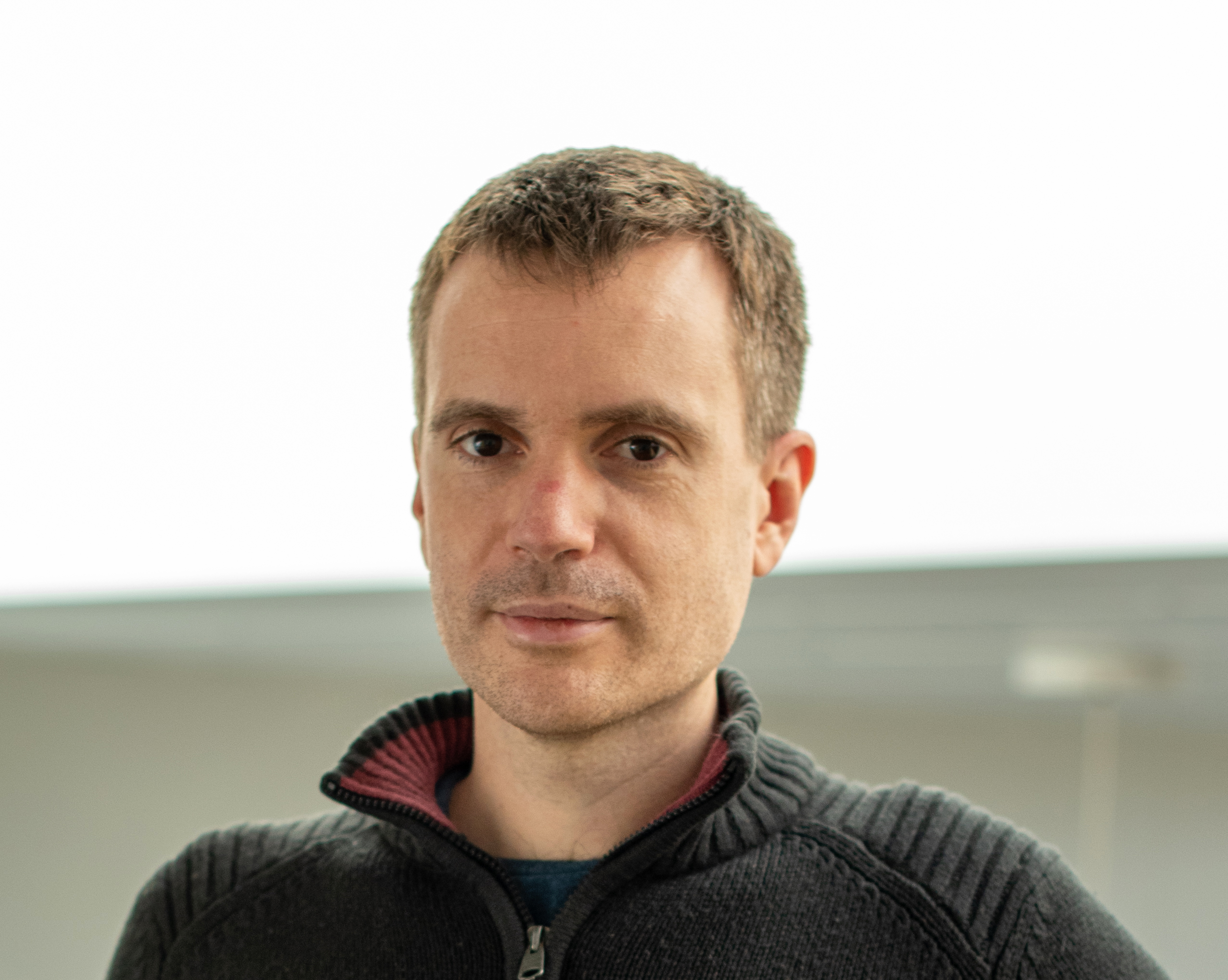
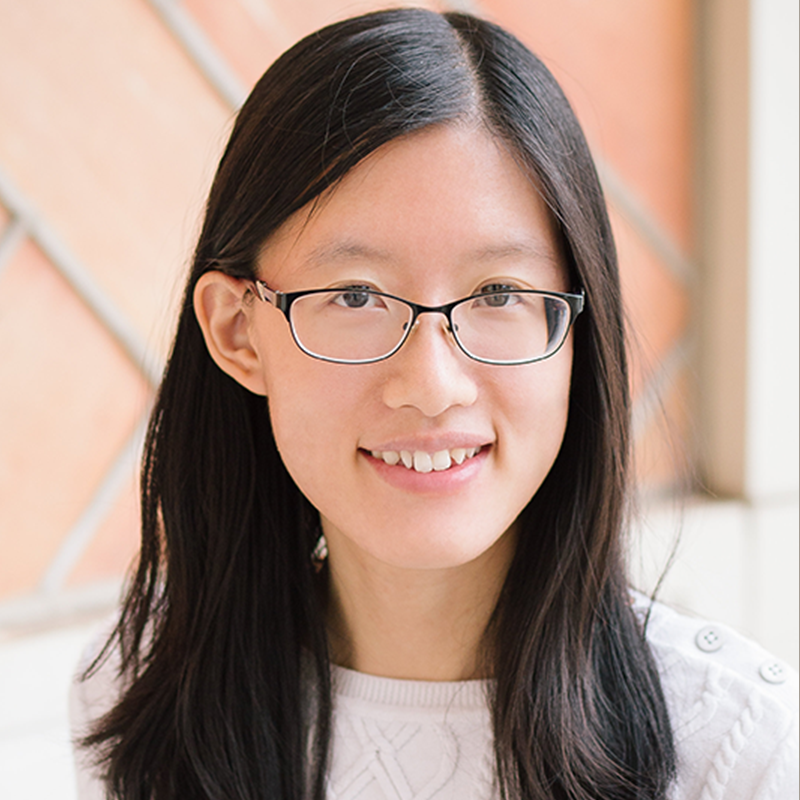
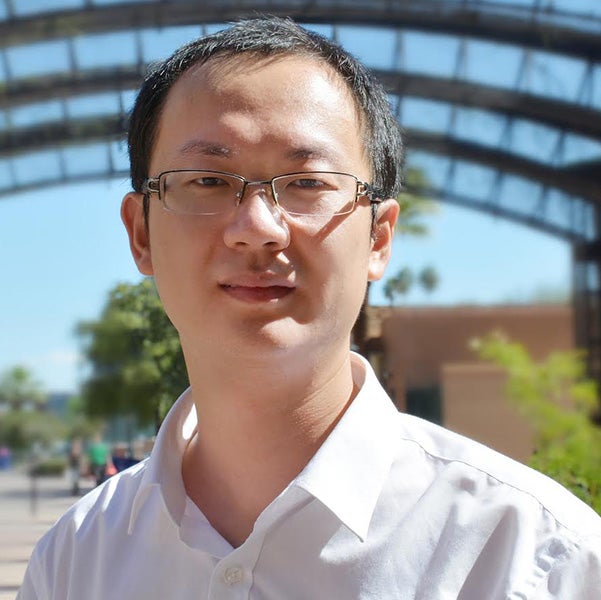
Han Gao is an academic affiliated with Technical University of Denmark (DTU), specifically within the Department of Informatics and Mathematical Modelling at DTU Informatics. Their research focuses on interdisciplinary areas spanning artificial intelligence, machine learning, robotics, and control systems. They have also collaborated with institutions like Zhejiang University, Huawei Technologies, and others, indicating a broad network of academic and industrial partnerships. Key research interests include generative AI models, adversarial machine learning, swarm robotics, and energy systems optimization. Their work often bridges theoretical advancements and practical applications, such as improving UAV localization accuracy under GNSS denial conditions and enhancing cybersecurity in industrial IoT. Publications highlight contributions to 3D reconstruction (e.g., DIG3D), robust backdoor attack mitigation, and unified vision models like DINO-X. Collaborations span domains like healthcare (tongue image segmentation) and environmental sensing (remote sensing analysis). While no explicit grants or awards are listed, their prolific publication record (over 150 papers since 2004) underscores active involvement in cutting-edge research. Ongoing projects include risk-aware robotics, edge computing for logistics, and explainable AI frameworks.
Dr. Frank Hannig is a Professor at the Department of Computer Science, Friedrich Alexander University Erlangen-Nuremberg (FAU), Germany. He serves as the Head of the Architecture and Compiler Design Group within the Hardware-Software-Co-Design department (Department 12). With a career spanning over two decades at FAU since 2003, he has established himself as a leading researcher in hardware-software co-design, compiler design, and embedded systems. Dr. Hannig received his Diploma degree in Electrical Engineering/Computer Science from the University of Paderborn in 2000, followed by his Dr.-Ing. degree in Computer Science from FAU in 2009 with a thesis on "Scheduling Techniques for High-Throughput Loop Accelerators." He completed his habilitation (Dr.-Ing. habil.) in 2018 with a thesis titled "Domain-specific and Resource-aware Computing," which qualifies him for a full professorship in the German academic system. His research focuses on hardware-software co-design, compiler design for embedded systems, reconfigurable computing, parallel systems, and machine learning acceleration. Dr. Hannig has made significant contributions to domain-specific and resource-aware computing, with applications in image processing, automotive systems, and edge AI. His work bridges the gap between high-level programming models and efficient hardware implementations, particularly for resource-constrained environments. Dr. Hannig's recent publications reveal a strong trend toward efficient machine learning deployment on embedded devices and microcontrollers, with particular emphasis on memory optimization, hardware acceleration, and low-precision computing. His research spans multiple domains including computer architecture, machine learning, and embedded systems, with a focus on practical implementations for real-world applications. Dr. Hannig serves as an Associate Editor for IEEE Embedded Systems Letters and the Journal of Real-Time Image Processing. He has organized numerous prestigious conferences including SLOHA 2021, ARC 2021, and Euro-Par 2021, demonstrating his leadership in the academic community. As an educator, Dr. Hannig teaches courses on Domain-Specific and Resource-Aware Computing on Multicore Architectures, Parallel Systems, and Embedded Systems. He has supervised numerous students through lectures, exercises, and seminars covering electronic system level design and multi-core architectures. Dr. Hannig leads several significant research projects including InvasIC (DFG Transregional Collaborative Research Centre), ExaStencils (Advanced Stencil-Code Engineering), and HBS (DFG Research Training Group on Heterogeneous Image Systems). His work with the HIPAcc open-source project has contributed to domain-specific language and compiler development for image processing applications.
Dr. Yanmin Gong serves as an Associate Professor in the Department of Electrical and Computer Engineering within the Margie and Bill Klesse College of Engineering and Integrated Design at The University of Texas at San Antonio (UTSA). Based in the Biotechnology Science and Engineering Building (BSE 1.536), he maintains active research and teaching responsibilities with contact available through (210) 458-5086 and yanmin.gong@utsa.edu. His academic foundation includes a Ph.D. from the University of Florida, positioning him at the forefront of distributed systems research. Dr. Gong's research program centers on critical challenges in next-generation computing infrastructures, with primary emphasis on: Federated learning architectures for heterogeneous edge environments Privacy-preserving distributed training via differential privacy mechanisms Quantum-assisted optimization for satellite-aerial-terrestrial networks Resource allocation and communication efficiency in mobile edge computing Machine learning applications in healthcare analytics and disaster response Analysis of his 2024-2025 publications reveals three dominant research trajectories: (1) integration of large language models with federated frameworks for resource-constrained devices, (2) quantum-inspired solutions for network optimization challenges, and (3) healthcare-focused applications addressing medication adherence and opioid use disorder. His work consistently bridges theoretical innovation with practical constraints like device heterogeneity and regulatory privacy requirements. While no specific scientific awards are documented in the source materials, Dr. Gong's prolific publication record in high-impact venues demonstrates significant scholarly contribution. The absence of listed advisees or laboratory facilities suggests his current research is conducted through collaborative projects rather than a standalone research group, with future work likely expanding quantum-federated learning intersections and public health applications.
Dr. Alexander Escobar is an Associate Teaching Professor in the Department of Biology at Emory University. He holds a B.S. in Genetics from UC Davis (1985) and a Ph.D. in Chemistry and Biochemistry from UC Santa Cruz (1992), with postdoctoral training at Emory in NMDA receptor pharmacology. His teaching innovations include flipped classrooms and case-based learning to foster critical thinking. His research interests bridge neurobiology and pedagogy, particularly visual awareness mechanisms and development of neurobiology teaching tools. Publication trends show an early focus on beta-lactamase enzymology (1990-1994) and a later shift to visual consciousness models (2011-2020).
Florian Metze is an Adjunct Professor at the Language Technologies Institute (LTI) within the School of Computer Science at Carnegie Mellon University. His work focuses on advanced speech and audio processing, multimodal learning, and machine learning applications in under-resourced languages. He leads research in speech recognition, generative audio models, and cross-modal understanding. His research interests emphasize leveraging audiovisual data for robust speech recognition, developing scalable solutions for low-resource languages, and advancing multimodal systems through innovations like diffusion-based text-to-audio generation (Audio-Journey) and modular neural architectures (Legonn). His contributions include foundational work on wake-word detection, speaker verification (MASV), and context-aware error correction in ASR systems. Collaborative projects span speech technology for unwritten languages, child phonetic acquisition modeling, and integrating visual context into speech processing pipelines. His work often bridges theoretical advancements with practical applications in edge computing, security, and biomedical signal analysis (e.g., heart sound monitoring). Metze's research outputs include over 100 peer-reviewed articles since 2018, with recent emphasis on large language models for multitalker scenarios, efficient neural architectures, and cross-modal representation learning. He actively contributes to open-source tools like the ACLEW DiViMe diarization toolkit.
Dr. Miao Yin is an Assistant Professor in the Department of Computer Science and Engineering at the University of Texas at Arlington (UTA), part of the College of Engineering. He holds a PhD in Computer Engineering from Rutgers University and has industry experience at Google, Amazon Web Services, and Samsung Research America. His research focuses on high-performance and energy-efficient spatial/multimodal intelligence systems, leveraging higher-order tensor decomposition and algorithm-hardware co-optimization. Education: PhD in Computer Engineering, Rutgers University (2023). Research Interests include Spatial Intelligence Systems, Large-Scale Neural Model Optimization, and High-Performance Computing. His lab is equipped with advanced computing resources, including H100 GPU nodes and Ada6000/4090 servers. Awards include the UT System Rising STARs Award ($100k), and multiple travel grants from top conferences. He serves on committees for MLSys, PPoPP, DAC, and ICCD, and reviews for CVPR, NeurIPS, and IEEE journals. Advises PhD students including Sunny Shree and Wei Lin, and collaborates on projects funded by UTA and NSF grants. His lab emphasizes cross-disciplinary collaboration in AI and scientific computing.
Dr. Yan Zhang is a Lecturer in Information Technology within the Faculty of Science and Technology at Macquarie University. She completed her PhD in recommendation systems from the University of Technology Sydney (UTS) in 2022 and has established herself as an active researcher with 17 publications spanning from 2016 to 2025. Her academic profile shows consistent research output with multiple publications each year, demonstrating ongoing productivity and engagement in her field. She is registered to supervise postgraduate research, indicating her role in mentoring graduate students. Dr. Zhang's research interests center around recommendation systems, data mining, machine learning, and transfer learning. Her work spans both theoretical foundations and practical applications, with a strong emphasis on solving cold-start problems, cross-domain recommendations, and efficient recommendation techniques. The fingerprint of her research shows significant contributions in areas including User, Hashing, Collaborative Filtering, Recommender Systems, User Preference, Algorithms, Matrix Factorization, and Boolean Function. Her research contributes to UN Sustainable Development Goals through technological innovation in data science and information systems. Analysis of Dr. Zhang's publication history reveals an evolving research trajectory with increasing sophistication in recommendation system methodologies. Her early work focused on discrete techniques and hashing methods for efficient recommendations, while recent publications demonstrate expansion into federated learning, multi-agent systems, and medical applications. The thematic progression shows movement from foundational recommendation techniques toward more complex, interdisciplinary applications while maintaining core expertise in user preference modeling and efficient recommendation algorithms. Dr. Zhang has accumulated 268 citations with an h-index of 7, indicating growing scholarly impact in her field. Her publications appear in reputable venues including IEEE Transactions on Knowledge and Data Engineering, ACM Transactions on Information Systems, and proceedings of major conferences like IEEE ICDE. She has demonstrated consistent collaboration with researchers across institutions, as evidenced by her co-authorship patterns across multiple publications. As a postgraduate research supervisor, Dr. Zhang contributes to academic training in information technology. Her research program appears to focus on both theoretical aspects of recommendation systems and practical applications in cybersecurity, healthcare, and content delivery. The diversity of her recent work suggests she leads or participates in multiple research streams addressing different application domains while maintaining core methodological expertise in recommendation technologies.
Fei Wang is a Professor and Condra Chair of Excellence in Power Electronics at the University of Tennessee, Knoxville (UTK), affiliated with the Tickle College of Engineering and the Min H. Kao Department of Electrical Engineering and Computer Science. He serves as Technical Director of CURENT and holds a joint appointment at Oak Ridge National Lab. His expertise spans power electronics converters, motor drives, wide bandgap devices, and renewable energy systems. Education: B.S. in Electrical Engineering, Xi’an Jiaotong University, 1982 M.S. and Ph.D. in Electrical Engineering, University of Southern California, 1985 and 1990 Research Interests: Focuses on design, modeling, and control of advanced power electronics systems, including grid integration of renewable energy, electric vehicle drivetrains, and wide bandgap semiconductor applications. He has authored over 500 publications and holds 20 patents, with funding exceeding $65M and personal share over $18M. Key Contributions: Developed three-level NPC medium voltage drives at GE Co-founded CURENT and led its technical strategy Recipient of IEEE IAS Gerald Kliman Innovator Award (2018), Dushman Award (1998), and multiple research excellence awards Grants & Advising: Supervised 13 Ph.D. and 8 M.S. students, advised postdocs, and hosted over 35 visiting scholars. Active in IEEE standards development and editorial roles. Labs & Teams: Leads the CURENT Engineering Research Center, focusing on ultra-wide-area power grid resilience through advanced power electronics and system integration.
Dr. Robert Legenstein is a Full Professor and Institute Head at the Institute of Machine Learning and Neural Computation , Graz University of Technology. He serves as Speaker of the Graz Center for Machine Learning and Action Editor for Transactions on Machine Learning Research (TMLR) . His research bridges computational neuroscience and machine learning, focusing on neuromorphic computing systems that mimic biological neural networks. Research Leadership: Leads EU-funded projects like Adaptive Optical Dendrites (FET-Open) , SYNCH (FET-Proactive) , and Stochastic Assemblies in SNNs (FWF) . Scientific Contributions: Develops learning algorithms for spiking neural networks (SNNs), with applications to memristive architectures, neuroprosthetics, and energy-efficient AI systems. Key Publications: 15+ recent works on topics including dendritic computing, hardware-aware training, and context-dependent neural processing. Teaching Roles: Offers courses like Deep Learning , Principles of Brain Computation , and Data Structures & Algorithms . Contact: robert.legenstein@tugraz.at | +43 316 873 5824 | Inffeldgasse 16b/I, 8010 Graz, Austria.
Dr. Wei Yu is a Full Professor in the Department of Computer and Information Sciences at Towson University, USA, and serves as the Ph.D. program director in Information Technology since 2023. He holds a Ph.D. in Computer Engineering from Texas A&M University (2008), with prior degrees from Chinese institutions. His research focuses on cybersecurity, privacy, cyber-physical systems (CPS), IoT, data science, and machine learning applications. Key contributions include foundational work on secured edge intelligence in CPS domains like smart energy, manufacturing, and transportation. He has pioneered federated learning frameworks for privacy-preserving data analytics, digital twin architectures, and reinforcement learning for industrial IoT control. He has received prestigious awards including the NSF CAREER Award (2014–2021), USM Regents’ Faculty Award (2015), and Wilson H. Elkins Professorship (2016). His professional service includes senior editorial roles at IEEE Transactions on Information Forensics and Security, IEEE Internet of Things Journal, and IEEE Access. Research spans CPS security, IoT forensics, and AI-driven CPS applications. Notable projects include adversarial mitigation in federated learning, CAPTCHA robustness, and edge computing for smart transportation systems.
Vincent Gripon is a Full Professor at IMT Atlantique, France's leading engineering institutions. He leads the BRAIn team within Lab-STICC (CNRS UMR 6285), focusing on Artificial Intelligence intersections with Deep Learning, Signal Processing, and Neuroimaging. IMT Atlantique Lab-STICC (CNRS UMR 6285) Mathematical and Electrical Engineering (MEE) Department Research Interests span Artificial Intelligence with specialization in: Few-Shot Learning Neural Network Pruning & Quantization Brain-Computer Interfaces Graph Signal Processing Thrifty AI for Edge Computing Geometry-Driven Model Optimization Selected Publications demonstrate his focus on efficient AI systems through: Training-free adaptation techniques for large models Quantization-aware hardware design Manifold intrusion prevention methods Neuroimaging data analysis frameworks Honors & Distinctions : CVPR 2025 publication (ProKeR) AMD Open Hardware Competition winner (2023) DCASE 2023 Task 5 Jury Award
Adam Oberman is a Full Professor at McGill University's Department of Mathematics and Statistics, affiliated with the Faculty of Science. He holds the Canada CIFAR AI Chair and is an associate member of Mila, Quebec's AI institute. His academic career includes roles at Simon Fraser University (2004-2012) and postdoctoral research at the University of Texas at Austin. His research spans applied mathematics, focusing on numerical methods for PDEs, optimal transportation, and machine learning. Key areas include adversarial robustness, generative models (e.g., normalizing flows), and AI safety. He has contributed to foundational work on PDE solvers, regularization techniques, and neural network optimization. Notable collaborations include projects on AI safety with Yoshua Bengio and work on ethical AI frameworks. Education: PhD from the University of Chicago, postdoctoral training at UT Austin. Research highlights include the development of EuclidNets for efficient neural network inference, contributions to multi-resolution normalizing flows, and theoretical advancements in reinforcement learning representation generalization. His work bridges mathematical rigor with practical machine learning challenges, addressing issues like adversarial attacks and algorithmic fairness. Teaching includes advanced courses on machine learning theory and numerical PDEs. Key contributions extend to numerical methods for nonlinear PDEs, including Monge-Ampère equations and optimal transport problems. He has pioneered techniques like filtered schemes for Hamilton-Jacobi equations and regularization approaches for deep learning optimization. Recent efforts focus on mitigating catastrophic risks in AI through frameworks like Scientist AI and collaborations with Safe AI for Humanity (SAIFH).
Walter Stechele is a Professor at the Technical University of Munich (TUM), holding a position in the Department of Integrated Systems within the TUM School of Computation, Information and Technology. His research focuses on hardware-software co-design for neural networks, embedded systems optimization, and edge computing applications. Key areas include FPGA acceleration of convolutional neural networks (CNNs), quantization-aware training, and adversarial robustness in multi-bit networks. He also investigates sensor fusion, automotive imaging systems, and medical image registration techniques. His work bridges theoretical advancements in machine learning with practical deployment challenges on resource-constrained hardware. Notable contributions include methodologies like MATAR (multi-quantization-aware training) and HW-flow-fusion (inter-layer scheduling for CNN accelerators). His research addresses critical issues such as numerical stability in 8-bit Winograd convolutions and optimizing imaging through automotive windshields. Leveraging FPGA platforms, he explores energy-efficient implementations of binarized neural networks (BNNs) for tasks like driveable area detection and gesture recognition on edge devices. His publications frequently emphasize real-world applications in autonomous driving, robotics, and medical imaging, demonstrating a commitment to translating algorithmic innovations into deployable systems.
Carlee Joe-Wong is the Robert E. Doherty Career Development Associate Professor in the Electrical and Computer Engineering department at Carnegie Mellon University (CMU), part of the College of Engineering. She leads the LIONS research group (Learning, Incentives, and Optimization in Networked Systems), focusing on mathematical and economic aspects of computer and information networks. Her work emphasizes practical system deployments, such as her co-founded startup DataMi, which commercialized smart data pricing (SDP) solutions deployed globally by ISPs like AT&T and Airtel. Previously, she held roles at Princeton University (Ph.D., M.A., A.B. in Mathematics/Applied Mathematics) and served as Director of Advanced Research at DataMi (2013–2014). Her research spans network economics, edge computing, federated learning, and autonomous vehicle policy. Notable contributions include foundational work on burstable cloud instances, dynamic pricing mechanisms, and resilience in mixed-autonomy transportation systems. Awards include the INFORMS ISS Design Science Award (2014), Best Paper at IEEE INFOCOM (2012), and DOE Early Career Award (2024). She has advised numerous industry collaborations and contributed to standards in distributed learning and networked systems through initiatives like the Fog Computing framework and federated learning benchmarks. Education: Ph.D. (2016), M.A. (2013), and A.B. (2011) in Applied Mathematics from Princeton University. Active in policy briefs on autonomous vehicles and energy-efficient computing systems.
Xia Hu is an Associate Professor in the Department of Computer Science at Rice University. His research focuses on data science, interpretable machine learning, automated machine learning, and network analytics. He leads projects such as AutoKeras, an open-source automated deep learning system widely adopted in industry. His work integrates machine learning with real-world applications in healthcare and production systems like TensorFlow and Bing. Dr. Hu holds a PhD from Arizona State University (2015), and has received prestigious awards including the NSF CAREER Award and ACM SIGKDD Rising Star Award. Education: PhD, Computer Science, Arizona State University (2015) Master's Degree, Computer Science, Beihang University (2009) Bachelor's Degree, Computer Science, Beihang University (2006) Research Interests: Dr. Hu explores automated machine learning (AutoML) techniques, interpretable AI systems, and ethical considerations in algorithmic fairness. His work bridges theory and practice, addressing challenges in model efficiency, bias mitigation, and healthcare applications. Recent projects include improving LLM compression, fairness in graph neural networks, and leveraging AI for medical diagnosis prediction. Publications Trends: His recent articles emphasize large language model optimization (e.g., quantization, compression), fairness in AI systems, and healthcare applications like risk assessment in heart transplants. He also contributes to foundational research in explainable AI and data-centric methodologies. Awards: ACM SIGKDD Rising Star Award (2021) NSF CAREER Award (2018) Multiple Best Paper nominations (ICDM 2019, WWW 2019) Labs & Collaborations: His group develops open-source tools like AutoKeras and collaborates with industry leaders (e.g., Apple, Bing). Research spans interdisciplinary projects combining AI with healthcare, cybersecurity, and network analysis.