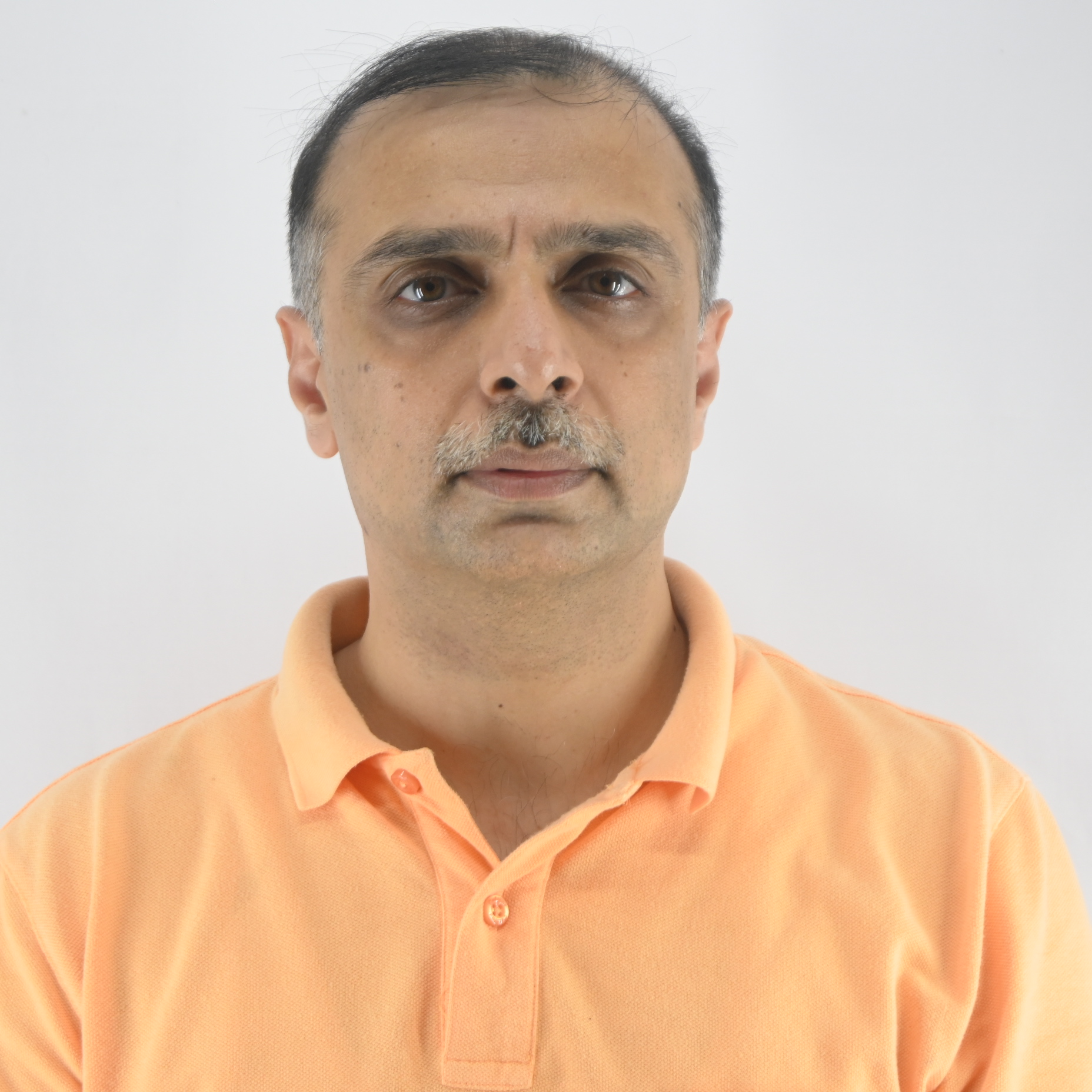
Ajit Rajwade is a Professor at the Department of Computer Science and Engineering , Indian Institute of Technology Bombay. His research spans Artificial Intelligence , Compressed Sensing , and Medical Imaging , with affiliations to the Centre for Machine Intelligence and Data Science and the Koita Centre for Digital Health . Education : PhD in Computer and Information Science and Engineering, University of Florida (2010) MSc in Computer Science, McGill University (2004) BTech in Computer Engineering, University of Pune (2002) His research interests focus on intelligent data acquisition, particularly in neural network analysis , graph signal processing , and medical imaging . He develops compressed sensing algorithms for inverse problems like tomography and MRI reconstruction , alongside applying group testing to pandemic response. Scientific awards include the Prof. S. P. Sukhatme Award (2024) and Departmental Teaching Excellence (2019). His publications demonstrate expertise in image restoration , noise modeling , and epidemiological algorithms . He has advised PhD students like Sabyasachi Ghosh and Jerin Geo James , with a focus on computationally efficient methods in medical imaging and machine learning .
Zhi Da is the Howard J. and Geraldine F. Korth Chair in Finance and Professor of Finance at the University of Notre Dame , Mendoza College of Business, Department of Finance. He completed his Ph.D. in Finance at Northwestern University’s Kellogg School of Management (2006), preceded by an M.Sc. in Financial Engineering from the National University of Singapore (2001) and a B.B.A. with First-Class Honors (1999) from the same institution. Holding editorial roles at Journal of Finance , Management Science , Review of Financial Studies and several other top journals, he is a leading voice in empirical finance research. Education Ph.D. in Finance, 2006 – Kellogg School of Management, Northwestern University M.Sc. in Financial Engineering, 2001 – National University of Singapore B.B.A. (1st Class Honors), 1999 – National University of Singapore Research Interests Zhi Da’s scholarship sits at the intersection of asset pricing , behavioral finance , and market microstructure . He investigates how investor attention, institutional trading, liquidity frictions, and information flows jointly determine the cross-section of expected returns. His work delves into retail margin trading, the role of pension-fund flows in exchange-rate dynamics, the informational content of SEC filings, and the efficiency of short-selling mechanisms. By combining large-scale data analytics, textual analysis, and structural modeling, he uncovers novel predictors of returns ranging from presidential approval ratings to real-time attention measures. Recent projects explore fractional trading ’s impact on price efficiency, hedging demand as a driver of intraday momentum, and the hidden effort problem in delegated portfolio management. These themes collectively advance our understanding of limits to arbitrage and the formation of extrapolative beliefs. Publication Landscape Spanning 2025 back to 2009, his 15 most recent articles in Journal of Finance , Review of Financial Studies , Management Science , Journal of Financial Economics , and Journal of Financial and Quantitative Analysis converge on three broad motifs: (1) micro-level trading frictions—liquidity costs, margin requirements, and short-selling constraints; (2) macro-finance linkages—exchange rates, fiscal policy, and global capital flows; and (3) information economics—attention allocation, media analytics, and regulatory disclosures. The collective evidence demonstrates that seemingly small trading or informational frictions aggregate into large, persistent cross-sectional return predictability. Honors and Awards 2017 William F. Sharpe Award for Best Paper, Journal of Financial and Quantitative Analysis Lead-article distinctions in Journal of Finance , Review of Financial Studies , and Management Science Featured coverage in SmartMoney and CNBC Teaching & Mentorship At Notre Dame’s Mendoza College, Professor Da teaches Investments (undergraduate and MBA) and Fixed Income Securities , integrating cutting-edge research insights into the curriculum. While specific advisees are not listed, his extensive co-author network (22+ recurring collaborators) attests to a vibrant mentoring environment. Laboratory & Data Resources He publicly distributes the NAT (Net Arbitrage Trading) dataset, a stock-quarter panel of arbitrage positions used in Chen, Da & Huang (2019). This resource has become a standard tool for researchers studying arbitrage capital movements.
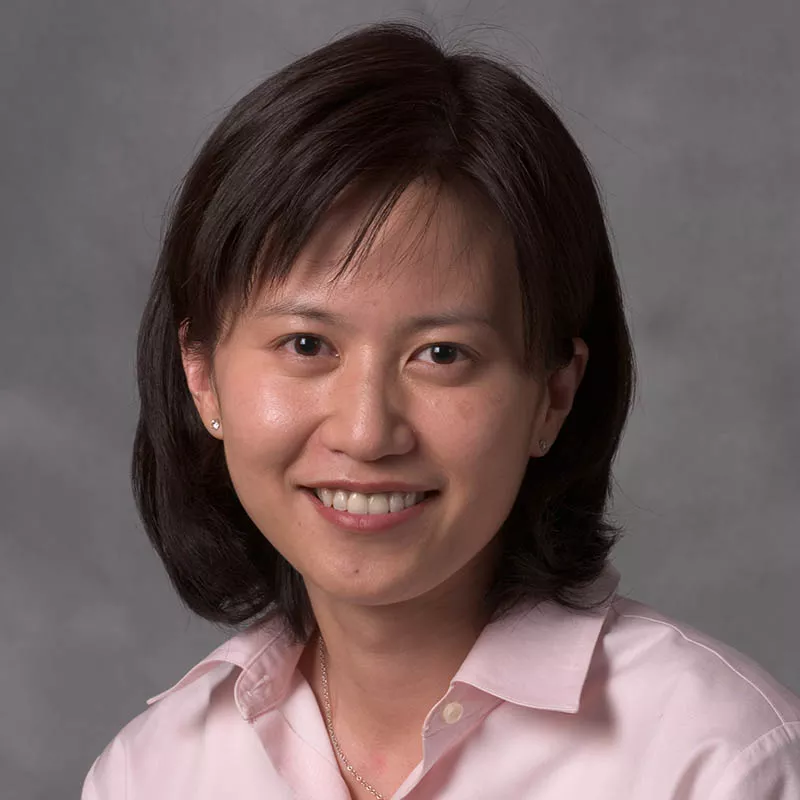
Suzanne S. Lee is an Associate Professor of Finance at the Scheller College of Business, Georgia Institute of Technology, where she has been a faculty member since 2005. She also serves as the Ph.D. Coordinator, playing a key role in graduate education and research training. Her educational background is highly quantitative and interdisciplinary: Ph.D., University of Chicago MBA, University of Chicago M.S. in Statistics, University of Chicago Dr. Lee's research lies at the intersection of asset pricing and financial econometrics, with a strong focus on jump processes, market microstructure, and derivative markets. She investigates how sudden price movements (jumps) impact asset returns, risk, and information flow in financial markets. Her work extends to cryptocurrency, currency markets, and carry trade strategies, combining theoretical rigor with empirical validation using high-frequency data. The analysis of her recent publications (2008–2024) reveals a consistent and influential research program centered on detecting and modeling jumps in financial time series. Her work spans equity, currency, and cryptocurrency markets, often employing advanced nonparametric and econometric techniques. A recurring theme is the role of jumps in pricing anomalies, risk measurement, and market efficiency, with increasing attention to digital assets in recent years. Dr. Lee is actively engaged in the academic community through editorial service: Associate Editor, Journal of Banking and Finance Associate Editor, Asia-Pacific Journal of Financial Studies She has presented her research at premier conferences such as the American Finance Association, European Finance Association, Econometric Society, and Society for Financial Econometrics. Her publications appear in the most prestigious journals in finance and econometrics, including the Journal of Finance , Review of Financial Studies , Journal of Financial Economics , and Journal of Econometrics . While specific grant details are not listed, her sustained publication record in top journals indicates significant research funding and academic impact. She advises Ph.D. students through her role as Ph.D. Coordinator, though individual advisees are not named in the text. Dr. Lee's work contributes to both theoretical and applied finance, improving our understanding of market dynamics, risk modeling, and asset pricing under extreme events. Her research has practical implications for risk management, trading strategies, and financial regulation.
Massachusetts Institute of TechnologyUnited States
Ricardo Caballero is the Ford International Professor of Economics at the Massachusetts Institute of Technology's School of Humanities, Arts, and Social Sciences, where he previously served as Chairman of the Economics Department from 2008 to 2011. A leading scholar in macroeconomics and financial economics, his research focuses on safe assets, monetary policy, financial crises, and international economics. His research interests center on the macroeconomic implications of financial frictions, with particular emphasis on safe asset shortages, risk premium dynamics, and monetary policy transmission mechanisms. Caballero's work has pioneered the risk-centric approach to macroeconomics, explaining phenomena such as the Wall Street/Main Street disconnect, global imbalances, and the collapse of interest rates through the lens of safe asset scarcity and risk intolerance. His research bridges theoretical modeling with empirical analysis of financial crises and policy interventions. Caballero's recent publications demonstrate a consistent focus on financial conditions indexing, monetary policy frameworks, and the interaction between financial markets and the real economy. His work increasingly examines how central banks can target financial conditions directly and how risk premia evolve during crises, with applications to pandemic-era economic policy and zero lower bound environments. 2002 Frisch Medal of the Econometric Society Smith Breeden Prize by the American Finance Association Journal of Finance 2014 Brattle Group Prize 2022 Banque de France-TSE Senior Prize in Monetary Economics and Finance Elected Fellow of the Econometric Society (1998) Elected Fellow of the American Academy of Arts and Sciences (2010) As an NBER Research Associate and frequent policy advisor, Caballero has influenced central bank thinking globally through his work on financial stability, monetary policy frameworks, and global imbalances. His research has informed policy discussions at the Federal Reserve, IMF, and multiple central banks regarding crisis management, safe asset creation, and the appropriate monetary response to financial shocks. Caballero maintains active collaborations with major financial institutions and central banks worldwide, translating theoretical insights into practical policy frameworks.
Demetris Christodoulou is an Associate Professor in Accounting, Governance and Regulation at the University of Sydney. He holds a BEcon from Piraeus University, an MSc(Fin) from the University of York (UK), and a PhD from Athens University of Economics and Business (AUEB). His research focuses on applying data analytics, econometrics, and visualization techniques to financial analysis, equity valuation, life insurance, and financial advice. He co-directs the PEMA research group, specializing in productivity and performance measurement analytics, and previously led the MEAFA research group (2007–2022). He has collaborated extensively with industry partners including Deloitte and Australian insurers, and developed training programs for over 1,000 executives. His work includes open-source contributions to Stata software and the Graph Workflow platform, alongside $662k in workshop-generated funds supporting academic programs. He has advised multiple PhD students and taught at leading universities globally. Education: BEcon in Economics (Econometrics), Piraeus University MSc in Finance, University of York (UK) PhD in Accounting and Financial Analysis, Athens University of Economics and Business His research interests span financial reporting models, life insurance underwriting strategies, and behavioral finance. Recent projects address dishonesty mitigation in insurance disclosures and the adviser effect on customer disclosures. He has published widely in top journals like the Review of Accounting Studies and Stata Journal , and his work was featured in The Australian for insights on insurance fraud reduction. He maintains international collaborations, including visiting roles at Columbia Business School and the University of Cyprus, and serves on advisory boards for organizations like Behaviour.ai. Publications highlight methodological innovations in econometrics and visualization, with 2025's upcoming Stata Journal paper advancing time-series analysis techniques. His grants include partnerships with industry on longitudinal studies of insured lives, aiming to improve risk modeling and public policy insights.
California Institute of Technology (Caltech)United States
Dr. Konstantin (Kostia) M. Zuev serves as Teaching Professor in the Computing + Mathematical Sciences Department at California Institute of Technology , where he has made significant contributions to network science and computational statistics since 2016. His dual PhDs in Mathematics (Moscow State University, 2008) and Civil Engineering (HKUST, 2009) underpin his interdisciplinary research spanning differential geometry, stochastic simulation, and network dynamics. Education PhD in Mathematics, Lomonosov Moscow State University (2008) PhD in Civil Engineering, Hong Kong University of Science & Technology (2009) His research focuses on network science , particularly course-prerequisite networks and complex financial systems , with recent work extending to network navigability in cosmological models and rare event simulation. Over his career, he has developed innovative Bayesian inference methods and geometric preferential attachment theories while maintaining active collaborations across mathematics, physics, and biomedical domains. Recent publications highlight network analysis in education ( 2023 ), hyperbolic graph theory ( 2024 ), and pandemic-informed cancer mortality studies ( 2023 ). His 15 most recent articles demonstrate methodological innovations across disciplines including statistics, physics, finance, and cosmology. Scientific recognition includes Humboldt Research Fellowship (2021) Carver Mead Seed Fund Grant (2023) ASCIT Teaching Award (2018, 2023) Northrop Grumman Teaching Excellence Prize (2019) As Graduate Option Representative for Information and Data Sciences at Caltech and faculty advisor for multiple student organizations including the Caltech Karate Club and Caltech Chess Club , he actively bridges academic rigor with community engagement through outreach initiatives like the virtual math education channel and university math circles for K-12 students.
Dr. Yunjie Yang is an Associate Professor at the University of Edinburgh's School of Engineering, with affiliations at the Edinburgh Futures Institute (EFI), the Edinburgh Generative AI Laboratory (GAIL), and the Edinburgh Centre for Robotics. He previously held the Chancellor's Fellow in Data Driven Innovation (2018-2023) and Bayes Innovation Fellow (2023-2024) positions. His research focuses on AI-powered sensing and imaging, machine learning, and soft sensors & electronics for robotics. Yang received his PhD in Engineering Electronics from the University of Edinburgh, MSc in Control Science & Engineering from Tsinghua University, and BEng in Measurement & Control Engineering from Anhui University. After his PhD, he worked as a Postdoctoral Research Associate in Chemical Species Tomography before securing his lectureship. His research interests center on developing intelligent sensing systems that replicate human perception capabilities for robotics and intelligent systems. He pioneers flexible sensing and imaging technologies across various scales through innovative multi-modal sensors, soft electronics, and their modeling using machine learning approaches. His work aims to enable autonomous physical artificial intelligence by bridging the gap between robotic systems and human-like perception. Analysis of his recent publications reveals a strong focus on soft robotics perception, particularly through electrical impedance tomography (EIT) and transformer-based architectures. His research spans medical imaging applications, digital twin modeling for industrial processes, and machine learning approaches for sensor data interpretation. The trend shows increasing integration of physics-informed deep learning with traditional tomographic techniques to achieve higher accuracy and efficiency. European Research Council (ERC) Starting Grant (2024) IEEE J. Barry Oakes Advancement Award (2024) IEEE I&M Society Graduate Fellowship Award (2015) Multiple Best Paper Awards Senior Member of IEEE Fellow of the International Society for Industrial Process Tomography Fellow of the Higher Education Academy ESI highly cited papers Dr. Yang serves as Associate Editor for IEEE Transactions on Instrumentation and Measurement and holds editorial positions with Scientific Reports and IEEE Sensors Journal. His research has been licensed to overseas research institutes and industry partners and received wide media coverage including BBC, EFE, USA Today, and STV. He has secured significant grant funding including the prestigious ERC Starting Grant. He leads the Edinburgh SMART Lab (Sensing/imaging + Machine Learning + Robotics), which aims to replicate human perception capabilities for robotics and advance flexible sensing technologies through innovative multi-modal sensors and machine learning approaches. The lab focuses on enabling autonomous physical artificial intelligence with applications spanning medical diagnostics, industrial monitoring, and advanced robotics systems.
Jeremy Dahl is a Professor of Radiology (Pediatric Radiology) at Stanford University School of Medicine. He directs the Ultrasound Imaging & Instrumentation Lab and serves as Director of Research Academic Affairs in the Department of Radiology since 2020. He holds multiple affiliations across Stanford including Bio-X, the Cardiovascular Institute, Wu Tsai Human Performance Alliance, Maternal & Child Health Research Institute, Stanford Cancer Institute, and Wu Tsai Neurosciences Institute. Dr. Dahl received his B.S. in Electrical Engineering from the University of Cincinnati (1999) and Ph.D. in Biomedical Engineering from Duke University (2004). His research focuses on developing ultrasonic beamforming and image reconstruction methods for diagnostic imaging applications, particularly techniques that generate high-quality images in difficult-to-image patients. His laboratory specializes in B-mode and Doppler imaging techniques that utilize additional information from ultrasonic wavefields to improve image quality and develop real-time imaging systems for clinical applications including cardiac, liver, and fetal imaging. Dr. Dahl's research has led to significant advancements in ultrasound molecular imaging platforms, sound speed estimation, aberration correction, and reverberation noise suppression. His work often bridges engineering innovation with clinical applications for cancer detection and other diseases. His recent publications demonstrate strong focus on machine learning applications in ultrasound, distributed aberration correction, and molecular imaging techniques. Fellow, American Institute of Ultrasound in Medicine (2021) Senior Member, Institute of Electrical and Electronics Engineers (2020) Distinguished Investigator Award, The Academy for Radiology & Biomedical Imaging Research (2018) Outstanding Paper Award, IEEE Ultrasonics, Ferroelectrics, and Frequency Control Society (2011) Dr. Dahl serves in editorial roles for major journals including IEEE Transactions on Medical Imaging (2017-2024) and IEEE Transactions on Ultrasonics, Ferroelectrics, and Frequency Control (2013-Present). His laboratory has successfully translated numerous innovations into clinical applications, with multiple patents including recent developments in pulsed focused ultrasound therapy and speed of sound quantification.
Dr. Rasmus Ibsen-Jensen is a Lecturer in Computer Science at the University of Liverpool. Previously, he held a Postdoctoral position at IST Austria under Krishnendu Chatterjee and completed his PhD under Peter Bro Miltersen. Research Focus: Algorithmic game theory, strategy complexity in two-player zero-sum games, control flow graph algorithms, edit distance for automata, and theoretical biology applications. Teaching: Module Coordinator for second-year courses in database development (COMP207), C++ programming (COMP282), and industrial placement (COMP299). His work bridges computational game theory and formal verification, with recent publications exploring memory constraints in partial-information games, algebraic path properties in concurrent systems, and evolutionary spatial dynamics. While no scientific awards are explicitly mentioned in the provided text, his contributions to algorithmic complexity and interdisciplinary research (e.g., theoretical biology) highlight his academic impact.
Dr. Chunyan Mu serves as a Senior Lecturer in the School of Natural and Computing Sciences at the University of Aberdeen, actively contributing to both academic instruction and cutting-edge research in computing science while currently accepting new PhD students. Her research program centers on Trustworthy AI and Safe Autonomy, with specialized expertise in formal verification of responsibility, accountability, and privacy mechanisms within multi-agent systems. She investigates resilience frameworks for autonomous intelligent systems and develops advanced methodologies for information flow security analysis, bridging theoretical computer science with practical security implementations. Analysis of her publication trajectory (2014-2025) reveals consistent innovation in applying formal methods to security-critical systems. Key thematic developments include probabilistic strategy logic for observability analysis, quantitative verification of opacity properties, and game-theoretic approaches to security verification, demonstrating increasing sophistication in handling multi-agent accountability and system resilience challenges. Dr. Mu currently supervises PhD candidates and offers a fully funded doctoral position focused on formal verification of safety properties in autonomous systems, providing comprehensive financial support including tuition coverage, £20,780 annual stipend, and dedicated research funding for candidates with strong backgrounds in formal methods and artificial intelligence.
Aura Istrate is a Lecturer/Assistant Professor in Urban Planning & Sustainable Urbanism at the School of Architecture, Planning and Environmental Policy at University College Dublin (UCD). With an international background spanning multiple continents, she conducts interdisciplinary research on sustainable urban development, focusing on active mobility, nature-based solutions, and climate-neutral cities. She teaches GIS and urban planning modules while coordinating several significant research projects across European and Asian contexts. University College Dublin, School of Architecture, Planning and Environmental Policy Primary Coordinator of C-NEWTRAL (Horizon MSCA-DN 2024-2028) Co-Leader of REALLOCATE (Horizon Europe project 2023-2027) Principal Investigator for BIODIVERSA+ projects (NatureScape and NBS4AQUAMISSION) Educated at the University of Architecture and Urban Planning 'Ion Mincu' in Bucharest (BA and MA) and the University of Liverpool (PhD), Dr. Istrate further enhanced her teaching credentials with a Professional Certificate in University Teaching & Learning from UCD. Her academic journey reflects a strong foundation in architectural and urban planning principles combined with specialized expertise in sustainable urbanism. Dr. Istrate's research focuses on smart and sustainable urbanism, particularly examining active mobility, livable streets, green public spaces, and nature-based solutions in urban planning. Her work employs participatory, geospatial, and mixed methods to inform smart communities and the transition to climate-neutral cities. She has practical international experience in urban design and planning, with ongoing collaborations spanning European and Asian countries, currently teaching and researching across cultures in UCD and UCD's International Colleges (CDIC). Her recent publications reveal a strong focus on street vitality, urban heat adaptation, and nature-based solutions. The research demonstrates methodological diversity combining quantitative spatial analysis with qualitative community engagement approaches. Her work spans multiple geographic contexts, with particular expertise in Chinese urban environments and European cities, showing how urban planning concepts need to be contextualized for different cultural settings. The articles consistently address climate adaptation challenges through innovative approaches like urban nature games and fine-grained street classification systems. Dr. Istrate serves as a PhD thesis supervisor and is actively involved in major research initiatives including C-NEWTRAL (as Primary Coordinator), REALLOCATE (as Co-Leader), and BIODIVERSA+ projects (as PI for NatureScape and NBS4AQUAMISSION). Her grant portfolio includes Horizon Europe projects and other significant funding that supports interdisciplinary research on climate-neutral urban development. She has coordinated multiple teaching modules including Planning Design & Development, GIS & Planning, Intro to Spatial Planning, and Local Planning Studio. She leads international research collaborations and maintains active partnerships across various European and Asian countries. Her work bridges academic research with practical urban planning applications, particularly through her focus on research-by-design approaches and participatory methods that engage communities in the planning process. She has served as a lecturer, tutor, or teaching assistant across departments of Architecture, Planning, Environmental Studies, Global Studies, and Human Geography in Ireland, the UK, Czechia, Sweden, China, and Romania since 2010.
W. Brent Lindquist is a Professor in the Department of Mathematics and Statistics at Texas Tech University, affiliated with the TTU Mathematical Finance Program. His contact details include office location in the Mathematics & Statistics building (Room 104), phone (+1 806 834 2348), and email brent.lindquist@ttu.edu. His research spans computational financial mathematics, porous media flow, neuroscience applications, and quantum electrodynamics. Key contributions include dynamic asset pricing with market microstructure integration, pore-scale flow modeling using 3D micro-tomography, automated neuron morphology identification, and QED computations for electron magnetic moments. Recent work emphasizes ESG factor incorporation into financial models. Analysis of 2023–2025 publications reveals a dominant focus on sustainable finance, particularly ESG-integrated option pricing and portfolio optimization. Methodologies include random forests for market microstructure analysis, skew random walks for volatility modeling, and Lévy processes for Bitcoin dynamics. Cross-cutting themes involve hedonic real estate models with ESG factors and unified asset pricing frameworks bridging classical finance theories.
Kingsley Fong is an Associate Professor of Finance at the UNSW Business School , specifically within the School of Banking and Finance . He holds a PhD from the University of Sydney and a BCom (Hons) from UNSW. His research focuses on market microstructure , investment , household finance , and sustainable finance , and he co-founded the RISE Finance Lab to explore finance's role in societal well-being. He also developed the DATKIS framework for systemic coherence in financial practices. Research Interests : Market microstructure, household finance, sustainable finance, and empirical finance. Teaching : Courses such as WEALTH MANAGEMENT AND CLIENT ENGAGEMENT , SUSTAINABLE INVESTING , and SUSTAINABLE FINANCE . Key Trends in Research : His work spans liquidity proxies, algorithmic trading impacts, broker-client dynamics, and sustainable finance innovations. Notable collaborations include studies on market quality, tax-driven trading, and household investment behavior. Scientific Awards : 2017 Review of Finance Spängler IQAM Prize 2021 Aspen Institute Ideas Worth Teaching Award 2022 S&P Global Decarbonisation Hackathon Engagement : Co-Founder of UNSW RISE Finance Lab (2025) Australian Sustainable Finance Institute Reference Group (2024) Deputy Head of School Banking and Finance (2011–2019) Contact : k.fong@unsw.edu.au | Location : UNSW Business School, Ref E12, Level 3, Room 344B.
Professor Raghavendra Rau is the Sir Evelyn de Rothschild Professor of Finance at Cambridge Judge Business School, University of Cambridge. He is the Founder and Academic Director of the Cambridge Centre for Alternative Finance (CCAF) and serves on editorial boards of journals like the Journal of Corporate Finance and Journal of Banking and Finance. He will be President of the Financial Management Association in 2025 and has held visiting roles at Gresham College, Universiti Malaya, and University of Jordan. Education: MBA (IIM Bangalore), MSc, PhD (INSEAD) Previous Roles: Principal at Barclays Global Investors, Ambank Chair, Gresham Professorship His research focuses on how investors and firms process information, with key areas including corporate governance, behavioral finance, fintech, digital finance, CEO decision-making, and ESG. He explores links between prenatal environmental exposure and executive risk-taking, gender diversity in finance, and regulatory impacts on crowdfunding and digital lending. Recent publications analyze serial acquirers' behavior, CSR impacts on firm value, superstitious fund managers, and digital financing regulations. His work bridges behavioral biases, environmental factors, and financial innovation. Awards include the 2015 Ig Nobel Prize in Management.
Allaudeen Hameed is the Tang Peng Yeu Professor in Finance at the National University of Singapore (NUS) Business School , where he has been a Professor since 2006. He also holds editorial roles at several leading finance journals and has previously held visiting positions at the Chinese University of Hong Kong, University of North Carolina at Chapel Hill, and University of Texas at Austin. Education: Ph.D. in Finance, University of North Carolina at Chapel Hill Bachelor of Business Administration (Honours), Second Class Upper Division, National University of Singapore Research Interests: His research spans a wide range of topics in finance, including return-based trading strategies , stock return co-movement , liquidity , the role of financial analysts , and international financial markets . These interests are deeply rooted in empirical asset pricing, market microstructure, and behavioral finance. His work often explores how market frictions, investor behavior, and institutional features affect asset prices and trading strategies, with a strong focus on cross-country and emerging market contexts. Scientific Awards & Honors: Asian Finance Conference Best Paper Award – 2024 Pacific Basin Finance Journal Best Paper Award – 2024 UM Distinguished Visiting Scholar, University of Macau – 2024 Best Paper of PERC Award – 2023 Tun Ismail Mohamed Ali Distinguished Chair, Universiti Kebangsaan Malaysia – 2022–2024 Teaching Excellence Team Award, NUS Business School – 2020 Best Paper Awards, FMA – 2016 & 2018 Outstanding Researcher Award, NUS Business School – 2015 & 2003 University of North Carolina Kenan-Flagler Alumni Merit Award – 2011 Professional Service: He serves as Editor of the International Review of Finance and Associate Editor of the Journal of Financial and Quantitative Analysis and Pacific-Basin Finance Journal . He is also a Senior Fellow at the Asian Bureau of Financial and Economic Research (ABFER) and a former Council Member of the Society for Financial Studies. Leadership Roles: He is currently Chair of the Faculty Promotion & Tenure Committee (FPTC) and Chair of the Faculty Promotion in Educator Track Committee (FPEC), both from 2025–2026.