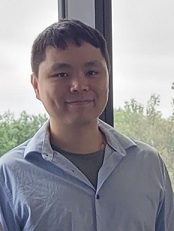
Mohsen Heidari is an Assistant Professor in the Department of Computer Science at Indiana University, Bloomington. He is affiliated with the IU Quantum Science and Engineering Center (QSEc) and the NSF Center for Science of Information (CSoI). He previously held positions as a Visiting Assistant Professor at Purdue University and as a Postdoctoral Research Associate at CSoI. Ph.D. in Electrical Engineering (2019) and M.Sc. in Applied Mathematics (2017) from the University of Michigan His research focuses span quantum computing, theoretical machine learning, and information theory. Key themes include: Quantum algorithm design and sample complexity Fourier-based learning frameworks Quantum-classical duality in learning problems Information-theoretic approaches to biological systems Article trends show a strong emphasis on quantum-classical learning intersections (6/15 papers), Fourier analysis applications (5/15), and information-theoretic foundations (12/15). Notable venues include NeurIPS, IEEE Transactions, and ISIT. He directs research involving: Quantum Neural Network development Quantum measurement simulation Quantum data compression techniques Quantum algorithm implementation constraints
Imran Currim is a Distinguished Professor at The Paul Merage School of Business, University of California, Irvine. He previously served as Associate Dean for eight years and is currently the Faculty Director of the Beall Center for Innovation and Entrepreneurship. He has played a pivotal role in developing new academic programs, including the Master of Innovation and Entrepreneurship (MIE), the first of its kind in the UC system. PhD, Stanford University MS (Statistics), Stanford University MBA, University of Wisconsin BE (Electrical Engineering), Victoria Jubilee Technical Institute, University of Bombay Professor Currim is a leading expert in marketing science, with core research interests in customer choice modeling , product and service design , online consumer behavior , and competitive marketing strategy . His work integrates quantitative methods to understand how product features, service attributes, and marketing efforts influence consumer decisions and market share dynamics. He has published extensively in top journals and is known for bridging academic research with real-world business applications. Although specific publications are not listed in the provided text, his research has consistently influenced both marketing theory and practice, as evidenced by his numerous accolades and recognition from premier institutions like the American Marketing Association and the Marketing Science Institute. His scientific awards include some of the most prestigious honors in marketing: American Marketing Association William O'Dell Award AMA/Houghton Mifflin Distinguished Teaching in Marketing Award Marketing Science Institute Robert D. Buzzell Award Emerald Literati Highly Commended Article Award Finalist, Paul E. Green Award (Journal of Marketing Research) Finalist, European Marketing Academy Best Paper Award Wall Street Journal's 2008 Favorite Professor in an Executive MBA Program Bloomberg Businessweek 2006: #3 ranked marketing course in the world Chancellor’s Professor, UCI Distinguished Faculty Lectureship Award, UCI Academic Senate Professor Currim has advised or conducted executive education and consulting projects for over 100 companies, demonstrating strong industry engagement and impact. While specific grants are not detailed, his leadership in creating innovative academic programs like the MIE and certificate tracks for graduate and undergraduate students reflects substantial institutional and curricular development initiatives. He has also taught at prestigious institutions including UCLA, New York University, and Yale. He leads initiatives at the Beall Center for Innovation and Entrepreneurship , where he focuses on advancing innovation, entrepreneurship curriculum, and experiential learning programs. Under his direction, the center has launched groundbreaking programs such as the Master of Innovation and Entrepreneurship and expanded educational offerings through minors and certificates.
Professor Jim Harris is a leading academic in Environmental Technology at Cranfield Environment Centre, Cranfield University. He holds the Chair in Environmental Technology, a position he has held since 2002. His work spans microbial ecology, ecological restoration, soil health, and sustainable land systems, with significant contributions to policy, industry, and international standards. First degree in Applied Biology, North East London Polytechnic Doctoral work on microbiology of stored topsoil on opencast mine sites His research interests are centered on microbial ecology and its role in ecosystem processes, particularly in disturbed landscapes. He investigates soil formation, organic matter dynamics, waste treatment (e.g., landfill leachate), and the quantitative assessment of ecosystem services. He applies systems ecology to urban planning, water treatment, and land restoration. His work bridges science and practice, influencing government policy and industrial applications. The recent publications reflect a strong focus on soil health quantification , microbial community dynamics , nutrient cycling in waste-amended soils , and urban ecosystem services . There is a clear trend toward integrating Bayesian modelling , resilience metrics , and decision-support tools for environmental management. His team frequently collaborates on interdisciplinary studies involving carbon, nitrogen, and phosphorus cycling in agricultural and urban systems. Jim Harris has secured funding from major UK research councils including BBSRC, NERC, and EPSRC, as well as from government agencies (Defra, Environment Agency, Natural England), industry (Syngenta, AECOM, SITA), and international bodies (European Union, Royal Society). His research has informed national and international guidance on ecological restoration and land use. He is actively involved in professional societies such as the Society for Ecological Restoration, British Society of Soil Science, British Ecological Society, and Institution of Agricultural Engineers. He has contributed to major book publications and editorial roles in high-impact journals. His laboratory and research group focus on soil microbial communities , ecosystem resilience , and bioremediation . Projects like RestREco (Restoring Resilient Ecosystems) and Urban BESS (Biodiversity and Ecosystem Service Sustainability) highlight his team’s focus on reconnecting green-blue infrastructure and enhancing urban sustainability. He also leads work on food and nutrition security in the context of global disruptions like the COVID-19 pandemic.
Tommy Löfstedt is an Associate Professor at Umeå University , affiliated with the Department of Computing Science and the Department of Mathematics and Mathematical Statistics. His research focuses on machine learning , computer vision , and medical image analysis , with applications in life sciences, radiation therapy, and biomedical imaging. He leads multiple research projects, including AI-driven delineation in radiation therapy, quantitative MRI for radiotherapy, and machine learning for plant nutrient uptake. Current research emphasizes structured regularization methods to improve model interpretability and robustness. Key applications include medical image segmentation , Alzheimer's classification , and uncertainty estimation in MRI . Recent publications highlight his work on morphological regularization , adversarial attack mitigation , and multi-task learning in medical imaging contexts. His projects span 2022–2026 with funding for pediatric oncology automation and gynecological cancer staging. Affiliated with both computing and mathematical departments, he bridges algorithm development with applied mathematical frameworks in medical and life science domains.
Dr. Richard Segall is a Professor in the Department of Information Systems and Business Analytics at Arkansas State University , affiliated with the Beck College of Sciences & Mathematics . He is also affiliated faculty in the Master of Engineering Management (MEM) Program , the Environmental Sciences Program , and serves on thesis committees at the University of Arkansas at Little Rock (UALR) . Education: Ph.D. in Operations Research, University of Massachusetts at Amherst (1984) M.S. in Operations Research and Statistics, Rensselaer Polytechnic Institute (1975) M.S. in Mathematics, Rensselaer Polytechnic Institute (1973) B.S. in Mathematics, Rensselaer Polytechnic Institute (1971) Dr. Segall's research spans data mining, text mining, web mining, big data analytics, bioinformatics, supercomputing applications, and mathematical modeling . His work bridges business analytics and computational biology , with a focus on transdisciplinary applications in agriculture, healthcare, and space systems. His recent publications emphasize genomic data analysis , plant disease diagnostics , AI-driven healthcare solutions , and space technology forecasting . The integration of machine learning , data visualization , and open-source tools is a recurring theme across domains. Scientific Awards & Grants: Three research awards from the National Research Council (NRC) Software grants from Oracle Corporation and SAS Institute, Inc. Dr. Segall has served on the editorial boards of the International Journal of Data Science , International Journal of Data Mining, Modelling and Management , and International Journal of Fog Computing . He previously contributed to the Arkansas Center for Plant-Powered Production (P3) and currently participates in the Center for No-Boundary Thinking (CNBT) .
Xi Li is an Associate Professor at the University of Arkansas's Walton College of Business, Department of Finance. He holds a PhD and has previously served as faculty at Hong Kong University of Science and Technology, Boston University, University of Miami, and Vanderbilt University. With significant industry experience at Acadian Asset Management and State Street Global Advisors, Li bridges academic research and practical finance applications. His research focuses on investment strategies , corporate finance , and market anomalies , with expertise in predicting macroeconomic trends. Li's work examines: Financial market anomalies (low-volatility, asset growth effects) Impact of regulation on international markets Analyst performance and career dynamics Corporate governance reforms Li's recent publications demonstrate consistent focus on empirical finance in global markets, particularly: Market efficiency and post-earnings drift Quantitative investment strategies Regulatory impacts on cross-listed firms Behavioral aspects of financial analysis Trends show increasing emphasis on international applications and market structure analysis. He maintains active industry engagement through speaking engagements at major financial institutions (Citi, Deutsche Bank, IMF) and frequent media citations in Wall Street Journal and Financial Times .
Andrew O. Arnold is a Principal Applied Machine Learning Engineer at Shopify and an Adjunct Professor at New York University's Tandon School of Engineering, Department of Finance and Risk Engineering. He earned his Ph.D. in Machine Learning from Carnegie Mellon University and a BA in Computer Science and Artificial Intelligence from Columbia University. Education Ph.D., Machine Learning, Carnegie Mellon University BA, Computer Science and Artificial Intelligence, Columbia University His research focuses on robust machine learning , developing models that perform well in low signal-to-noise regimes, handle distributional shifts (transfer learning), and extract features from unstructured data. Key applications include time series analysis and natural language processing in financial and other domains. Recent publications highlight work on large language models (LLMs) for code generation, including multitask pretraining, contrastive learning, and quantization techniques for efficiency. He has contributed to understanding model robustness and adapting NLP methods to dynamic market conditions. Arnold teaches NYU FRE GY 7871: News Analytics and Machine Learning , covering NLP and ML techniques for quantitative trading strategies. The course emphasizes practical applications of sentiment analysis, text relevance, and novelty detection in financial contexts. He has led teams at Amazon Web Services (AI Labs), served as Chief Scientist at Oracle Alpha, and worked at Microsoft Research, IBM Research, and other institutions. His technical expertise spans code generation , anomaly detection , and NLP for commerce , with patents in these areas.
Edmund Hollis is an Assistant Professor of Neuroscience at the Brain and Mind Research Institute within Weill Cornell Medical College . He has been affiliated with the institution since 2016 and leads a research lab focused on neural circuit remodeling and recovery after spinal cord injury. Education: Ph.D. in Neurosciences, University of California, San Diego, School of Medicine (2008) B.S., University of Southern California (2002) Research Interests: Hollis's lab investigates the neural mechanisms underlying movement and recovery from spinal cord injury. Using genetic, molecular, and behavioral tools, along with optogenetics and optical imaging, the lab explores how neural circuits respond to injury and how they can be therapeutically enhanced. Key areas include cortical plasticity, axon regeneration, astrocyte responses, and neuromodulation of motor circuits. Scientific Contributions: His recent publications demonstrate a strong focus on corticospinal tract function, spinal interneuron modulation, and the use of advanced behavioral assays like the Kinematic Deviation Index (KDI) to assess motor recovery in rodent models. His work spans from molecular signaling pathways (e.g., RANKL, Wnt, IGF-I) to large-scale circuit remodeling and rehabilitation strategies. Collaborations & External Roles: Hollis has professional affiliations with Texas A&M University and the National Institutes of Health, and has served as a speaker and consultant for various academic and governmental organizations.
Professor Julia Schlüter is a distinguished academic in the Chair of English Linguistics within the Humanities Faculty at the University of Bamberg, Germany. She has served as Senior Lecturer at the Chair of English Linguistics and Language History under Prof. Manfred Krug since June 2008, holding the title of Professor following her habilitation in 2008. Her institutional profile demonstrates deep commitment to both research and teaching innovation, particularly through her leadership of the KorPLUS project and development of open educational resources for corpus linguistics. Her research interests span corpus linguistics for English language learners, empirical methods for studying language variation and change, and the application of corpus methods to teaching. She specializes in examining grammatical, phonological, and lexical differences between British and American English across historical periods from Middle English to present-day usage. Her work investigates phonological variation (particularly phonotactically controlled alternations), morphological change, and syntactic variation through corpus analysis, with special attention to functional grammar and grammaticalization theory. Professor Schlüter's recent publications (2022-2025) reveal a strategic evolution in her research focus, with increasing emphasis on the intersection of corpus linguistics and digital education. While maintaining her foundational work in historical English linguistics, she has developed significant expertise in applying corpus methods to language teacher education and evaluating AI writing tools. Her work demonstrates consistent methodological innovation, moving from traditional corpus analysis to blended learning approaches and digital educational resource development. Her scientific recognition includes: Winner of the 2025 Teaching Innovation Prize from the International Society for the Linguistics of English for the KorPLUS project University of Bamberg Prize for outstanding habilitation (2009) Lise Meitner Programme post-doctoral scholarship (2005-2006) Rectorate Prize from University of Paderborn for outstanding Ph.D. thesis (2005) Multiple DAAD scholarships for international study Professor Schlüter actively supervises doctoral research, currently guiding three Ph.D. candidates (Katharina Deckert, Aklima Nahar, and Nikolai Beland) while having successfully completed supervision for several others. She leads the KorPLUS project (2021-2025), funded by the Stiftung Innovation in der Hochschullehre, which develops open educational resources for corpus linguistics. Her research has been consistently supported by the German Research Foundation (DFG) and other funding bodies throughout her career. She heads the KorPLUS team (with Carina Großmann and Katharina Deckert) which develops the interactive Open Educational Resource platform for corpus linguistics. Her YouTube channel offers video tutorials on corpus basics, and she has created the Video Podcast Series "How to Update your Grammar" for English teachers. She regularly organizes in-service teacher trainings and collaborates with the Virtual Linguistics Campus at RWTH Aachen University to deliver her educational materials globally.
Nicholas Horsewood is an Honorary Associate Professor in Economics at the Department of Economics, Birmingham Business School, University of Birmingham. His roles include Director of Postgraduate Studies, Director of Overseas Programmes, Easter School Co-organiser, and Director of MSc Money, Banking and Finance (MSc MBF) programmes. MPhil, University of Oxford BA in Economics, University of Sussex Research interests span International Econometrics (trade relationships), Labour Econometrics , Economic History , and Housing Economics . His work focuses on econometric modeling of macroeconomic phenomena across historical and contemporary contexts. Selected publications examine: sovereign debt crisis prediction (2017), interwar German unemployment dynamics (2006), European housing-labour-financial market interactions (2004), interwar Australian unemployment causes (2002), and Japanese monetary policy near-zero interest rate transmission (2002). These works demonstrate cross-disciplinary applications of econometric methods to historical and systemic economic challenges. Roles : Director of Postgraduate Studies, Director of Overseas Programmes, Easter School Co-organiser, MSc MBF Director Research Groups : Political Economy and Economic Policy, Econometrics Contact: n.j.horsewood@bham.ac.uk | Tel: +44 (0) 121 414 6647
Brooke Foucault Welles is a Professor in the College of Arts, Media and Design at Northeastern University, where she also serves as Interim Dean and Director of the Network Science PhD program. Her research focuses on how social networks and communication technologies shape power dynamics, particularly in contexts of marginalization and social justice. PhD in Media, Technology and Society from Northwestern University MS and BS in Communication from Cornell University Her research spans multiple domains including: Network science of AI and social systems Digital activism and social movement dynamics Health information and (mis)information flows Open source community structures Race/ethnicity in digital contexts Computational social science methodologies Recent publications focus on attention dynamics in social networks, hate speech protection mechanisms, and open-source software sustainability. Her work has been supported by grants from the NSF, NULab, and Chan Zuckerberg Initiative. Awards include: McGannon Book Award (2021) for #HashtagActivism Best Paper Honorable Mention at CSCW 2019 She leads the Communication Media and Marginalization Lab (CoMM Lab) which includes PhD students and postdocs from diverse disciplines. Her advising approach emphasizes interdisciplinary collaboration and methodological training in both quantitative and qualitative approaches.
Prof. Ulrich W. Thonemann is a Full Professor and Director of the Department of Supply Chain Management & Management Science at the University of Cologne's Faculty of Management, Economics and Social Science. Since 2019, he has served as Dean of the Faculty and President of the University of Cologne Executive School since 2018. His research spans Supply Chain Management Optimization Behavioral Operations Information Systems . His recent work focuses on Incentive systems for forecast sharing Behavioral inventory metrics Contract design for newsvendor problems Demand information sharing Capacity rationing . He has served on the scientific advisory board of Bundesvereinigung Logistik and as Associate Editor for Production and Operations Management . Scientific Awards: Terman Fellow (1999-2000) Anderson Faculty Scholar (1998-2000) Outstanding Academic Achievements at Stanford (1992) Contact: ulrich.thonemann@uni-koeln.de | Research Group Website
Dr. Barbara E. Jones serves as an Associate Professor in the Department of Internal Medicine at the University of Utah School of Medicine, with dual appointments in Pulmonary and Critical Care Medicine. Her clinical practice spans diverse healthcare settings within the Veterans Affairs system and academic medical centers, focusing on evidence-based adaptation of care to varied patient populations. Her educational background includes: M.D. from University of Washington School of Medicine B.A. in Philosophy from Dartmouth College Master of Science in Clinical Investigation (M.S.C.I) from University of Utah Postdoctoral Fellowship in Pulmonary and Critical Care Medicine at University of Utah Residency in Internal Medicine at University of Utah Dr. Jones' research centers on decision-making processes in pneumonia diagnosis and treatment, employing a tripartite informatics approach combining population analytics, cognitive behavior analysis, and clinical decision support systems. Her work specifically targets reducing diagnostic uncertainty and treatment variation across healthcare systems, with emphasis on equitable care delivery for diverse patient populations. Current projects investigate diagnostic discordance in community-acquired pneumonia, electronic surveillance for hospital-acquired infections, and machine learning applications for diagnostic error detection. Analysis of her 15 most recent publications reveals consistent focus on pneumonia management systems, with emerging emphasis on pandemic impacts on diagnostic practices and AI-driven quality improvement. Her work predominantly utilizes large VA healthcare datasets spanning 100+ medical centers, featuring mixed-methods approaches that integrate quantitative analytics with qualitative clinician experience assessment. Dr. Jones actively contributes to clinical guideline development and medical education through editorial work in major journals including Chest and Annals of Internal Medicine , where she frequently addresses controversies in pneumonia diagnosis and antibiotic stewardship. Her research program operates at the intersection of the University of Utah Health system and the Veterans Affairs national healthcare network, leveraging electronic clinical decision support implementations across diverse hospital settings including rural and critical access facilities. Current initiatives focus on real-time feedback systems for diagnostic performance improvement and automated surveillance for healthcare-associated infections.
Michael Mak is an Associate Professor in the Department of Pharmacological Sciences at the Renaissance School of Medicine, Stony Brook University, where his research investigates the critical role of mechanical and biophysical signals in tissue organization, disease progression, and regenerative medicine applications. His primary research interests include: Mechanobiology and cellular mechanosensing of multifactorial signals Synthesis of physiologically realistic extracellular matrix material states Biofabrication and bioprinting of functional tissue/organ systems Disease modeling in cancer metastasis, fibrosis, and organ development Dr. Mak employs interdisciplinary methodologies integrating tissue engineering, biophysics, materials science, microfluidics, and quantitative microscopy to develop engineered tumor models and organoids. His work bridges fundamental mechanobiological insights with therapeutic applications in regenerative medicine and drug discovery. As principal investigator of the Mak Research Lab, he mentors graduate students and postdoctoral researchers in advanced biomaterial design and mechanotransduction studies, fostering innovation at the engineering-biology interface. The laboratory maintains specialized facilities for 3D bioprinting, mechanobiology experimentation, and computational modeling, with current projects focused on user-designable tissue systems for personalized disease modeling and regenerative therapies.
Dubravko Radic serves as Professor of Service Management at the University of Leipzig's Faculty of Business and Economics since 2009, while simultaneously holding the position of Deputy Head of the Price and Service Management group at the Fraunhofer Center for International Management and Knowledge Economics IMW since 2013. His academic career spans multiple institutions including the University of Wuppertal where he completed his habilitation, and the University of Frankfurt am Main where he earned his doctorate in statistics and econometrics. Doctorate (Dr. rer. pol. summa cum laude): Johann Wolfgang Goethe-Universität Frankfurt a.M. (2004) Habilitation: Bergische Universität Wuppertal (2009) Diplom-Volkswirt: Johann Wolfgang Goethe-Universität Frankfurt a.M. (1999) Research Stay: University of California Davis (2008) Professor Radic's research centers on the intersection of empirical methods and business management, with particular emphasis on service pricing modeling, applied microeconometrics, and social interactions in service contexts. His work bridges theoretical econometric approaches with practical business applications, especially in the healthcare sector where he has led multiple Fraunhofer IMW projects including ASARob, NurMut, and ATMoSPHÄRE. His research methodology combines quantitative modeling with real-world case studies to address strategic and operational decisions in service organizations. His recent publications demonstrate a consistent focus on discrete choice modeling, game theory applications in marketing, and service innovation frameworks. The 2025 paper "Discrete Games in Marketing Research" presented at the Global Marketing Conference in Hong Kong exemplifies his approach of applying advanced econometric techniques to practical marketing problems, particularly in digital service contexts. His work shows an evolving trajectory from foundational service management concepts toward increasingly sophisticated modeling of strategic interactions in service markets. Professor Radic has extensive experience advising major corporations including Metro AG, Lilly Deutschland, IMS Health, Berlin Chemie, and Augustinum gGmbH. His practical projects at Fraunhofer IMW focus on translating academic research into actionable business solutions, particularly in healthcare digitization and service innovation. He has led the TRAIN@MINE project developing training tools for Vietnam's mining sector and contributed to studies on Big Data applications in health insurance. At the University of Leipzig, he leads research activities through the Institute for Service and Relationship Management, supervising multiple research projects that connect academic inquiry with industry applications. His team collaborates with international partners including the University of California Davis, University of Maryland, Northwestern University, and the Technion Israel Institute of Technology, creating a robust research ecosystem focused on service management innovation.